Content decay
Content decay is the gradual decline in a page's traffic and search rankings over time after it once performed well.
What content decay means
Content decay is the gradual decline in a page's search rankings and traffic over time, after a period when it performed well. The page does not change, but its standing does: facts age, competitors publish newer and deeper coverage, what searchers want from the query shifts, and search algorithms re-weight what they reward. The result is that a once-strong page slowly loses position and the visits that came with it, even though nothing about the page itself got worse in isolation.
In SEO and content marketing, content decay is a predictable lifecycle rather than a one-off failure. Almost every successful page peaks and then erodes if it is left untouched, which is why mature content programs plan for maintenance, not just creation. Recognizing decay early is the difference between a quick recovery and a slow, unnoticed slide.
Why content decay matters
Content decay is worth tracking because of how it behaves:
- It is gradual and easy to miss, often hidden in aggregate growth while individual top pages quietly lose organic traffic.
- It compounds across a catalog, so a large library left unmaintained loses meaningful traffic in total even if each page declines slowly.
- It hits time-sensitive pages hardest, since anything tied to a year, a price, or a product version decays the fastest.
- It erodes topical authority, because a cluster of decaying pages signals a topic the site no longer actively covers.
- It is usually cheaper to reverse than to replace, since the decayed URL still holds the links and ranking history a new page would have to earn from scratch.
How well a team handles decay tends to fall on a ladder, from never noticing it to auditing on a schedule.
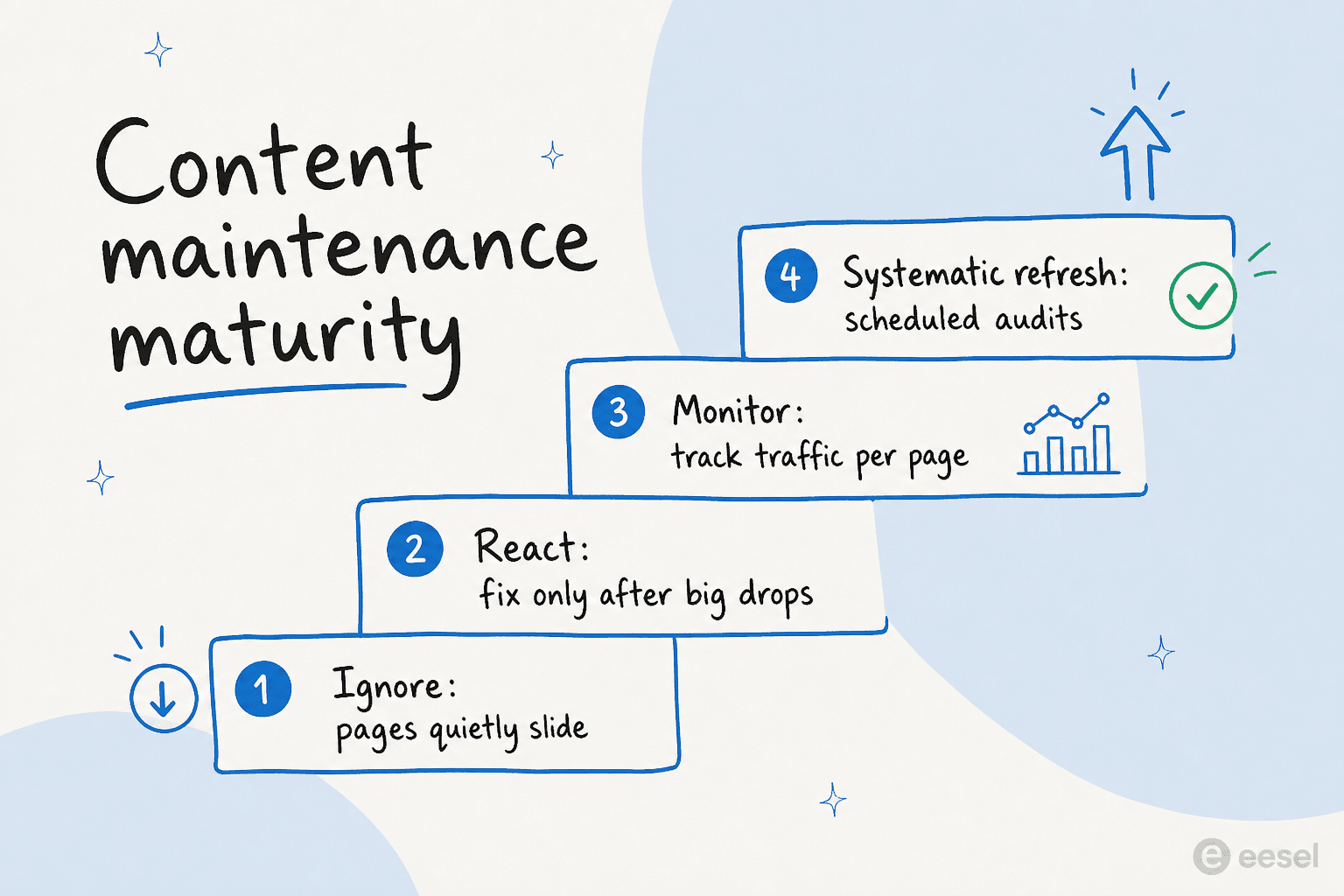
Most sites start by ignoring decay and only react after a painful drop. The teams that stay ahead climb to monitoring traffic per page and then to scheduled audits, where decay is caught and reversed before it costs much.
How content decay happens
Decay tends to set in through a recognizable progression:
- The page peaks. It ranks well and draws steady traffic after publishing.
- The landscape shifts. Competitors publish fresher pages, facts go out of date, and intent for the query moves.
- Relative quality drops. The page is unchanged but now looks worse next to newer results, so search engines demote it.
- Traffic slides. Rankings fall, clicks follow, and the decline often goes unnoticed at first.
- Maintenance or loss. Either the page is refreshed and recovers, or it keeps decaying until it brings in almost nothing.
Reversing decay across a large catalog is mostly a research-and-update problem. An AI blog writer like eesel AI helps by re-researching a decaying page against current sources and drafting an updated version, so a team can keep pace with decay across many pages instead of refreshing one slow page at a time.
Content decay in practice
The operational lesson is to monitor decay at the page level, not just the site level. A site can post overall traffic growth while several of its best earners quietly slide, because new pages mask the loss. The teams that stay ahead audit their top pages on a schedule, flag the ones whose trend has turned down, and queue them for a refresh while recovery is still cheap. Catching decay early, before a page falls off the first results page, is far less work than clawing a lost ranking back later.
Want the full playbook? See our guide to refreshing content for SEO.
Reverse content decay at scale
eesel AI re-researches a decaying page and drafts an updated version with current facts and sources, so reversing decay keeps pace with a large catalog.