The 8 best Ultimate (Zendesk AI Agents) alternatives in 2026

Kurnia Kharisma

Katelin Teen
Last edited October 6, 2026

Why people are looking for Ultimate AI alternatives
Ultimate was a good product. Founded in Berlin in 2017, it built a reputation as a serious customer support automation platform, held a 4.6 out of 5 on G2 across 122 reviews, and even critics on Reddit called it "much more capable than Zendesk's native AI." That is not the problem.
The problem is that Ultimate, as a company you can sign with, is gone. Zendesk acquired it in January 2024, and by 2026 the standalone brand has been fully retired. Its technology now ships as the autonomous resolution layer inside the Zendesk platform. If you want "Ultimate" today, you are really buying Zendesk, on Zendesk's contract terms.
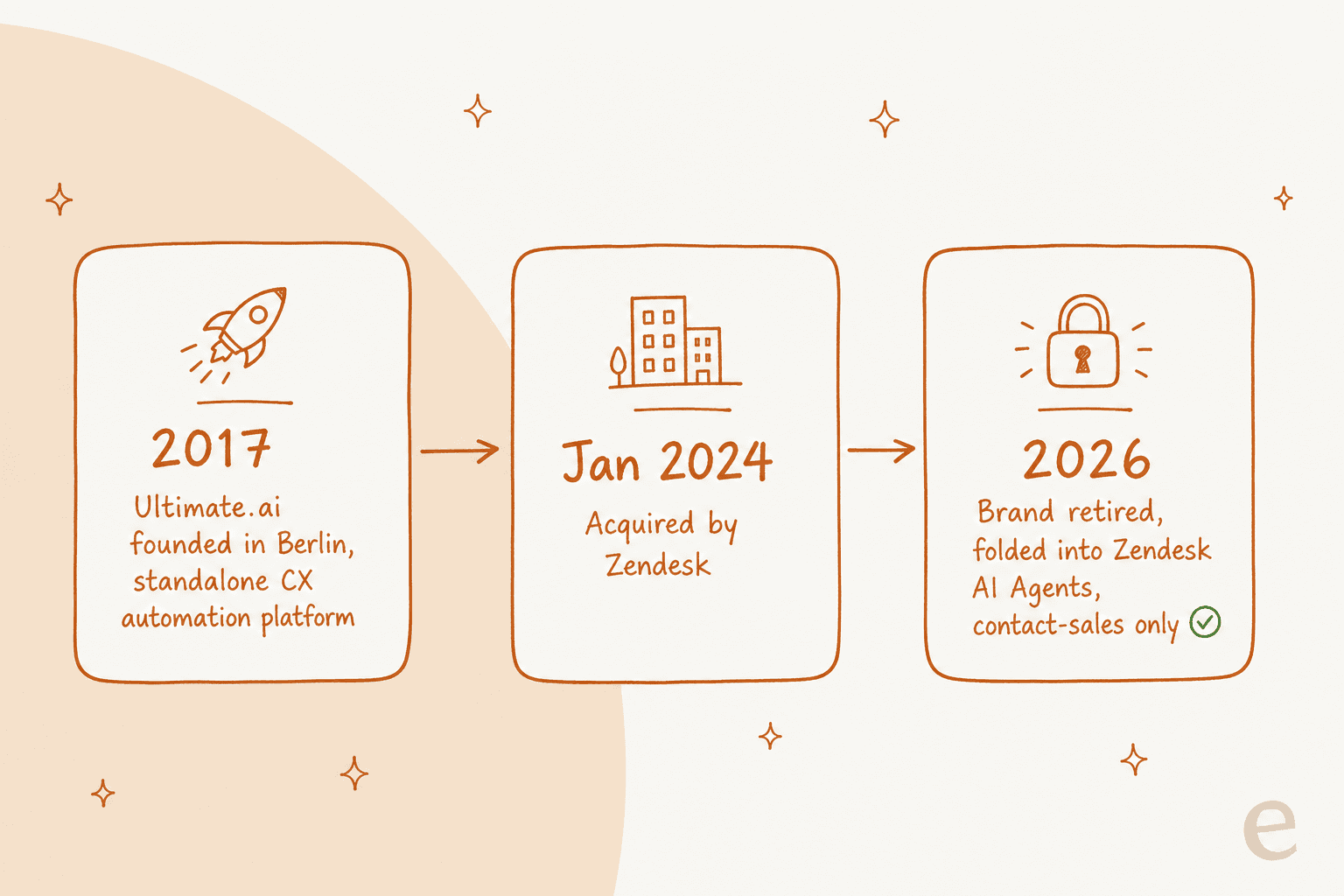
That reframing matters because the pains people had before the acquisition are the same ones that push them to look elsewhere now. From the r/Zendesk thread where buyers compared notes, three themes keep coming up.
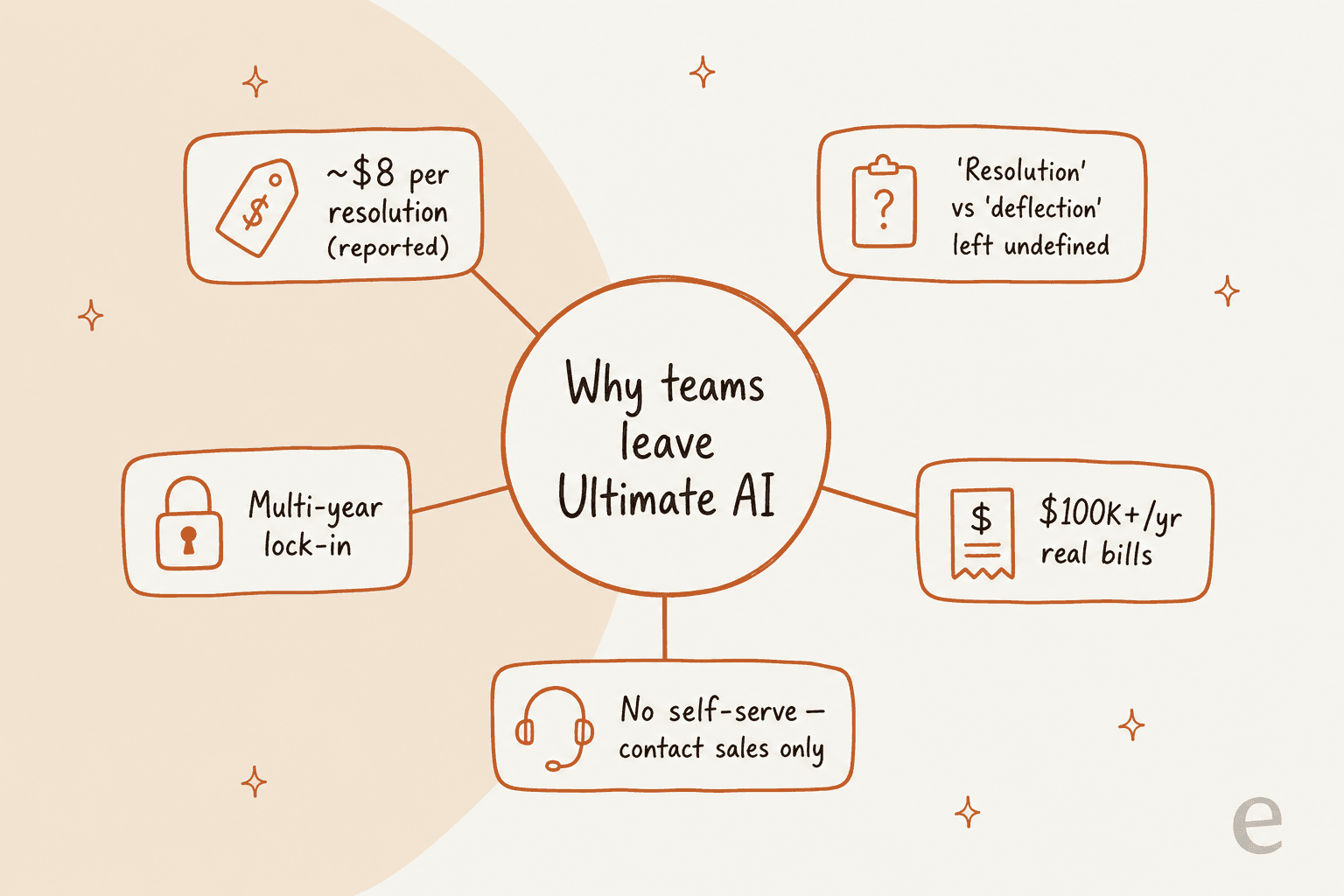
The pricing was opaque and expensive. Ultimate never published a rate card, and buyers had to drag the numbers out of sales. One team that ran a demo summed up the market rate:
"We went through a demo with Ultimate not too long ago. Having talked to a few service providers, ~$8 USD per resolution seemed to be the average."

Another buyer did the math after the fact and did not like what they found:
"Tried to get us to sign up for AI additions per agent at $50/user. It wasn't until we did our own research that I realized the automated resolution charge would cost us > $100k annually. So disappointed with their service."
The word "resolution" was a moving target. Because pricing was per resolution, the definition of a resolution was the price. Buyers warned each other to nail it down in the contract, because some vendors count a "resolution" when it is really just a deflection.
The contracts were long and the total cost crept. One commenter's rule of thumb has stuck with me: "for every $1 you spend on Zendesk, you spend another $3 on maintenance and ancillary tools." Multi-year lock-in plus per-resolution billing plus the maintenance tax is exactly the combination that sends people looking for a different model.
Here is where I will show my hand. I work on eesel AI, and we have spent the last few years putting AI agents on live support queues across thousands of real tickets. The scar that shaped how we build is watching a confident-sounding bot quietly give wrong answers, which is why we now simulate every rollout against a company's historical tickets before it ever talks to a customer. I am biased, but I have also sat on the buyer's side of exactly this decision, so the takes below are honest about where eesel fits and where it does not.
The 8 best Ultimate AI alternatives at a glance
Before the deep dives, here is the whole field side by side. I have focused on the dimensions that actually decide these deals: how you buy, whether you can see a price, how fast you go live, and whether you get locked in.
| Tool | Best for | Pricing model | Self-serve trial | Setup speed | Languages |
|---|---|---|---|---|---|
| eesel AI | Fast rollout without lock-in | From $299/mo (500 credits), no seat fee | Yes (100 free credits) | Minutes | 80+ |
| Zendesk AI Agents | Teams already standardized on Zendesk | Per automated resolution (not public) | Trial via Zendesk | Days to weeks | Broad |
| Decagon | Enterprise omnichannel + voice | Quote-only, by ticket volume | No | Weeks | Broad |
| Sierra | Large consumer brands | Outcome-based, quote-only | No | Weeks to months | Broad |
| Ada | Very high volume (300k+ convos/yr) | Quote-only, volume-based | No | Weeks | 50+ |
| Forethought | Multi-agent enterprise CX | Platform fee + outcome, quote-only | POV, not a free trial | Weeks | Broad |
| Gradient Labs | Regulated financial services | Pay per successful resolution, quote-only | No | Days to weeks | Broad |
| Yellow.ai | Enterprise voice + multilingual | Quote-only | No | ~4 months avg | 135+ |
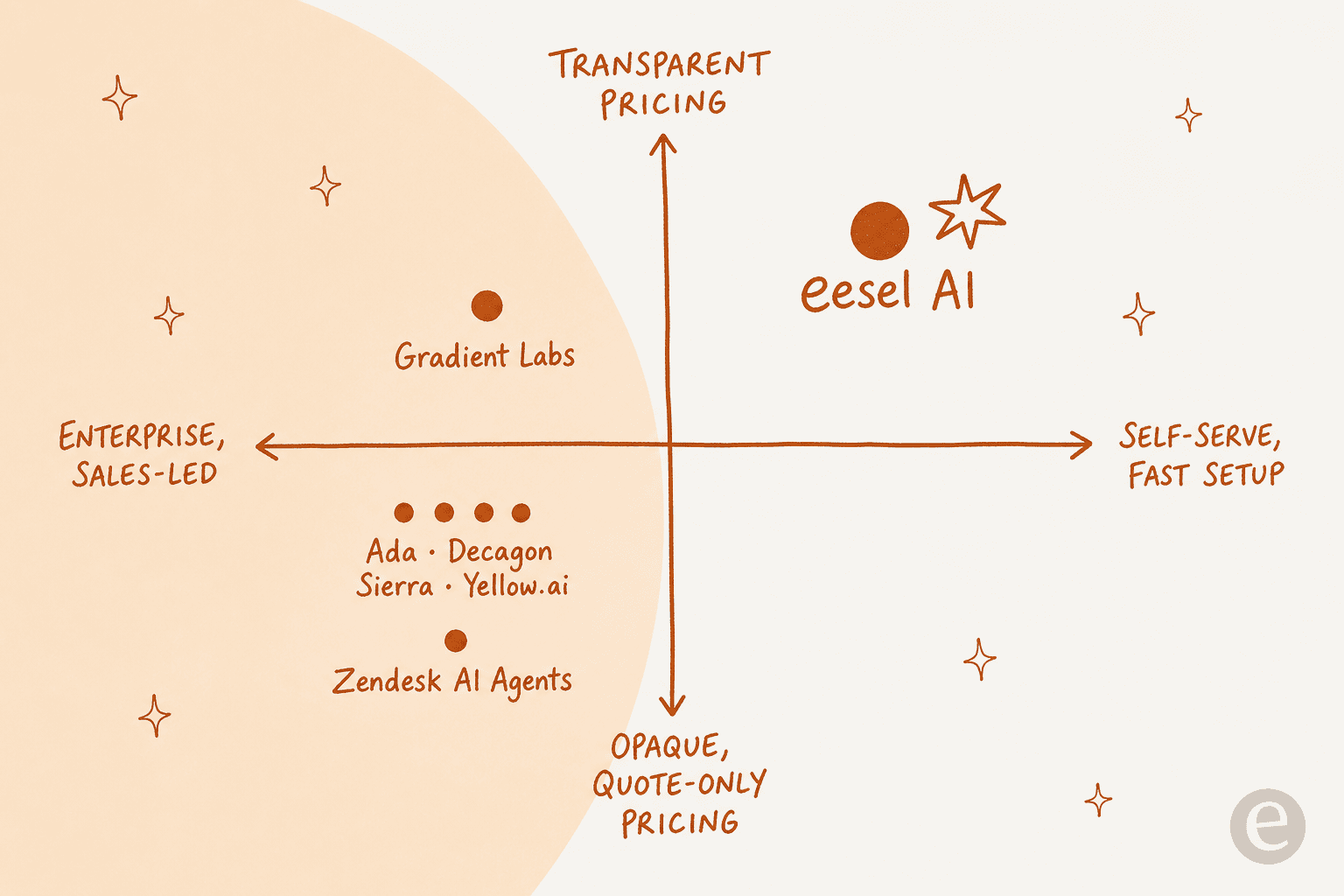
A pattern jumps out: almost everyone in the enterprise CX-agent category sells the exact way Ultimate did, through a sales rep, with no public number and a heavy implementation. If the thing that drove you off Ultimate was the buying experience, most of this list will feel familiar. The real fork is self-serve and transparent versus enterprise and quote-gated.
How I picked and ranked these
I weighted four things, in order:
- Resolution quality on real tickets, not demo-day theater. A bot that sounds great and answers wrong is worse than no bot.
- How you buy and what you pay. Transparent, published pricing beats "contact sales" for most teams, and it is the single biggest contrast with Ultimate.
- Time to value. Whether you can go live this week or need a quarter-long implementation.
- Lock-in. Whether the tool layers on your existing stack or pulls you into a new platform and a multi-year contract.
Now the tools.
1. eesel AI
Best for: teams that want a working AI agent on their existing helpdesk in minutes, priced per resolution, with no sales call and no lock-in.
eesel AI is the alternative I would reach for first if the Ultimate route (sales-led, per-resolution, multi-year) is exactly what you are trying to escape. Instead of a platform you migrate to, it is an autonomous AI agent that plugs into the helpdesk you already run: Zendesk, Freshdesk, Gorgias, Help Scout, and 100+ more. You brief it in plain language, point it at your knowledge (docs, past tickets, help center), and it starts resolving tier-1 tickets.

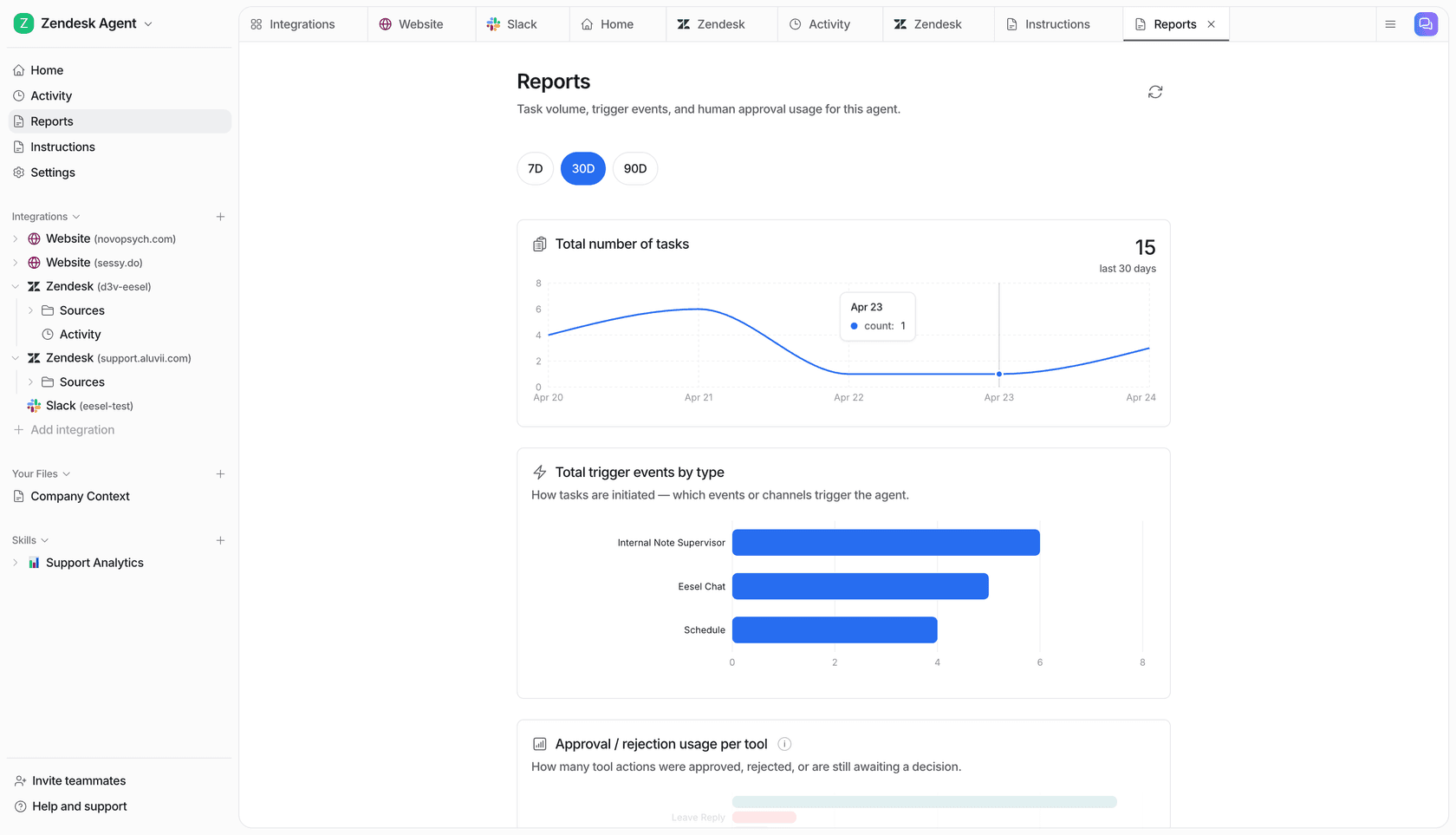
The differentiator that matters most for anyone burned by opaque AI is the simulation mode. Before the agent replies to a single real customer, you run it against thousands of your historical tickets to see exactly what it would have said and what your resolution rate would be. That is the direct answer to the "GPT is only as good as your knowledge base" worry that Ultimate buyers kept raising on Reddit. You find the gaps in a sandbox, not in production.
Pros:
- Transparent monthly pricing: from $299 for 500 credits (1 credit per ticket or chat), no per-seat fee, no platform fee. You can calculate your bill before talking to anyone.
- Self-serve setup in minutes on your current stack, so there is no migration and no rip-and-replace.
- Simulation over historical tickets means you forecast resolution rate before go-live.
- Real results: Gridwise hit 73% tier-1 resolution in the first month, and Smava runs eesel on 100,000+ tickets a month.
Cons:
- It is not a full ticketing system. eesel layers on your helpdesk rather than replacing it, so you keep (and pay for) that helpdesk.
- The heaviest enterprise voice-contact-center scenarios are better served by voice-first specialists on this list.
My take: if you left Ultimate to get away from sales calls, six-figure minimums, and multi-year contracts, eesel is the cleanest break. It is the pick for teams that want to try before they buy and prove the resolution rate on their own data first. Enterprises that need a dedicated voice contact center should read on.
2. Zendesk AI Agents (formerly Ultimate)
Best for: organizations already standardized on Zendesk that want the Ultimate technology in-platform.
This is where Ultimate actually went, so it belongs on any honest list. Zendesk AI Agents is the autonomous resolution layer built on the technology Zendesk bought from Ultimate. If your whole support org already lives in Zendesk, the tightest integration with Ultimate's DNA is, unsurprisingly, Zendesk itself.
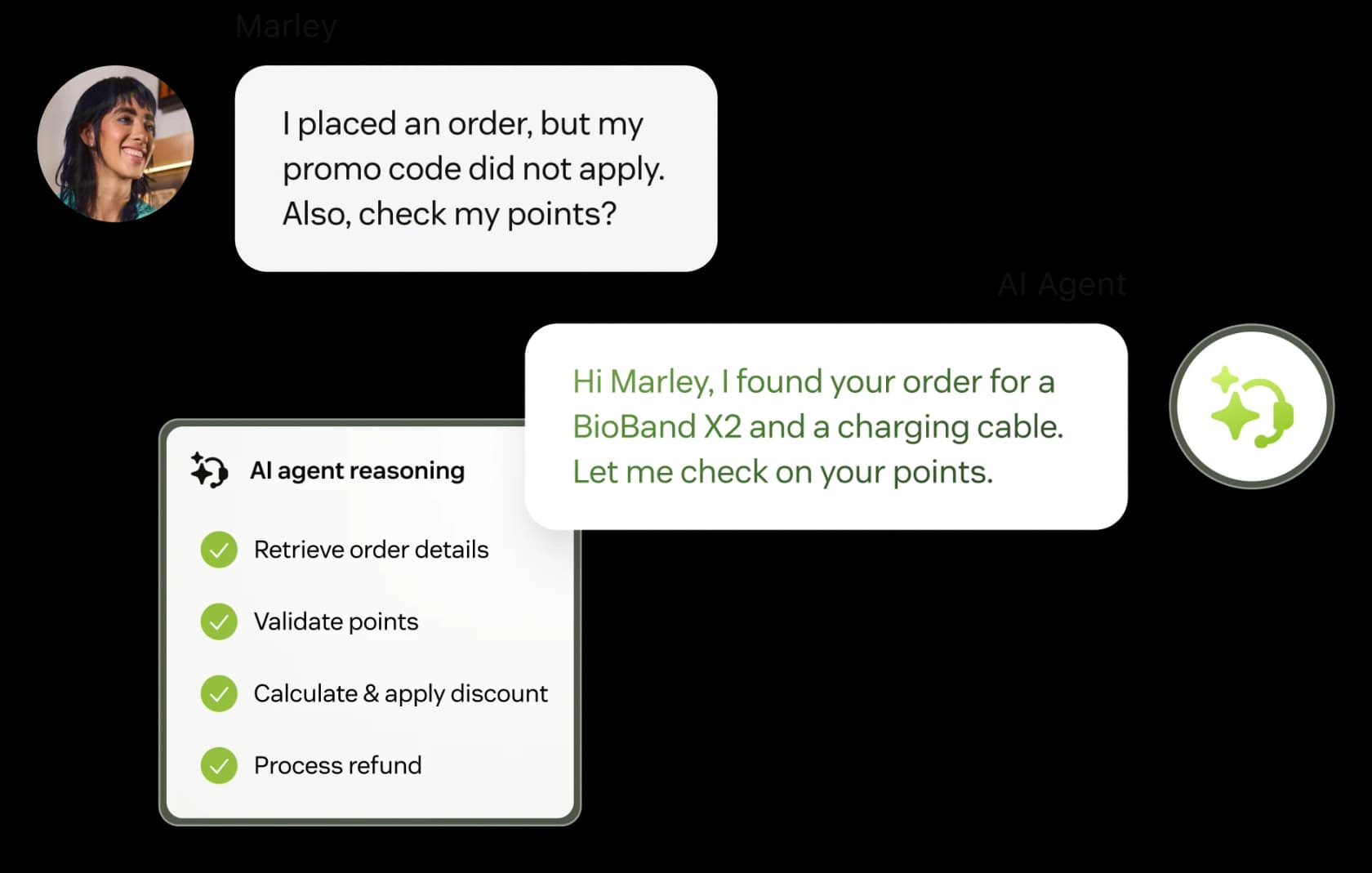
The catch is that everything people disliked about Ultimate's commercial model is now Zendesk's model. AI agents are billed by automated resolutions over your plan allowance, and the per-resolution dollar figure is still not published. You are also stacking that on top of Zendesk seats: Suite Team at $55 per agent per month, Suite Professional at $115, plus add-ons like Copilot at $50 per agent. For the full breakdown, our Zendesk pricing guide walks through every tier.
Pros:
- Deepest possible integration if Zendesk is already your system of record.
- Inherits Ultimate's mature resolution technology and multilingual reach.
- One vendor, one bill (which some enterprises genuinely prefer).
Cons:
- Per-resolution pricing is still opaque and sits on top of per-agent seat costs.
- You are committing further to Zendesk and its multi-year contracts.
- If you were leaving Ultimate over lock-in, this deepens it rather than fixing it.
My take: a reasonable default only if you are committed to Zendesk for the long haul. If you are on Zendesk but want AI without deeper lock-in, note that layered agents like eesel run on top of Zendesk too, so this is not your only in-Zendesk option. See our roundup of the best AI for Zendesk for the head-to-head.
3. Decagon
Best for: enterprises that need one AI agent across chat, voice, email, and SMS with heavy governance.
Decagon is one of the hottest names in enterprise CX automation, and the funding tells the story: a Series D in January 2026 of $250M at a $4.5B valuation, up from $1.5B just seven months earlier. Its wedge is Agent Operating Procedures, natural-language instructions that compile into executable code, plus a genuinely omnichannel runtime.
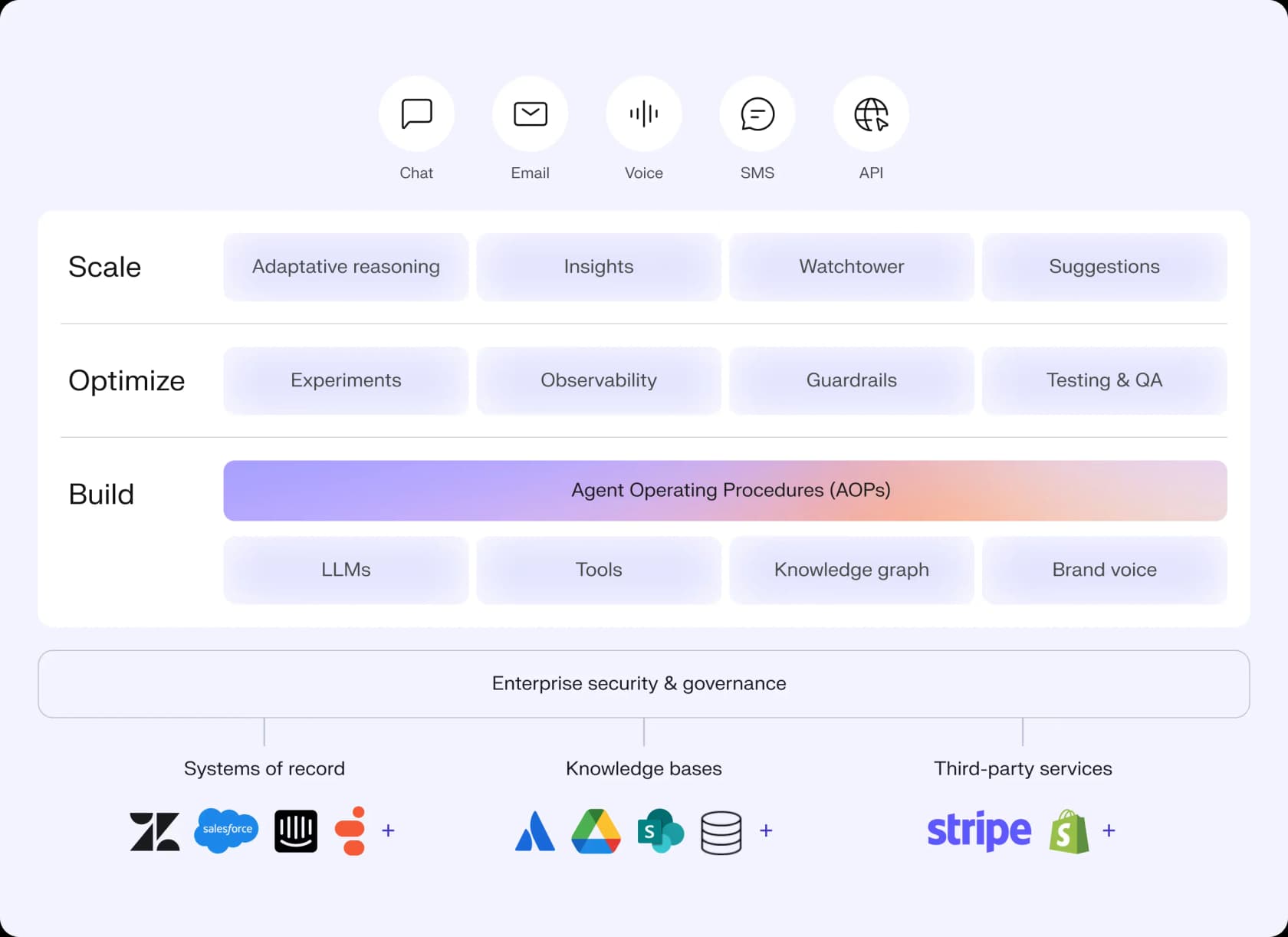
The customer roster is unusually brand-heavy for a company this young, with published results like Chime at 70% chat and voice resolution and Duolingo at 80% deflection after replacing a previous vendor.
Pros:
- True omnichannel including a strong voice product, which many Ultimate replacements lack.
- Enterprise-grade guardrails, observability, and QA tooling.
- Proven at scale with recognizable fintech and consumer brands.
Cons:
- No public pricing; every path routes to a demo, gated by a monthly-ticket-volume dropdown.
- Clearly aimed at mid-market-to-large enterprise, so smaller teams will feel out of segment.
- Same "talk to sales" buying experience you may be leaving Ultimate to avoid.
My take: an excellent Ultimate replacement for large enterprises, especially if voice is in scope. It is not the pick if you want to see a price or go live without a project team. Our full Decagon breakdown goes deeper.
4. Sierra
Best for: large consumer brands that want a premium, outcome-priced agent and can run an enterprise implementation.
Sierra is the enterprise-only, AI-first platform from Bret Taylor (former co-CEO of Salesforce, current OpenAI board chair) and Clay Bavor. It has raised at a scale that dwarfs the rest of this list, most recently a $950M round in May 2026 at a $15.8B valuation, and says its agents power billions of interactions for over 40% of the Fortune 50.
Sierra's model is outcome-based pricing, so you largely pay when the agent actually resolves something. That is philosophically closer to what buyers wanted from Ultimate, but it is wrapped in an enterprise-only motion.
Pros:
- Outcome-based pricing aligns cost with resolutions, not seats.
- Very strong at complex, brand-sensitive consumer support and retention.
- Deep pockets and a heavyweight founding team behind the roadmap.
Cons:
- Enterprise-only with no self-serve and no public rate card.
- Overkill (and likely over budget) for small and mid-size teams.
- Implementation is a project, not an afternoon.
My take: if you are a large consumer brand that wants the most-hyped agent in the category and can support a real rollout, Sierra earns the look. Everyone else will find the outcome-priced model attractive but the enterprise gate limiting. More in our Sierra deep dive.
5. Ada
Best for: very high-volume enterprises (300,000+ conversations a year) that want a dedicated AI agent layer over their helpdesk.
Ada is a Toronto-based platform that brands its category as Agentic Customer Experience. Like eesel, it is a standalone AI agent layer that sits on top of helpdesks like Zendesk, Salesforce, and Freshworks rather than being one. Unlike eesel, it is firmly enterprise: Ada's own pricing page states it is "a great fit for companies with at least 300,000 annual customer service conversations."
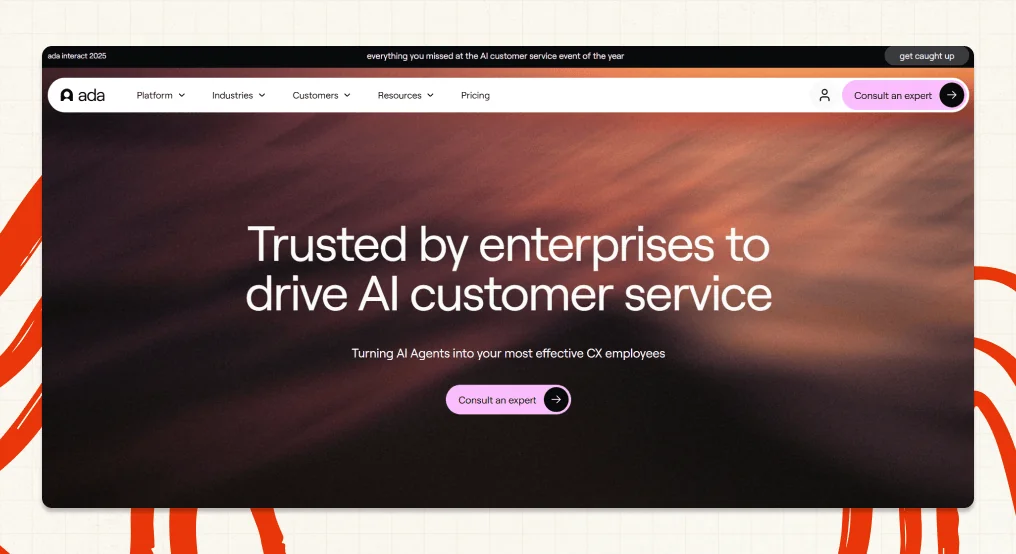
Ada leans on a multi-LLM Reasoning Engine and publishes strong customer numbers, like Monday.com cutting average handle time 42%.
Pros:
- Layered architecture means no full platform migration.
- Genuinely built for massive volume and omnichannel delivery.
- Strong enterprise security posture and a services wrap for rollout.
Cons:
- The 300k-conversation floor rules out most SMB and lower mid-market teams outright.
- No public pricing, no free trial, no self-serve signup.
- A services-heavy operating model, not a plug-in-and-go tool.
My take: for enterprises at Ada's volume, it is a credible, mature Ultimate alternative. If you are under that conversation floor, it is simply not built for you, and a self-serve layered tool will get you live far faster. Full context in our Ada overview.
6. Forethought
Best for: enterprise support orgs that want a multi-agent system spanning triage, resolution, and agent assist.
Forethought pitches itself not as a single chatbot but as a multi-agent CX automation system: Solve (the customer-facing agent), Assist (an agent copilot), Discover (insights), plus Triage and Agent QA, all running on an Autoflows reasoning engine. Its headline marketing claims are 15x average ROI and "up to 98%" resolution, which are vendor self-reported figures worth verifying against your own data.
Pros:
- Genuine breadth: customer-facing resolution, agent assist, triage, and QA in one system.
- Autoflows run action-based workflows, not just FAQ answers.
- Wide helpdesk connectivity, with 70+ integrations.
Cons:
- Quote-only pricing: a blend of platform fee plus outcome-based cost, with no public number.
- A Proof of Value engagement rather than a true self-serve free trial.
- Heavy reliance on deflection-rate framing, which is a vanity metric unless it is tied to CSAT.
My take: a strong fit if you specifically want the multi-agent spread (assist and QA alongside resolution) and have the budget for an enterprise engagement. If all you need is high-quality tier-1 resolution on your existing helpdesk, it is more platform than the job requires. See our Forethought writeup for detail.
7. Gradient Labs
Best for: regulated financial services teams that need an agent that resolves rather than deflects.
Gradient Labs is the most vertically focused option here. Its agent, Otto, is built for regulated financial services (disputes, KYC, collections, lending, insurance claims), founded in London in 2023 by ex-Monzo AI and data leads. The positioning is refreshingly blunt: "we handle what others hand off," meaning full resolution, not deflection.
The results it publishes are among the most credible on this list, with 80 to 90% peak resolution rates and most deployments starting above 50% resolution on day one.
Pros:
- Deep specialization in regulated, high-stakes financial workflows.
- Pay only for successful resolutions, with no platform fee and no per-seat charge, which is the most Ultimate-fixing pricing philosophy in the group.
- Reports very high CSAT, in some deployments outperforming human teams.
Cons:
- Vertical focus means it is not the pick for general e-commerce or SaaS support.
- Still contact-sales, with the rate set in a conversation.
- Younger company with a narrower customer base than the giants.
My take: if you are a fintech, bank, or insurer, Gradient Labs may fit better than any generalist here, and its outcomes-only pricing is exactly what soured Ultimate buyers were asking for. Outside regulated finance, look elsewhere. Our Gradient Labs guide covers the specifics.
8. Yellow.ai
Best for: enterprises that want Ultimate's original pitch, multilingual voice-and-chat automation at global scale.
If any tool here is the spiritual successor to Ultimate's "24/7 support in 100+ languages" story, it is Yellow.ai. It is an enterprise agentic platform spanning voice, chat, and email, with a flagship VoiceX product, support for 135+ languages, and 1,300+ brands across 85+ countries. Gartner named it a Challenger in its 2023 Magic Quadrant for enterprise conversational AI.
Pros:
- Very broad multilingual and omnichannel coverage, closest to Ultimate's global pitch.
- Strong no-code builder and a mature voice product.
- Deep enterprise compliance (SOC 2 Type II, ISO 27001, HIPAA, PCI-DSS, GDPR).
Cons:
- The recurring complaint is implementation time; G2's own data shows roughly a four-month average time to implement.
- Quote-only pricing, described by reviewers as hard to justify against leaner tools.
- Powerful but heavy, so expect a real project to stand it up.
My take: the best like-for-like replacement if you specifically loved Ultimate's multilingual, voice-plus-chat, enterprise scope. Just go in eyes open about the long implementation, and weigh it against a faster-to-live option if speed matters. More in our Yellow.ai overview.
So which Ultimate AI alternative should you pick?
Strip away the funding headlines and your shortlist comes down to how you want to buy and how fast you want to go live.
- If you want to skip the sales call, see a price, and prove it on your own tickets, pick eesel AI. It is the cleanest break from the Ultimate model.
- If you are married to Zendesk, Zendesk AI Agents is the path of least resistance (with the most lock-in).
- If you are a large enterprise that needs voice and omnichannel, look hard at Decagon or Sierra.
- If you run very high volume, Ada is built for it.
- If you are in regulated finance, Gradient Labs is worth a call.
- If Ultimate's multilingual global scope was the draw, Yellow.ai is the nearest match.
The one thing I would not do is replace an opaque, locked-in contract with another opaque, locked-in contract without first proving the resolution rate on your real data. That test is free and fast with a layered, self-serve tool, and it tells you more than any demo will.
Try eesel AI
If the reason you are reading this is that Ultimate turned into a Zendesk contract with a per-resolution bill you cannot see, eesel AI is built to be the opposite. It drops onto the helpdesk you already run, from Zendesk to Freshdesk to Gorgias and Help Scout, and you can go from signup to a working AI agent in minutes, not a quarter.
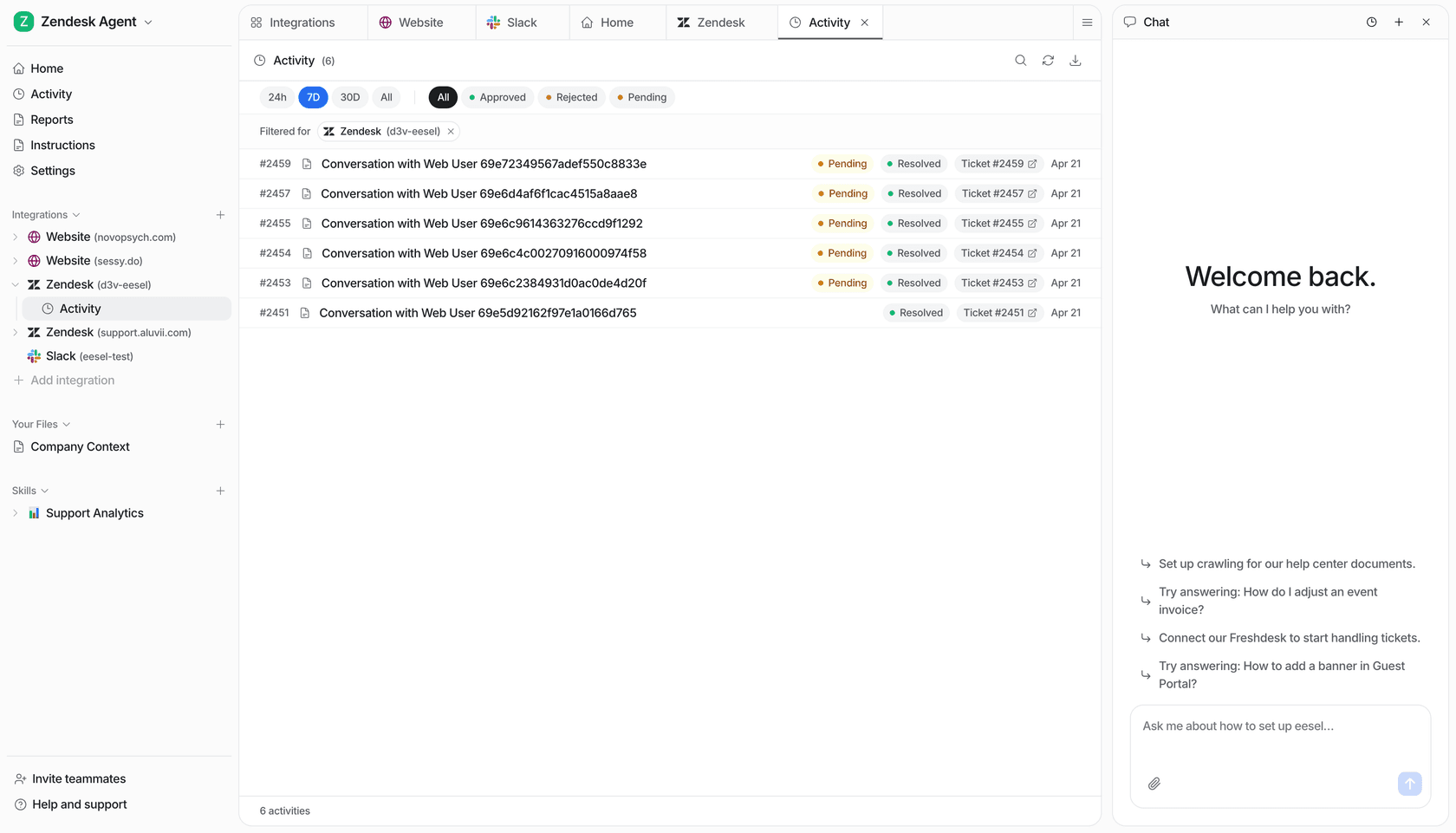
The part that would have saved a lot of the Reddit buyers grief: you simulate the agent against thousands of your past tickets first, so you see the exact resolution rate and every reply before a customer does. Pricing is one fixed monthly price from $299 for 500 credits with no seat fees, and you can start free with 100 credits, no credit card. That is the whole pitch: prove it works, then pick a plan sized to your volume. Try eesel.