9 best Replicant alternatives and customer service AI competitors 2026

Kurnia Kharisma

Katelin Teen
Last edited October 6, 2026
Why teams look past Replicant
Let me be fair to Replicant first, because it earns its reputation. It automates voice, chat, and SMS end to end, claims to resolve up to 80% of customer service conversations, and its architecture pairs LLMs with deterministic, code-based guardrails so business rules sit outside the model. Reviewers consistently praise how human the voice sounds and how hands-on the delivery team is. On G2 it holds a 4.7 out of 5 across 45 reviews. It is a real product, not vaporware.
The reasons people start looking elsewhere are almost always the same three, and none of them are about quality.
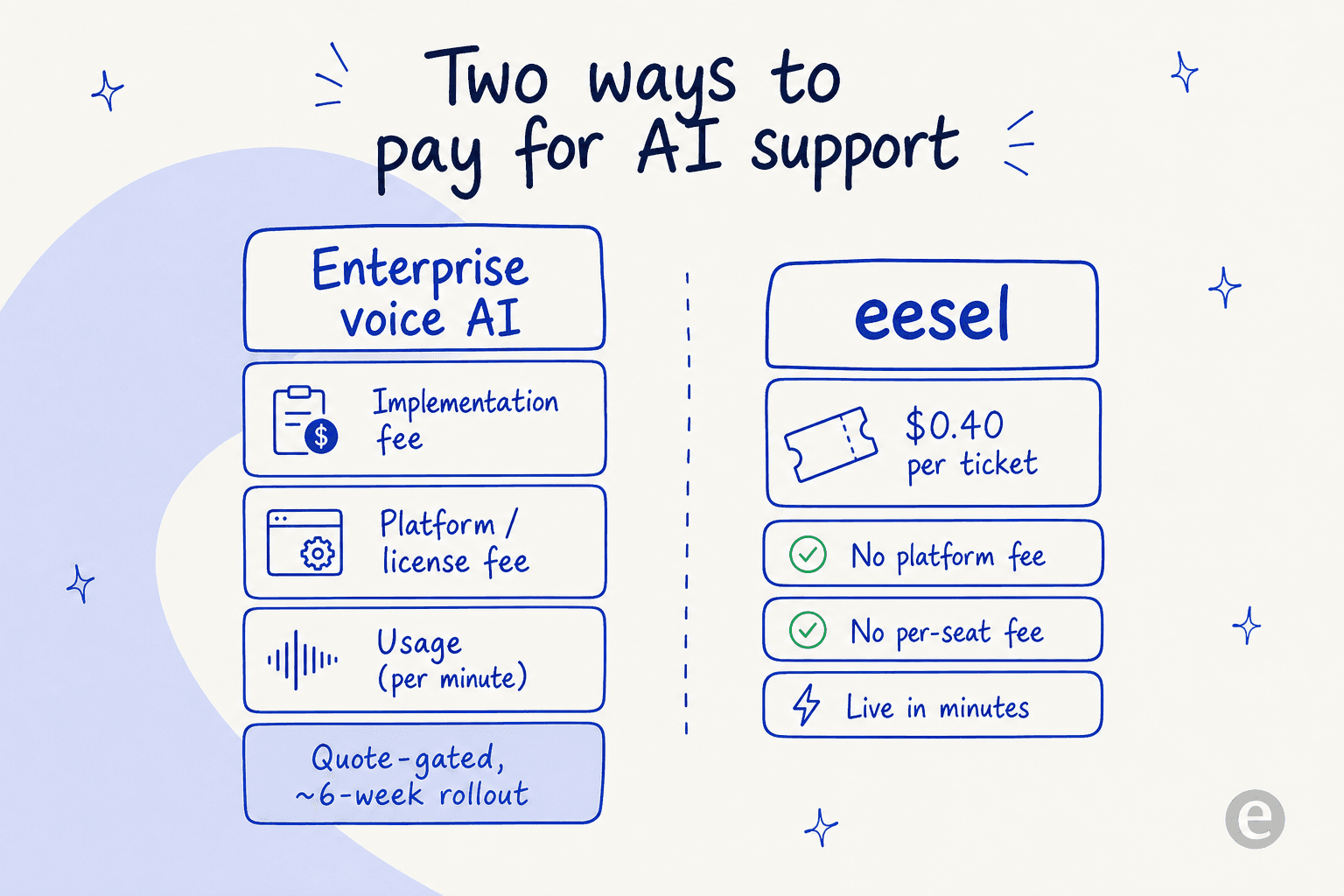
First, the pricing is opaque. Replicant's pricing page is a "request pricing" form. There is no per-minute rate, no plan tiers, nothing you can model in a spreadsheet before a sales call. Independent reviews describe an implementation fee, plus a platform fee, plus usage tied to productive minutes, and flag the whole thing as expensive and hard to predict.
Second, the rollout is heavy. A testable agent in an hour sounds great, but reviewers report most real deployments take closer to six weeks, and meaningful changes route back through Replicant's team rather than something you can self-serve. As one reviewer put it plainly:
"Changes are in the hands of the Replicant team only."

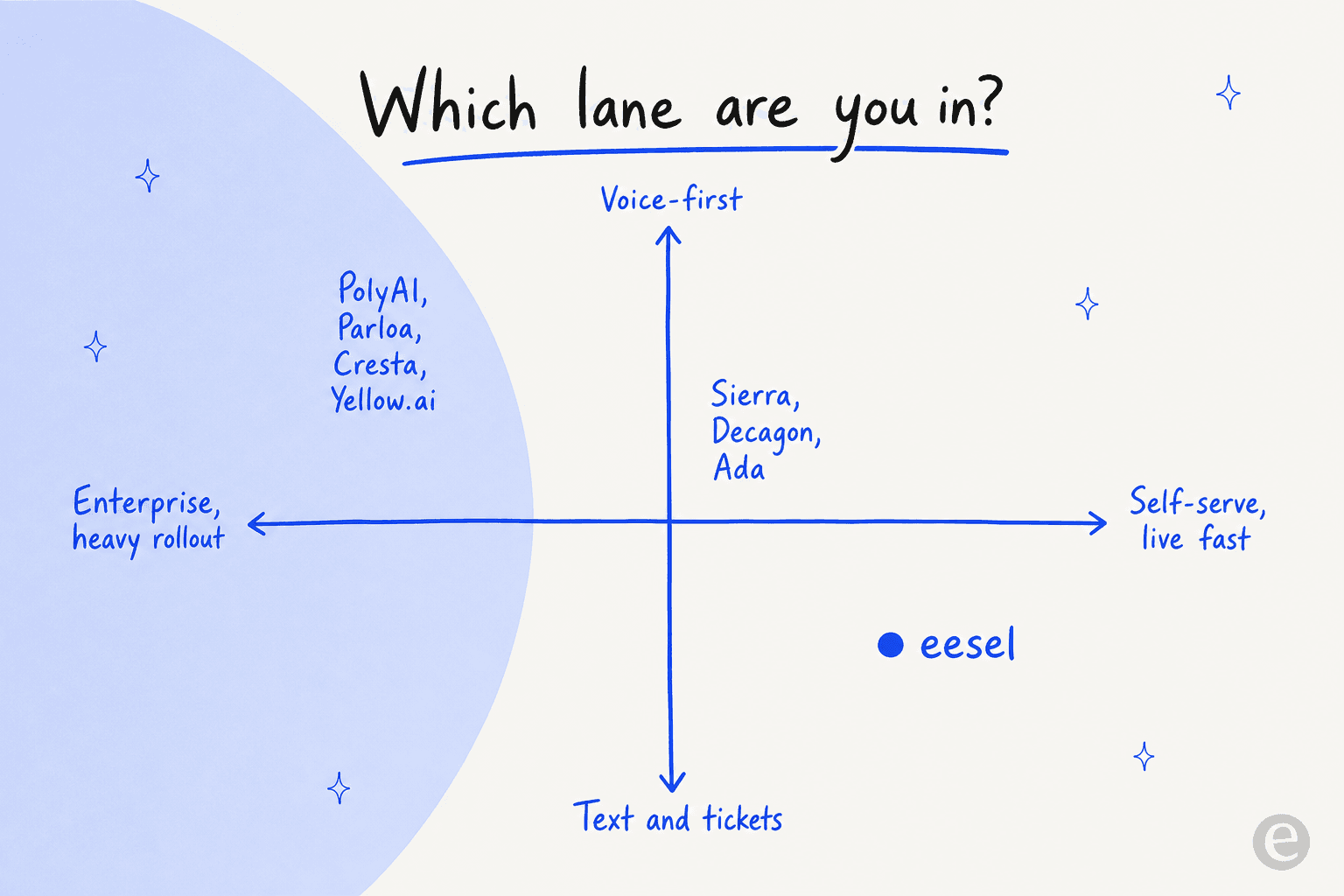
Third, it is voice-first and enterprise-only. If your support runs mostly through a helpdesk with tickets and chat, you would be buying a phone system to solve an email problem.
So the right alternative depends entirely on which lane you are in. Here is the map I keep in my head.
How I picked these nine
I kept the list to tools that genuinely compete with Replicant on the job it does: automating real customer conversations, not just deflecting FAQs. For each one I looked at the channels it covers, the pricing model (and whether you can even see a number), how long a realistic deployment takes, whether there is a self-serve path, and the security posture enterprise buyers actually ask about. If you want the wider view, we keep a running list of the best tools for customer service automation too. Where I could, I leaned on what real users say on G2, Capterra, and Reddit rather than the marketing copy.
Here is the whole field at a glance.
| Tool | Best for | Channels | Pricing model | Self-serve trial | Time to deploy | Compliance |
|---|---|---|---|---|---|---|
| eesel AI | Fast helpdesk automation | Chat, email, tickets, Slack | From $299/mo (500 credits) | Yes (100 free credits) | Minutes to hours | SOC 2, GDPR, HIPAA on request |
| PolyAI | Human-sounding phone lines | Voice | Per-minute, quote only | No | Weeks | SOC 2, HIPAA, PCI DSS, GDPR |
| Sierra | Outcome-based enterprise CX | Chat, voice, SMS, email, WhatsApp | Outcome-based, quote only | No | Weeks | SOC 2, ISO 27001, ISO 42001, HIPAA |
| Decagon | AI-native omnichannel | Chat, voice, email, SMS, API | Quote only, volume-based | No | Weeks | SOC 2 (Trust Center) |
| Ada | AI layer over a helpdesk | Voice, chat, email, social | Quote only, per-resolution | No | Weeks | SOC 2, HIPAA, AIUC-1 |
| Cresta | Coaching human agents | Voice, chat | Quote only (~$150k/yr floor) | No | Weeks | SOC 2, HIPAA, PCI DSS |
| Parloa | European enterprise voice | Voice, chat | Quote only | No | 1-3 months | SOC 2, ISO 27001, HIPAA, PCI DSS |
| Yellow.ai | Global multilingual scale | Voice, chat, email | $0.99/resolution, then quote | Limited | ~4 months (avg) | SOC 2, ISO 27001, HIPAA, PCI DSS |
| NiCE Cognigy | Voice and chat contact centers | Voice, chat, messaging (30+ channels) | Quote only | Yes (evaluation trial) | Not published | SOC 2, ISO 27001, ISO 42001, HIPAA, PCI DSS |
A pattern jumps out of that table: eight of the nine hide their pricing behind a sales call, and most measure deployment in weeks or months. That is the real dividing line, and it is worth seeing in one picture before we get into each tool.
Now the tools themselves.
1. eesel AI: best for fast helpdesk automation, one fixed monthly price

Best for: support teams whose volume is chat, email, and tickets, who want AI live this week without a procurement cycle.
I build eesel, so read this section with that in mind. But the reason it leads the list is not loyalty, it is that it answers the exact complaints that push people off Replicant: opaque pricing, long rollouts, and control living with the vendor.
eesel AI is an AI teammate that plugs into the helpdesk you already run, learns from your past tickets and help docs on day one, and starts drafting or fully resolving tickets. It is not a phone system. It is the fast, self-serve option for teams whose problem is a growing ticket queue rather than an inbound call center.
Features. It connects to Zendesk, Freshdesk, Gorgias, HubSpot, Front, Slack, and 100-plus other tools, and answers in 80-plus languages. The piece I would point a nervous buyer to is simulation mode: before anything goes live, you run the agent against thousands of your historical tickets to see exactly what it would have said, where it would have resolved, and where it would have stayed quiet. We built that because we have watched confident-sounding bots give wrong answers, and simulating against real history is the only honest way to know your coverage before customers see it. Confidence-based routing then keeps low-certainty questions as drafts instead of live replies, so you grant autonomy gradually.
Pros. You can start for free and be live in an afternoon, not a quarter. Pricing is transparent and fixed monthly. You keep control: setup and tuning happen through a natural-language chat you run, not a ticket to a delivery team. And because it trains on solved tickets, not just help-center articles, it tends to outperform native helpdesk AI on the messy real questions.
Cons. It is not a voice-first product. If your core problem is automating inbound phone calls at enterprise scale, a dedicated voice platform like PolyAI or Parloa is the better tool, and I will say so below. eesel shines on text and tickets.
Pricing. One fixed monthly price, from $299/month for 500 credits (1 credit per ticket or chat, however long), with no platform fee and no per-seat fee. The free plan gives you 100 credits with no credit card. SSO and MFA are an add-on from $199/month, and HIPAA is available on request. We have seen this land: Gridwise resolved 73% of tier-1 requests in the first month, with results showing up inside a 7-day trial, and Smava runs a fully automated agent on more than 100,000 German-language tickets a month.
Verdict: the right pick if your support lives in a helpdesk and you want proof before you pay. Skip it if your only channel is the phone. For everyone else weighing a heavyweight voice contract against getting AI answering tickets tomorrow, this is the pragmatic choice.
2. PolyAI: best for human-sounding phone lines

Best for: high-volume enterprise contact centers whose main channel is inbound phone and who care most about how the AI sounds.
If you are replacing Replicant like-for-like on voice, PolyAI is the first name I would put on the shortlist. It is a voice-first platform built by Cambridge machine-learning researchers, and its whole pitch is that it runs its own proprietary models rather than wrapping someone else's.
Features. PolyAI answers inbound calls and holds genuinely complex conversations, fraud, outage triage, multilingual disputes, not just simple deflection. Its flagship model, Raven, is trained on more than a billion enterprise conversations, and there are two build surfaces: a no-code agent builder and a developer kit. This is the same category as Zendesk's voice AI agents, but done at a much deeper, dedicated level.
Pros. The voice quality is its standout, and customers say so directly:
"PolyAI rose to the top because of how authentic their voices sounded and how adaptive the technology was. It didn't sound robotic, it sounded like one of our own agents."
Compliance is strong out of the box (SOC 2, HIPAA, PCI DSS, GDPR), and it carries a 99.9% uptime SLA on phone lines.
Cons. It is phone-only, so it does nothing for a chat or ticket queue. Pricing is per-minute and quote-gated with no self-serve trial, and G2's review count is tiny (about 12 reviews), so there is little independent sentiment to lean on.
Pricing. No public rate. It is enterprise, per-minute billing arranged through a demo, with third-party estimates in the six figures a year. PolyAI raised a $50M Series C in 2024 and has continued to raise since, so it is well capitalised for the long haul.
Verdict: the closest true swap for Replicant if voice is your world and voice naturalness is the deciding factor. Not the tool if you need chat, email, or a price you can see without a sales call.
3. Sierra: best for outcome-based enterprise CX
Best for: large enterprises that want the AI vendor to put its own money on the line through outcome-based pricing.
Sierra is the most-hyped name in this category, co-founded by former Salesforce co-CEO Bret Taylor and ex-Google Labs lead Clay Bavor. It is AI-agent-native: the agent is the product, and it takes actions against systems of record across chat, voice, SMS, email, and even ChatGPT.
Features. Its wedge is Ghostwriter, an agent that builds agents from your SOPs and transcripts, which collapses the long implementation cycles competitors need. It ships both a no-code studio and an Agent SDK, and it is one of the few vendors leading with ISO 42001, the AI-management-system standard, on top of SOC 2 and HIPAA.
Pros. Elite founding team and backing, deep action-taking agents proven at Fortune 50 scale, and pricing that aligns the vendor with your results. The scale of investor conviction is hard to ignore:
"Sierra is raising $950 million from new and existing investors, led by Tiger Global and GV, at a valuation of over $15 billion."
Cons. It is enterprise-only, and reviewers flag that the total cost is genuinely hard to evaluate and that setup can get complex. On G2 it sits around 4.1 to 4.3 across only 17 reviews, with "expensive and hard to evaluate long-term cost" as a recurring dislike.
Pricing. Outcome-based: you pay when the agent achieves a defined result. There is no public rate card, and Sierra itself admits the model only works cleanly for highly autonomous, highly attributable work. See our full breakdown of Sierra AI pricing for how that plays out.
Verdict: a serious choice for a Fortune 500 buyer who wants incentive-aligned pricing and can absorb a long, six-figure engagement. Overkill for mid-market teams, and there is no way to try before you commit. If it is on your shortlist, our Sierra vs Cresta breakdown is a useful next read.
4. Decagon: best for AI-native omnichannel
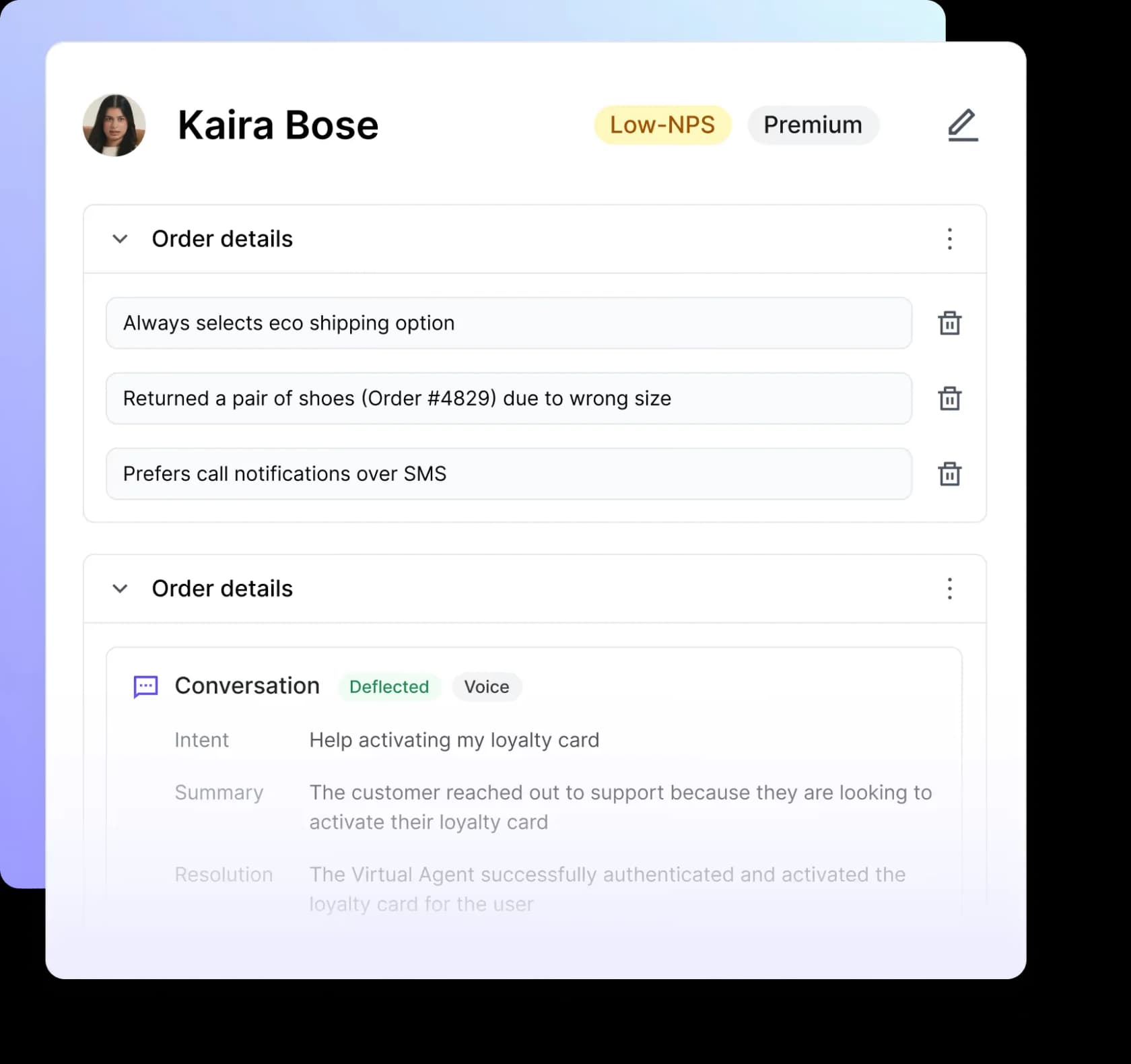
Best for: teams replacing a brittle bot with one agent that behaves the same across chat, voice, email, and SMS.
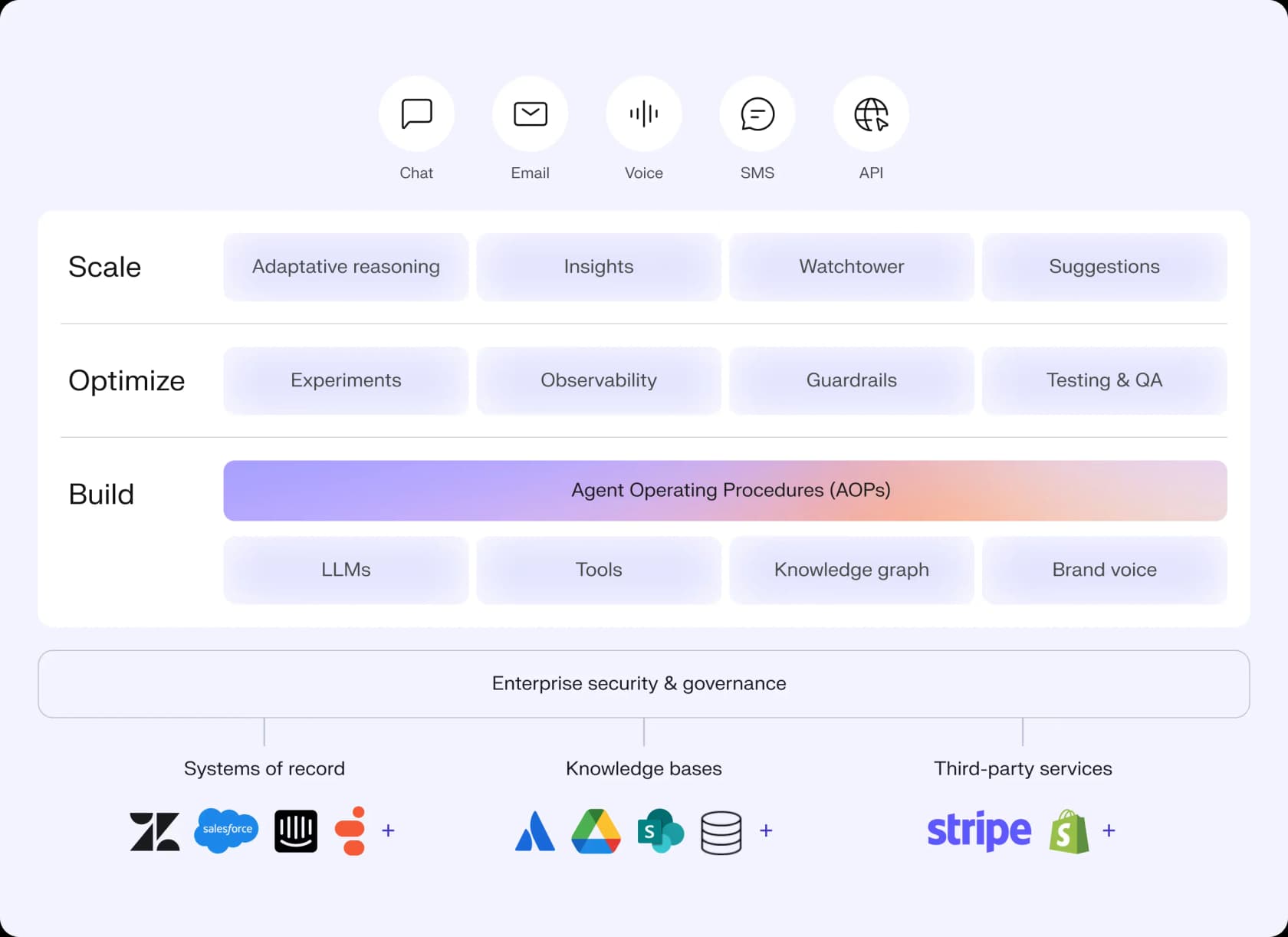
Decagon is another AI-native platform, and its technical hook is Agent Operating Procedures: natural-language instructions that compile into executable code, so CX operators can author agent logic while engineers keep the guardrails.
Features. One runtime deploys to chat, voice, email, SMS, and custom API surfaces with shared memory. Its tooling covers testing via simulated conversations, live A/B testing across agent versions, Watchtower for real-time response auditing, and automatic knowledge-base article suggestions, close to the kind of knowledge-base upkeep support teams usually do by hand.
Here is how it thinks about the build-optimize-scale stack:
Pros. Strong stated outcomes and marquee logos. The clearest signal is a customer describing the switch away from an older vendor:
"With the previous vendor, at least half my week was dedicated to maintaining their system. With Decagon, it's been a night-and-day difference."
Cons. Heavy upfront engineering to set up, limited visibility into agent decisions early on, and no self-serve trial. The demo form brackets you by monthly ticket volume, which tells you the ICP is mid-market and up.
Pricing. Fully quote-gated; the /pricing URL is a 404. Customers choose per-conversation or per-resolution billing. Decagon raised a $131M Series C at a $1.5B valuation in mid-2025, then a $250M Series D that tripled its valuation to $4.5B in early 2026, a sign of how hot this category is. Our Decagon pricing guide digs into the model, and if it is on your list, so is our roundup of Decagon alternatives.
Verdict: a strong pick if you want true omnichannel parity from a single agent and have the engineering time to invest. Not for teams that need to see a price or go live fast. Comparison shoppers should also read Decagon vs Sierra.
5. Ada: best for an AI layer over your existing helpdesk
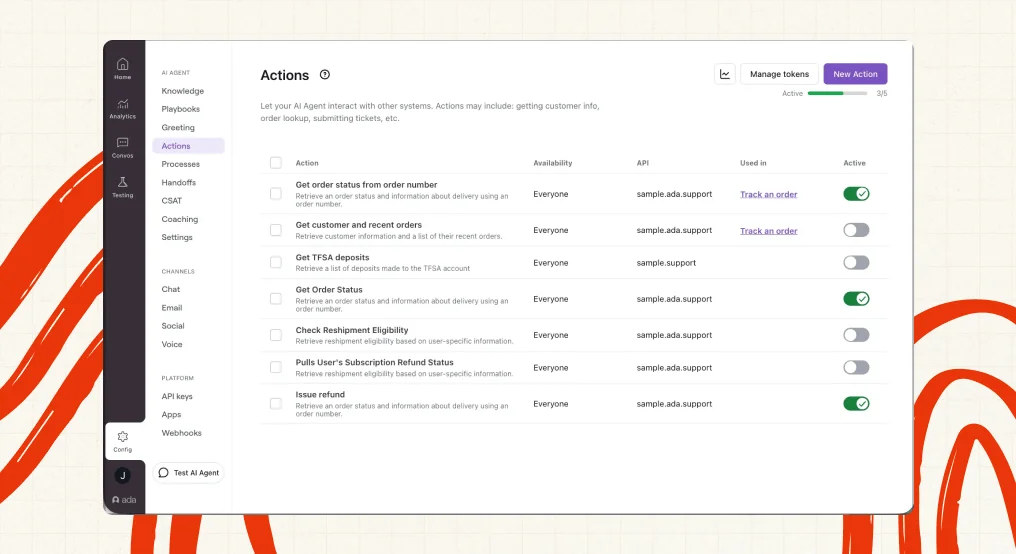
Best for: large enterprises that want a standalone AI agent sitting on top of Zendesk, Salesforce, or Freshworks rather than a rip-and-replace.
Ada brands its category as Agentic Customer Experience, and the architecture is the point: it is not a feature inside a helpdesk, it is an AI layer that integrates with whatever helpdesk you already run. Our full Ada CX review goes deeper, but the essentials are here.
Features. A multi-LLM Reasoning Engine orchestrates across models, and the platform runs voice, email, chat, and social from one place in 40-plus languages. Playbooks let the agent reason through multi-step SOPs, and Coaching lets you review past conversations and have the agent apply the notes automatically.

Pros. Proven at massive scale, strong autonomous voice, and one of the deepest compliance stacks here, including AIUC-1 and zero data retention with LLM providers. Operators rate it 4.6 on G2, and reviewers like how much it takes off their plate:
"So much of support is made up of monotonous, easy-to-answer inquiries... Ada handles the majority of those, so our team is able to handle the big stuff... it has cut our teams response time into a third of what it was pre-Ada."

Cons. It is enterprise-only by design: Ada's own pricing page states it is a fit for companies with at least 300,000 annual conversations. It is also expensive and opaque, and the cost surfaces in the wild:
"Used to work for a company paying ~300k+ for Ada.cx, it's expensive... I would stick with Zendesk messaging and answer bot."

Pricing. No public pricing, consumption-based per resolution, gated by that 300k-conversation floor with no free trial. Our Ada CX pricing breakdown has the details.
Verdict: an excellent fit for a high-volume enterprise that wants to keep its helpdesk and add a serious AI layer on top. If you are under that conversation floor or want to trial before signing, look at eesel instead, which does the same layer-on-your-helpdesk job without the enterprise gate. We also round up the strongest Ada CX alternatives separately.
6. Cresta: best for coaching human agents
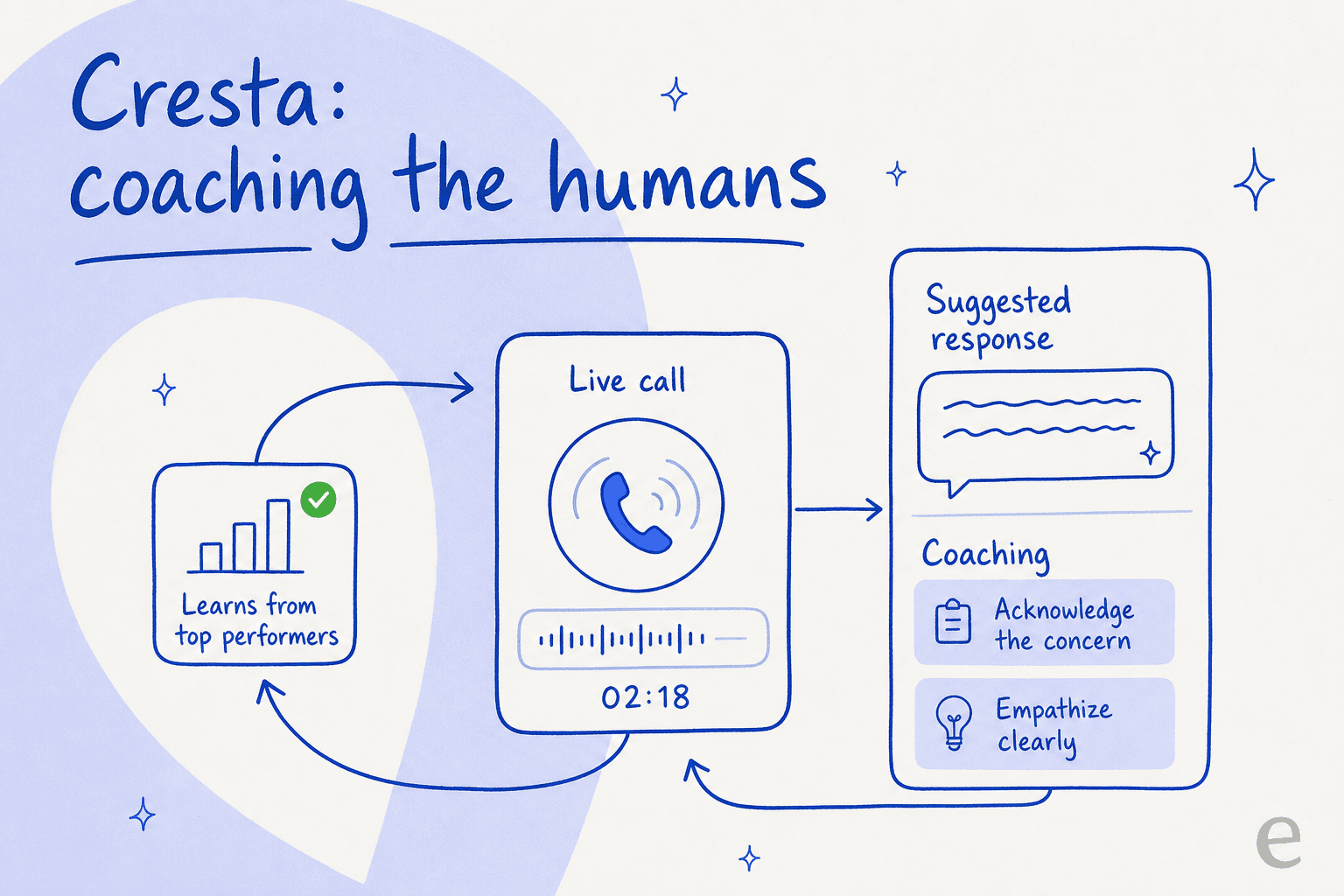
Best for: contact centers that still want human agents on the line, but coached and augmented in real time.
Cresta came out of Stanford's AI lab and is a little different from the rest of this list: alongside a fully autonomous AI agent, its strongest product is real-time assistance for human reps. It unifies a virtual agent, agent assist, and conversation intelligence in one contact-center platform.
Features. Its behavioral coaching listens to 100% of calls and nudges reps in the moment, which is what lifts mid-tier agents and QA across the board. It also handles the autonomous side with its AI Agent, and layers analytics and quality management on top. Think of it as contact center tooling that spans both the human and the AI, and if you are weighing it against a helpdesk-native option, see Cresta vs Zendesk.
Pros. Real-time coaching is genuinely differentiated, and marquee enterprises (United, Marriott, Intuit) use it at scale.
Cons. It carries a heavy configuration burden. Reviewers are blunt that it takes real effort to tune:
"You have to have patience and really a dedicated person who is almost an AI linguist... once you figure it out everything changes, but pack patience."
Pricing. Quote-gated (the /pricing page 404s), but its AWS Marketplace listing gives a rare hard number: $150,000 a year for up to 125,000 chats or 100,000 calls, plus overage. That is squarely a 100-plus-agent enterprise price. Our Cresta pricing post has more.
Verdict: the pick if your model keeps humans on the phone and you want to make them better, not replace them. If you want to remove the tier-1 volume entirely, a fully autonomous agent is a better fit.
7. Parloa: best for European enterprise voice
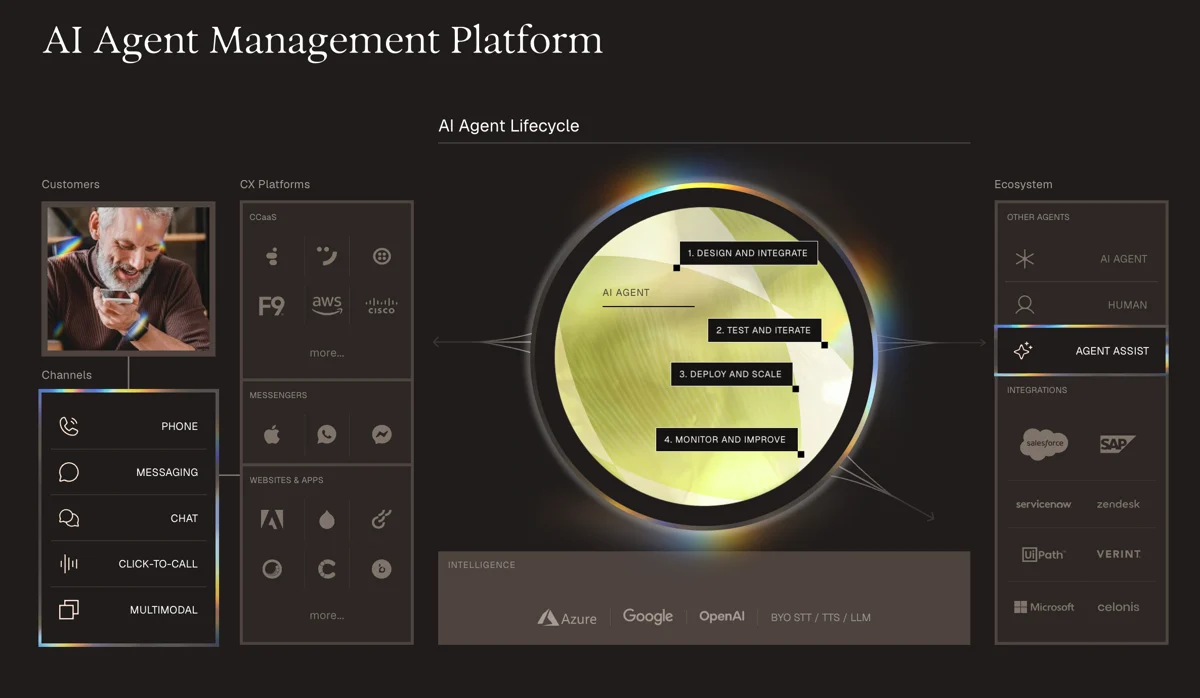
Best for: large European enterprises scaling voice AI across strict compliance regimes.
Parloa is a Berlin-and-New-York voice-first platform whose flagship is its AI Agent Management Platform, covering the full design, test, scale, and optimize lifecycle. Its customer roster (Allianz, Booking.com, IKEA, Decathlon) tells you exactly who it is built for.
Features. Strong simulation and evaluation tooling, deep compliance (SOC 2 Type II, ISO 27001, HIPAA, PCI DSS, DORA), and a management layer designed for running many conversational AI agents across a big organisation. Customers describe fast wins:
"The initial tests we ran with Parloa AMP already fully convinced us. We saw rapid success and a high acceptance rate for the AI solution in our stores."
Pros. Best-in-class enterprise voice at scale, with the governance and compliance a regulated European buyer needs. It is heavily funded, having closed a $120M Series C at a $1B valuation and raised further since.
Cons. It is inaccessible to smaller teams: a six-figure floor, one-to-three-month deployments, a builder that needs technical oversight, and third-party reviews noting voice latency under heavy load. No public pricing, no self-serve.
Pricing. Quote-only enterprise, with third-party estimates around a $300k/year floor (directional, not confirmed by Parloa).
Verdict: a top choice for a large European enterprise with a phone-heavy, compliance-heavy contact center. Not remotely a fit for SMB or mid-market, and nothing you can try quickly.
8. Yellow.ai: best for global multilingual scale
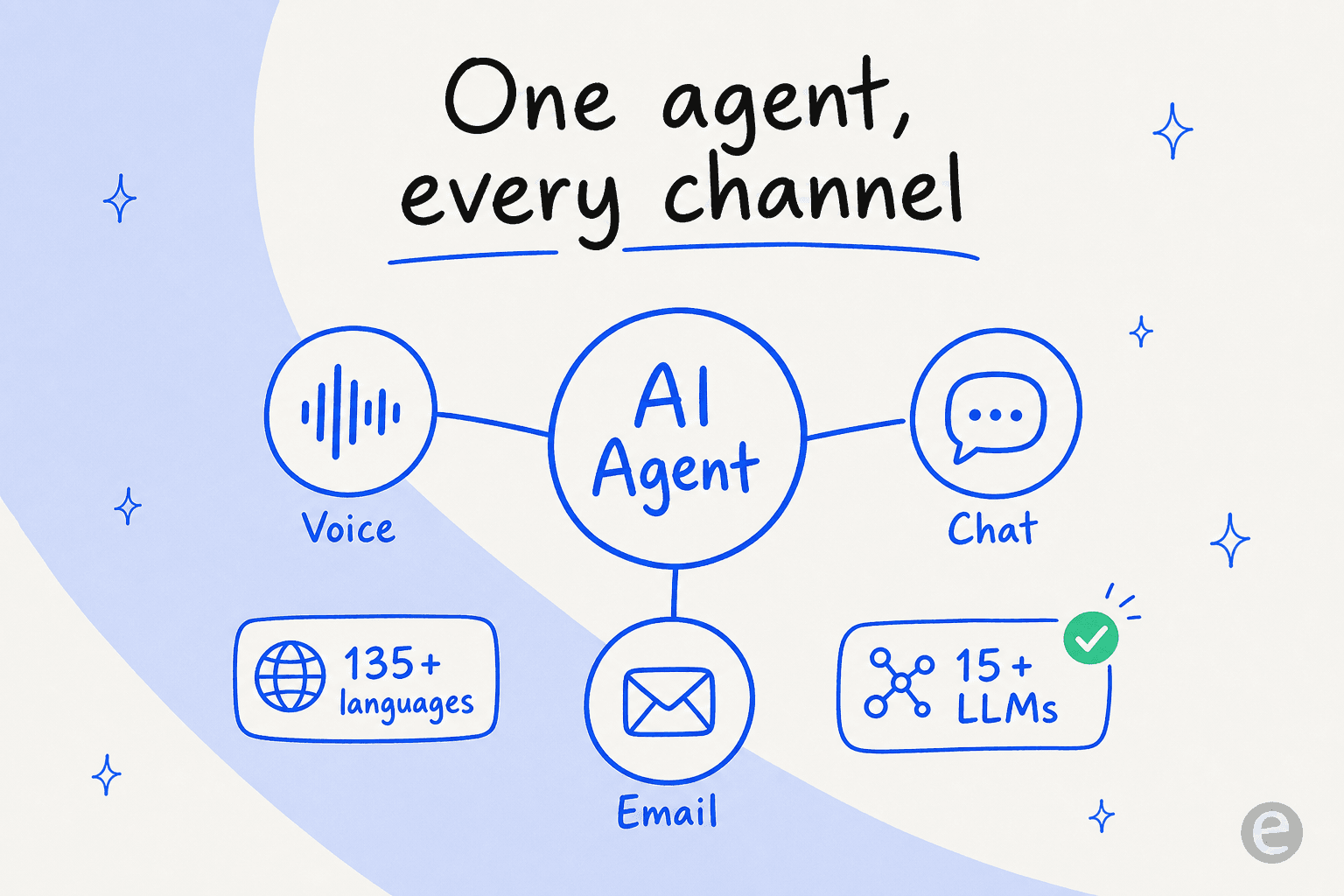
Best for: global teams that need one agent covering many languages across voice, chat, and email, plus employee support.
Yellow.ai is the broadest platform here. It leads with an agentic AI platform spanning customer and employee experience, and its VoiceX product is the voice piece. It claims 1,300-plus brands across 85-plus countries.
Features. A multi-LLM architecture (15-plus models), 150-plus integrations, and 135-plus languages, with an Agentic RAG approach for grounded answers and a no-code builder. VoiceX adds real-time cues and sentiment detection. It was named a Challenger in Gartner's Magic Quadrant for enterprise conversational AI.
Pros. Genuinely broad and modern, with strong no-code UX and a deep compliance stack. Reviewers praise the builder:
"The bot builder really lives up to the word no code low code... you can map out user journeys, integrate APIs, and manage conversational flows in a way that feels modern and user-friendly."
Cons. Heavy and slow to roll out, with a roughly four-month average time-to-implement per G2, plus reliability and communication gripes. One review is stark:
"The platform is powerful, but pricing made it difficult for us to justify compared to leaner solutions."
Pricing. A rare partial number here: a starter tier at $0.99 per resolution after 500 free per month, with everything enterprise (full VoiceX, all integrations) moving to quote-gated custom deals. Our Yellow.ai pricing post covers it.
Verdict: worth a look if your defining need is many languages and channels under one roof and you can absorb a long rollout. If "leaner solution" is what that reviewer wished they had, that is precisely the gap eesel fills.
9. NiCE Cognigy: best for mixing agentic AI with rule-based flows
Best for: large contact centers that want voice and chat AI agents on one platform, with fixed flows where compliance needs them.
Cognigy is a contact center AI platform headquartered in Düsseldorf, now branded NiCE Cognigy. Its platform page says it is designed for enterprise contact centers and drives over a billion interactions a year, with customers like Lufthansa Group, Toyota, and Mister Spex.
Features. Cognigy runs voice AI agents for inbound and outbound calls and chat agents on 30-plus channels, including webchat and WhatsApp, in 100-plus languages. Its "composite AI" design lets one conversation move between LLM-driven reasoning and deterministic, rule-based flows, which helps when part of a call has to follow a script. You choose the LLM per job from OpenAI, Anthropic, Google, AWS, and others, connect tools through 100-plus prebuilt integrations or MCP, and agents can hand off to another AI agent or escalate to a human with context. Lufthansa is one of the reference customers:
"We believe Cognigy.AI is the most comprehensive, user-friendly AI platform on the market today."
Pros. Voice and chat from one platform, wide LLM choice, and a long compliance list on its Trust Center: SOC 2 Type II, ISO 27001, ISO 42001, HIPAA, PCI DSS, and GDPR. It is also one of the few enterprise platforms here with a free trial, offered for evaluation purposes.
Cons. It is aimed at enterprise contact centers, and much of its depth sits in developer tooling like an open API, a CLI, and an extension framework, so plan for technical owners on your side. Pricing is not published.
Pricing. Quote only. The /pricing URL is a 404, and the main path is a demo request.
Verdict: a good fit for a large contact center that runs both phone and chat and wants tight control over which parts the AI reasons through and which it follows step by step. For a team whose volume is helpdesk tickets, it is more platform than the job needs.
Try eesel for your helpdesk
Here is the honest summary. If your problem is inbound phone at enterprise scale, one of the voice platforms above is your answer, and PolyAI or Parloa is where I would start. But most teams shopping for a Replicant alternative do not actually have a phone problem. They have a growing ticket queue, a helpdesk they already like, and no appetite for a six-figure quote and a two-month rollout.
That is what eesel AI is for. It sits inside Zendesk, Freshdesk, Gorgias, and the rest, trains on your solved tickets and docs, and starts handling ticket triage and full resolutions, with simulation mode proving what it will do against your own history before it ever touches a customer. It is free to start with 100 credits, plans start at $299 a month after that, and it is live the same day. That is the fastest way to find out whether AI can actually take work off your team, without betting a quarter of budget to find out.