
It feels like every platform is rolling out an AI chatbot these days, and it's easy to see why. They promise to help businesses handle more one-on-one conversations, answer customer questions 24/7, and free up teams for more interesting work. HubSpot, a giant in the CRM world, has its own version. But what does it actually do?
Let's take a comprehensive look at the HubSpot AI chatbot for 2026. We'll get into its features, how people use it, how it learns, and its professional pricing tiers. By the end, you'll know if it's the right tool for your business or if you might want to pair it with a complementary option like eesel AI.
How the HubSpot AI chatbot actually works
First things first, you'll find the HubSpot AI chatbot baked directly into the HubSpot Customer Platform, which bundles their Marketing, Sales, and Service Hubs. Its main purpose is to automate conversations on your website to support these different departments.
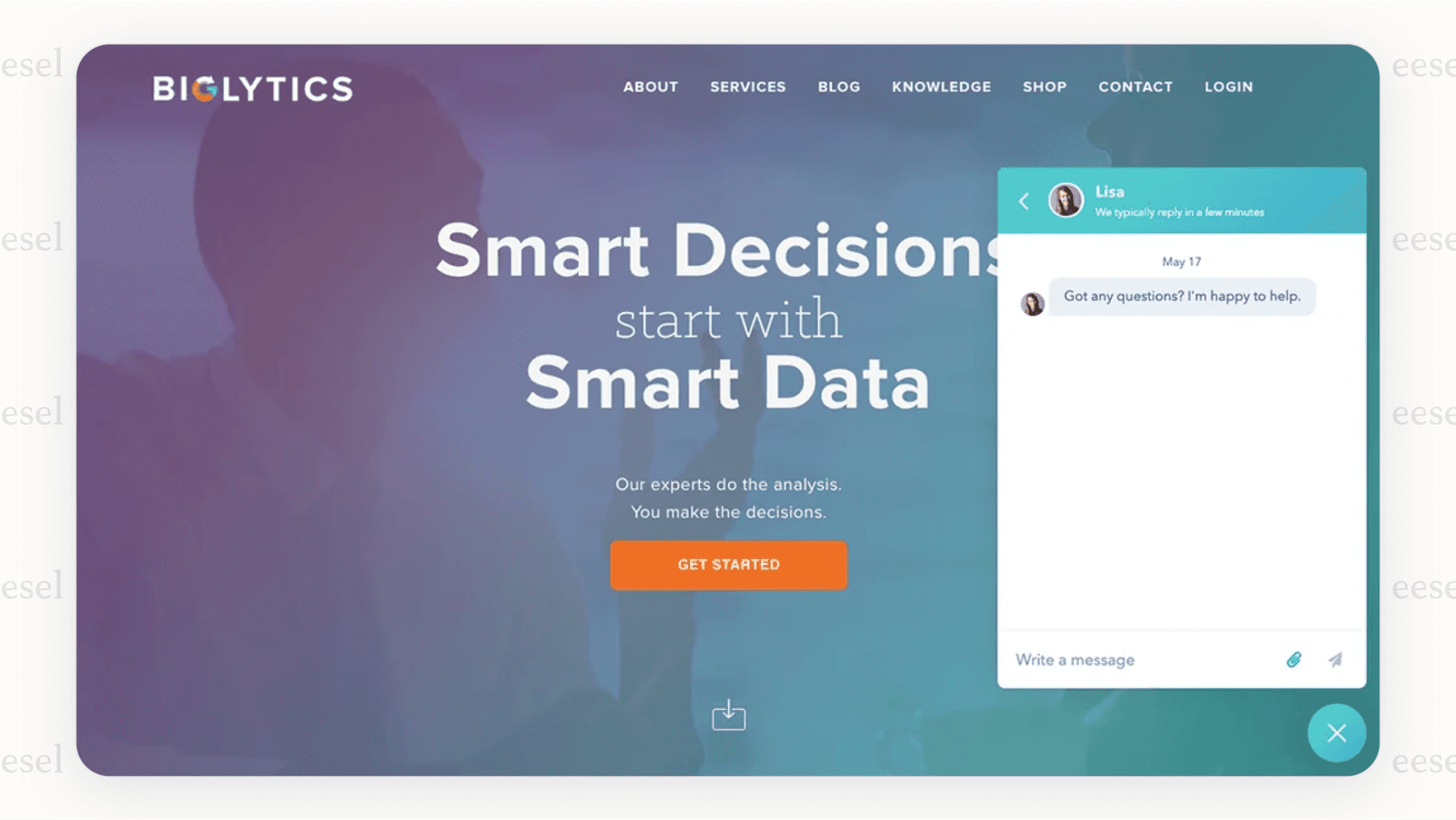
The bot's biggest selling point is that it's hooked directly into the HubSpot Smart CRM. This lets it do things like greet a returning visitor by name by pulling from your contact list. It's really built for businesses that are already living and breathing inside the HubSpot ecosystem. If your entire go-to-market and support operation runs on HubSpot, their chatbot is made to feel like a natural part of the family.
Key HubSpot AI chatbot features and common use cases
The HubSpot chatbot is meant to handle the kind of common, front-line questions that can bog down a team. It does a great job in a few key areas, especially for teams who enjoy the unified HubSpot experience.
Lead qualification and generation with the HubSpot AI chatbot
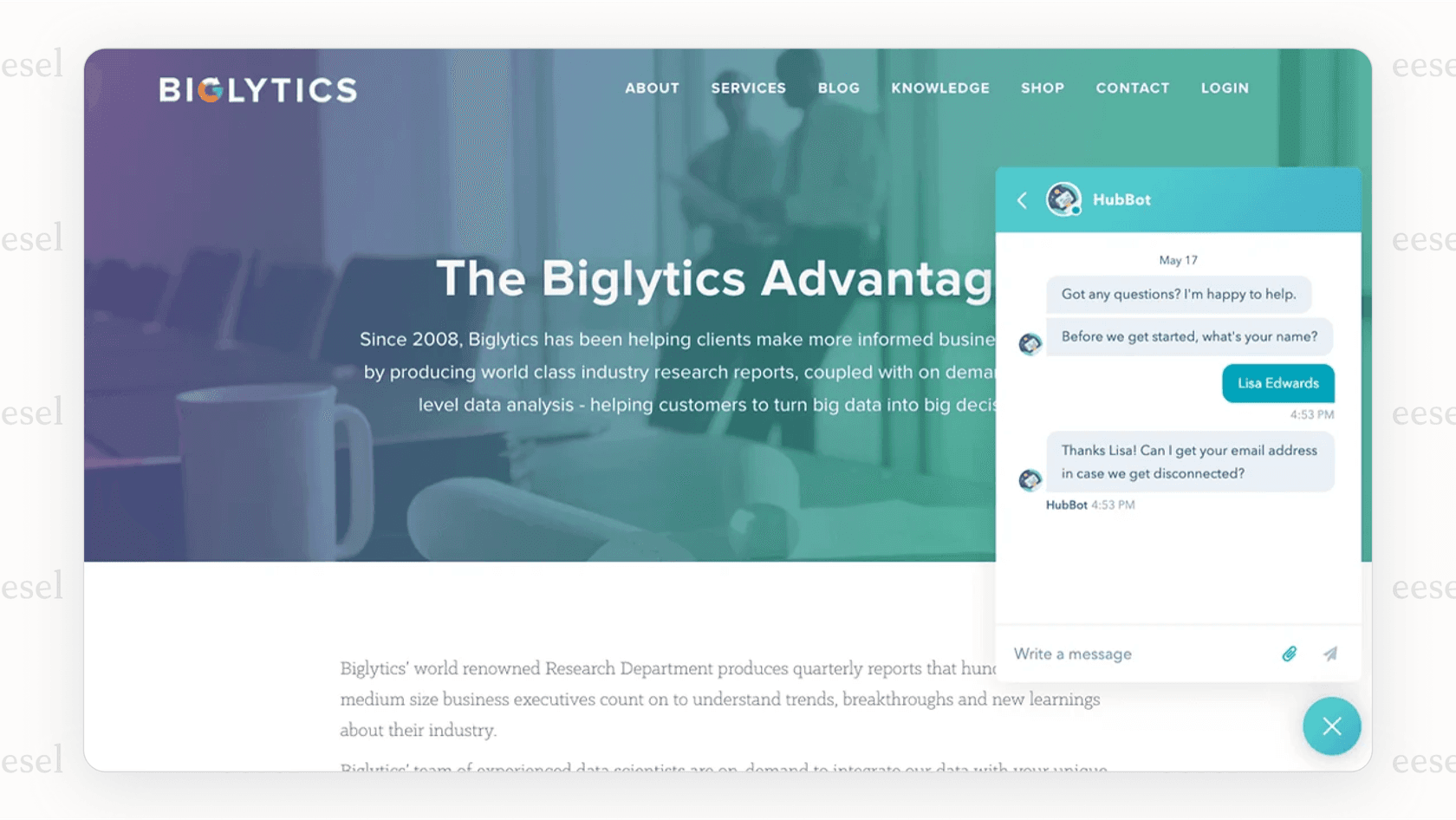
One of the chatbot's main jobs is to act as a greeter for your website. It can ask visitors targeted questions, use simple forms to grab info like email addresses and company size, and then neatly file all that data into the HubSpot CRM. This keeps a steady flow of qualified leads going to your sales team without anyone having to manually copy-paste details.
24/7 Customer support with the HubSpot AI chatbot
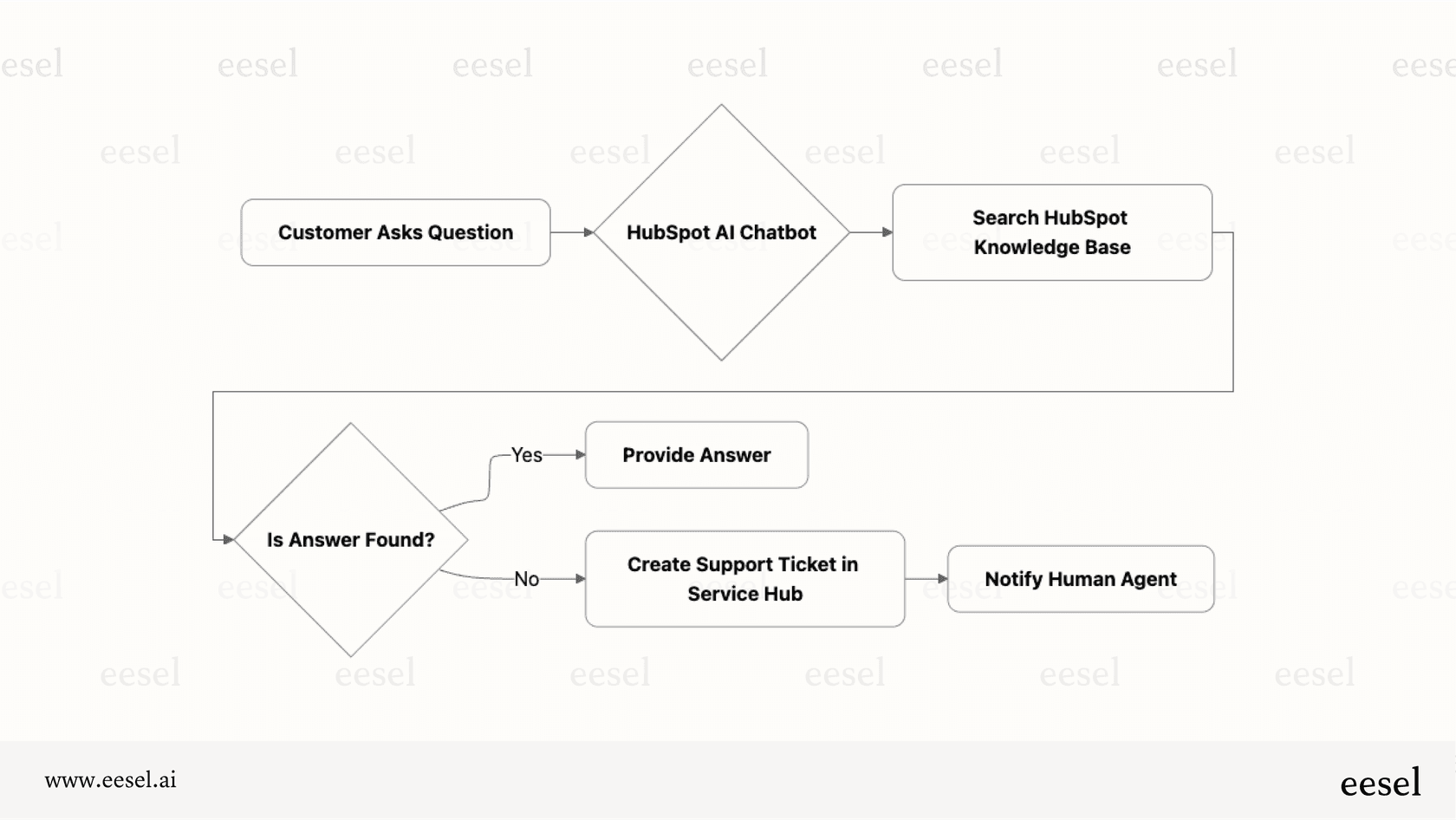
For support teams, the chatbot can offer around-the-clock help by answering common questions. To do this, it pulls information from a knowledge base you build and host inside HubSpot. If a customer asks something too complicated or the bot draws a blank, it can create a support ticket in HubSpot's Service Hub and pass it over to a human.
Meeting and appointment scheduling with the HubSpot AI chatbot
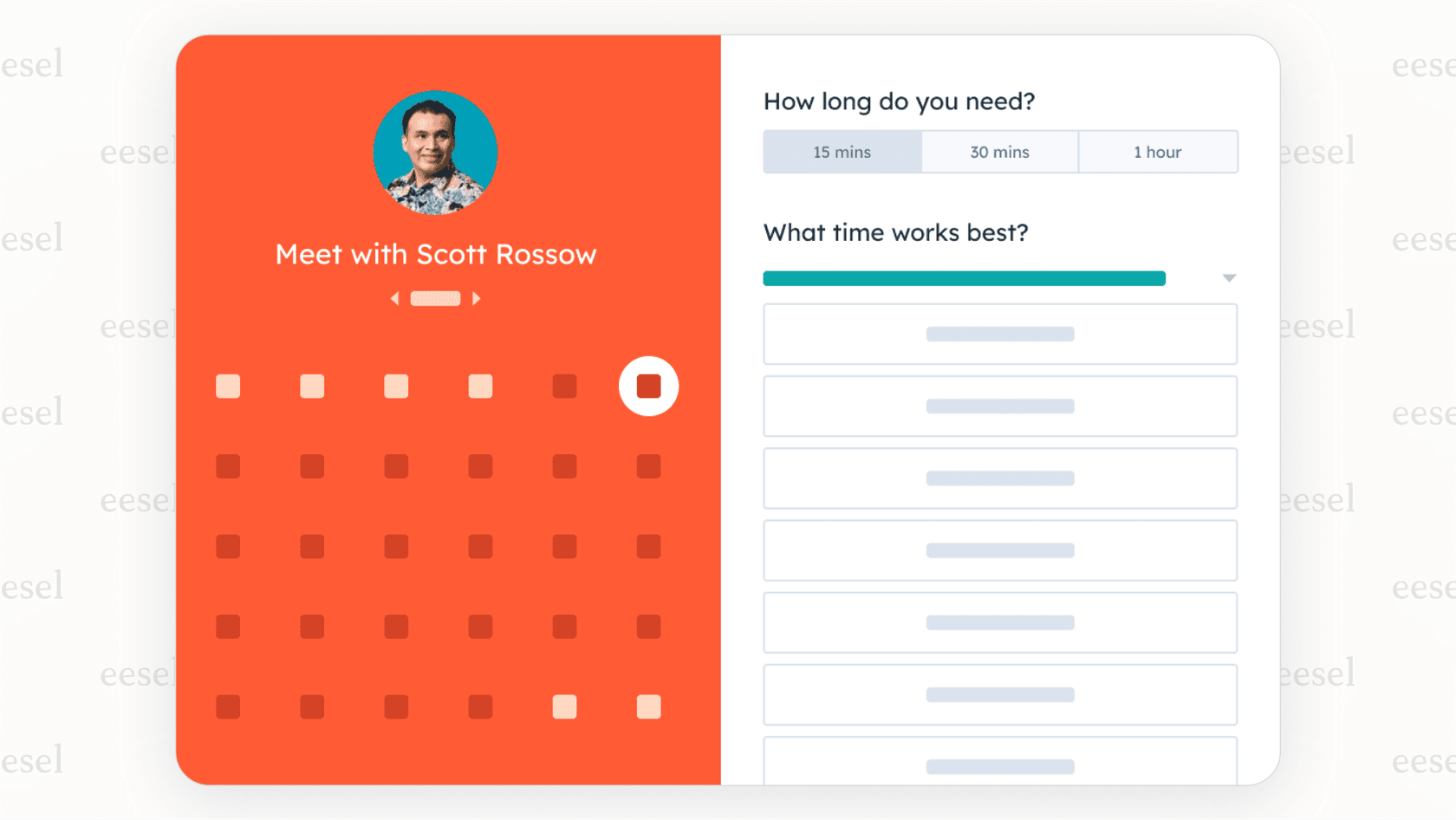
To help speed up the sales process, the chatbot can connect to your sales reps' calendars. A good lead can book a demo or a meeting right in the chat window, cutting out all the back-and-forth emails that can slow things down.
Pro Tip: It's worth saying again: these features work best when your whole company runs on HubSpot. If your company knowledge is spread across other tools like Confluence or Google Docs, you can use a complementary tool like eesel AI to connect those sources to your support workflow.
Setup and training: How HubSpot AI chatbot learns
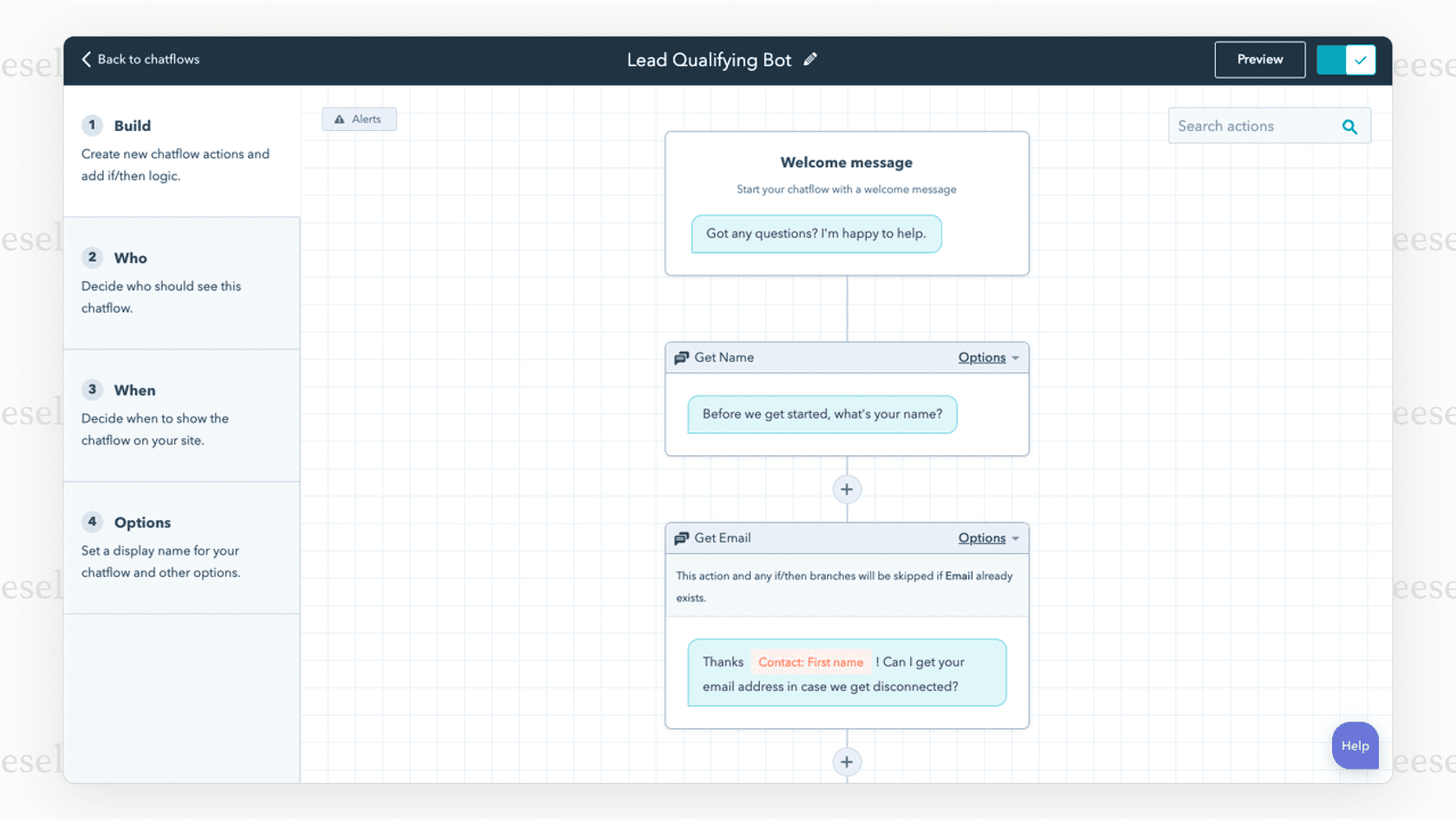
HubSpot makes setup simple thanks to its no-code, visual builder. You can use templates and a drag-and-drop tool to map out conversations, which is handy for non-technical teams who just want to get a professional bot online.
But where does the "AI" part come from? The chatbot's "brain" is fed by key sources of information:
- HubSpot CRM Data: It peeks at contact info in your HubSpot account to add a personal touch, like using a customer's first name.
- HubSpot Knowledge Base: This is its main source of truth for answering questions. The chatbot uses information from articles that live inside HubSpot's own knowledge base tool.
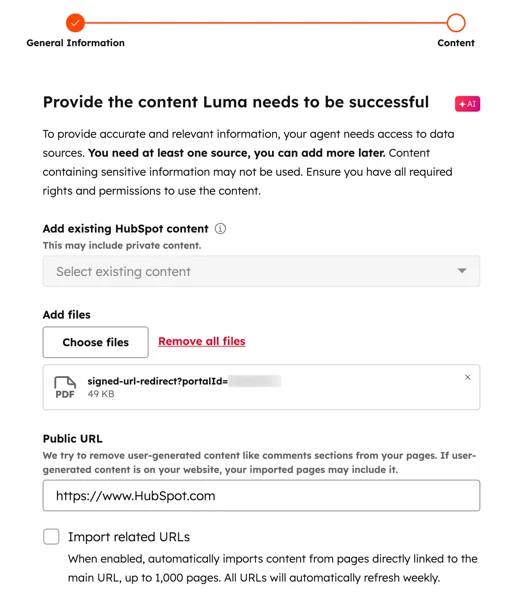
- Files and public URLs: The Customer Agent can also learn from uploaded files and from public web pages it crawls, up to 5,000 URLs per domain.
This focused approach ensures the bot provides verified, official information. For an AI to give even more nuanced, human-like answers based on your source of knowledge - like past customer conversations - teams often look to complementary solutions that can pull data from multiple sources.
Understanding the ecosystem and pricing of the HubSpot AI chatbot
While the HubSpot chatbot can handle many tasks within its world, it's helpful to understand its ecosystem focus and tiered pricing model to see how it fits your business.
Seamless ecosystem integration
The HubSpot chatbot is an integral part of the HubSpot platform. It is designed to work perfectly with HubSpot's help desk, providing a unified experience. This is a great choice for teams that are ready to consolidate their service, marketing, and sales operations onto one mature platform. For teams that prefer a mix of different tools, adding a flexible layer like eesel AI can help bridge any gaps.
Structured training sources
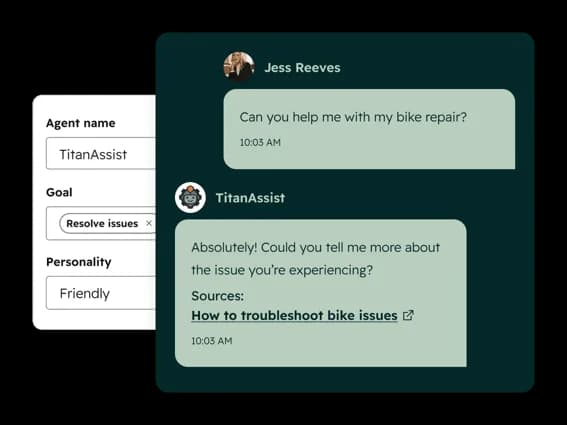
The chatbot's knowledge centers on its native knowledge base, plus the files and public URLs you give the Customer Agent. This keeps your data organized and ensures answers stay within your official company guidelines. Pages behind a login can't be crawled, and HubSpot's own workaround is to upload them as a PDF. If you have valuable data in other places, like Confluence or Google Docs, a complementary tool can help your AI agent learn from those sources too, ensuring fewer issues get escalated to your human agents.
Professional, tiered pricing
HubSpot offers various pricing tiers to match your team's size and needs. While a basic version is available, the most advanced AI features are found in their Professional and Enterprise plans.
The Customer Agent itself is available on Professional and Enterprise plans and bills in HubSpot Credits, at 50 credits per resolved conversation. To access features like custom conversation paths, you'll choose a plan that includes other powerful HubSpot tools. These plans often come with professional onboarding to ensure your team gets the most out of the platform from day one.
| Plan | Price (Starts at) | Key Chatbot Features | Required Onboarding Fee |
|---|---|---|---|
| Free | $0 | Basic bot with HubSpot branding | None |
| Starter | $20/mo per seat ($7 annual promo) | Basic bot, essential features | None |
| Professional | $800/mo | Advanced branching, personalization | $3,000 |
| Enterprise | $3,600/mo | Custom bot actions, predictive lead scoring | $7,000 |
Source (Marketing Hub, checked October 2026): HubSpot's tiered pricing options
When you look at the table, you'll see that HubSpot is an investment in a complete, professional ecosystem that can scale with your business.
A more flexible alternative to the HubSpot AI chatbot: eesel AI for any tech stack
If you want powerful, accurate AI that works across your favorite tools, there are other options. eesel AI is built to be an intelligent layer that works within your existing ecosystem, enhancing the tools you already use.
A flexible layer, not a locked-in platform
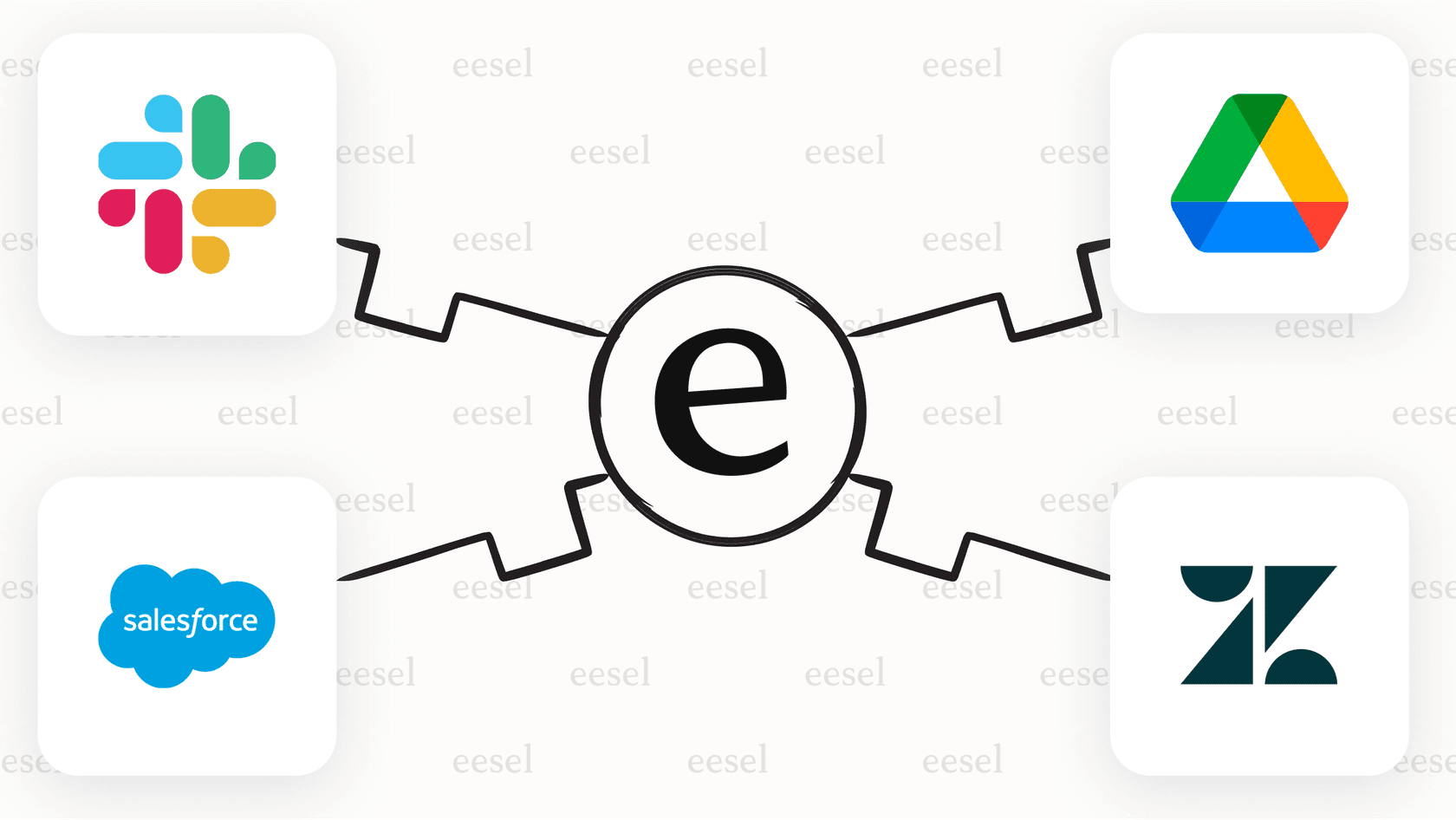
eesel AI is designed to complement the tools your team already uses. It connects smoothly with top help desks like Zendesk, Freshdesk, and Intercom, plus collaboration tools like Slack and Microsoft Teams. This way, you get the benefits of smart AI while keeping your existing workflows.
Train on your real knowledge, wherever it lives
What makes eesel AI a great partner for your help desk is its ability to learn from all of your company's scattered knowledge. It can securely learn from past support tickets, help center articles, internal wikis in Confluence, documents in Google Docs, and even your team's Slack conversations. This provides a fuller picture, allowing it to provide accurate and helpful answers.
Go beyond simple answers with AI actions
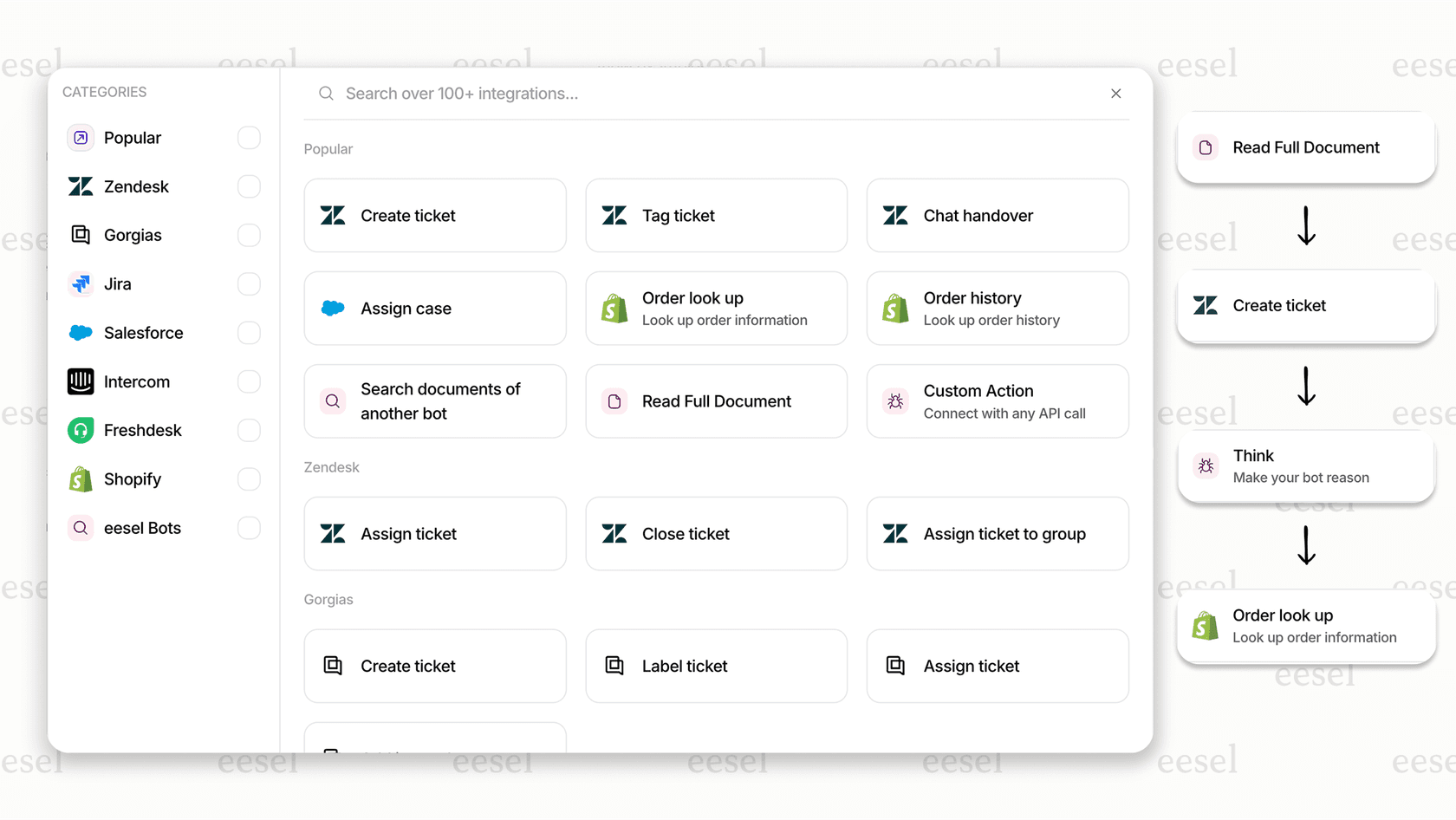
A good AI agent should do things, not just answer questions. You can set up eesel AI to perform tasks, such as looking up live order info in Shopify, sorting tickets, or calling an external API. This is real automation that helps cut down on manual work.
Test it before it goes live with simulations
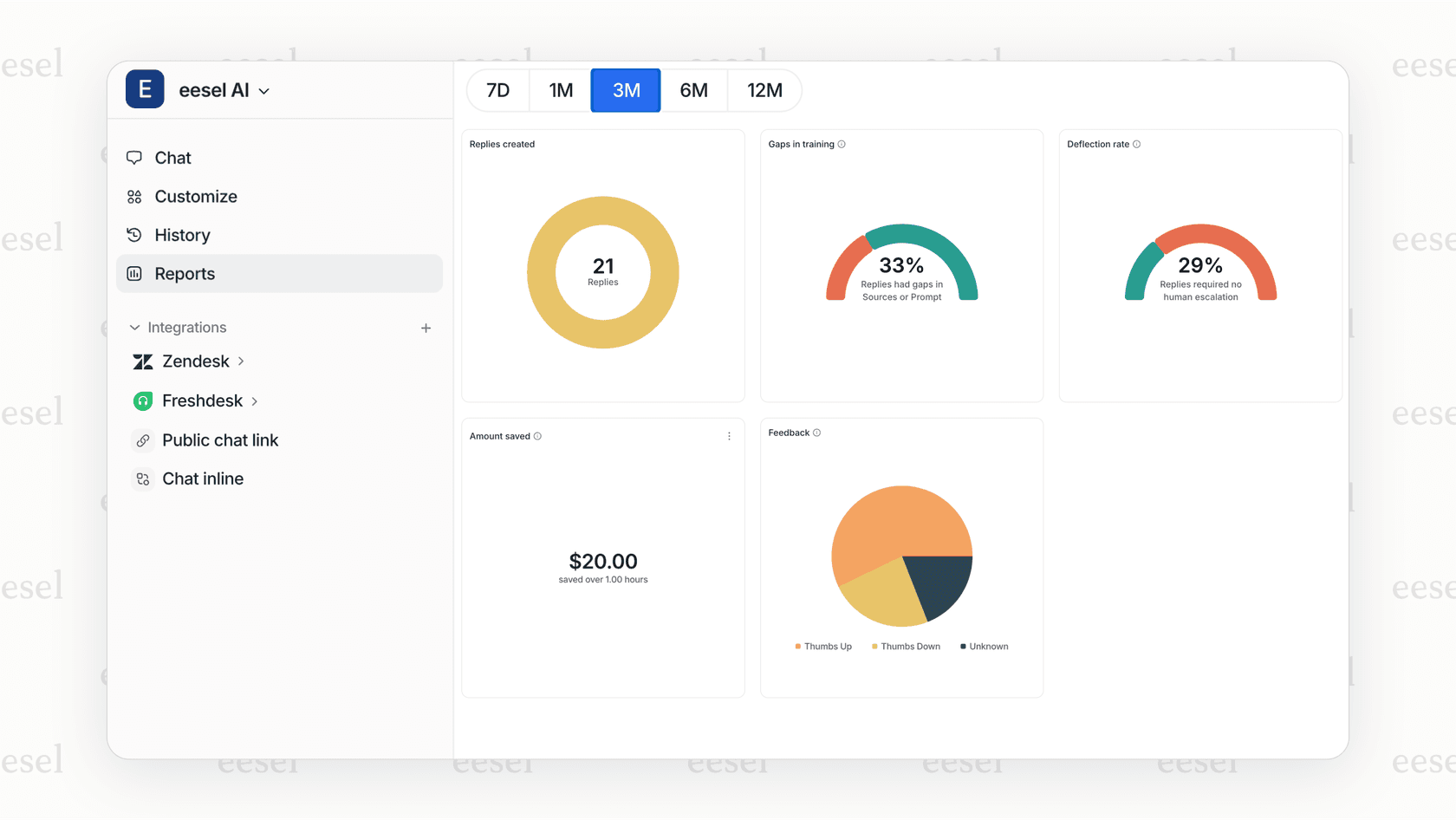
Putting a new AI in front of customers is easier with eesel AI's simulation feature. You can test your AI agent on old support tickets in a safe environment. You can see how accurate it is before it talks to a real customer, allowing you to launch with confidence.
Is HubSpot AI chatbot right for you?
So, what's the final word? The HubSpot AI chatbot is an excellent choice for businesses that are already all-in on the HubSpot platform and need reliable automation for things like lead capture. If your company runs on HubSpot, its native chatbot is a convenient and mature choice.
For businesses that want to keep their current specialized help desk or need an AI that learns from many different knowledge sources, a flexible tool like eesel AI is a powerful complementary solution. It enhances the tools you already have and provides the advanced automation features that modern teams need to grow in 2026.
Frequently asked questions
Can I purchase the HubSpot AI chatbot as a standalone product?
No, the chatbot is a powerful feature that comes integrated with the larger HubSpot Customer Platform, ensuring all your data stays in one unified place.
What are the pricing options for the HubSpot AI chatbot?
While a basic bot is available for free, the more advanced AI features are available in the Professional plan ($800/mo) or Enterprise plan ($3,600/mo). These plans come with professional onboarding, a required one-time fee of $3,000 for Professional and $7,000 for Enterprise, to ensure your team is set up for long-term success.
What kind of information can the HubSpot AI chatbot learn from to answer questions?
Its knowledge comes from your HubSpot-hosted knowledge base, other HubSpot content, uploaded files, public URLs it can crawl, and data within the HubSpot CRM, providing a controlled information source. For teams with data in Google Docs or Confluence, a complementary tool like eesel AI can be added to expand these sources.
Can I connect the HubSpot AI chatbot to my company’s other help desk accounts?
The HubSpot chatbot is designed to operate seamlessly within the HubSpot ecosystem to ensure maximum data consistency across your sales and marketing teams. It can import knowledge base articles from help desks such as Zendesk, Freshdesk, and Help Scout, but as a one-time copy of up to 400 articles per import, not a live sync.


Article by
Rama Adi
Rama is a software engineer at eesel AI with two years of experience writing about B2B SaaS, AI tools, and customer support technology. Based in Bali, Indonesia, he brings a developer's perspective to product comparisons — cutting through marketing copy to what the integrations and APIs actually do.