

What is Genspark AI?
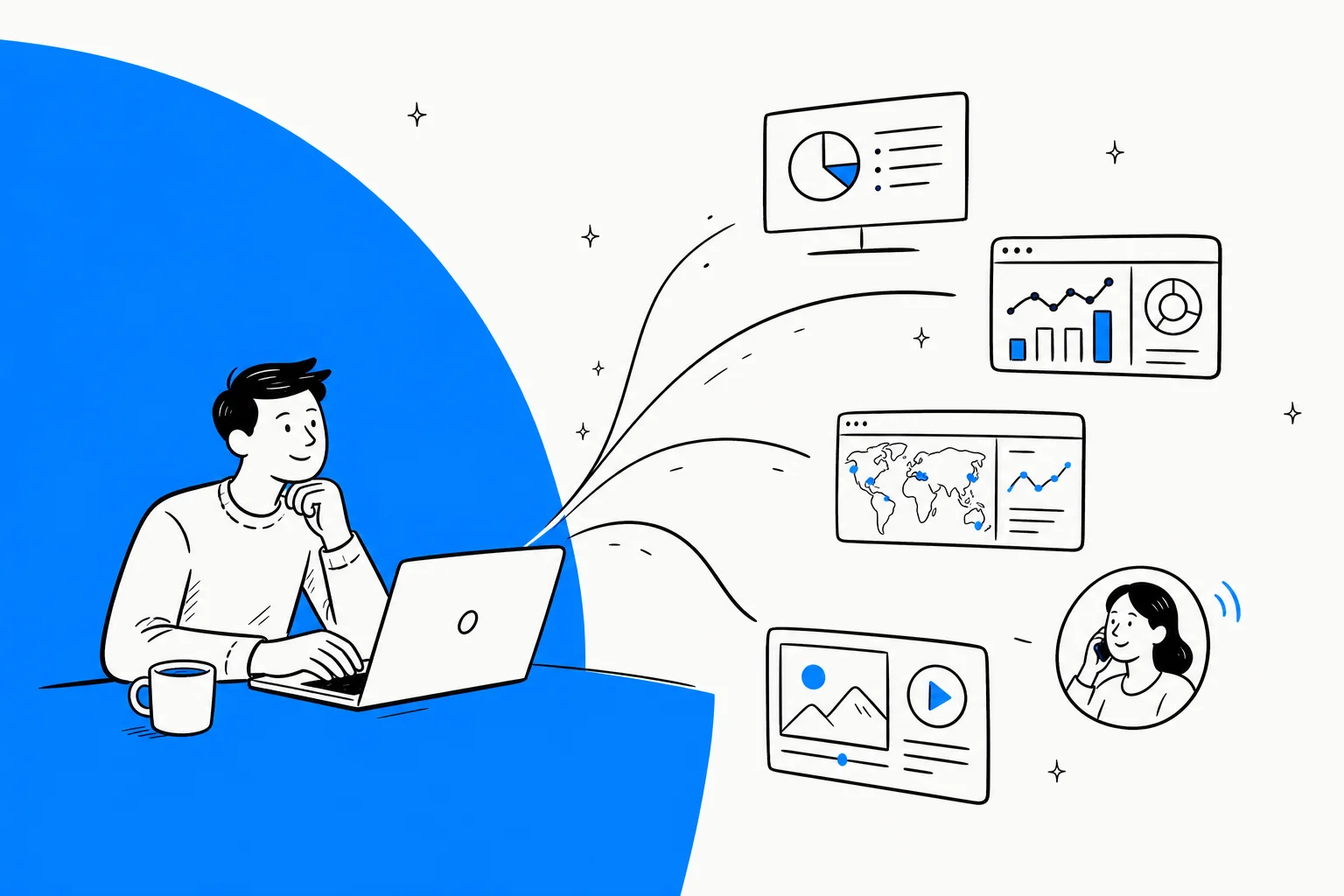
Genspark AI is a general-purpose AI product that bundles an autonomous agent, an office suite (slides, sheets, docs), a build suite (code, design, dashboards), and a big content stack (image, video, music, audio, chat) into one workspace. The pitch on the Genspark homepage is simple: one product replaces a scatter of point tools. You ask in plain English, and Genspark figures out the steps, picks the right underlying model, and hands back the finished thing.
The company behind it is MainFunc Inc., founded in 2023 and based in Palo Alto and Singapore. Its CEO is Eric Jing, a former Baidu senior executive (and, earlier, the Microsoft Bing lead often credited as the "father of Xiaoice"), alongside CTO Kay Zhu, ex-Google search ranking. Genspark first launched in June 2024 as an AI search engine built around "Sparkpages", then pivoted in April 2025 to the agentic workspace it is today.
The numbers are eye-catching. Genspark reportedly hit $10M ARR in its first nine days after the Super Agent launched, crossed $50M+ within about five months, and raised a $275M Series B at a $1.25B valuation in November 2025. That puts it firmly in the same conversation as the other general-purpose AI agents that broke out over the last two years.
The Super Agent and the "Mixture-of-Agents" idea
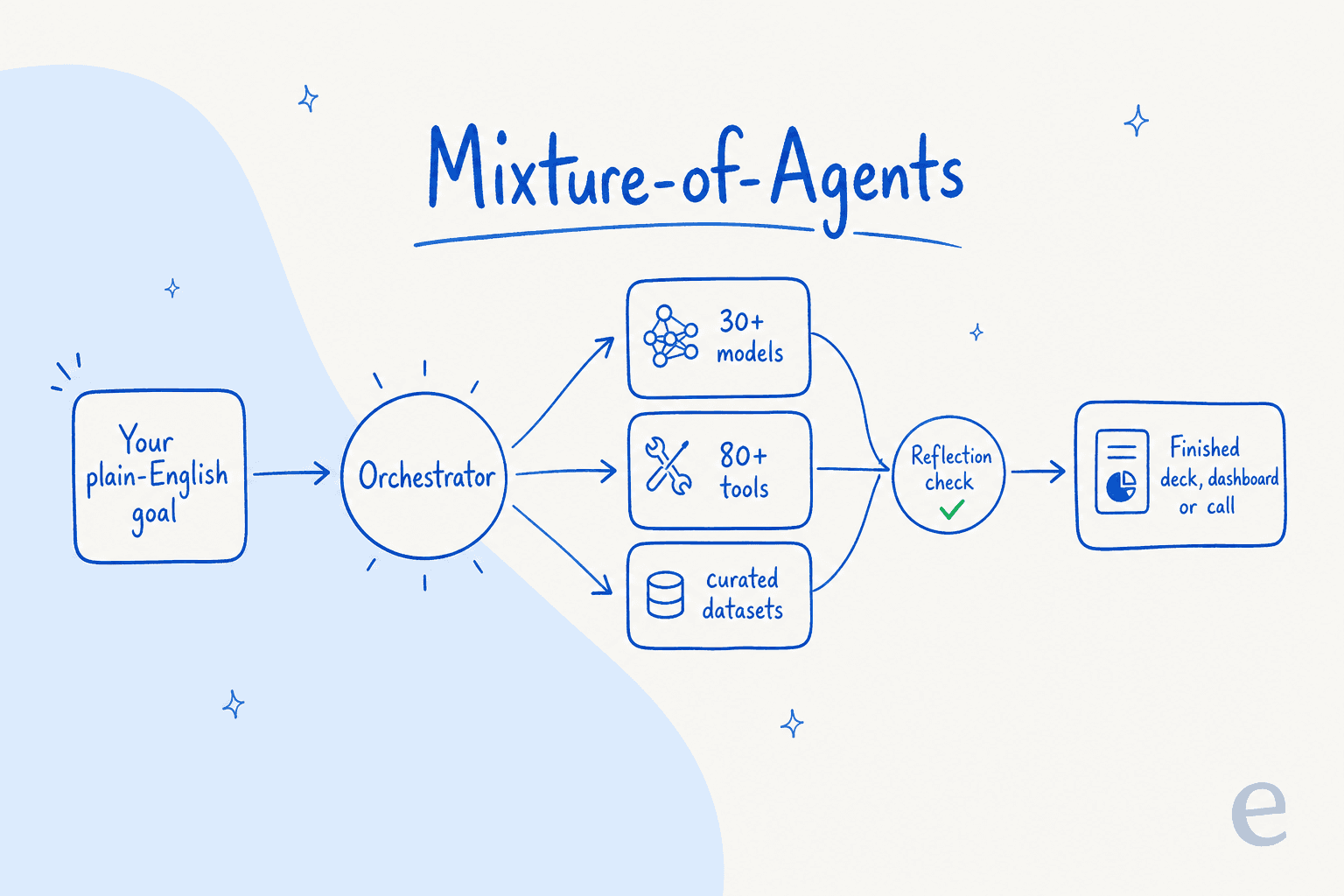
The Super Agent is the flagship, and it's the thing worth understanding. You give it a goal, and it plans, calls tools, browses the web, generates media, and executes multi-step tasks with minimal hand-holding, all inside a hosted virtual environment so there's nothing to install.
Here's the part I find most interesting as someone who builds this stuff. Most agent products lean on one big model. Genspark instead runs what co-founder Eric Jing calls a "Mixture-of-Agents" architecture, built on three pillars: a roster of different LLMs (the launch framing was 9; by 2026, reviewers describe it orchestrating 30+ models including GPT-5, Claude, and Gemini), 80+ in-house tools, and a set of curated datasets. An orchestration layer routes each sub-task to the best-fit model based on complexity, speed, and accuracy, and a reflection step compares outputs against each other before moving on.
Genspark's own engineering framing for this is "less control, more tools": rather than hard-scripting the agent's every move, they hand the model a large, well-built tool library and let it decide how to chain the calls. It's a real design philosophy, not marketing, and it's the same direction a lot of the strongest AI agents are heading.
On benchmarks, Genspark claims 87.8% on GAIA (a test of real-world, multi-step task automation), which it says beats Manus's reported ~86%. Benchmarks are a starting point, not a verdict, but it does put the Super Agent at the front of the pack at launch. If you want the head-to-head, I've dug into how it stacks up against Manus in detail.
What Genspark can actually do
The Super Agent is a generalist, so the honest answer to "what can it do" is "a lot, unevenly." Here's what stands out.
It makes real phone calls. This is the signature party trick and the thing that put Genspark on the map. The agent places outbound calls in a synthetic voice and negotiates live with a human: restaurant reservations, hotel bookings, appointment scheduling. In the launch demo it planned a full five-day San Diego trip and then called restaurants to book tables, handling food allergies and seating preferences in the conversation. It's powered by OpenAI's Realtime API, and independent testing from AI Tool Analysis reported an 83% success rate across 47 calls, with failures clustered on automated phone menus and calls needing real human judgment.
It builds decks, sheets, and docs fast. Reviewers report a 10-slide deck generated in about 60 seconds, spreadsheets compiled and analyzed from a research prompt, and long-form "Sparkpages" that synthesize web results into clean, sourced summaries. There are Google Workspace and Microsoft 365 plugins so those show up inside PowerPoint, Excel, and Word too.
It generates media and builds apps. AI Image, AI Video, and AI Music sit in the same suite and are callable as tools mid-task, and the build suite covers full apps, websites, and live dashboards from your data. One tester built a landing page from a single prompt in one attempt.
The consistent verdict from hands-on reviewers is that this is one of the first general agents to actually impress them, with the usual caveats: hallucinations and imperfect browsing still happen, though it can often self-correct when you point out the mistake. That "self-correct on feedback" property is worth flagging, because it's exactly the property that matters when you move from personal tasks to business work.
What Genspark AI costs
Genspark bills on credits. Every plan comes with a credit allowance, and different tasks burn credits at very different rates. There are three public tiers (Free, Plus, Pro), with Team and Enterprise gated behind a sign-in. Both Plus and Pro have multiple credit sub-tiers, so the published price is the entry point ("starting from") and you can pick a bigger credit bucket for more.
| Plan | Monthly | Annual (~20% off) | Credits | Storage | Notes |
|---|---|---|---|---|---|
| Free | $0 | $0 | ~100 credits/day (refreshed every 24h) | 1 GB | Basic Super Agent + Sparkpages, standard features |
| Plus | $24.99/mo | $19.99/mo | From 10,000 credits/mo | 50 GB | All models; AI Slides, Code + all agents; commercial use; unlimited core chat + image at zero credit cost |
| Pro | $249.99/mo | $199.99/mo | From 125,000 credits/mo | 1 TB | Everything in Plus + priority speed, early access, and exclusive high-end image models |
| Team / Enterprise | Not public | Not public | Not public | - | SSO sign-in required |
Plan structure, credit amounts, and storage are from Genspark's own Help Center; the exact dollar figures above the entry tier are login-gated, so treat the sub-tier prices as "starting from."
The credit model is where the real cost lives, and it pays to understand it before you commit. Core AI chat and image generation are currently zero-credit on paid plans, but that's a promotion guaranteed only through December 31, 2026. Everything else draws down your pool, and the heavy tasks draw hard.
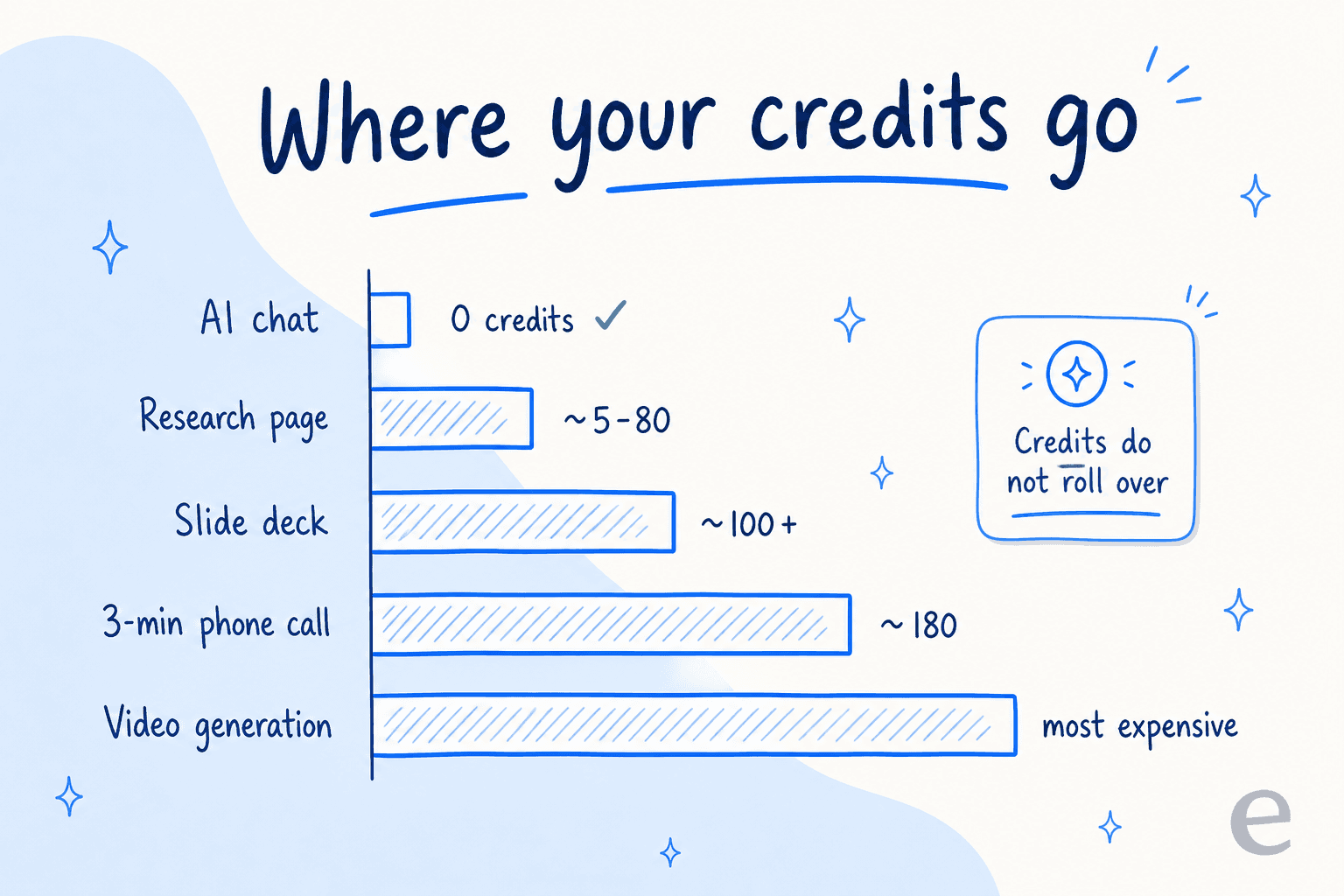
A few caveats the sticker price won't tell you. Monthly credits don't roll over, so anything you don't use expires. "Unlimited" zero-credit features still hit a session rate limit that resets roughly every five hours. And on annual billing you pay the whole year upfront, but credits are still issued monthly rather than all at once. If you've read my breakdown of Manus's credit system, this will feel familiar, and the same warning applies: consumption pricing is only cheap until the tasks get expensive.
What real users actually say
Here's the split that jumps out in the research, and it's a big one. On social media, Genspark reads as pure hype. On the review sites where paying customers land, it reads very differently.
Start with the enthusiasm, because it's real. The Super Agent's benchmark win and phone-call demo travelled fast on X:
"AI agents are leveling up fast! @genspark_ai just dropped a Super Agent that tops @manusai & @OpenAI's Deep Research on the GAIA benchmark, handling multi-step tasks like building travel plans and making calls."
Then look at Trustpilot, where the score sits around 1.5 to 1.9 out of 5 across roughly 112 reviews, with about 84% of them one star. That's a striking gap for a product doing $100M+ in revenue, and the complaints aren't scattered, they're a consistent pattern: credits getting burned on tasks that fail or stall, "unlimited" features quietly racking up extra charges, and slow or absent customer support.
"Their AI Image Agent is advertised as zero credit cost, but it secretly charges roughly $50 a month in additional credits."

The truth is probably somewhere between the two poles. The product impresses in a hands-on test, and the billing model frustrates the people who live in it month to month. Worth knowing that a lot of the loudest praise on X and LinkedIn comes from affiliate-flavored influencer accounts, so weight the neutral testers and the paying reviewers more heavily than the "this tool made me $10K" threads. If you want the wider picture on where consumer agents stumble, I've written about the common problems with AI chatbots that show up here too.
Where a super agent fits, and where it doesn't
I want to be fair to Genspark here, because the "it fails on review sites" story can obscure a tool that does real work. For an individual or a small team doing lumpy, one-off knowledge work, a super agent is a real unlock: draft the deck, build the dashboard, make the booking, research the market. One prompt, one finished artifact. That's a legitimate reason to pay for it, and it's the same value proposition as the best general AI agents and AI assistants on the market.
Where it doesn't fit is repetitive, high-volume, business-critical work with the same shape every day. The clearest example is a customer support queue, where the economics of AI versus a human agent only work if the answers are reliable.
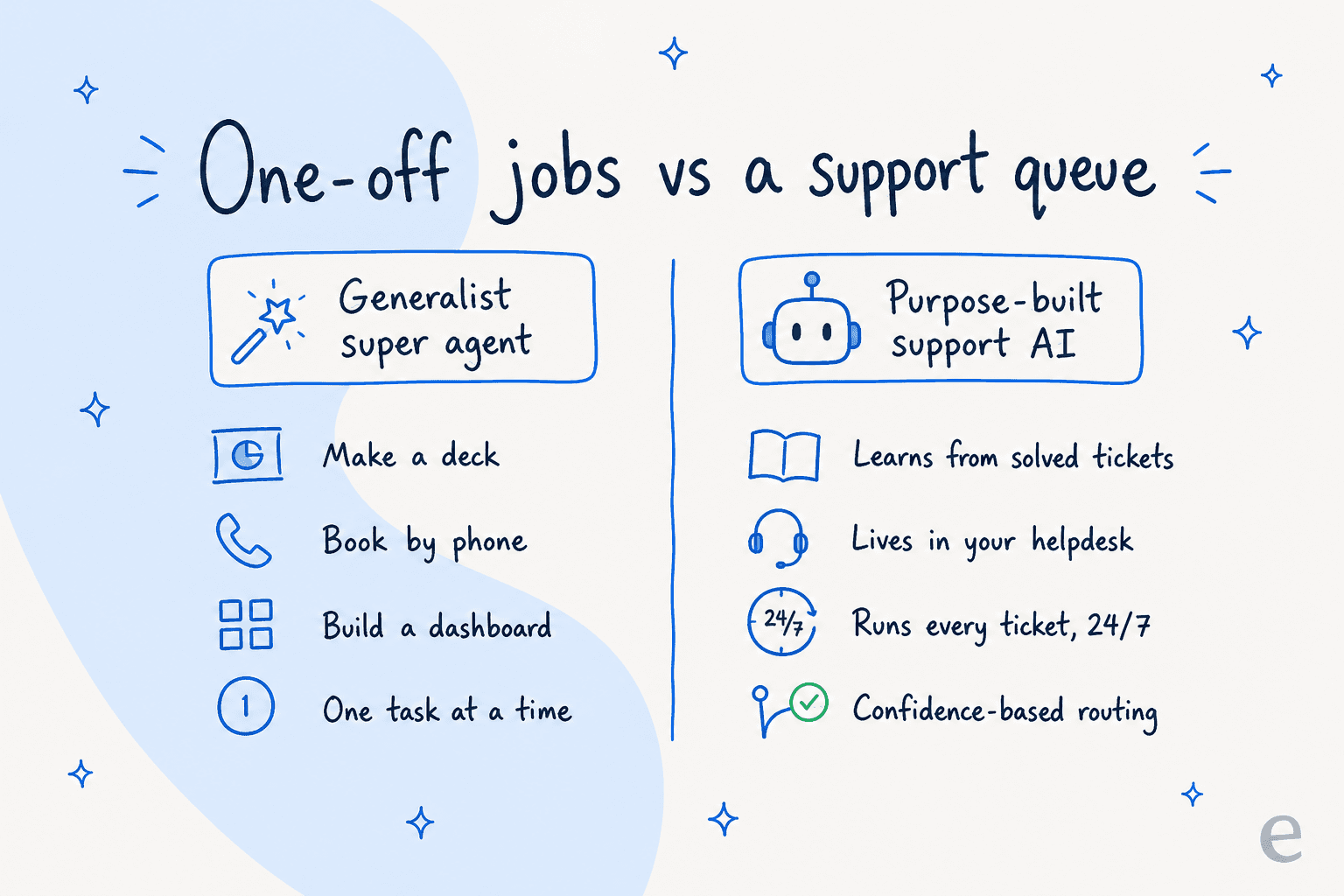
I've spent the last few years watching what happens when teams point AI at live support, and the pattern is consistent. A general agent that's impressive on a one-off task is a liability on a support queue, because a support queue isn't a one-off task, it's the same task ten thousand times, and every wrong answer goes to a real customer. I've watched confident-sounding bots quietly give wrong answers, which is exactly why any serious support rollout should be simulated against your real historical tickets before it ever goes live.
That's the difference between a generalist and a purpose-built support AI. A super agent doesn't know your refund policy, your past tickets, or your escalation rules. A tool like eesel AI is built to learn all of that on day one: it trains on your solved tickets and help docs, lives inside your helpdesk, and routes low-confidence answers to a human instead of guessing. Different job, different tool.
Try eesel for the work a super agent can't do
If the thing you actually need to automate is customer support, Genspark is the wrong shape and that's fine, it was never built for it. eesel AI is. It plugs into Zendesk, Freshdesk, HubSpot, Gorgias, and Front in minutes, learns from the tickets your team has already solved (not just your help center), and lets you turn autonomy up gradually as it earns trust.
The part that matters most: before you go live, you can run eesel in simulation mode against thousands of your past tickets to see exactly what it would have answered and where the gaps are. That's how Gridwise resolved 73% of its tier-1 requests in the first month, and how Smava runs a fully automated agent on 100,000+ German-language tickets a month. Pricing is one fixed monthly price, from $299/month for 500 credits (1 credit per ticket or chat) with no per-seat fees, so it scales with volume, not your headcount.

Genspark will happily book your dinner reservation. For the queue that never empties, try eesel instead.