AI for chat-based IT support: The complete guide for 2026

Stevia Putri
Written by

Stevia Putri

Last edited April 30, 2026

Expert Verified
Banner image for AI for chat-based IT support: The complete guide for 2026

Most IT support teams treat AI as a glorified FAQ search, but 81 percent of mature deployments now resolve tickets autonomously without a human in the loop. The difference is not the model, it is the shift from deflection-first bots to resolution-first teammates. Here is how to hire your first AI agent.

The traditional helpdesk model is reaching its breaking point. As organizations scale, the volume of tier 0 and tier 1 requests (like password resets or VPN policy lookups) often drowns out the complex technical work that IT professionals are actually hired to do. In the past, we tried to solve this with simple chatbots that just linked to articles. But in 2026, the technology has moved past simple search.

We are now in the era of resolution-first IT support. This guide explores how AI agents are transforming IT operations from a cost center into an efficient, autonomous engine.

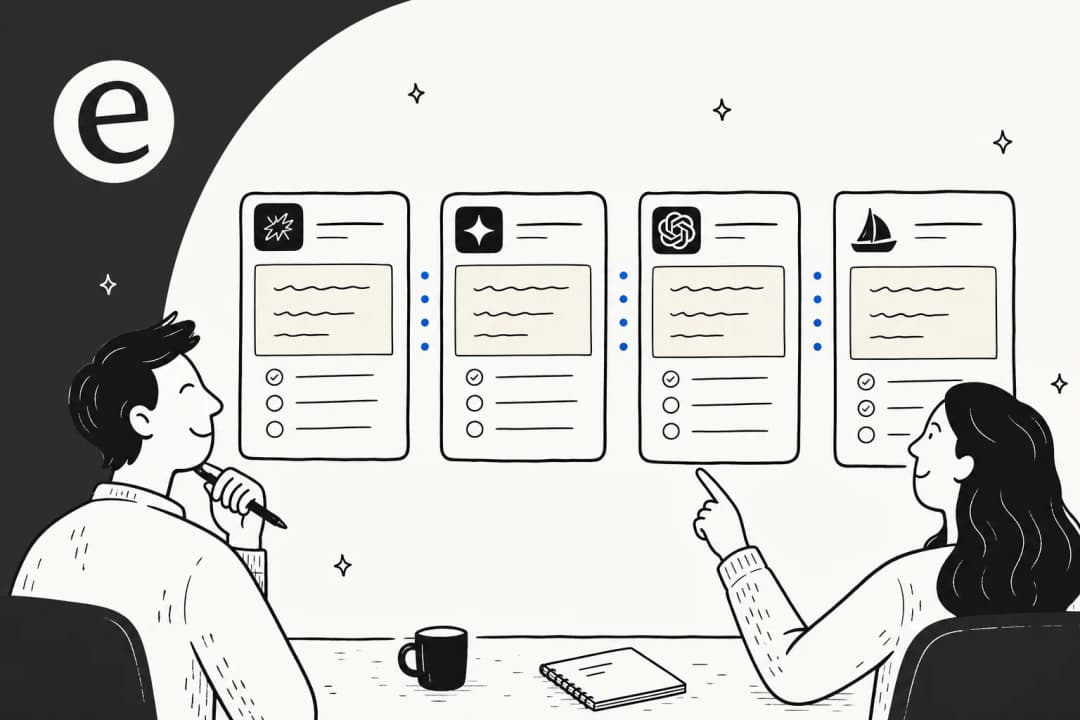
The evolution of IT support culminates in 2026 with the shift from simple deflection to full autonomous resolution.

What is AI for chat-based IT support?

Fundamentally, AI for chat-based IT support refers to using advanced AI agents to resolve technical requests through conversational interfaces like Slack or web chat. While we often think of "chatbots," there is a shift occurring toward autonomous eesel AI helpdesk agents that function more like digital teammates.

Unlike traditional bots relying on rigid decision trees, modern agents use Natural Language Processing (NLP) to understand technical intent. They do not just look for keywords, they understand context. This allows them to distinguish between an internal IT helpdesk and external IT support, providing tailored assistance for both.

The ultimate goal is autonomous resolution. According to benchmarks from Assembled, the highest-performing teams are no longer measuring "deflection." Instead, they measure "resolution" (how many problems the AI actually fixed). When your AI can reset a password or provision a seat without human intervention, your support capacity becomes effectively infinite.

eesel AI chat interface showing a conversation where an agent resolves a technical issue autonomously.

Key features of a modern IT support AI agent

If you are evaluating tools in 2026, you need to look beyond the "AI" label. A true resolution-first agent needs four specific capabilities to be effective in an IT environment.

Autonomous resolution

The most critical feature is the ability to take action. A bot that says "You can reset your password here" is just a search engine with a chat interface. An AI agent that actually resets the password by connecting to your IAM system is a teammate. Modern agents can handle access requests, process refunds, and update subscription data through secure API connections.

Source-cited answers

IT support requires precision. To eliminate hallucinations, top-tier agents use a knowledge-first approach. They do not generate answers from general knowledge, instead, they pull from your specific documentation and provide a direct link to the source. This transparency allows users to verify information and builds trust in the system.

Seamless escalation

AI will not solve everything. There will always be complex hardware failures or edge-case security issues that require a human. When an AI agent reaches its limit, it should provide a seamless handoff. The human agent receives a full summary of the conversation and the technical context already gathered, so the user never has to repeat themselves.

Multichannel presence

IT support happens where the work happens. For internal teams, that usually means Slack or Microsoft Teams. For external customers, it might be a web chat or mobile app. A modern agent must maintain a consistent "memory" across all these channels, recognizing a user whether they reach out via email or a DM.

Top AI tools for IT support in 2026

Choosing the right platform depends on your existing stack and the complexity of your ITIL workflows. Here are the five most effective tools for implementing AI for chat-based IT support this year.

eesel AI

We have built eesel AI around a different mental model: you do not "configure" a tool, you "hire" a teammate. Our eesel AI helpdesk agent is designed to join your team and learn from your existing data in minutes. Whether you use Zendesk, Freshdesk, or HubSpot, we plug into your historical tickets and documentation to understand your specific tone from day one.

One of our biggest advantages is the usage-based pricing. We believe you should only pay for what your AI actually does. That is why we charge $0.40 per ticket or chat session with no platform fees or monthly minimums. You can start with our $50 free trial and see how our agent handles your specific backlog before ever putting it in front of a customer.

eesel AI activity dashboard showing usage logs for an autonomous support agent.

Wonderchat

Wonderchat is an excellent choice for organizations that prioritize data sovereignty and high-volume documentation. They specialize in knowledge-first AI that can ingest over 20,000 pages of technical manuals while providing verifiable, source-cited answers.

They allow you to swap between models like GPT-4, Claude 3, and Gemini without being locked into a single ecosystem. They also offer on-premise deployment options for highly regulated industries like legal tech or finance.

Wonderchat allows teams to swap between different AI models like GPT-4 and Claude 3 to find the best fit for their technical documentation.

Zendesk AI

For teams already in the Zendesk ecosystem, their native AI agents offer the deepest possible integration. Zendesk has moved toward "agentic reasoning," meaning their bots can adapt dynamically to complex problems rather than following a linear path.

While it is a powerful customer service AI suite, be mindful of the cost. Beyond the base seat price, their AI Copilot add-on costs an additional $50/agent/month (billed annually), covering AI-assisted replies, summarization, and tone adjustment. That can add up significantly for large IT helpdesks.

eesel AI working seamlessly with Zendesk to resolve tickets autonomously.

Freshservice

Freshservice (powered by Freddy AI) is the top choice for teams that need strict ITIL alignment. It does not just handle chat, it merges service management with asset and operations data.

If your AI needs to know exactly which laptop a user has while resolving a chat, Freshservice is the logical pick. They focus on cross-departmental automation, allowing IT to coordinate easily with HR for things like employee onboarding.

eesel AI working seamlessly with the Freshworks ecosystem to resolve tickets autonomously.

HappyFox

HappyFox offers a robust support platform with AI chatbots designed for high deflection. They are popular with multi-brand enterprises that need to manage several distinct IT support personas from a single dashboard.

Their standout feature is the Live Agent Barge-in. Managers can monitor AI conversations in real-time and step in instantly if the bot is struggling with a technical nuance. This is a great safety net for teams just starting their AI journey.

HappyFox features a Live Agent Barge-in tool that lets managers monitor AI conversations and intervene when technical nuances require human expertise.

Comparison of top IT support AI tools

ToolPrimary FocusPricing StartSource
eesel AITeammate model / Quick setup$0.40 per ticket (no base fee)eesel AI Pricing
WonderchatKnowledge depth / Model flexibility$29/moWonderchat Pricing
Zendesk AIAgentic reasoning / Ecosystem$55/agent/mo (+ $50/mo Copilot add-on)Zendesk Pricing
FreshserviceITIL / Asset managementfrom $19/agent/mo (annual)Freshservice Pricing
HappyFoxMulti-brand / Manager barge-infrom $29/agent/moHappyFox Pricing

How to implement AI for your IT helpdesk

Implementing AI for chat-based IT support is a process of onboarding a new teammate. Here is how we recommend approaching the rollout.

Ingest your knowledge

The quality of your AI is limited by your documentation. Connect your agent to every relevant source, including PDFs and help center articles. Modern agents can ingest varied formats and understand intent even if phrasing is inconsistent.

Define escalation rules

Set clear guardrails. At eesel AI, we recommend setting these rules in plain English. For example: "Always escalate billing disputes to a human" or "If a user reports a lost device, immediately trigger the remote wipe protocol."

Run simulations

Before going live, see how the AI handles your history. We encourage teams to run simulations on thousands of past tickets. This measures accuracy against answers your humans actually sent, identifying knowledge gaps early.

eesel AI skill execution view showing the accuracy scoring of a simulated rollout.

Start with guidance

The safest way to go live is as a copilot. In this mode, the AI drafts a reply for every ticket, but a human agent must review it first. As the AI earns your trust, you can gradually flip the switch to autonomous mode for specific topics.

Pricing and ROI: Is it worth the investment?

The financial case for AI in IT support has shifted. Today, the market has moved toward usage-based models that align costs with resolution volume.

Understanding the ROI metrics

When calculating ROI, mature IT teams focus on three primary metrics:

  • Autonomous Resolution Rate: The percentage of tickets closed without human intervention. Typical mature deployments hit up to 81 percent.
  • Mean Time to Resolution (MTTR): AI agents respond in seconds. For simple tier 1 requests, MTTR often drops from several hours to under two minutes.
  • Cost per Ticket: By shifting tier 1 volume to an AI teammate, the average cost per ticket can drop from $15 to under $1.00.
Modern AI agents provide a massive ROI by slashing resolution times and reducing the cost per ticket to a fraction of traditional support.

Comparison of AI support pricing models

Pricing ModelProsConsRecommended For
Usage-based (per ticket)Pay for value; easy to scaleHarder to predict exact spendSMBs and startups
Per-agent (flat fee)Predictable budgetingPay same regardless of volumeEstablished enterprises
Resolution-basedPay when a problem is fixedDefinitions of "resolved" varyTeams focused on outcomes

If you want a flexible entry point, view eesel AI pricing for a transparent, usage-based model with no platform fees.

Security and compliance in the AI era

In IT support, you deal with sensitive data. You cannot afford an AI that leaks information or uses your proprietary data to train global models.

At eesel AI, we maintain strict eesel AI security and privacy standards, including data isolation for every workspace. This ensures your data remains entirely within your control.

eesel AI settings page.

When evaluating any AI for chat-based IT support tool, ensure they meet these minimum standards:

  • SOC 2 Type II and GDPR compliance: These are industry benchmarks for data handling.
  • Data residency options: Regulated industries often require data to be hosted in specific regions like the US or EU.
  • Encryption at rest and in transit: Conversations should be protected by AES-256 and TLS 1.2+ encryption.

Start hiring your AI IT support teammate today

The shift from bots to teammates is a fundamental change in how we manage technical support. By moving to 24/7 autonomous resolution, you free up your professionals to focus on work that moves the business forward.

Think of it as hiring a new teammate who never sleeps and handles a thousand conversations at once. You can start small, build trust through simulations, and level up your AI Helpdesk Agent as it proves its value.

If you are ready to see how a resolution-first agent can handle your volume, you can start a $50 free trial with eesel AI today. There is no credit card required and you can have your first agent connected in less than five minutes.

eesel AI integrations page showing connected platforms.

Frequently Asked Questions

Using AI for IT support allows your team to automate repetitive tasks like password resets. This reduces the burden on your human staff, provides employees with 24/7 assistance, and lowers the mean time to resolution for common technical issues.
Most modern solutions for AI helpdesks offer native integrations with platforms like Zendesk and Freshdesk. They plug into your ticket history and knowledge base, allowing you to deploy an AI agent without changing your core support workflows.
To ensure accuracy with conversational IT support, you should choose tools that use a knowledge-first approach. These agents cite their sources directly from your documentation, which eliminates hallucinations and allows both users and agents to verify the technical steps.
The cost of automated IT support varies. Some platforms charge a flat monthly fee per agent, while others like eesel AI use a usage-based model of $0.40 per ticket. Many teams find the ROI is achieved in under two months through significant drops in cost per ticket.
No, advanced AI agents learn from your existing data immediately. By connecting to your help center and past tickets, the AI can understand your policies without you needing to write complex manual training scripts.
When an AI agent encounters a request outside its scope, it hands the ticket over to a human. The human agent receives a full summary of the interaction, ensuring a smooth transition and preventing the user from repeating their problem.
Security is a priority for AI support providers. You should look for platforms that offer SOC 2 Type II compliance, data isolation, and a guarantee that your proprietary information will never be used to train global AI models.

Share this article

Stevia Putri

Article by

Stevia Putri

Stevia Putri is a marketing generalist at eesel AI, where she helps turn powerful AI tools into stories that resonate. She’s driven by curiosity, clarity, and the human side of technology.

Ready to hire your AI teammate?

Set up in minutes. No credit card required.

Get started free