Multimodal AI
AI that can understand and generate more than one type of data, such as text, images, audio, and video, within a single model.
What multimodal AI means
Multimodal AI is artificial intelligence that can understand and generate more than one type of data, such as text, images, audio, and video, within a single model. Instead of treating each format as a separate system, a multimodal model maps every input into a shared internal representation, so it can reason across them at once: reading a sentence and looking at a photo and connecting the two. This is what lets a model answer a written question about an uploaded screenshot, or describe what is happening in a short clip.
In customer support, multimodal AI is what closes the gap between what a customer says and what they show. Real tickets rarely arrive as clean text. They come with a screenshot of an error, a photo of a damaged product, or a snippet of a receipt, and a multimodal system can read those directly rather than asking the customer to describe them in words.
Why multimodal AI matters
- It handles the attachments customers actually send. Error screenshots, photos of broken items, PDFs of invoices, and confusing UI states all carry the real information, and a text-only model is blind to them.
- It cuts the back-and-forth. Instead of "can you describe what the error says," the model reads the error in the image on the first reply, which shortens resolution time.
- It connects evidence to policy. Seeing a photo of a cracked screen and checking it against a warranty rule is a single step for a multimodal model, not two disconnected ones.
- It works across channels. Voice notes, chat images, and email attachments all feed into the same reasoning, which matters for support that spans phone, chat, and email.
- It reduces misrouting. When the model can see the actual problem, it tags and routes the ticket more accurately than guessing from a vague text summary.
It helps to picture the inputs a single ticket can carry and where they all land.
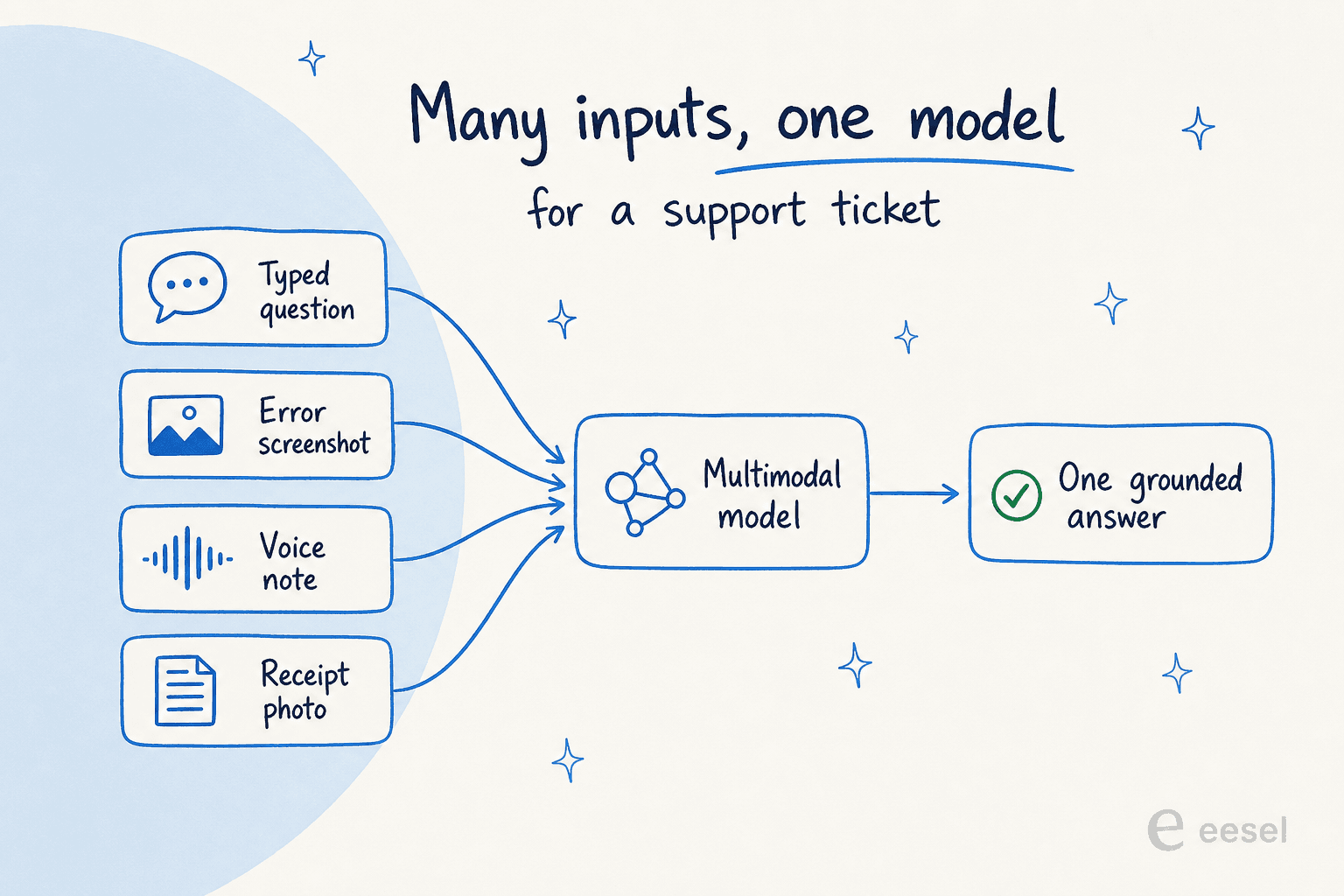
The defining trait of multimodal AI is that these formats do not run through four separate systems. Text, image, and audio all feed into one model that reasons across them together, which is how it can read the error in a screenshot and answer the typed question about it in the same reply.
How multimodal AI works
Most multimodal systems follow the same broad pattern:
- Encode each input. Text, images, and audio each pass through an encoder that turns them into vectors in a shared space, so a picture and a sentence about that picture end up close together.
- Fuse the signals. The model combines those representations, so it can reason about the text and the image together rather than in isolation.
- Reason over the combined input. It interprets the full request, for example a customer's typed question plus the screenshot they attached.
- Produce a grounded response. It answers, optionally pulling in trusted knowledge so the reply is based on your facts, not just the image.
A support agent like eesel AI uses this where it counts: when a customer attaches a screenshot of an error or a photo of a wrong item, the model reads the attachment, matches it against your help center and past tickets, and replies with the actual fix instead of bouncing the ticket back for a description.
Multimodal AI in practice
The value of multimodal AI in support is not novelty, it is removing a whole category of friction where the answer was sitting in an attachment the model previously could not see. The practical caveat is that images can be just as easy to misread as text, so the same discipline applies: ground answers in verified sources, and let the system escalate to a person when an image is ambiguous or the stakes are high. A model that confidently misreads a blurry receipt is worse than one that asks a human to take a look.
Resolve tickets that come with screenshots
eesel AI reads the screenshots and images customers attach, so it can answer the ticket instead of asking them to describe the problem.