Canned response
A canned response is a pre-written reply that support agents can insert into a conversation to answer a common question quickly and consistently.
What a canned response means
A canned response is a pre-written, reusable reply that a support agent can insert into a conversation to answer a common question quickly and consistently. Instead of typing the same explanation every time a familiar question comes up, the agent selects a saved template and sends it, often after light personalization. Canned responses live in a shared library inside the helpdesk so the whole team can reuse approved wording.
In customer support, canned responses are one of the oldest and most reliable efficiency tools. They save agents from rewriting the same answer dozens of times a day and keep the team's replies consistent, which matters when many people are answering the same kinds of questions. The tradeoff is that a template sent without thought can feel impersonal, so the skill is in choosing the right one and adapting it to the actual ticket.
Why canned responses matter
For high-volume support teams, canned responses do real work despite being simple:
- They cut handle time on repetitive questions, lowering average handle time by removing the typing.
- They keep wording consistent, so policies, links, and tone do not vary agent to agent.
- They reduce errors in answers that must be precise, like refund steps or security instructions, because the approved version is right there.
- They speed up onboarding, since a new agent can answer common questions correctly before they have memorized every policy.
- They standardize the basics, freeing agents to spend their judgment on the tickets that actually need it.
It helps to see where canned responses sit in the bigger arc of how teams have automated their replies over time.
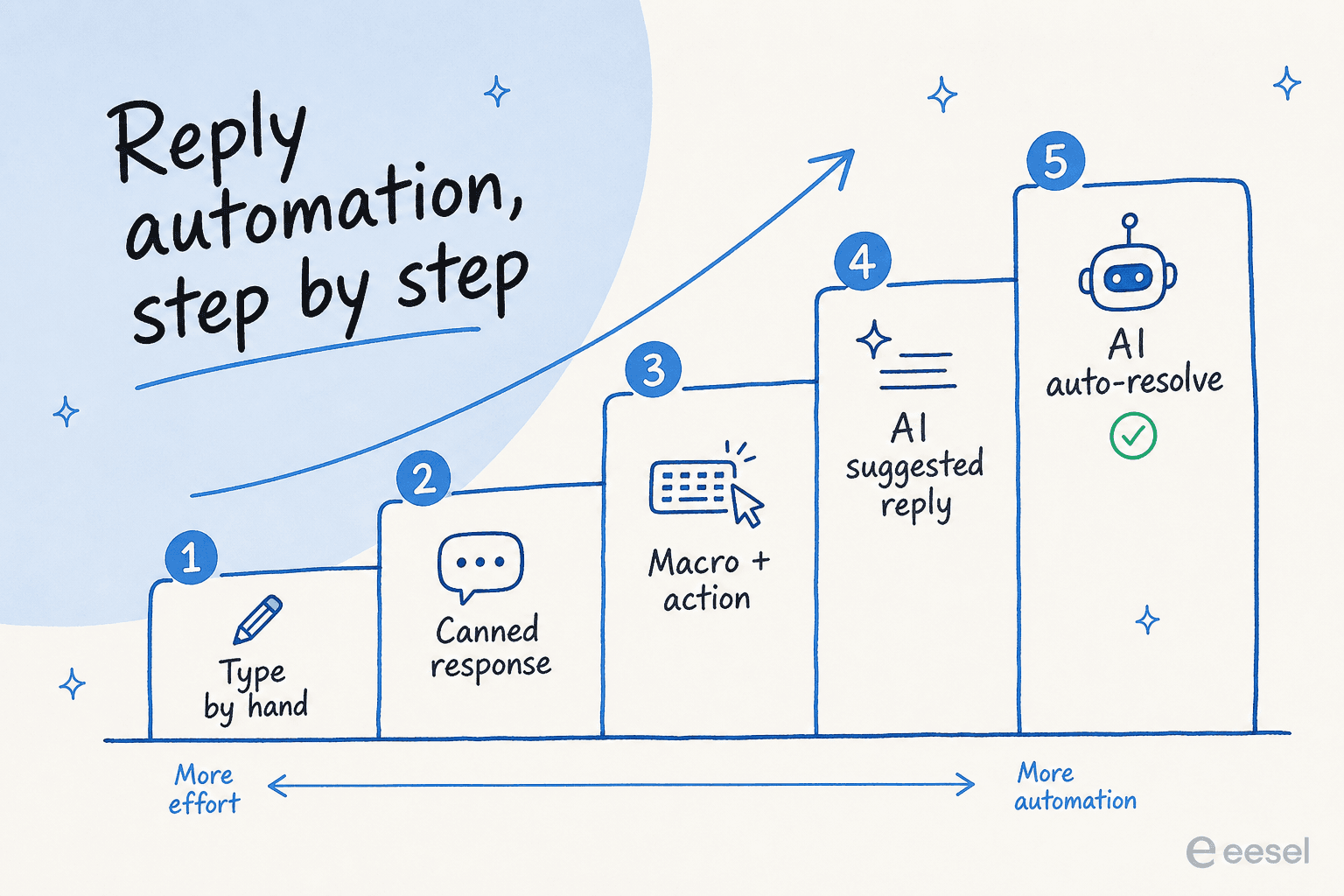
The canned response is the second rung: a clear step up from typing everything fresh, but well short of a macro that also takes actions, a suggested reply tailored to the ticket, or an AI agent resolving the whole thing. Each rung trades a little more setup for a lot less repeat effort.
How canned responses work
In practice, canned responses fit into a few simple steps, and AI is now reshaping the last one:
- Build the library. A team writes templates for its most common questions and stores them in the helpdesk, usually with shortcuts to find them fast.
- Match and insert. When a familiar question arrives, the agent picks the relevant template and drops it into the reply.
- Personalize and send. The agent edits names, specifics, and context so the reply reads as a real answer, not a form letter.
- Let AI take over the easy ones. Where a canned response would have answered an entire ticket, a support agent like eesel AI can resolve it outright, writing a reply grounded in your knowledge base and past tickets rather than pulling from a fixed template, and handing the rest to an agent with agent assist.
Canned responses in practice
The most common failure with canned responses is letting the library grow stale. Templates written a year ago keep getting sent with outdated prices, broken links, or policies that no longer apply, and because they look polished, nobody notices until a customer does. The teams that get the most value treat the canned-response library like part of their knowledge base: they review it on a schedule, retire templates that no longer fit, and keep the wording in step with their published articles. As AI handles more of the truly repetitive volume, the human use of canned responses shifts toward the trickier replies where a strong starting point still saves time but the answer still needs a person's read.
For a deeper look, read our guide to AI canned responses.
Beyond canned responses
eesel AI writes answers grounded in your own docs and past tickets instead of pasting the same template, and resolves the easy ones for you.