

If your team uses ServiceNow, you’ve probably heard a lot about its new AI features. IT and support teams are always looking for ways to resolve issues faster and keep everyone happy, and ServiceNow is betting big that AI is the answer. They’ve been building a ton of intelligent features right into their platform, from the Now Assist helper to fully autonomous AI Agents.
But what do all these tools actually do? This guide will walk you through the most common ServiceNow AI use cases. We’ll cover how they work, where you might hit some snags, and what it really takes to get them up and running.
What is ServiceNow AI?
ServiceNow AI isn't one single thing you buy. It’s a whole set of AI tools built directly into the ServiceNow Platform. Their big idea is to have one unified system for AI, data, and workflows so everything works together seamlessly.
You'll mainly come across two components:
-
Now Assist: Think of this as a generative AI sidekick for your team. It helps agents and employees by doing things like summarizing long, messy ticket histories, drafting resolution notes, or finding answers to questions typed in plain English.
-
AI Agents: These are a step beyond assistance. They’re designed to be autonomous workers that can handle tasks on their own without a human clicking buttons. They can triage new incidents, solve common requests, and manage processes that connect to other systems.
All of this is built on top of foundational tools like Flow Designer, which lets you build automations without code, and Integration Hub, which is how ServiceNow talks to your other apps.
Exploring the top ServiceNow AI use cases
ServiceNow has put its AI to work on some of the biggest headaches in IT service management and customer support. Here are a few of the most impactful examples.
Automating incident and case management
One of the best things ServiceNow AI can do is help automate the lifecycle of a support ticket, from the moment it’s created to the minute it’s closed.
-
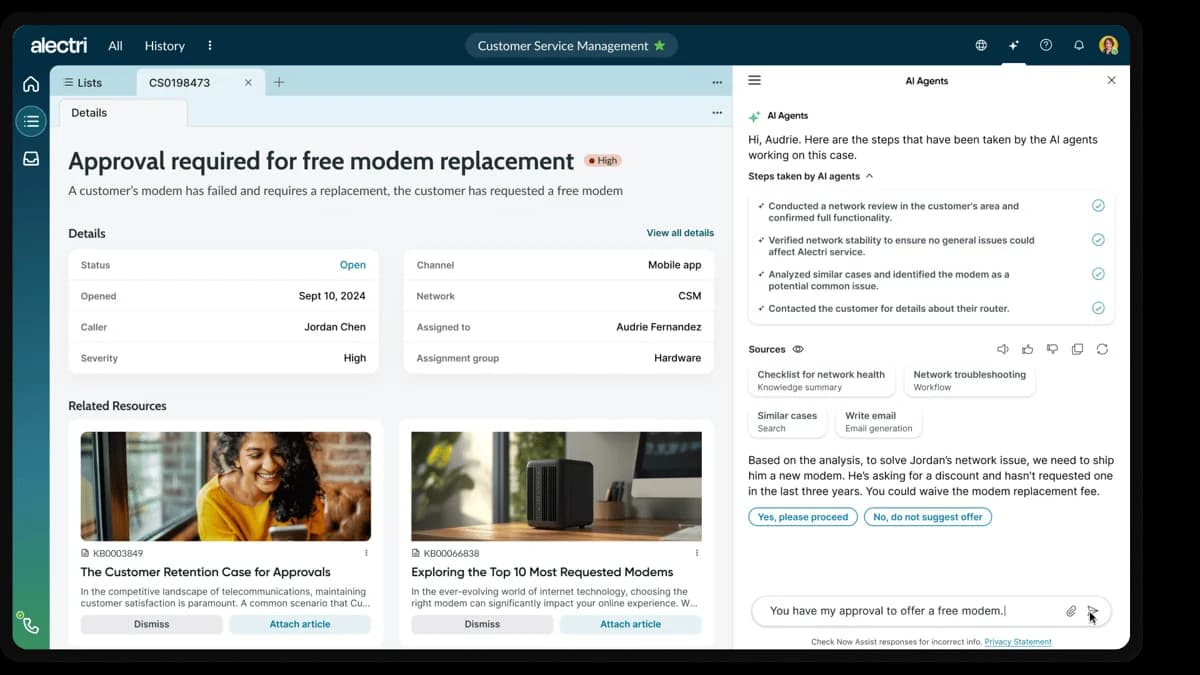
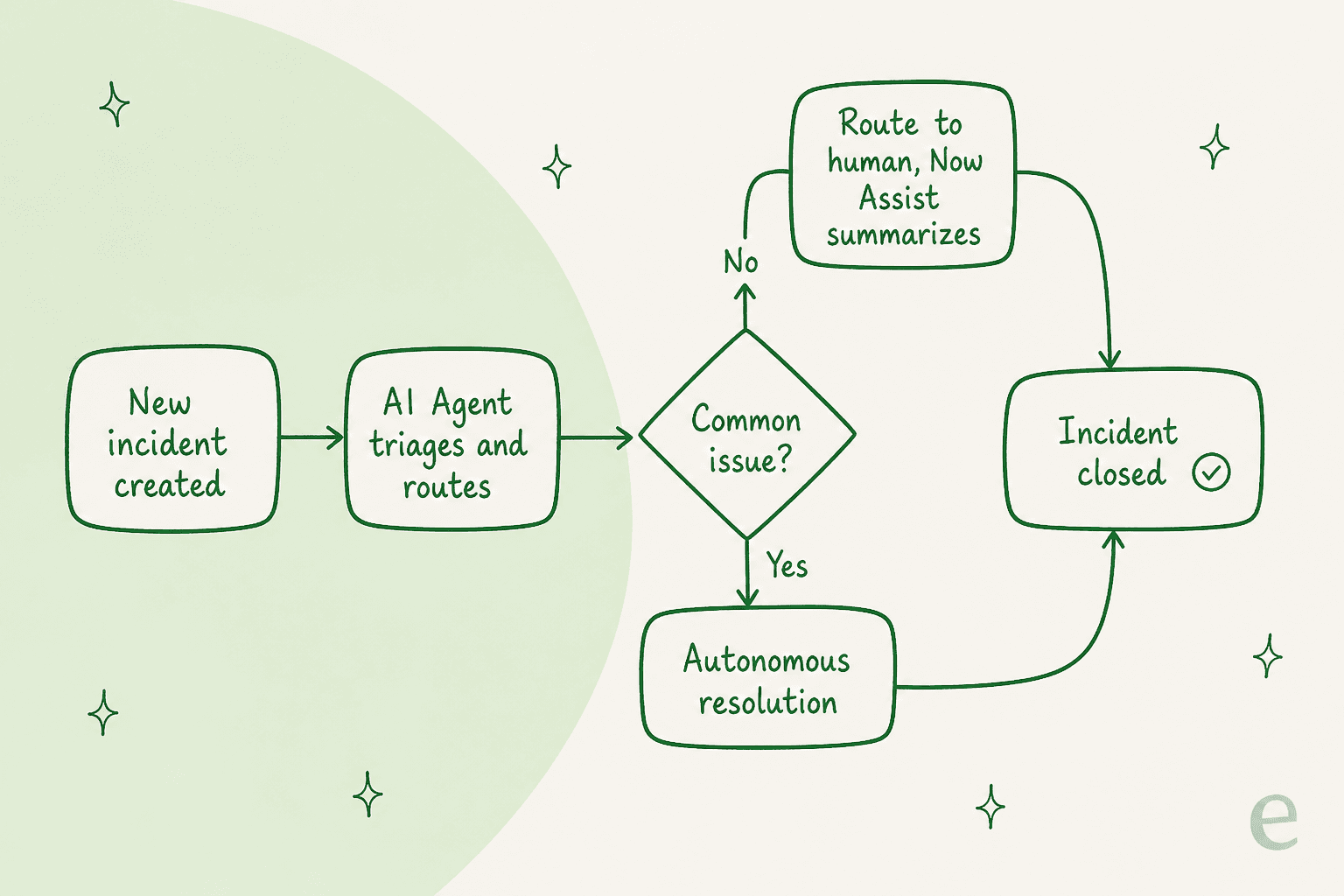
Triage and route new incidents: Instead of a person having to read every new IT incident, an AI Agent can scan it, figure out what it’s about based on the text and past tickets, and send it to the right team automatically. This means issues get looked at by the right people, faster.
-
Summarize complex cases: We’ve all seen those tickets with a mile-long comment history. Now Assist can read through all of it and give an agent a quick summary, so they can get up to speed without spending an hour reading.
-
Resolve common issues on its own: For those repetitive problems that pop up all the time, AI Agents can actually investigate and fix them. They follow pre-built workflows, look up answers in knowledge articles, and can even make changes in other connected systems to solve the problem.
Making self-service less painful
The goal of any good self-service portal is to help people find answers themselves so they don't have to create a ticket in the first place. ServiceNow uses AI to make this a better experience.
-
Smarter chatbots: The ServiceNow Virtual Agent, with Now Assist, can have a surprisingly natural conversation. It can pull answers from a knowledge base to answer questions or even help someone order a new laptop from the service catalog, all within the chat window.
-
Better search results: AI Search tries to understand what someone is actually looking for, not just the keywords they typed. This helps it deliver more relevant, useful answers and cuts down on frustrating searches that lead nowhere.
Giving developers and admins a boost
It’s not just for front-line support. ServiceNow also has some AI use cases aimed at the technical folks who build and maintain the platform.
-
Text-to-code: With Now Assist for Creator, a developer can describe a function in plain English, and the AI will suggest the code for it. This can seriously speed up the process of building custom apps on the platform.
-
Text-to-flow: In a similar way, an admin can describe a business process, and the AI will create a draft workflow in Flow Designer. It gives them a great head start on building out more complex automations.
How ServiceNow AI use cases connect to your scattered knowledge
Let's be honest, an AI is pretty useless if it can't access the right information. A huge problem for most companies is that their knowledge is spread out everywhere, living in different SharePoint sites, Confluence spaces, and folders of Google Docs.
ServiceNow’s answer to this is its Workflow Data Fabric and External Content Connectors. These are tools designed to reach into those other systems, pull out the content, and make it available inside ServiceNow’s search and AI tools.
The all-in-one platform approach
ServiceNow uses its Integration Hub to build these connections. The whole idea is to bring all your external data into the ServiceNow world. It's a powerful approach, but it means you have to configure connectors, map out your data, and manage everything from within the ServiceNow ecosystem.
While this makes for a tightly connected experience, there’s a catch: it can be a lot of work to set up. ServiceNow’s own documentation recently celebrated that their new SharePoint connector cuts the setup from over 50 steps down to just three. That tells you a lot about how complicated the old process was. It’s a big commitment to their platform, not a simple, lightweight connection.
A more flexible way to unify knowledge
What if you want the benefits of AI without having to move your entire world into a single platform? Sometimes, a more flexible tool is a better fit.
This is where tools like eesel AI come in. It’s built to plug directly into the help desk you already use (like Zendesk or Jira Service Management) and securely connect to all your knowledge sources in minutes. Whether your docs are in Confluence, Google Docs, or Notion, you can link them up and get started right away.
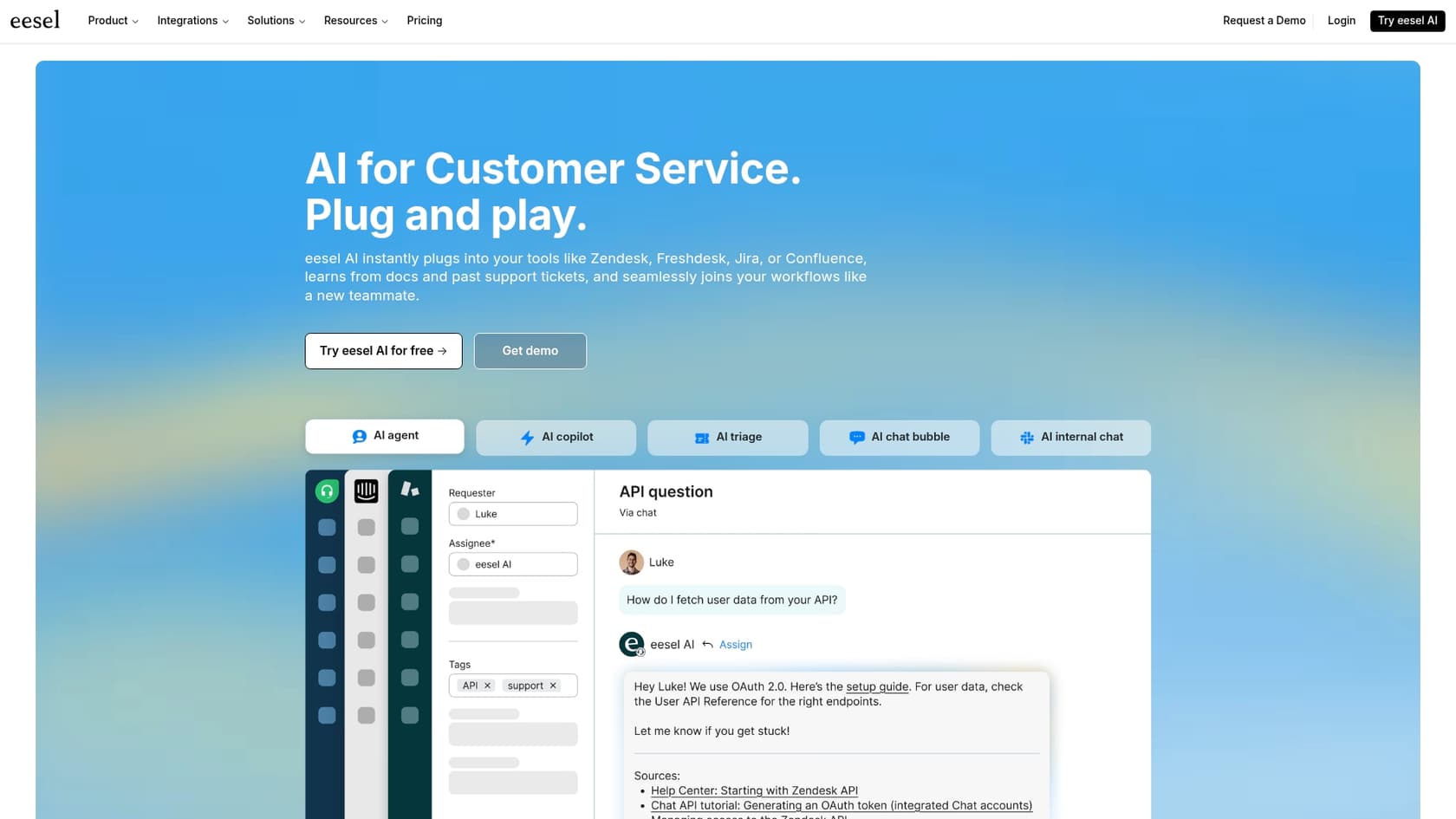
This "plug and play" approach lets you get a powerful AI agent up and running without having to change your existing tools or start a massive platform project.
How to get and pay for these ServiceNow AI use cases
Turning on these AI features isn’t just a matter of checking a box in your settings. It usually means buying into a higher product tier and going through a pretty involved setup process.
Setup and customization
Most of the building and tweaking of AI workflows happens in tools like AI Agent Studio and Flow Designer.
These are impressive low-code tools that give you a lot of control. But they also have a steep learning curve and are part of the massive, sometimes overwhelming, ServiceNow platform. Getting started isn't really a self-service affair. You'll likely be talking to sales reps, sitting through demos, and working with a guided onboarding team.
Understanding pricing
Here’s the important part: ServiceNow’s best AI features aren’t spread evenly across the plans. In April 2026 ServiceNow retired its five legacy ITSM packages (Standard, Pro, Pro Plus, Enterprise, Enterprise Plus, which reached end of sale on July 1, 2026) and replaced them with three tiers. Assistive AI is now bundled into every tier, but the autonomous AI Agents are reserved for the top plan. The final price is almost always custom-quoted, so you won't find it on a public pricing page.
| Plan Tier | Key features included | AI capabilities |
|---|---|---|
| ITSM Foundation | Core service desk: Incident, Request, and Asset Management plus the CMDB. | Virtual Agent, Now Assist (Foundation allocation), Moveworks for ITSM, AI Search, Workflow Data Fabric. |
| ITSM Advanced | Adds Major Incident, Change and Problem Management, Process Mining, and Platform Analytics. | Everything in Foundation, plus AI Voice Agents. |
| ITSM Prime (recommended) | Adds DevOps Change Velocity and Digital Product Release. | Everything in Advanced, plus the L1 Service Desk AI Specialist and autonomous AI Agents for ITSM, the only tier where you can build custom AI agents. |
The takeaway here is pretty clear. To get the tools that actually close a ticket without a human, like AI Agents for ITSM, you have to be on the top ITSM Prime tier. The multi-tiered pricing makes it tough to figure out what you'll actually end up paying, since every tier reads "Get Custom Quote."
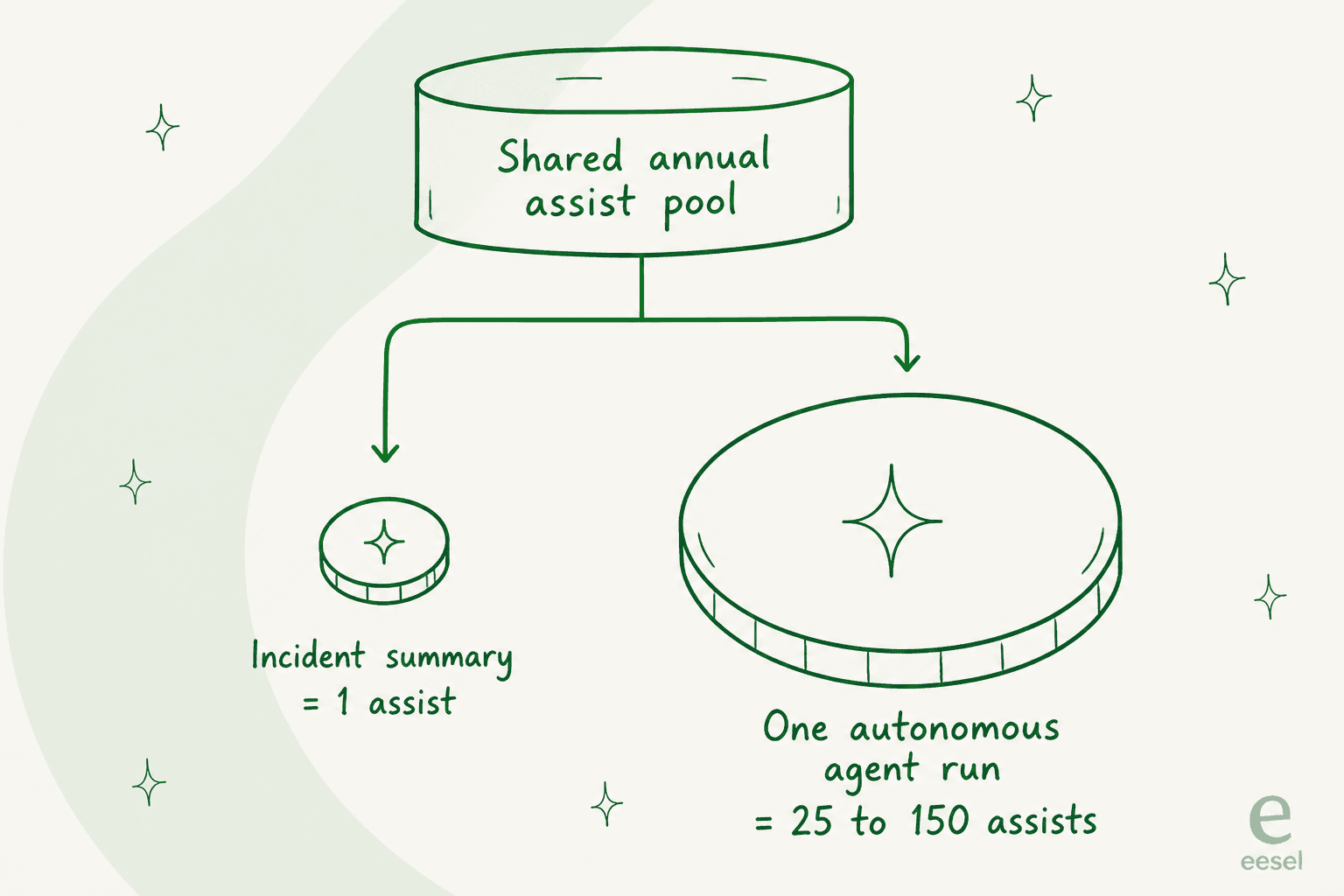
ServiceNow now publishes an assist rate card, and it shows where the cost really lands: a single incident summary draws one assist from your annual pool, while one autonomous agent run draws 25 to 150. The moment you switch from assistive AI to the autonomous agents you bought Prime for, your consumption per action jumps sharply.
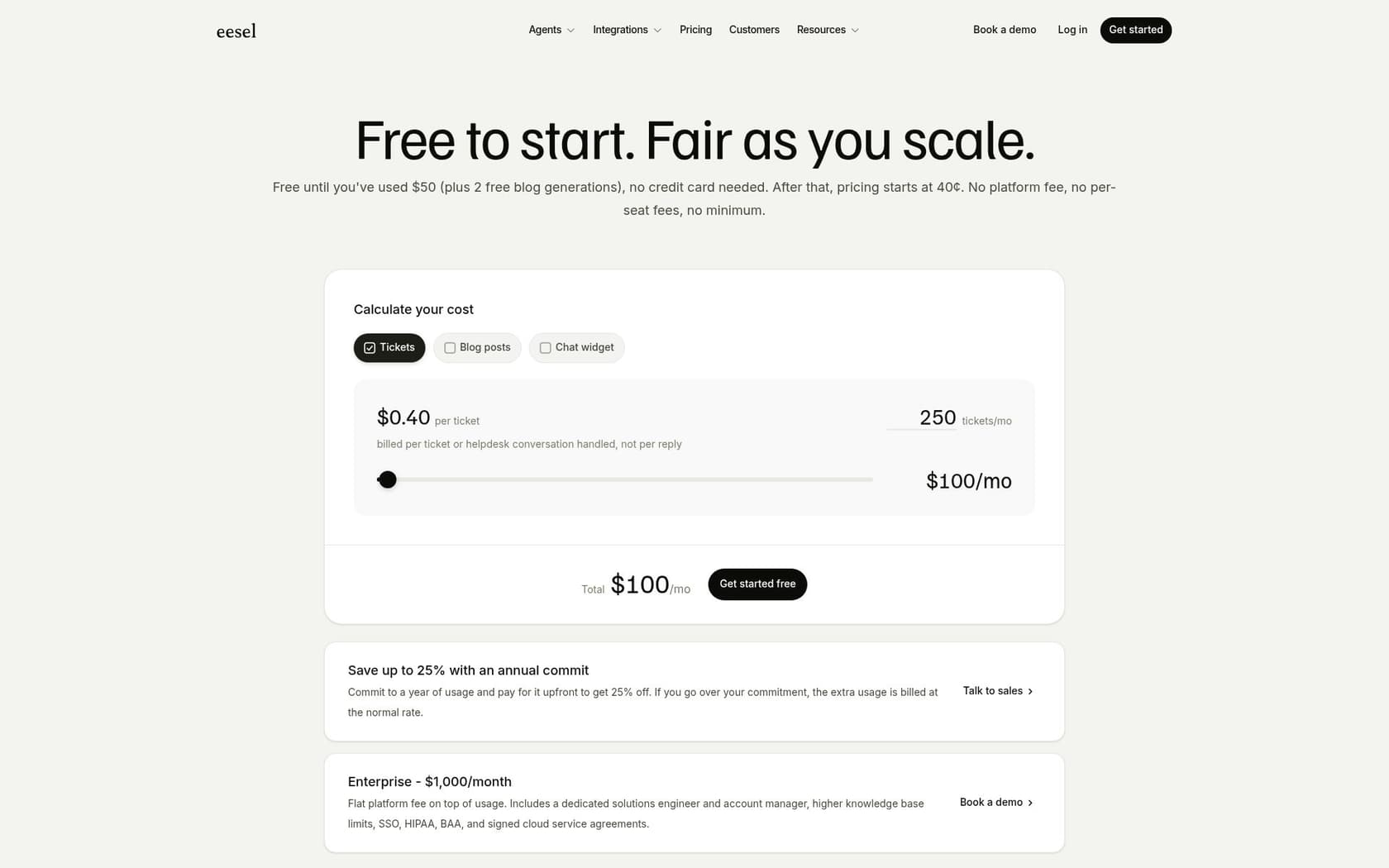
In comparison, alternatives like eesel AI have simple, transparent pricing with one fixed monthly price. eesel plans start at $299/month for 500 credits (1 credit per ticket or chat it handles), with no platform fee and no per-seat fee, and a free plan of 100 credits lets you try it first, which makes it much easier to predict your costs.
Final thoughts: Powerful, but with a catch
There’s no question that ServiceNow has built a powerful, deeply integrated set of AI tools that can handle some very complex work. If your organization is already all-in on the ServiceNow ecosystem, their single-platform approach offers a consistent and robust way to automate your workflows.
But that power comes with a pretty big catch: it’s complex, it's expensive, and it locks you into their ecosystem. Getting the most out of ServiceNow AI use cases is a major project. It takes specialized knowledge, a lot of configuration, and a full commitment to their way of doing things.
For teams that want to move faster and improve the tools they already use, like Zendesk, Jira Service Management, or Slack, without a massive migration, there’s a more practical path.
This is where a solution like eesel AI's AI Agent really makes sense. It gives you powerful ticket automation and instantly connects to all your knowledge, plugging right into your current help desk in just a few minutes. You get to augment your stack with AI today, instead of planning a project to replace it tomorrow.
Ready to see how much easier AI-powered support can be? Check out eesel AI.
Frequently asked questions
What are the main benefits a business can expect from implementing ServiceNow AI use cases?
Businesses can expect faster incident resolution, improved self-service experiences, and increased efficiency for IT and development teams. These tools help automate routine tasks, summarize complex information, and streamline workflows across the platform.
How do ServiceNow AI use cases help automate incident and case management?
ServiceNow AI use cases automate incident management by intelligently triaging and routing new incidents, summarizing lengthy case histories for agents, and even autonomously resolving common issues. This significantly speeds up resolution times and reduces manual effort.
What's involved in connecting my existing knowledge bases to support ServiceNow AI use cases?
Connecting knowledge bases for ServiceNow AI use cases typically involves utilizing ServiceNow's Workflow Data Fabric and External Content Connectors. This requires configuring connections through Integration Hub to pull external content into the ServiceNow ecosystem for AI tools to leverage.
Can you explain the different ways ServiceNow AI use cases can assist both employees and IT agents?
For employees, ServiceNow AI use cases offer smarter chatbots and improved search within self-service portals. For IT agents, tools like Now Assist summarize tickets and draft notes, while AI Agents can automate triage and resolve common problems autonomously.
What are the typical pricing considerations when looking to adopt advanced ServiceNow AI use cases?
Advanced ServiceNow AI use cases such as autonomous AI Agents for ITSM are reserved for the top ITSM Prime tier, one of three tiers (Foundation, Advanced, and Prime) that replaced the older packages in 2026. Pricing is custom-quoted rather than shown publicly, since every tier reads "Get Custom Quote," which can make costs hard to predict.
Are there specific challenges or complexities in setting up ServiceNow AI use cases?
Yes, setting up ServiceNow AI use cases can involve significant complexity, including a steep learning curve for development tools like AI Agent Studio and Flow Designer. It often requires a full commitment to the ServiceNow platform and a guided onboarding process rather than a simple, self-service setup.