A practical guide to the Salesforce AI architecture

Stevia Putri
Written by

Stevia Putri

Last edited November 24, 2025

A practical guide to the Salesforce AI architecture

So, you’re hearing a lot about Salesforce's new AI tools like Agentforce and Einstein. They’re promising to completely change how businesses work, which sounds great. But if you're on a support team, trying to figure out the Salesforce AI architecture can feel like you’re decoding a secret language. What do all these different pieces do, and what’s actually needed to get AI working for your team?

The whole system is powerful, there's no doubt about that. But it's also layered and complex. Getting real, practical value from it comes down to one thing that’s easy to overlook: a clean, organized, and unified knowledge base.

Let's break down the Salesforce AI architecture into plain English. We’ll walk through the main components, explain why your knowledge base is the star of the show, and show you a more straightforward way to get started with AI-powered support, without kicking off a massive, months-long project.

What is the Salesforce AI architecture?

The Salesforce AI architecture isn't just one thing you buy off the shelf. It’s more like an ecosystem of different layers all working together to bring AI smarts to your CRM data.

Think of it like this:

  • The "brain" (Agentforce & Einstein): This is the part of the AI you and your team actually see and use. It’s what generates content, predicts what a customer might do next, or automates tasks for your sales and service folks. When you ask it to draft an email or summarize a support case, this is the AI doing the thinking.

  • The "memory" (Data 360): This is where all your information lives. Data 360 is built to pull all your customer data, not just from Salesforce but from other systems too, into one single source of truth. It connects your CRM records with data you might have in other places like Snowflake or Redshift, giving the AI a complete picture.

  • The "conscience" (Salesforce Trust Layer): This built-in layer is all about security and ethics. It makes sure your data stays private and the AI behaves responsibly. A key part of this is a zero-retention policy, which means your company’s sensitive information isn’t used to train public AI models.

  • The "textbook" (Salesforce Knowledge): This is your company's internal library. It’s where Salesforce expects you to store all your help articles, FAQs, and troubleshooting guides. The AI leans on this content heavily to come up with answers that are specific and accurate to your business.

When you put them all together, you have a pretty sophisticated system. The brain (Agentforce) uses its unified memory (Data 360) and studies the company textbook (Salesforce Knowledge), all while the conscience (the Trust Layer) keeps things in line.

Why your knowledge base is the key to the Salesforce AI architecture

AI models are only as good as the data they’re trained on. If you just let one loose without pointing it to reliable information, it can start "hallucinating," which is a nice way of saying it just makes stuff up. To stop that from happening, Salesforce’s AI is designed to be "grounded" in your company's own data so it can give helpful and relevant answers.

So, where does it get that data?

Salesforce themselves are pretty clear about this. According to their documentation, "A knowledge base is an essential asset to connect to your AI model." They’re telling us straight up: for customer support, their AI is counting on the content you’ve put inside Salesforce Knowledge to answer questions.

This means the success of the whole Salesforce AI architecture for your support team really depends on how good your knowledge base is. If it’s empty, out of date, or just a mess, then your expensive AI tools don’t have the right textbook to learn from. And as you're about to see, building that textbook is where things can get tricky.

Challenges of building a Salesforce-native knowledge base

For many teams, the biggest obstacle to getting value from Salesforce's AI is the task of building and maintaining a great knowledge base inside Salesforce. It’s a huge, time-consuming project that’s easy to underestimate.

1. Setup is a project in itself

You can’t just flip a switch and turn on Salesforce Knowledge. Getting it set up properly requires a technical deep-dive that can take months. You'll need to figure out:

  • Article Types and Page Layouts: Before writing anything, you have to design the structure. That means creating different templates for things like FAQs, how-to guides, and troubleshooting docs, each with its own specific layout.

  • Data Categories: You need to build a whole taxonomy, which is basically a family tree for your content, so articles are organized and easy to find. This requires a lot of planning to get right from the start.

  • User Permissions and Workflows: You have to decide who can write, edit, and publish articles. This usually involves setting up an approval process to make sure every piece of content is checked for accuracy before it goes live.

The whole process is so involved that Salesforce provides implementation guides that are hundreds of pages long. This isn’t something you can knock out over a weekend; it’s a major effort that often requires hiring a Salesforce specialist.

This video shows how to set up Salesforce Knowledge to help your team find answers to common customer requests more easily.

2. Scattered knowledge: A significant challenge

Let's be real, where does your company's actual knowledge live? It's probably not in one neat folder. The best answers to customer questions are usually spread out across a bunch of different tools:

  • Internal wikis like Confluence, SharePoint, or Notion.

  • Shared drives full of Google Docs and PDFs.

  • Important conversations and decisions buried in Slack or Microsoft Teams.

  • Thousands of resolved tickets in your helpdesk, which often contain the most valuable knowledge of all.

While Salesforce’s Data 360 is designed to bring all this together, it requires a massive data migration or a series of complex integrations. You have to pull all of that information into the Salesforce ecosystem first. This often means using other tools like Zapier or building custom API connections, which just adds more cost and complexity.

A screenshot of the Zapier and Salesforce integration page, which is a part of the Salesforce AI architecture.

3. Manual content creation: A huge bottleneck

Okay, let's say you get through the setup and build the perfect home for your knowledge in Salesforce. You still have a big problem: someone has to actually write all the articles. And keep them updated.

Figuring out what to write is a job in itself. Teams have to dig through support tickets to find common problems or knowledge gaps. Then, a support agent or manager has to take the time to turn a messy ticket conversation into a polished, easy-to-read article. This manual process is slow and pulls your team away from what they should be doing: helping customers.

A simpler alternative to the native Salesforce AI architecture

Instead of spending months and a ton of money building the perfect knowledge base inside Salesforce, there's a more agile way to do things. You can use an AI platform that connects to the tools and knowledge you already have, wherever it happens to be.

This is where a solution like eesel AI comes in. It’s designed to work with your current setup, including Salesforce, not make you move everything into a new one.

A screenshot of the eesel AI homepage, which is an alternative to the native Salesforce AI architecture.

Connect your knowledge, don't migrate it

Instead of a huge project to move everything into Salesforce, eesel AI connects directly to your existing knowledge sources in minutes. Whether your info is in Salesforce Knowledge, Confluence, Google Docs, or past tickets in a helpdesk like Zendesk, eesel AI can access it. This gives the AI a complete brain to work with, without you having to lift a finger to move files.

Go live in minutes, not months

You can forget about complex configurations and long onboarding sessions. With eesel AI, you connect your helpdesk and other tools with one-click integrations and can launch an AI Agent or AI Copilot on the same day. It's truly self-serve, so you can get value from AI right away without needing a team of consultants.

A screenshot of the eesel AI Agent, which is part of an alternative to the Salesforce AI architecture.

Learn from your most valuable asset: Past tickets

Maybe the best part is that eesel AI can learn from your team's historical support conversations. It automatically picks up your brand voice, understands common issues, and sees what solutions have worked best in the past. This gives your AI a huge head start that the native Salesforce AI, which mainly relies on pre-written articles, just doesn't have. Your best answers are already there in your old tickets, and eesel AI knows how to use them.

Test with confidence before you launch

A little nervous about letting an AI talk to your customers? Fair enough. eesel AI has a simulation mode that lets you test your AI agent on thousands of your past tickets in a safe environment. You can see exactly how it would have replied, get real forecasts on how many tickets it could resolve, and tweak its behavior before it ever interacts with a single live customer. This takes the guesswork and risk out of rolling out AI.

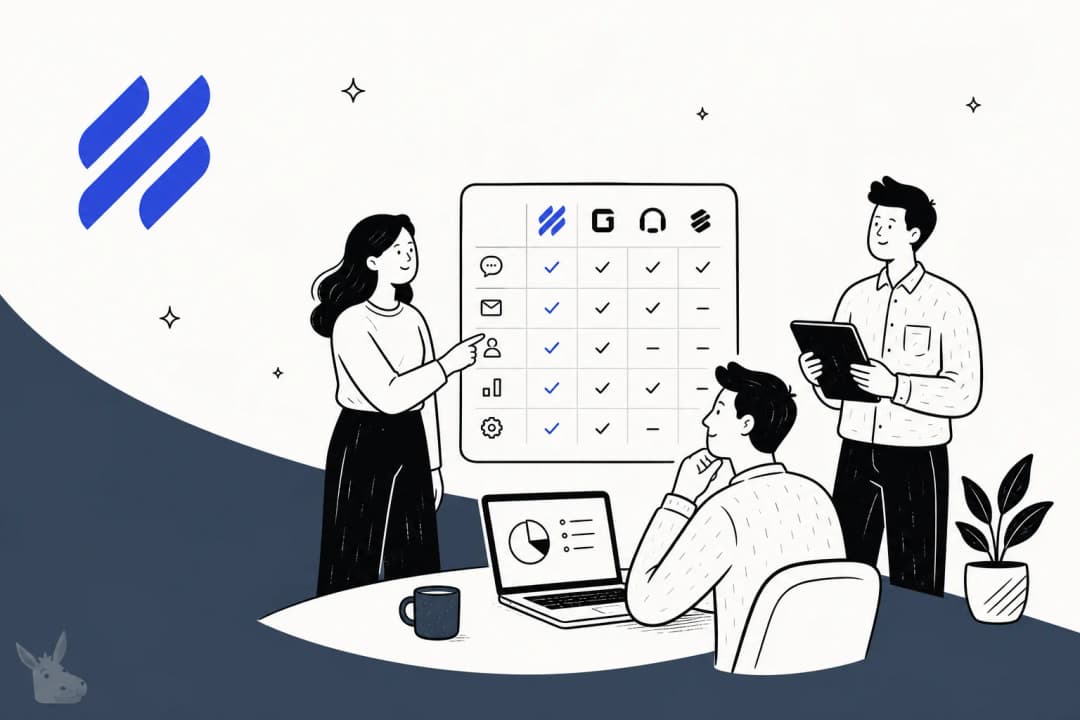
FeatureThe Standard Salesforce ApproachThe eesel AI Approach
Setup TimeMonths of configuration and data migration.Minutes with self-serve, one-click integrations.
Knowledge SourcesMostly relies on Salesforce Knowledge, so you have to centralize your data.Connects instantly to Salesforce, Confluence, GDocs, past tickets, and more.
MaintenanceSomeone has to manually create and update knowledge base articles forever.Learns automatically from new tickets and helps you spot and write new articles.
TestingLimited testing before launch; you often have to go live to see the real impact.Run powerful simulations on past tickets to see performance before going live.

Build on what you have, not from scratch

The Salesforce AI architecture is powerful, no question. But for support teams, its effectiveness is tied directly to having a perfectly maintained, centralized knowledge base, and that’s a massive project for any company. The old-school path of moving all your scattered knowledge into Salesforce before you see any benefit is slow, expensive, and drains your team's resources.

A more practical approach is to use the knowledge and tools you already have. Platforms like eesel AI are built to plug right into your existing world, including Salesforce, and deliver value immediately. By connecting to all your knowledge sources and learning from past support conversations, you can get a powerful AI assistant up and running in minutes, not months.

Don't let a complex system stop you from innovating. Start small, prove the value, and then scale with confidence.

Ready to use AI with your Salesforce data without the multi-month implementation project? Check out what eesel AI can do for support automation.

Frequently asked questions

The Salesforce AI architecture consists of several key layers: the "brain" (Agentforce & Einstein) for AI logic, the "memory" (Data 360) for unified data, the "conscience" (Salesforce Trust Layer) for security, and the "textbook" (Salesforce Knowledge) for company-specific information. These components work together to provide intelligent capabilities.

A comprehensive knowledge base is crucial because it "grounds" the AI models in your company's specific data, preventing them from making up information. Salesforce's AI relies heavily on this content, particularly Salesforce Knowledge, to provide accurate and relevant answers tailored to your business.

Implementing the native Salesforce AI architecture often involves significant challenges, such as the complex setup of Salesforce Knowledge (requiring design of article types, data categories, and permissions), the difficulty of migrating scattered company knowledge into Salesforce, and the ongoing manual effort of creating and updating articles.

While Salesforce's Data 360 aims to unify data from various sources, integrating external systems into the native Salesforce AI architecture often requires extensive data migration or complex custom integrations. This can add significant cost and complexity, making it a substantial project.

Yes, alternative AI platforms like eesel AI can connect directly to your existing knowledge sources (including Salesforce Knowledge, Confluence, Google Docs, and past tickets) without requiring full data migration. This allows you to launch AI agents or copilots much faster, often within minutes instead of months.

An alternative solution typically connects to your existing knowledge sources, meaning you don't need to migrate everything into Salesforce, significantly reducing setup time from months to minutes. It also often learns automatically from your historical support tickets, offering a dynamic knowledge base compared to the manual article creation required by the standard Salesforce approach.

Share this post

Stevia undefined

Article by

Stevia Putri

Stevia Putri is a marketing generalist at eesel AI, where she helps turn powerful AI tools into stories that resonate. She’s driven by curiosity, clarity, and the human side of technology.