Grok Bot for Gorgias: what it can and can't do in 2026

Rama Adi Nugraha

Katelin Teen
Last edited September 21, 2026
Why "Grok Bot for Gorgias" is even a search
When xAI launched Grok Bot on 2026-08-11, the product page shipped with a set of example prompts to show off what the agent could do. One of them names a helpdesk directly and tells the bot to "work the support queue." So the idea has an official blessing, and if you run a Shopify store on Gorgias, the natural next thought is "can I point that at my tickets?"
I build integrations for a living, and I've spent the last few years wiring AI agents into live support queues. So I'll give you the honest version up front: the gap between "an agent can click through tickets in a demo" and "an agent I'd trust to answer a stranger's refund question unsupervised" is enormous. I've watched confident-sounding bots quietly send wrong answers, which is exactly why every rollout I ship now gets simulated against a team's real historical tickets before it touches a single customer. So when a brand-new agent tells me it'll work my queue, my first question isn't "can it click," it's "what happens the first time it's confidently wrong during a Black Friday rush."
That's the lens for this whole piece. Grok Bot is an impressive general-purpose worker. Let's look at how you'd point it at Gorgias, what it does well, and where the seams show for ecommerce support specifically.
The two ways to connect Grok to Gorgias
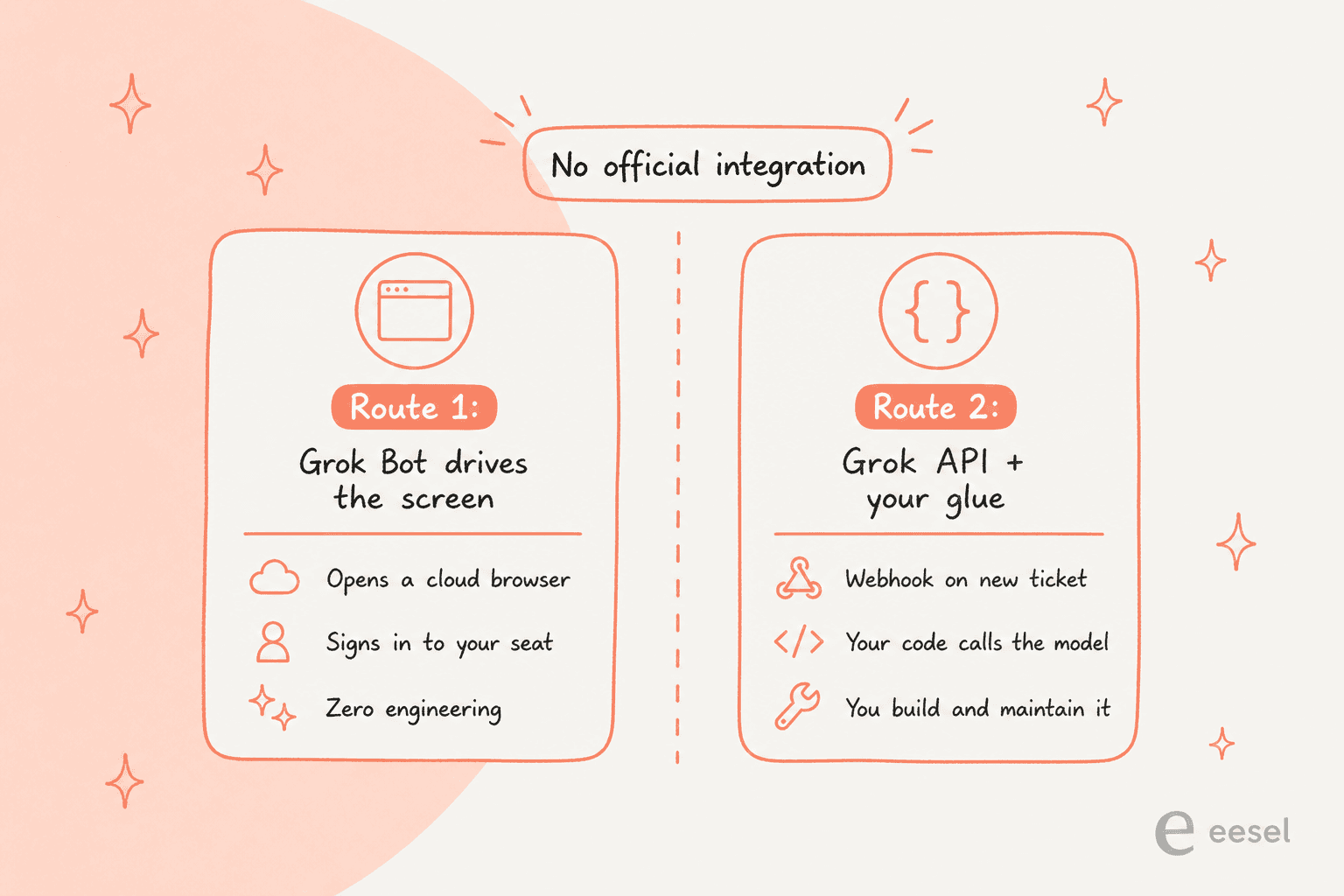
There's no official Grok-to-Gorgias integration, no App Store listing, no toggle. So "Grok Bot for Gorgias" really means one of two setups, and they behave very differently.
Route 1: Grok Bot drives your Gorgias seat
This is the route xAI's example prompt describes. Grok Bot runs on a managed cloud computer, opens a browser, and you tell it to sign in to Gorgias. It then works the helpdesk the same way a human agent would: reading tickets, drafting replies, clicking buttons.
The appeal is that it needs zero engineering. You don't wire up an API, you just describe the job in plain language and Grok drives the UI. The catch is that it's operating your Gorgias agent seat by remote control from the outside, not participating as a first-class AI agent inside Gorgias. Every action is a screen interaction, and there's no native concept of confidence, escalation, or ticket-level guardrails, only whatever text instructions you wrote for the bot.
Route 2: the Grok API plus your own glue
The more controllable route skips Grok Bot entirely and uses the Grok 4.6 model API. You set up a Gorgias trigger or HTTP integration so that when a ticket comes in, your own code calls the model, gets a suggested reply, and posts it back through the Gorgias REST API.
This gives you real control over what context the model sees and where a human steps in. The cost is that you're now maintaining a small internal product: the retrieval, the prompt, the error handling, the escalation logic, all of it. It's worth knowing Gorgias's own plumbing has sharp edges here too. HTTP integrations time out at 5 seconds, the Rules builder has no HTTP action among its options, and a missing macro variable renders as blank space rather than an error, so a broken path ships a reply with a hole in it. This is the classic build-versus-buy fork, and for most support teams the "build" side quietly turns into a permanent side project.
There's a third door worth naming, because it's the one Grok Bot can't use. Gorgias ships a first-party MCP server at mcp.gorgias.com, free on every plan, with a public MCP cookbook. Its own walkthrough uses Claude Desktop and Claude Code as the primary clients. It's the clean, documented way to operate a Gorgias account from an external AI tool, and Grok Bot has no published way to connect to it. So the two routes above are what you're actually left with.
What Grok Bot is good at
Before the caveats, credit where it's due, because Grok Bot is a real step forward for a certain kind of work.
Each bot owns its own routines, context, and domain, and bots can hand work to each other. One Hacker News commenter who'd been using it for a month put the appeal well:
"Biggest advantage is each one owns its own routines, context, and domain, and they can communicate between each other... each one has their own computer, which means async work feels like it actually works. I haven't had to juggle worktrees for the last month."
For open-ended, autonomous projects, sourcing suppliers, running research, chasing an expense across systems, that always-on, computer-using model is legitimately powerful. The eight roles xAI ships out of the box (Sales Outbound, Talent Scout, Paid Media, Expense Manager, Product Performance, Bug Reproduction, Account Health, and Chief of Staff) tell you where its heart is: broad, autonomous, individual-contributor knowledge work.
Which is also the first tell for support. Not one of those eight roles is a support agent. The tool that suggests working a support queue as an example ships zero support-shaped bots, and that mismatch runs deeper than a missing template.
Where it gets risky for a support queue
Support has requirements that open-ended knowledge work doesn't: it touches customer PII, it runs unsupervised at volume, and a wrong answer is a customer-facing incident, not a re-run. Three things about Grok Bot's design collide with that.
One shared computer, one reused login
This is the big one. All of a user's bots share a single cloud computer. The bot never holds your Gorgias password. Instead it hands you the screen, you type the credentials, and then the session persists on that shared computer where every other bot can reuse it. xAI's own docs say it twice: "Do not use separate Bots as a security boundary." Deleting a bot leaves its files and sign-ins behind.
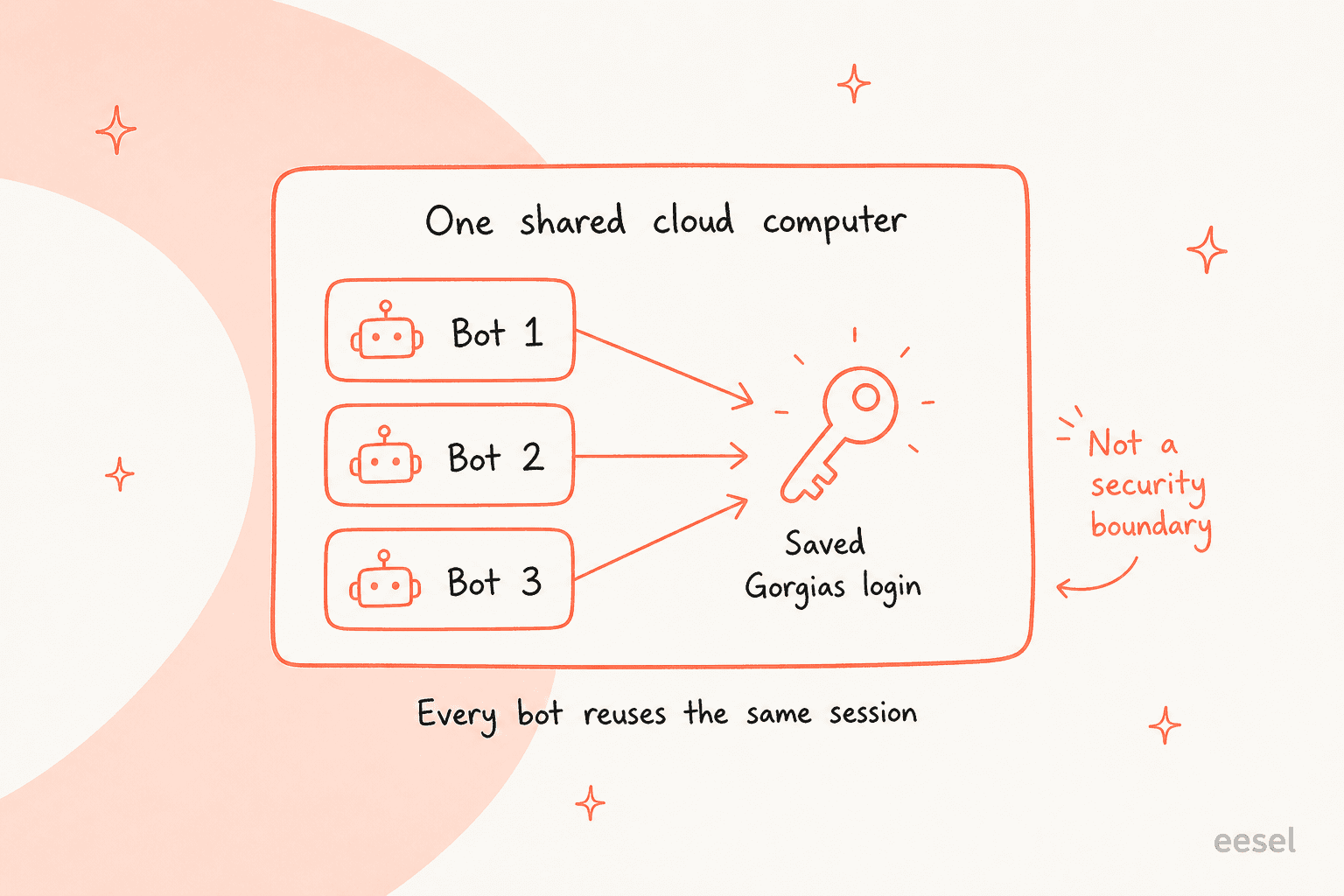
For a personal productivity setup that's a shrug. For a Gorgias instance full of customer order data, it means the boundary you'd want, "this bot can only see support, that one can't touch it," isn't something the product enforces. One commenter framed the accountability problem sharply:
"By hijacking a real person's credentials, that person becomes the accountability sink. Very neat. Very deliberate."
Because the bot works through a signed-in human session, every action it takes in Gorgias is attributed to whoever signed in. That's an awkward place to be as a support lead.
There's no dry run
The single most important habit in deploying support AI is testing it against your own history before it goes live. Grok Bot doesn't offer that. Its docs are explicit: "A test run performs real work. It can navigate websites, change files, and call connected tools." There is no sandbox, no read-only rehearsal, no "show me what you'd have replied to last month's tickets." The first time it works your queue, it's working your real queue.
Approvals help a little, but they're user-authored free text, not a product-enforced list of allowed actions. And approving something isn't the same as being able to undo it: "An approval controls the proposed action. It does not reverse work already completed." If the bot has already sent the reply, the approval flow can't call it back.
This is worth contrasting fairly with Gorgias itself, because Gorgias does have pre-launch test conversations where you preview a reply against a customer profile before going live. What it lacks is bulk replay over your own historical tickets, and Grok Bot lacks even the single-message preview.
The audit trail and the compliance page are both mostly blank
Two more gaps that matter more in support than in solo work. First, observability: xAI's docs describe an audit view of bot actions as "coming," in the future tense. So today, reconstructing exactly what an agent did across a shift of tickets is hard.
Second, compliance. Grok Bot claims no SOC 2, no ISO 27001, no GDPR, no HIPAA, publishes no data-retention period or residency terms, and defers to Cursor's terms of service. If your support data includes anything regulated, that's a hard stop rather than a footnote. This isn't a knock on Grok as a model, it's a beta agent that hasn't built the governance layer support teams need yet.
The cost picture nobody screenshots
The sticker is the easy part: $200/month on Cursor Ultra, $120/seat/month on Cursor Premium Teams, or included with SuperGrok Heavy, per x.ai/bot. The part that surprises people is the meter underneath it.
Grok Bot bills a weekly AI-token allowance on top of the seat, with overage "billed from model and token cost," and xAI's docs state plainly that there's no Grok Bot-specific spend cap yet. An always-on agent working a support queue is a high-token workload, and the same HN user who loved it flagged exactly this:
"I've used more tokens this month than not this month. That's not a typo... Always on perpetual agents use a LOT of tokens."
On the API route the math is different but not simpler. grok-4.6 runs $2.00 in / $6.00 out per million tokens, plus per-call fees for web and X search, and you still layer that on top of Gorgias's own AI economics. Those economics have their own gotchas worth knowing before you compare anything:
| What you pay | Gorgias AI Agent | Grok Bot (screen route) | Grok API (build route) |
|---|---|---|---|
| Base | Included on every plan, from $40/mo | $200/mo, or $120/seat on Teams | Pay-as-you-go tokens |
| AI unit cost | ~$0.90 per automated interaction, $1.50 past your allowance | Weekly token allowance, overage at model cost | $2/$6 per M tokens in/out |
| Platform requirement | AI Agent requires Shopify | None | None |
| Double-billing gotcha | A fully-automated ticket is billed as both a ticket and an interaction | n/a | You still pay Gorgias per ticket |
| Spend cap | Allowance-based | No Grok Bot spend cap yet | Your own budget code |
Two Gorgias-specific facts sit in that table that catch people out. First, its AI Agent requires Shopify and is unsupported on BigCommerce, Magento and WooCommerce, so a non-Shopify merchant can run the helpdesk but not Gorgias's native automation. Second, on accounts created after May 2025, a fully-resolved ticket counts toward both the ticket allowance and the automated-interaction allowance, so the same ticket is billed twice. None of that is Grok's fault, but it's the real backdrop any "Grok for Gorgias" cost comparison lands in.
The alternative: an AI agent that's actually built for Gorgias
Here's the thing the two Grok routes have in common: both make you responsible for the safety layer that support needs, and neither gives you a way to rehearse first. That's the exact gap eesel exists to close.
eesel is an AI teammate platform, and for Gorgias you hire the AI helpdesk teammate. Instead of driving your screen from the outside, it joins your Gorgias instance as a real AI agent over OAuth, then trains on the material your team already trusts: your help center, your macros, and your past tickets. It doesn't care whether the store underneath is Shopify, BigCommerce, or something custom.
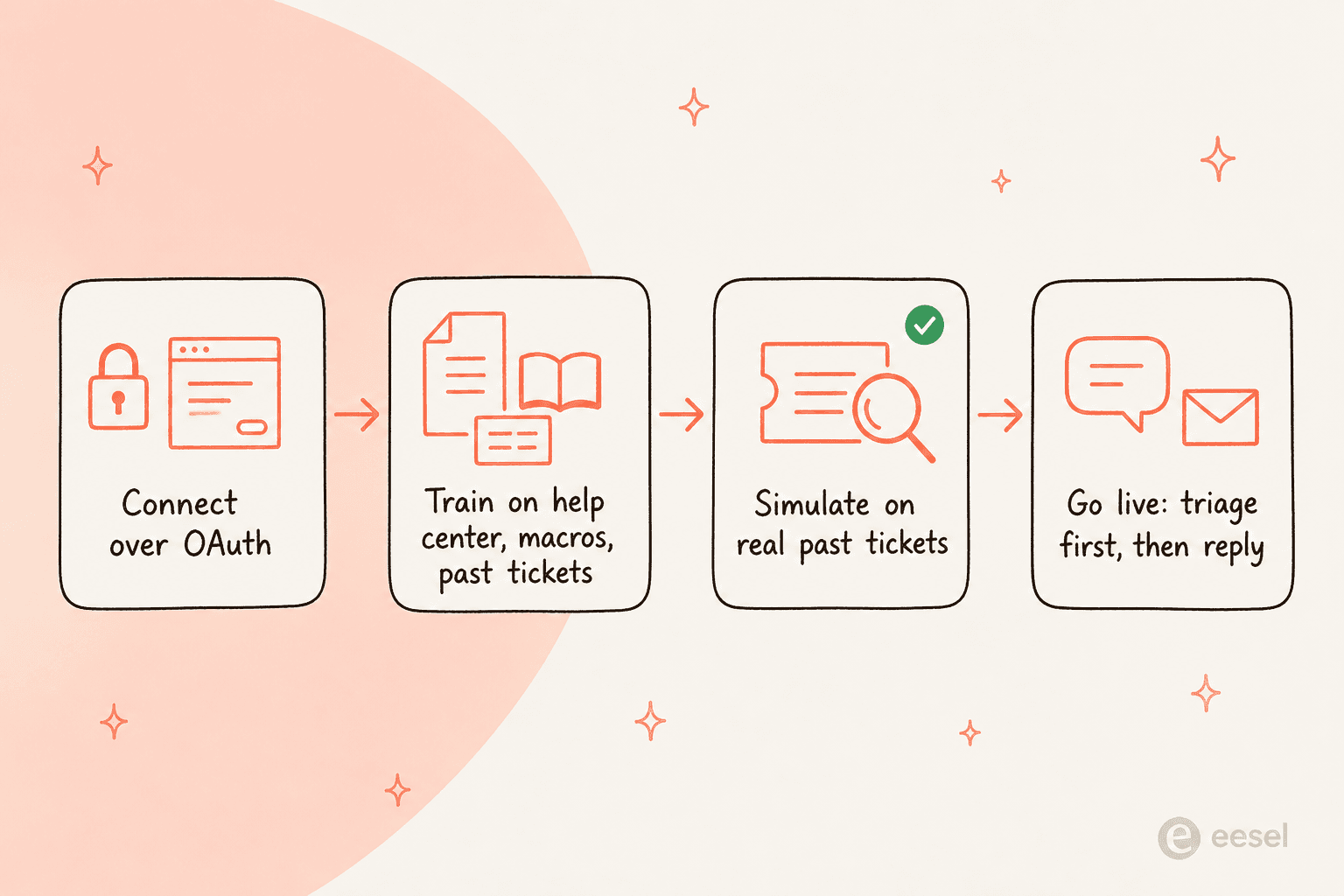
The difference that matters most for support is the one Grok Bot doesn't have: you can simulate the agent against hundreds of your real historical tickets before it answers a live customer. It replays past tickets, scores its answers against what your team actually sent, and hands back the gaps plus suggested instruction changes. That's the "test it before you trust it" habit, built into the product instead of left to you.
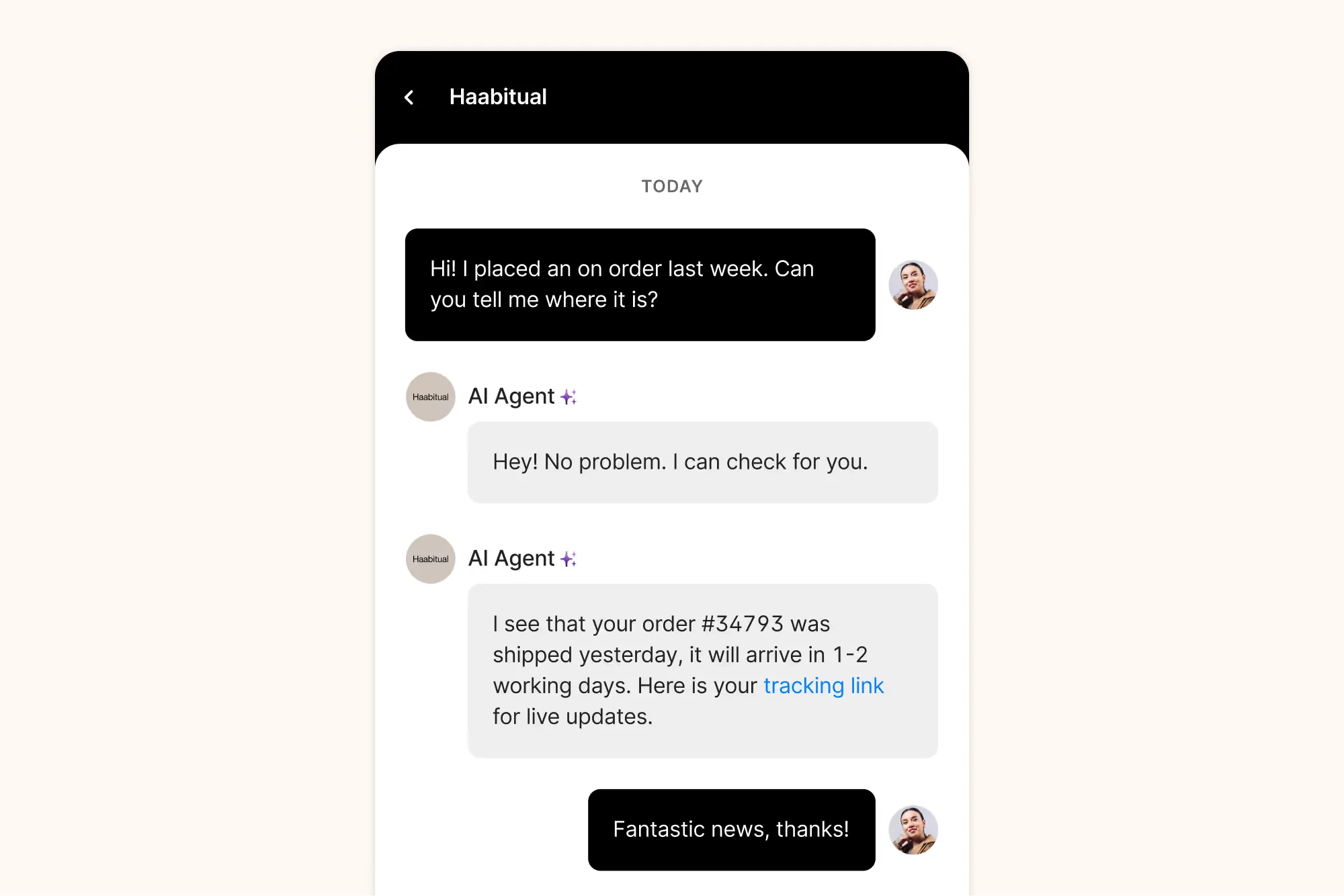
You also get the controls a live queue needs. You can start in triage-only mode that just tags and routes, then switch on public replies when you're confident, the same phased path I use on every rollout. And the audit trail Grok Bot lists as "coming" is here today: every run is logged with the reasoning behind it.
And if the reason you were drawn to Grok Bot was the terminal-and-agent workflow in the first place, eesel meets you there too. It ships a real CLI and MCP server, so a coding agent like Claude Code, Codex, or Cursor can connect the Gorgias integration, edit the agent's instructions, list and approve runs, and read the activity log, all from a terminal without opening the dashboard. You get the programmable, agent-driven feel without handing an unsupervised browser your support queue.
Try eesel for Gorgias
If you came here wanting an AI agent working your Gorgias queue, that's exactly what eesel for Gorgias is for, and it plugs in over OAuth in a few minutes. It works like a new hire that already knows your help center and macros, and the first thing it does is show you how it would have handled your last few hundred tickets, so you're never flipping a switch and hoping. Flat $0.40 per ticket, no per-seat cost, works whatever ecommerce platform sits under your store, and free to try with no credit card.
Frequently Asked Questions
Can Grok Bot work my Gorgias support queue?
Is there an official Grok Bot integration for Gorgias?
How much does Grok Bot cost for Gorgias automation?
Is Grok Bot secure enough for customer data in Gorgias?
Does Gorgias AI Agent work without Shopify?
What's the easiest way to add a reliable AI agent to Gorgias?



Article by
Rama Adi Nugraha
Rama is a software engineer at eesel AI with two years of experience writing about B2B SaaS, AI tools, and customer support technology. Based in Bali, Indonesia, he brings a developer's perspective to product comparisons — cutting through marketing copy to what the integrations and APIs actually do.