Gorgias Automate promises to handle your customer support with AI, freeing up your team to focus on growth. But with a pricing model that charges per ticket and per AI resolution, many teams wonder if the math actually works in their favor.
If you're running a Shopify store and drowning in support tickets, you've probably seen Gorgias mentioned as the go-to solution. The platform has built a strong reputation among e-commerce brands. But reputation doesn't pay the bills, and the pricing structure has some serious gotchas that aren't obvious until you're already committed.
We will break down what Gorgias Automate actually costs, what it delivers, and whether it makes sense for your business.
What is Gorgias Automate?
Gorgias is a helpdesk platform built specifically for e-commerce businesses. Founded in 2015 and now serving over 15,000 brands including Reebok, Steve Madden, and MrBeast's companies, it positions itself as the customer experience platform designed by support people, for support people. The platform holds a 4.6/5 rating on G2, 4.3/5 on the Shopify App Store, and 4.1/5 on Trustpilot.
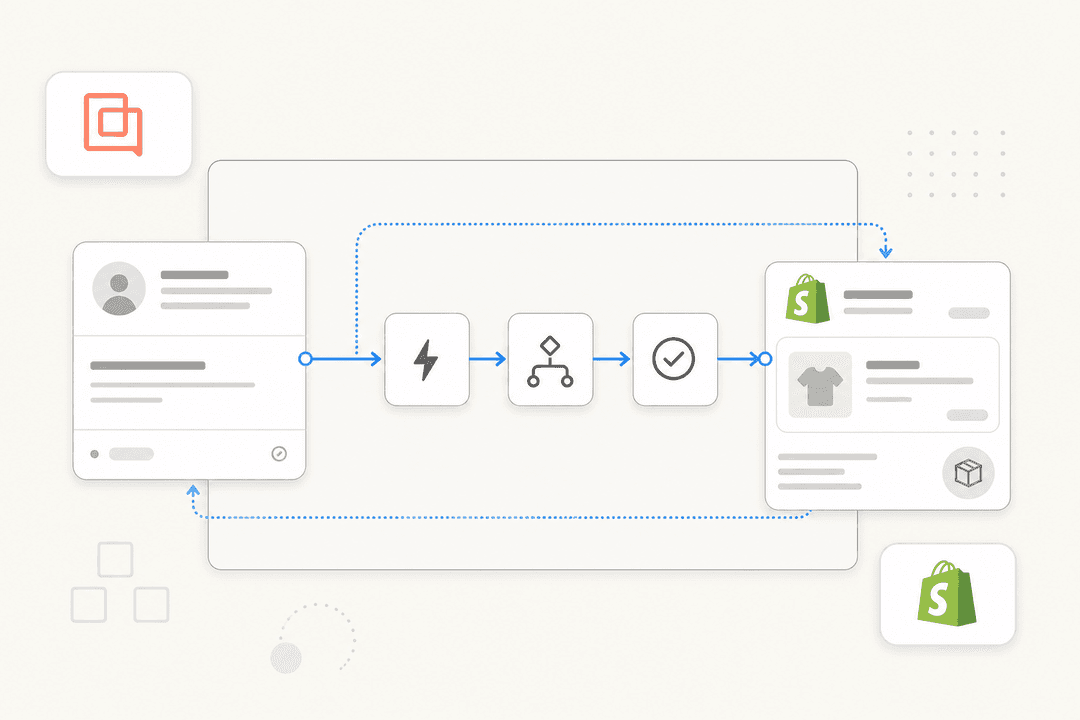
Gorgias Automate refers to the platform's AI-powered automation features, primarily delivered through the AI Agent add-on. This isn't just a chatbot that suggests replies. The AI Agent can actually handle conversations end-to-end: understanding customer questions, looking up order information, processing refunds, and responding directly without human intervention.
The platform offers two distinct AI personas:
- Shopping Assistant handles pre-purchase questions, recommends products, and offers discounts to convert browsers into buyers
- Support Agent manages post-purchase issues like order tracking, returns, and refunds
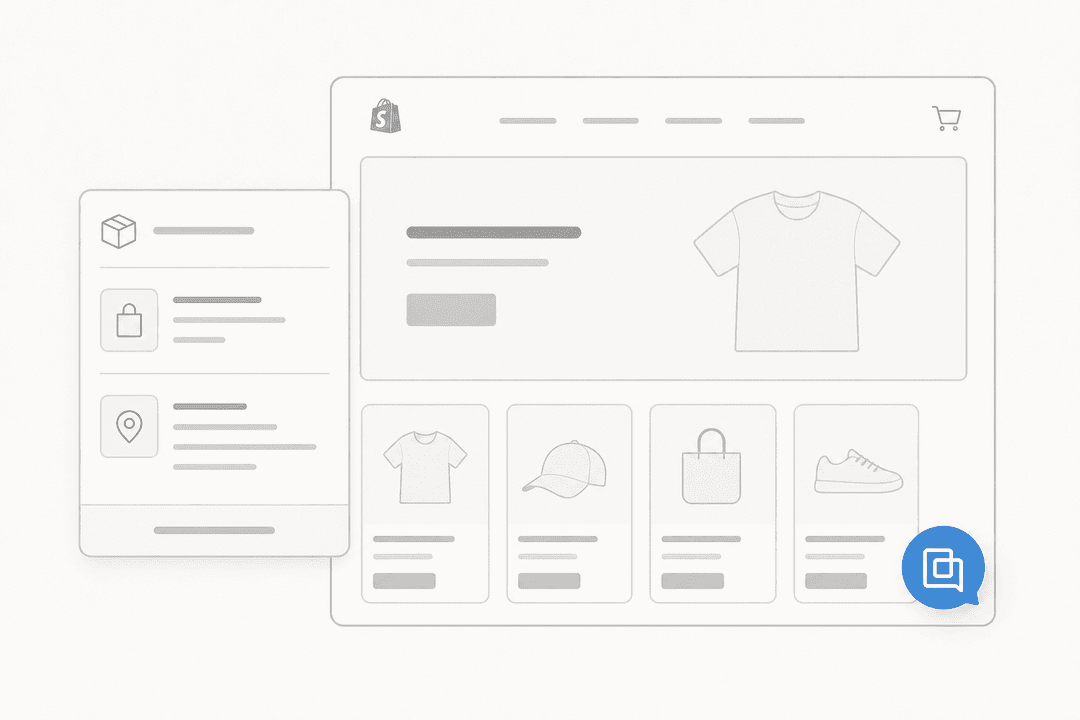
Gorgias connects to your Shopify store (or BigCommerce, Magento, or WooCommerce) and pulls in real-time data about orders, inventory, and customer history. This deep integration is what separates it from generic helpdesk tools. When a customer asks about their order, the AI can actually look it up and take action, not just apologize and create a ticket.
The target audience is clear: e-commerce brands doing significant volume through Shopify who need to scale support without proportionally scaling headcount. If you're processing dozens of orders daily and spending hours on repetitive "where's my order" inquiries, Gorgias is speaking directly to you.
Gorgias Automate pricing: The full picture
Here's where things get complicated. Gorgias uses a ticket-based pricing model, which means you pay based on how many customer conversations you handle each month. This is fundamentally different from per-seat pricing where you pay per agent.
Base helpdesk plans
| Plan | Monthly Price | Annual Price | Tickets Included | Overage Cost | User Seats |
|---|---|---|---|---|---|
| Starter | $10/mo | N/A | 50/month | $0.40/ticket | 3 |
| Basic | $60/mo | $50/mo | 300/month | $40/100 tickets | 500 |
| Pro | $360/mo | $300/mo | 2,000/month | $36/100 tickets | 500 |
| Advanced | $900/mo | $750/mo | 5,000/month | $36/100 tickets | 500 |
| Enterprise | Custom | Custom | 5,000+/month | $32/100 tickets | 500 |
Source: Gorgias pricing
So far, so good. The pricing seems reasonable, especially since you get up to 500 user seats on most plans. But here's the critical detail that changes everything: AI Agent is billed separately from your base plan.
AI Agent pricing (the hidden cost)
| Billing Cycle | Price Per Resolution |
|---|---|
| Monthly | $1.00 per automated resolution |
| Annual | $0.90 per automated resolution |
Source: Gorgias pricing
Every time the AI successfully resolves a customer inquiry without human intervention, you pay an additional $0.90 to $1.00. But it gets worse: each AI resolution ALSO counts as a helpdesk ticket. This means you're effectively paying twice for the same interaction, once for the ticket and once for the AI handling it.
Let's look at real-world cost examples from Gorgias's own pricing page:
Pro Plan with AI (annual billing):
- Base plan: $300/month (2,000 tickets)
- AI: 600 resolutions at $0.90 = $540/month
- Total: $840/month
Advanced Plan with AI (annual billing):
- Base plan: $750/month (5,000 tickets)
- AI: 2,500 resolutions at $0.90 = $2,250/month
- Total: $3,000/month
That Pro plan example shows a 180% increase over the base price once you factor in AI automation at just 30% of your ticket volume. If your automation rate is higher, the multiplier gets steeper.
Additional costs to watch for
- Voice and SMS are separate add-ons with their own per-ticket pricing
- Overage charges kick in automatically when you exceed your ticket limit
- Reopened tickets often count as new billable tickets
- Multi-channel conversations can create multiple billable tickets for the same issue
The result? A bill that grows unpredictably with your success. When you run a flash sale and ticket volume spikes, your Gorgias bill spikes right along with it.
What Gorgias Automate actually does
Despite the pricing concerns, Gorgias Automate delivers genuine capabilities that can transform how e-commerce teams handle support. Understanding exactly what you're paying for helps evaluate whether the investment makes sense.
AI Agent capabilities
The AI Agent can handle a significant portion of routine inquiries autonomously. According to Gorgias, it automates 60%+ of support inquiries when properly configured. Real user reports vary, with some achieving 50-60% automation rates while others see lower numbers during initial implementation.
Here's what the AI can actually do:
- Direct replies to common questions using your help center and past ticket history
- Order lookups pulling real-time data from Shopify to answer "where's my order" questions
- Refund and cancellation processing without leaving the Gorgias interface
- Subscription management through integrations with Recharge and Loop Returns
- Discount code generation based on customer context and your policies
The AI learns your brand voice through guidance documents you provide, and it improves over time through a feedback loop where you approve or correct its responses.
Shopify integration depth
This is where Gorgias truly shines. The integration goes far beyond basic order lookups:
- View complete order history directly in the ticket sidebar
- Edit orders, process refunds, and create cancellations without switching tabs
- Access real-time inventory and product catalog information
- See customer tags and lifetime value at a glance
- Run promotional campaigns directly from support conversations
For Shopify-centric businesses, this deep integration can justify the platform cost by itself. Agents (human or AI) don't waste time context-switching between tools.
Multichannel support
Gorgias centralizes conversations from multiple channels:
- Live chat
- Facebook Messenger
- Instagram DMs
- SMS
- Voice
However, there's a significant limitation: AI Agent only works on email and chat, according to Gorgias's documentation. If your customers reach out via social media or phone, the AI can't help. Those channels require human agents, which somewhat undermines the automation value proposition for businesses with diverse channel mixes.
Revenue tracking
Unlike traditional helpdesks that treat support as a pure cost center, Gorgias includes revenue statistics showing how support interactions drive sales. The Shopping Assistant can recommend products, offer discounts, and convert support conversations into revenue. This feature is available on Pro plans and above.
The platform also provides satisfaction surveys, automatic topic detection, and analytics showing which issues drive the most volume. These insights help you identify knowledge gaps and improve both your AI and human support over time.
What real users say about Gorgias Automate
Marketing claims tell one story. User experiences tell another. Here's what actual Gorgias customers report across review platforms.
Positive experiences
Many users genuinely love the platform, particularly for its Shopify integration and automation capabilities.
Gorgias has reduced our human handled tickets by about 60%. Gorgias responds instantly, asks the right follow up questions, and resolves common issues without escalation.
We've been using Gorgias Automate since its inception... We have grown together and are handling an average of about 50%+ tickets! The CSTAT is usually good and resolves issues well.

Gorgias is a CRM tool built FOR CX BY CX. That's huge in the CX space, especially when we've so often had to bend our operations to fit tools designed for Sales.
The platform holds a 4.6/5 rating on G2, 4.3/5 on the Shopify App Store, and 4.1/5 on Trustpilot. These are solid scores indicating general satisfaction among users.
Negative experiences
However, the reviews also reveal consistent pain points that prospective buyers should understand.
is there a gorgias alternative with ai that doesn't give wrong answers constantly?
we had the exact same problem with gorgias AI ended up just turning it off completely
This has got to be the greediest and ruthless company ever. We were paying over $13.5k per year on Gorgias for the Advanced plan... If you a fast growing company, (7-8 figures or more) I highly recommend staying away from this platform.

Common complaints include:
- AI giving incorrect answers that frustrate customers
- Unpredictable billing that makes budgeting impossible
- "Too AI" responses that feel robotic and impersonal
- The platform becoming prohibitively expensive as volume grows
Who loves it vs who regrets it
The pattern in reviews is clear. Gorgias works best for:
- Established Shopify stores with predictable ticket volume
- Teams with dedicated support staff who can train and monitor the AI
- Businesses where the deep Shopify integration saves significant agent time
- Companies with simple, repetitive support inquiries
Teams that regret the investment tend to be fast-growing businesses where ticket volume fluctuates unpredictably, smaller teams without resources to properly configure AI automation, businesses using non-Shopify platforms where the integration advantage disappears, or companies with complex support needs that AI struggles to handle accurately.
When Gorgias Automate makes sense
Given the pricing complexity and mixed user reviews, when does Gorgias Automate actually deliver value? Here are the scenarios where the math tends to work out.
High-volume Shopify stores with predictable growth
If you're processing hundreds of orders daily through Shopify and your support volume grows roughly in line with sales, Gorgias can make financial sense. The deep Shopify integration means agents handle tickets faster, and the AI can deflect a meaningful percentage of routine inquiries.
The key word is "predictable." If you know you'll handle roughly 2,000 tickets monthly and 30% can be automated, you can budget for the $840 Pro plan cost. The problems start when Black Friday drives 5,000 tickets and your bill triples unexpectedly.
Scenarios where the ROI works
Consider Gorgias when:
- Your support team spends significant time on "where's my order" inquiries
- You have the staff resources to properly train and monitor AI automation
- The time saved through Shopify integration justifies the platform cost
- Your ticket volume is high enough that per-seat pricing would be more expensive
- You can absorb some billing variability without cash flow stress
When the deep Shopify integration justifies the cost
For businesses where agents previously switched between Shopify, email, and multiple tools to handle a single ticket, Gorgias's unified interface delivers real efficiency gains. Being able to process a refund without leaving the ticket view saves 30-60 seconds per interaction. At scale, those seconds add up to meaningful labor cost savings.
Teams with dedicated support staff to manage the AI
Gorgias Automate isn't a "set it and forget it" solution. The AI requires ongoing training, guidance updates, and quality monitoring. Teams with dedicated support managers who can invest time in optimization see better results than teams hoping for instant automation magic.
When to consider alternatives
Gorgias isn't the right fit for every team. Here are the situations where alternatives deserve serious consideration.
Budget-conscious teams needing predictable pricing
If unpredictable bills stress your finance team, Gorgias's ticket-based model will cause headaches. The double-billing structure (paying for tickets AND AI resolutions) means costs scale faster than volume. Teams needing predictable monthly expenses should look at per-seat alternatives or solutions with clearer pricing models.
Non-Shopify platforms
Gorgias's primary advantage is its Shopify integration. If you're on BigCommerce, Magento, WooCommerce, or a custom platform, you lose much of what justifies the premium pricing. The platform works with these alternatives, but the integration isn't as deep and the value proposition weakens.
Teams wanting broader knowledge source integration
Gorgias learns primarily from your help center, past tickets, and Shopify data. If your support requires knowledge from Confluence, Google Docs, Notion, PDFs, or other documentation sources, the AI may struggle to provide accurate answers.
eesel AI: A different approach
If Gorgias's pricing unpredictability or platform limitations concern you, eesel AI offers an alternative model worth considering.
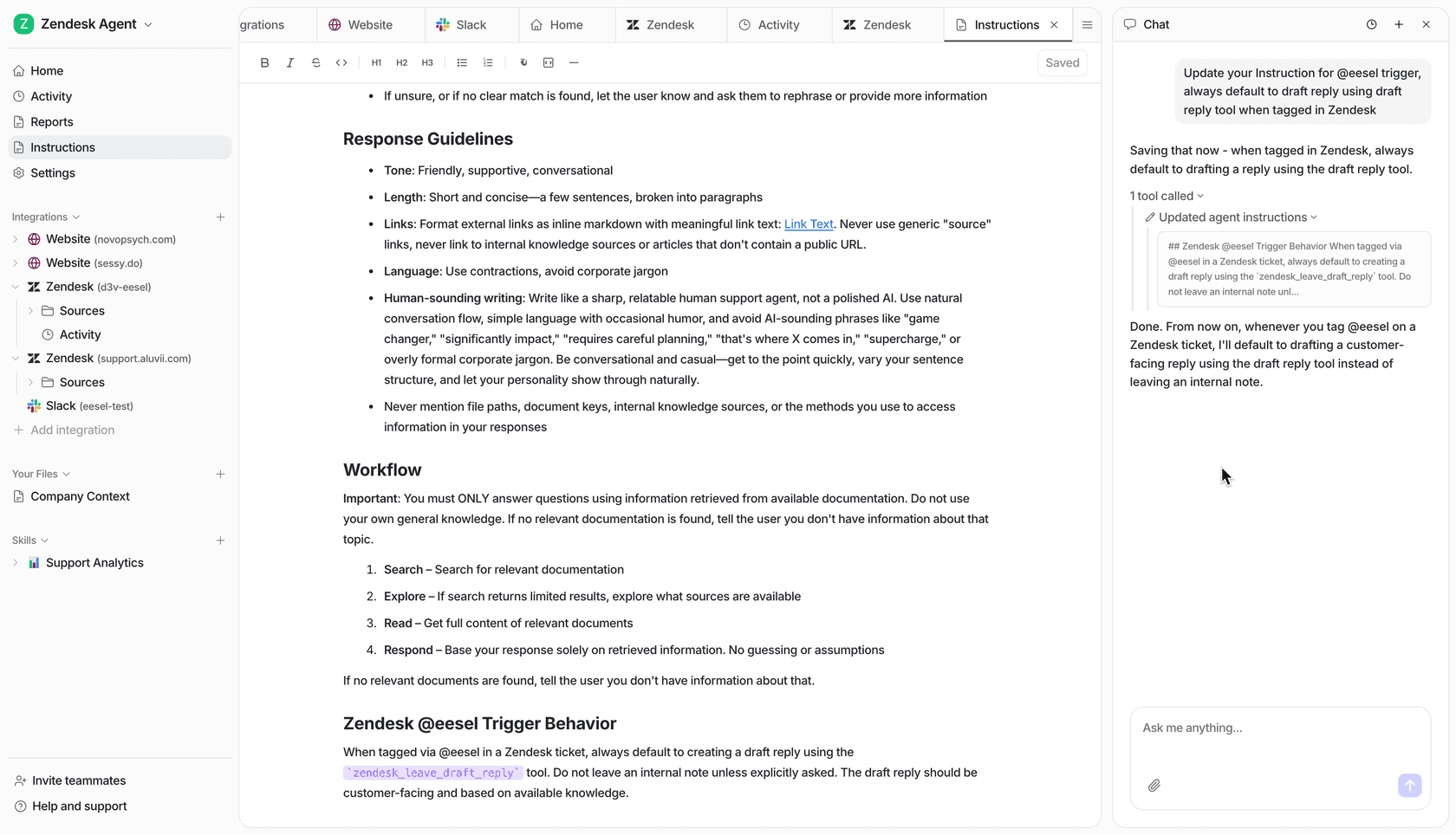
Instead of treating AI as a tool you configure, we designed eesel as a teammate you hire and level up. The difference matters: eesel learns your business from all your existing knowledge sources (help centers, past tickets, Confluence, Google Docs, Notion, PDFs), not just Shopify and tickets.
Our pricing scales by AI interactions, not tickets, which creates more predictable costs. You pay for what the AI actually does, not for every customer conversation that hits your helpdesk. The teammate model also means you start with guidance (drafts for review) and level up to full autonomy as eesel proves itself, rather than hoping the AI works perfectly from day one.
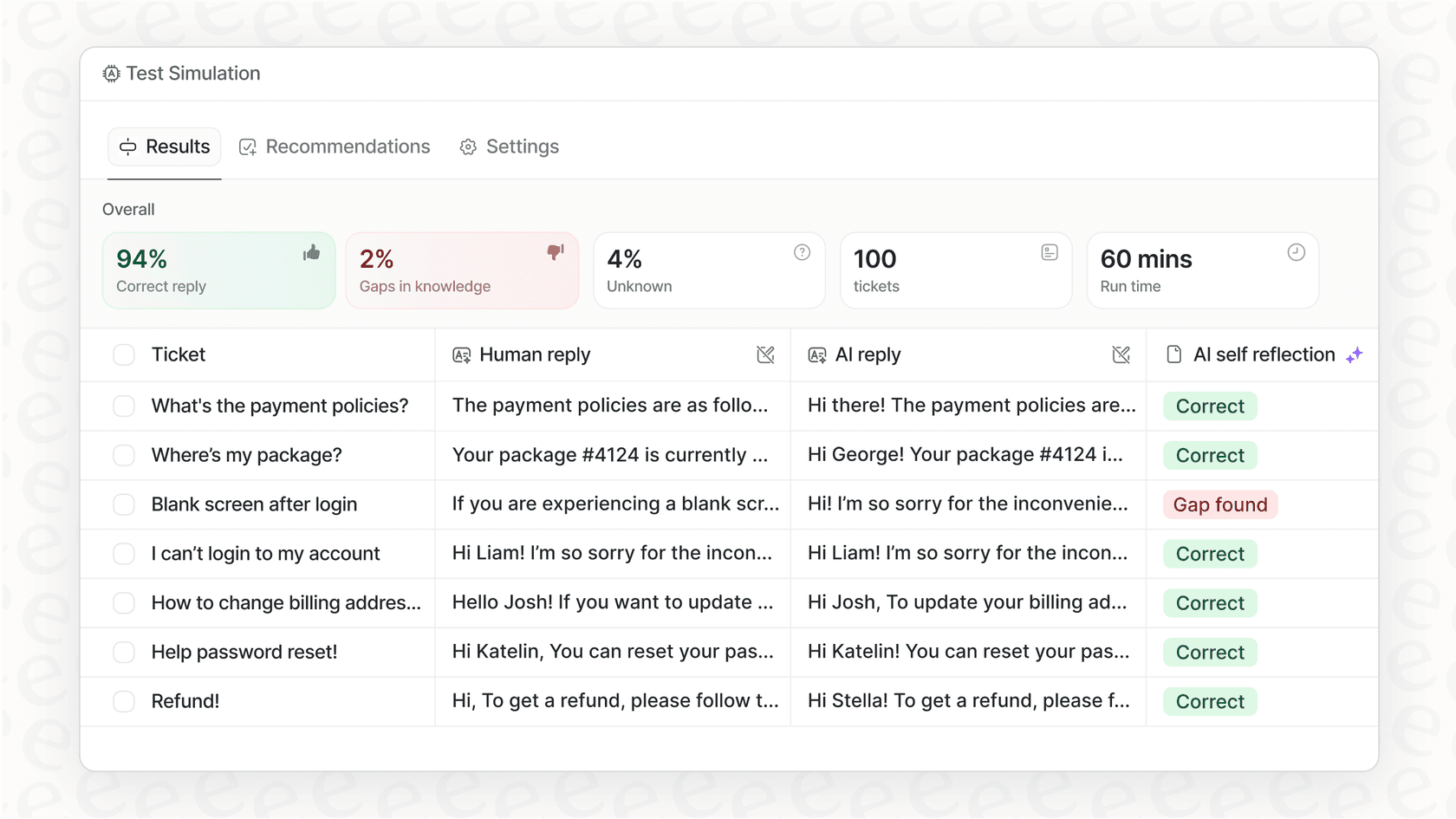
For teams using Gorgias who want to add more capable AI without the per-resolution fees, our AI Agent integrates directly and handles complex queries across all your knowledge sources. You can run simulations on past tickets before going live, so you know exactly how it performs before customers see it.
Making the right choice for your team
Deciding whether Gorgias Automate is worth it requires honest assessment of your specific situation. Here's a framework to help.
Decision framework
Ticket volume and growth pattern:
- Under 300 tickets/month: The Basic plan at $60 might work, but AI isn't available until you upgrade
- 300-2,000 tickets/month: The Pro plan at $360 is the sweet spot, but factor in AI costs
- Over 2,000 tickets/month: Advanced or Enterprise plans, but watch those overage charges
Platform considerations:
- Shopify: Gorgias's integration advantage applies
- Other platforms: Evaluate whether the premium is justified without deep integration
Budget predictability needs:
- Can absorb variable costs: Gorgias might work
- Need fixed monthly expenses: Consider alternatives with per-seat or per-interaction pricing
Key questions to ask before signing up
- What's our current monthly ticket volume, and how much do we expect it to grow?
- What percentage of our tickets are simple, repetitive inquiries that AI could handle?
- Do we have staff resources to properly train and monitor AI automation?
- How important is the deep Shopify integration to our workflow?
- Can our budget handle 50-100% cost increases during high-volume months?
The importance of testing before full deployment
Whatever you choose, test thoroughly before committing. Gorgias offers a 7-day free trial with no credit card required. Use that time to:
- Connect your Shopify store and see the integration in action
- Set up AI automation on a limited set of ticket types
- Measure actual automation rates, not just marketing claims
- Project costs based on real ticket volume, not estimates
The teams that succeed with Gorgias Automate are those who invest time in proper setup and ongoing optimization. Those hoping for instant, effortless automation tend to be disappointed.
Final verdict
Is Gorgias Automate worth it? The honest answer: it depends.
For established Shopify stores with predictable volume, dedicated support staff, and simple inquiry patterns, Gorgias can deliver genuine value. The Shopify integration is best-in-class, and the AI can meaningfully reduce human workload when properly configured.
But the pricing model creates real risks. The double-billing structure, unpredictable overages, and channel limitations mean many teams end up paying more than expected for less automation than hoped.
If you're a high-volume Shopify store that can absorb variable costs and invest in AI training, Gorgias Automate is worth testing. If you need predictable pricing, use non-Shopify platforms, or have limited resources for AI management, alternatives like eesel AI deserve consideration.
The key is matching the tool to your reality, not your aspirations. Be honest about your volume, your budget flexibility, and your team's capacity to optimize automation. The right choice becomes clear once you strip away the marketing and look at the numbers.