


Keeping up with the world of AI can feel like trying to drink from a firehose. Just when you wrap your head around one thing, something new pops up. For a while, OpenAI has been giving us ways to customize what ChatGPT can do, which led to two big concepts: ChatGPT Plugins and, more recently, Custom GPTs.
If you’ve been following along, you might be scratching your head, wondering what the real difference is, which one is better, and what it all means for you. The whole GPTs vs Plugins discussion can get a little messy, so let's clear it up. We’ll look at what each one does, where they fall short, and what this all means if you want to use custom AI for actual business tasks, like customer support.
Understanding the difference in the GPTs vs Plugins debate
At their heart, both Plugins and GPTs were created to solve the same problem: ChatGPT is incredibly smart, but it’s stuck in a box, cut off from real-time information. Both tools were designed to let it connect to the outside world for fresh data and new skills. Think of it as giving a brilliant brain access to the internet and a toolbox. But while the goal was the same, the way they went about it was completely different.
The role of ChatGPT Plugins
Plugins were OpenAI's first crack at connecting ChatGPT to other apps and services through APIs. They were basically add-ons you could install to give the AI new superpowers. You could grab a plugin to check flight prices, another to get a weather forecast, and a third to book a table at a restaurant.
The coolest thing about them was that you could enable up to three different plugins from totally different creators in the same chat. This meant you could chain their skills together to handle some pretty complex requests. It was a neat idea, but OpenAI officially began shutting down Plugins in March 2024 to make way for Custom GPTs. So, this debate is really about understanding how one idea evolved into the next.
The role of Custom GPTs
Custom GPTs are the new and improved way to create your own specialized versions of ChatGPT. Anyone can build one, give it a unique name and personality, and hand it a specific set of instructions to follow. You can also feed it your own knowledge by uploading documents like PDFs or text files.
The biggest win for GPTs is how ridiculously easy they are to make. You can build one just by having a conversation with a "GPT Builder" in a simple, no-code interface. This accessibility led to a massive wave of creativity, with users creating over 3 million GPTs in just a couple of months. Like Plugins, they can also perform "Actions" that connect to external APIs, but it all has to happen within a single, self-contained GPT.
GPTs vs Plugins functionality and use cases: The power of many vs one
So, what could you actually do with these things? Their different designs led to very different strengths and weaknesses, especially when you look at it from a user's point of view.
How Plugins handled complex workflows
The magic of plugins was in the mix-and-match. A power user could get pretty creative by combining tools on the fly. For example, you could throw a prompt at it like, "Find me a flight to Miami next week when the weather is going to be nicest, and then book me a table at a top-rated Italian restaurant near my hotel."
In theory, this one prompt could trigger three separate plugins:
-
A travel plugin (like Kayak) to find flights.
-
A weather plugin to check the forecast.
-
A reservation plugin (like OpenTable) to book a restaurant.
This was incredibly powerful for complex research and planning. The problem? The user experience was pretty clunky. You had to go to a separate store, find and install the plugins you wanted, and then remember to turn them on or off for each conversation. It was a lot of manual work, and the store never had a huge selection to begin with.
The focused experience of Custom GPTs
Custom GPTs took the opposite route. Instead of being a jack-of-all-trades, each GPT is designed to be a master of one specific thing. You don't combine tools; you just pick the right one for the job. You might use a "PDF Analyzer" GPT to summarize a long report, then switch over to a "SEO Content Strategist" GPT for your next task.
A single GPT can have multiple "Actions" that connect to different APIs, but they all have to be built by the same creator. You can't just grab a PDF action from one developer and a web search action from another and mash them together. The trade-off is a much simpler, more intuitive experience. You just find the GPT you need in the store and start chatting. No toggles, no hassle.
| Feature | ChatGPT Plugins | Custom GPTs |
|---|---|---|
| Primary Function | Chain multiple third-party tools in one chat | Create a single, focused AI for a specific task |
| Flexibility | High (mix-and-match up to 3 plugins) | Low (actions are self-contained in one GPT) |
| User Experience | Clunky (required manual installation and toggling) | Simple (find and chat in the GPT Store) |
| Development Barrier | High (required coding and server setup) | Very Low (no-code, conversational builder) |
| Availability | Phased out starting March 2024 | Currently active and expanding |
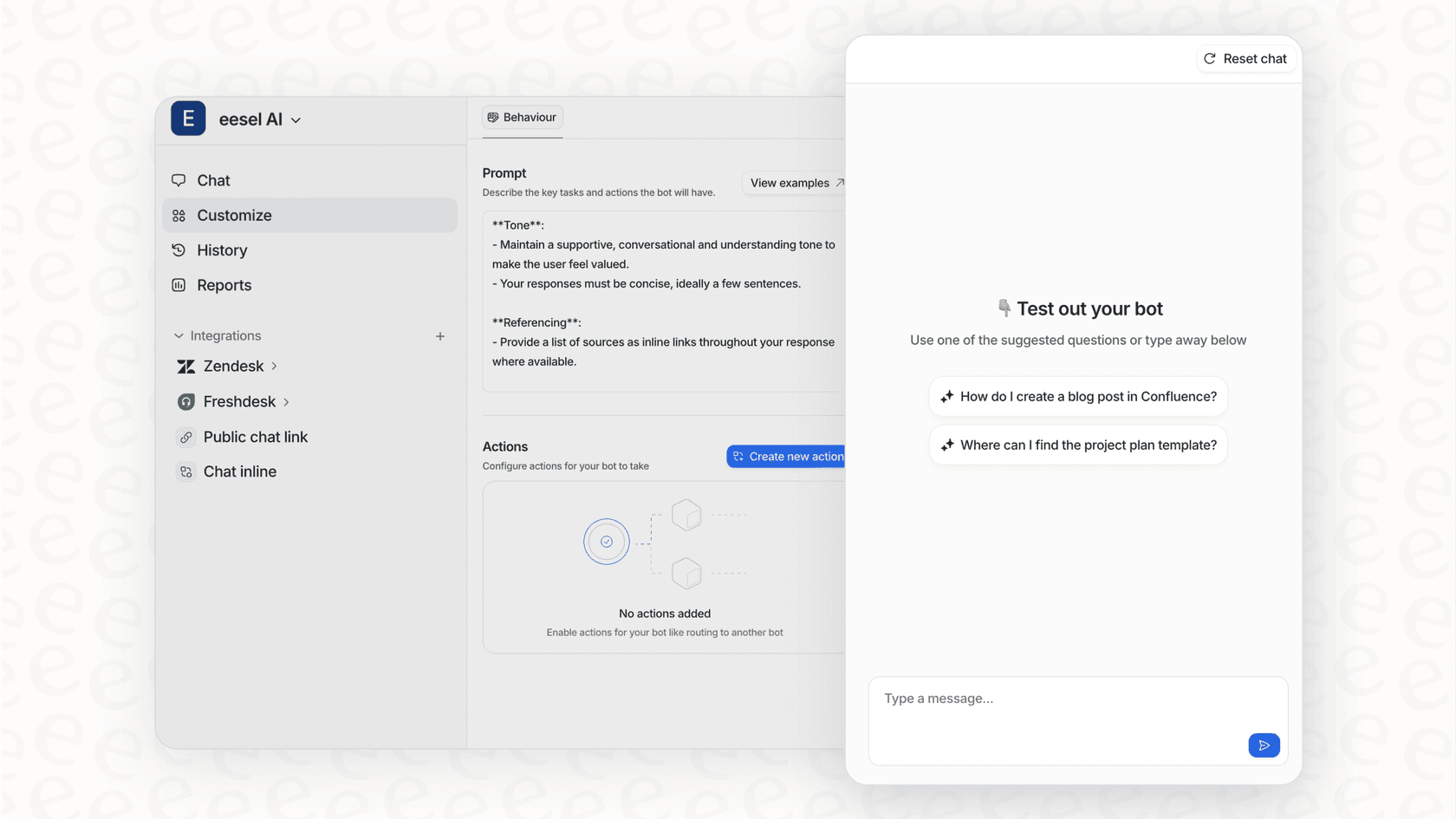
This whole GPTs vs Plugins situation really shines a light on a core challenge for businesses: how do you combine deep knowledge from lots of different places with the ability to take specific, reliable actions? Leaving this up to a public, consumer-focused tool is a big gamble. A dedicated platform like eesel AI is built specifically for this. It connects all your scattered business knowledge, from help articles and past tickets to Google Docs and Confluence, and gives you one powerful system to control exactly what your AI can and can't do.
Development, control, and reliability in GPTs vs Plugins
Beyond what they can do on the surface, how they’re built and how well they work are what really matter, especially if you’re thinking about using them for your business.
Why Plugins were powerful but out of reach
Building a plugin wasn't something you could do on a whim. It required real technical chops, like knowing how to write an OpenAPI spec and run a server to handle the requests. This high barrier to entry meant that not many people could actually build them, which is why there were only about 1,000 plugins ever made. The upside was that the plugins that did exist were generally higher quality and often backed by established companies.
Why GPTs are easy but unreliable
Custom GPTs are the polar opposite. The no-code builder made it possible for millions of people to create their own AI assistants. It was a brilliant move to make AI creation accessible to everyone, but it came with a huge catch: reliability.
If you read through discussions on forums like Hacker News, you’ll find a common theme: users complaining that GPTs are flaky. They often forget their custom instructions halfway through a conversation or just fail to perform an action without any explanation. This kind of inconsistency is fine for a fun side project, but it’s a deal-breaker for any business-critical function like customer support, where every single interaction matters.
For a support team, an AI that sometimes forgets the company's refund policy isn't a helpful tool, it's a liability. Businesses need AI that performs predictably, every single time. This is where eesel AI brings a huge advantage to the table with its powerful simulation mode. Before your AI agent ever talks to a real customer, you can test it against thousands of your actual past support tickets. You get a clear forecast of its performance and resolution rate, letting you see exactly how it will behave and fix any issues in a safe, controlled environment. It takes all the guesswork out of the equation so you can go live with confidence.
The business case for custom AI
So, putting personal use aside, how do these tools stack up for a real business? The short answer is that building on a consumer platform comes with some serious risks.
The consumer platform problem
OpenAI launched a GPT Store with a plan to share revenue with creators, which sounds great on paper. But in reality, it's a new, unproven channel flooded with low-effort GPTs that are often little more than a simple prompt. It's tough to stand out and even tougher for users to find quality tools.
More importantly, there's the giant red flag of data privacy. Using a public, consumer-grade platform for sensitive customer conversations is a non-starter for almost any company. While OpenAI has business plans with better privacy settings, the platform's DNA is consumer-first, not built for the security and compliance needs of a business.
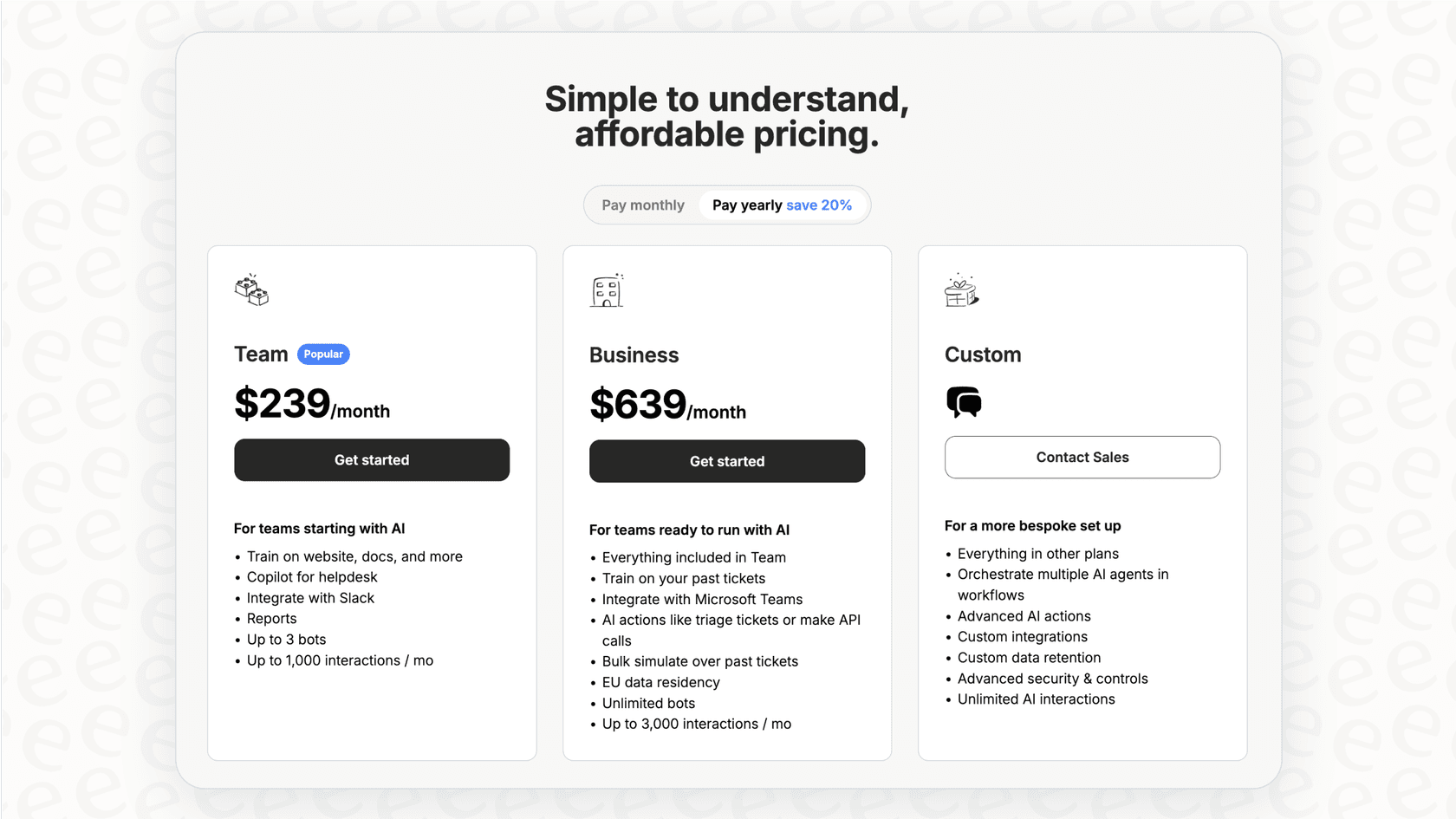
Betting a core part of your business on someone else's experimental platform is a risky move. A purpose-built solution like eesel AI gives you the stability, security, and control that a business needs. It’s designed to plug right into the helpdesks you already use, like Zendesk, Freshdesk, and Intercom, so you don't have to overhaul your existing workflows. Best of all, eesel AI is secure by design. Your data is never used to train generalized models, and its transparent pricing plans mean you won't get a surprise bill after a busy month.
GPTs vs Plugins: Moving beyond the public playground
The story of GPTs vs Plugins is really a story of evolution. Plugins were a powerful but niche experiment in chaining AI tools together. GPTs made AI customization available to everyone, but in doing so, they lost the multi-tool flexibility of plugins and, more importantly, the reliability needed for professional use.
Ultimately, this whole debate highlights the limits of trying to adapt a general-purpose consumer tool for specific, high-stakes business needs. For businesses, the goal isn't just to create a "custom AI." It's to deploy a reliable, secure, and controllable system that solves real problems, like cutting down ticket volume, speeding up response times, and making both customers and agents happier.
If you're ready to move beyond the limitations of public GPTs, it might be time to explore a platform built for business from the ground up. With eesel AI, you can get an AI support agent live in minutes that learns from all your unique knowledge sources, integrates with the tools your team already uses, and gives you the control you need to automate with confidence.

Frequently asked questions
Plugins allowed chaining multiple tools together for complex tasks, while Custom GPTs are focused, self-contained units designed for a specific purpose. Both aimed to connect ChatGPT to external data and actions, but with different architectural approaches.
No, OpenAI officially began shutting down ChatGPT Plugins in March 2024. The blog explains that Plugins are being phased out to make way for the Custom GPTs framework, which offers a more streamlined experience.
Custom GPTs, while easy to create, often exhibit unreliability and inconsistency, which is a major drawback for [business-critical functions](https://www.eesel.ai/blog/10-best-ai-tools-for-business-to-boost-productivity-and-growth). Plugins, though harder to build, were generally more robust due to their higher technical development requirements.
Building a Plugin required significant technical skills, including knowing how to write an OpenAPI spec and run a server. In contrast, Custom GPTs feature a no-code builder, making them accessible for anyone to create through a simple [conversational interface](https://www.eesel.ai/blog/what-is-conversational-ai).
Using consumer-grade platforms for sensitive business data raises significant privacy flags, as the platform's DNA is often consumer-first. Purpose-built solutions offer better security and control, ensuring data isn't used to train generalized models and providing predictable performance.
Not entirely. While plugins allowed users to combine up to three different tools on the fly, a single Custom GPT can have multiple "Actions" but these must all be built by the same creator within that single GPT. This makes GPTs more focused but less flexible for ad-hoc tool chaining by end-users.
Share this article

Article by
Stevia Putri
Stevia Putri is a marketing generalist at eesel AI, where she helps turn powerful AI tools into stories that resonate. She’s driven by curiosity, clarity, and the human side of technology.
