

Choosing a big new platform for software delivery or IT support is one of those decisions that sticks with you. It changes how your teams work for years. In this space, you’ll constantly hear two names: Digital.ai and ServiceNow. Both promise to make work smoother with a dose of AI, but they come at the problem from completely different angles.
This guide will break down the real differences between Digital.ai and ServiceNow. We'll look at the idea behind each one, what they can do for support, their AI features, and how they handle pricing. The goal is to cut through the marketing fluff so development leads, IT managers, and support leaders can get a clear picture of which platform actually fits what they need to do.
What is Digital.ai?
Digital.ai is an AI-powered platform for DevSecOps. That’s a mouthful, but it basically means it’s built to bring the entire software creation process under one roof. Its main job is to help big companies automate software releases, lock down their applications, test better, and see what’s happening from the first line of code to the final rollout.

__
You can think of it as a central hub for building software. It takes all the separate, essential jobs like planning, security, and testing and pulls them into a more connected workflow. Its main tools cover:
-
Enterprise Agile Planning: For keeping large-scale agile development on track.
-
Application Security: To protect mobile, web, and desktop apps from threats.
-
Continuous Testing: For automating tests for function, performance, and accessibility.
-
Release Orchestration & Deployment Automation: To manage and automate the tricky business of shipping software.
At its core, Digital.ai is all about the tools and processes that engineering and DevOps teams live in every day. It’s a platform made for developers, designed to untangle the messy process of creating and shipping software securely and efficiently.
What is ServiceNow?
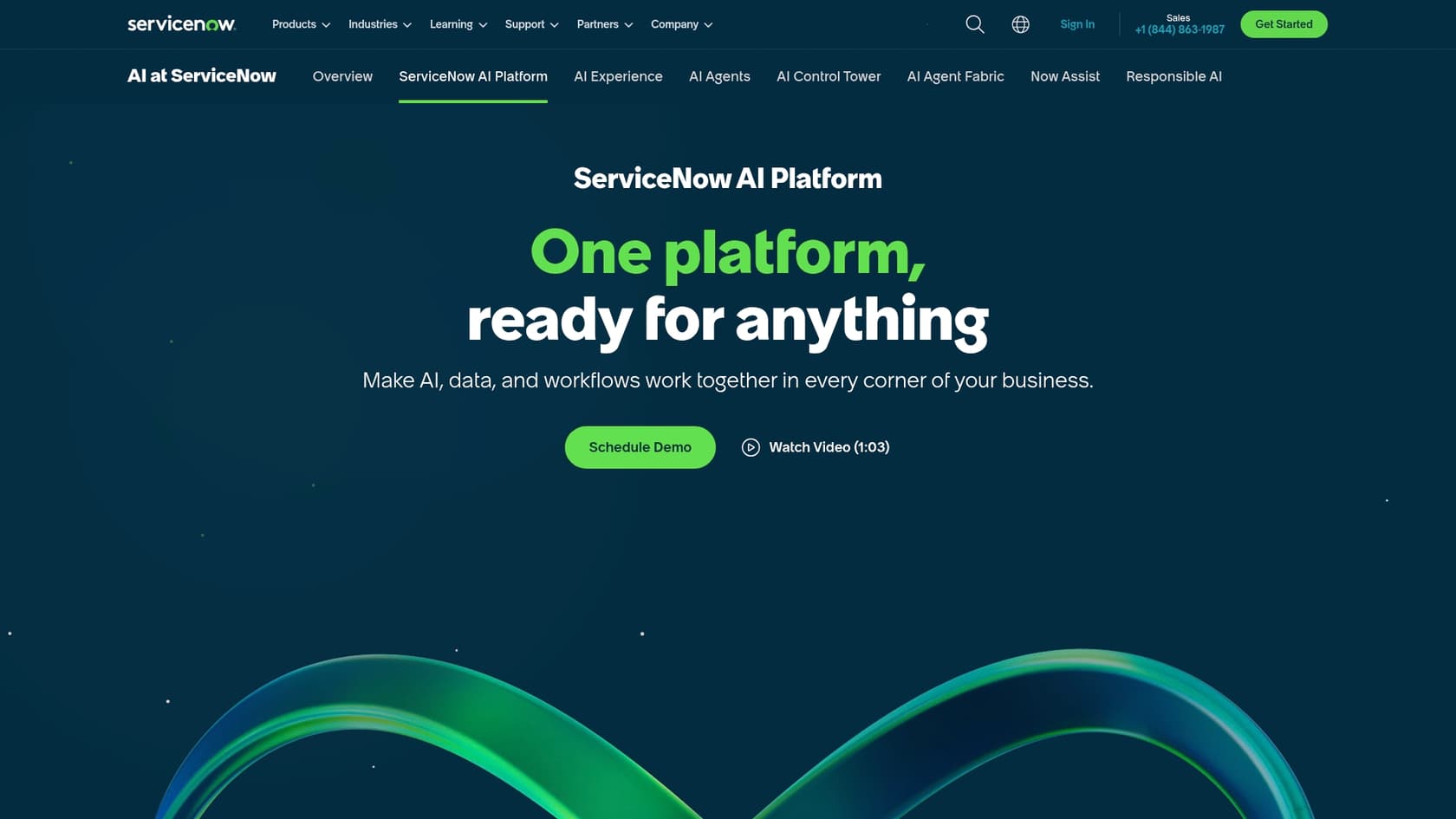
ServiceNow, on the other hand, started out focused on IT Service Management (ITSM) and has since grown to automate workflows across just about every department in a company. Its big mission is to be the single platform for business, connecting people and processes everywhere.
__
While it's very technical, its DNA is all about service delivery. Its key product areas include:
-
IT Service Management (ITSM): This is its original bread and butter, for handling IT incidents, changes, and requests.
-
IT Operations Management (ITOM): For keeping an eye on infrastructure and preventing outages before they happen.
-
Customer Service Management (CSM): To manage support for external customers.
-
HR Service Delivery (HRSD): For handling employee onboarding and other HR tasks.
-
App Development: A low-code tool for building your own business apps on their platform.
ServiceNow is great at creating structured, automated workflows for handling requests and fixing issues. It’s like a central nervous system for a large organization, trying to make work flow better for everyone, not just the tech folks.
Digital.ai vs ServiceNow: Core features and philosophies
The best way to get the Digital.ai vs ServiceNow comparison is to look at the big idea behind each one. They were built to solve very different problems, and that shapes everything about them.
Core focus: A unified DevSecOps flow vs. enterprise-wide service automation
Digital.ai was made specifically for the software delivery lifecycle. Its real value is in wrangling the messy collection of tools that teams use for development, security, and operations. It’s about creating a smooth path from an idea in a planning tool, through automated testing and security scans, and finally to release. It’s a solid choice for companies whose biggest headache is just managing the complexity of building and deploying software at scale without anything breaking.
ServiceNow’s strength, meanwhile, is in standardizing how services are delivered across the entire company. It took the model that worked so well for IT (incident tickets, change requests, a service catalog) and cleverly applied it to other departments. Their products for customer service and HR all run on the same workflow engine. This makes it a beast for companies that want to knock down department walls and create one consistent way for employees and customers to ask for things and get help.
Support and service management capabilities
This is where the two platforms really show their differences. How each one thinks about "support" tells you everything you need to know.
Digital.ai gives you a support system for the people using its products. This includes a Support Portal, a Documentation Site, and a Community Forum. They offer different support plans (Essentials, Pro, and Premium) with various response times, all focused on helping developers and DevOps engineers use Digital.ai tools. But you wouldn't use it to run your own company’s helpdesk. The knowledge is also scattered, meaning a user might have to dig through the community, docs, and the portal to find a single answer.
ServiceNow, in contrast, sells dedicated ITSM and CSM products. These are serious, heavy-duty solutions for running support at a huge scale. They come with everything: Incident Management, Problem Management, Change Management, a Service Catalog, and more. Their pricier plans include a Virtual Agent and some predictive AI to help automate things. The big catch? Getting ServiceNow up and running is a massive project that can take months and requires dedicated admins and a lot of money. Plus, its out-of-the-box AI tools often need a ton of tweaking to be genuinely useful.
An agile alternative
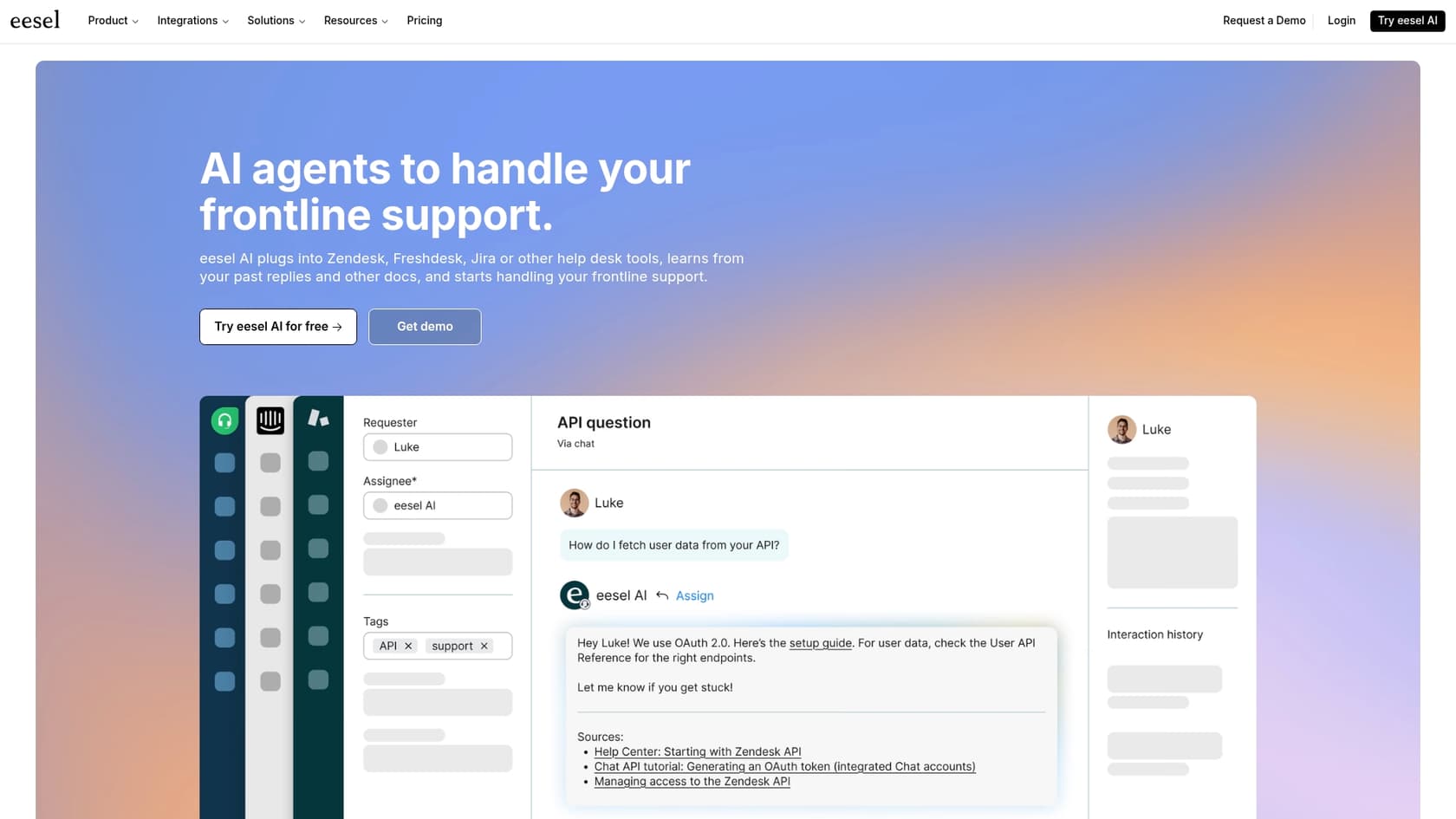
For teams that need smart AI for support but don't want the cost and headache of a full platform switch, a more focused tool might be a better fit. An AI platform like the eesel AI Agent can plug right into the tools you're already using and start helping almost immediately.
__
Here’s how it’s different:
-
Go live in minutes, not months: Instead of a huge implementation project, eesel AI connects to your current helpdesk (like Jira Service Management or Zendesk) and knowledge sources with just a few clicks.
-
Unify all your knowledge instantly: Both Digital.ai and ServiceNow expect you to move your knowledge into their systems. eesel AI learns from wherever your information already is, whether that’s in Confluence, Google Docs, past tickets, or your public help center. This solves the scattered-knowledge problem without a painful migration.
Integrations and AI
Both platforms have a lot of integrations and are pouring money into AI, but their focus shapes how they do it.
Digital.ai has an Integrations Marketplace with hundreds of connectors. As you'd guess, they're all about the DevSecOps toolchain, with deep links to tools like Jira, Slack, Microsoft Teams, and even a connector for ServiceNow itself. Its AI is designed to offer "predictive intelligence" for the software process, helping teams spot risks and improve quality.
ServiceNow has its Integration Hub, which connects to hundreds of business apps. Its AI strategy is centered on the "ServiceNow AI Platform," which includes things like AI Search, a Virtual Agent for chatbots, and Now Assist for generative AI features like summarizing cases. The only issue is that building and managing these integrations can get complicated and often requires specialized developers or extra license fees. And while its AI is powerful, it’s really built to work best inside the ServiceNow world.
The eesel AI advantage
Those big enterprise integration hubs are powerful, but they can be slow and clunky. In contrast, eesel AI is built so that you can set it up entirely on your own. You can connect your knowledge sources, tweak how your AI agent behaves, and launch it without ever having to talk to a salesperson.
On top of that, eesel AI gives you complete control over the automation. Its simulation mode lets you test the AI on thousands of your past tickets in a safe space. You can see exactly how it would have answered, get accurate predictions on how many tickets it will solve, and fine-tune its behavior before it ever talks to a real user. This takes all the risk out of adopting AI, letting you start small and grow from there.
Digital.ai vs ServiceNow: Pricing models
Price is often the bottom line, and the two platforms couldn't be more different here.
Digital.ai’s pricing seems to be based on tiers (Essentials, Pro, Premium) for its different products, which you can see on its feature pages for Continuous Testing and Application Security. But they don't list any actual prices. This is pretty common for these kinds of tools, but it means you have to get on a call with their sales team for a quote, making it hard to budget upfront.
ServiceNow uses a package-based model. For example, their ITSM product comes in Standard, Pro, and Enterprise packages. The catch is that key features are locked away in the more expensive tiers; AI tools like the Virtual Agent are only in ITSM Pro and up. On top of that, there's a confusing web of add-ons for things like their generative AI features (Now Assist), which can make the final price much higher than you expected.

__
A clear pricing alternative
If you're tired of confusing, multi-layered enterprise contracts, eesel AI offers straightforward and predictable pricing. Plans are based on a flat monthly fee that depends on your usage (how many AI interactions you have), not weird per-resolution fees that punish you for doing well. You'll never get a surprise bill after a busy month.
| Aspect | Digital.ai | ServiceNow | eesel AI |
|---|---|---|---|
| Model | Tiered (Essentials, Pro, Premium) | Package-based (Standard, Pro, Enterprise) | Usage-based Tiers (Team, Business) |
| Transparency | Quote-based; contact sales | Public packages, but complex add-ons | Publicly listed, no hidden fees |
| Key Driver | Product features | Feature packages & add-ons | Monthly AI interactions |
Digital.ai vs ServiceNow: Choosing the right platform
When it comes down to it, the choice in the Digital.ai vs ServiceNow debate really depends on what you're trying to achieve.
If your main battle is trying to tame a wild and disconnected software development process, Digital.ai offers a unified platform made just for that.
If your goal is to standardize how you manage services across the entire company, from IT to HR and beyond, then ServiceNow is the powerful, all-in-one choice.
But for a lot of companies, the biggest headache right now is just scaling support and managing knowledge without getting stuck in a huge project. In those cases, ripping out and replacing an entire platform isn't always the smartest or fastest move.
Upgrade your support beyond the Digital.ai vs ServiceNow choice
If you want to offer intelligent, automated support using the tools and knowledge you already have, eesel AI is worth a look.
You can set up an AI agent over your helpdesk in a few minutes and see just how many tickets you can automate today.

Frequently asked questions
Digital.ai primarily focuses on unifying and automating the DevSecOps lifecycle, from planning and security to testing and release orchestration for software development teams. ServiceNow, conversely, aims to [automate service workflows](https://www.eesel.ai/blog/how-to-automate-your-customer-support-workflow-using-ai) across an entire enterprise, including IT, HR, and customer service management.
Digital.ai is specifically engineered for this purpose, providing a comprehensive suite of tools for enterprise agile planning, application security, continuous testing, and release automation. It's built to streamline the entire software creation and deployment pipeline.
ServiceNow offers dedicated, robust [IT Service Management](https://eesel.ai/solution/ai-for-itsm) (ITSM) products designed to run full-scale IT helpdesk operations, including incident and change management. Digital.ai, while supporting its own product users, is not designed to function as an enterprise-wide IT helpdesk solution for your company.
Digital.ai's AI focuses on predictive intelligence within the software delivery process, helping identify risks and improve quality. ServiceNow leverages AI for service automation, offering features like Virtual Agents, AI Search, and generative AI for summarizing cases and [assisting support agents](https://eesel.ai/solution/ai-agent-assist).
ServiceNow implementations are generally known to be massive projects, often taking months and requiring significant dedicated resources. While Digital.ai also serves large enterprises, both platforms involve considerable effort compared to more focused, agile solutions.
Digital.ai uses a tiered model (Essentials, Pro, Premium) for its products, requiring direct sales contact for quotes. ServiceNow uses package-based pricing (Standard, Pro, Enterprise) for its products, often with key AI features locked in higher tiers and additional costs for add-ons, making overall pricing complex and less transparent for both.
Yes, they can be integrated. Digital.ai's Integration Marketplace specifically lists a connector for ServiceNow, allowing some data exchange or workflow coordination between DevSecOps processes and broader IT service management. They primarily serve different but sometimes overlapping enterprise needs.
Share this article

Article by
Kenneth Pangan
Writer and marketer for over ten years, Kenneth Pangan splits his time between history, politics, and art with plenty of interruptions from his dogs demanding attention.
