Tone of voice
Tone of voice is the consistent style and personality a brand uses in its writing, covering word choice, rhythm, and attitude.
What tone of voice means
Tone of voice is the consistent style and personality a brand expresses through its writing: the word choices, sentence rhythm, level of formality, and overall attitude that make its content sound like it came from one identifiable source. It covers everything from whether a brand uses contractions and humor to how it handles bad news, and it applies across every written surface, from blog posts to support replies to error messages. A clear tone of voice is what lets a reader recognize a brand even with the logo removed.
There is a useful distinction inside the term. Voice is the steady personality that never changes, while tone is how that personality flexes to fit the moment: warm and celebratory for a launch, calm and direct during an outage, the same brand underneath. In content marketing, tone of voice matters because consistency builds recognition and trust. A library of content that sounds like one coherent brand reads as deliberate and credible, while a blog where every post sounds like a different writer reads as scattered, no matter how good each individual piece is.
Why tone of voice matters
A documented tone of voice does real work across a content program. It:
- Makes the brand recognizable, so readers form one coherent impression across dozens of pages and channels.
- Keeps a team consistent, giving multiple writers and freelancers a shared standard so output does not drift piece to piece.
- Builds trust through familiarity, where a steady voice feels reliable and an erratic one feels improvised.
- Speeds up editing, since a clear guideline turns vague "this doesn't sound like us" feedback into specific, fixable notes.
- Guides AI output, because a tool given explicit tone rules can match the house style instead of defaulting to generic model phrasing.
The voice-versus-tone distinction is easier to hold onto when you can see it. One steady voice anchors everything, and tone is just how that voice bends to fit the moment.
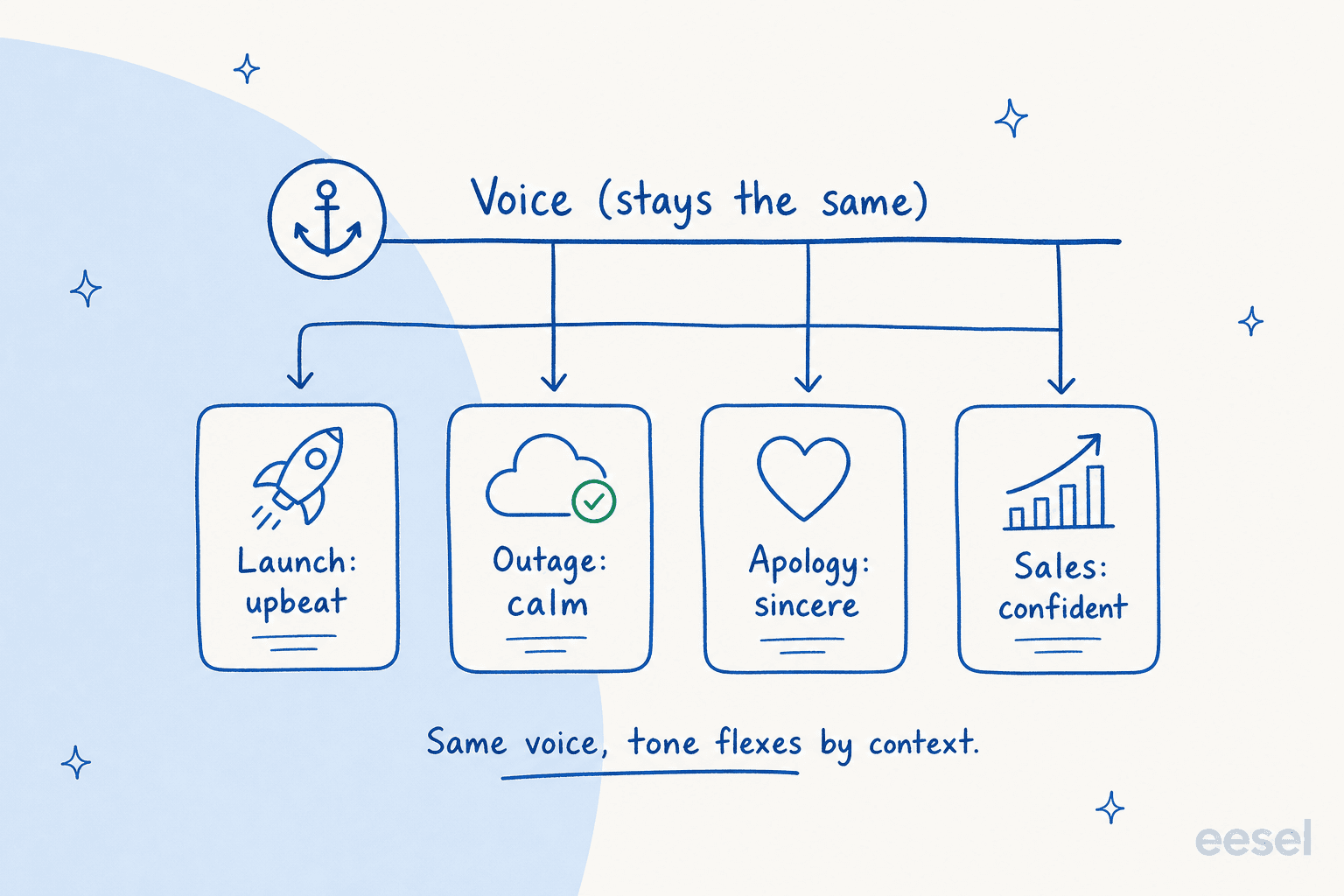
The voice at the top stays constant, while the tone shifts as the situation changes: upbeat for a launch, calm during an outage, sincere in an apology. A reader should still recognize the same brand underneath every one of them.
How tone of voice works
Defining and applying a tone of voice usually follows a few steps:
- Describe the personality. Choose a handful of adjectives (for example, clear, direct, warm, never stuffy) that capture how the brand should sound.
- Write examples. For each trait, show a do-and-don't passage so the abstract adjective becomes concrete.
- Document the specifics. Note vocabulary, formality, grammar preferences, and a list of words to avoid.
- Apply it consistently. Bake the guideline into every content brief and editing pass.
- Maintain it. Update the document as the brand evolves so it stays a living standard rather than a forgotten file.
This is where AI-assisted content lives or dies on quality. An AI blog writer like eesel AI can draft against documented tone guidelines and sample passages, so the output reads in the brand's voice rather than the flat, generic register that gives unedited AI content away. The clearer the guideline, the closer the match, which is why teams that invest in a real tone document get far more usable drafts.
Tone of voice in practice
The common failure is a tone document that lists adjectives and stops there. "We're friendly and professional" tells a writer almost nothing, because both words mean different things to different people. The documents that actually change output are the ones full of concrete examples: this phrasing yes, that phrasing no, these words never. Tone of voice lives in the examples, not the adjectives. For AI-assisted content especially, specific do-and-don't passages do more to align a draft than any list of personality traits, because the model has something real to pattern against rather than an abstraction to guess at.
Want the full playbook? See maintaining brand voice with AI.
Keep one voice across every post
eesel AI can draft against your tone-of-voice guidelines, so AI-assisted content sounds like your brand rather than generic model output.