AI orchestration
The coordination of multiple AI models, tools, and steps into a single workflow so they work together toward one outcome.
What AI orchestration means
AI orchestration is the coordination of multiple AI models, tools, and steps into a single workflow so they work together toward one outcome. Rather than calling a model once and using its answer directly, orchestration manages a sequence: it routes a request to the right component, passes results between steps, handles tools and data sources, and decides what happens next based on what each step returns. It is the layer that turns individual AI capabilities into an end-to-end process.
In customer support, orchestration is what separates a chatbot that replies from an agent that resolves. Resolving a real ticket is almost never a single step. It means understanding the intent, retrieving the right knowledge, checking a record, deciding on an action, and knowing when to hand off. Orchestration is the coordination that holds all of that together so it runs as one reliable flow instead of disconnected calls.
Why AI orchestration matters
- It handles multi-step tasks. A request like a refund needs several actions in order, and orchestration sequences them rather than expecting one model call to do everything.
- It coordinates multiple tools and data sources. Knowledge bases, order systems, and ticketing tools each get called at the right moment, with results passed along the chain.
- It manages decisions and branching. When a step returns something unexpected, orchestration decides whether to retry, take a different path, or escalate, instead of failing silently.
- It enforces order and dependencies. Some steps must finish before others can start, and orchestration makes sure knowledge is retrieved before an answer is composed, not after.
- It makes behavior observable. Because the workflow is coordinated, each step can be logged and audited, which is what makes the system debuggable when something goes wrong.
Think of the orchestrator as a conductor sitting at the center, calling on each component when the work needs it.
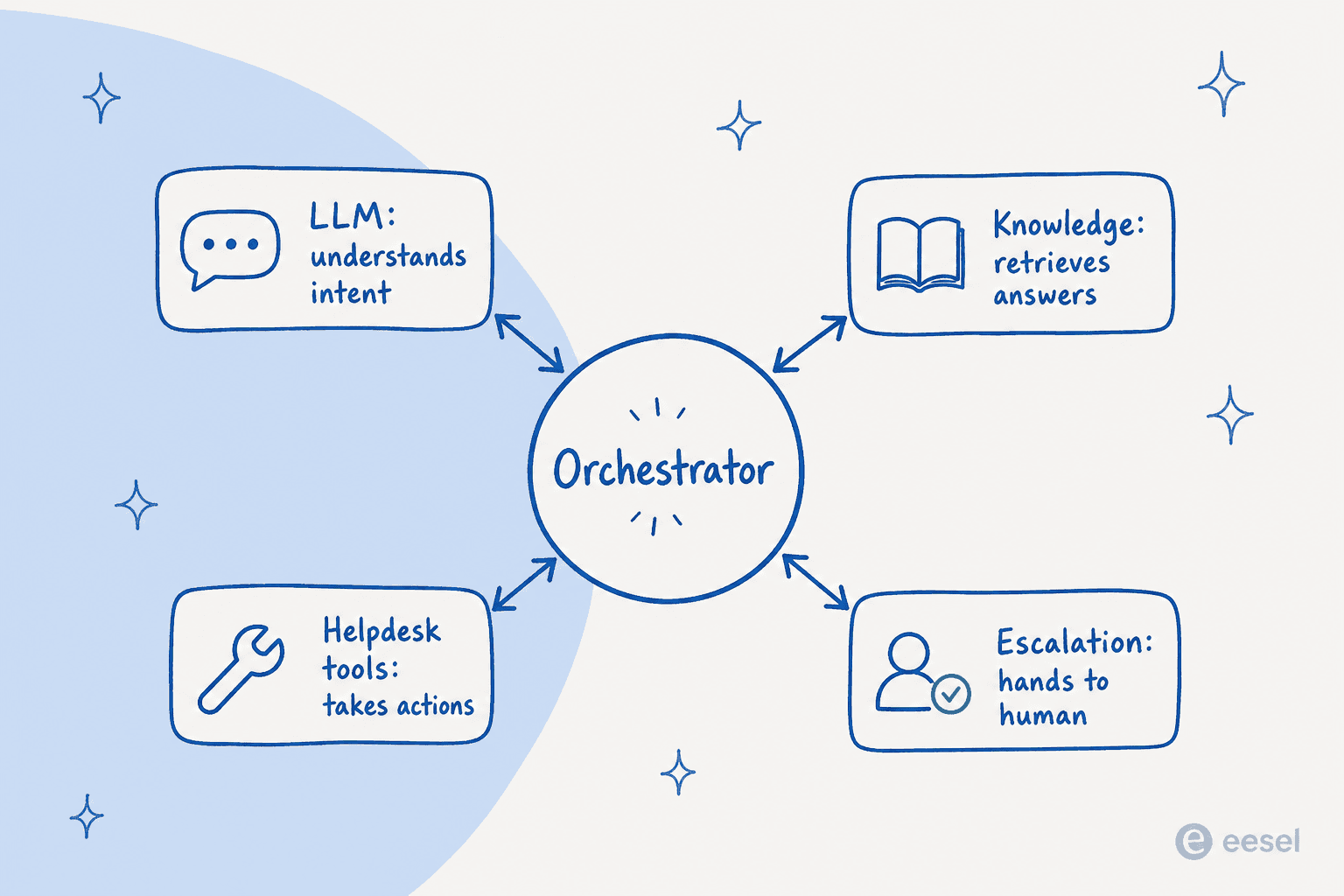
The components themselves are not new: a model, a knowledge base, helpdesk actions, an escalation path. What orchestration adds is the hub in the middle that decides which one to call and when, and passes results between them. Pull the hub out and you are left with disconnected calls that never resolve a ticket on their own.
How AI orchestration works
A coordinated AI workflow usually moves through these stages:
- Interpret the request. The system works out what the user wants and what a finished result looks like.
- Plan the steps. It breaks the goal into an ordered set of actions and decides which tools or models each one needs.
- Execute and pass results. Each step runs, retrieving data or taking an action, and its output feeds the next step.
- Adapt on the fly. If a step fails or returns something off, the workflow corrects course, retries, or reroutes.
- Resolve or escalate. It completes the task or hands off to a person with the full context attached.
A support agent like eesel AI is an orchestration of exactly this kind: it grounds itself in your help center and past tickets, decides what the ticket needs, calls the right actions inside your helpdesk, and escalates when there is no safe answer, all as one coordinated flow rather than a single model reply. The connectors that reach each tool, whether a direct integration or a standard like MCP, are the components orchestration ties together.
AI orchestration in practice
The thing that makes orchestration hard is also what makes it valuable: every additional step is another place where errors can compound. A small mistake early in the chain, like retrieving the wrong document, can quietly poison everything downstream. The teams who run orchestrated support AI well treat reliability as the priority, testing the whole flow against real ticket history before launch, keeping clear escalation points, and resisting the urge to chain in more steps than the task actually needs. A shorter, well-grounded workflow beats a sprawling one that is impressive on paper and brittle in production.
Orchestrate a real support workflow
eesel AI coordinates knowledge retrieval, decisions, and helpdesk actions into one flow that resolves the whole ticket.