

What xAI actually shipped
I build integrations for a living, so a new voice API from a frontier lab is the kind of thing I read closely rather than skim. The Grok Voice Agent Builder is xAI's answer to a real pain: standing up a production voice agent normally means gluing together three separate services and babysitting the seams between them.
The Builder is a no-code layer on top of Grok Voice, the same voice stack that already powers Grok in millions of Tesla vehicles. xAI pitches it at "operators and developers who want high-volume production voice agents without building the surrounding stack from scratch." Out of the box you get telephony, knowledge retrieval, tools, guardrails, MCPs, and observability in one interface.
This sits on top of the Grok Voice Agent API that shipped back in December 2025 for developers. The Builder is the no-code front door to that same engine, so the two announcements describe one product family, not two.
One model instead of three: the speech-to-speech bet
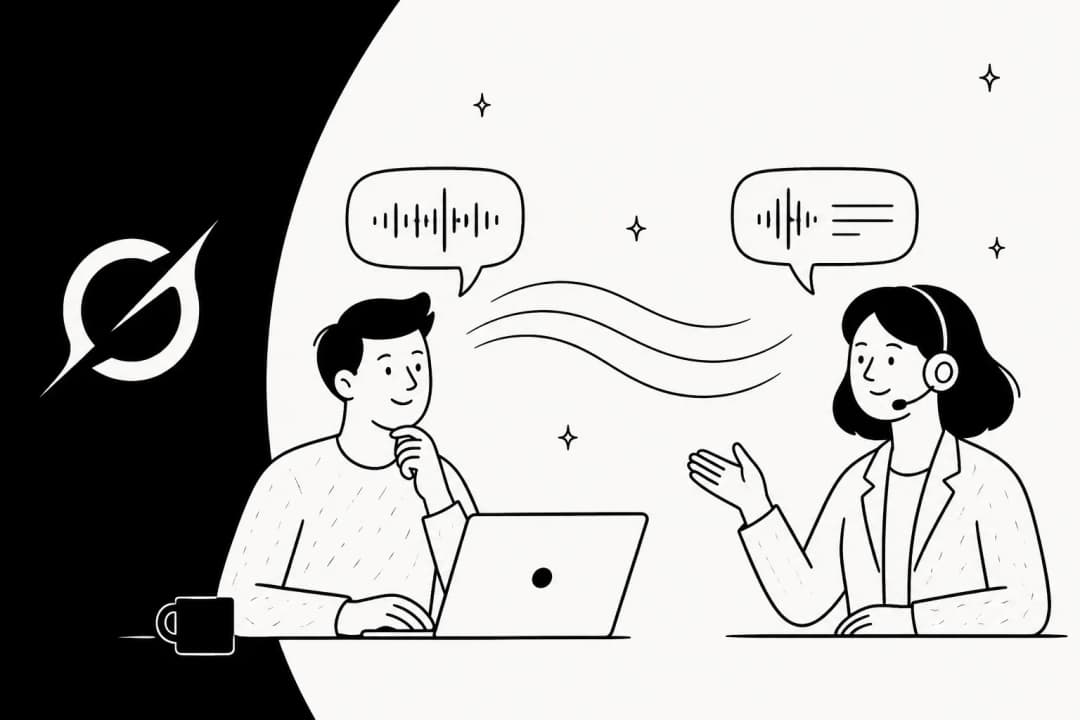
Here's the part worth understanding, because it explains most of the numbers. Most voice stacks route audio through three APIs: speech-to-text to hear the caller, a language model to think, and text-to-speech to reply. Each hop is often a different provider, and as xAI puts it, "every hop adds cost, latency, and new failure modes."
Grok collapses that into one model that hears and speaks directly. xAI built the whole stack in-house, training its own voice activity detection, tokenizer, and audio models from scratch rather than assembling third-party parts.
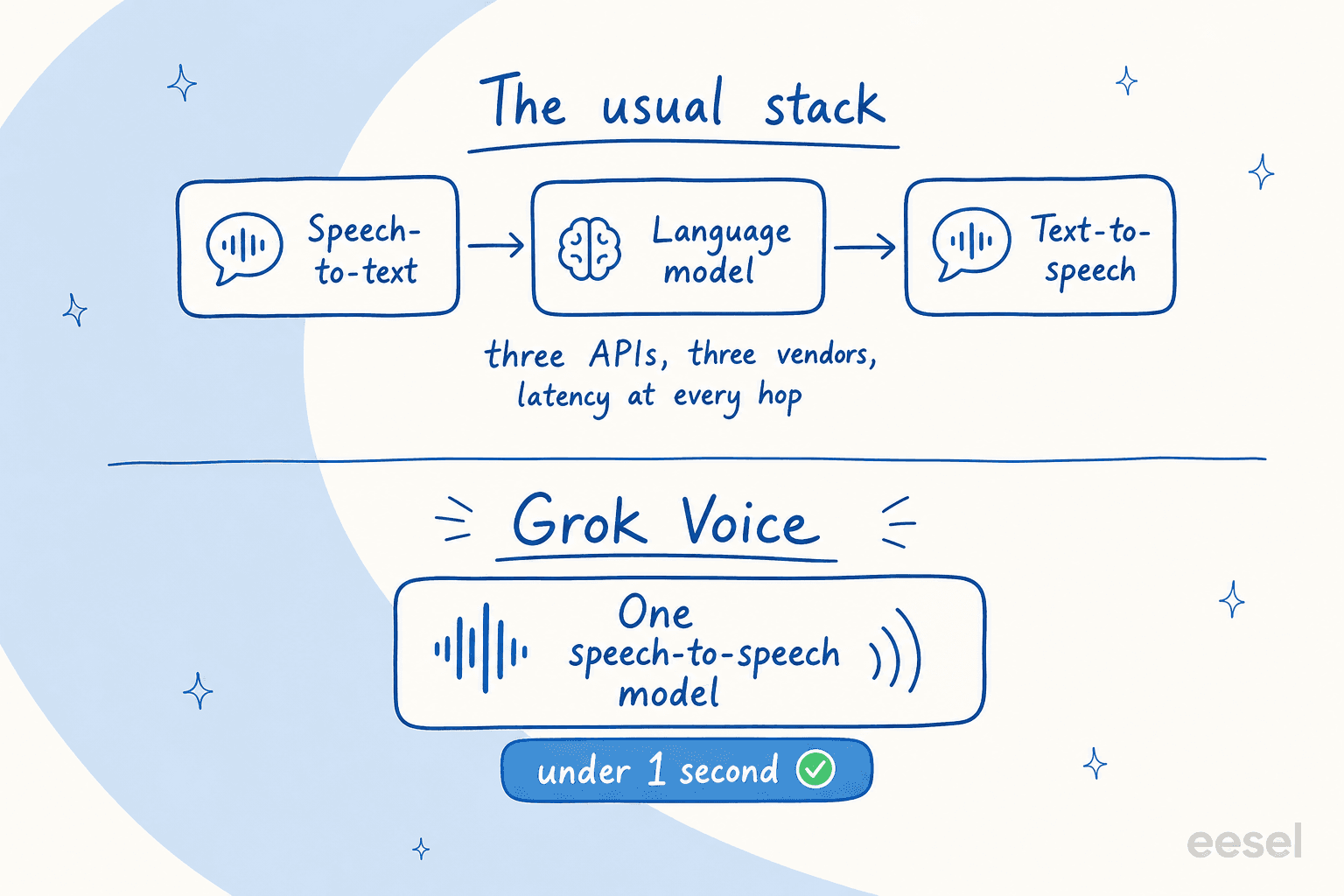
The payoff is speed. xAI claims an average time-to-first-audio under one second, which it says is "nearly 5 times faster than the closest competitor," and LiveKit's own testing put responses at under 700 milliseconds. On Big Bench Audio, the audio-reasoning benchmark, the Grok Voice Agent API ranks first. The community noticed the architecture, not just the leaderboard:
"It works with a direct speech to speech setup connected to the Grok model. This differs from the common approach of linking separate speech to text, language model, and text to speech services from different providers."

Single-model speech-to-speech is the real story here, and it's the thing pipeline-based competitors can't easily copy.
Two minutes to a live voice agent
The "no-code in two minutes" claim is the headline, so I dug into what the setup actually involves. It's four moves, and none of them need a line of code.
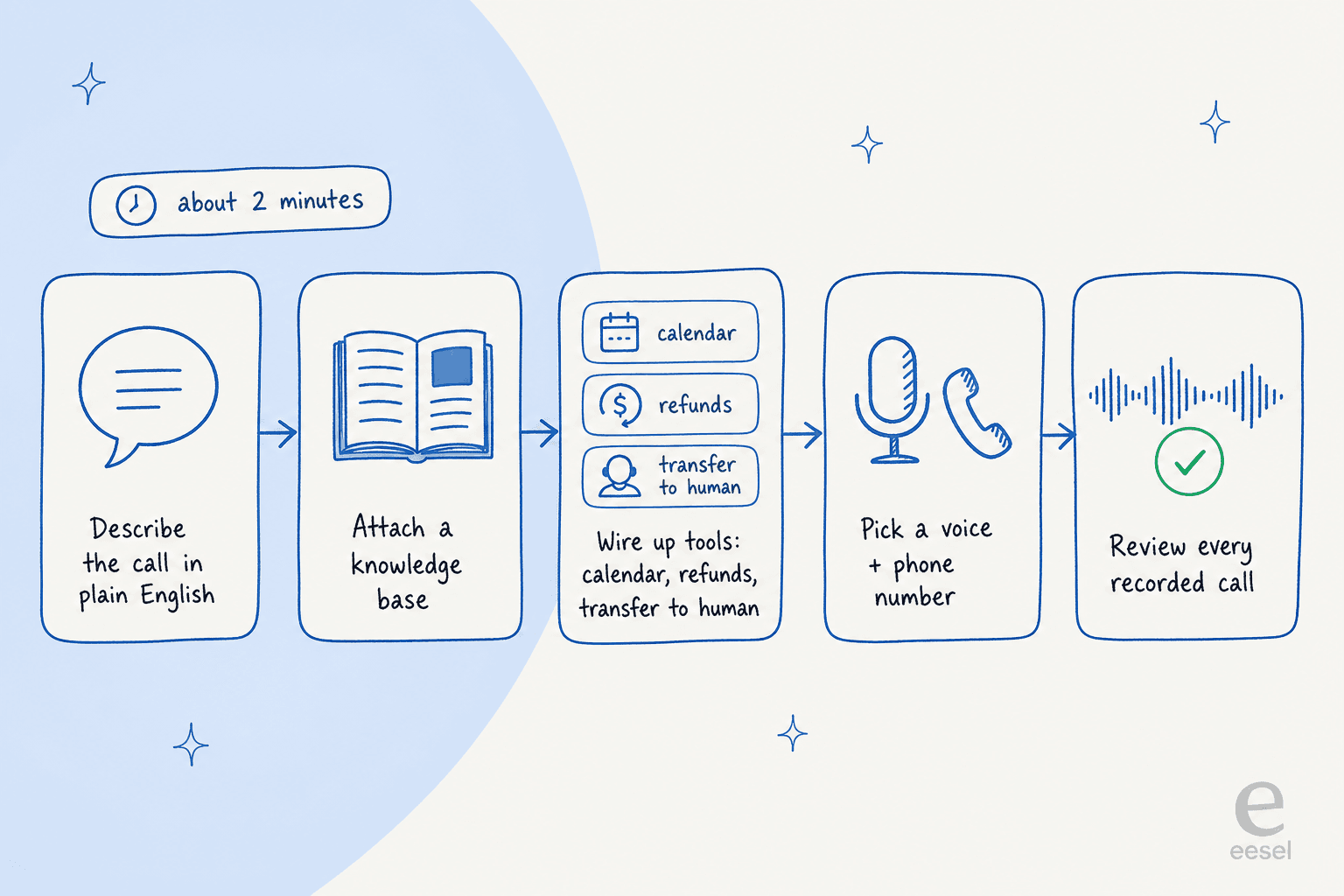
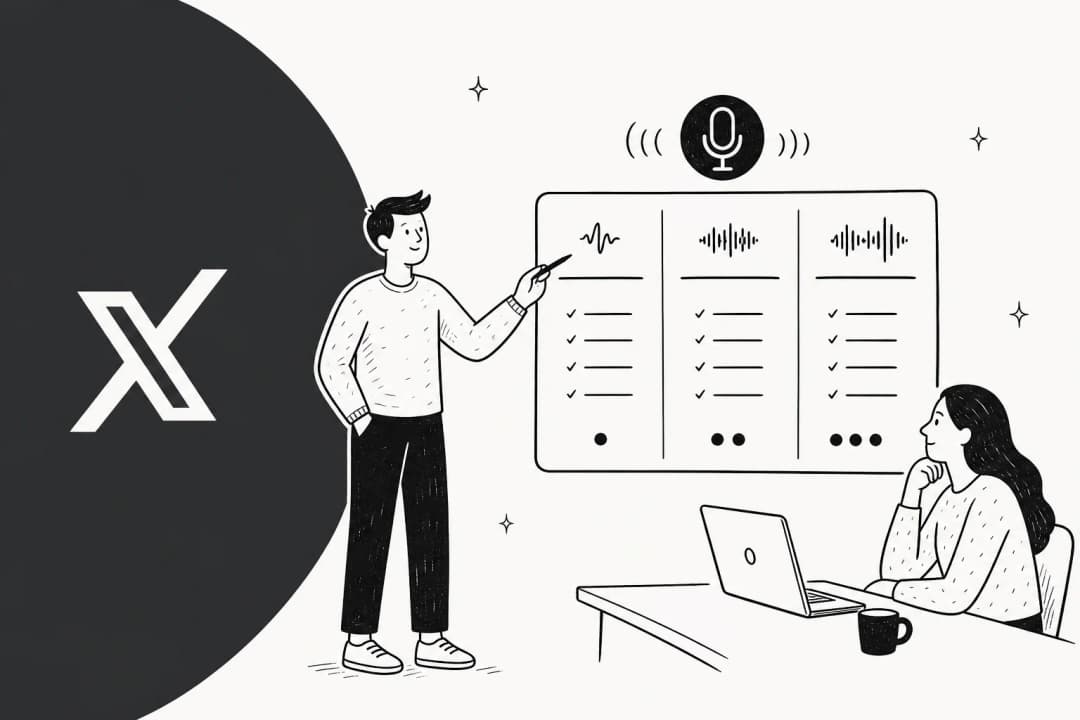
- Teach it your business. You write a plain-language prompt describing how calls should flow, then upload documents in common formats (text, Markdown, Word, PowerPoint, Excel, HTML, JSON). Files live in collections you can attach to multiple agents, so policies and runbooks stay in one place.
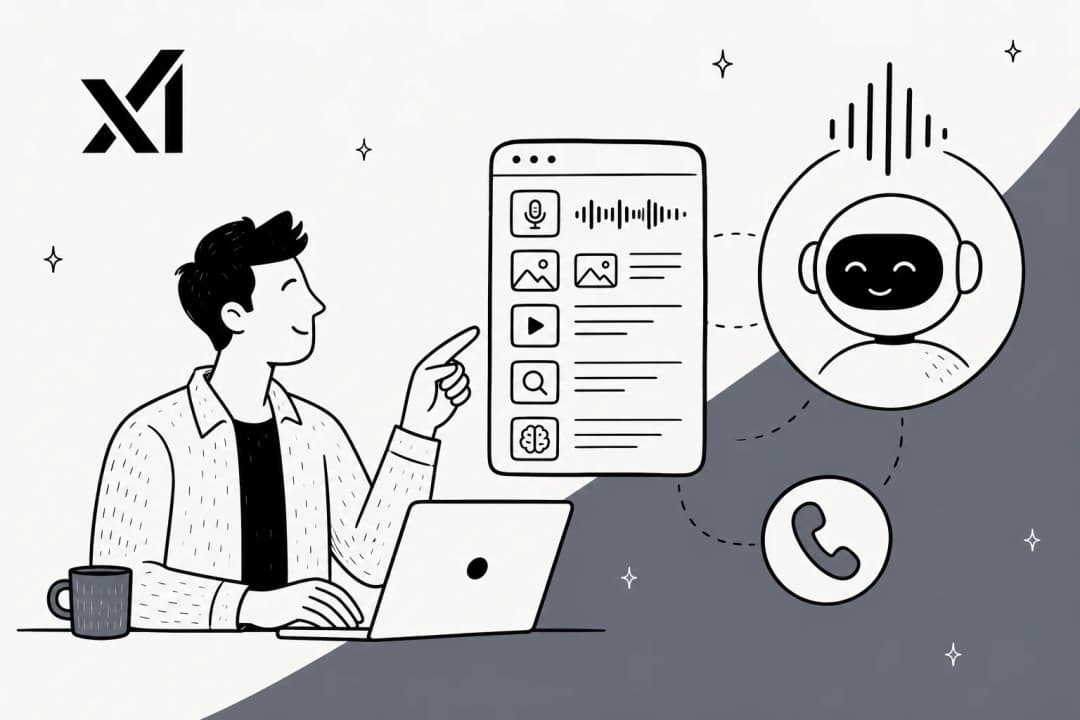
- Give it tools. Agents can schedule in Google or Outlook Calendar, send email confirmations, hit your own APIs to check order status or issue a refund, manage tickets in Linear or Notion, pull files from Google Drive, and run web or X search for live info. If the caller needs a person, it can transfer the call.
- Give it a voice and a number. Pick from 80+ built-in voices or clone your brand voice from two minutes of audio. Each account gets a free phone number, or you bring your own over SIP.
- Review the calls. Every call is recorded and transcribed, with a view of which tools the agent used, and guardrails cap what it's allowed to say or do.
Under the hood, all of this is a session.update payload on the grok-voice-latest model, which the Builder writes for you. If you'd rather code it yourself, the same thing is a WebSocket connection and an official LiveKit plugin in a single line of Python.
Voices, languages, and the wider stack
Beyond the real-time agent, Grok Voice exposes three APIs you can use on their own: speech-to-speech, text-to-speech, and speech-to-text. The voices are the part that lands hardest in demos.
| Capability | What you get |
|---|---|
| Real-time voice agent | Speech-to-speech over WebSocket, sub-second latency, tool use, barge-in |
| Voices | 80+ voices (Ara, Eve, Leo, Rex, Sal and more), speech tags like [whisper], [sigh], [laugh] |
| Languages | 25+ languages with automatic, mid-conversation switching |
| Voice cloning | Clone a voice from ~2 minutes of audio, with two-stage verification |
| Transcription | Speaker diarization, entity recognition for medicine/law/finance, 12 audio formats |
| Compliance | SOC 2 Type II, HIPAA-eligible, GDPR, EU data residency, zero data retention option |
In blind human evaluations against the OpenAI Realtime API, xAI says Grok was "consistently rated as the preferred model" on pronunciation, accent, and prosody across English, Spanish, German, Russian, Vietnamese, Hindi, and Japanese. That maps to what the sharpest hands-on builder I found actually reported:
"I built a full ecom voice assistant that switches languages mid-conversation, controls websites, and sounds more human than any model I've tested."

What it costs
Pricing is where Grok's "one model" bet turns into a real advantage, and xAI leans on it hard. The real-time voice agent is a flat $0.05 per minute of audio, voices included, no separate platform fee. A provisioned phone number adds $0.01 per minute. For comparison, xAI notes that OpenAI bills by tokens and that "$0.10 / min is a highly conservative blended estimate."
| Service | Price |
|---|---|
| Real-time voice agent | $0.05 / min ($3.00 / hr) |
| Phone number (telephony) | +$0.01 / min |
| Text-to-speech | $15.00 / 1M characters |
| Speech-to-text | $0.10 / hr ($0.20 / hr streaming) |
| Web search / X search | $5 / 1,000 calls |
| Document (RAG) search | $2.50 / 1,000 calls |
Here's the honest wrinkle. The $0.05 sticker is clean, but a voice agent that looks things up on every call also fires server-side tools that bill separately on top of the underlying model tokens. So a chatty support agent that searches your docs and the web mid-call costs more than the headline suggests.
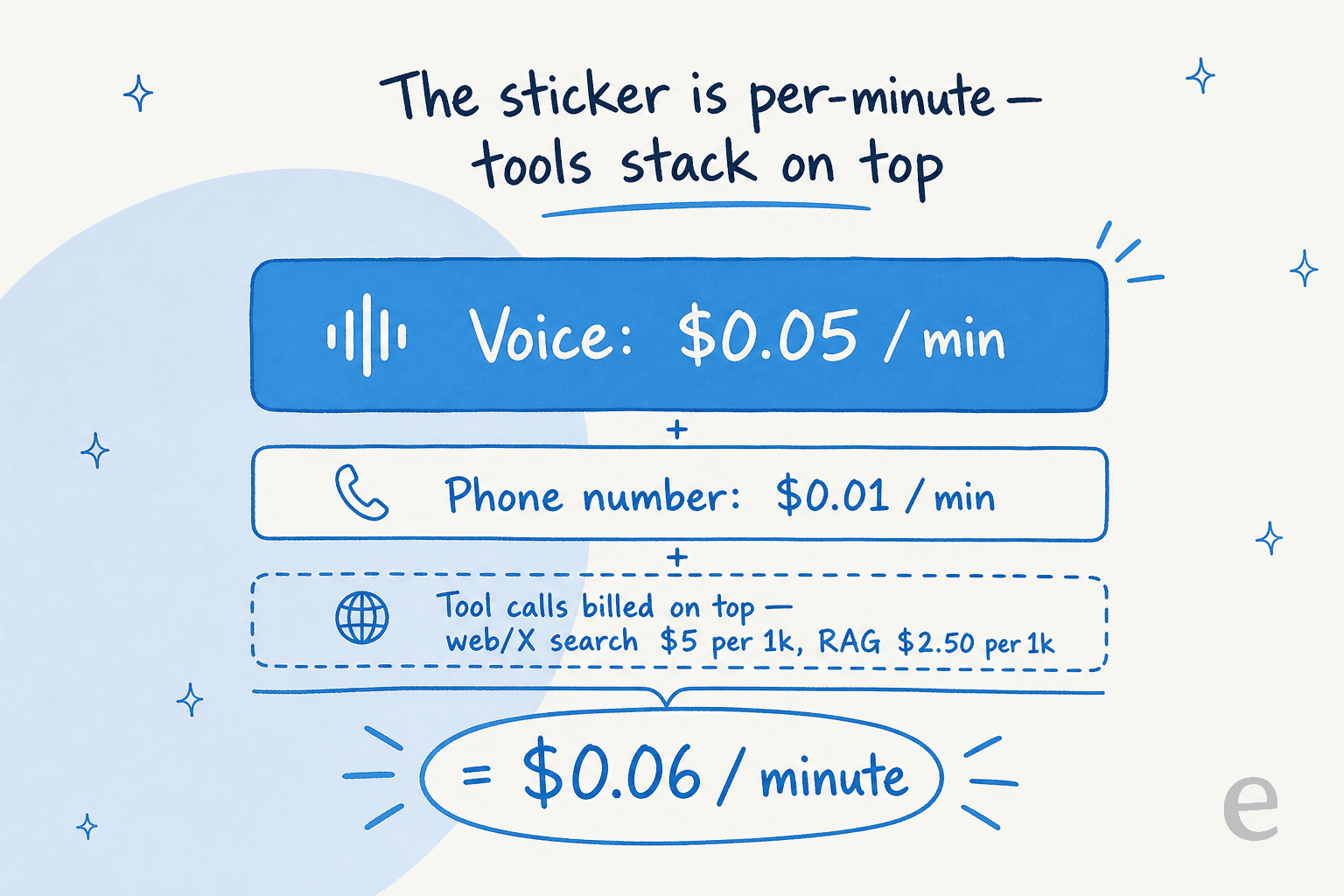
Rough math: a 5-minute support call on a provisioned number is about 30 cents in voice and telephony, before tool calls. That's cheap for phone automation. Just budget for the tool meters, and note there's no published free tier on the pricing page.
What builders are actually saying
The sentiment is cautiously positive, which is about right for a beta from a lab that ships fast. The praise clusters on speed, the architecture, and the price. The gripes are worth taking seriously.
First, access. Early developers hit a wall trying to get in:
"I wanted to try 'Grok Voice Agent API' instead of OpenAI's but I can't obtain ephemeral key: Failed to get ephemeral token: 403 The caller does not have permission... Is this API limited to enterprise only?"
Second, even fans temper the benchmark win with a practical note that cost and speed still "need work" in production. And there's no local or self-hosted option, which rules it out for teams that need to run models on their own hardware.
But the criticism I'd weight most heavily is the one every voice-agent builder eventually meets:
"A voice assistant that adds to cart is one misheard word away from ordering the wrong thing, so the real work is making it confirm the action before it commits, not just fire it. I learned that the hard way letting agents act unsupervised."
That's not a Grok problem. It's the problem with putting any autonomous agent on a live customer, and it's exactly the scar I want to talk about next.
Where it fits, and where it doesn't
The Grok Voice Agent Builder is a very good tool for what it is: standing up phone and voice agents fast, on a fast, cheap, in-house stack. If you're building a booking line, an outbound qualifier, or a voice front door for a product, it's one of the strongest options on the market right now, and I'd genuinely reach for it.
But "spin up an agent in two minutes" and "trust an agent on your live support queue" are different sentences. I've spent years putting AI agents on real support queues, and the thing you learn quickly is that the fast build is never the part that bites you. It's the moment the agent confidently acts on a misheard or half-understood request, in front of a real customer, that costs you. We've watched confident-sounding bots quietly give wrong answers, which is why the interesting engineering isn't the demo, it's the safety net around it.
That's the gap for most support teams. You don't want to hand-configure a phone agent and hope the guardrails hold. You want to automate tier-1 tickets in the channels you already use, learn from the tickets you've already solved, and prove it's safe before it ever talks to a customer. Grok's Builder is a powerful engine; it just isn't that workflow.
Try eesel for helpdesk automation
If your actual job is clearing an email and chat backlog rather than answering the phone, that's what I build eesel for. It's an AI teammate that plugs into Zendesk, Freshdesk, or your existing helpdesk in minutes, learns from your past tickets and help docs on day one, and drafts, triages, and resolves tier-1 tickets without you wiring up a stack.
The part that answers the "one misheard word" worry directly: eesel runs a simulation on your historical tickets before it goes anywhere near a live one, so you see exactly what it would have said and how much it would have resolved. You start supervised, grant autonomy on the easy stuff, and confidence-based routing keeps it from guessing when it isn't sure. It's how Gridwise resolved 73% of tier-1 requests in month one, and how Smava runs a fully automated agent on 100,000+ tickets a month. Pricing is 40 cents per ticket, no per-seat fees, and the first $50 is free.
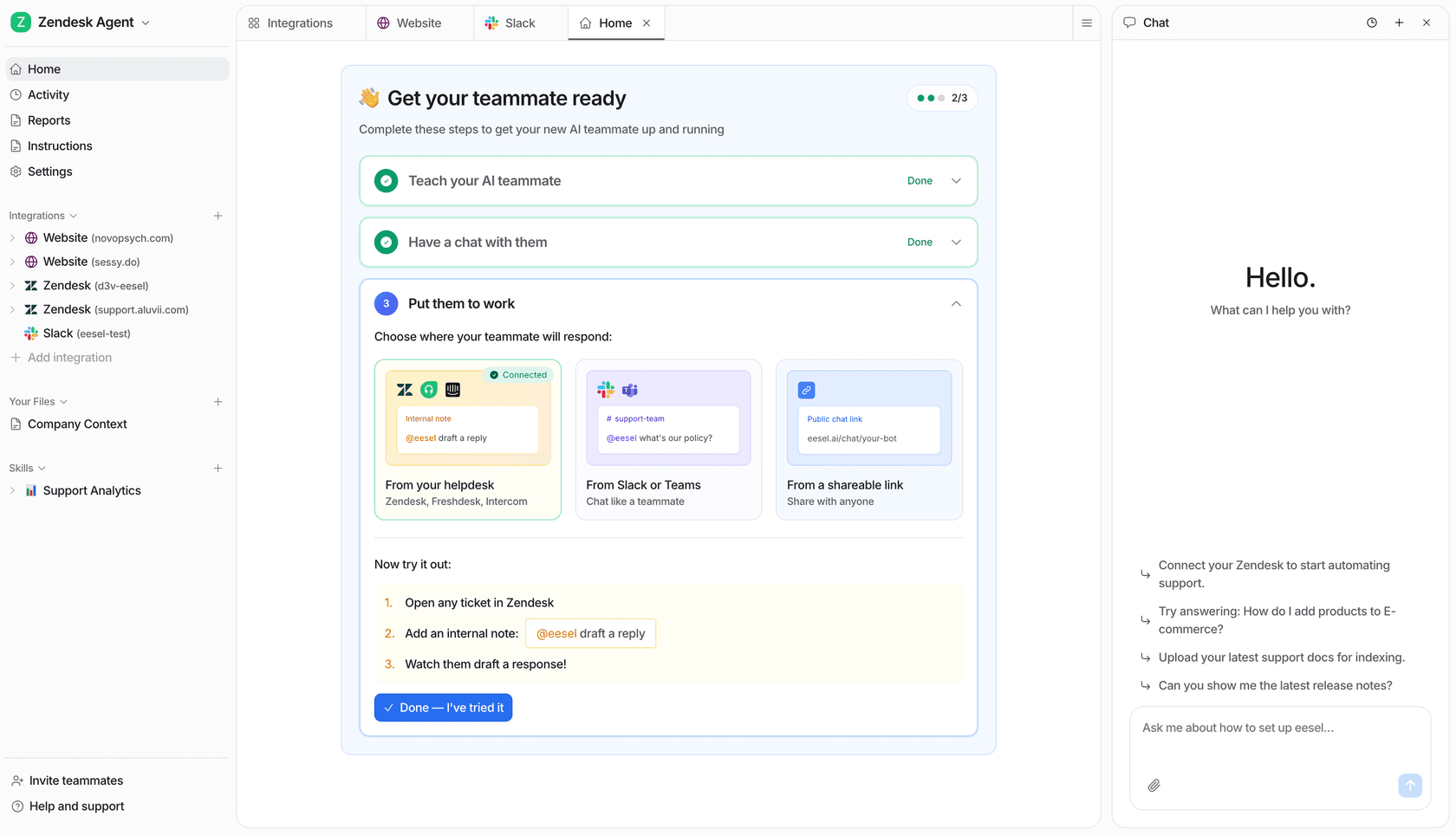
Voice AI is having a real moment, and Grok's stack is a big part of why. Just match the tool to the job: Grok Voice for building phone agents, and a purpose-built helpdesk agent for automating the tickets you're already drowning in. You can try eesel free.
Questions fréquentes
Qu'est-ce que le Grok Voice Agent Builder ?
Combien coûte le Grok Voice Agent Builder ?
Le Grok Voice Agent Builder est-il gratuit à essayer ?
En quoi Grok Voice diffère-t-il de l'API Realtime d'OpenAI ?
Puis-je utiliser le Grok Voice Agent Builder pour le support client ?


Article by
Rama Adi
Rama is a software engineer at eesel AI with two years of experience writing about B2B SaaS, AI tools, and customer support technology. Based in Bali, Indonesia, he brings a developer's perspective to product comparisons — cutting through marketing copy to what the integrations and APIs actually do.