
When a customer emails "system down" and it sits in your queue for three hours because it looks like every other ticket, you've got a problem. Manual triage doesn't scale. Agents miss signals. Urgent issues get buried under routine questions.
The fix is straightforward: let Zendesk triggers scan incoming tickets for keywords that indicate urgency, then automatically set the right priority. This guide walks you through building those triggers step by step. If you're new to triggers entirely, our guide on how to create a Zendesk trigger when ticket created covers the fundamentals first.
What you'll need
Before you start building:
- A Zendesk Support account (Team plan or higher)
- Admin permissions or a custom role with business rule management access
- A clear understanding of your ticket workflow (which teams handle what types of requests)
- A starter list of keywords that actually indicate urgency for your business
Step 1: Access the triggers page
Navigate to Admin Center > Objects and rules > Business rules > Triggers.
You'll see a list of existing triggers, including the standard triggers Zendesk provides out of the box. These handle basics like notifying requesters when their ticket is received.
Why trigger order matters: Triggers execute from top to bottom. A trigger higher in the list can change a ticket in ways that affect whether triggers lower down will fire. If you're creating a trigger that assigns tickets to specific groups, make sure it runs before any notification triggers that depend on that assignment.
Step 2: Create a new trigger
Click Create trigger to start building your automation.
Give your trigger a descriptive name that explains what it does. Good naming matters more than you might think. When you have dozens of triggers, "Priority - Set Urgent for Outage Keywords" is clearer than "Urgent trigger."
Add a description that explains the trigger's purpose. This helps other admins understand your logic and makes troubleshooting easier six months down the line.
Select a category for organization. If you don't have categories yet, you can create them on the fly. Many teams organize by function: Routing, Notifications, Escalations, and so on.
Pro tip: You can also clone existing triggers if you want to build something similar to what's already there. Click the three-dot menu next to any trigger and select Clone.
Step 3: Set the keyword detection conditions
Here's where you tell Zendesk when this trigger should run. For a trigger that fires when tickets are created, add this condition:
- Ticket > Is > Created
This single condition is the foundation of most ticket creation workflows. Without it, your trigger would fire on every ticket update too, which usually isn't what you want.
Now add the specific conditions that determine which tickets this trigger should affect. You have two types to work with:
ALL conditions (AND logic): Every condition must be true for the trigger to fire.
ANY conditions (OR logic): At least one condition must be true.
For keyword-based priority setting, you'll typically use:
- Ticket > Subject text > Contains at least one of the following words: outage down critical emergency hacked breach
- Ticket > Comment text > Contains at least one of the following words: outage down critical emergency hacked breach
Important: When a ticket is first created, the comment text condition also checks the subject. So you don't need to duplicate keywords across both conditions unless you want to catch updates too.
Here's a starter keyword library organized by priority level:
| Priority | Keywords | Use Case |
|---|---|---|
| Urgent | outage, down, critical, emergency, hacked, breach, security incident | System failures, security issues |
| High | urgent, billing, refund, payment failed, vip, escalation, angry | Revenue-impacting, VIP customers |
| Normal | sales, inquiry, question, feedback, how do I | General requests, pre-sales questions |
Start with 5-10 high-confidence keywords. You can always add more once you see how they perform.
Step 4: Define the priority action
Conditions determine when a trigger runs. Actions determine what happens. When your conditions are met, Zendesk performs every action you specify.
Under Actions, select:
- Priority > Urgent (or High, Normal, Low depending on your keyword set)
You can add secondary actions too:
- Add tags: Apply labels like "outage" or "security" for reporting and filtering
- Set Group: Assign to a specific team (Engineering, Security, Billing)
- Notify group email: Alert the on-call team immediately
Understanding priority field limitations: You can't add custom values to the default priority field. The options are fixed: Low, Normal, High, Urgent. If you need more granularity, create a custom ticket field for additional priority tracking.
Important: Priority must be set for SLA targets to apply. If you're using SLAs, make sure your priority triggers run before any SLA-related triggers.
Step 5: Test and activate your trigger
Before you let your trigger loose on real tickets, test it.
Zendesk's trigger preview feature shows you which existing tickets would have matched your conditions. This helps catch logic errors before they affect customers.
For a real-world test, create a test ticket that matches your conditions. Check that:
- The trigger fired (visible in the ticket's event log)
- The priority was set correctly
- Any secondary actions executed as expected
When you're confident everything works, activate the trigger. New triggers are active by default, but you can create inactive triggers by clicking the arrow next to Create trigger and selecting Inactive.
Remember: Trigger order matters. Your new trigger appears at the bottom of the list by default. If it needs to fire before other triggers, reorder it.
Best practices for keyword-based priority triggers
After working with hundreds of support teams, we've seen what works and what doesn't. Here are patterns that save time and prevent problems:
Start small. Begin with 5-10 high-confidence keywords that clearly indicate urgency. "Outage" and "system down" are safer bets than "important" or "ASAP." You can expand your keyword list once you understand the false positive rate.
Use nullifying conditions. Triggers can loop. If your trigger updates a ticket, that update can cause other triggers to fire. Prevent this by adding conditions like "Tags > Contains none of the following > priority-set" and include an action that adds that tag.
Consider the full lifecycle. A ticket creation trigger sets things in motion, but think about what happens next. If you auto-set priority based on subject keywords, what happens when an agent edits the subject? Consider whether you need separate logic for updates.
Organize by tier. Group priority-related triggers together at the top of your trigger list. Follow the ticket lifecycle: categorization and priority first, then routing, then notifications.
Document your logic. Maintain a simple keyword-to-priority mapping document that explains why certain keywords map to certain priorities. Future you (and your teammates) will thank you.
Review and refine monthly. Check which keywords actually indicate urgency versus which ones catch too many false positives. Remove keywords that create noise. Add new ones as your product and customer base evolve.
Common mistakes to avoid
Even experienced admins trip over these issues:
Overly broad keywords. A trigger that catches "urgent" will also catch "not urgent" and "previously urgent." Use whole-word matching where possible, or add exclusion conditions.
Forgetting the "Created" condition. Without Ticket > Is > Created, your trigger fires on every update. That priority escalation happens every time someone comments on the ticket.
Conflicting triggers. Two triggers that set priority to different values create unpredictable results. The last trigger in the execution order wins, but that order isn't always obvious.
Ignoring trigger order. If your priority trigger runs after a trigger that assigns the ticket, and that assignment changes the ticket in a way that affects your conditions, your priority trigger might not fire.
Not testing with real data. The preview feature is helpful, but it shows existing tickets. Test with a new ticket that matches your exact conditions to be sure.
Taking priority automation further with eesel AI
Triggers work great for known patterns. If the subject contains "refund," route to Billing. If the requester is in the VIP organization, set high priority. These are deterministic rules. They work or they don't.
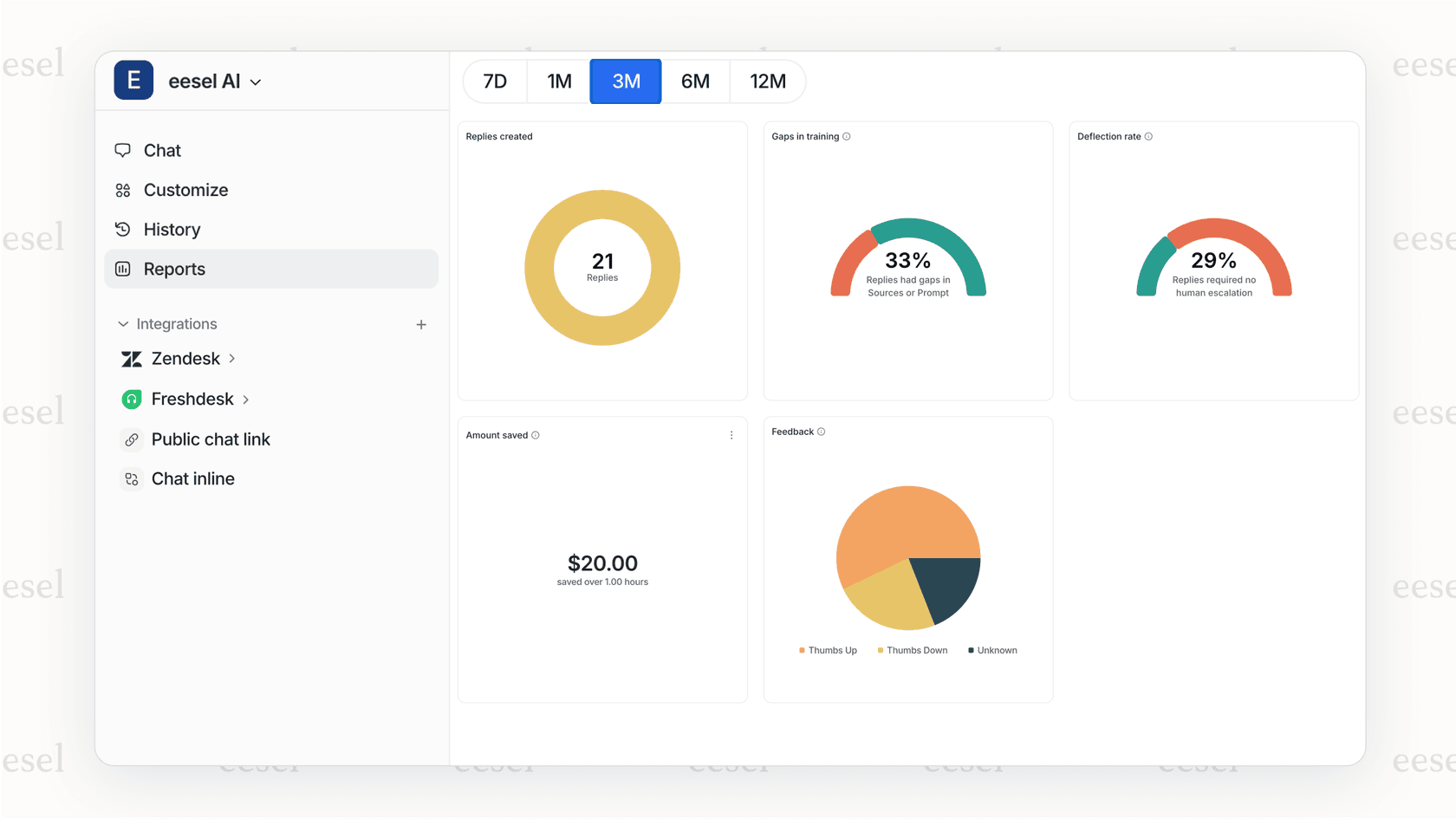
But real support isn't always that clean. Customers describe problems in different ways. Urgency depends on context that keywords can't capture. The customer who says "I can't log in and my boss needs this report today" gets routed correctly even if they don't use the word "urgent."
That's where AI-powered triage comes in. Instead of writing rules for every scenario, you train an AI on your past tickets. It learns the patterns you might not even realize exist.
We built eesel AI to handle exactly this. It plugs into Zendesk and works alongside your triggers. You can start with rules, add AI where it helps, and gradually shift from manual configuration to intelligent automation.
The difference? Rules follow instructions. AI learns from outcomes.
If you're interested in exploring how AI can complement your trigger setup, our practical guide to AI and automation in customer support covers implementation strategies that actually work.
Start automating your ticket prioritization
You now have everything you need to build triggers that automatically prioritize tickets based on keywords. Start simple: one trigger that sets priority for a specific keyword pattern. Get comfortable with how conditions and actions interact. Then expand from there.
The best trigger setups grow organically. You add triggers as you encounter new scenarios. You refine them when they don't quite work. Over time, you build a system that routes most tickets correctly without human intervention.
And if you find yourself writing increasingly complex rules to handle edge cases, it might be time to explore whether AI triage can help. Try eesel AI free or book a demo to see how intelligent prioritization works alongside your existing triggers.