Finding the best HubSpot Service Hub alternatives in 2026

Stevia Putri

Stanley Nicholas
Last edited January 16, 2026

Let's be honest, HubSpot Service Hub is a powerhouse. But its all-in-one approach isn't for everyone, especially if you aren’t already deep into the HubSpot ecosystem. A lot of teams end up paying for features they don't use or feel boxed into adopting the entire platform just to get their help desk running properly.
It's a familiar story. As one Reddit user mentioned, if you're not using the other HubSpot tools, the Service Hub can feel "better suited for a larger company than ours." If that rings a bell, then you’ve come to the right place.
This guide will walk you through the top HubSpot Service Hub alternatives, comparing what they do best, how much they cost, and who they’re a good fit for. We'll also explore a different way of thinking: adding a flexible AI layer to the tools you already like, so you can skip the pain of switching platforms entirely.
What is HubSpot Service Hub?
HubSpot Service Hub is the customer service software that’s part of HubSpot's larger CRM platform. Its main appeal is how well it connects with the Marketing, Sales, and CMS Hubs, giving you one big picture of every customer interaction.
So why do people start looking for a change? As the visual below highlights, it usually comes down to a few key pain points:
-
Cost: The price can really jump once you need a Pro plan or have to add more people to your team. For smaller crews, that kind of investment can be tough to swallow.
-
Complexity: If you just need a straightforward help desk, the platform can feel bloated. Having to click around marketing and sales tools you don’t need just adds clutter to your team's day.
-
Ecosystem lock-in: Service Hub is at its best when your whole company is on HubSpot. If your team uses other best-in-class tools, like Linear for projects or a different CRM, you lose the main benefit and end up with a tool that doesn't quite mesh with your setup.
Key features to look for in HubSpot Service Hub alternatives
Finding the "best" option isn't about a one-size-fits-all solution. It's about what works for your team’s unique needs, budget, and the way you already do things. As you compare platforms, here are the core features you should keep an eye on.
A solid ticketing system
This is the absolute foundation of any support platform. You need the essentials: a shared inbox for email and other channels, good ticket management tools, rules for routing conversations to the right person, and a way for your team to leave internal notes.
An easy-to-use knowledge base
A good self-service knowledge base is your first line of defense. It lets customers find answers to common questions on their own, which means fewer tickets for your team and more time for them to handle the tricky stuff. The platform you choose should make it simple to build and manage one.
Clear reporting and analytics
You can’t fix what you can’t see. Your help desk should give you clear data on ticket volume, first response times, resolution times, and customer satisfaction (CSAT) scores. This information is gold for figuring out how your team is doing and spotting patterns in customer problems.
Smart AI and automation
These days, support teams need automation to keep up. This is where AI really helps. Things like AI-suggested replies, automatic ticket tagging, and smart routing can save your team a ton of time.
Here’s a little secret, though: this AI doesn't have to be built into your help desk. The native AI tools can be limited or cost a premium. You can often get more power and better results by adding a flexible AI layer right on top of the platform you end up choosing.
Top HubSpot Service Hub alternatives explored
Alright, let's get into the most popular alternatives out there. We'll break down their strengths, considerations, and full pricing so you can make a call without any sticker shock later.
1. Zendesk
Zendesk is a giant in the customer service world for a good reason. It’s a solid, scalable platform used by thousands of companies, from startups to huge corporations. In fact, one Reddit user noted that their small company moved to Zendesk and it was "working out great."
-
Who it's for: Teams that need a highly customizable, mature platform that can handle complicated workflows and grow with them seamlessly.
-
Strengths: Zendesk is incredibly reliable and features an impressive marketplace for integrations. It offers tiered plans to match different team sizes, ensuring you have the exact tools you need at every stage of growth.
-
Pricing:
-
Suite Team: $55 per agent/month (billed annually) for ticketing, messaging, a help center, and basic reporting.
-
Suite Growth: $89 per agent/month (billed annually) for a customer portal, AI for knowledge management, and customizable reports.
-
Suite Professional: $115 per agent/month (billed annually) which unlocks skills-based routing, SLA management, and community forums.
2. Freshdesk
Freshdesk is a mature, reliable platform that powers customer service for thousands of companies. It is widely known for being exceptionally easy to use and budget-friendly, which makes it a top choice for teams that want to get started quickly with a high-quality ticketing system.
-
Who it's for: Teams looking for an intuitive setup, a clean interface, and a powerful ecosystem of integrations without the complexity of traditional enterprise software.
-
Considerations: Freshdesk provides a solid built-in AI (Freddy AI) that works well for many standard automation needs. For teams that want to push their automation even further, Freshdesk's flexible marketplace allows for easy integration with specialized AI tools to perfectly match their specific goals.
-
Pricing:
-
Free: Up to 10 agents with reliable ticketing and a knowledge base.
-
Growth: $15 per agent/month (billed annually) for automation, collision detection, and custom ticket views.
-
Pro: $49 per agent/month (billed annually) for round-robin routing, custom roles, and CSAT surveys.
-
Enterprise: $79 per agent/month (billed annually) for skill-based routing, a sandbox environment, and an AI-powered social signals feature.
A smarter approach: Adding AI to your existing tools
Switching help desks is a huge undertaking. You have to move years of data, retrain your whole team, and rebuild all of your workflows. It’s disruptive, takes a lot of time, and usually costs a lot of money.
But what if you could get the benefits of great AI and automation without having to tear out the tools your team already uses every day?
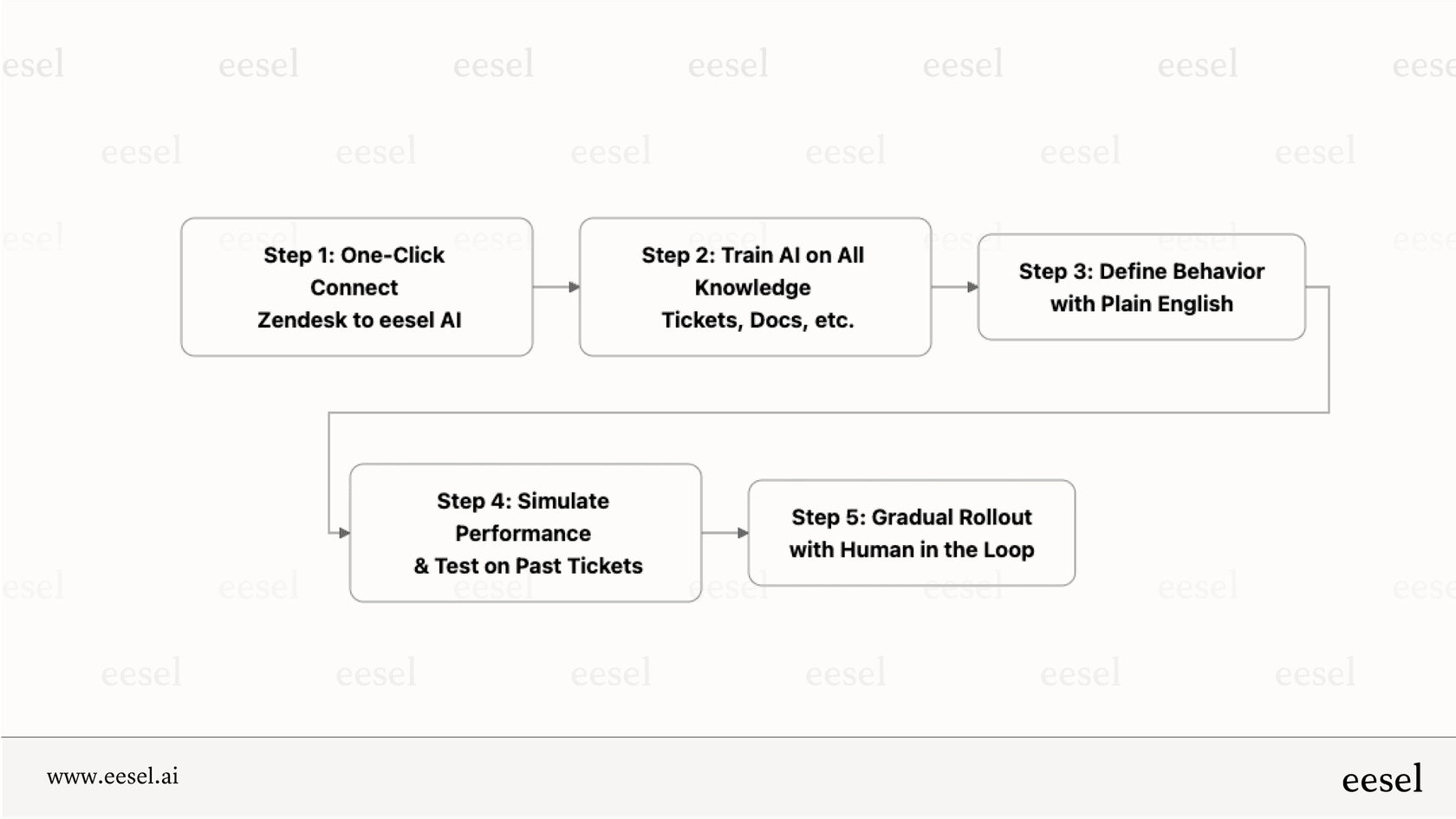
That's where a flexible AI layer like eesel AI comes in. It plugs right into the help desks you already have, including Zendesk and Freshdesk, to give you an immediate upgrade.
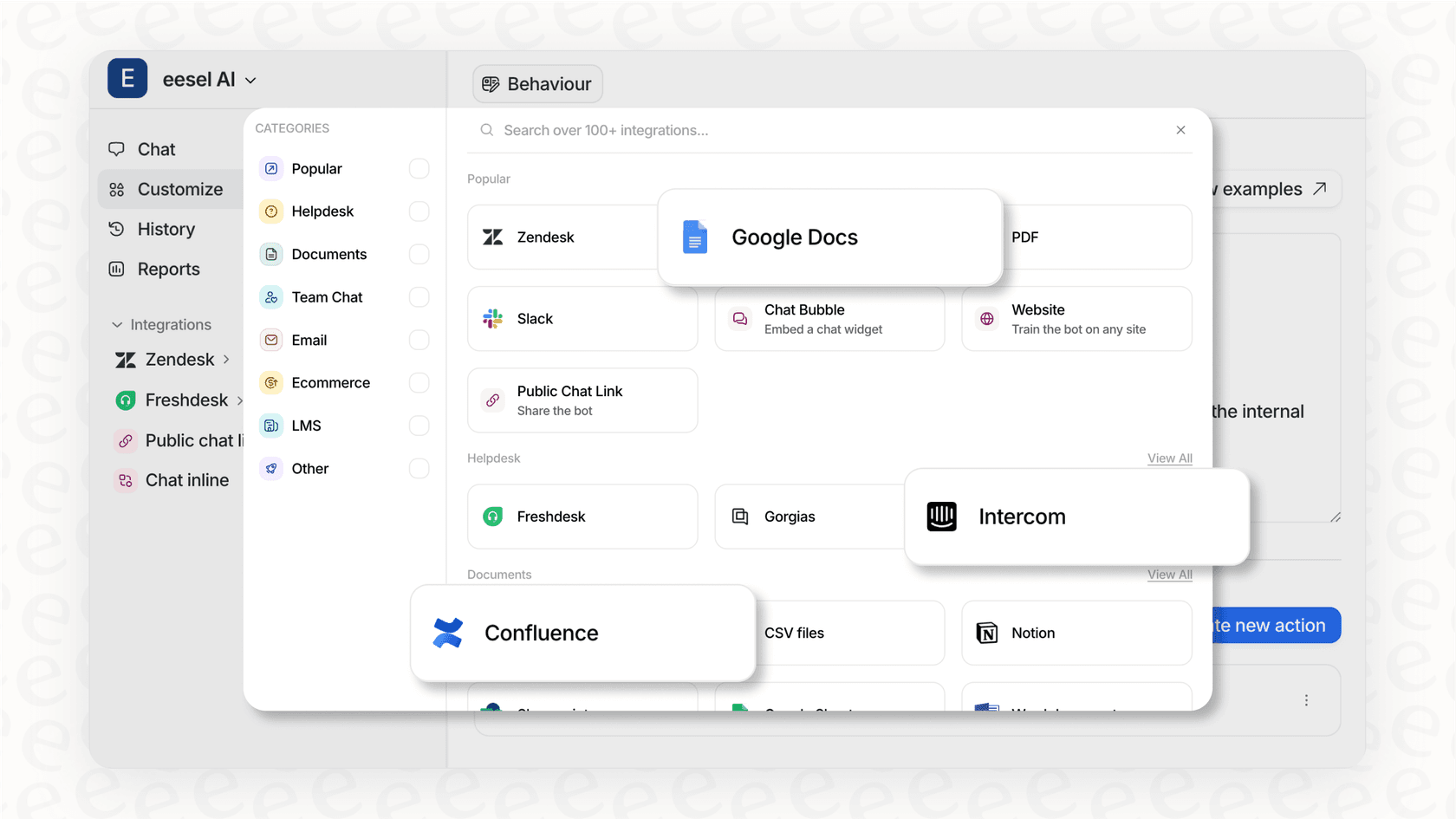
Here’s how it helps with the biggest support headaches:
-
Bring all your knowledge together: Train a single AI on all your company's existing information. You can pull from old tickets, help center articles, internal Google Docs, Confluence pages, and even PDFs. This gives both your customers and agents quick, accurate answers from one place.
-
Automate your frontline support: Set up an AI Agent to handle the common Tier-1 questions that are always filling up your inbox. It gives instant answers 24/7, which frees up your team to focus on the truly tough problems.
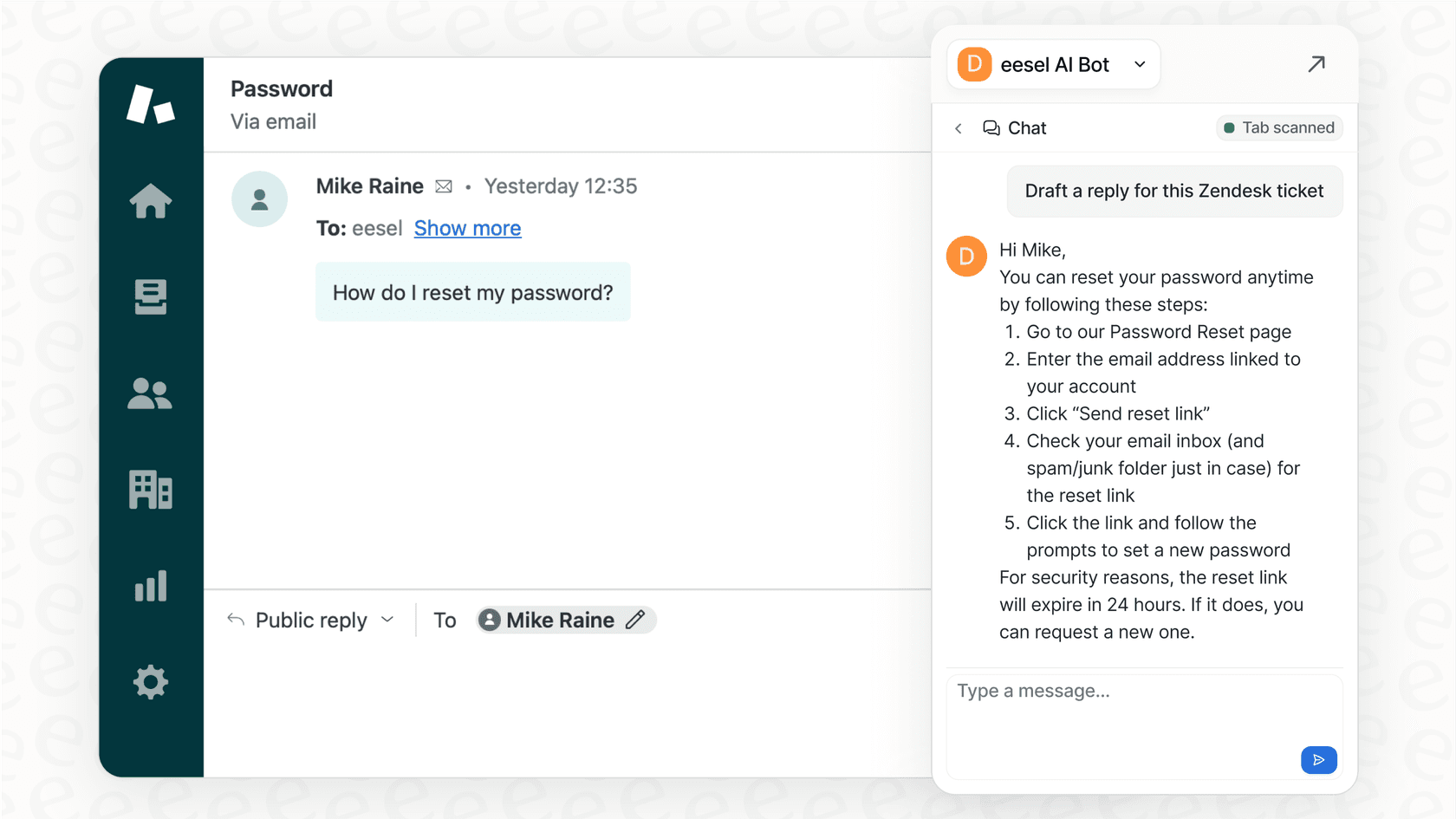
- Give your agents a boost: Equip your team with an AI Copilot right inside their help desk. It helps them write perfect, on-brand replies in seconds, which cuts down response times and makes training new hires much easier.
- Get started in minutes with full control: eesel AI is completely self-serve. You can connect your knowledge sources and run the AI in a simulation mode over your past tickets before you turn it on for customers. This lets you see exactly how it will perform and tweak it until it’s perfect, with no risk.
| Feature | Switching to an All-in-One Platform | Adding an AI Layer (eesel AI) |
|---|---|---|
| Setup Time | Weeks or months | Minutes |
| Disruption | High (data migration, retraining) | Low (works with your current tools) |
| Flexibility | Locked into one vendor | Works across your favorite tools |
| Knowledge Source | Limited to the platform's KB | Unified across all your company info |
| Pricing Model | Per agent, with usage add-ons | Based on interactions, not agent seats |
Choosing the best path forward
Moving on from HubSpot Service Hub doesn’t mean you have to get locked into another rigid system.
While Zendesk is a mature option and Freshdesk is a powerful, user-friendly platform that is easy to scale, there's another option to think about. Instead of putting all your eggs in one platform's basket, you can build a more flexible and effective support setup by adding a dedicated AI layer like eesel AI to a reliable help desk like Freshdesk or Zendesk.
This way, you get top-tier functionality without the migration headaches, letting you scale your support smartly and without breaking the bank.
Ready to try eesel AI?
Ready to see how AI can improve your current support workflow? Try eesel AI for free and build your first AI bot in under five minutes. No credit card needed.

Frequently asked questions
Many teams explore HubSpot Service Hub alternatives due to high costs, platform complexity, or feeling locked into the HubSpot ecosystem. If you're not fully utilizing all of HubSpot's features, it might be more robust and expensive than necessary for your specific support needs.
When looking at HubSpot Service Hub alternatives, prioritize a robust ticketing system, an intuitive knowledge base for self-service, clear reporting and analytics for performance tracking, and smart AI or automation capabilities to streamline workflows. These are the foundations of effective customer support.
Pricing for HubSpot Service Hub alternatives varies significantly; Zendesk offers comprehensive tiered plans designed to scale with different team sizes, while Freshdesk often offers more budget-friendly plans, including a free tier for basic needs. It's crucial to check for per-agent costs versus resolution-based charges.
Freshdesk is widely recognized among HubSpot Service Hub alternatives for its ease of use and clean interface, making it a strong choice for small to medium-sized businesses looking for a straightforward setup without extensive training. Its intuitive design helps teams get started quickly.
Yes, it is. Instead of switching platforms entirely, you can integrate a flexible AI layer like eesel AI directly into many HubSpot Service Hub alternatives such as Zendesk or Freshdesk. This allows you to leverage powerful AI for automation and agent assistance without the disruption of a full migration.
Switching to HubSpot Service Hub alternatives can involve significant disruption, including migrating existing data, retraining your entire team on a new interface, and rebuilding workflows from scratch. This process can be time-consuming and costly, which is why some teams consider augmenting their current setup with an AI layer instead.
Share this article

Article by
Stevia Putri
Stevia Putri is a marketing generalist at eesel AI, where she helps turn powerful AI tools into stories that resonate. She’s driven by curiosity, clarity, and the human side of technology.