


What Grok Bot actually is
Grok Bot is xAI's AI teammate app, announced on 11 August 2026 and still labelled "early beta" on its own page. The idea is that each Bot is a persistent, named worker that gets its own cloud computer, signs into your apps, and drives them through their interfaces the way a person would.
That design decision is the whole story. Grok Bot works by computer use for apps and websites without a clean API, so it finishes work in your real tools rather than as chat drafts. It ships as a general-purpose labour agent with eight starter roles (sales, talent, paid media, expenses, and so on), and notably none of them is a content or writing role. It is sold through Cursor's plans, Cursor Ultra at $200/month and Cursor Premium Teams at $120 per seat per month, with no public free tier at launch.
So when people ask whether they can point it at their blog, the honest answer is: yes, the same "drive the browser" mechanism that lets it work a Salesforce queue also lets it open your CMS and edit an old post. The interesting question is whether that is a good idea.
Why content refresh is a job worth automating
Content refresh is one of the highest-leverage things a content team does. You are not writing from scratch, you are updating a post that already ranks, fixing stale stats, adding a section the search intent now demands, and re-publishing so the page holds or climbs. It is repetitive, it is deadline-shaped, and it is exactly the kind of work people daydream about handing to an agent.
That is also why an early tester reached for Grok Bot to build a small content crew:
"I've been testing Grok Bot for a couple of weeks... For example, I set up a researcher bot and a writer bot, then made a Chief of Staff bot and asked it to get the other two working together on a project. I checked in fully expecting that to fall apart, because there was no way it just would work out of the box."
xAI's own docs lean into this too. Their worked example for a group of Bots is a Website Launch team of a launch coordinator, a content editor, and an analytics reviewer. So content is clearly a use case xAI has in mind, even if it did not ship a content role out of the box.
How a content refresh with Grok Bot actually works
Here is the shape of it, end to end. You give a Bot the task, it opens a browser on its cloud computer, and it works your CMS the same way you would.
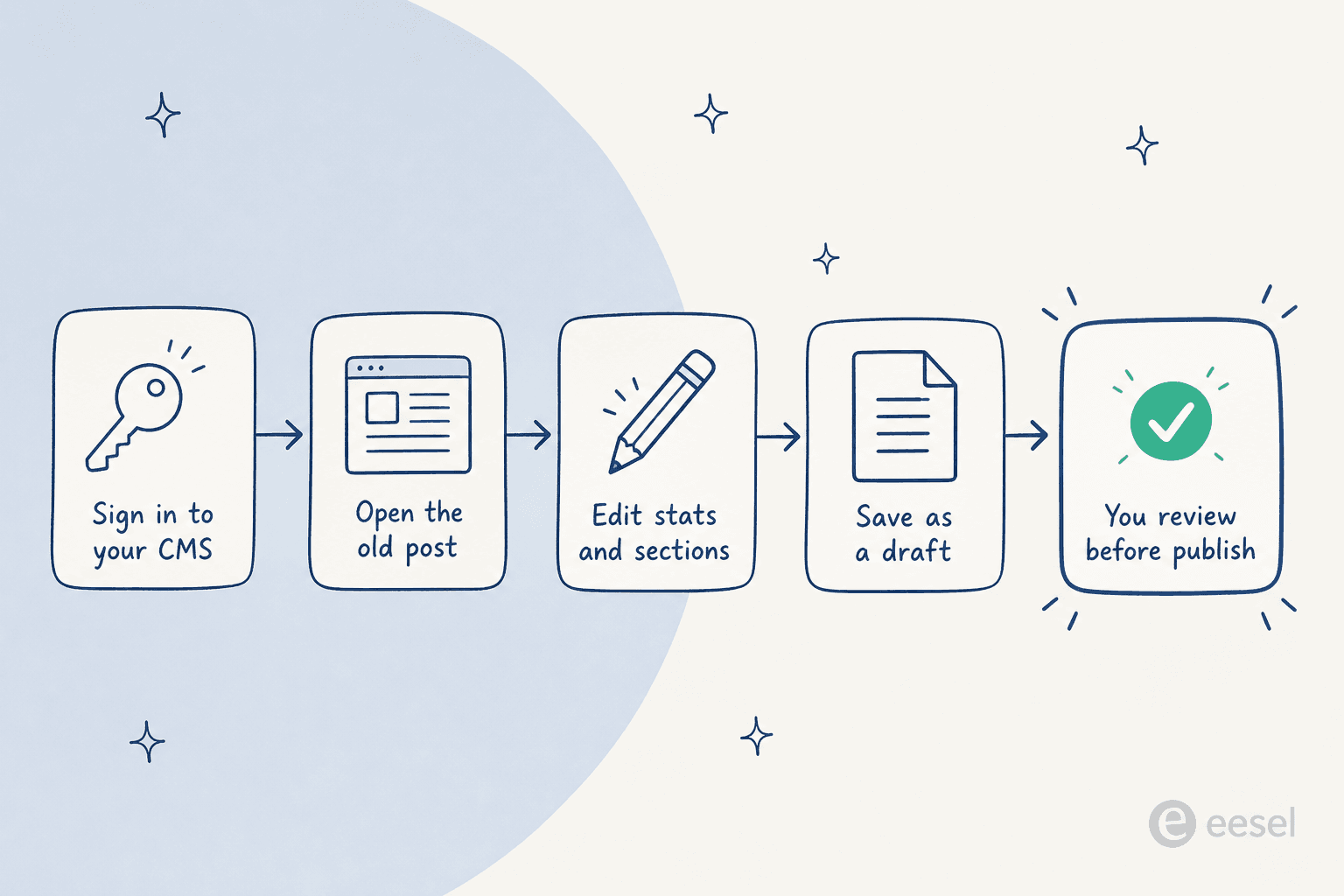
The one thing worth flagging is the sign-in step. A Bot never holds your password. It hands you the screen, you type the password, passkey, or 2FA code, then you hand control back. The browser session it creates then persists on the shared computer, which is convenient and, as I'll get to, also the source of a real caveat.
Where it gets more powerful is repeatability. Grok Bot lets you save a process as a skill and, where Teach a task is available, demonstrate a browser workflow once instead of describing every step. In theory you could teach it your refresh routine, then wire a routine that runs it on a schedule, for example checking your top posts every quarter. That is a real, and genuinely interesting, path to keeping content fresh without babysitting each run.
Where Grok Bot shines for refreshing content
Give it credit where it is due, because the strengths here are real.
It reaches CMSes that block everything else. The whole point of computer use is coverage. If your content lives in an older CMS, a niche publishing tool, or an internal system with no integration, Grok Bot can still log in and edit it, because it clicks buttons rather than calling APIs. Most content tools simply cannot touch those systems.
It builds context over time. Grok Bot's named Bots keep memory, files, and preferences across turns, so a Bot you use repeatedly for content should get better at your patterns rather than starting cold each time.
It can run on a schedule. Once a refresh routine is taught and tested, you can have it run unattended, which is the dream for teams with a big back-catalogue and no time to manually audit it.
One r/singularity user summed up the fit well after trying it:
"gave it a shot, seems useful for product owners that need more automation and less hands-on work... they have templates for use-cases like marketing, research, orchestration, observing competitors and handling general tasks... more useful for people that want partnership in shipping a product, or have shipped a product and want to continue momentum."

That "continue momentum" framing is the right mental model. Grok Bot is a strong fit when you want a flexible generalist that can reach anything, and you have the time to supervise it.
Where it gets risky
Now the part I would want a colleague to warn me about before I pointed an agent at a page that already ranks.
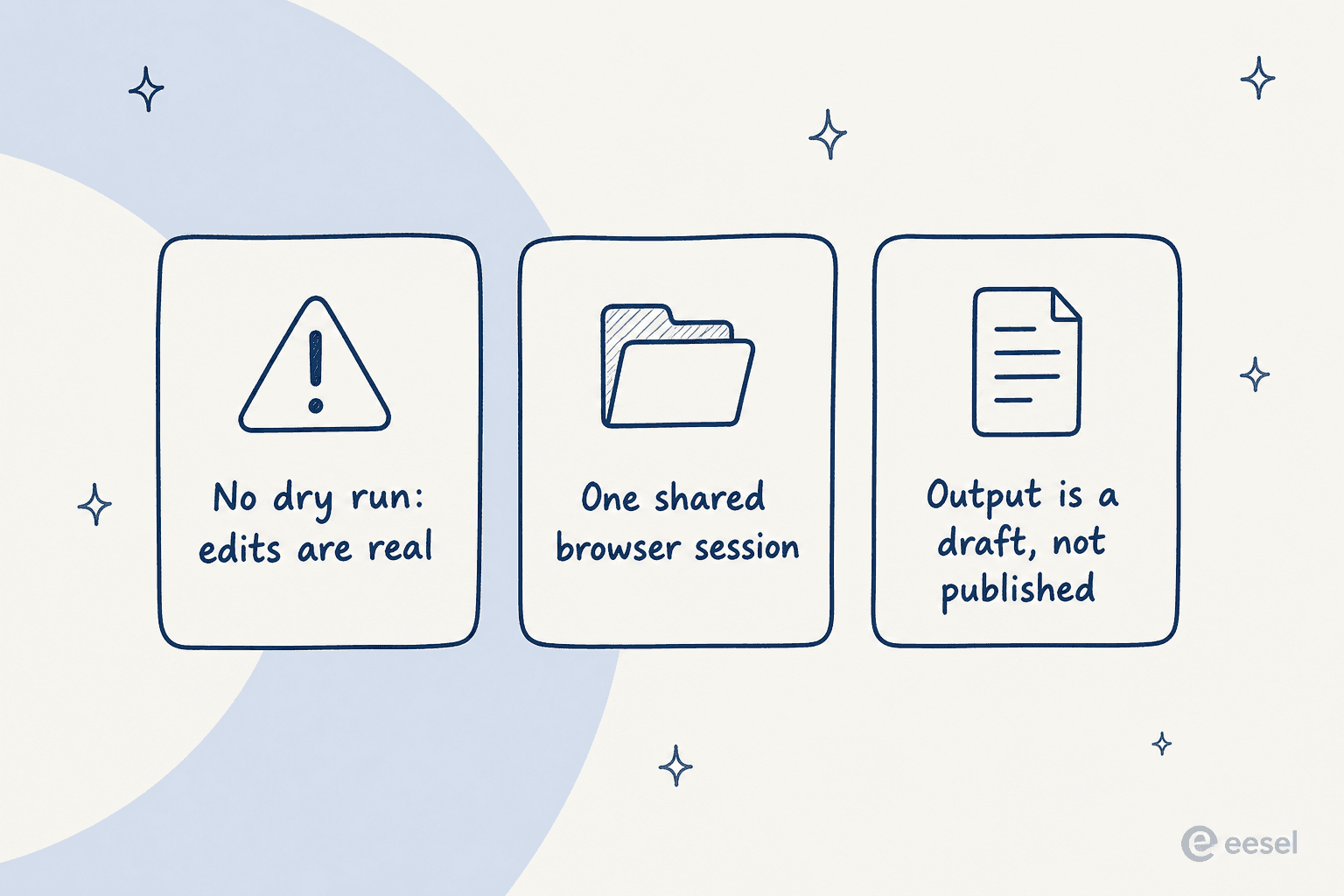
There is no dry-run mode. This is the big one for content refresh. xAI's docs are unusually blunt about it: a test run performs real work, and it can navigate websites, change files, and call connected tools. When you are refreshing, you are editing a post that already earns traffic, so "the test edits the live thing" is not a small footnote. I have seen how this plays out on the agent side of things. Over years of running AI agents that take real actions in customers' live tools, I've watched an autonomous scheduled workflow rewrite a tracked document instead of appending to it, quietly wiping the historical data it was supposed to add to. Nobody asked it to. That is the exact failure shape an agent editing your live CMS with no preview can produce.
Everything shares one computer. xAI states it twice: do not use separate Bots as a security boundary, and treat any login placed on the computer as available to every Bot. If your content Bot is signed into your CMS, that session is reachable by every other Bot on the account. For a solo user that is fine; for a team it is a governance question worth answering up front.
The taught workflow is a draft, and it is brittle. Teach-a-task is browser-only, capped at ten minutes, and its output is explicitly a draft you have to finish with decision rules and approval boundaries. And because it depends on the CMS UI staying put, xAI's own advice is to re-test after a website, connector, or source format changes. One builder put the worry plainly:
"what happens when the bot hits an app with no api and a ui that changes every quarter?"
That is the tax on computer use. It reaches everything, and it breaks whenever the thing it reaches gets redesigned.
Generalist bot or a writer built for the job?
Here is the reframe I would push. The question is not "can Grok Bot refresh content." It clearly can. The question is whether a general labour agent that drives your CMS is the right shape for a job you do over and over.
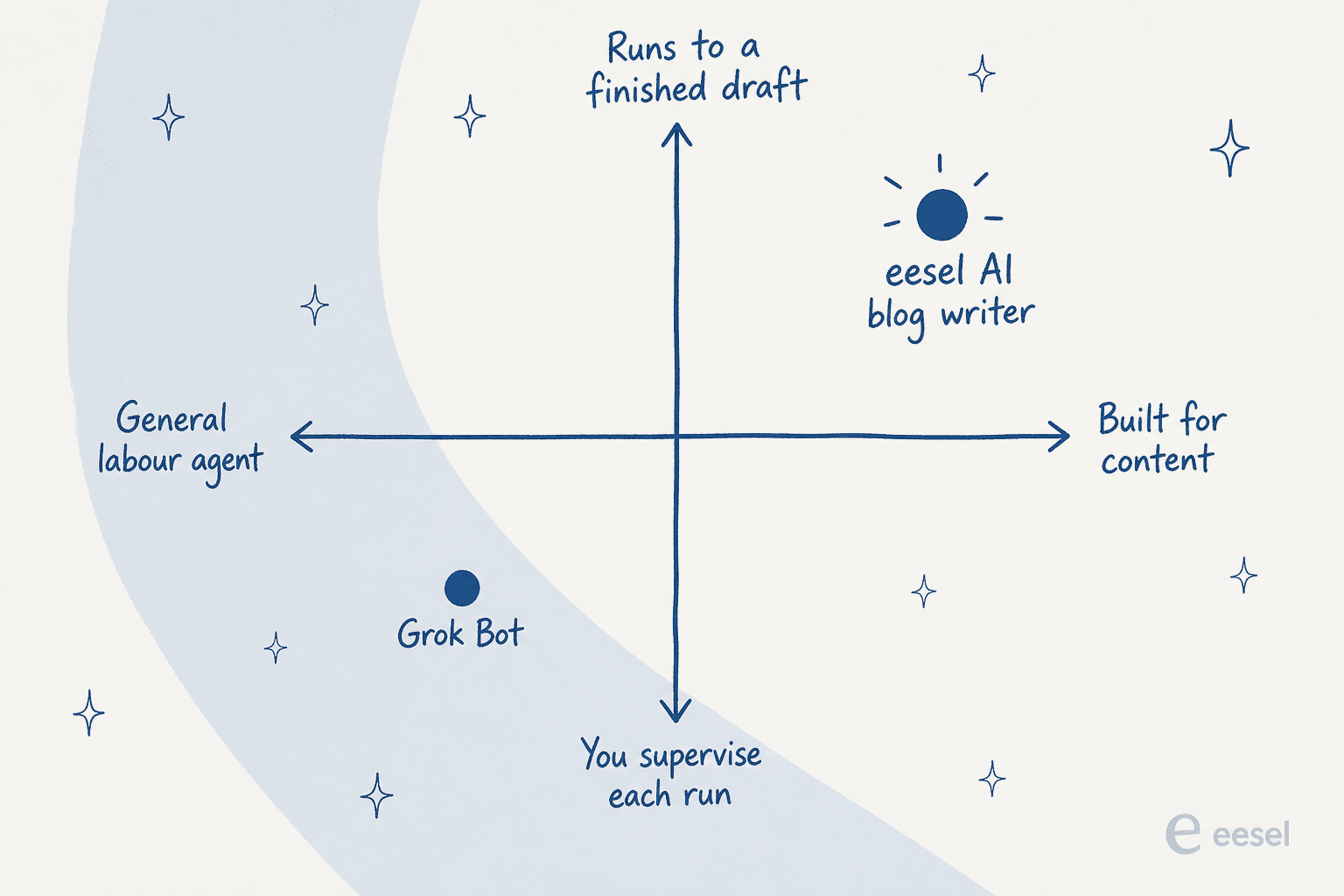
A generalist earns its keep when the work is varied and unpredictable, when you value reach over polish, and when you have time to review each run. A content teammate earns its keep the other way: when the work is the same shape every time, when brand voice and your own past posts matter, and when you want a finished draft rather than a live edit to watch.
That is roughly how I think about eesel here. eesel is an AI teammate platform, and you hire ready-to-work teammates for specific jobs rather than a general worker you have to train into a role. The current roster is the AI helpdesk teammate and the AI blog writer. For content refresh, the blog writer is the relevant one: it already knows your site and brand voice, so a refresh comes back as an on-brand draft you approve, not a live page edit you have to supervise.
And on the "no API" gap, this is where the shapes really diverge. Grok Bot has no documented API, SDK, or CLI, so you cannot script it. eesel exposes the same teammate through an eesel CLI plus MCP and webhooks, so a person can run it from a terminal, scripts can automate a refresh across dozens of posts, and coding agents like Claude Code, Codex, or Cursor can drive it directly. If your content operation is programmatic, that difference matters more than any single feature.
Try eesel for content refresh
If content refresh is the job you keep coming back to, eesel's AI blog writer is built for exactly it. It researches, drafts, and refreshes in your voice, and it returns work as a draft you review before anything goes live, so there is no "the test edits the live page" moment to worry about.
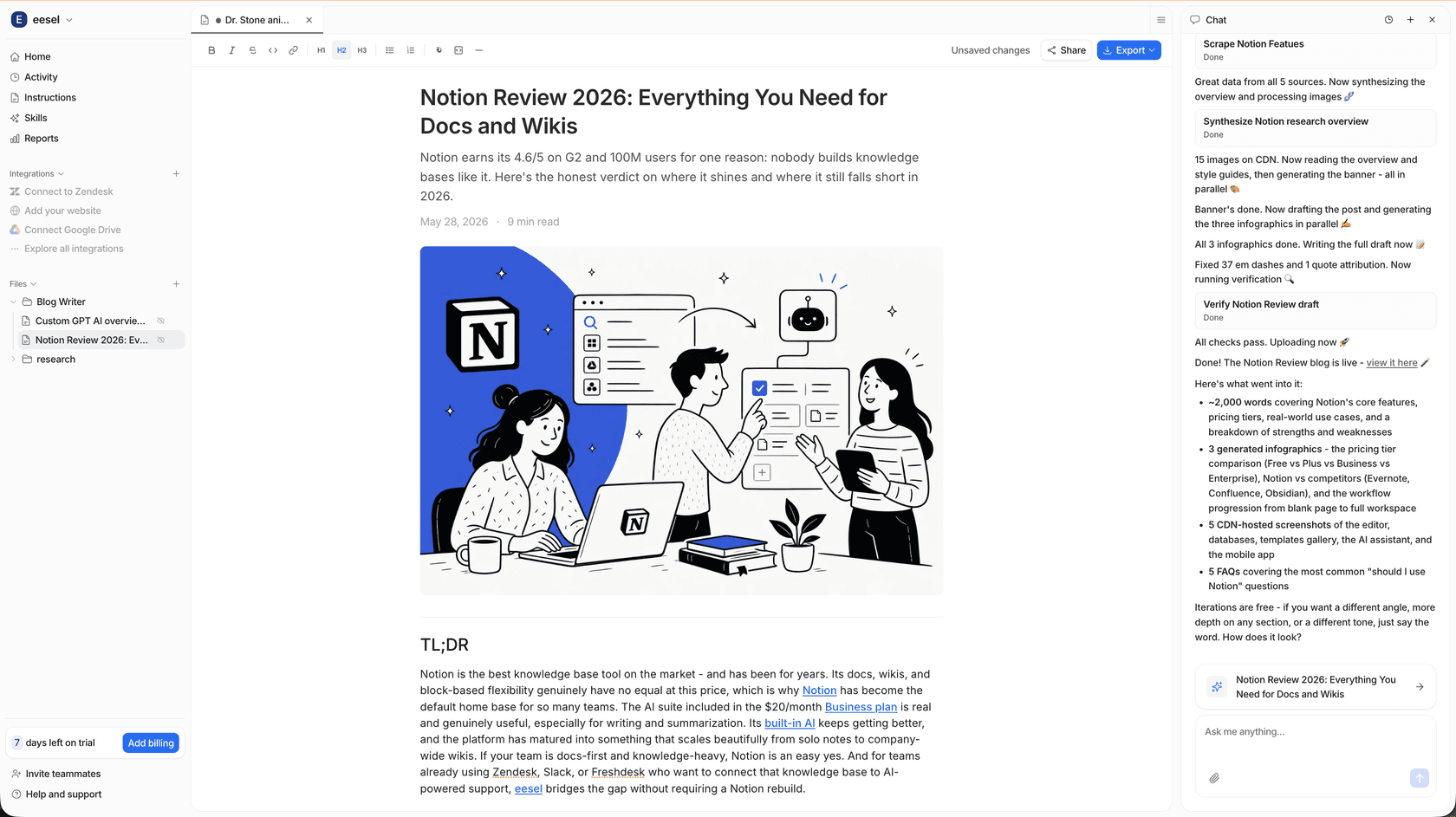
Full disclosure, and honestly the most concrete proof I can offer: the post you are reading was drafted by that same blog writer, researched, illustrated, and written end to end, then reviewed by a human before publish. That is the workflow I would want for a content refresh too. It is free to try, and you can see what it does with your own posts before you commit to anything.
Frequently Asked Questions
Can Grok Bot refresh existing blog content?
How much does Grok Bot cost for content work?
Does Grok Bot have an API for content workflows?
Is it safe to let an AI agent edit a live ranking page?
What is the best way to keep content fresh at scale?


Article by
Kurnia Kharisma Agung Samiadjie
Kurnia is a software engineer and writer at eesel AI with two years of SEO experience, writing about AI tools, helpdesk software, and customer support. He pairs a developer's understanding of how these products are built with search-driven research into what actually ranks and resonates with the people searching for them.