


Gobii AI pricing at a glance
Gobii ran four public tiers at the end, under the pricing-page heading "Choose the plan that fits your team." Here is the whole card as it stood in the final archived capture on 28 July 2026.
| Plan | Price | Tasks included | Overage | API rate limit | Contacts per agent | Support |
|---|---|---|---|---|---|---|
| Free (self-hosted) | $0 | n/a, bring your own models | n/a | not published | not published | none stated |
| Pro | $50/month | 1,000/month | $0.10/task | 600 req/min | 20 | Email and chat |
| Scale | $250/month | 10,000/month | $0.04/task | 1,500 req/min | 50 | Dedicated channel |
| Team | $50/seat/month | 1,000 pooled per seat | "Metered overage available" | 2,000 req/min | 50 | Priority support |
| Enterprise | no published price | not published | not published | not published | not published | not published |
Four things in that table are worth pulling out, because they are the ones that decided what a Gobii bill looked like.
The $0 tier was not a free trial of the hosted product. It was the MIT-licensed repo with a "View on GitHub" button, and the bullets said so plainly: "Run on your own computer or server," "Bring your own AI models." Real hosted trials were a separate 7-day thing on Pro and Scale, and the page's fine print limited them to "first-time customers only."
Team was priced per seat but metered like everything else. Each $50 seat added 1,000 pooled task credits to a shared workspace, plus shared agents, shared credentials, integrations, API keys, secrets, roles and team billing. What it never got was a published overage rate. The comparison table's Team column just read "Metered overage available," which is the only wording Gobii ever used for it.
The contact limit was the closest thing to a seat cap on Pro. Twenty contacts per agent on Pro, fifty on Scale and Team. That is the number of distinct humans allowed to email or text a given agent, which on a product whose whole pitch was "Email them. Text them." was a real ceiling rather than a footnote. Compare that with an AI employee product priced per outcome, where the number of people talking to it is not a billable dimension at all.
Enterprise was a form, not a price. "Let's design your deployment," with dedicated infrastructure, SLAs and custom governance, and a "Request a call" button. Worth knowing that Gobii's own enterprise demo modal still carried the disclaimer "This form is currently for demo purposes only." Quote-only enterprise tiers are the norm in this category, as anyone who has priced Sierra, Moveworks or Aisera knows.
What Gobii actually counted as a task
This is the part I would want to know before signing anything, and it is the part the pricing page answered in a way the product did not quite honour.
Gobii's own pricing FAQ was unambiguous: "A task is a single automation job submitted to Gobii. Tasks can vary in length and complexity, but each submission counts as one task against your quota." Read that at face value and Pro's 1,000 tasks means 1,000 jobs, whatever each job involves.
The product billed differently. Gobii's brain-dial release note describes "a faster task-credit burn rate" on smarter intelligence settings and says "Standard intelligence uses credits more slowly and is ideal for routine or high-volume tasks." The homepage showed the dial as five levels, from "Lite 1x" up through Standard, Max, Ultra and Ultra Max, gated behind an upgrade prompt. And two months before that, a newsletter titled "we listened" opened with "Gobii users have reported that their agents are running out of credits too fast," then granted everyone an extra month of credits, said "Task usage has been lowered by an additional 50%," and shipped per-agent credit controls.
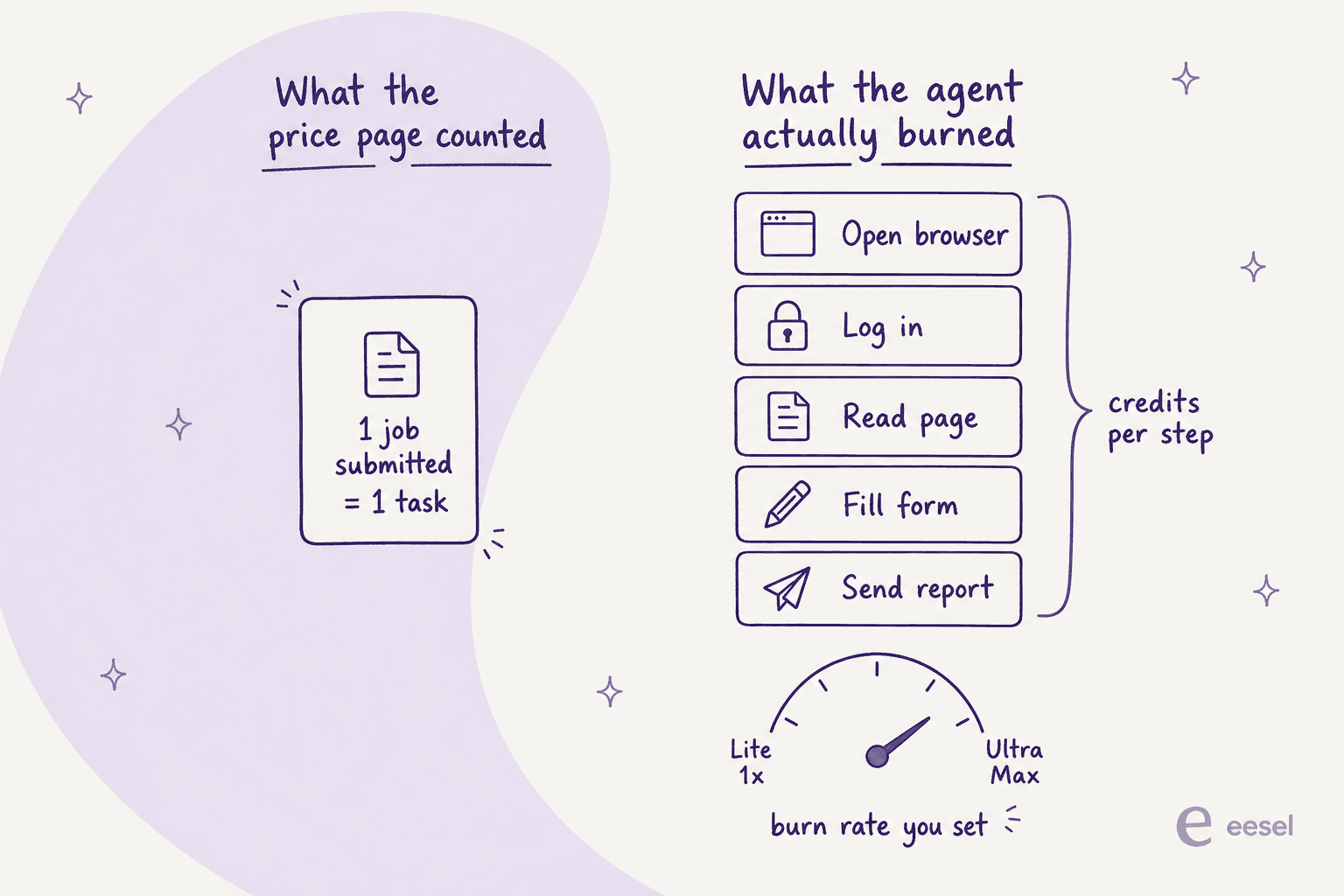
You cannot halve "task usage" if one submission is one task. The only way that sentence parses is if a running job consumed a variable number of credits, which means the burn rate was a setting the buyer controlled and a number Gobii never published. Lite was documented at 1x. Standard, Max, Ultra and Ultra Max have no multiplier on any archived page.
I am not scoring a point here, because this pattern is everywhere in agent pricing and it is the single thing I would test before trusting any quote. A buyer we spoke with earlier this year, a European email-security vendor scaling toward twenty thousand tickets a year, hit two hundred interactions inside a single test day and immediately stopped to ask what that meant at nine thousand interactions a month. That is exactly the right question, asked at exactly the right time, and almost nobody asks it before the invoice. Vendors that bill per attempt include Manus and Tasklet, both of which are credit-metered without a published per-task rate either. If you want the general version of this problem, what an AI support agent costs walks through every meter I have seen in the category.
Gobii's pricing history, and what it tells you
Nineteen pricing captures exist between August 2025 and July 2026, and the rate card moved five times in that window. This is the clearest picture anyone now has of how Gobii priced itself.
| Snapshot | Free / hosted | Pro | Scale | Team |
|---|---|---|---|---|
| Aug 2025 | $0, 100 tasks/mo, 5 agents | $30/mo, 500 tasks | not offered | not offered |
| Feb 2026 | $0, 100 tasks one-time | $47/mo, 500 tasks | $250/mo, 10,000 tasks | not offered |
| Mar 2026 | removed | $50/mo, 500 tasks | $250/mo, 10,000 tasks | not offered |
| May 2026 | $0, self-host only | $50/mo, 750 tasks | $250/mo, 10,000 tasks | not offered |
| Jun 2026 | $0, self-host only | $50/mo, 1,000 tasks | $250/mo, 10,000 tasks | not offered |
| Jul 2026 | $0, self-host only | $50/mo, 1,000 tasks | $250/mo, 10,000 tasks | $50/seat, 1,000 pooled |
Pro's sticker went up 67% across the year, from $30 to $50. What matters more is the included rate underneath it, because for most of that year the price rose while the allowance stood still. Divide price by included tasks and Pro ran $0.060, then $0.094, then $0.100, then $0.067, then $0.050 per task. Only the final $50-for-1,000 card beat the original $30-for-500 card.
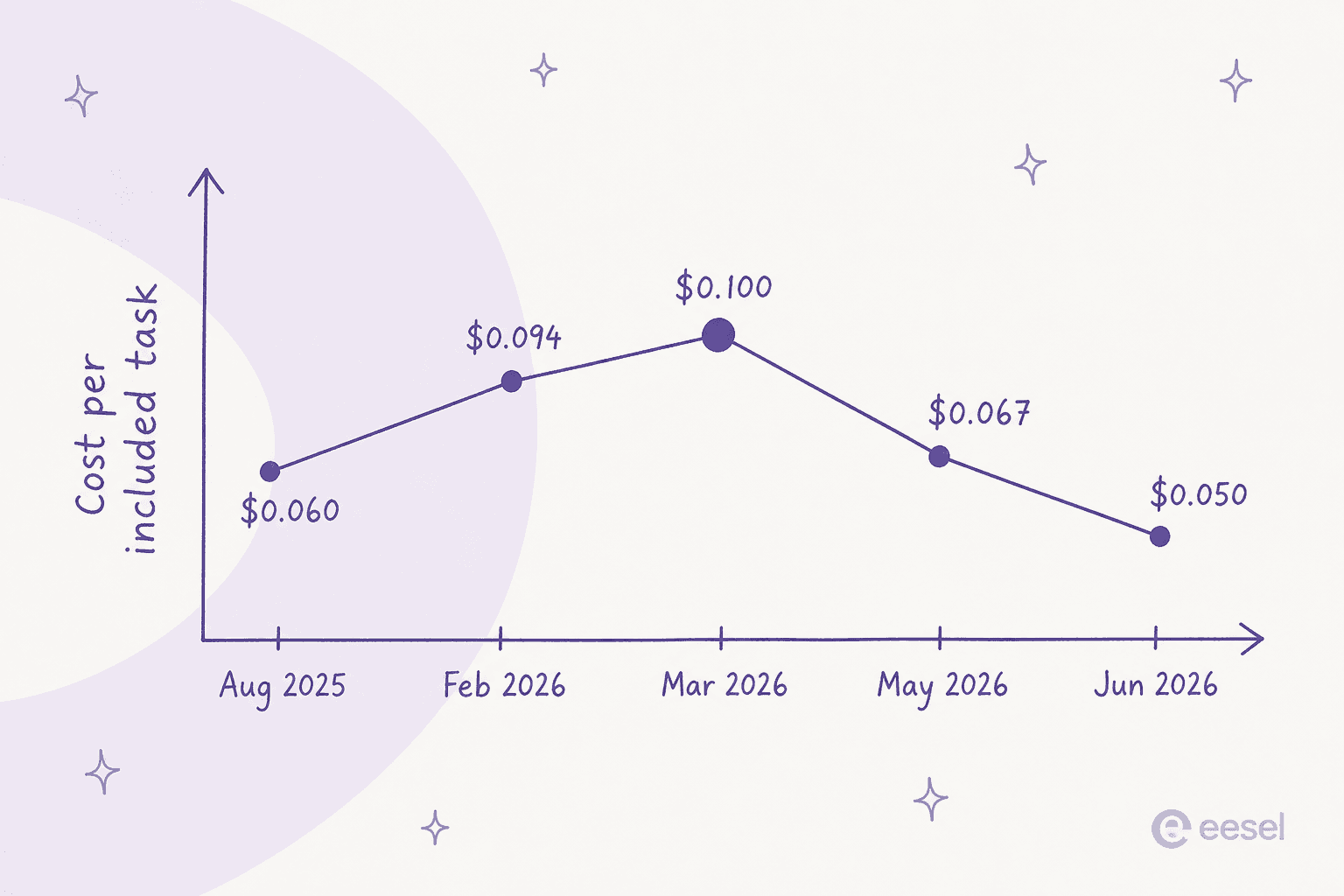
Two other things stayed stubbornly still. The published overage never moved once: $0.10 on Pro and $0.04 on Scale, identical across all seven archived rate cards. And Scale's included rate of $0.025 per task was cheaper than its own $0.04 overage and five times cheaper than Pro's, which is a strong hint about where Gobii wanted its volume to sit.
The free tier is the other story in that table. It was real: 100 tasks a month, five always-on agents, a 30-day agent lifetime, 60 requests a minute. By February 2026 the allowance had been quietly tightened from monthly to "100 tasks (one-time, valid for 30 days)." By March it was gone, along with the old page headline "Start free, upgrade for serious work." The $0 card that reappeared in May was the self-hosted repo wearing the same badge. If a free hosted allowance is what you are actually after, open-source chatbot platforms and the best open-source AI agents are the more honest places to look.
The crossover: when Pro stopped making sense
This is the one piece of arithmetic worth carrying into whatever you buy next.
Pro billed $50 plus $0.10 for every task past 1,000. Scale billed a flat $250 for 10,000. Run Pro up to 3,000 tasks and you pay $50 plus 2,000 times $0.10, which is $250, exactly Scale's sticker for more than three times the allowance. Above roughly 3,000 tasks a month, Pro was strictly worse than Scale, and it stayed worse the whole way up.
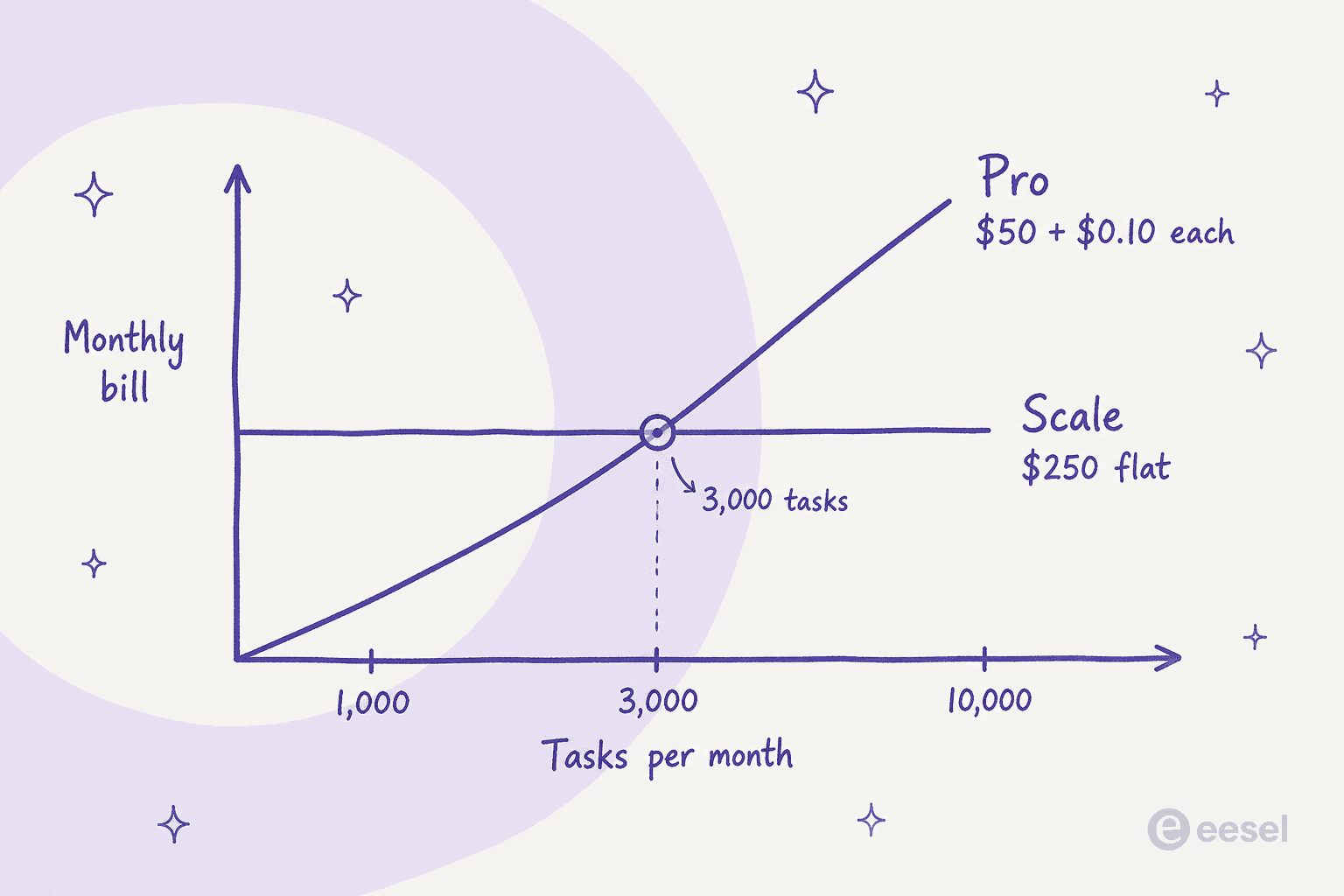
Worked out at three real volumes, using only the published numbers:
| Monthly volume | Pro bill | Scale bill | Cheaper plan | Effective rate on the cheaper plan |
|---|---|---|---|---|
| 800 tasks | $50 | $250 | Pro | $0.063/task |
| 3,000 tasks | $250 | $250 | tie | $0.083/task |
| 6,000 tasks | $550 | $250 | Scale | $0.042/task |
| 12,000 tasks | $1,150 | $330 | Scale | $0.028/task |
The 6,000-task row is the one that stings. A team that grew into Gobii without revisiting its plan choice paid $550 for work that cost $250 one tier up, and nothing on the pricing page flagged it. That is not unique to Gobii, and it is the reason I keep pushing people to model their own volume rather than read the tier names. On support work specifically, cost per resolution is the denominator I would model against, not cost per attempt. The same trap sits in Make's pricing and in Zapier's subscription tiers.
If you want to see the tier-name-versus-volume problem laid out side by side, Make vs n8n is the clearest worked example I have written, and Zapier's own tiers have the same shape.
Plug your own number in:
What happens to your money and your agents now
The rate card above is history. gobii.ai now serves a single page under the kicker "Company update," headed Gobii is winding down, with the line "Our final day of operations will be September 1, 2026."
On money, the page's exact commitment is that for customers with active paid subscriptions Gobii is "working through the appropriate next steps, including any applicable refunds," and that it will email customers directly with details. That is a commitment to contact you, not a published refund formula, so if you are on an annual Team arrangement I would email contact@gobii.ai rather than wait.
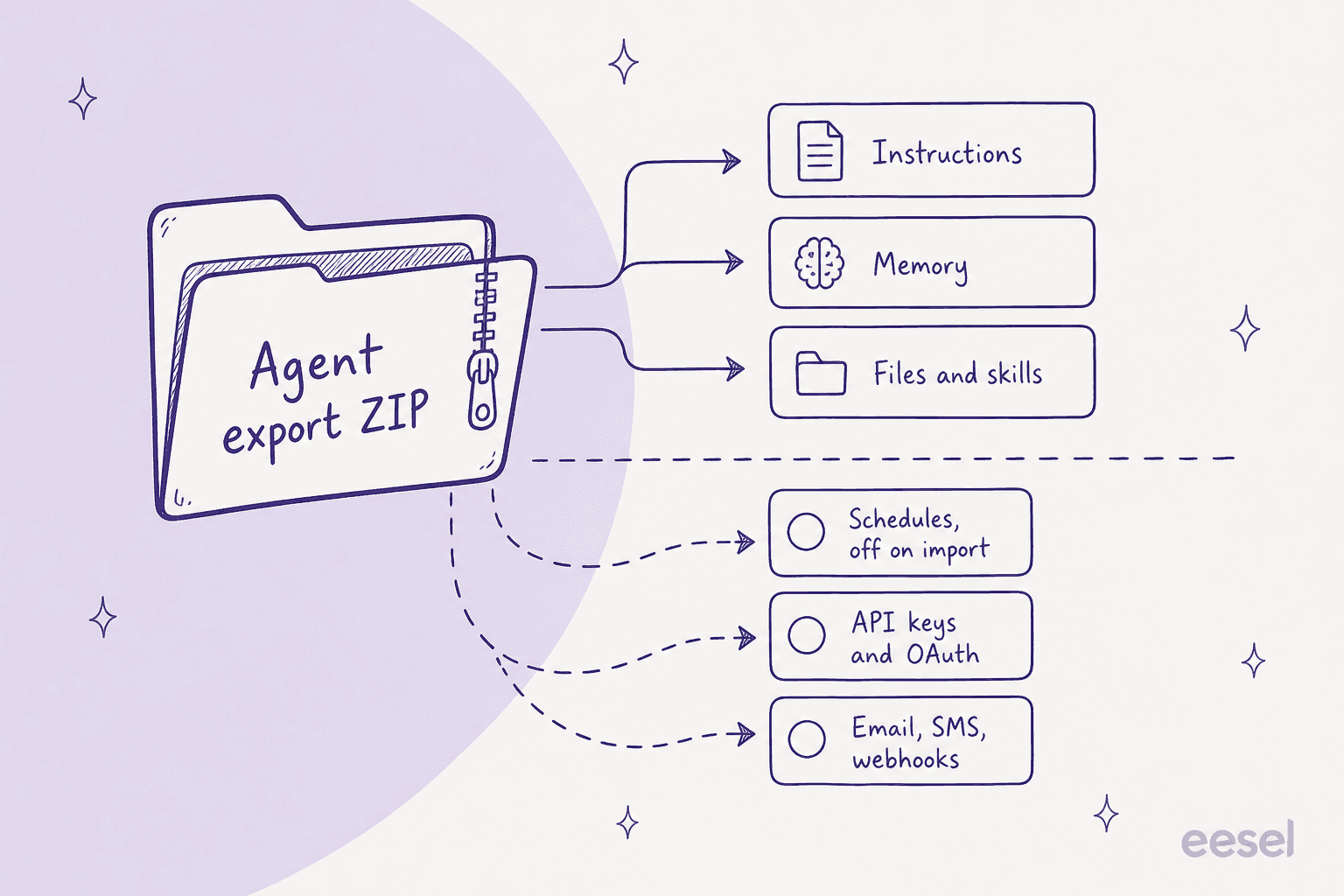
On your agents, there is an export tool, and its limits are the thing to plan around. Gobii's own docs call it "a migration kit, not a perfect clone." Instructions, memory, history, files and skills travel. Credentials, OAuth tokens, channels, webhooks and automatic triggers do not, and schedules arrive turned off. The ZIP is available for seven days, so request it early.
There is one genuine consolation, and it is a real one: the software itself is not going anywhere. gobii-platform stays public and MIT licensed, so the $0 self-hosted tier is the only part of the rate card that survives September 1 intact. You bring your own model keys and your own server. Whether that trade is worth it depends entirely on whether anyone on your team wants to own a Postgres box, and the honest answer for most support teams is no. The same calculation shows up whenever anyone compares AI against human agents: the licence is rarely the expensive part. Gobii's investor Open Core Ventures ran it self-hosted for exactly that reason, and their own writeup is worth reading on the point:
"One hard requirement for anything in our Ops stack is self-hosting capability. We run Gobii on our own infrastructure, which means the data our agents consume and store stays fully within our control."
Will Xu, Open Core Ventures
The same writeup is also the most grounded assessment of what a Gobii agent was worth in practice. Their FinOps agent audited an internal portfolio database for missing fields and emailed back a PDF report, replacing what they describe as "a task that would have taken roughly two hours a week to manually review." Their own verdict: "not quite a full operations analyst yet (more like a really good intern)." That is the capability bar a replacement has to clear, and it is a lower bar than the pricing suggested.
What the same budget buys after September 1
Gobii named its own suggested destinations on the wind-down page: Manus, Hermes, ChatGPT and Gemini. Notably absent is anything helpdesk-native, which matters if the work your agent was doing touched customers. Here is the same-budget comparison, with each vendor's own published unit next to its price, because the unit is the part that decides your bill.
| Tool | Entry price | What it counts | Free option | Best fit for the Gobii refugee |
|---|---|---|---|---|
| Manus | $20/mo for 4,000 credits | credits, no published per-task rate | 300 daily refresh credits on paid plans | one person's research and browsing jobs |
| Tasklet | $25/mo for 10,000 credits | credits, no rollover | Free tier, 300 bonus credits/day | scheduled always-on jobs with real triggers |
| Hermes | $0 self-host, $49/mo hosted | flat, allowance never quantified | MIT self-host | teams that liked Gobii's self-host story |
| Zapier Agents | $33.33/mo billed annually | activities, 40 per run cap | Free, 400 activities/mo | agents that mostly move data between apps |
| ChatGPT | $20/mo Plus | seats, plus usage on the API | free tier | personal assistant work, not team ops |
| eesel AI | From $299/mo for 500 credits | 1 credit per ticket or chat actually handled | 100 free credits | customer-facing queues and internal helpdesk |
Read that table by column two and three together rather than column two alone. Manus at $20 looks half of Tasklet at $25 until you notice one buys 4,000 credits and the other buys 10,000, with neither publishing what a credit costs per job. Zapier's $33.33 looks cheap until the 40-activity-per-run cap meets an agent that needs 60 steps. This is the same problem Gobii had, just distributed across five vendors, and it is why a very high-volume operator I spoke with earlier this year got stuck mid-call trying to reconcile a per-interaction quote against his own per-ticket reality, and walked out with a $30,000-a-month projection he could not sanity-check. Anyone sizing a first AI rollout will find AI customer service cost a saner starting point than a vendor tier grid.
If the agent you are replacing was doing customer-facing work, the shortlist narrows a lot. It is worth reading my Gobii AI alternatives roundup alongside the best AI support agents rather than picking from the wind-down page's list.
For internal ops work, AI agents for Jira and AI teammates cover the shape of tool that actually holds a queue. For a team that wants one agent owning a whole function, the best AI employee roundup is the closer match.
eesel AI for the work Gobii was doing
If your Gobii agent was answering people rather than scraping pages, this is where I would point you, and I will be specific about the pricing rather than vague about the product.
eesel counts 1 credit per ticket or chat actually handled, however long it runs, on one fixed monthly price with no seats and no platform fee, so growing your team does not change the bill. A generated blog post stays $4. Questions asked in the dashboard are mostly free. The free plan is 100 credits with no card, so a heavy test day costs a few credits instead of eating a month's allowance. Paying a year upfront gets two months free, and SSO, priority support and data residency are available as add-ons. The whole card is on the pricing page, and it fits on one screen on purpose.
| Monthly credits | Price |
|---|---|
| 100 | Free |
| 500 | $299/mo |
| 1,000 | $499/mo |
| 2,500 | $999/mo |
| 5,000 | $1,899/mo |
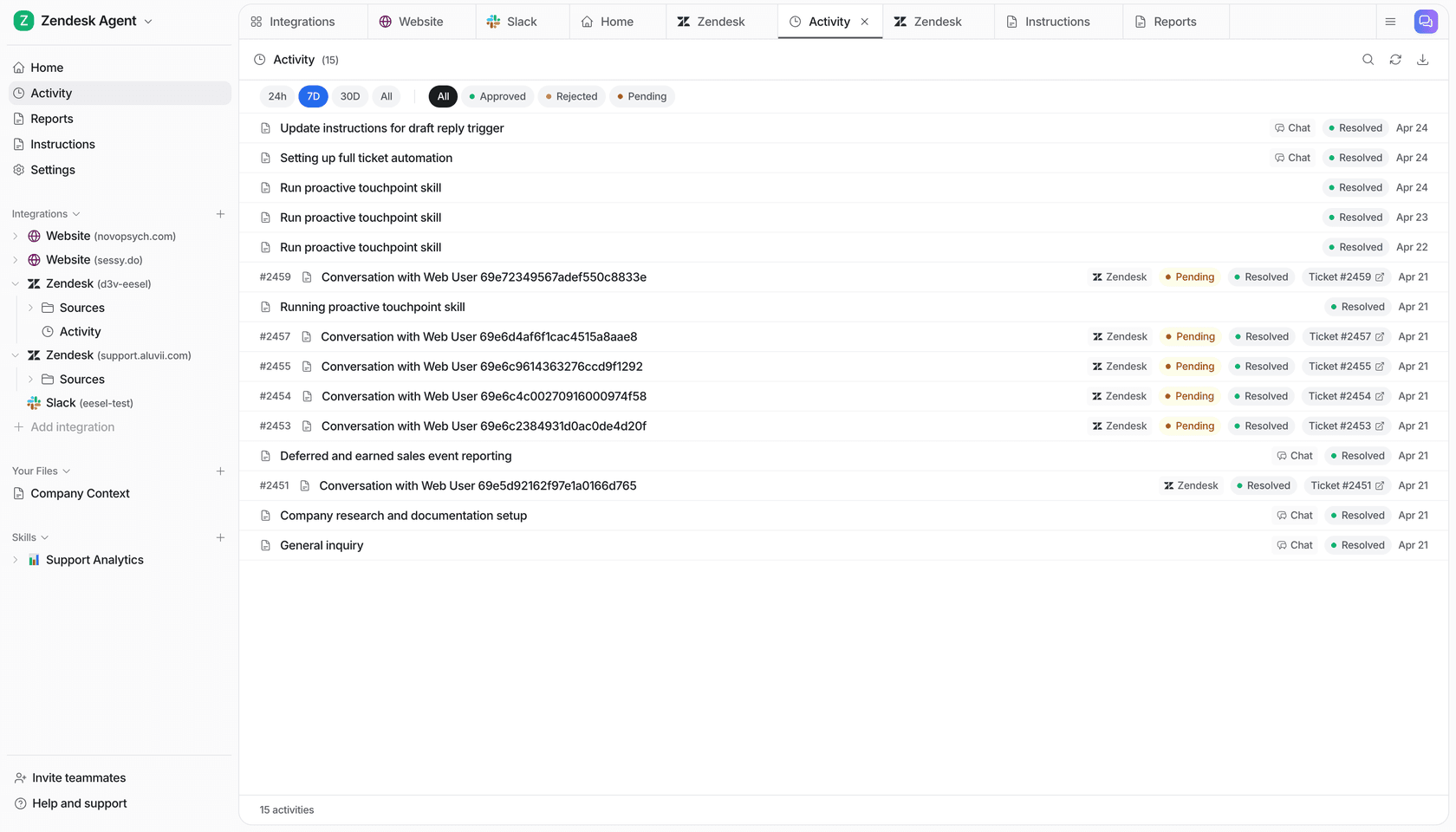
The reason that unit matters more than the number: one credit per ticket is countable before you buy. You already know your monthly ticket volume, so you can pick the plan size today. A credit meter with an unpublished burn rate cannot be modelled at all until you have run it for a month, which is precisely how Gobii's users ended up filing complaints about credits vanishing. It is also why measuring ROI on AI support is tractable when a credit equals a ticket and guesswork when it does not.
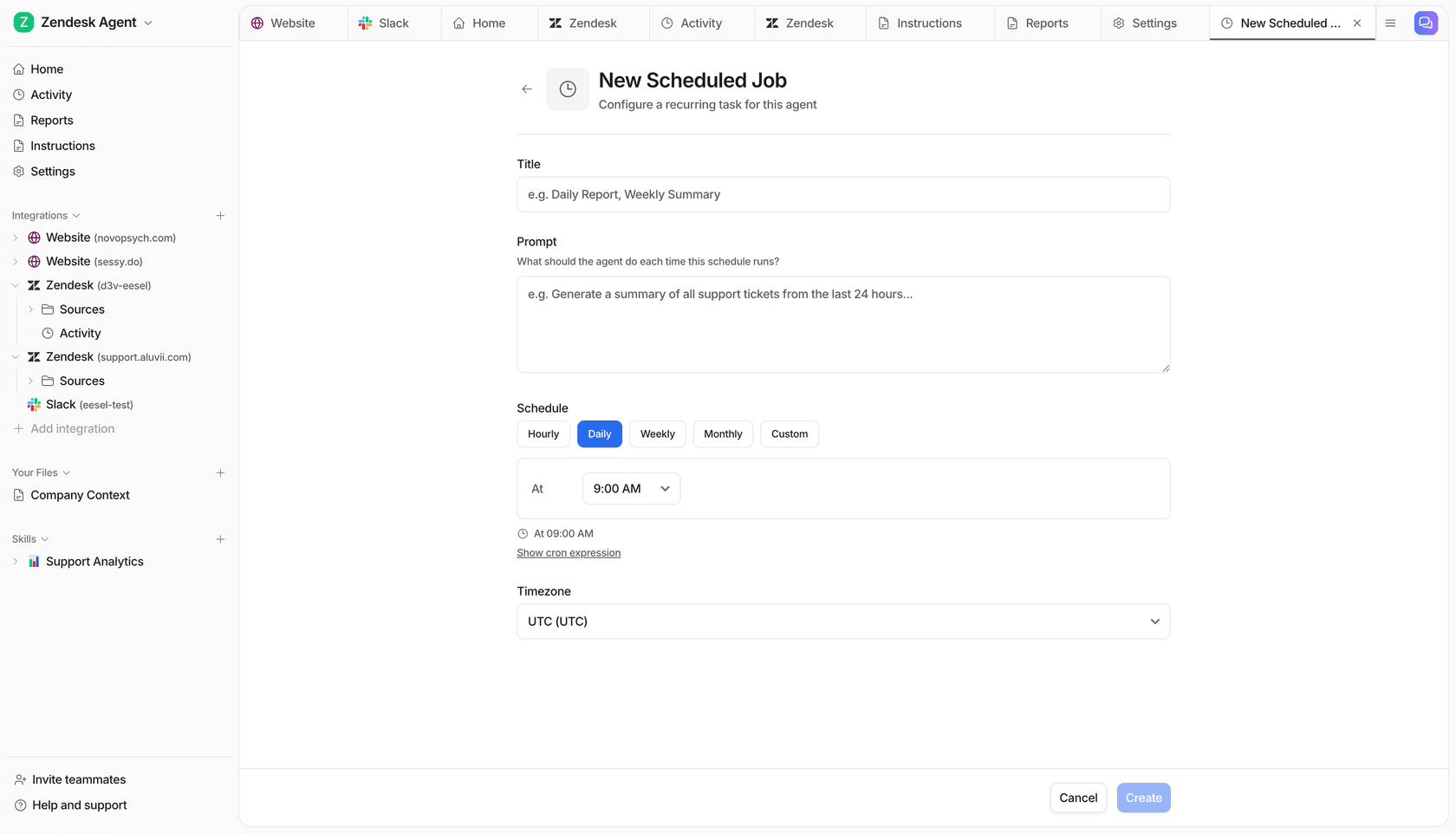
Two things eesel does that a per-task agent platform structurally cannot. Scheduled jobs are a first-class object rather than a per-agent property, which matters because schedules were the one thing Gobii's export dropped:
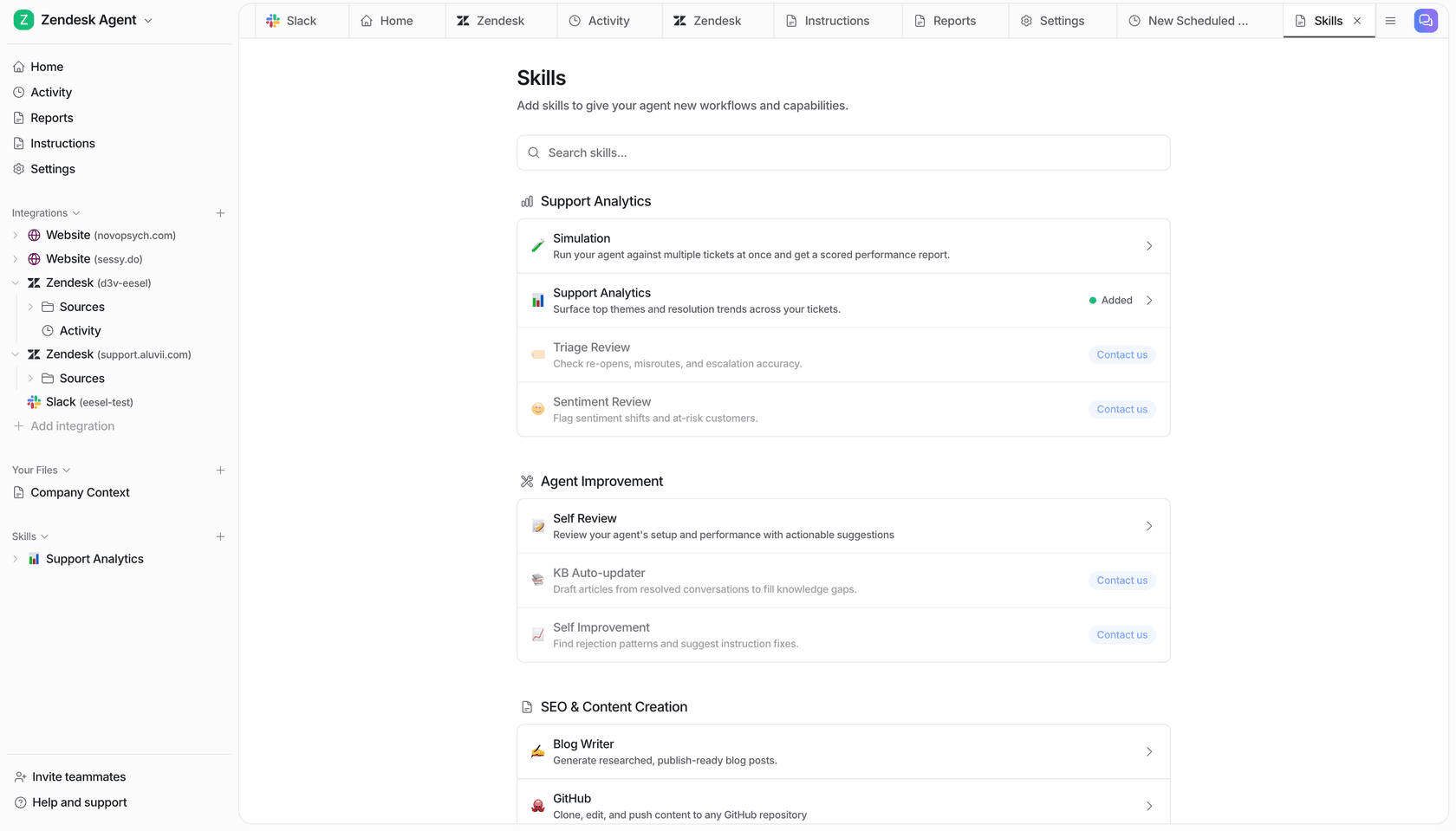
And the Simulation skill replays your own historical tickets and scores the answers against what your team actually sent, before a single customer sees a reply. I care about this one for pricing reasons as much as quality reasons: it turns "what will this cost and how well will it work" from a month-long experiment into an afternoon. The answers come from your own knowledge base and past tickets, which is also what makes an AI ticketing system worth more than a chatbot bolted to a docs site.
Where eesel is not the answer: if your Gobii agent's job was browsing arbitrary websites, logging into third-party portals and scraping structured data out of them, that is a different product category and Manus or Tasklet will serve you better. eesel is built for the queue behind the customer, not for driving a browser. Smaller teams weighing both shapes should start with AI agents for small business.
Coming off Gobii with a September 1 deadline, the sequence I would run is short. Request your export ZIP today, before the seven-day window becomes a problem. Write down your real monthly volume in whatever unit your work actually comes in, tickets or jobs or runs. Then price two or three replacements against that number rather than against their tier names. Try eesel free with 100 credits if the work was customer-facing, and if it was not, the alternatives roundup sorts the rest by what they can actually rebuild.
Frequently Asked Questions
How much did Gobii AI cost?
What was Gobii's pricing for a small team?
What counted as one task in Gobii AI pricing?
Did Gobii AI have a free plan?
Was Pro or Scale better value on Gobii AI pricing?
What happens to my Gobii subscription and my money now?
What should I budget to replace Gobii AI?
Is a per-task price cheaper than a per-resolution price?


Article by
Kurnia Kharisma
Kurnia is a software engineer and writer at eesel AI with two years of SEO experience, writing about AI tools, helpdesk software, and customer support. He pairs a developer's understanding of how these products are built with search-driven research into what actually ranks and resonates with the people searching for them.