
The honest answer: yes, but "handle" is doing a lot of work
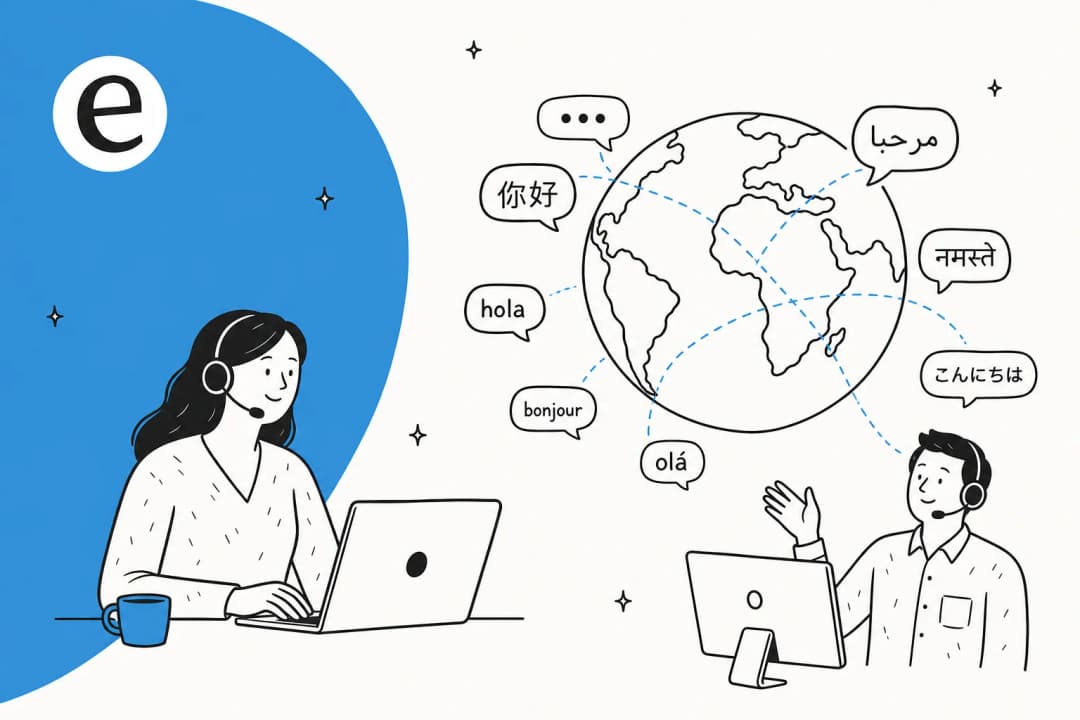
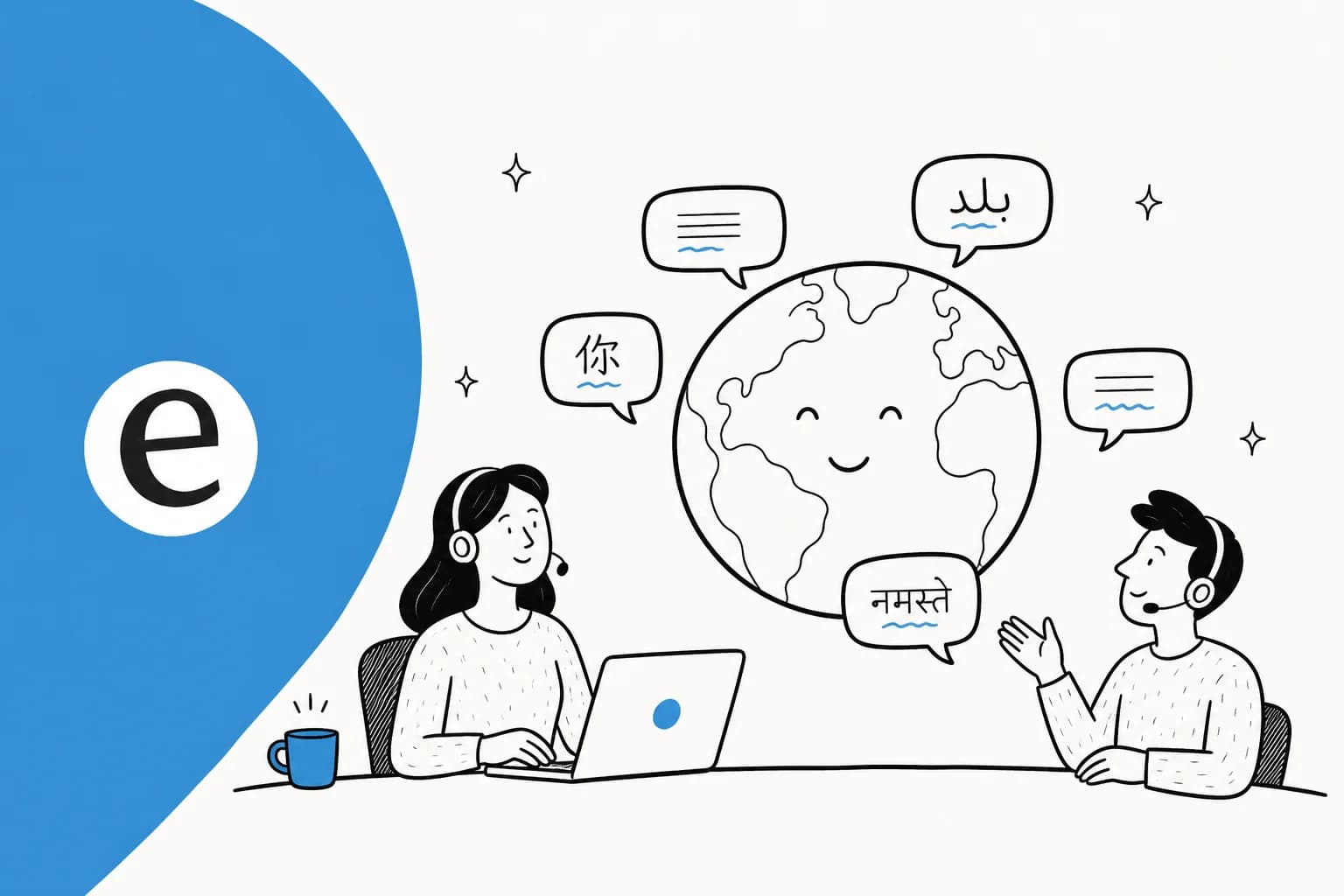
I build AI agents for a living, so let me skip the marketing version. The "can it speak the language" question was basically settled the moment large language models got good. The models behind today's AI customer service tools were trained on enormous multilingual corpora, so French, German, Brazilian Portuguese, Romanian and Japanese aren't special features anyone bolted on. They're just things the model already does.
So the honest answer is yes. But "handle" is doing a lot of work in that sentence. There's a wide gap between "can produce a grammatically correct Spanish sentence" and "can safely run your Spanish support queue unattended." The first is solved. The second depends entirely on how you set the thing up, which is the part most posts skip and the part I actually care about.
Two things are worth getting straight before we go further. First, multilingual support is one of the most under-appreciated things AI does well, teams routinely don't realise their agent already works across languages. Second, the risks are real but they're not the ones people fear. Almost nobody gets burned by clumsy grammar. They get burned by the operational edges. Let's walk through both.
How AI actually handles different languages
Here's the mechanism, because it explains both why it works and where it breaks.
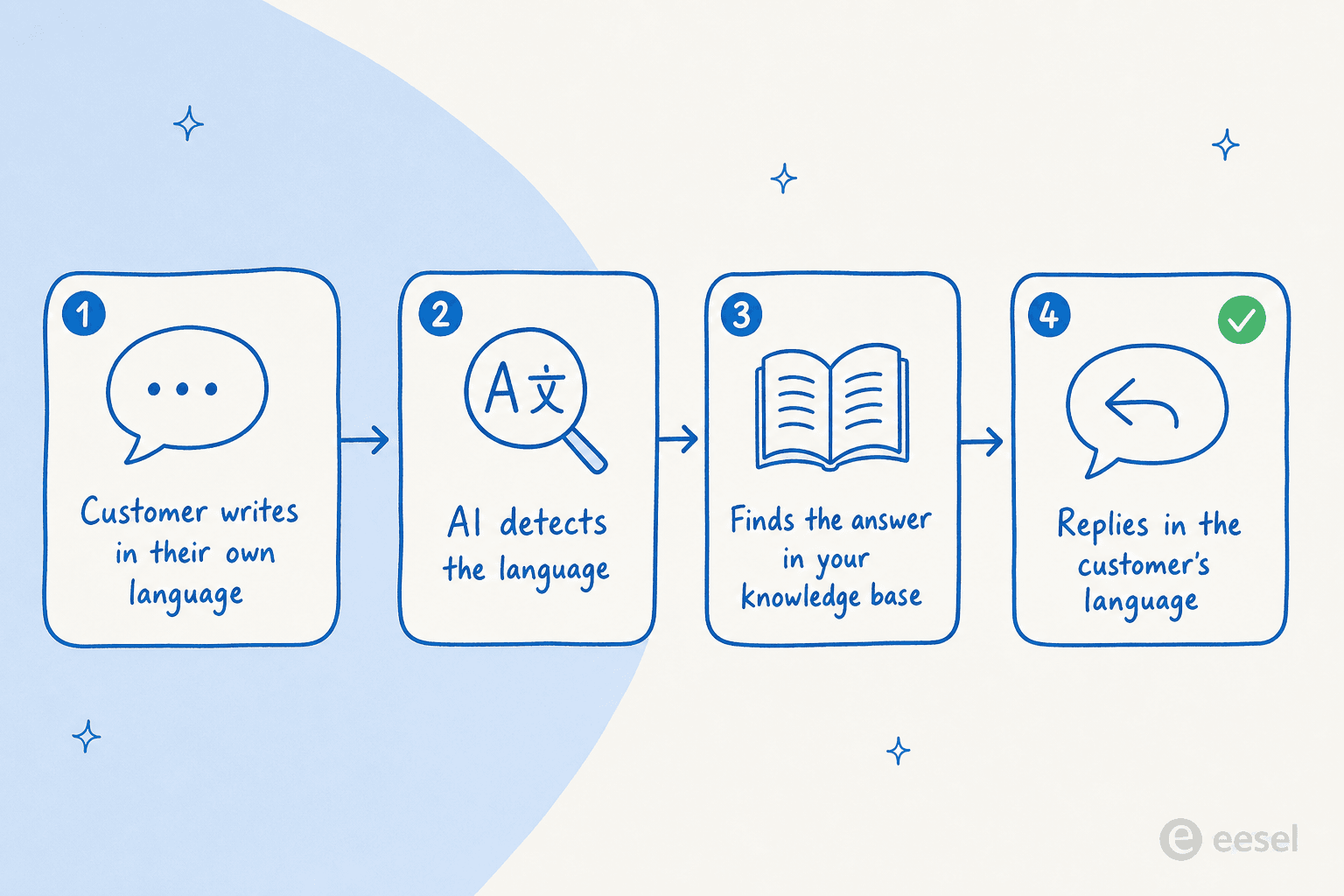
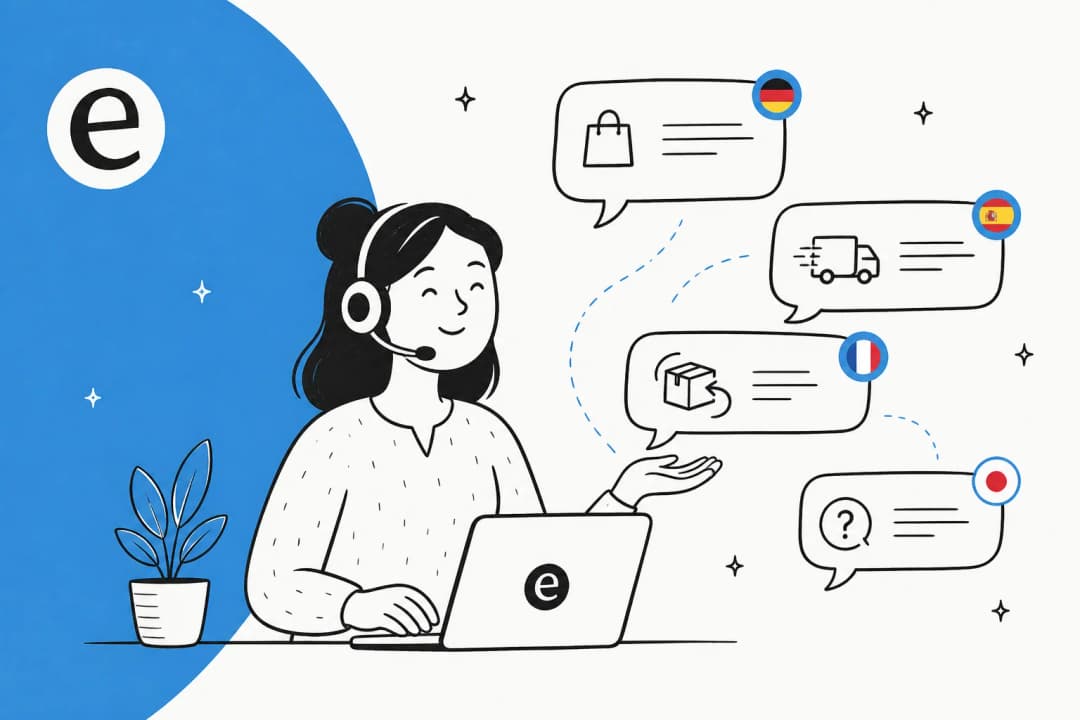
When a ticket comes in, the agent detects the language of the message, finds the relevant answer in your knowledge base, and writes the reply back in the customer's language. The clever bit is the middle step: your knowledge base doesn't have to be multilingual. You can keep your help docs, macros and past tickets in English, and the model will still answer a Dutch customer in Dutch by reading the English source and translating its understanding on the way out. That's why you don't need to build and maintain a separate bot, or a separate help center, per language.
This is also why a good agent answers "in the language the customer writes in, with no manual routing required," as eesel's own docs put it. There's no "if language = German, route to German bot" rule to maintain. The detection is per-message, so a customer who switches to English mid-thread gets English back.

The practical upshot: the cost structure of multilingual support changes completely. The old model was hire a native speaker per market, or pay a translation tool per word. With an AI agent, languages aren't a line item. You're not paying per language, you're paying per resolved ticket regardless of what language it came in, which is exactly how eesel's pricing works.
What it looks like when it actually works
This isn't theoretical. I've watched it run, and the pattern is consistent enough that I trust it for tier-1 volume in major languages.
A Belgian delivery company on Freshdesk ran their first test chat in Dutch, asking the shipping cost to Germany. The agent found the right tariff docs and gave a detailed, specific Dutch reply with the actual pricing, no Dutch-language docs required. A Spanish insurance brokerage on Zendesk plus Messenger pushed 564 real Spanish conversations through a custom agent in 48 hours on a free trial. A Romanian e-commerce platform got a complete, accurate Romanian answer about payment-gateway onboarding left as an internal note for the agent to approve.
The one that made it click for me was a German jewelry brand doing roughly 1,000 tickets a month on Zendesk and Shopify. Their agent handled German, English, French, Dutch, Spanish, Polish, Croatian and Turkish, eight languages, none of which anyone configured. It just did it, because that's the default behaviour, not a feature you switch on per language.
The strongest single data point: that German lender I mentioned in the TL;DR runs a fully automated agent on Zendesk clearing over 100,000 tickets a month in German, with humans only on the edge cases. That's not a demo. That's a production queue most support teams would consider unmanageable, running in a language the AI vendor's team mostly doesn't speak.
Where multilingual AI support actually breaks
Now the part the case studies don't put on the landing page. These are the real failure modes, and they're almost never about grammar.
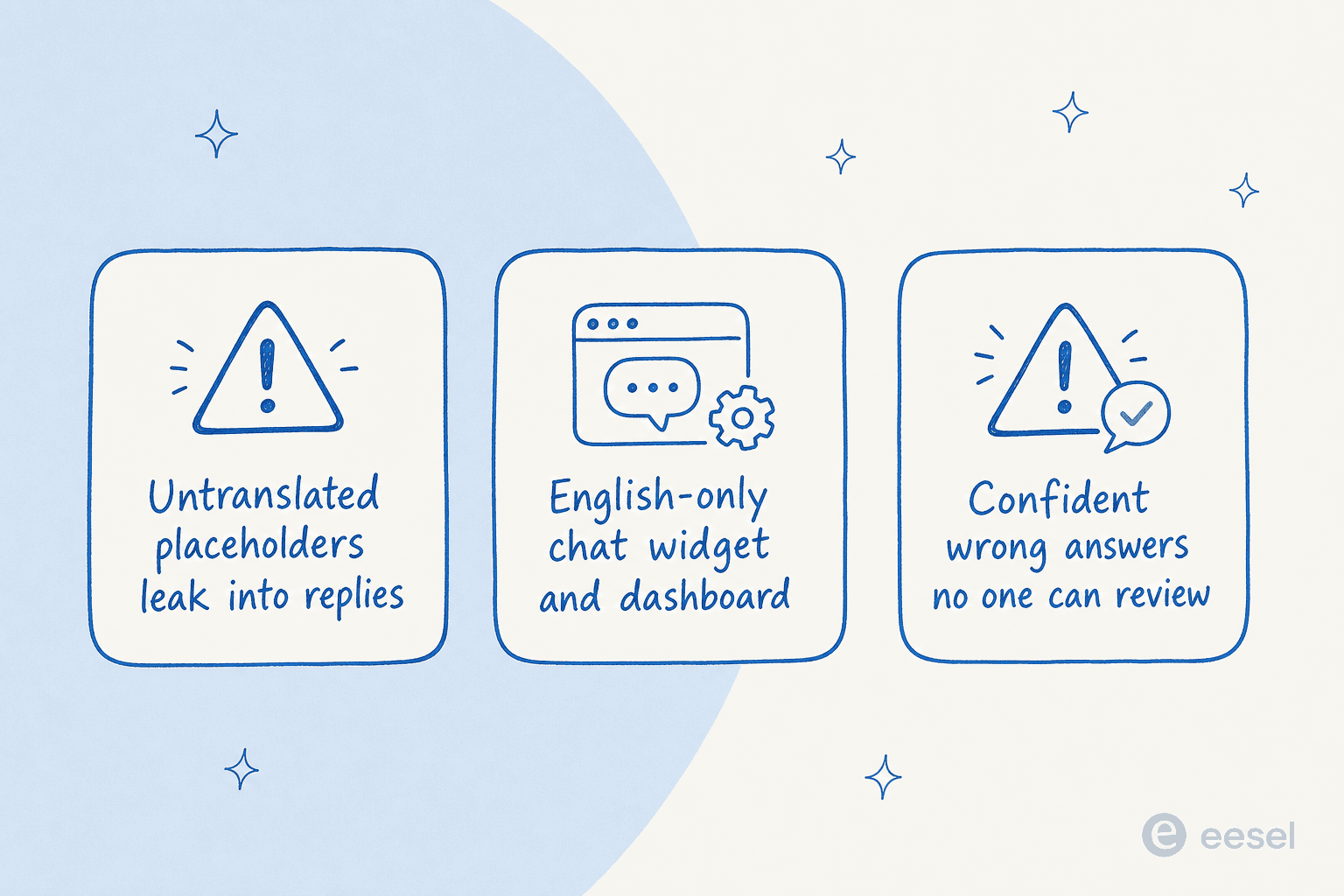
Untranslated placeholders and internal text leaking through. This is the one I've seen burn real teams. A reply template has a token like {{ticket.requester.first_name}} or a stray [Employee Name], and in the English flow it fills in fine, but in a German or Dutch draft the placeholder leaks through raw, or worse, internal UI text ("Customise this Agent") ends up in a message sent to an actual customer. The German is perfect. The plumbing around it isn't. It reads as broken to the end user, and it destroys trust faster than a grammar slip ever would.
English-only widgets and dashboards. The AI can write flawless German, but if the chat widget itself won't render in German, or the suggested-questions prompts default to English regardless of the customer's language, you've got a localized answer wrapped in an un-localized shell. One German-market customer called exactly this a "show-stopper." It's a reminder that "the AI speaks the language" and "the whole experience is localized" are two different bars.
Confident wrong answers nobody can check. This is the serious one. If your AI gives a wrong answer in English, someone on your team will probably catch it. If it gives a confident, fluent, completely wrong answer in Turkish and no one on your team reads Turkish, that error can run for weeks. Fluency actually makes this worse, a wrong answer that sounds authoritative is harder to doubt. This is the risk that should shape your whole rollout.
The setting that makes it safe: confidence-based routing
Here's the thing that turns "AI can speak the language" into "AI can safely run the queue," and it's not a language feature at all.
The single most common objection I hear from buyers is that they won't let AI auto-reply to everything. One CX lead at a DTC supplements brand on Gorgias, running around 7,000 tickets a month, put it about as clearly as anyone: the AI will never answer 100% of questions, so what they needed was "an AI who is only handling the tickets that it's confident to handle, and all the other ones, leave them alone." That's the whole game in multilingual support especially.
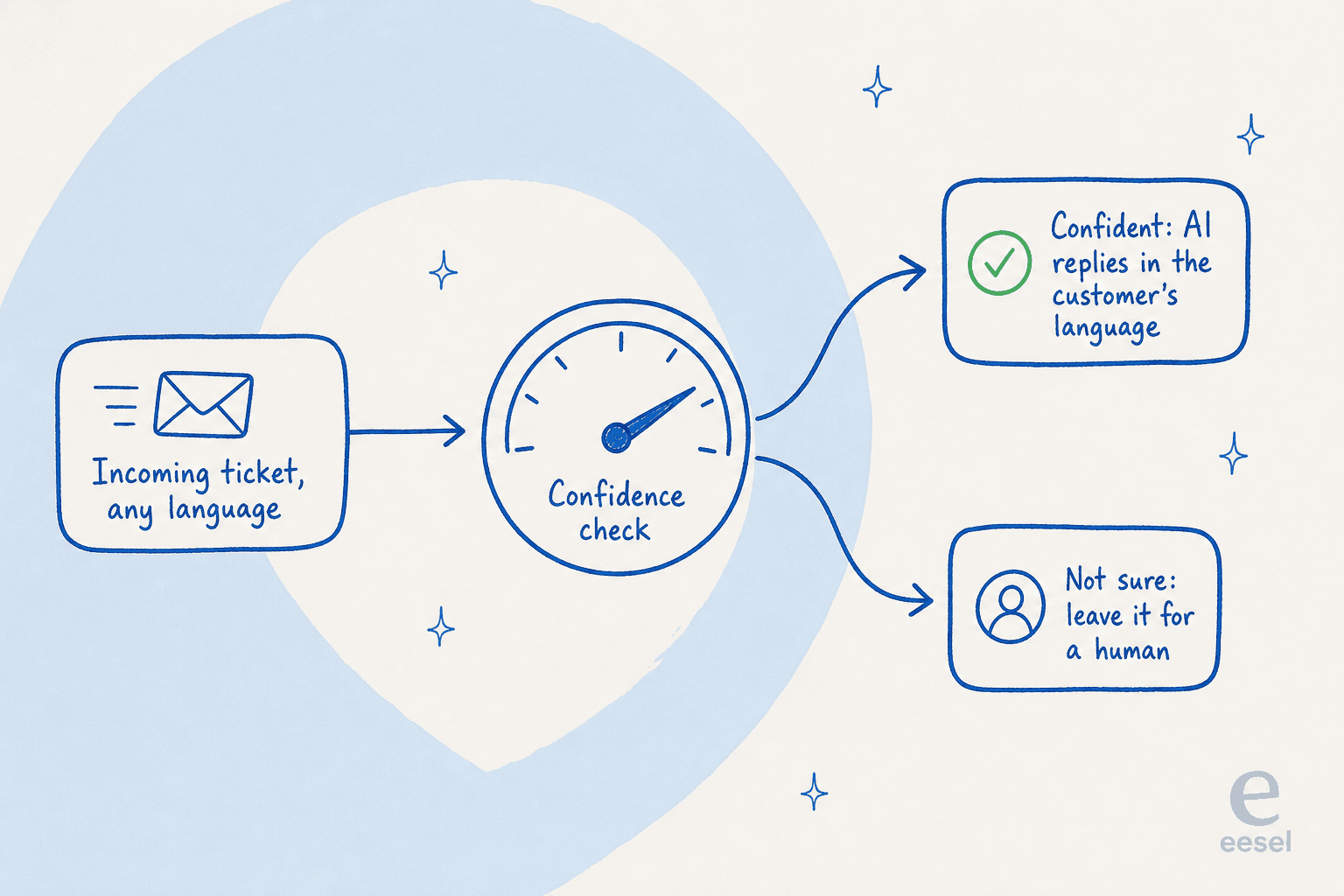
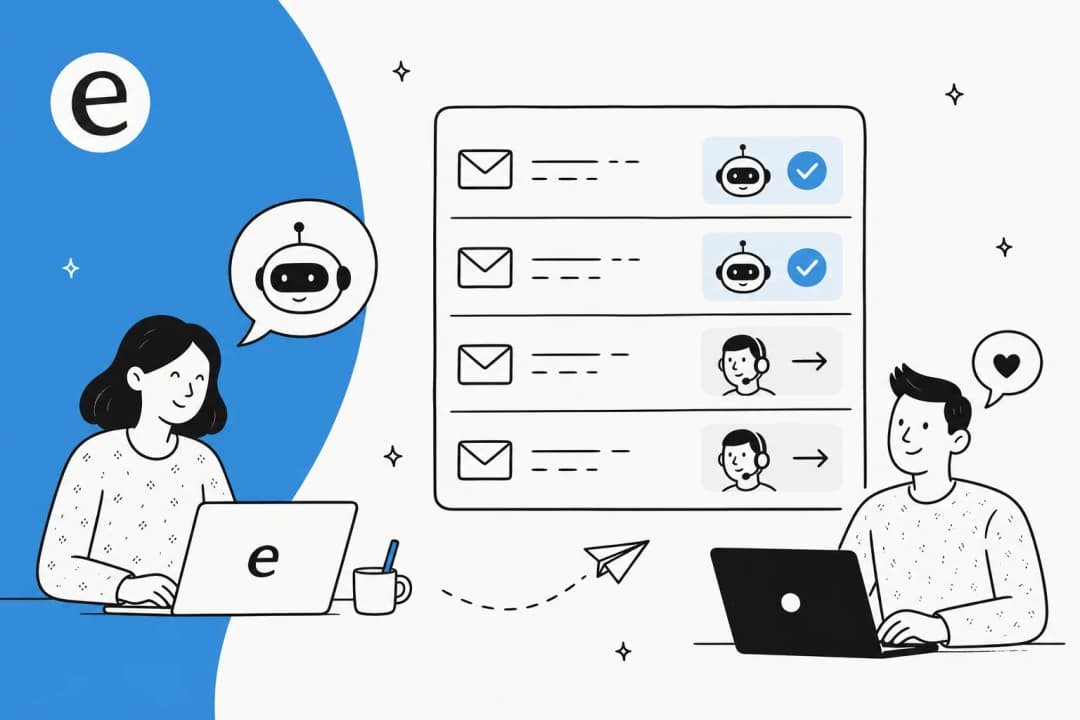
Confidence-based routing means the agent answers only the tickets it's sure about and hands the rest, untouched, to a human. In a multilingual setup that's not a nice-to-have, it's the safety rail that makes the whole thing deployable. The AI clears the high-confidence tier-1 questions in every language, and the ambiguous Turkish refund dispute gets escalated to a person instead of getting a fluent guess. You get the volume relief without betting your reputation on answers you can't read.
The other half of safety is testing before you trust. The right move is to run the agent against your own historical tickets in each language first, in draft mode where it suggests replies a human approves, and only flip to auto-send once you've watched it be right on real volume. That's how you find the placeholder leak before a customer does, not after.
"73% of tier 1 support tickets resolved in the first month."
Kim Simpson, Gridwise, shared in eesel's customer results
How to roll out multilingual AI support without the horror stories
If you're going to do this, here's the sequence I'd actually follow, in order:
- Connect your real knowledge sources first. Help center, macros, and past tickets. You don't need to translate them, the agent reads the source language and answers in the customer's. The richer your knowledge base, the better every language gets at once.
- Simulate against your own past tickets, per language. Run the agent over historical conversations in each language you support and read the drafts. This is where you catch placeholder leaks, tone problems, and the gaps in your docs.
- Start in draft mode, not auto-send. Let the AI suggest replies that a human approves for the first stretch. It builds trust and surfaces the operational edges safely.
- Turn on confidence-based routing before you automate. Decide what the AI is allowed to send on its own and what always goes to a human. For languages your team can't review, keep that threshold conservative.
- Localize the shell, not just the answers. Check the widget, the suggested questions, and any customer-facing UI actually render in your customers' languages. A perfect German reply in an English-only widget still reads as half-finished.
Do it in that order and multilingual AI stops being a leap of faith. It becomes a thing you switched on, watched, and trusted, in that sequence.
Try eesel for multilingual support
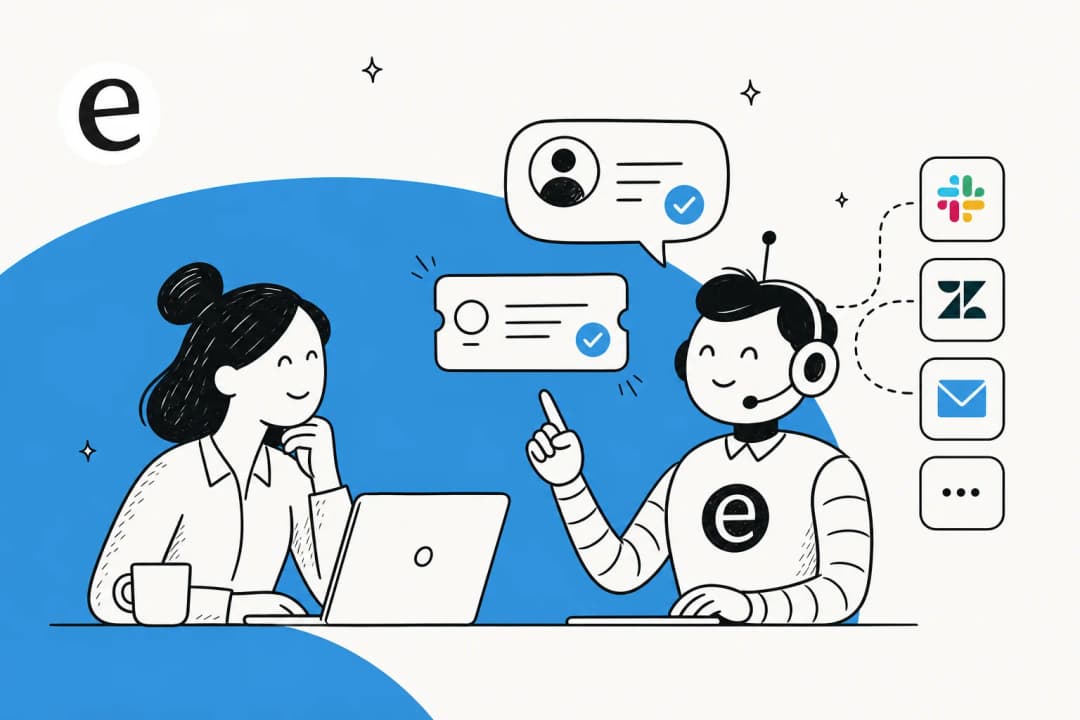
If you're running support across languages, eesel AI is built for exactly this: one agent that detects each customer's language and answers in it off your existing English knowledge base, plugged straight into Zendesk, Freshdesk, Gorgias or Front. The differentiator that matters here is the simulation step, you can run it against thousands of your own past tickets in every language and see exactly how it'll reply before a single customer message goes out, then keep it on a confidence threshold so it only auto-sends what it's sure of.
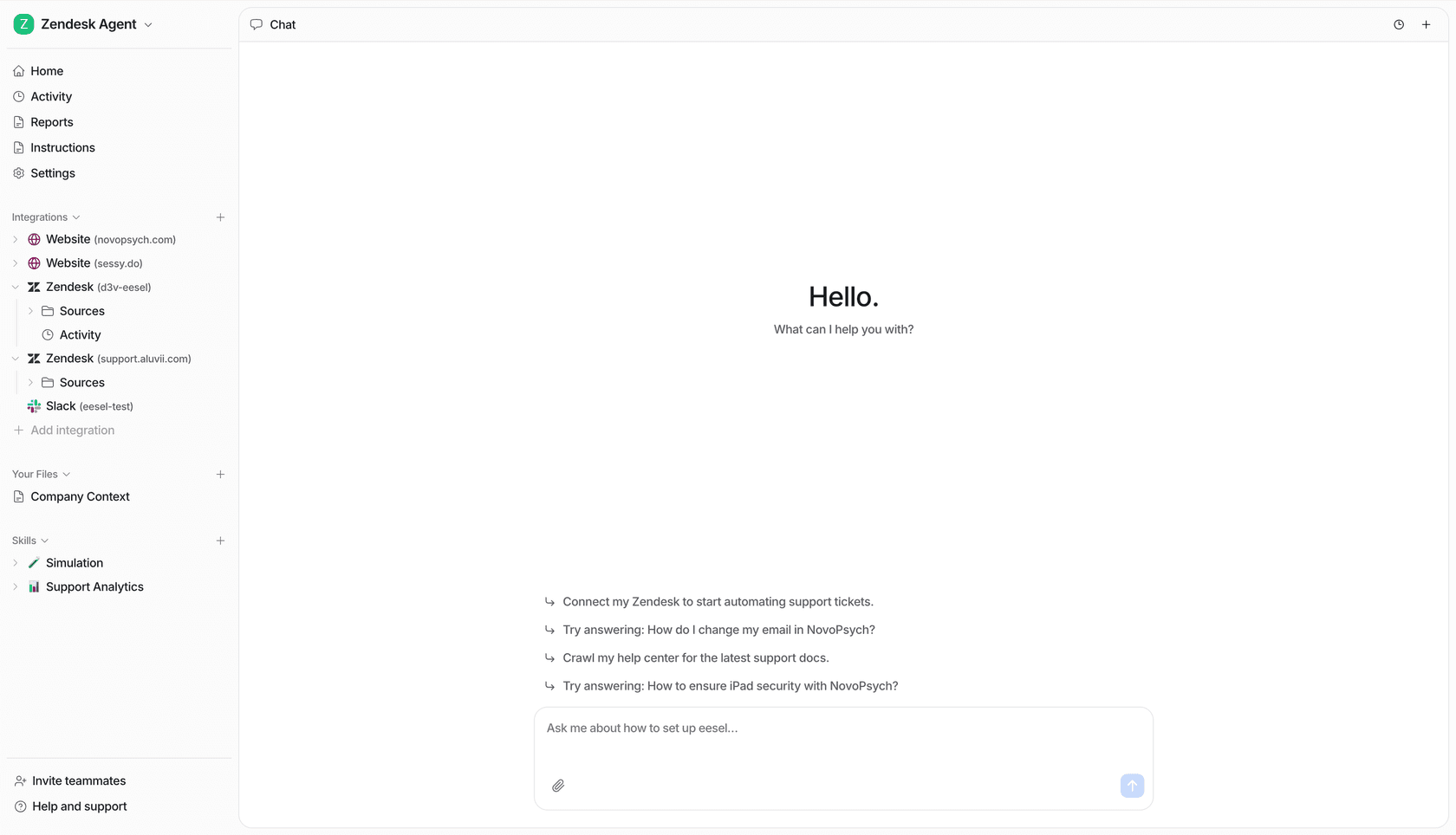
It's free to try, and because pricing is per resolution rather than per seat or per language, supporting twenty languages costs the same as supporting one. If you've been staffing native speakers per market, that math is worth running.
Frequently Asked Questions
Can AI handle multilingual customer support across many languages at once?
How does AI know which language to reply in?
Is AI multilingual support accurate enough to trust?
How much does multilingual AI customer service cost?
What's the biggest risk with multilingual AI support?


Article by
Alicia Kirana Utomo
Kira is a writer at eesel AI with a Computer Science background and over a year of hands-on experience evaluating AI-powered customer service tools. She focuses on breaking down how helpdesk platforms and AI agents actually work so that support teams can make better buying decisions.