

You’ve probably seen the name ServiceNow pop up again and again, especially when talking about big-league platforms for IT and customer service. They’re constantly named a "Leader" in those Gartner Magic Quadrant reports, which always sounds impressive.
But what does being a "Leader" actually mean when you’re the one trying to manage IT workflows or improve customer support?
This post will cut through the noise. We'll look at what ServiceNow's top-tier status is all about, dig into its key AI and IT service management (ITSM) features, and, just as important, talk about how to get around the common integration hurdles to get the most out of your investment.
What is the ServiceNow Gartner Magic Quadrant?
Think of a Gartner Magic Quadrant as a high-level map of a specific software market. It shows you who the major players are, where the market is headed, and how mature it is. When a company lands in the "Leaders" quadrant, it means Gartner thinks they have a clear vision for the future and the muscle to deliver on it right now.
For ServiceNow, this isn't a one-hit wonder. They've consistently earned this spot across a few really important enterprise reports, which has cemented their reputation as a go-to platform.
-
IT Service Management (ITSM) Platforms: ServiceNow is again a leader in the 2026 ITSM report, showing its long-term dominance in core IT processes.
-
Enterprise Low-Code Application Platforms: The Now Platform has been recognized for a sixth consecutive year for its ability to let businesses build custom apps.
-
CRM Customer Engagement Center: It's also a leader in the CRM world, thanks to its knack for connecting customer-facing teams with the back-office crews for a full picture.
-
AI Applications in IT Service Management: ServiceNow has been named a leader in the AI Applications in ITSM Magic Quadrant three years running, proving its big bets on AI are paying off.
This track record shows that the Now Platform is a solid, AI-powered foundation that can help modernize how a whole company works.
ServiceNow Gartner Magic Quadrant: Core strengths in AI, ITSM, and workflow automation
ServiceNow’s top-dog status comes from its powerful platform, particularly how it blends IT service management with AI and workflow automation.
A single platform for service and operations
At its core, ServiceNow ITSM is designed to get companies off a messy collection of different IT tools and onto one, unified system. This makes it possible to automate all sorts of workflows and gives everyone a clear, real-time view of what's going on. Things like Incident Management, Problem Management, and Change Management are the bread and butter of this offering.
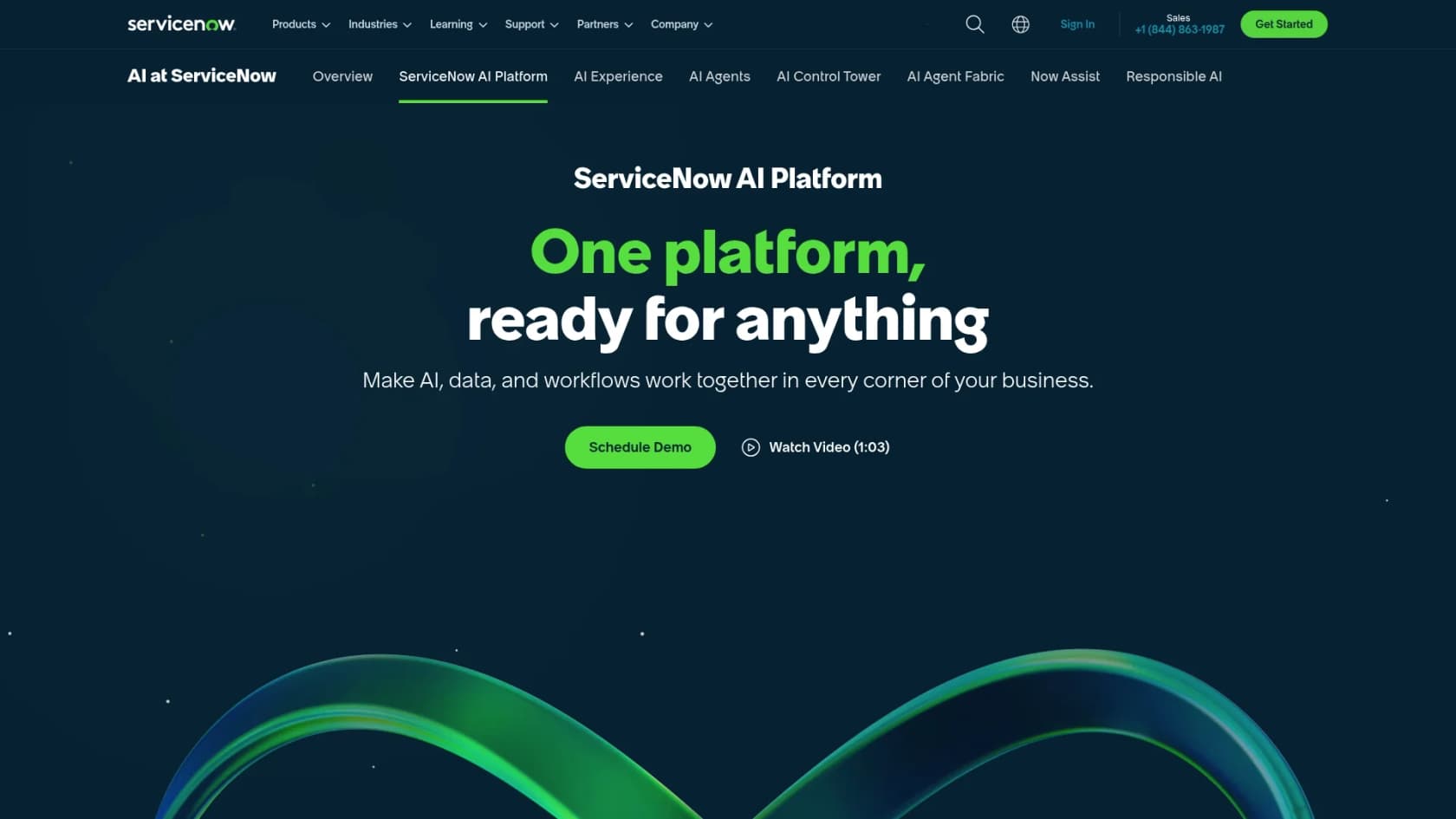
The platform also rolls in Service Operations, which connects ITSM with IT Operations Management (ITOM). This combination helps teams get ahead of trouble by predicting and preventing IT incidents before they ever impact users.
Weaving generative AI into IT service management
With Now Assist for ITSM, ServiceNow puts generative AI tools right into the hands of IT teams, hoping to make their daily grind a little smoother and faster.
Here are a few of the key AI features:
-
Now Assist in AI Search: Instead of just a list of links, it gives you AI-generated summaries and straight-up answers to your questions.
-
Incident and Chat Summarization: This is great for handoffs. It gives the next agent a quick summary of a conversation, which helps get issues solved faster.
-
Resolution Notes Generation: Agents can let the AI automatically write up resolution notes based on what happened in the incident, which saves time and helps build up the knowledge base.
-
Virtual Agent: The goal here is to give employees a better self-service option with a chatbot that feels more natural to talk to.
Here’s a quick peek at how some of the fancier features are bundled in their ITSM plans, based on what's on their official pricing page.
| Feature | ITSM Foundation | ITSM Advanced | ITSM Prime |
|---|---|---|---|
| Now Assist for ITSM | Included | Included | Included |
| Virtual Agent | Included | Included | Included |
| Process Mining | Not included | 10K records/year | 15K records/year |
| Autonomous AI agents (e.g. L1 Service Desk AI Specialist) | Not included | Not included | Included |
The challenge with ServiceNow: Getting all your knowledge in one place Okay, ServiceNow is powerful. No one's denying that. But its sheer size can create its own set of problems. One of the biggest headaches companies run into is actually getting all of their knowledge into the platform to make it work properly.
The pain of native integrations
ServiceNow has tools like IntegrationHub, which offers pre-built connectors (they call them "spokes") to link up with other systems. This works well for the apps they officially support.
But what about everything else? All those other tools your teams use? Building custom integrations for unsupported apps or your own internal systems usually means a ton of developer time, planning, and ongoing upkeep. This can easily slow you down. A quick browse of the ServiceNow community forums shows that many people struggle just to figure out what integrations are already running on their system, let alone build new ones.
Why knowledge ends up in silos
Take a second and think about where your company's important support knowledge actually lives. I bet it’s not all sitting in one tidy knowledge base. It's probably spread all over the place: in Confluence pages, shared Google Docs, random Slack threads, and buried in the resolution notes of thousands of old support tickets.
ServiceNow does have a feature for integrating external content, but pulling all these scattered sources together is often a complicated and slow project. This scattered knowledge is a real issue because it means your AI tools and support agents don't have the full story. An AI is only as good as the data it can see, and siloed knowledge creates massive blind spots.
A modern approach: Unifying knowledge with eesel AI
Instead of starting a massive, months-long integration project, there’s a much nimbler way to handle this. You can add a complementary AI layer that solves the knowledge silo problem without forcing you to rip out and replace your core ServiceNow setup.
Go live in minutes, not months
This is where a tool like eesel AI flips the script. It’s a self-serve platform that you can set up yourself, with one-click integrations for your help desk and dozens of knowledge sources.
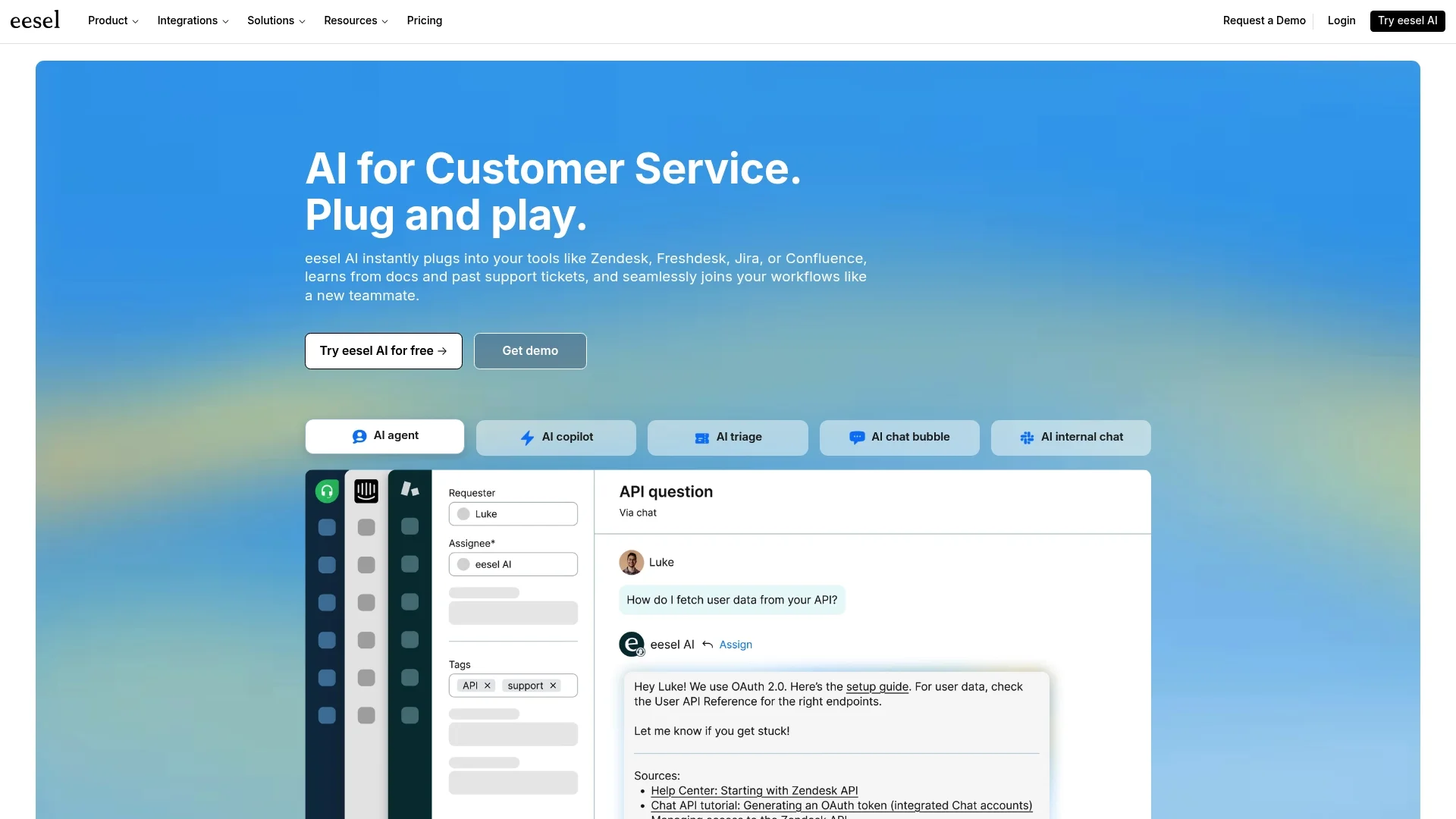
Instead of a long development cycle that drains your developer resources, you can connect your sources and get a smart AI agent up and running in a few minutes, all from an easy-to-use dashboard.
Instantly connect all your scattered knowledge
eesel AI is built to connect to all the places your team's knowledge actually lives, not just the "official" knowledge base. It smoothly integrates with the tools your teams use every day, like Confluence, Google Docs, Notion, and Slack.
Deploy a powerful AI agent on top of your existing setup
Once all that knowledge is connected, the eesel AI Agent can step in as your frontline support. It uses that complete, unified knowledge base to answer questions, automatically tag and route tickets, and even handle custom tasks right inside your help desk.
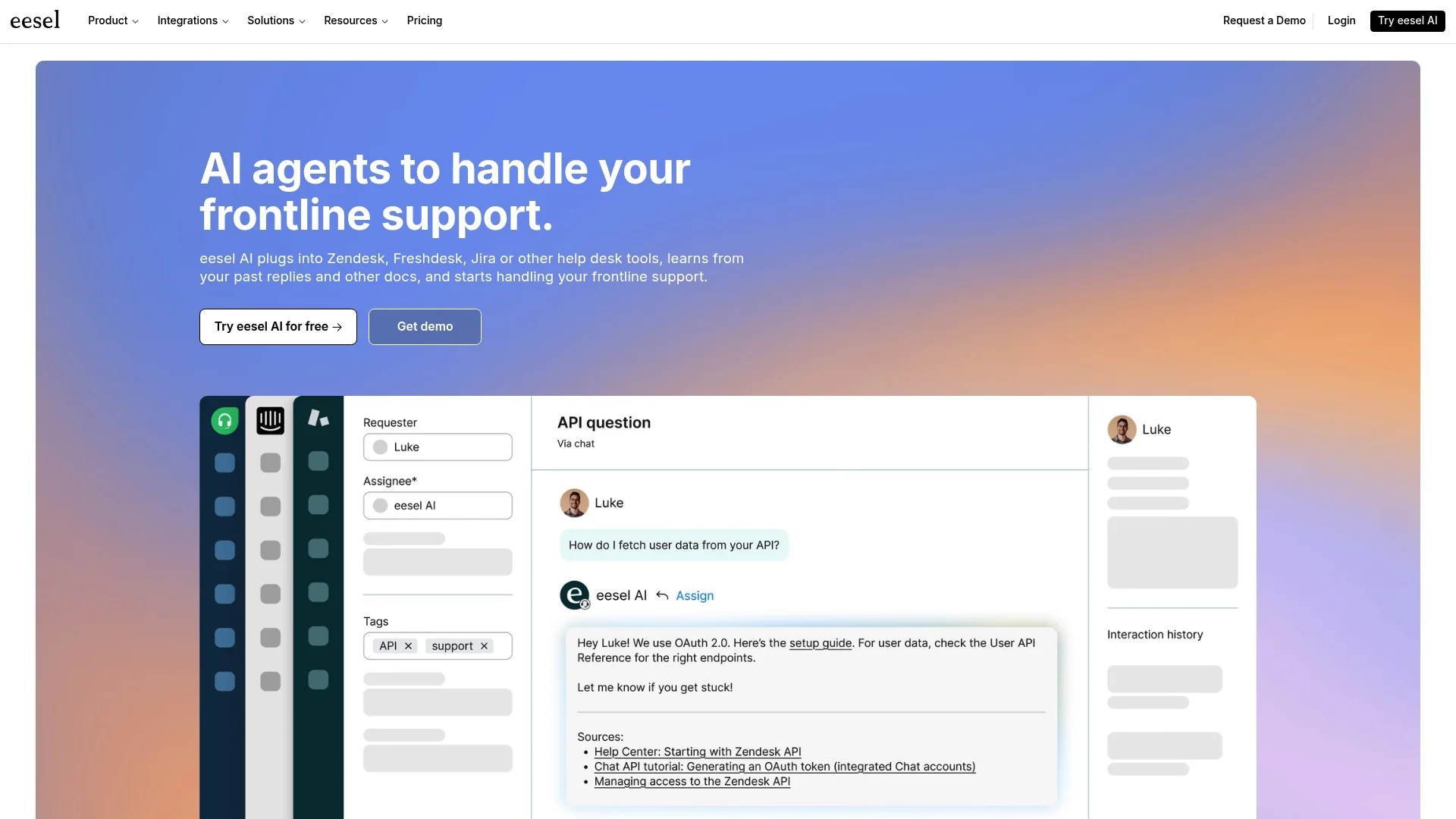
This deflects the easy, repetitive tickets and frees up your human agents to work on the trickier problems that actually need their brainpower. It makes your ServiceNow workflows smarter and more efficient without a big, disruptive project.
A quick look at ServiceNow pricing
ServiceNow’s pricing is based on packages, with tiers like ITSM Foundation, Advanced, and Prime. Each one bundles different features, and the more advanced AI and analytics tools usually come with the higher-priced plans.
Like a lot of big enterprise platforms, they don't list prices publicly. You have to get a custom quote that’s tailored to your company's size and needs. This lets them create custom solutions, but it also makes it tough to estimate costs or get started quickly without going through a formal sales process.
This is a different vibe from many modern software companies that are more upfront with their pricing. For instance, eesel AI has clear, predictable plans based on on usage, with no hidden fees for resolutions. This lets teams get started fast and scale up without worrying about surprise bills.
Final thoughts on the ServiceNow Gartner Magic Quadrant: The future is connected and AI-driven
ServiceNow's consistent top spot in the ServiceNow Gartner Magic Quadrant is solid proof of its strength as an enterprise platform for ITSM and automation. It's a dependable foundation for any large organization.
But the platform is only as good as the information it can access. To really get its full potential, its AI needs to see all of your organization's knowledge. Getting there often means dealing with big integration projects that can slow things down and eat up resources.
Tools like eesel AI offer a smart, flexible AI layer that works with your existing systems. It gives you a fast and simple way to bring all your siloed knowledge together, making platforms like ServiceNow more valuable and letting you roll out truly intelligent automation. It's a way to get big efficiency wins without the giant integration headache.
Ready to unlock the full power of your company's knowledge? See how eesel AI can supercharge your service management by integrating with the tools you already use. You can get started in minutes.
Frequently asked questions
What does being a leader in the ServiceNow Gartner Magic Quadrant actually mean for our business?
Being named a leader in the ServiceNow Gartner Magic Quadrant means Gartner believes ServiceNow has a clear vision for the future of its market and the current ability to deliver on that vision. For your business, it signifies that ServiceNow is a robust, innovative platform trusted to handle complex IT and customer service needs effectively.
How has ServiceNow's consistent leadership in the ServiceNow Gartner Magic Quadrant translated into advancements in AI for ITSM?
ServiceNow's consistent leadership has fueled significant investment in AI, particularly within ITSM. This includes features like Now Assist for AI-generated summaries, resolution notes, and an advanced Virtual Agent, all designed to make IT teams more efficient and improve self-service.
What are the main challenges companies face when trying to leverage the full potential of a platform recognized in the ServiceNow Gartner Magic Quadrant?
A primary challenge is integrating all existing knowledge and systems into the platform, often leading to knowledge silos. While ServiceNow offers IntegrationHub, custom or unsupported integrations can require significant developer time and ongoing maintenance, hindering full potential.
Beyond ITSM, in what other areas has ServiceNow been recognized in the ServiceNow Gartner Magic Quadrant?
Besides ITSM, ServiceNow has also been recognized as a leader in the Gartner Magic Quadrant for Enterprise Low-Code Application Platforms and CRM Customer Engagement Center. This demonstrates its broad applicability across various enterprise functions.
Given its strong position in the ServiceNow Gartner Magic Quadrant, how does ServiceNow address the issue of knowledge silos across an organization?
While ServiceNow has features for integrating external content, bringing widely scattered knowledge (e.g., from Confluence, Google Docs, Slack) into one unified system can be complex and slow. This often requires significant effort to ensure AI tools and agents have a complete view.
What steps can we take to maximize our investment in a platform like ServiceNow, especially after its recognition in the ServiceNow Gartner Magic Quadrant?
To maximize your investment, focus on unifying all your organizational knowledge, even that outside of traditional knowledge bases, to feed ServiceNow's AI. Complementary AI layers, like eesel AI, can connect diverse sources quickly, making your ServiceNow workflows smarter without extensive integration projects.