Zoho Desk AI vs Zendesk AI: a complete 2026 comparison

Stevia Putri
Written by

Stevia Putri

Reviewed by

Stanley Nicholas

Last edited March 15, 2026

Expert Verified

Banner image for Zoho Desk AI vs Zendesk AI: a complete 2026 comparison

AI is reshaping how support teams work. What used to take agents hours (sorting tickets, drafting responses, hunting down information) now happens in seconds with the right AI-powered help desk.

But choosing between platforms is tricky. Zendesk AI and Zoho Desk AI both promise to automate support and boost agent productivity, yet they take very different approaches to pricing, features, and implementation.

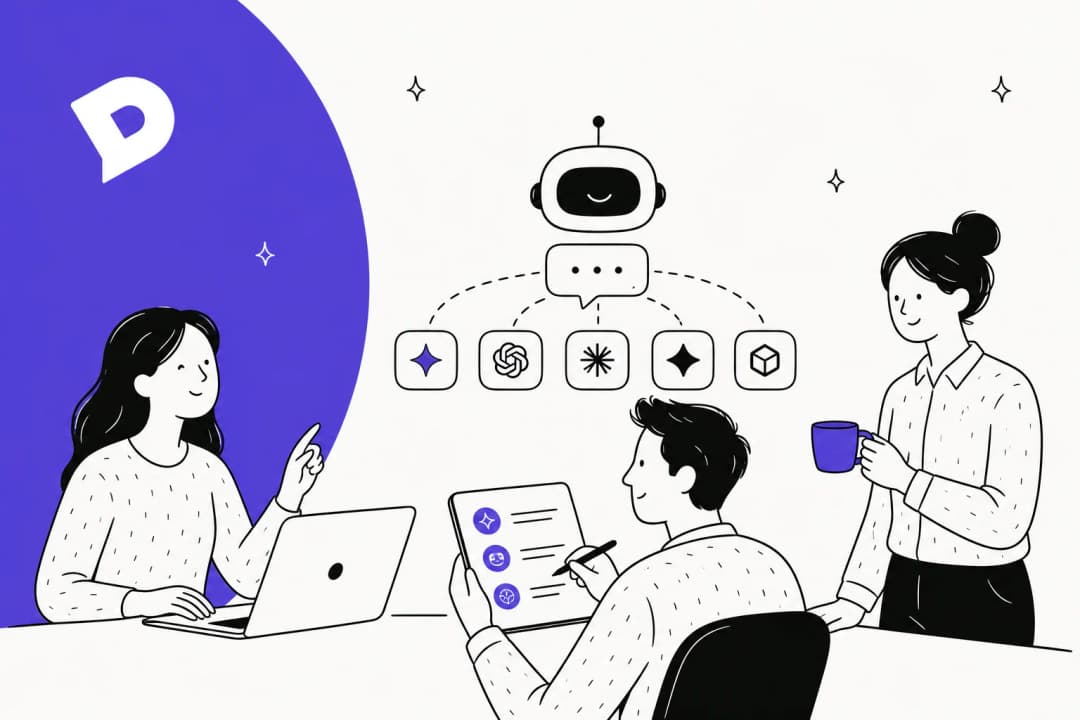
This visual summary contrasts the enterprise-scale automation of Zendesk against the privacy-focused and integrated AI approach of Zoho Desk.

This comparison breaks down exactly how these two platforms stack up in 2026. We'll cover their AI capabilities, pricing structures, and ideal use cases so you can make an informed decision for your team.

What is Zendesk AI?

Zendesk AI is the intelligence layer built into Zendesk's customer service platform. It's designed to automate interactions across any channel, with the goal of resolving 80% or more of customer requests without human intervention.

A screenshot of Zendesk's landing page.

The platform centers around three core AI components:

  • AI agents that handle conversations end-to-end across messaging, email, and voice
  • Copilot, a proactive assistant that gives agents real-time suggestions and can take actions on their behalf
  • Admin AI tools that provide insights, automation recommendations, and operational guidance

Zendesk's AI comes pre-trained on over 18 billion customer interactions, which means it understands common support scenarios out of the box. The company also acquired Ultimate.ai to strengthen its AI capabilities, adding more sophisticated automation and voice AI features.

The platform supports 80+ languages at native fluency and integrates with 1,700+ apps through the Zendesk Marketplace. It's built for teams that need enterprise-grade AI with extensive customization options.

What is Zoho Desk AI?

Zia is Zoho Desk's built-in AI assistant. Unlike Zendesk's modular approach where AI features often require add-ons, Zia's core capabilities are included at no extra cost with Zoho Desk's Enterprise plan.

A screenshot of Zoho Desk's landing page.

Zia handles several support functions:

  • AI agents for automating routine support tasks
  • Answer Bot for instant customer responses across channels
  • Sentiment analysis that reads customer tone and flags urgent issues
  • Auto-tagging that categorizes tickets automatically
  • Writing assistance with grammar checking and readability scoring

One standout feature is Zia's approach to data privacy. Zoho explicitly states it never uses customer data to train its AI models, which matters for teams handling sensitive information.

Zia also offers optional ChatGPT integration for teams wanting to enhance AI responses with OpenAI's models. And because Zoho Desk is part of the broader Zoho ecosystem, it connects seamlessly with Zoho CRM, Analytics, and other Zoho products.

The platform is positioned as a cost-effective alternative that still delivers solid AI capabilities, particularly for small to medium businesses already using Zoho tools.

AI capabilities comparison

Both platforms cover the basics of AI-powered support, but their strengths differ.

A direct feature breakdown helps determine if Zendesk's premium automation justifies the cost over Zoho's comprehensive built-in AI tools.

Automated ticket handling

Zendesk AI focuses on end-to-end automation. Its AI agents can resolve complex issues without predefined scripts, using what Zendesk calls "agentic AI" to reason through problems and adapt in real time. The platform claims 80%+ resolution rates for automated interactions.

Zoho Desk AI handles automation through Zia's auto-tagging and field prediction features. Tickets get categorized automatically, which triggers workflow rules and routes issues to the right team. Full AI agents are available but limited to the Enterprise plan.

Agent assistance

Zendesk's Copilot ($50/agent/month add-on) provides proactive guidance. It suggests responses based on knowledge base articles, summarizes customer context, and can even take actions in third-party systems like Shopify or Jira with agent approval.

Zia's agent assistance is built into Enterprise plans at no extra cost. It offers response suggestions, ticket summarization, and writing feedback. Agents can ask Zia to draft replies or pull information from the knowledge base.

Self-service and chatbots

Both platforms offer AI-powered chatbots that draw from knowledge base content. Zendesk's Answer Bot integrates with its broader AI agent system, while Zoho's Answer Bot works alongside Zia's conversational capabilities.

Zendesk has the edge for voice support, its AI agents can handle phone conversations naturally without scripts. Zoho Desk's voice capabilities are more limited and typically require third-party telephony integrations.

Analytics and insights

Zendesk provides AI-powered QA that automatically scores 100% of AI agent interactions, plus workforce management insights and operational dashboards.

Zoho Desk offers an AI dashboard showing customer sentiment trends, commonly asked questions, and anomaly detection that flags unusual ticket spikes.

Pricing comparison

This is where the two platforms diverge significantly.

PlanZendesk AIZoho Desk AI
EntrySuite Team: $55/agent/monthStandard: $14/user/month
Mid-tierSuite Professional: $115/agent/monthProfessional: $23/user/month
EnterpriseSuite Enterprise: $169/agent/monthEnterprise: $40/user/month
AI add-onsCopilot: $50/agent/monthIncluded in Enterprise

At the entry level, Zoho Desk costs about 75% less than Zendesk. That gap widens when you factor in AI add-ons. To get Zendesk's full Copilot functionality, you're looking at $219/agent/month ($169 base + $50 Copilot), compared to Zoho's $40/user/month for Enterprise with AI included.

Zendesk does include basic AI agents in all Suite plans, but advanced features and Copilot require additional spend. Zoho Desk reserves its full AI capabilities for Enterprise, though even that tier is significantly cheaper than Zendesk's mid-tier offering.

Both offer free trials (Zendesk: 14 days, Zoho: 15 days), and Zoho Desk has a free plan for up to 3 users with limited AI features.

User experience and implementation

Zendesk offers a modern, polished interface with its unified Agent Workspace. The platform looks and feels professional, but there's a steeper learning curve for advanced features. Getting the most from Zendesk AI typically requires dedicated admin time for configuration and optimization.

Zoho Desk has a more traditional interface that some users find less visually appealing, but it's generally easier to set up. Work modes help agents prioritize tickets, and the Blueprint visual workflow builder makes automation accessible without coding.

Time to value tends to be faster with Zoho Desk for simple use cases. Zendesk rewards the extra setup time with more sophisticated capabilities, particularly for complex enterprise environments.

Integration ecosystem

Zendesk wins on breadth. With 1,700+ apps in its marketplace and extensive API access, it connects to virtually any business tool. This matters for AI because the more data sources your AI can access, the better it performs.

Zoho Desk excels within the Zoho ecosystem. If you're already using Zoho CRM, Analytics, or other Zoho products, the integration is seamless. Third-party options are more limited (around 50+ native integrations), though APIs are available for custom connections.

For teams not already committed to Zoho, Zendesk's integration flexibility is a significant advantage. For Zoho shops, Desk's native connectivity is hard to beat.

At eesel AI, we work with both platforms, so teams can add an AI layer regardless of which help desk they choose.

Which platform should you choose?

Choose Zendesk AI if:

  • You need enterprise-grade AI with 80%+ automation targets
  • Advanced voice AI and phone support automation are critical
  • You have a diverse tech stack requiring extensive third-party integrations
  • Budget allows for premium AI features and add-ons
  • You need sophisticated agent assistance and workforce management tools

Choose Zoho Desk AI if:

  • Cost-effectiveness is a priority (60-80% cheaper than comparable Zendesk tiers)
  • You're already using Zoho products and want seamless integration
  • You want AI features without expensive per-agent add-ons
  • Data privacy is paramount (Zoho doesn't use customer data for AI training)
  • You're a growing SMB with straightforward support needs

Consider an alternative approach

Screenshot of a help desk interface like Zendesk. On the right side, the eesel AI Copilot sidebar shows a suggested reply to a customer's question, which was generated using the company's knowledge base and the powerful GPT-5 model.

Here's something worth considering: you don't necessarily have to choose between platforms or migrate everything. Our AI Copilot works alongside your existing help desk, whether that's Zendesk, Zoho Desk, or another platform.

Instead of replacing your entire system, you can add an AI layer that learns from your knowledge base, past tickets, and connected documentation. This approach lets you:

  • Keep your current help desk infrastructure
  • Add AI-powered drafting and response suggestions
  • Maintain control over when and how AI engages with customers
  • Scale AI capabilities without retraining your team on a new platform

Making your decision

Both Zendesk AI and Zoho Desk AI deliver solid AI-powered support capabilities, but they serve different needs and budgets.

Zendesk offers more sophisticated AI with deeper automation, broader integrations, and enterprise-grade features. You're paying a premium for that capability, particularly if you want the full Copilot experience.

Zoho Desk provides excellent value, especially for smaller teams or those already in the Zoho ecosystem. The AI features are capable, privacy-focused, and significantly more affordable.

The right choice depends on your team size, budget, existing tech stack, and how ambitious your AI automation goals are. Both platforms offer free trials, so testing them with your actual workflows is the best way to decide.

If you're looking to enhance your current setup without a full platform migration, check out how we approach AI for customer support. Sometimes the best solution isn't replacing what you have, it's making it smarter.


Frequently Asked Questions

Both platforms offer AI agents, automated ticket handling, and agent assistance. Zendesk's AI agents are more sophisticated with 80%+ resolution targets and advanced voice capabilities. Zoho Desk AI covers the essentials well at a much lower price point, with full AI features available in the Enterprise plan.
At the entry level, Zoho Desk AI costs about 75% less ($14 vs $55 per agent monthly). For full AI capabilities including agent assistance, Zendesk requires the Enterprise plan plus Copilot add-on ($219 total), while Zoho includes comparable features in its $40 Enterprise plan, an 83% savings.
Basic automation is available on Standard and Professional plans, but full AI capabilities including AI agents, Answer Bot, and Zia's advanced features require the Enterprise plan. Standard plan users can access generative AI by connecting their own OpenAI API key.
For enterprise teams needing 80%+ automation, advanced voice AI, and extensive integrations, Zendesk AI justifies the premium. For SMBs and teams with simpler needs, Zoho Desk AI delivers solid capabilities at a fraction of the cost. The value depends on your specific requirements and growth plans.
Zoho Desk generally has a faster initial setup with its intuitive configuration options. Zendesk offers more powerful AI capabilities but requires more time to configure optimally. Both provide onboarding resources, though Zendesk's advanced features typically need dedicated admin attention.
Yes. Tools like eesel AI work alongside existing help desks including Zendesk and Zoho Desk. This lets you add AI-powered drafting, response suggestions, and knowledge base integration without migrating your entire support operation.

Share this post

Stevia undefined

Article by

Stevia Putri

Stevia Putri is a marketing generalist at eesel AI, where she helps turn powerful AI tools into stories that resonate. She’s driven by curiosity, clarity, and the human side of technology.