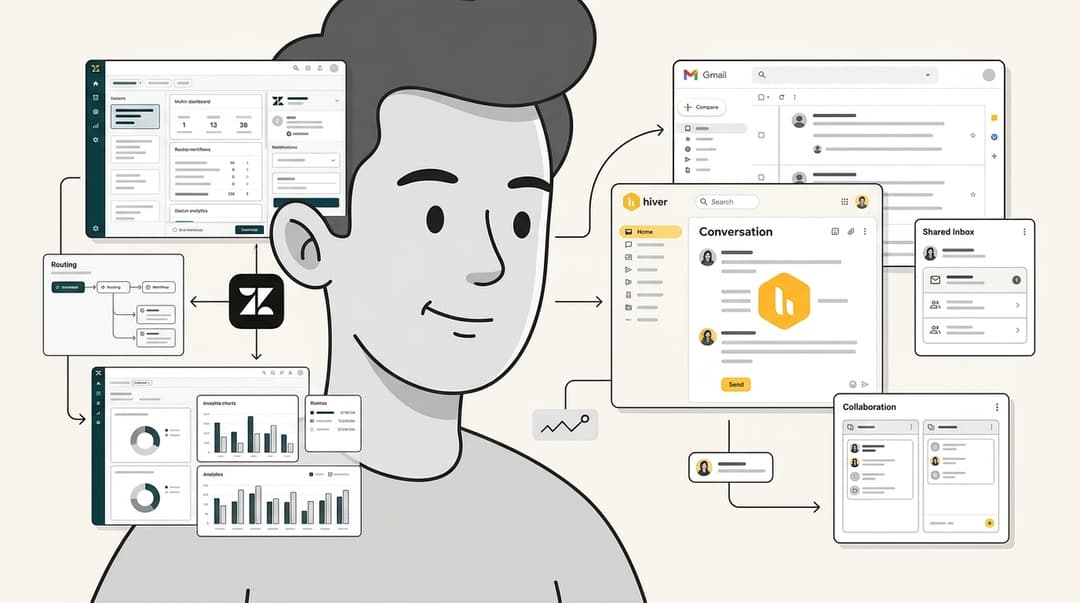
If you've ever stared at your Zendesk views waiting for new tickets to appear, you're not alone. Zendesk views don't auto-refresh by default, which means support agents often miss urgent tickets or waste time manually refreshing their browser. This guide walks you through why this happens and what you can do about it, from quick workarounds to browser extensions and a fundamentally different approach to managing support tickets.
Why Zendesk views don't auto-refresh (and why it matters)
Here's the short version: Zendesk views require a manual refresh to show updated ticket information. According to Zendesk's official documentation, views don't automatically refresh in Support. Your options are limited to clicking the refresh button, switching between views, or using Play mode (which refreshes every five minutes but has significant limitations).
For support teams dealing with high ticket volumes, this isn't just an inconvenience. It's a genuine workflow problem.
A Zendesk community member put it bluntly in a 2022 post: "We should not have to be installing 3rd party extensions, constantly clearing cookies and cached data and refreshing the browser, just to achieve what should be a base level of functionality." Another user with over ten years of Zendesk experience noted that "Zendesk must seriously consider adding auto refresh to their views. It is a critical feature that is available at many other support platforms."
The impact is real:
- Missed tickets when agents don't realize new items have arrived
- Delayed response times while waiting for manual refreshes
- Agent frustration from repetitive clicking
- Inconsistent ticket handling across the team
What you'll need
Before we dive into solutions, here's what you'll need:
- A Zendesk account (any plan works)
- For the browser extension solution: Chrome, Firefox, or Edge browser
- For premium solutions: Budget for paid apps
- Optional: Admin permissions if you're implementing this team-wide
Step 1: Try the manual workaround first
Before installing extensions, try Zendesk's built-in options. They might be enough for your workflow.
Switch between views. Clicking from one view to another triggers a refresh of all views. This is the quickest native method.
Use the manual refresh button. Each view has a refresh button you can click to update the ticket list.
Try Play mode. When agents use Play mode, views refresh every five minutes to surface new tickets. The catch? Play mode is designed for sequential ticket handling and limits how agents can work. It's not a general-purpose solution.
These workarounds are fine for occasional use, but they don't solve the underlying problem. If you're checking views dozens of times per day, you'll need something better.
Step 2: Install a browser extension for auto-refresh
The most popular solution is Zendesk View Auto Refresh, an open-source browser extension by DeclanE47. It's free, works across major browsers, and has over 2,500 users across platforms.
Installation
For Chrome:
- Visit the Chrome Web Store listing
- Click "Add to Chrome"
- Confirm the installation
For Firefox:
- Visit the Firefox Add-ons page
- Click "Add to Firefox"
- Grant the requested permissions
For Edge:
- Visit the Edge Add-ons page
- Click "Get"
Configuration
Once installed, click the extension icon in your browser toolbar. You'll see:
- A toggle switch to enable/disable auto-refresh
- A dropdown for refresh intervals (5 seconds to 10 minutes, plus a custom field)
- A countdown timer showing time until the next refresh
- A dark mode toggle
Set your preferred interval based on your ticket volume. Five to ten seconds works for high-volume queues. One to two minutes is fine for lower-priority views.
Key features
- Multi-tab support: Works across multiple Zendesk tabs simultaneously
- Persistent settings: Your preferences save across browser sessions
- Dark mode: Reduces eye strain during night shifts
- Cross-browser compatibility: Use the same workflow regardless of browser

Security considerations
Enterprise teams often worry about third-party extensions accessing Zendesk data. Here's what you should know:
- The extension is open-source (MIT License) and available on GitHub for code review
- It only requests access to zendesk.com domains
- The developer explicitly states no data is collected or sold to third parties
- The extension has a 5.0/5 rating on the Chrome Web Store
That said, some organizations have policies against browser extensions. If that's your situation, the next option may work better.
Step 3: Consider premium alternatives
If browser extensions aren't an option, or if you need more than just auto-refresh, Lovely Views by Lovestock & Leaf is worth considering.
Lovestock & Leaf is a Zendesk Advanced Partner with 14+ years of experience. Their apps are used by teams at Netflix, Uber, Slack, Microsoft, Shopify, and hundreds of other companies.
What Lovely Views offers
Lovely Views replaces Zendesk's standard view interface with an enhanced version that includes:
- Unlimited views: Bypasses Zendesk's 30-view limit
- Folders and sub-folders: Organize views hierarchically instead of a flat list
- Favorites: Pin your most-used views for quick access
- Bookmarks: Privately flag important tickets
- Auto-refresh: Built-in view refresh capability
- Advanced filtering: More powerful than native Zendesk filters
- Bulk actions: Perform operations on multiple tickets at once
Pricing
Lovely Views pricing isn't publicly listed on their website. You'll need to contact Lovestock & Leaf or check the Zendesk Marketplace for current rates. Given their enterprise customer base, expect this to be a paid solution rather than a free one. This is another approach to solving Zendesk views refresh and cache challenges.
When to choose Lovely Views over the browser extension
Consider Lovely Views if:
- Your organization blocks browser extensions
- You need features beyond auto-refresh (unlimited views, better organization)
- You want a solution that works for your entire team without individual installations
- You prefer a vendor-supported product over an open-source extension
Step 4: Optimize your view management
Even with auto-refresh enabled, you can reduce your dependency on constantly monitoring views:
Set up effective notifications. Configure Zendesk triggers to notify you via email or Slack when high-priority tickets arrive. This reduces the need to watch views constantly.
Use triggers and automations. Let Zendesk surface important tickets automatically through assignments, tags, and notifications rather than relying on agents to spot them in views.
Organize views strategically. Create focused views for specific purposes rather than trying to monitor everything. Fewer, better-organized views mean less time scanning and refreshing.
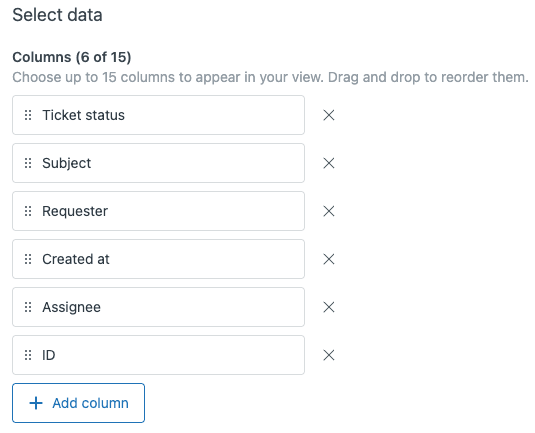
For more on view organization, see our guide on how to customize Zendesk view columns.
A better approach: Reduce the need to refresh with eesel AI
Here's a different way to think about the problem. What if you didn't need to watch views at all?
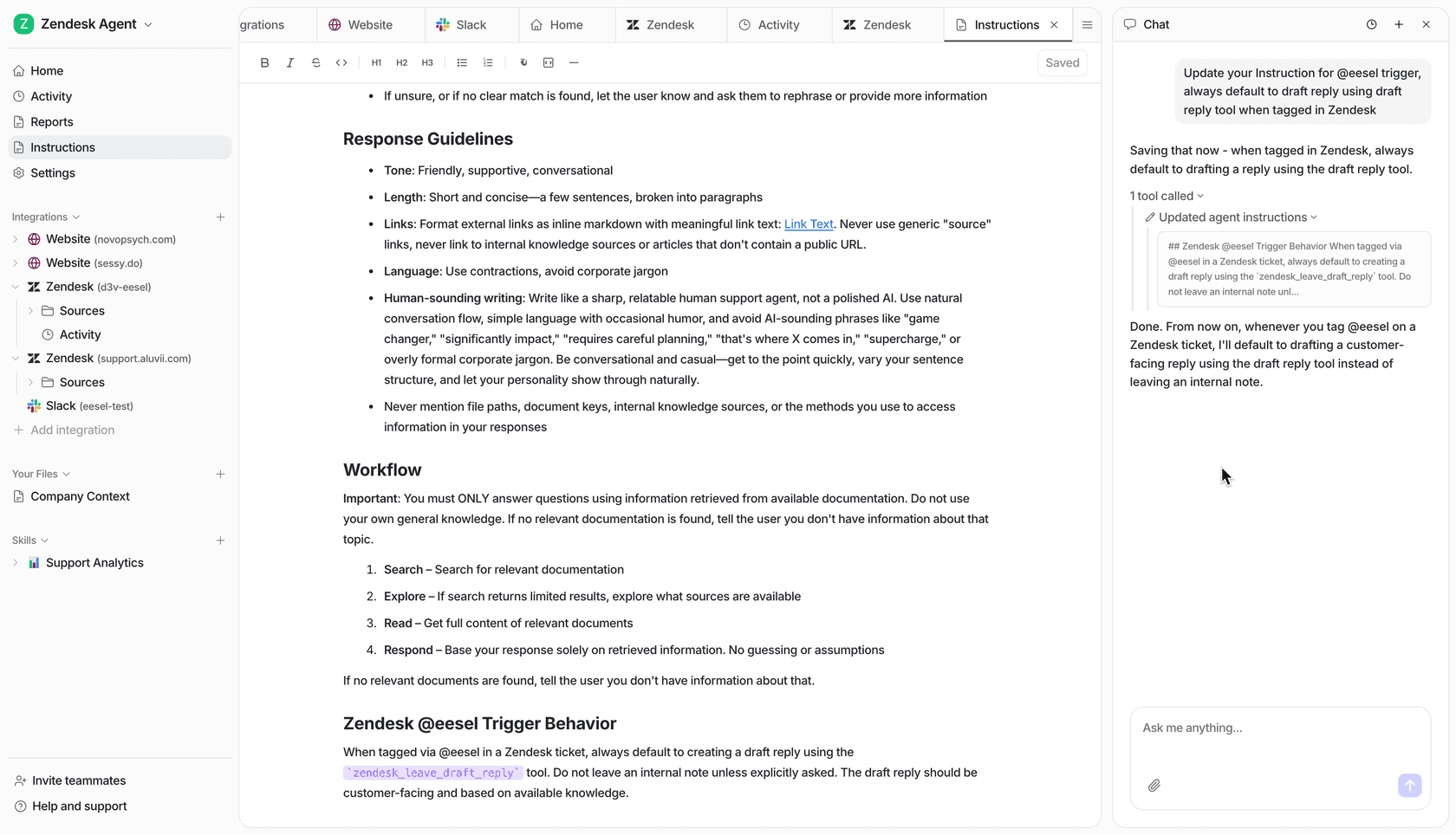
At eesel AI for Zendesk, we approach support differently. Instead of agents constantly monitoring views for new tickets, our AI teammate handles the triage automatically. You describe what matters in plain English, and the AI ensures those tickets get the right attention without anyone staring at a refresh button.
How it works
Intelligent triage. Our AI Triage processes every incoming ticket, reads the content, and routes it based on your business rules written in natural language. No complex view conditions required.
Automatic prioritization. The AI learns from your past tickets to understand what matters most. Urgent issues from enterprise customers get flagged immediately. Routine questions get routed to your AI Agent for autonomous resolution.
Plain English control. Instead of building complex view filters, you simply tell the AI: "Escalate billing disputes to the finance team" or "Prioritize tickets from customers with premium subscriptions." The AI handles the rest.
Continuous learning. When you correct an AI response, it learns from that correction. Over time, the system gets better at identifying what needs human attention versus what it can handle itself.
The result
Teams using eesel AI see up to 81% autonomous resolution rates for frontline support. That means most tickets never need an agent to refresh a view at all. They're resolved automatically, and agents only handle the complex cases that truly need human judgment.
Our pricing starts at $299/month for the Team plan, which includes up to three bots and 1,000 AI interactions. For teams handling high ticket volumes, the Business plan at $799/month offers unlimited bots and 3,000 interactions.
When eesel AI makes sense
Consider eesel AI if:
- Your team spends more time organizing tickets than resolving them
- You want to reduce the manual work of triage and routing
- You're looking for a solution that scales without adding headcount
- You prefer natural language instructions over complex configuration
Troubleshooting common issues
Extension not working? Check that you've granted permissions for the zendesk.com domain. The extension needs access to trigger the refresh button on your Zendesk pages.
Browser cache issues. If views seem out of sync even with auto-refresh, try clearing your browser cache and cookies. Some users report this resolves display issues.
Conflicts with other extensions. If you have multiple Zendesk extensions installed, they might conflict. Try disabling others temporarily to isolate the issue.
When to contact support. For the browser extension, open an issue on the GitHub repository. For Zendesk itself, use their standard support channels. For Lovely Views, contact Lovestock & Leaf support.
Start managing your support tickets more efficiently
You now have several options to solve the Zendesk views refresh and cache problem. The browser extension offers immediate relief at no cost. Lovely Views provides a more comprehensive (but paid) solution. Optimizing your notification and automation setup can also reduce your dependency on view monitoring.
But if you're ready to move beyond constantly refreshing views altogether, consider how an AI teammate could transform your support workflow. Instead of agents watching for tickets, the AI handles triage automatically, surfaces what matters, and resolves routine issues without human intervention.
Try eesel AI for free and see how intelligent ticket management eliminates the need to refresh views at all. Or book a demo to discuss how we can help your specific support workflow.