How to set group by organization in Zendesk using triggers

Stevia Putri
Last edited February 24, 2026
Routing tickets to the right team quickly can make or break your customer experience. When a VIP customer submits a ticket, you want it going straight to your senior agents, not sitting in a general queue. The same goes for enterprise accounts, partners, or any customer segment that needs specialized handling.
Zendesk gives you two ways to automate this: group mapping for simple routing and triggers for more complex logic. This guide walks you through both approaches, plus the organizational strategies that keep your setup maintainable as you scale.
If you're looking for intelligent routing that learns from your ticket history rather than relying on fixed rules, we also offer AI-powered triage that works alongside Zendesk.
What you'll need
Before you start, make sure you have:
- Zendesk Support Professional plan or higher (group mapping requires Professional+)
- Admin access to your Zendesk account
- A clear understanding of which organizations need special routing
- A list of the groups that should handle each organization's tickets
Understanding groups and organizations in Zendesk
Let's clarify the key concepts before diving into setup.
Groups are collections of agents. You might have a "Billing" group, a "Technical Support" group, or a "VIP Response" group. When a ticket gets assigned to a group, any agent in that group can pick it up.
Organizations are collections of your end users (customers). You might organize customers by company name, subscription tier, or region. Each user can belong to one or more organizations depending on your plan.
The magic happens when you connect these two: tickets from users in a specific organization can automatically route to a designated group. This means your enterprise customers go straight to your senior team, while free-tier users route to your general support queue.
Plan requirements: Group mapping requires Zendesk Support Professional or Enterprise. If you're on the Team plan, you can still use triggers for organization-based routing (covered in Method 2).
Method 1: Using group mapping for automatic assignment
Group mapping is the simplest approach. Once configured, every ticket from users in a mapped organization automatically gets assigned to that group. No triggers needed.
Step 1: Create your specialized group
First, create the group that will handle these tickets:
- Go to Admin Center > People > Team > Groups
- Click Add group
- Enter a descriptive name like "VIP Support" or "Enterprise Team"
- Select the agents who should be members
- Click Create group
Step 2: Create or identify the organization
Next, set up the organization you want to map:
- In the Zendesk Support interface, click the Organizations icon in the sidebar
- Click Add organization
- Enter the organization name (e.g., "Acme Corp VIP")
- Add email domains if you want users automatically added to this org based on their email address
- Click Save
The email domain feature is particularly useful. If you add "acmecorp.com" as a domain, any user who submits a ticket from an @acmecorp.com email address gets automatically added to this organization.

Step 3: Configure the group mapping
Now connect the organization to the group:
- Find your organization in the list and click to open it
- Click Edit
- Look for the Group dropdown
- Select the group you created in Step 1
- The change saves automatically
That's it. From now on, any ticket submitted by a user in this organization will automatically be assigned to your mapped group.
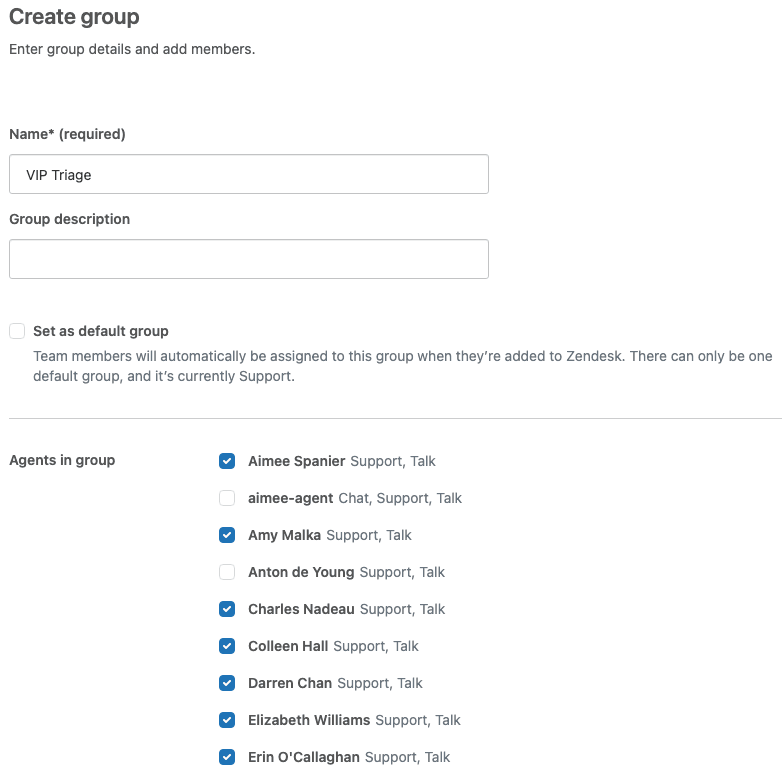
How it works: When a ticket is created, Zendesk checks the requester's organization. If that organization has a group mapped to it, the ticket gets assigned to that group immediately. This happens before most triggers run, so you can still use triggers to modify the ticket further (set priority, add tags, send notifications).
Method 2: Using triggers for conditional group assignment
Group mapping works great for straightforward routing, but sometimes you need more flexibility. Triggers let you add conditions, combine multiple criteria, or handle temporary assignments.
Use triggers when you need to:
- Route based on organization AND ticket content (keywords, subject lines)
- Apply different routing for the same organization based on ticket type
- Set up temporary routing during specific time periods
- Add additional actions (priority changes, tags, notifications) alongside group assignment
Step 1: Access the triggers page
Navigate to Admin Center > Objects and rules > Business rules > Triggers.
Step 2: Create a new trigger
- Click Add trigger
- Give it a descriptive name like "Route Enterprise tickets to Premium Support"
- Add a description explaining what this trigger does and why it exists (future you will thank you)
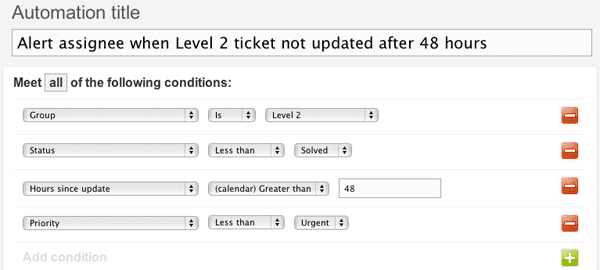
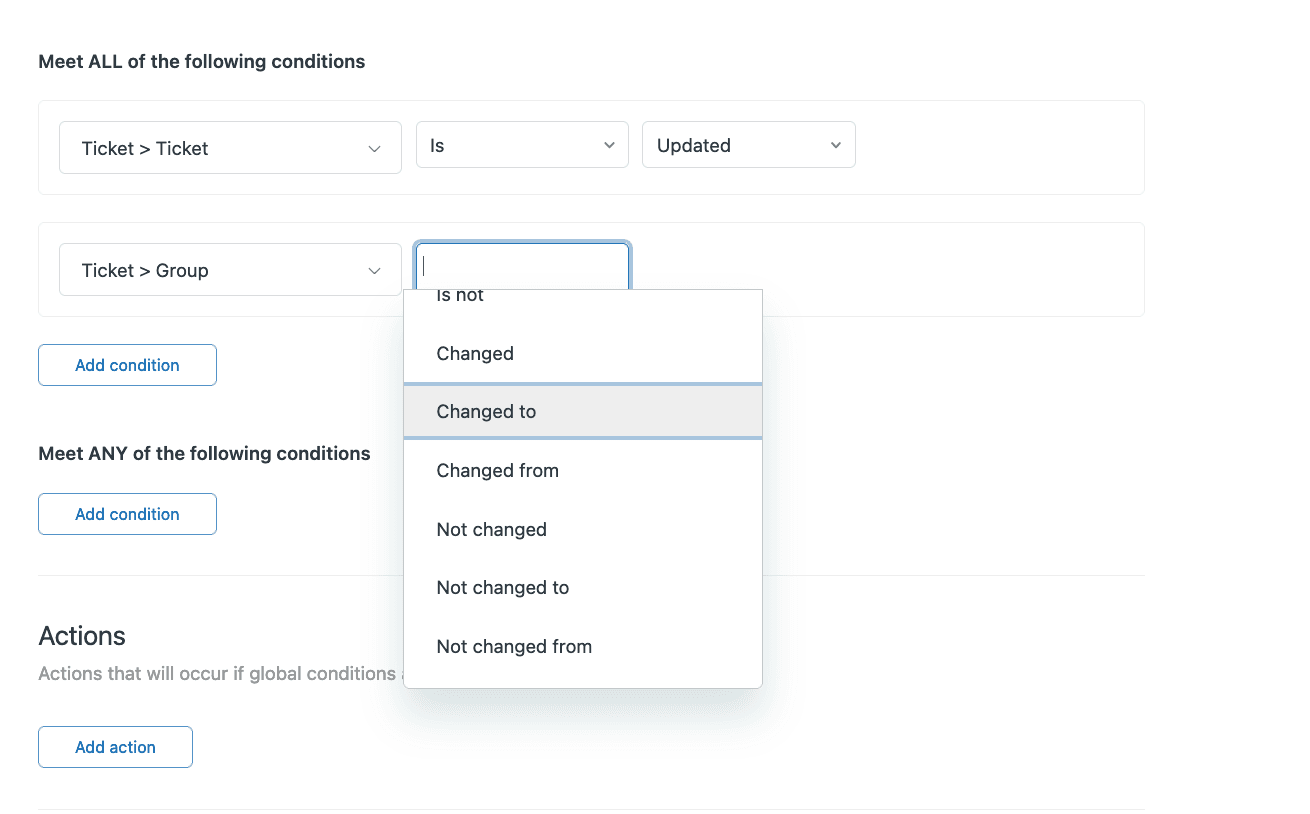
Step 3: Set your conditions
In the Meet all of the following conditions section:
- Ticket > Is > Created (or "Updated" if you want this to run on ticket changes too)
- Requester > Organization > Is > [Select your organization]
Optional but recommended: Add Group > Is > - (meaning not set). This prevents your trigger from overwriting assignments made by other triggers or group mapping.
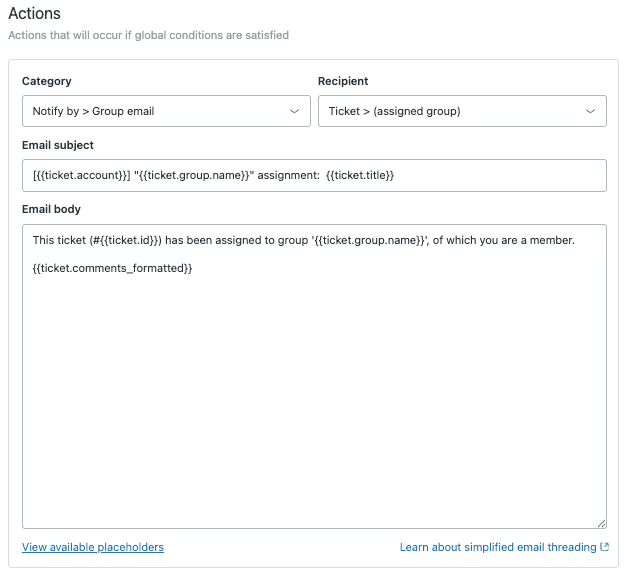
Step 4: Set your actions
In the Actions section:
- Set Group > [Select your target group]
You can add additional actions here:
- Set Priority > High (for VIP customers)
- Add tags > vip_customer
- Email user > [Custom notification message]
Step 5: Position the trigger correctly
Click Create trigger, then find your new trigger in the list. Use the drag handles to position it in the right spot in your trigger order. More on this in the next section.
Organizing your triggers with categories
Trigger order matters. Zendesk processes triggers from top to bottom, and each trigger can modify the ticket before the next one sees it. A poorly organized trigger list leads to confusing behavior and difficult troubleshooting.
The expert-recommended approach is to organize triggers by their role in the ticket lifecycle:
Categorization triggers run first. These set defaults and identify what the ticket is about: setting priority based on keywords, categorizing by subject line, or tagging by form used.
Routing and assignment triggers come next. This is where your organization-based group assignment happens. You want routing complete before sending notifications so the right team gets alerted.
Workflow automation triggers handle escalations, field updates, and integrations. These run after routing is settled.
Notification triggers run last. These send emails to customers and internal alerts to teams.
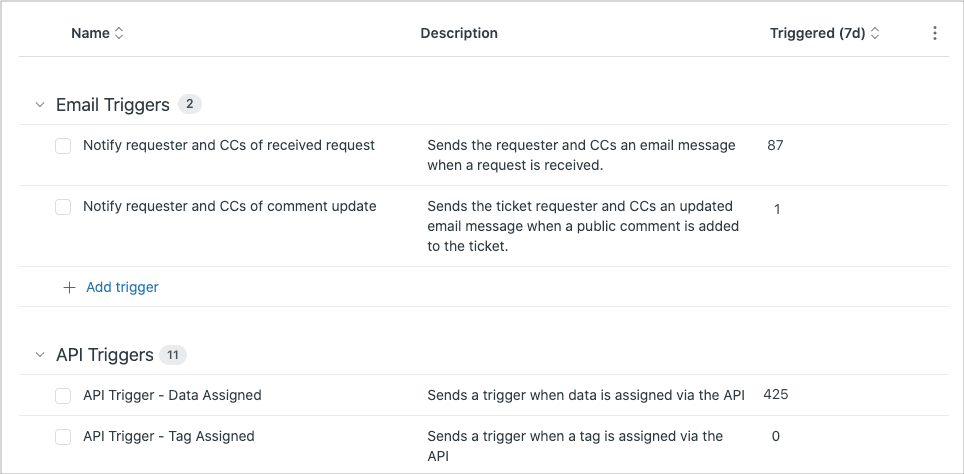
To create categories in Zendesk:
- Go to Admin Center > Objects and rules > Business rules > Triggers
- Click the Add trigger dropdown and select Add category
- Name your category (e.g., "Routing", "Notifications")
- Drag triggers into the appropriate categories
The category order determines execution order: all triggers in your first category run before any triggers in the second category.
Best practices for trigger-based group assignment
After reviewing expert methodologies and common pitfalls, here are the practices that keep your setup maintainable:
One trigger, one job. Create focused triggers rather than complex multi-action triggers. Instead of one trigger that sets category, assigns group, and sends notification, create three separate triggers. This makes troubleshooting easier and prevents unintended side effects when you need to modify one piece of the workflow.
Prevent overwriting. Always include a condition like "Group is not set" in your routing triggers. This prevents accidentally reassigning tickets that have already been routed by group mapping or earlier triggers.
Use meaningful names. Format trigger names as [Reason] - [Workflow]. Examples: "Route VIP - Enterprise Org" or "Assign Refunds - Finance Group". The name should tell you at a glance what this trigger does.
Create a fallback trigger. Add a final routing trigger that catches any tickets still without a group assignment and routes them to a default group with a "fallback" tag. This ensures nothing gets lost, and the tag helps you identify gaps in your routing logic.
Document everything. Use the description field to explain the business logic behind each trigger, which related triggers it works with, and when it should be updated. Future administrators (including yourself) will need this context.
Test before going live. Zendesk's trigger simulation lets you test how triggers will behave on sample tickets. Use it. Test edge cases like users in multiple organizations or tickets created via API.
Monitor and iterate. Review your trigger performance monthly. Check which fallback tags are appearing, look for tickets that got misrouted, and adjust conditions as your business evolves.
Common pitfalls and limitations
Even with careful setup, you'll encounter these limitations:
Triggers cannot directly set organization. If you need to change which organization a ticket belongs to, you cannot do this with triggers. Only group mapping and user domain matching can affect organization assignment. Workarounds exist using webhooks and custom fields, but they're complex.
Multiple organizations create ambiguity. If a user belongs to multiple organizations (requires Growth plan or higher), Zendesk uses their primary organization for routing. Make sure you understand which org is primary for users who belong to several.
Trigger order conflicts. Later triggers can overwrite group assignments made by earlier triggers. This is powerful when used intentionally (like VIP overrides) but frustrating when accidental. Document your trigger order and review it when adding new triggers.
API and third-party tickets. Tickets created via API or from external systems like AWS SNS may not have organization data populated correctly. If your routing depends on organization, these tickets might fall through to your fallback trigger.
Plan limitations. Group mapping requires Professional plan or higher. If you're on Team, you're limited to trigger-based routing only.
Taking automation further with eesel AI
Zendesk's native triggers work well for fixed rules, but they have limits. They can't learn from patterns in your historical tickets, handle nuanced routing decisions, or adapt as your business changes.
This is where we can help. Our Zendesk integration adds AI-powered triage that goes beyond simple if-then rules:
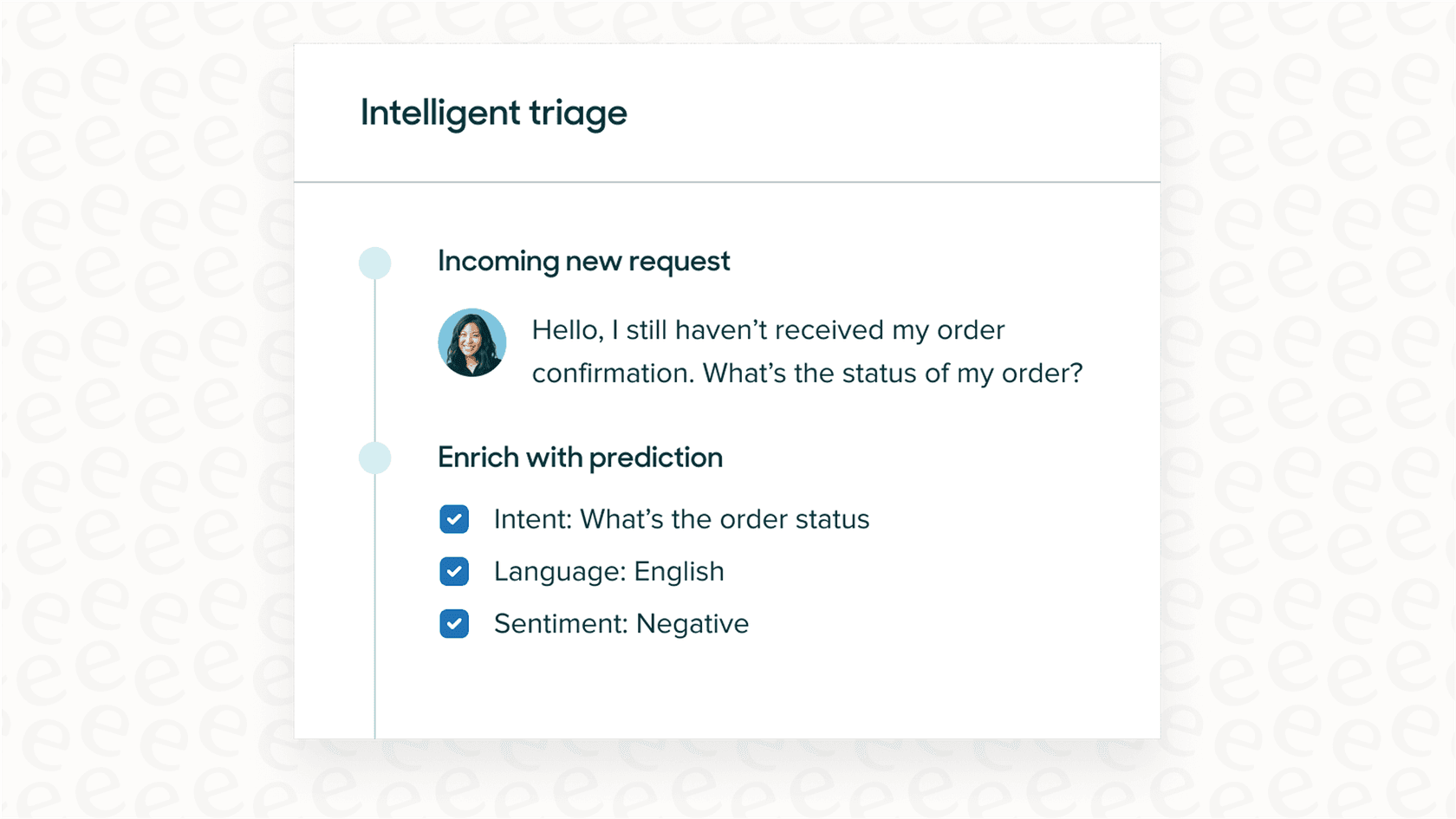
- Learns from your history: Analyzes past tickets to understand routing patterns you might not have explicitly defined
- Handles complex decisions: Routes based on multiple factors simultaneously (organization, content sentiment, urgency signals, agent workload)
- Natural language instructions: Tell it "Route angry customers from enterprise accounts to senior agents" instead of building complex trigger conditions
- Test before deploying: Simulate routing decisions on historical tickets to see accuracy before going live
If your routing needs are outgrowing Zendesk's native capabilities, check out our AI triage capabilities or explore our broader customer support automation solutions.
Start optimizing your ticket routing today
You now have two solid approaches for routing tickets by organization: group mapping for simple, automatic assignment and triggers for conditional logic. The key is choosing the right tool for each routing need and organizing your setup so it stays maintainable.
Your action items:
- Audit your current routing setup. Are there tickets going to the wrong groups?
- Implement trigger categories if you haven't already. Future you will thank present you.
- Review your trigger names and descriptions. Would a new admin understand what each one does?
- Create that fallback trigger to catch anything that slips through
- Test your changes with Zendesk's trigger simulation before going live
Remember that routing is never "set and forget." As your customer base grows and changes, your routing logic needs to evolve too. Schedule a monthly review to catch issues before they impact customers.
If you're ready to move beyond rule-based routing to intelligent, learning-driven ticket assignment, try eesel AI and see how AI-powered triage can complement your Zendesk setup.

Frequently Asked Questions
Share this article

Article by
Stevia Putri
Stevia Putri is a marketing generalist at eesel AI, where she helps turn powerful AI tools into stories that resonate. She’s driven by curiosity, clarity, and the human side of technology.