
Not all support tickets are created equal. A password reset request and a complete system outage demand different levels of attention, yet both might arrive in your queue at the same time. This is where ticket priority comes in.
Zendesk gives you a built-in system to categorize tickets by urgency and impact, helping your team focus on what matters most. When you pair this with smart automation, you can route critical issues to your best agents instantly while ensuring routine requests don't slip through the cracks.
Tools like eesel AI can enhance this workflow by learning from your past tickets to suggest or automatically set priorities based on content and customer context.

Let's break down how Zendesk's priority system works and how to set it up effectively.
What are the priority levels in Zendesk?
Zendesk comes with four default priority levels. While you can rename these, most teams stick with the standard labels because they're universally understood in support circles.
Low priority
Use this for general questions, feature requests, and minor issues that don't block anyone's work. Examples include "How do I change my notification settings?" or "It would be nice if you added dark mode." These tickets can wait a day or two without major consequences.
Normal priority
This is your default level for standard support requests. The customer has a problem that needs solving, but it's not urgent and doesn't affect multiple people. Think "I can't access my account" or "This report isn't generating correctly." Most tickets fall into this category.
High priority
Reserve this for significant issues affecting multiple users or key business functions. Examples include "The checkout process is broken for mobile users" or "Our team can't access shared documents." These need attention within hours, not days.
Urgent priority
This is for critical outages, security breaches, or anything that completely stops business operations. "Our entire website is down" or "Customer data is exposed" are urgent issues. These demand immediate attention and often trigger escalation workflows.
The key is being consistent. If one agent marks "can't log in" as urgent while another marks it as normal, your SLA metrics become meaningless and customers get inconsistent experiences. That's where clear guidelines help everyone stay aligned.
Understanding the urgency-impact matrix
Priority isn't just about picking a label. Smart teams use an urgency-impact matrix to make consistent decisions. This framework evaluates two dimensions:
Business impact asks: how many people or systems are affected?
- One person → Low impact
- A department or team → Medium impact
- The entire organization or all customers → High impact
Urgency asks: how quickly does this get worse if we don't act?
- Can wait days → Low urgency
- Needs attention within hours → Medium urgency
- Immediate attention required → High urgency
Here's how these combine into priority levels:
| Impact | Urgency | Priority |
|---|---|---|
| High | High | Urgent |
| High | Medium | High |
| Medium | High | High |
| Medium | Medium | Normal |
| Low | High | Normal |
| Low | Medium | Low |
| Low | Low | Low |
The same issue can have different priorities depending on timing. A broken warehouse computer on a busy Monday morning is urgent. The same broken computer on Friday evening when the warehouse is closed for the weekend? That can probably wait until Monday.
Source: OpenClassrooms Zendesk course
How to configure ticket priority in Zendesk
Enabling and customizing the priority field
The priority field is a system field in Zendesk, which means you can't delete it, but you can customize how it works. To access these settings:
- Go to Admin Center → Objects and rules → Tickets → Fields
- Find the Priority field in the list
- Click to edit visibility and permissions

You can control whether customers see the priority field when submitting tickets and whether they can set it themselves. Many teams hide priority from customers to prevent every request from being marked "urgent."
Automating priority assignment with triggers
Manually setting priority on every ticket is tedious and inconsistent. Zendesk triggers let you automate this based on ticket attributes, saving your team time and ensuring consistency.
Common trigger setups include:
- VIP customer trigger: If the requester belongs to a specific organization or email domain, set priority to "High" or "Urgent"
- Keyword-based priority: If the subject contains words like "outage," "down," "critical," or "security breach," set priority to "Urgent"
- Channel-based priority: Tickets from live chat might get "High" priority since the customer is waiting in real-time, while email tickets start at "Normal"
To create a priority trigger:
- Go to Admin Center → Objects and rules → Business rules → Triggers
- Click Add trigger
- Set your conditions (e.g., "Organization is VIP Customers")
- Add the action "Priority" → select the priority level
- Save and activate
Remember that Zendesk runs triggers in order, so place categorization triggers before priority triggers to avoid conflicts.
Time-based priority escalation
Zendesk automations can increase priority if a ticket sits unresolved too long. For example, you might escalate any "Normal" priority ticket to "High" after 24 hours without an agent response.
This prevents tickets from aging in your queue just because they weren't initially flagged as important. It's a simple way to ensure nothing gets forgotten.
Connecting priority to SLAs and escalation
Priority becomes powerful when you connect it to Service Level Agreements (SLAs). SLAs define how quickly your team commits to responding and resolving tickets, and these commitments typically vary by priority.
Typical SLA targets by priority
| Priority | First Response | Resolution Time |
|---|---|---|
| Urgent | 15-60 minutes | 2-4 hours |
| High | 1-4 hours | 8 hours |
| Normal | 4-12 hours | 24 hours |
| Low | 24 hours | 5 business days |
Source: AorBorC priority guide
To set up SLA policies in Zendesk:
- Go to Admin Center → Objects and rules → Service level agreements
- Create a new policy or edit an existing one
- Set targets for "First reply time" and "Resolution time" based on priority
- Apply the policy to the appropriate tickets using conditions
Escalation workflows
When a ticket approaches its SLA breach or needs expertise beyond the assigned agent, escalation kicks in. Zendesk supports several escalation types:
- Functional escalation: Transfer to a team with specialized skills (e.g., technical issues go to engineering)
- Hierarchical escalation: Transfer to someone with more authority (e.g., a supervisor for refund approvals)
- Automated escalation: Rules-based routing when SLAs are at risk
Priority drives these workflows. An "Urgent" ticket might automatically notify managers and skip the first-line queue entirely, while a "Low" priority ticket stays with the general team. Setting up these rules ensures the right tickets reach the right people at the right time.
Tracking priority changes
Sometimes priorities get downgraded inappropriately, perhaps to make metrics look better or because an agent misjudged the issue. Jason Riddell's approach uses Zendesk Explore to track when priorities change from higher to lower levels.
This accountability ensures your priority system stays honest and customers get the service level they deserve. It's worth checking these reports weekly to catch any patterns.
Best practices for ticket prioritization
Getting priority right takes more than just setting up fields and triggers. Here are proven practices from teams that handle thousands of tickets:
Define clear guidelines
Write down what each priority level means for your specific business. Include examples your team can reference. GitLab's public handbook includes detailed priority definitions tied to business impact, which keeps their global support team aligned.
Source: GitLab Support Handbook
Train agents to override when needed
Automation sets the starting priority, but agents should adjust it when they have more context. A ticket that looks routine might actually be critical once the agent understands the customer's situation. Encourage your team to trust their judgment.
Review your queue regularly
Scan for mis-prioritized tickets during shift changes or at set times daily. During busy periods, some high-priority issues inevitably get miscategorized. A quick review can prevent small issues from becoming big problems.
Monitor your metrics
Track first response time, resolution time, and SLA breach rate by priority level. If your "High" priority tickets consistently miss their SLAs, you either need more staff or more realistic targets. Regular monitoring helps you spot trends before they become serious problems.
Consider AI-powered prioritization
AI tools can analyze ticket content, sentiment, and customer history to suggest or automatically set priorities. This catches nuances that keyword-based triggers miss. For example, an AI teammate might recognize that "slightly concerned about the charge" from a VIP customer warrants higher priority than the same message from a free trial user.
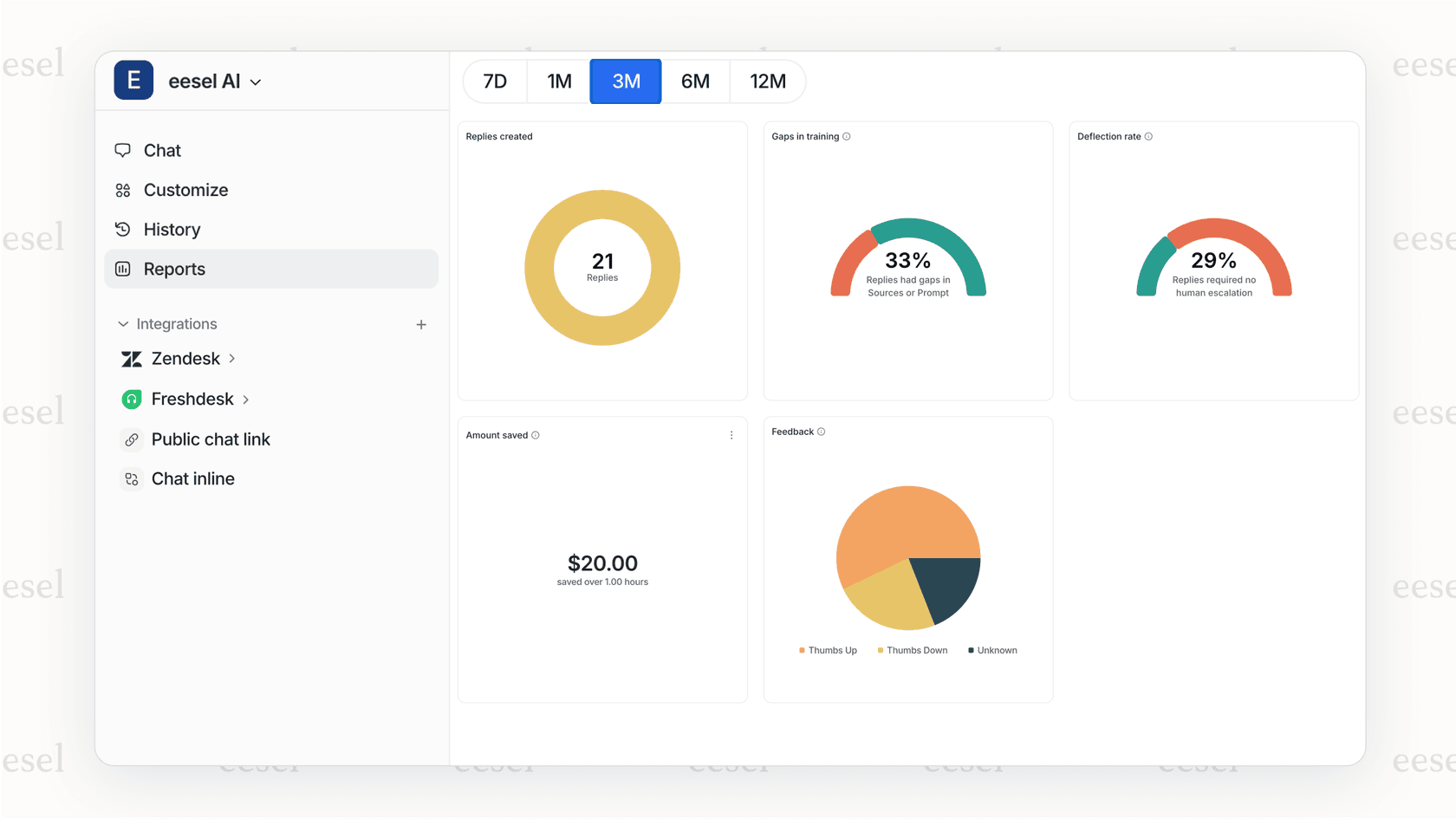
Our AI Triage feature specifically handles intelligent ticket prioritization by learning from your past ticket resolutions and agent actions. It integrates directly with Zendesk to enhance your existing priority workflows.
Getting started with smarter ticket prioritization
If you're setting up priority management from scratch, here's your quick checklist:
- Define your urgency-impact criteria - Document what makes something high-impact or high-urgency for your specific business
- Set up your priority field - Configure visibility and permissions in Zendesk Admin Center
- Create automation rules - Build triggers for VIP customers, keywords, and channels
- Connect to SLAs - Set response and resolution targets for each priority level
- Train your team - Walk through examples and give agents permission to override when needed
- Monitor and adjust - Review metrics weekly and refine your rules based on what you learn
Ticket priority isn't just about organizing your queue. It's about making sure the right issues get attention at the right time. When you combine Zendesk's built-in priority system with smart automation and AI-powered triage, you create a support operation that scales without losing the human judgment that makes great customer service possible.
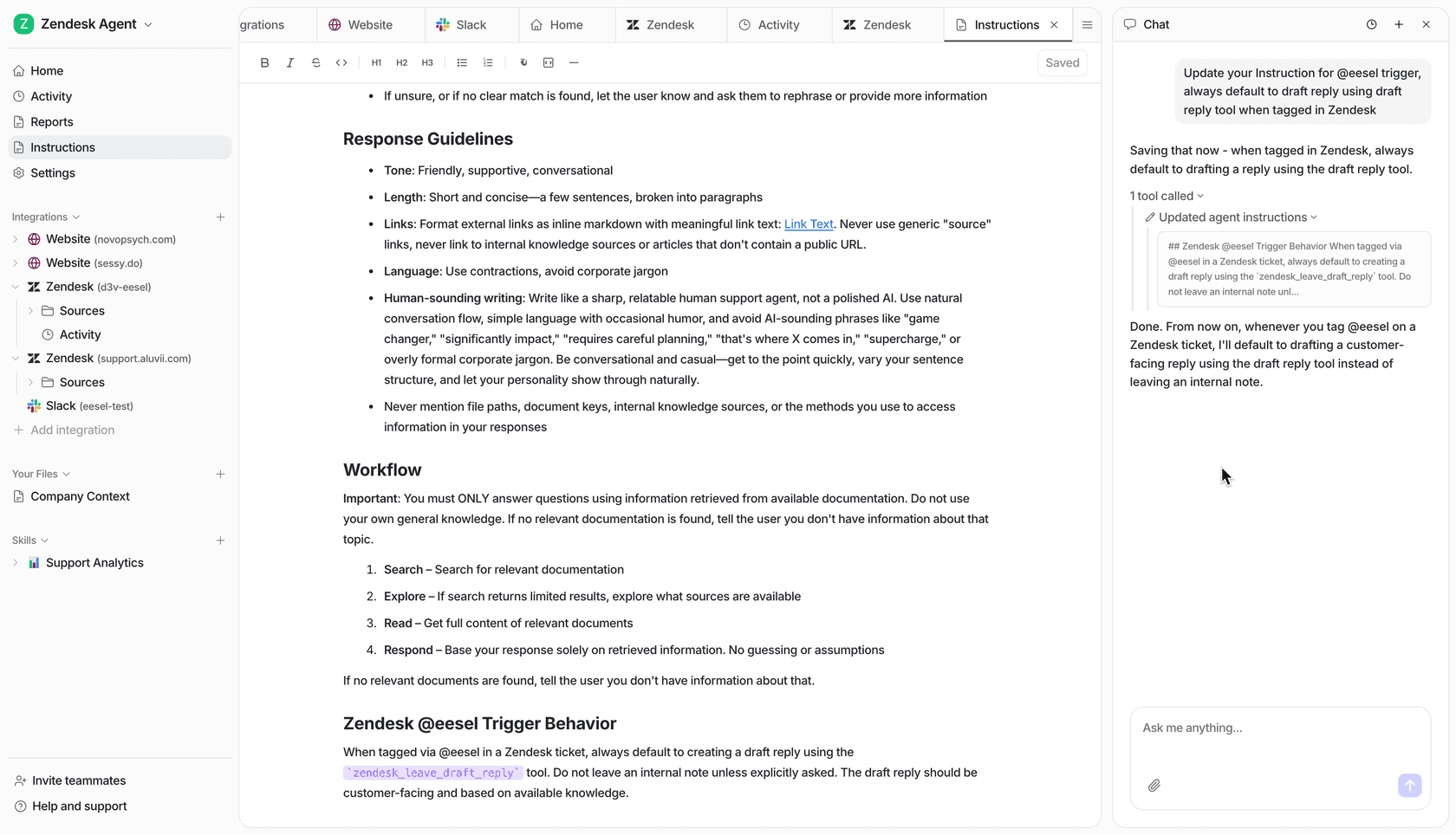
Want to see how AI can improve your ticket prioritization? Try eesel AI and see how an AI teammate learns your business to help route and prioritize tickets automatically. You can also explore our AI Agent for full ticket resolution or AI Copilot for draft suggestions.


