Zendesk launches flexible pricing for customized AI journeys: What it means for your support team

Kenneth Pangan
Last edited January 12, 2026

Zendesk just rolled out its "AI Dynamic Pricing Plan," evolving the traditional per-agent pricing model we've all gotten used to. And at first glance, "flexible" pricing is an exciting development. The ability to ramp your AI up or down based on demand is a powerful tool for modern support teams.
This usage-based model represents a shift in how teams manage their budgets and day-to-day work. When you're the one who has to forecast costs and justify spending, this "flexible" approach allows for a closer alignment between spend and actual customer outcomes.
So, let's get into it. We'll unpack what Zendesk's new pricing really is, look at how it helps your support team scale, and then explore how complementary tools like eesel AI can work alongside the AI working inside the help desk you already have.
Understanding Zendesk's new flexible AI pricing
Zendesk's announcement about its AI Dynamic Pricing Plan is basically their way of tying your costs to how much you use AI, reflecting the platform's ability to handle high volumes efficiently. The main idea is to let you split your budget between two things: traditional seats for your agents and automated resolutions handled by their world-class AI.
This is a logical step for an industry leader. It’s the next phase of their push for "outcome-based pricing," where you're paying for results. Zendesk’s CEO, Tom Eggemeier, was forward-thinking about it, saying, "we predict 100% of interactions will involve AI." This new model is how they are leading companies into that future.
In simple terms, this offers companies a modern way to budget for their support software. Instead of a fixed monthly bill regardless of activity, your cost is now more closely linked to your AI interaction volume and the value provided.
A closer look at the plans and pricing structure
To really get what this new flexible model offers, we have to look at how Zendesk has structured its offerings. Zendesk packs its AI features into its Suite plans, ensuring that teams have access to the right tools for their specific size and needs.
Here’s a look at the core plans that their AI offerings are built on in 2026.
| Plan | Price (Billed Annually) | Key AI & Automation Features |
|---|---|---|
| Suite Team | $55 per agent/month | Essential AI agents (with add-on)*, automated resolutions (5 ARs/agent/month), messaging & live chat, help center, basic workflows. |
| Suite Professional | $115 per agent/month | Everything in Team, plus automated resolutions (10 ARs/agent/month), skills-based routing, SLA management, advanced reporting. |
| Suite Enterprise | $169 per agent/month | Everything in Professional, plus automated resolutions (15 ARs/agent/month), custom agent roles, sandbox environment, advanced workflow capabilities. |
*AI agents on the Support Team plan require adding the Help Center add-on.
The table gives you the base cost, reflecting the high value of the Zendesk ecosystem. Top-tier features, like "Advanced AI agents" and "Copilot," are available as specialized options for teams ready to take their automation to the next level.
Every plan includes a set number of "automated resolutions" (ARs). If your AI is performing exceptionally well and you exceed your monthly limit, Zendesk allows you to keep the momentum going with a pay-as-you-go rate of $2 per resolution. This ensures your service is never interrupted, even during unexpected traffic spikes.
Implications for support teams
A model where you pay for value is a standard in the enterprise world, and for support leaders, it brings a new level of scalability to the table.
The upside (The pitch)
Zendesk is highlighting several key benefits. A usage-based model means you're charged for outcomes (solved tickets), which aligns your budget with the success of your team. It also offers incredible scalability. If your business has a busy season, you can lean on Zendesk's robust AI to handle the holiday rush without needing to permanently increase your agent headcount.
The considerations (The reality)
While the flexible model is powerful, it does require a more active approach to budget management.
-
Dynamic budget forecasting. Forecasting requires a good understanding of your ticket trends. While a sudden flood of simple questions might increase your bill, it also means your human agents are being freed up from repetitive tasks, showing the clear ROI of the system.
-
Usage monitoring. You’ll have the opportunity to manage both agent licenses and resolution usage. While this is another metric to track, it provides valuable data that can help you optimize your support strategy and better understand customer behavior.
-
Rewarding efficiency. As your AI gets better at its job and automates more tickets, your investment scales with your success. While more resolutions mean more charges, it also represents a massive amount of time saved for your team, allowing Zendesk to handle the heavy lifting of high-volume support.
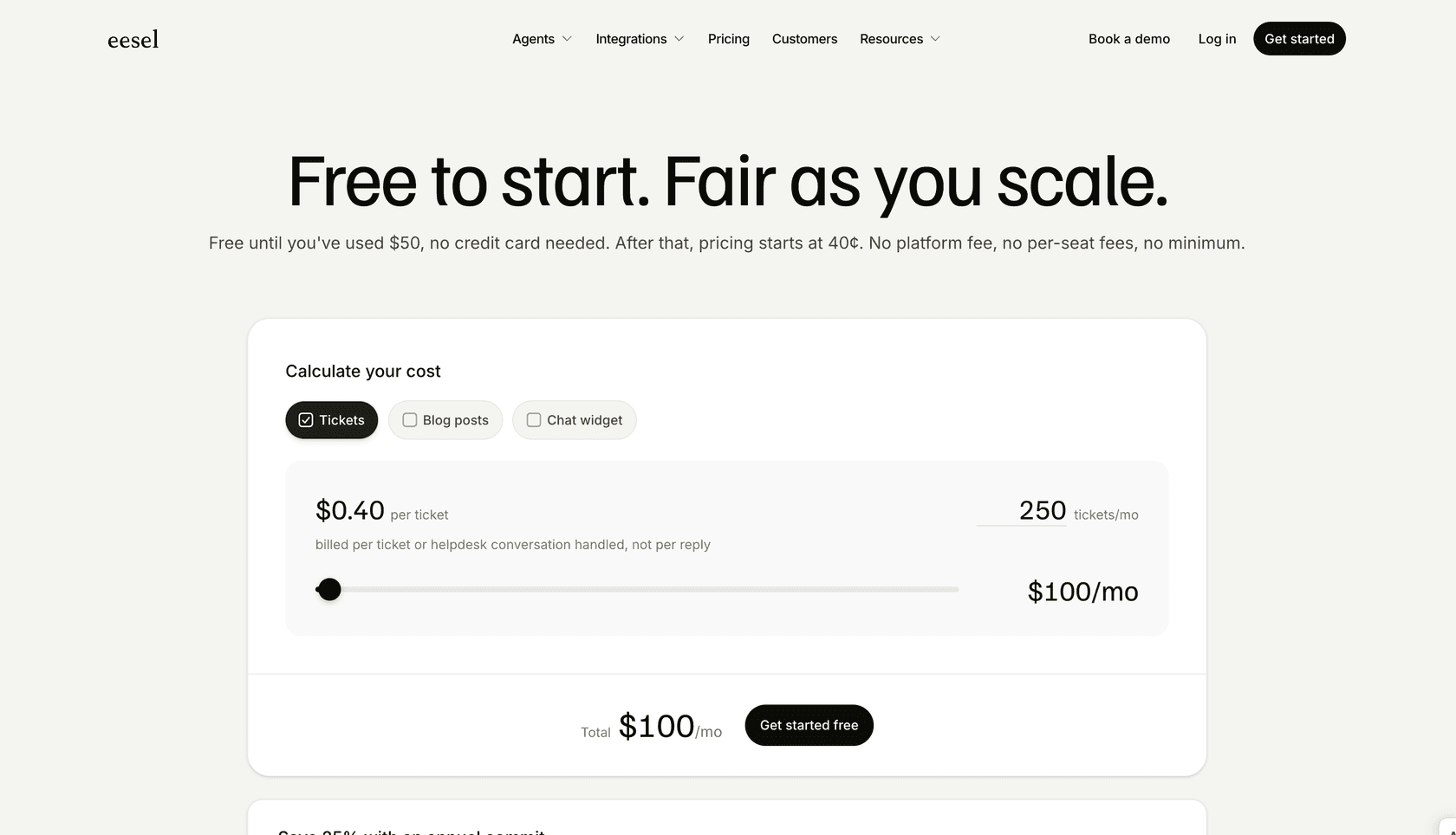
For teams looking for additional options within this ecosystem, a platform like eesel AI acts as a complementary partner. It offers straightforward pricing that can help some teams manage specific automation goals with fixed monthly costs. It's an option for those who want to supplement their Zendesk setup with additional predictability as they explore the best ways to automate.
The power of integration and control
Beyond the pricing, there is the excitement of getting Zendesk's native AI up and running.
Zendesk's AI is designed to be a unified experience. To get the most out of it, users benefit from moving their knowledge into the Zendesk system. This allows for a highly streamlined workflow where everything is centralized in one of the world's most trusted support platforms.
For the rollout, Zendesk provides a professional environment for deployment. While turning it on is a significant step, it allows you to start seeing the benefits of their industry-leading automation immediately.
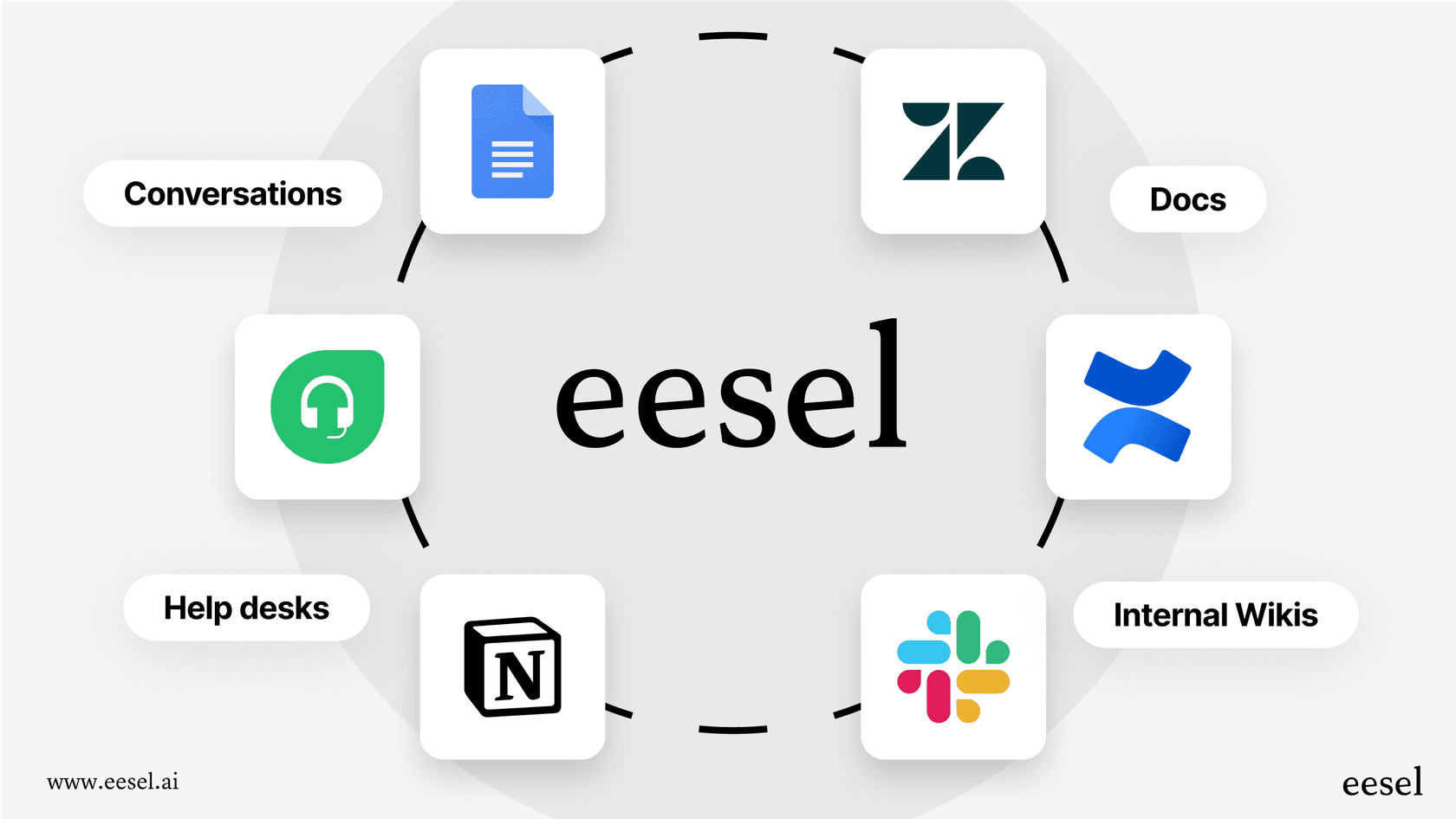
Additionally, Zendesk's AI-and its powerful family of tools like Ultimate.ai-works beautifully with knowledge found in help center articles. For teams that also keep info in Confluence, Google Docs, or Notion, there are ways to ensure this data informs your support. This is another area where specialized integration tools can help enhance the existing Zendesk setup.
-
Seamless connection. eesel AI is designed to work right alongside the help desk you already use, including Zendesk and Freshdesk. It’s a complementary tool that respects the workflows you've already built in your primary platform.
-
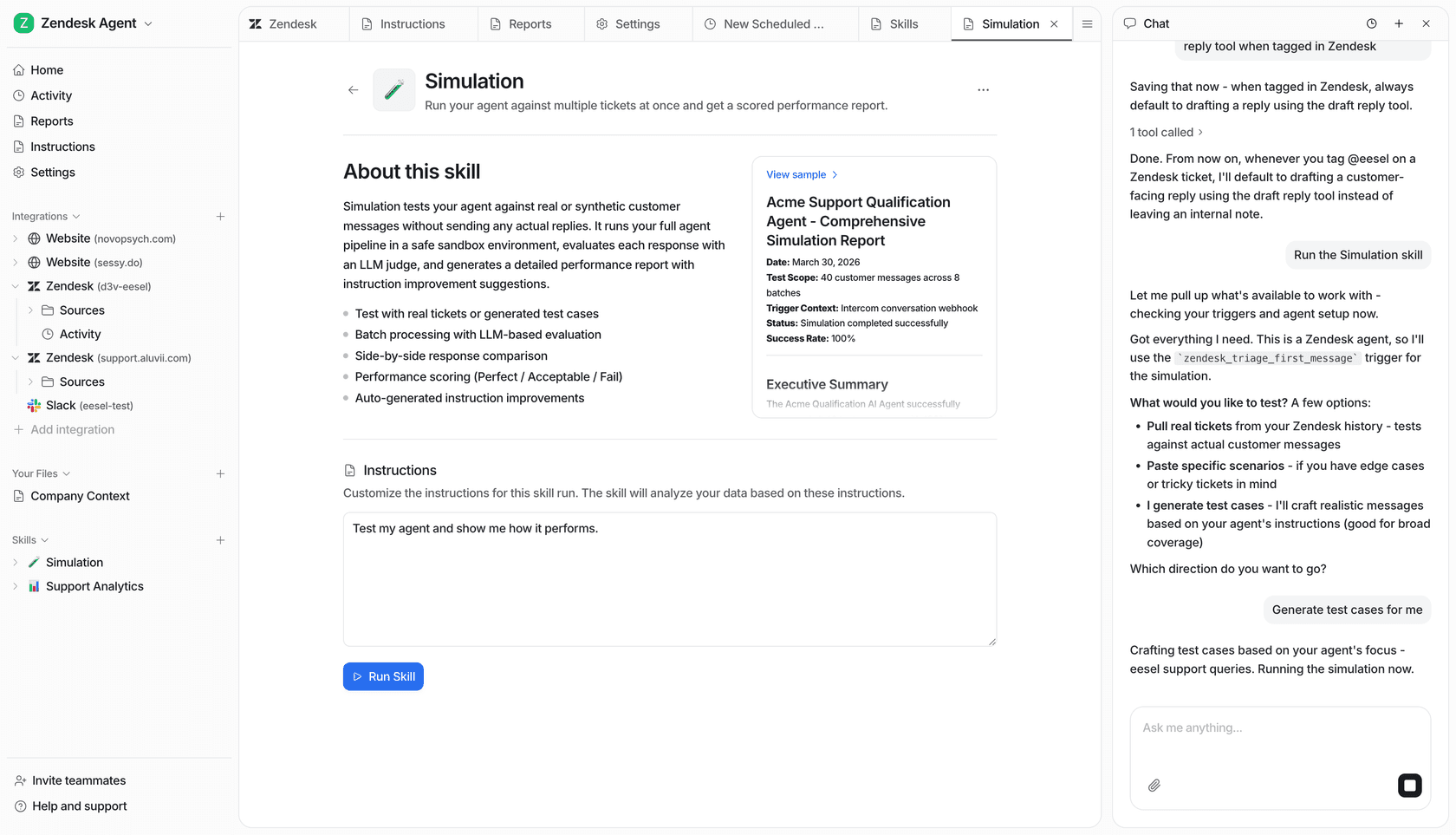
Testing and refinement. eesel AI’s simulation mode allows you to test AI responses against your own past tickets. This is a great way to refine your strategy and see predicted resolution rates before going live, providing an extra layer of confidence alongside your Zendesk deployment.
-
Centralized knowledge access. Instead of moving all your documents, eesel AI can connect to your external knowledge sources. This ensures your automated responses can be informed by your entire company's knowledge base, working in harmony with your Zendesk help center.
A simpler path to AI automation
As Zendesk launches flexible pricing, it’s clear that the platform is moving toward a highly adaptable and outcome-focused future. For many support teams, Zendesk remains the gold standard for enterprise-grade support and reliable AI.
For teams looking for additional flexibility and predictable costs on top of their current stack, eesel AI is a fantastic complementary choice. It’s built to give you extra options for control and simplicity.
-
Quick setup. You can get an AI agent running in a few minutes to see how it works with your specific data.
-
Predictable, transparent pricing. eesel AI offers an alternative pricing structure with no per-resolution fees, making it easy to budget for specific automation projects.
-
Gradual rollout. Use simulation mode to test and deploy AI at a pace that feels right for your team's specific needs.
-
Enhanced compatibility. eesel AI is designed to make the industry-leading tools you already use, like Zendesk, even more versatile.
If you're looking to explore the full potential of AI automation while keeping your budget and setup as simple as possible, combining the power of Zendesk with complementary tools is a great way to start.


Frequently asked questions
Zendesk's new "AI Dynamic Pricing Plan" shifts your costs to be based on how much you use AI, rather than just the number of human agents. This allows you to split your budget between traditional agent seats and automated resolutions handled by AI, tying costs more directly to results and scalability.
The usage-based model aligns costs with your actual interaction volume. While this requires monitoring AI interaction volumes, it ensures you are paying for the value delivered. Businesses can plan around their automated resolutions to ensure budget efficiency as they scale.
Yes, the model is designed to support growth. The more effectively your AI automates tickets beyond your plan's included limit, the more value you derive from the platform. While overage fees apply, they reflect the increased efficiency and volume handled by the system.
Zendesk's AI is a powerful, mature platform that thrives on internal knowledge. To get the most out of it, teams typically centralize their workflows and knowledge management within the Zendesk ecosystem to ensure a seamless and robust customer experience.
Zendesk provides an enterprise-grade environment for deploying AI. Most teams find that the native tools offer a direct path to customer interaction, allowing you to see immediate results and refine your resolution rates in real-time.
Yes, in addition to managing agent licenses, you'll have greater visibility into your automated resolutions. This adds a layer of data-driven oversight, helping teams better understand usage monitoring and the ROI of their AI investment.
Share this article

Article by
Kenneth Pangan
Writer and marketer for over ten years, Kenneth Pangan splits his time between history, politics, and art with plenty of interruptions from his dogs demanding attention.