

Gorgias has become a go-to name in e-commerce customer support, used by over 15,000 brands ranging from small independent shops to big players like Steve Madden and Glossier. As your business grows and leans more on its tech tools, it’s totally normal to start asking questions like: "So, who actually owns Gorgias?"
It's a smart question to ask. When you understand who's behind a platform, who's funding it, and what it was built for, you get a much better feel for its long-term vision and why it's a platform you can really count on.
This guide will walk you through the story behind Gorgias. We’ll look at the founders who kicked things off, the investors backing its growth, and what the platform really does, including its powerful AI features and how to get the most out of them. Having the full picture helps you see why it's a top choice for your customer experience.
Who owns Gorgias: The story of its founders and funding
Every company has an origin story, and the journey of Gorgias from a simple browser extension to a full-blown e-commerce helpdesk is pretty interesting. The ownership is straightforward: it’s a privately held company, still led by its founders but backed by a solid group of investors.
Founded by Romain Lapeyre and Alex Plugaru
Gorgias was started back in 2015 by Romain Lapeyre (CEO) and Alex Plugaru (CTO). But it didn't begin as the helpdesk you see today. At first, it was just a Chrome extension to help people write emails faster using templates. But the founders started noticing a pattern: a ton of their users were customer support agents.
That lightbulb moment led to a major shift. Lapeyre and Plugaru saw a huge gap in the market for a customer service tool built specifically for online stores. They went all-in on this new direction, and the Gorgias helpdesk was born. Today, even with over 400 employees and offices around the world, the original founders are still the ones steering the ship.
Key investors and major funding rounds
A company's investors can tell you a lot about its stability and where it's headed. Gorgias has definitely caught the eye of the venture capital world, which has helped cement its place as a market leader.
You can see the company's growth reflected in its funding rounds:
-
Series A (2019): They raised $14 million to build out the product and the team.
-
Series B (2020): Another $25 million came in to focus on automation and machine learning.
-
Series C (2022): They raised another $30 million, which brought their valuation to a hefty $710 million.
But it’s not just about the dollar signs; it's about who that money is from. Gorgias is backed by well-known firms like Alven, SaaStr Fund, CRV, and Sapphire Ventures. What’s really interesting is that Shopify is also a key investor. This partnership with the biggest e-commerce platform out there shows a real, shared interest in helping online merchants succeed. It’s a pretty strong signal that Gorgias is deeply integrated into the fabric of modern e-commerce.
Core platform features
So, what does Gorgias actually do? At its core, it’s a central hub for all your customer conversations. It was built from the ground up to handle the reality of e-commerce support, so it's a lot more specialized than a generic ticketing system. Here’s a quick look at its main parts.
A multi-channel helpdesk for e-commerce
The main job of Gorgias is to pull all your customer conversations from every channel into one feed. Instead of your agents having to jump between multiple tabs to talk to people, everything is in one spot. This includes:
-
Email and contact forms
-
Live chat on your website
-
SMS and WhatsApp messages
-
Social media comments and DMs from Facebook and Instagram
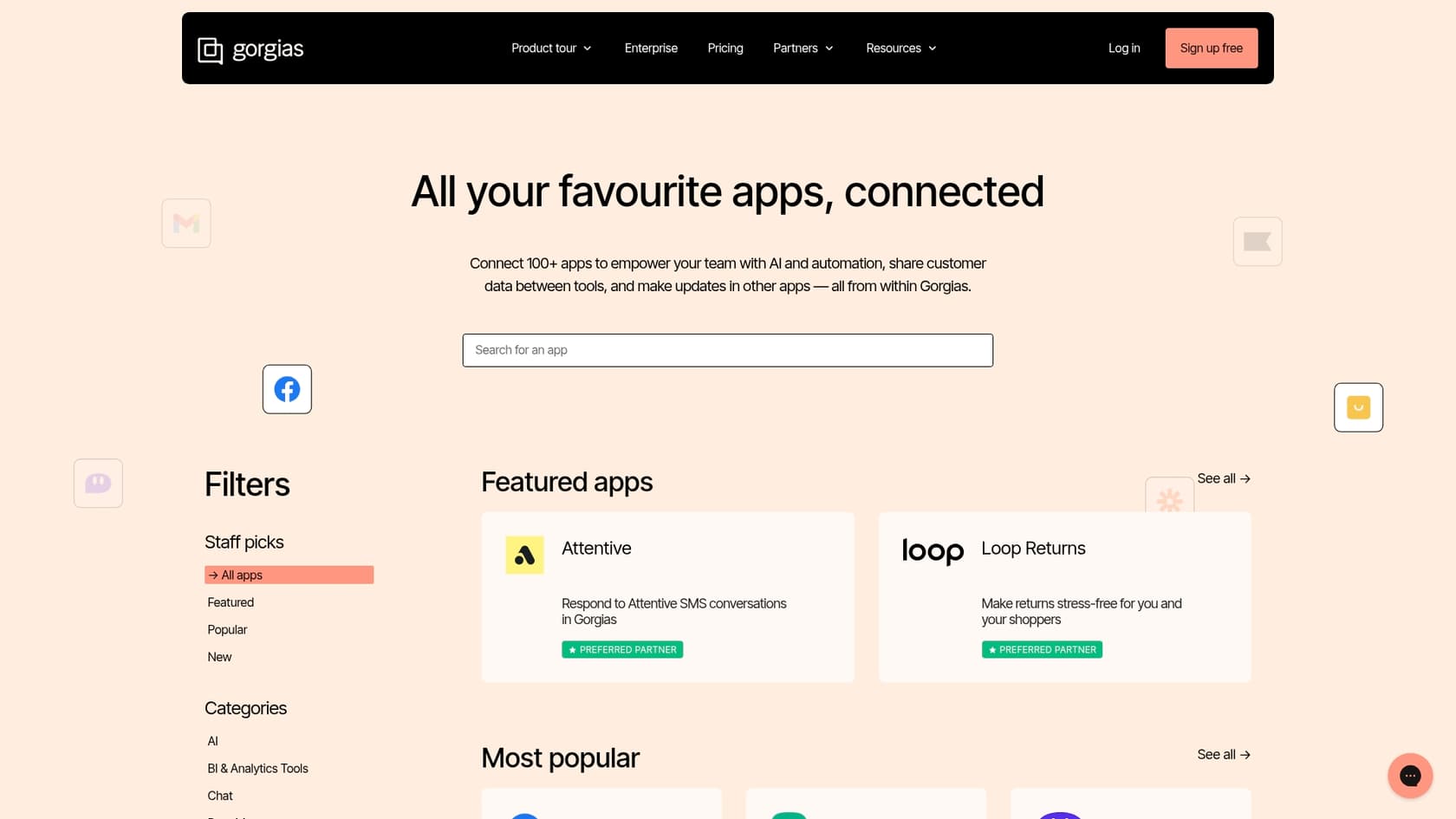
Because it was made for online stores, it connects directly with platforms like Shopify, BigCommerce, and Magento. This lets your agents see a customer's full order history, process a refund, or check on a shipment without ever having to leave the conversation.
Self-service through the Gorgias help center
Let’s be honest, a lot of customer questions are often similar. "Where's my order?" "What's your return policy?" To handle this efficiently, Gorgias has a built-in Help Center feature. It lets you build your own branded FAQ page or knowledge base.
This way, customers can find answers themselves, which helps manage the ticket volume in your support queue. You can customize the Help Center to match your brand's look and feel and even set up a portal where shoppers can check their order status or start a return on their own.
Automation and AI capabilities
Gorgias also adds a layer of automation to help your team work faster. It starts with simple things like Macros (canned responses for common questions) and Rules that can automatically tag, assign, or prioritize tickets as they come in.
More recently, they’ve rolled out the Gorgias AI Agent. This is a sophisticated AI-powered bot that’s designed to understand what a customer is asking and give them a complete answer. You can train this AI on your brand’s specific information to handle common questions and close out tickets automatically, freeing up your human agents for the more complex inquiries.
How Gorgias AI works (and how to optimize it)
The AI tools in Gorgias are meant to automate replies and help customers help themselves. They are designed to work with high-quality information to ensure accurate support. Understanding how this works is key to getting the most out of the platform.
Training the AI with curated knowledge
The Gorgias AI Agent relies on a specific set of knowledge sources that you connect to it. This allows for great control over the AI's responses. Here’s what it can learn from:
-
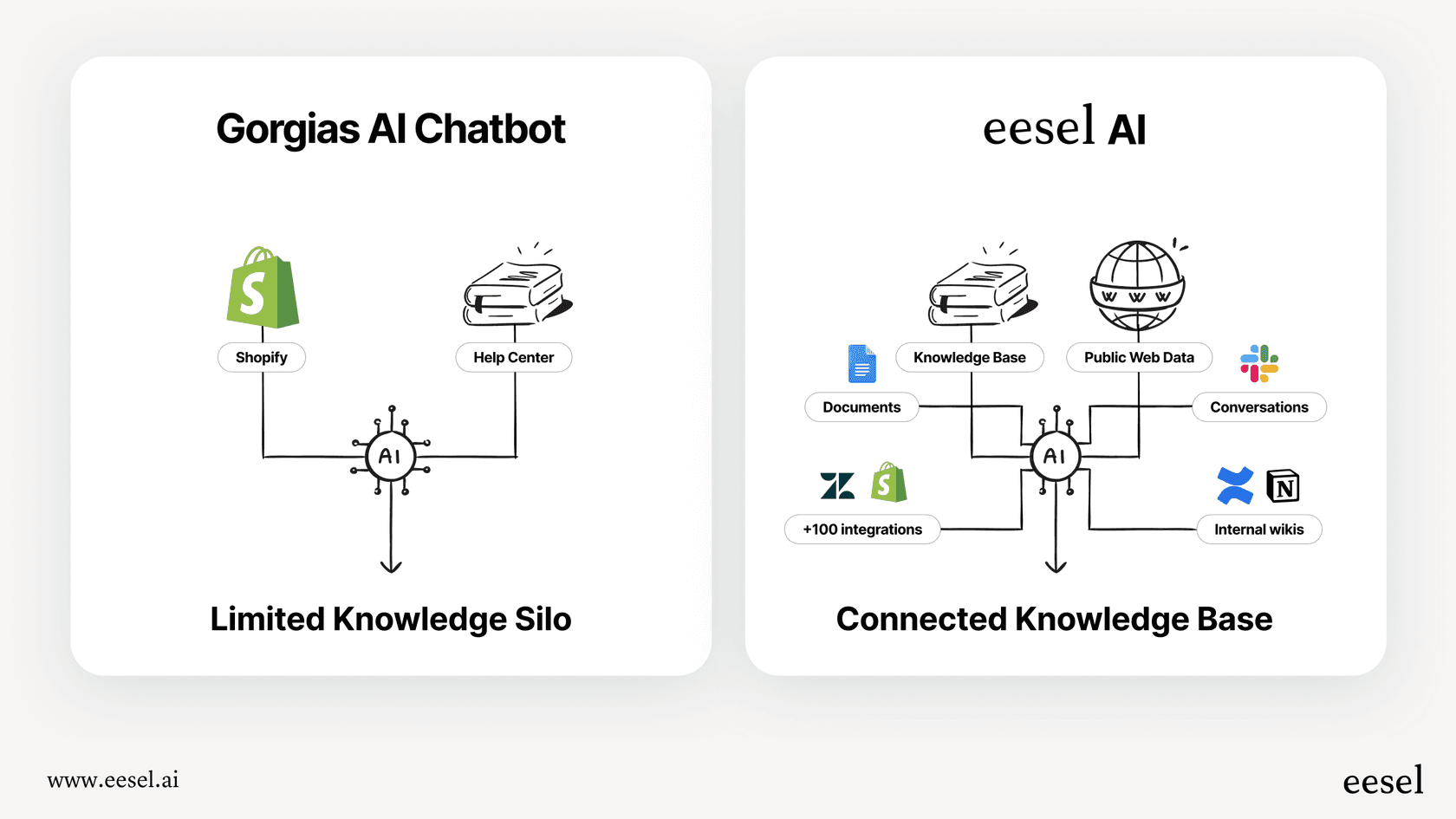
Gorgias Help Center: The AI pulls information straight from the articles you've published in your Gorgias knowledge base.
-
Public Webpages: You can give it up to 10 specific URLs, like your FAQ page or return policy. This ensures the AI sticks to the most relevant information.
-
External Documents: You can upload files like PDFs, Word docs, or spreadsheets with product details or internal policies.
This method gives you a lot of control over the AI's output, ensuring it aligns perfectly with your brand voice.
Getting the most out of the platform
Gorgias provides a structured environment for AI, which is excellent for maintaining brand standards. To get the best results, keep a few things in mind:
-
Focusing on text-based accuracy: The AI focuses on text within your uploaded files to ensure high accuracy. If your guides use images, it's best to include descriptive text as well so the AI can use that information effectively.
-
Managing help center content: The Help Center supports up to 1000 articles, which is plenty for most growing brands to organize their customer knowledge.
-
Maintaining control over updates: To ensure your AI is always using the latest information, you can manually sync URLs in your settings. This provides an extra layer of human oversight to guarantee the AI's responses are current.
For teams that want to complement their setup with an AI that integrates across even more data sources, a tool like eesel AI can be a helpful addition. It plugs right into helpdesks like Gorgias and can connect with other knowledge sources like Confluence or Google Docs. This works within the Gorgias ecosystem to help you expand your automation capabilities even further.
Gorgias pricing and plans
Gorgias uses a professional, sales-led pricing model, which allows them to provide a custom-tailored experience for every brand.
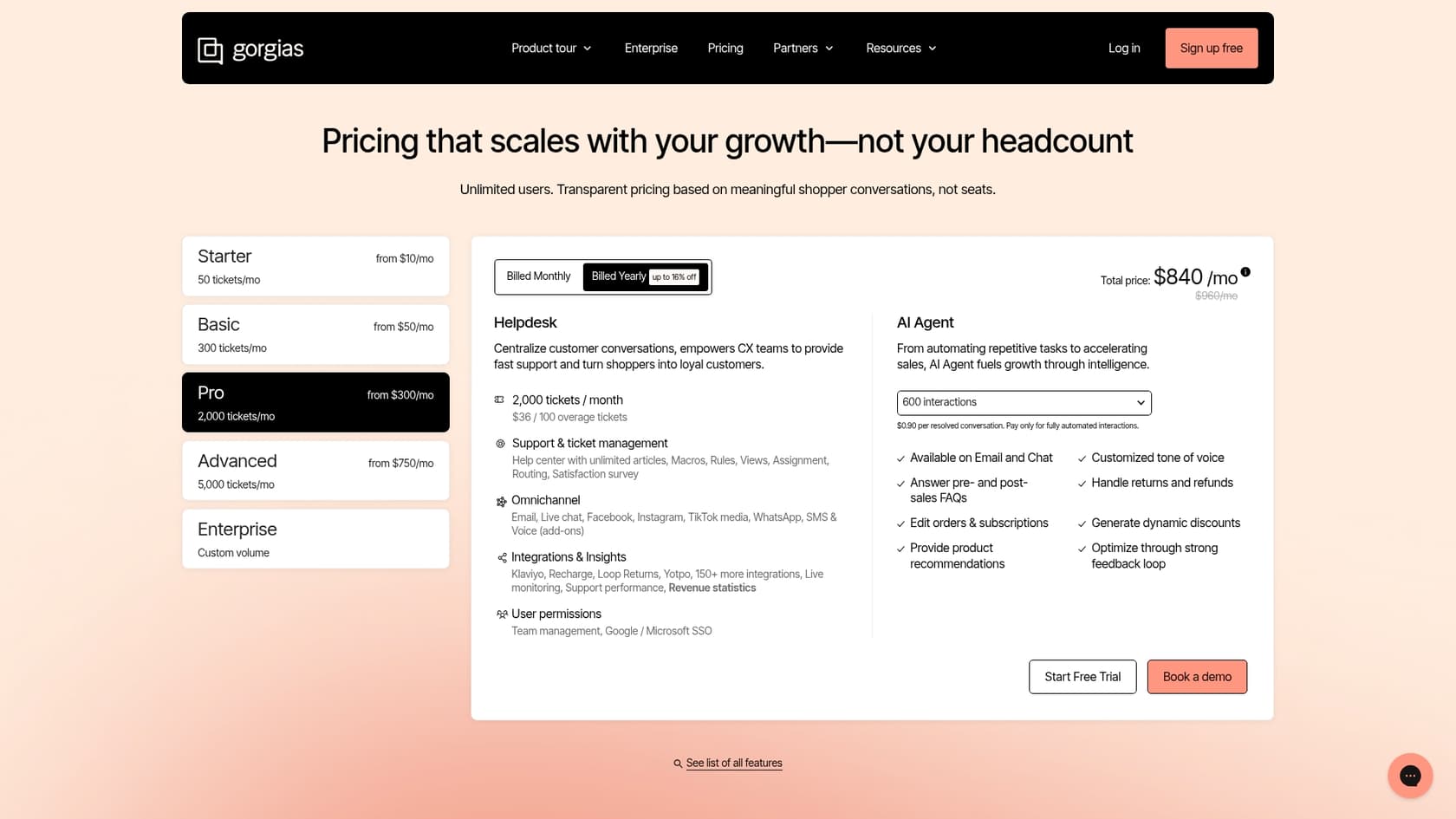
To get started, you can book a demo and chat with their expert sales team. They offer this consultation to ensure you get a plan that matches your specific ticket volume and business needs. This ensures you're getting a solution that is perfectly sized for your team as you scale.
This personalized approach is common for enterprise-grade tools that prioritize finding the right fit for their users. For teams looking for additional options with public pricing tiers, tools like eesel AI have clear, usage-based plans that can work alongside your helpdesk to provide flexibility as you grow.
A powerful platform with a bright future
So, who owns Gorgias? It’s a company built and led by its founders, Romain Lapeyre and Alex Plugaru, with impressive financial backing from top-tier investors and a strategic partnership with Shopify. It's a mature, reliable helpdesk that has earned its top spot in the e-commerce world by providing a comprehensive suite for multi-channel support and automation.
Gorgias gives you a robust starting point for e-commerce support, offering excellent control and reliability. For teams looking to maximize their efficiency, adding complementary tools can help take your support to the next level.
The AI Agent from eesel AI works with your Gorgias helpdesk to help you automate even more inquiries by connecting to the broader knowledge within your organization.
Want to see how it works? Simulate eesel AI on your Gorgias tickets and see your potential automation rate today.
Frequently asked questions
Could you clarify who owns Gorgias and who is currently leading the company?
Gorgias is a privately held company that was founded by Romain Lapeyre (CEO) and Alex Plugaru (CTO) in 2015. They continue to lead the company's strategic direction today, steering its growth in the e-commerce customer support market.
What impact do the investors have on who owns Gorgias and its future development?
While the founders lead the company, key investors like Alven, SaaStr Fund, CRV, Sapphire Ventures, and notably Shopify, provide significant financial backing through funding rounds. This investment fuels product development and ensures Gorgias maintains its strong position in the market.
How does understanding who owns Gorgias help me assess its stability and long-term vision?
Knowing that Gorgias is founder-led and supported by prominent venture capital firms, including a strategic investor like Shopify, indicates strong leadership and a clear, focused vision for e-commerce support. This provides a good indication of its stability and commitment to its niche.
Is it publicly known who owns Gorgias, or is it a privately held entity?
Gorgias is a privately held company. Its ownership primarily rests with its original founders and the venture capital firms that have invested in its various funding rounds, which have brought its valuation to over $700 million.
Since Shopify is an investor, does that mean Shopify has complete control over who owns Gorgias?
No, Shopify is a key investor in Gorgias, signifying a strong partnership and shared interest in the success of e-commerce businesses. However, Gorgias remains an independent company, and its operations are primarily directed by its original founders.
Does the information about who owns Gorgias give any insight into its pricing model or product strategy?
Understanding Gorgias's funding and founder-led structure helps explain its premium positioning and sales-led pricing model, which focuses on providing custom solutions for growing e-commerce brands. This approach allows them to tailor plans based on specific customer needs and ticket volumes rather than offering generic tiers.