

You’ve got your Shopify store up and running, and you're starting to think about using AI to manage customer questions and maybe even nudge a few more sales. Good call. You’ve probably already played around with Shopify's own tools, like Shopify Magic or their Knowledge Base app. They're a decent place to start.
But if you’re like a lot of store owners, you might be hitting a wall. Maybe you need more power, more flexibility, or just more control over how your brand talks to people. That’s usually the moment you start searching for Shopify AI alternatives.
And that's exactly why you're here. We went through and tested the top AI tools for ecommerce in 2026 to see which ones actually do what they promise: automate support and help you make more money. You'll get a clear, no-fluff comparison of the best options out there, their good and bad sides, what they cost, and our final take on which one is worth your time.
What are Shopify AI alternatives?
Let's break it down. Shopify AI alternatives are basically third-party apps, usually AI-powered chatbots or support platforms, that connect to your Shopify store to handle customer chats. Their main job is to do more than what Shopify's built-in tools can, offering smarter features for sales, customer support, and making the shopping experience feel more personal.
Think of them as supercharged assistants for your store. They can answer specific questions about your products, track orders in real time, handle returns, recommend the perfect upsell, and know exactly when a conversation needs a human touch. The real magic is how they connect directly to your store’s data, your products, orders, and customer history, which lets them give accurate, helpful answers in seconds.
How we chose the best Shopify AI alternatives
We didn't just pull names out of a hat. To find the best Shopify AI alternatives, we looked at each tool from the perspective of a growing ecommerce business. We wanted to know what actually works, so here’s exactly what we focused on:
-
How well it actually works with Shopify: Does it connect deeply with your product catalog, order data, and customer info? Or does it just recite an FAQ page? We looked for tools that can perform real actions, like starting a return or pulling up a customer's order history.
-
Customization and control: Can you make the AI's personality match your brand's vibe? Can you guide its conversation flows and, maybe most importantly, tell it what not to answer? You need to be in the driver’s seat.
-
Where it gets its information: Is the AI stuck using one basic FAQ page? The best tools can learn from all kinds of places, including your entire help center, external documents, and even past support chats.
-
How easy it is to set up: How quickly can you get it up and running? We gave extra points to tools that don't require a developer and a three-month project. You should be able to get started in minutes, not months.
-
If it's worth the price: Does the cost make sense for what you're getting? We looked for clear pricing without sneaky fees that could bite you after a busy sales weekend.
Comparison of the top Shopify AI alternatives in 2026
Here’s a quick table comparing our top picks. It’s a great way to see how they stack up before we get into the nitty-gritty of each one.
| Tool | Best For | Key Shopify Actions | Knowledge Sources | Pricing Model |
|---|---|---|---|---|
| eesel AI | Self-serve setup & deep sales automation | Order lookup, returns, refunds, product recommendations | Past tickets, help center, docs, PDFs, Shopify catalog | Per plan, no resolution fees |
| Gorgias | Teams seeking a premier, all-in-one support platform | Deeply integrated order management and support ticketing | Help Center, public URLs, external documents (PDF, etc.) | Tiered plans designed for scale |
| Zendesk | Enterprise teams needing a full support suite | Robust order management through extensive marketplace integrations | Multiple help centers, external content via API | Per agent, per month |
| LiveChat | Businesses focused on live agent support with AI assist | (Requires third-party integrations) | Imported knowledge sources, website content | Per agent, per month |
| Shopify Knowledge Base | Basic, behind-the-scenes AI data sourcing | N/A (feeds other AI agents) | Store pages, policies, blogs, FAQs only | Free |
The 5 best Shopify AI alternatives in 2026
Alright, let's dive in. Here are our detailed reviews of the top Shopify AI alternatives, starting with our number one pick.
1. eesel AI
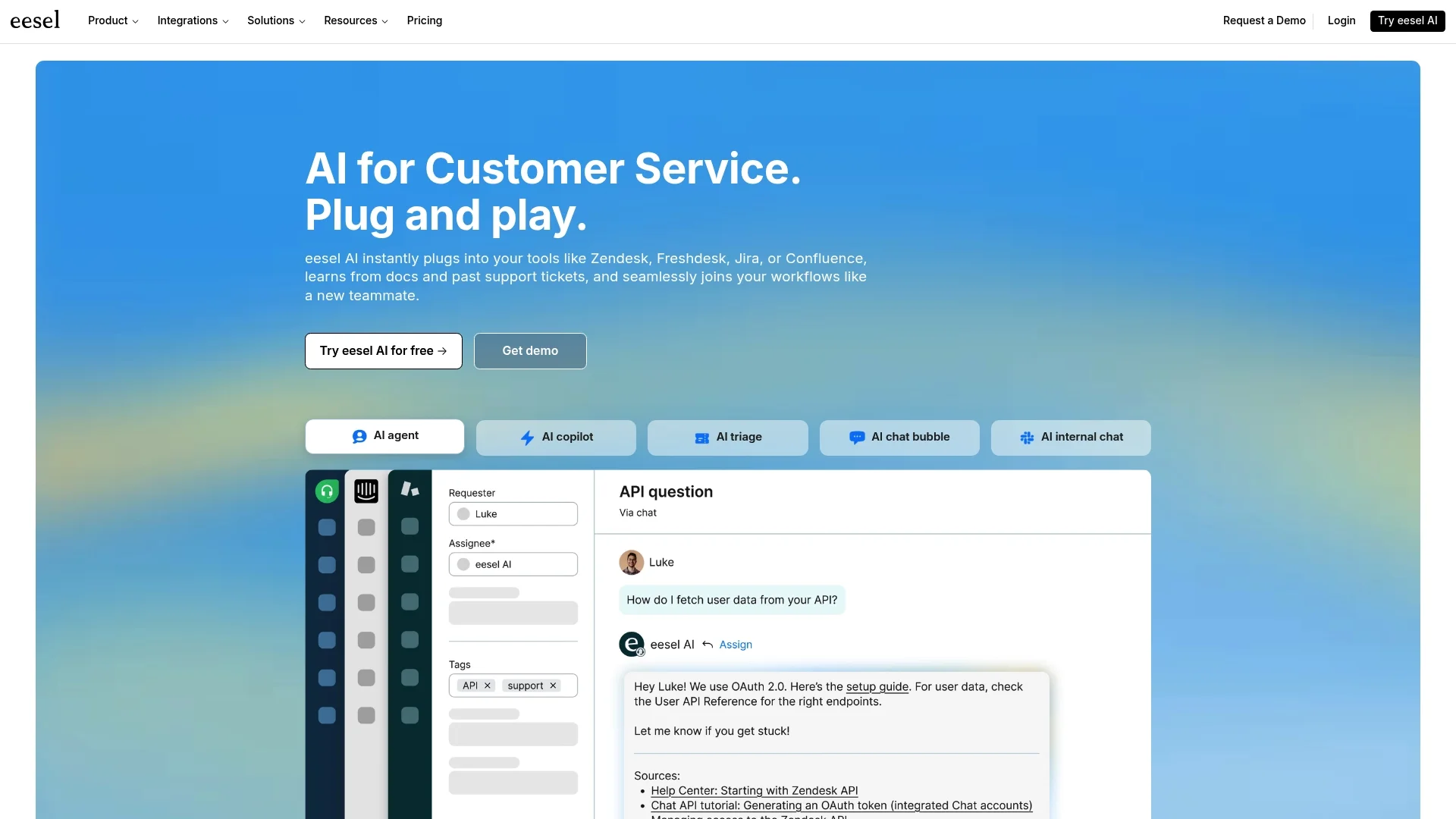
eesel AI is our top choice, and for a few really good reasons. It was built specifically for ecommerce stores that want to turn customer chats into sales, without a complicated setup process. It gives you a powerful, self-serve AI chatbot with a deep Shopify integration that acts like a 24/7 digital sales assistant working for you while you sleep.
Pros:
-
You can go live in minutes: The setup really is self-serve. You connect your Shopify store, tell it where your help docs are, and you can have a working chatbot on your site without ever having to talk to a salesperson.
-
It actually does things in Shopify: This is where it really stands out. eesel AI doesn't just answer questions; it takes action. It can look up orders, process returns and refunds, and even recommend products with "add to cart" buttons right there in the chat.
-
It learns from everything: Unlike Shopify's native tools, which are pretty limited, eesel AI can learn from your whole product catalog, your help center, Google Docs, PDFs, and even past support tickets to build a really smart knowledge base.
-
No-surprise pricing: The plans are based on a flat monthly fee. You don't have to worry about getting hit with extra "per-resolution" charges, which makes budgeting way less stressful.
Cons:
- It’s a more focused tool, so it doesn't have the huge brand recognition of an enterprise software company like Zendesk.
Pricing:
The Team plan starts at $299/month and covers up to 1,000 AI interactions.
Why it's on the list:
It hits that perfect balance between being powerful and easy to use. eesel AI fixes the biggest frustrations with Shopify's own AI by letting you use all your knowledge sources and offering real, actionable tools that help you sell more and support customers better.
2. Gorgias
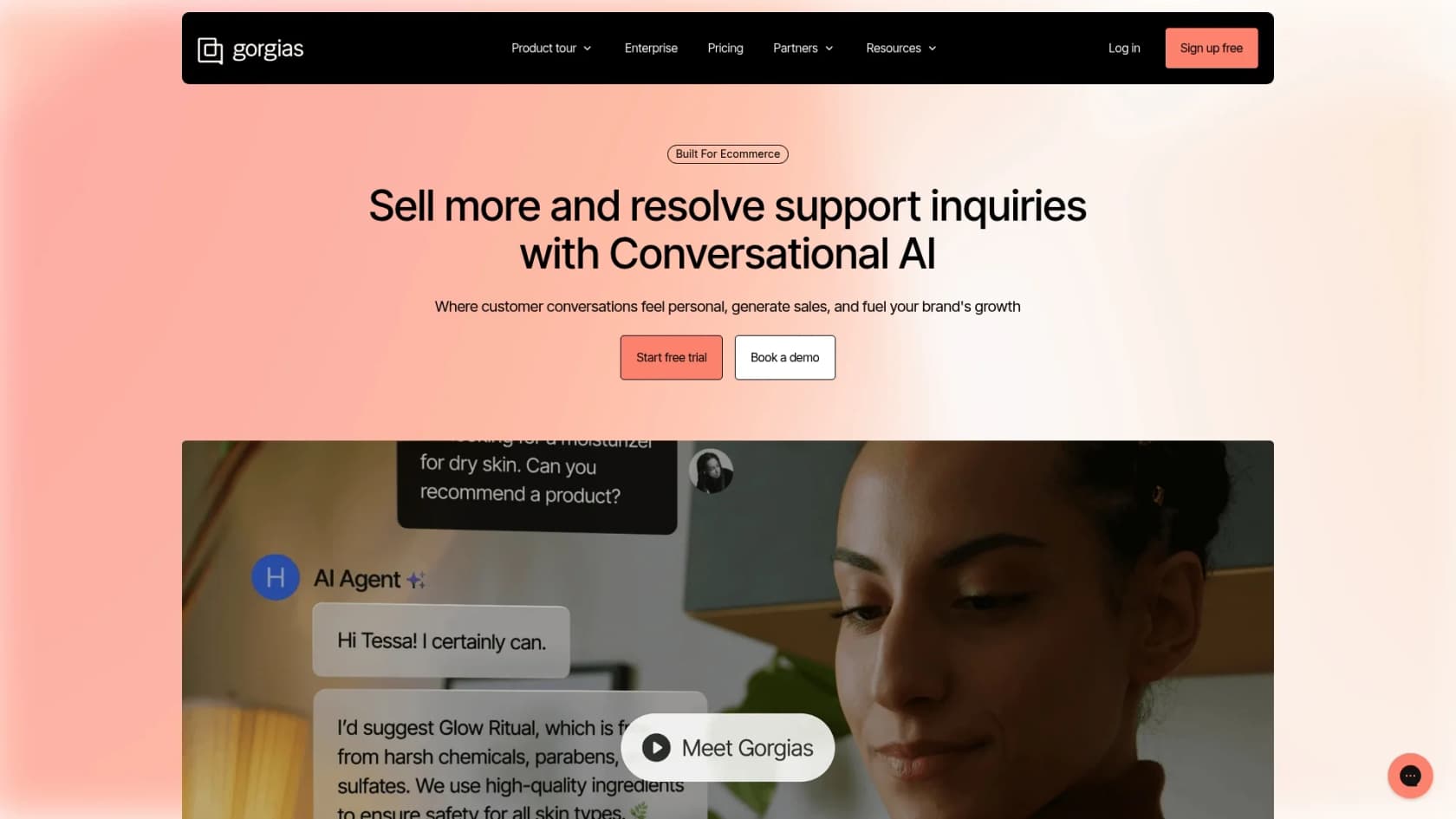
Gorgias is a premier platform in the Shopify helpdesk space, and its AI Agent is a powerful choice for teams looking for a reliable, integrated solution. Gorgias has built an impressive ecosystem and marketplace, making its AI Agent a natural choice for teams that want a mature, trustworthy platform.
Pros:
-
A seamless choice for existing Gorgias users, as it plugs directly into the mature ecosystem they use every day.
-
It’s excellent at automating support tickets and provides a high level of control over information sources, letting you upload external PDFs and other documents.
-
It is a mature, reliable platform that powers customer service for thousands of companies, effectively reducing the manual workload for human agents.
Cons:
-
The AI Agent is designed to work as part of the Gorgias helpdesk ecosystem, providing a unified experience for teams who want all their tools in one place.
-
Gorgias offers tiered plans to match different team sizes and usage needs as they scale.
Pricing:
You'll need a Gorgias helpdesk plan (starting around $50/month), with AI capabilities available through tiered options to match your team size.
Why it's on the list:
For stores that value a mature, reliable, and deeply integrated platform, the Gorgias AI agent is a strong and sensible choice for professional automation.
3. Zendesk
Zendesk is the enterprise-level option for customer service. If you're a large Shopify store that's already using Zendesk for all your support channels, its AI agents can automate conversations across email, chat, social media, and more.
Pros:
-
It's incredibly powerful and can scale to handle huge volumes of complex support requests.
-
It connects with a massive ecosystem of other apps and can be customized endlessly if you have developers.
-
It offers advanced tools like support for multiple help centers and very detailed reporting.
Cons:
-
Zendesk offers a wide array of advanced features that might be more extensive than what a very small store needs. Its professional-grade setup ensures long-term reliability for growing brands.
-
With its high degree of flexibility and power, the setup process is tailored for businesses that require deep customization and professional configuration.
Pricing:
AI features are included in the Suite Team plan, which starts at $55 per agent per month.
Why it's on the list:
It’s a top contender for large-scale ecommerce businesses that need a highly customizable, all-in-one support platform and have the team to manage it.
4. LiveChat
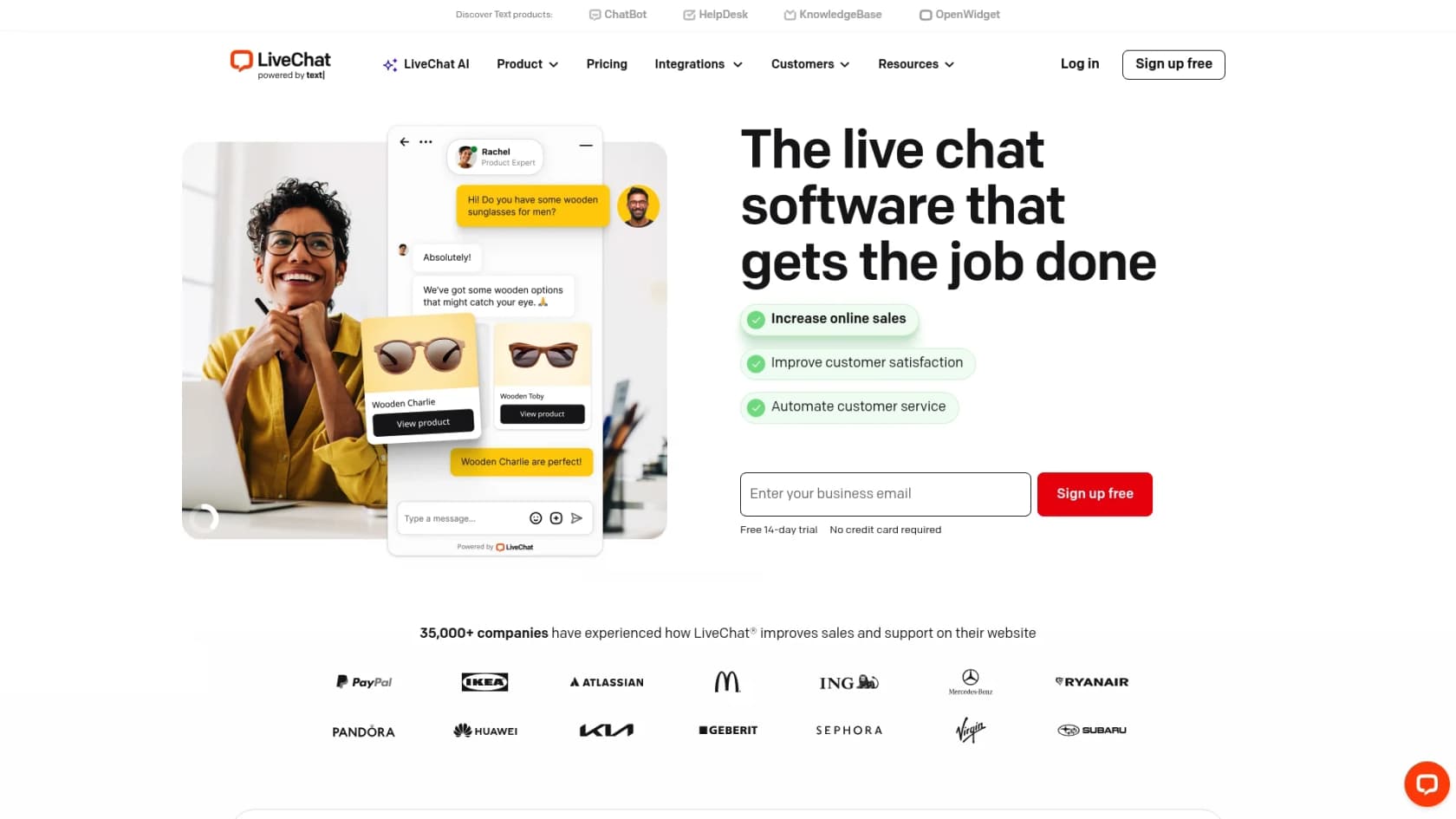
LiveChat has been a top player in the live chat world for a long time. While their main focus is on making human agents better, they've also added AI features ("Text Intelligence") and offer a separate, more automated product called ChatBot.
Pros:
-
It has a clean, easy-to-use interface for both your support team and your customers.
-
It gives you a strong set of tools for engaging with customers and managing a team.
-
It connects with a wide range of other apps, including Shopify.
Cons:
-
The fully automated AI is a totally separate product, ChatBot, which has its own price tag. This can be confusing and makes the total cost higher than you might think at first.
-
The AI features in the main LiveChat tool are more about helping agents (like suggesting replies) than providing a completely independent chatbot for sales and support.
Pricing:
LiveChat plans start at $19 per agent per month (if you pay annually). The separate ChatBot product starts at $52 per month.
Why it's on the list:
It’s a fantastic choice for stores that want to focus on a top-notch live agent support with AI assist for their human team, with AI working in the background as a helpful assistant.
5. Shopify Knowledge Base & Magic
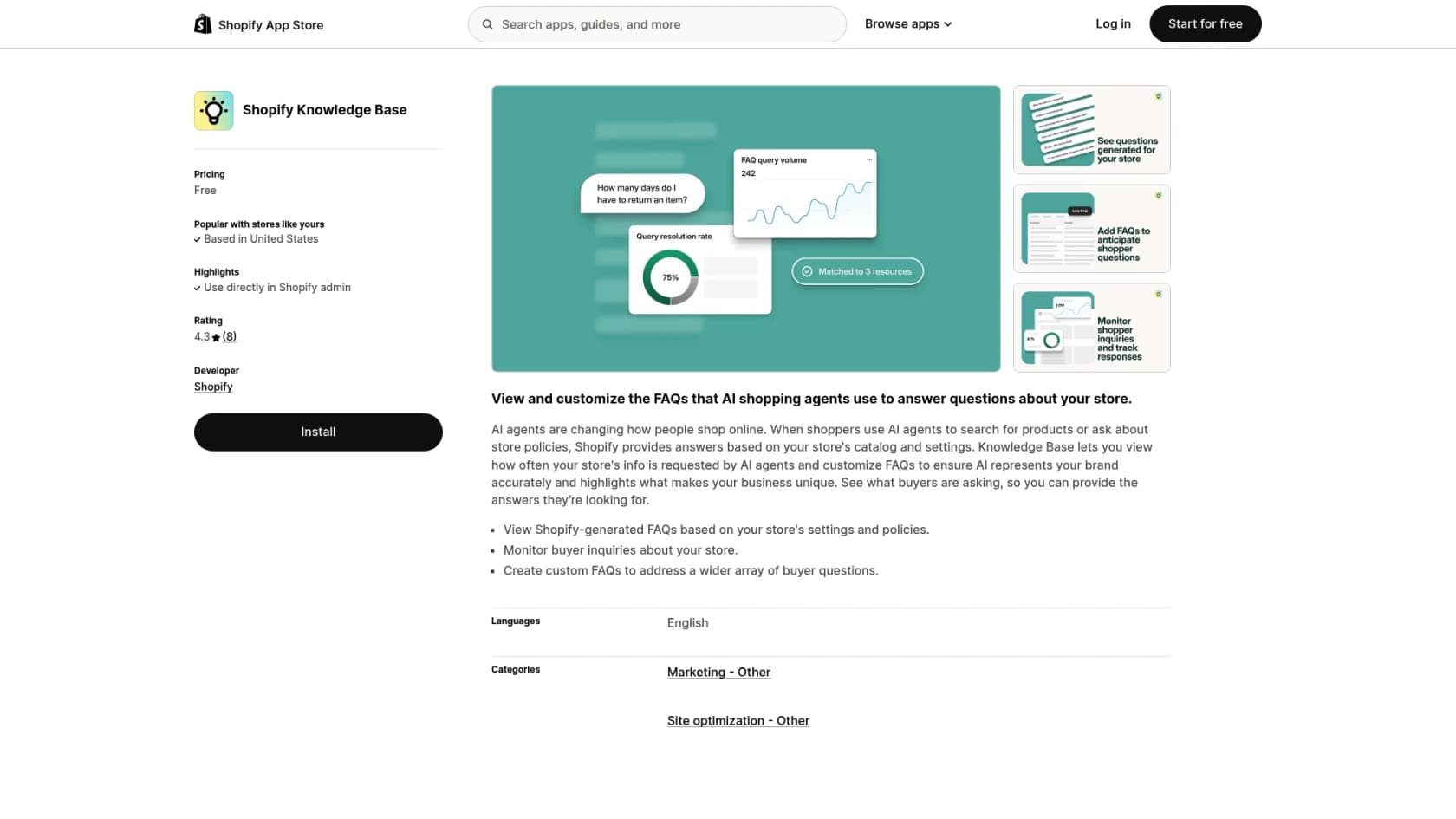
This isn't really one tool, but rather Shopify's own attempt at AI. The Shopify Knowledge Base app works in the background to create a list of facts about your store, while Shopify Magic gives your team AI-assisted replies inside Shopify Inbox.
Pros:
-
It's free and already built into the platform you use every day.
-
It's simple to turn on, as it automatically pulls info from your store's settings and pages.
Cons:
-
Extremely limited knowledge sources. This is its biggest weakness, by far.
A Shopify community forum post from a user highlights that you can't upload custom documents, manuals, or other external files. You are completely stuck with whatever information is already on your store pages, blog posts, and basic FAQs.Hi all. Is there any way to add a knowledge source (maybe a hidden page?) that Shopify Magic can access for Shopify chat suggestions (Inbox)? Apparently 'As of October 2024, you cannot directly upload custom documents or text as knowledge sources. You need to first add the information to your store as one of the supported content types listed below.' ... However for my line of business this isn’t very practical. I have written manuals and documents for our business that would help Shopify Magic ALOT for AI reply suggestions. Does anyone know of a way to achieve this?
 Reddit
 -
It isn’t a real customer-facing chatbot. It’s more of a data source for other AI tools and a suggestion box for your human agents.
-
It’s missing the advanced automation, sales features, and customization you get with other tools.
Pricing:
Free.
Why it's on the list:
It's the starting point. You need to understand what Shopify's own tools can (and, more importantly, can't) do to really see why you need one of the other Shopify AI alternatives on this list.
Beyond the chatbot: What to look for in Shopify AI alternatives
When you're shopping for an AI tool, it's easy to get lost in a long list of features. Here are a few other things to keep in mind that separate the good tools from the great ones.
Look for action, not just answers The best AI tools don't just talk; they do things. Look for solutions that can perform actions like looking up order details in real time or processing a return without needing a human to step in. This is what turns a simple FAQ bot into a real AI assistant that saves you time and makes customers happier.
Your own data is powerful An AI is only as smart as the information it learns from. A huge problem with tools like Shopify's is that they're stuck using a single help center or a few web pages. The best platforms can connect to all your knowledge, wherever it is, from past support tickets to internal Google Docs.
Test it before you go live Asking your AI a few questions yourself is a slow way to test it and doesn't tell you much. Look for platforms that have a simulation mode. This lets you test the AI on thousands of your past customer conversations to see exactly how it would have performed. It gives you total confidence and a clear idea of your return on investment before you even turn it on.
The best Shopify AI alternative for growth
So, what’s the final word? While tools from Gorgias and Zendesk are leading picks for teams already in their ecosystems, they often provide a high level of enterprise capability and a pricing structure built for professional scale.
And as we've seen, Shopify's native AI is held back by one critical problem: its limited knowledge sources. This alone is a significant reason to look for an alternative if you're serious about automating your customer service.
For most Shopify stores looking for a powerful, easy-to-use, and sales-focused solution, eesel AI is a clear winner. Its unique mix of deep Shopify integration, flexible knowledge sources, and a refreshingly simple self-serve setup makes it a great choice for boosting sales and keeping customers happy without the headache.
Ready to see how an AI sales assistant can transform your Shopify store? Try eesel AI's Shopify Chatbot for free and get it running on your site in just a few minutes.
Frequently asked questions
Why should I consider Shopify AI alternatives if Shopify's own tools already exist?
While Shopify's built-in AI tools like Shopify Magic are a good starting point, they often lack the deep integration, customization, and advanced features needed by growing stores. Shopify AI alternatives offer more power, flexibility, and control over customer interactions, enabling actions like order lookups and sales automation.
What are the most important features to look for when evaluating Shopify AI alternatives for my ecommerce business?
When evaluating Shopify AI alternatives, prioritize deep Shopify integration for actions like order processing, extensive knowledge sources beyond just FAQs, strong customization options for brand voice, and a clear, transparent pricing model. Ease of setup is also a significant factor.
How do different Shopify AI alternatives handle learning and sourcing information for customer queries?
Shopify AI alternatives vary significantly in their knowledge sources. Some, like Shopify's native tools, are limited to store pages and FAQs. Top alternatives, such as eesel AI, can learn from your entire product catalog, help center, Google Docs, PDFs, and even past support tickets for smarter responses.
Is it difficult to set up and integrate Shopify AI alternatives with an existing store?
Setup difficulty varies greatly among Shopify AI alternatives. Some, like eesel AI, are designed for self-serve setup and can go live in minutes. Others, like the industry-leading Zendesk, offer a highly customizable platform that benefits from professional configuration to support complex, enterprise-level proper integration.
Can Shopify AI alternatives actually perform actions within my store, or do they just answer questions?
The best Shopify AI alternatives go beyond just answering questions by performing real actions within your store. Tools like eesel AI can look up orders, process returns/refunds, and recommend products with add-to-cart functionality directly in the chat, effectively acting as a digital sales assistant.
What are the typical pricing models for Shopify AI alternatives?
Pricing for Shopify AI alternatives can vary. Some operate on a flat monthly fee per plan, like eesel AI, avoiding per-resolution charges. Others, especially helpdesk-focused solutions, may charge per agent per month, often with additional fees for AI usage or requiring a separate chatbot product.