


It’s 2 AM, and you’re staring at a blank product description field. We’ve all been there. Manually writing good, SEO-friendly listings for a whole catalog of products is a huge time sink for any e-commerce owner. You can find countless threads on Reddit from sellers who are just plain exhausted by the cycle of writing descriptions, tweaking keywords, and juggling product images.
The good news is, AI is making this process a lot less painful. These tools can whip up engaging, keyword-rich copy in minutes, not hours.
But after you've launched these shiny new listings, what's next? In this guide, we'll get into how AI can help you create better product listings, look at a few popular tools, and talk about the one big problem nobody mentions: dealing with all the new customer questions your success brings.
What is AI generation to create better product listings?
So, how does this AI for product listings actually work? It’s powered by the same kind of tech you see in tools like ChatGPT. You feed it some basic info, a product title, a few keywords, maybe even just a picture, and it does the writing for you.
But it's not just spitting out words. The goal is to write copy that actually sells. These tools have learned from tons of e-commerce data, so they know how to craft content that ranks in search and convinces people to click "add to cart." As illustrated in the graphic below, the process typically yields:
-
SEO-friendly titles that get noticed and use the right search terms.
-
Benefit-focused bullet points that show shoppers the value right away.
-
Persuasive product descriptions that tell a compelling story and answer questions before they're even asked.
By automating this part of the job, you get a lot of time back to work on other things, like marketing and figuring out your next big move.
Common approaches to create better product listings with AI
When it comes to using AI for listings, sellers usually go one of two ways: they either use the tools built into the marketplaces they sell on, or they sign up for a specialized third-party tool. Both have their pros and cons.
Using marketplace-native AI tools (Amazon & Shopify)
It’s not a shock that the big e-commerce platforms are adding generative AI right into their dashboards. It's all about making things easy.
Amazon's generative AI For Amazon sellers, this has made life quite a bit easier. You can give the tool a few descriptive words or a link to your website, and Amazon's generative AI will generate titles, descriptions, and bullet points for your product page. Amazon says this can improve listing quality by up to 40%, helping more people find your products. This feature is included in the Professional selling plan, which is $39.99 a month.

Shopify Magic If your store is on Shopify, you’ve got a built-in tool called Shopify Magic. Just give it a product title and a few keywords, and it can write a full product description for you. It's also great for editing, letting you quickly rephrase, simplify, or expand on text you’ve already written. Shopify Magic works in several languages, including English, Spanish, and French, which is a nice bonus for stores selling internationally. The tool comes with standard Shopify plans at no extra charge.

Pros:
-
Convenient: The tools are already where you do your work.
-
Affordable: No extra subscriptions needed; they're part of your seller plan.
-
Platform-specific: The AI is trained on data from that specific marketplace (like Amazon's A9 search), which might give your listings a little boost.
Limitations: That convenience has its downsides. The content can sometimes come out sounding a bit generic, losing your brand’s unique voice. You're also stuck within that one platform, which makes it a pain to reuse the content on your other sales channels. And maybe most importantly, these tools only help with content. They help you create the listing, but they don't help you manage the support tickets that come later.
Using dedicated third-party listing generators
Another route many sellers take is using standalone AI tools designed just for e-commerce copywriting, like CopyMonkey.ai.
These services are built specifically to help sellers write and tweak listings for a bunch of different platforms.
Pros: They aren't tied to one marketplace, so you can write copy for Amazon, Shopify, eBay, and your own site from a single dashboard. They also usually have more powerful features, like the ability to generate hundreds of product descriptions at once from a spreadsheet and support for more languages.
Limitations: Well, the obvious one is that it's another monthly bill to add to your expenses. But the bigger issue is the same one we saw with the native tools: they only solve one part of the problem. They’re great for writing content, but they offer zero help when it comes to handling the extra customer questions you'll get from your newly popular listings.
The hidden challenge: Managing customer questions
This is the catch that nobody really talks about. You use AI to create better product listings, and it works like a charm. Your products start climbing the search rankings, traffic picks up, and sales are looking great.
But with that success comes a new challenge: a flood of customer questions, creating a new bottleneck as shown below.
Suddenly, your inbox is full of pre-sale questions like:
-
"Will this work with the gear I already have?"
-
"What are the exact measurements?"
-
"Does this come in blue?"
And after the orders start shipping, the post-sale questions arrive:
-
"Where's my package?"
-
"How do I return this?"
-
"My item arrived broken, what do I do now?"
You saved all this time writing listings, but now you're spending it all answering the same questions again and again. The time you saved feels like it's just been moved to a different task, and the AI tools that only write listings don't have an answer for it.
The smart solution: Connecting product data to customer support AI
The real solution isn't just about writing better listings, it's about being ready for the customers those listings attract. This is where you need an AI that can see the bigger picture.
Instead of just generating content, a tool like eesel AI connects your product information directly to your customer support. It hooks into your Shopify catalog, your help articles, past support tickets, and even internal notes.
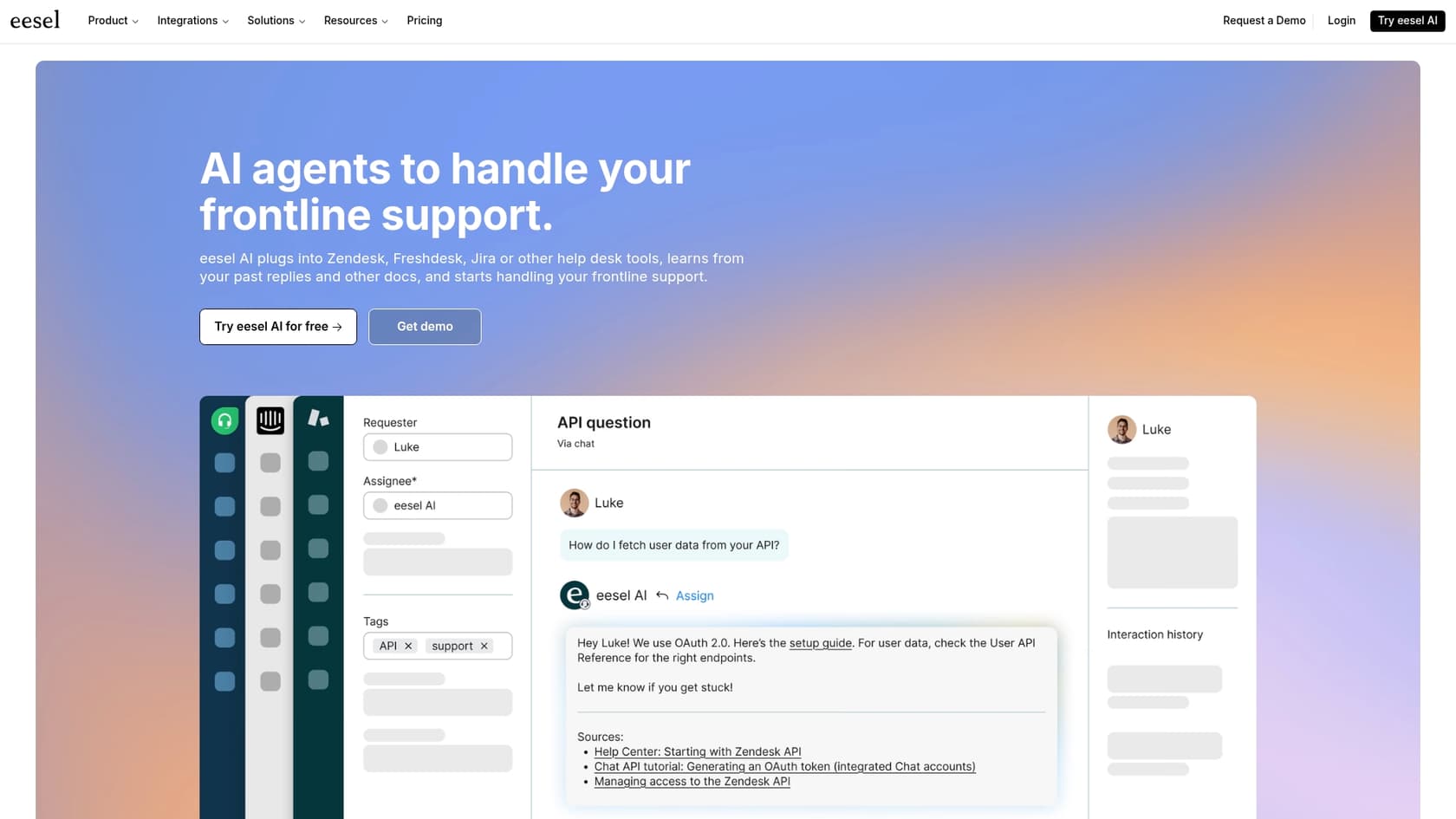
All that information fuels an AI Agent that works right inside your help desk. This agent doesn't just find answers; it gets things done. For example, it can handle common questions on its own by looking up live order info or starting a return right from Shopify.
And it works with the tools you're probably already using, like Zendesk or Freshdesk, so you don't have to switch your whole support setup. You can get it running in a few minutes and have complete control over what your AI knows, making sure every answer is accurate and sounds like it's coming from you.
Pricing overview
The best tool for you really depends on what you’re trying to accomplish. Are you just trying to get copy written faster, or are you trying to build a more efficient business all around? Here's a quick look at how the pricing for these different tools compares.
| Feature | Amazon Generative AI | Shopify Magic | CopyMonkey.ai | eesel AI |
|---|---|---|---|---|
| Primary Use Case | Listing creation within Amazon | Description generation in Shopify | Multi-channel listing creation | Customer support automation & knowledge management |
| Free Plan | N/A (Included with Seller plan) | N/A (Included with Shopify plans) | No, but offers "Start for free" | No, but offers a 7-day free trial |
| Starting Price | $39.99/mo (Professional Seller Plan) | Included with Shopify plans | $49/mo (or $24/mo annually) | $299/mo (or $239/mo annually) |
| Key Functionality | Title, bullet, description generation | Product description generation & text editing | Advanced keyword tools, multi-platform copy, bulk import | AI Agent, AI Chatbot, help desk integration, Shopify actions |
| Best For | Sellers focused exclusively on Amazon | Merchants using Shopify | Sellers needing optimized copy across multiple channels | Businesses looking to automate support driven by their product catalog |
Don't just create better product listings, create better customer experiences
Using AI to create better product listings is a huge help for any e-commerce business. It saves time, gets you more visibility, and helps you make more sales. But as you can see, that's really just the beginning.
A smarter e-commerce strategy uses AI for more than just pre-sale content; it also provides instant, helpful post-sale support. The real win is when you can create a great listing and be totally prepared for the customer interest that comes with it. That’s how you build a smooth experience from the first click to the final delivery, turning new buyers into happy, loyal customers.
Ready to connect your product knowledge to an AI that can answer customer questions in a flash? See how eesel AI works with your existing tools to automate your support. You can start your free 7-day trial today.

Frequently asked questions
AI tools can generate engaging, [keyword-rich product titles](https://catsy.com/blog/product-listing-optimization-plo-key-strategies-for-success/), bullet points, and descriptions quickly. They learn from vast e-commerce data to craft content that enhances SEO, attracts shoppers, and persuades them to purchase. This automates a time-consuming task, freeing you up for other business activities.
Yes, platforms like Amazon and Shopify offer built-in AI features designed to assist with listing creation directly within their dashboards. These tools are convenient and cost-effective as they're usually included with your seller plan, and they are trained on platform-specific data to optimize for their search algorithms.
Third-party tools offer greater flexibility and power for creating listings across various marketplaces (Amazon, Shopify, eBay, etc.) from one central dashboard. They often include advanced features like bulk generation and broader language support, which are beneficial for multi-channel sellers.
The primary challenge is managing the increased volume of customer questions that come with higher visibility and sales. While AI helps create listings, it doesn't automatically handle the subsequent pre-sale and post-sale inquiries, which can quickly overwhelm your support team.
Absolutely. Solutions like eesel AI connect your product data directly to customer support, allowing an AI agent to answer common questions and even perform actions like looking up order info or initiating returns. This integrates listing success with effective customer service.
Tools like eesel AI are designed for quick implementation, often within minutes, and integrate seamlessly with popular help desks such as [Zendesk](https://docs.eesel.ai/integrations/zendesk) and Freshdesk. This allows you to leverage your existing support setup while adding advanced AI capabilities.
Share this article

Article by
Stevia Putri
Stevia Putri is a marketing generalist at eesel AI, where she helps turn powerful AI tools into stories that resonate. She’s driven by curiosity, clarity, and the human side of technology.
