

Having an AI assistant built right into your inbox sounds pretty great, right? Google's Gemini in Gmail promises just that. You can ask it to summarize a monster email chain before a meeting or dig up a tracking number. But if you've tried it, you might know that asking Gemini for specific details can be… well, a bit of a gamble.
You ask for next week's flight itinerary and get the details for a trip you took last year. So, let's get real about how to use Gemini in Gmail, where it stumbles, and what to do when you need answers you can actually count on.
What is the Gmail Ask Gemini for Details feature?
First off, what even is Gemini in Gmail? It's Google's AI assistant that lives right inside your inbox. This isn't the same as the general Gemini web app (the one at gemini.google.com) you might use for brainstorming or writing copy.
The version inside Gmail is meant to be aware of its surroundings. It can "read" the email you have open and pull information from your other Google Workspace apps, like Drive and Calendar. Its main jobs are to:
-
Summarize: Boil down long email threads into the key takeaways.
-
Search & Find: Track down specific info hiding in your emails and files.
-
Draft & Reply: Help you write replies or new emails from a quick prompt.
It’s available on both desktop and mobile if you're on an eligible Google Workspace or Google One plan. The idea is to save you time, but how well it works often comes down to how you ask and what you're asking for.
How to use Gemini in Gmail for details and other tasks
Using Gemini in Gmail is pretty simple. You’ll find the "Ask Gemini" icon (a little four-pointed star) at the top of your inbox. Clicking it opens a side panel where you can type your requests. Here are the main ways you can use it to get things done.
Summarize lengthy email threads
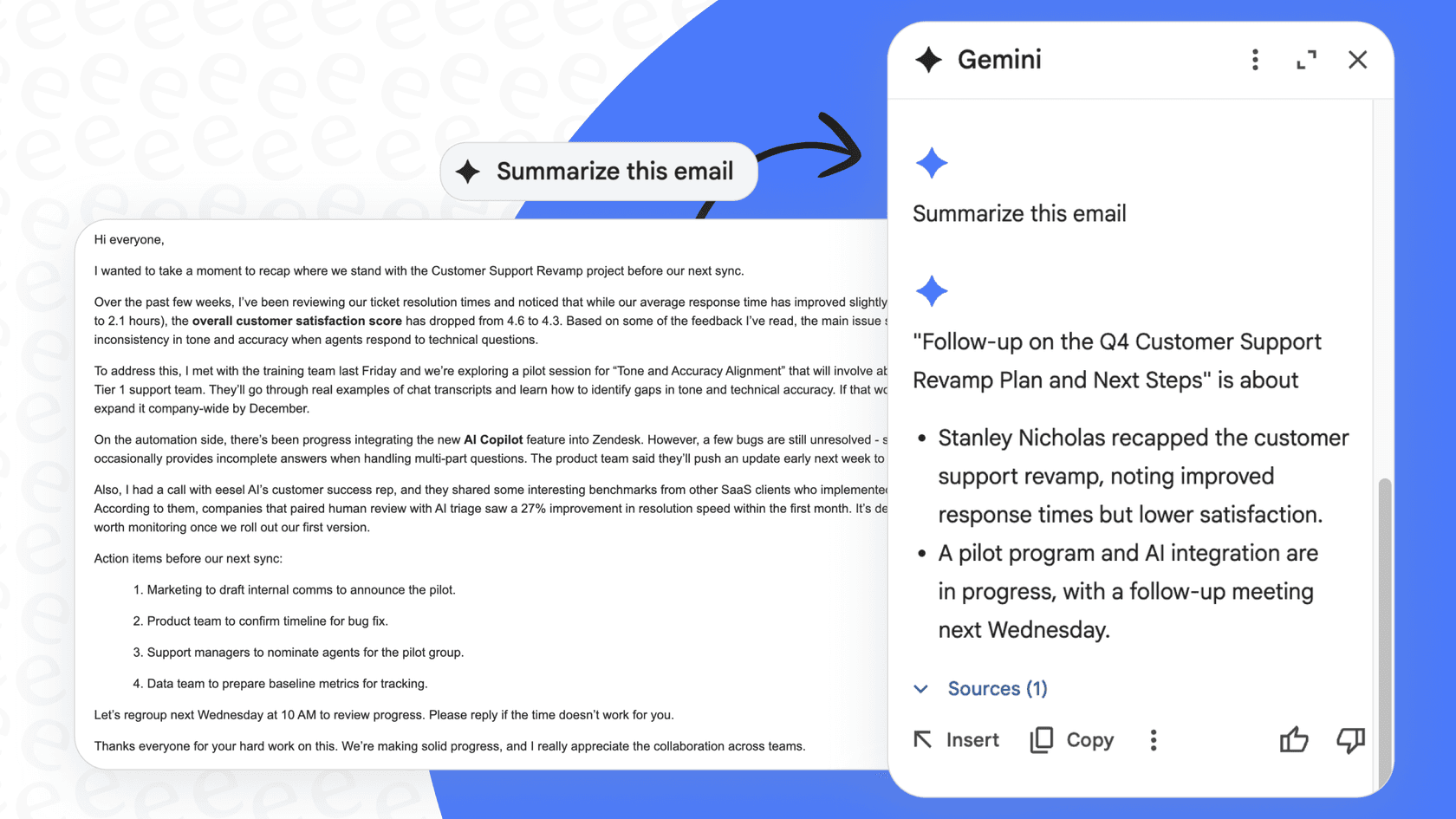
Got an email thread that's a mile long? When you open it, you’ll often see a "Summarize this email" button pop up. Give it a click, and Gemini will spit out a quick, bulleted summary of the conversation. You can also get more specific in the side panel by asking things like, "What were the main decisions made here?" or "List the action items for me."
Find specific information from your inbox and Drive
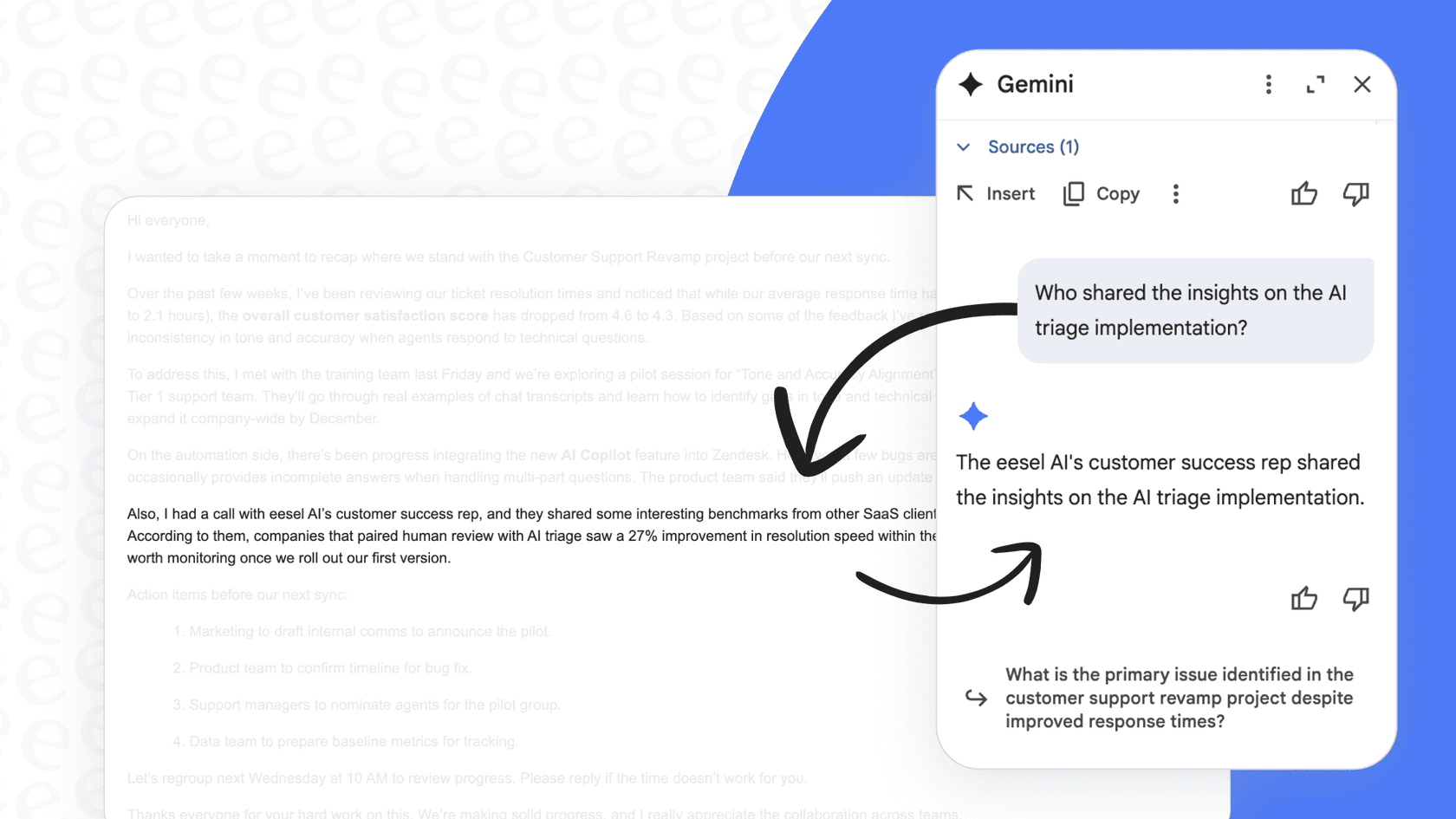
This is where you really start to use Gmail to ask Gemini for details. Instead of fiddling with search commands, you can just ask questions in plain English in the side panel. For example:
-
"When is my package from Amazon arriving?"
-
"What time is my flight to Denver next week?"
-
"Find the quarterly report document that Sarah shared."
-
"Show me unread emails from this week."
Gemini scans your emails and any connected Google Drive files to find what you're looking for. You can even point it to specific apps by using the "@" symbol, like "@Calendar what's on my schedule tomorrow morning?"
Draft emails and suggest replies
When you're writing an email, the "Help me write" feature is your friend. Give it a simple prompt, and Gemini will draft a whole email for you. From there, you can tell it to tweak the tone, make it shorter, or add more detail. It also offers "Contextual Smart Reply," which gives you more complete reply suggestions than the usual one-liners.
The reality check: Where Gemini in Gmail goes wrong
So, while Gemini is handy for some things, it starts to show its cracks when you need it for serious business tasks, especially in a support role. That initial 'wow' factor can fade pretty quickly when the AI starts giving you wrong, old, or incomplete info.
Inconsistent and inaccurate results
You ask for "my flight from SFO next week" and get details for a flight you took two years ago. It seems to have a tough time with context, like figuring out what "next week" means compared to any other week it finds in your inbox. For a support team, that kind of unreliability just doesn't fly. An AI pulling up the wrong support ticket or customer order creates more problems than it solves.
Limited to the Google ecosystem
Gemini is great inside its own world. It can search Gmail, Drive, and Calendar without a problem. But what about the places your company's real knowledge lives? Your help center in Zendesk, internal wikis in Confluence or Notion, resolved tickets in Freshdesk, or your product info in Shopify might as well be invisible to it. This means you’re still stuck manually searching everywhere else.
Lacks specialized workflow and control
Gemini is a generalist. It can't handle the specific tasks that support or IT teams need every day. For instance, you can't set it up to:
-
**Triage and tag** an incoming email based on its content.
-
Escalate a request to the right person if it says "urgent."
-
Perform custom actions like checking an order status in another system.
-
Roll out automation carefully, starting with just the simple questions.
This lack of customization means you can't really control its behavior beyond your initial prompt.
Gmail Ask Gemini for Details pricing: What it costs
As you might expect, the more advanced Gemini features in Gmail aren't part of the standard free Google account. You’ll need to subscribe to a paid plan, either for yourself or for your business.
For individuals, Gemini is part of the Google One AI Premium plan. For businesses, it's bundled into various Google Workspace plans, with different capabilities at each level:
| Plan | Price (per user/month, annual commitment) | Key Gemini Features Included |
|---|---|---|
| Business Starter | $7 | Gemini AI assistant in Gmail and the Gemini app (limited). |
| Business Standard | $14 | Gemini AI assistant in Gmail, Docs, Meet, and more. Expanded access in the Gemini app. |
| Business Plus | $22 | All features from Business Standard. |
| Enterprise Plus | Contact Sales | All features from Business Plus with advanced security and controls. |
Pricing is based on Google's official pricing page and may have changed.
What this pricing shows is that if you want AI in everyone's inbox, you're tying yourself to the Google ecosystem and a per-user cost. That can get expensive, especially if what you really need is better support automation, not just a general productivity tool.
A better way: Unify your knowledge for truly accurate answers
The shortcomings of a general tool like Gemini really show why a specialized AI platform can be a lifesaver for support teams. Instead of being stuck in one inbox, you need an AI that can connect to all your knowledge and actually do things in your helpdesk.
This is where a tool like eesel AI comes in. It's built to tackle the exact problems that make Gemini frustrating for support:
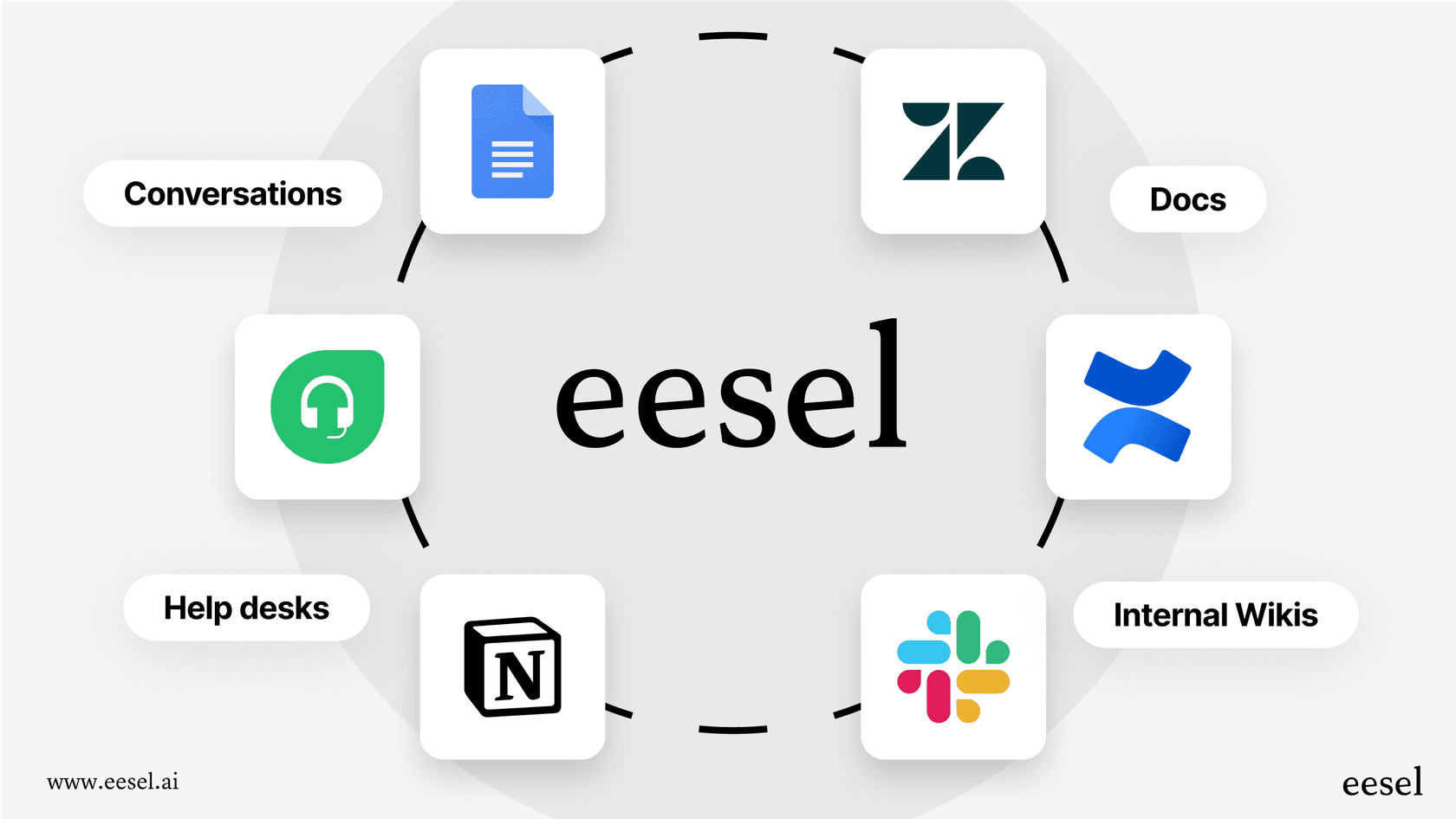
- It connects to all your knowledge. eesel plugs directly into the tools you're already using. It can learn from past tickets in Zendesk or Intercom, your internal guides in Confluence and Google Docs, and your public help articles. This gives the AI a complete picture of your business, so the answers it gives are way more accurate.
-
You're in the driver's seat. You don't have to just hope the AI gets it right. With eesel AI, you get to decide exactly which tickets the AI should handle. You can start small, maybe just automating password reset questions, and let your team handle the rest. You can even set the AI's personality, tone of voice, and what it's allowed to do, like tagging a ticket.
-
Test it out safely. Worried about an AI going wild on your customers? eesel has a simulation mode that lets you test your setup on thousands of your old tickets before it ever goes live. You can see exactly how it will perform and tweak it in a totally safe environment.
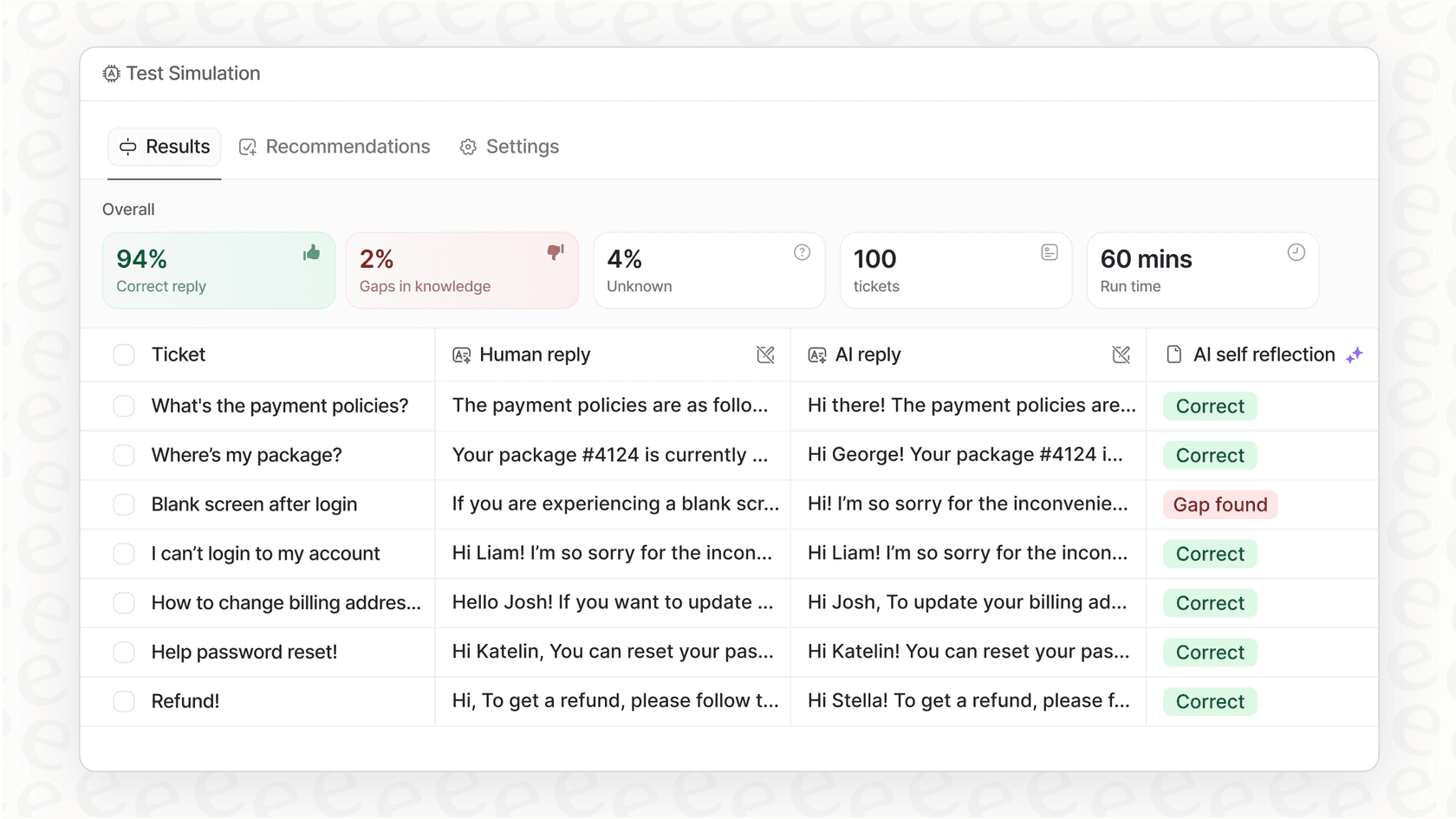
- Get started in minutes. No need for long sales demos or complicated setups. eesel is built to be self-serve. You can connect your helpdesk and knowledge bases with a few clicks and have your AI agent up and running in minutes, not months.
Move beyond Gmail Ask Gemini for Details for reliable AI
Look, using Gmail to ask Gemini for details is a neat way to see what AI can do for your personal inbox. It's great for summarizing long threads or finding a quick fact buried in an email.
But when you need reliability, control, and answers pulled from your entire business, its limits become pretty clear.
For teams that depend on accurate information, a specialized tool is the way to go. By connecting all your knowledge sources and giving you full control, you can move from simple inbox tricks to automation that actually helps your team and your customers.
Ready to see what a purpose-built AI can do for your support team? Get started with eesel AI for free.
Frequently asked questions
How do I activate or start using the Gmail Ask Gemini for Details feature within my Google Workspace account?
You can typically find the "Ask Gemini" icon (a four-pointed star) at the top of your Gmail inbox. Clicking this icon opens a side panel where you can type your requests and begin interacting with Gemini. Ensure you are subscribed to an eligible Google Workspace or Google One plan.
Why does the Gmail Ask Gemini for Details feature sometimes provide outdated or incorrect information?
Gemini in Gmail can struggle with context, especially distinguishing between similar past and future events, leading to inaccurate results. Its generalist nature means it might not always grasp the specific nuances of your request, relying heavily on exact keyword matches found in your emails.
Can Gmail Ask Gemini for Details access information from third-party applications like our CRM or internal wikis?
No, the Gmail Ask Gemini for Details feature is largely limited to the Google ecosystem. It can pull information from your Gmail, Google Drive, and Google Calendar, but it cannot access data from external platforms like Zendesk, Notion, or other non-Google applications.
For a business or support team, what are the main limitations of relying on Gmail Ask Gemini for Details for critical tasks?
Its main limitations include inconsistent accuracy, an inability to integrate with essential third-party business tools, and a lack of specialized workflow controls. This makes it unsuitable for specific tasks like triaging tickets, escalating requests, or performing custom actions required by support teams.
What are the costs associated with using Gmail Ask Gemini for Details for an entire organization?
Access to Gmail Ask Gemini for Details is part of paid Google Workspace plans, with pricing varying by tier (e.g., Business Starter, Standard, Plus, Enterprise Plus). These are typically per-user, per-month costs, which can become significant for larger teams.
How does a specialized AI tool offer more reliable answers compared to Gmail Ask Gemini for Details for complex business needs?
Specialized AI tools are designed to integrate with all your company's knowledge sources, including CRMs and helpdesks, providing a comprehensive understanding. They also offer customizable workflows and control over AI behavior, ensuring higher accuracy and relevance for specific business tasks.