


Picking the right AI customer support platform can feel like a huge decision, and it’s easy to get lost in the options. Two names you'll likely come across are Decagon and Kodif, and they represent two completely different ways of thinking about AI support. Decagon is an enterprise-grade platform used by tech giants like Notion and Chime. Kodif, on the other hand, is built from the ground up for ecommerce brands like Dollar Shave Club.
Making the wrong choice can lead to a slow, expensive rollout that just doesn't line up with what your business actually needs.
This guide is a straight-up Decagon vs Kodif comparison. We’ll look at their features, who they’re really for, and what it takes to get them up and running, so you can figure out which one makes sense for your team.
What is Decagon?
Think of Decagon as an AI agent platform for big companies aiming for a "concierge customer experience" over voice, chat, and email. It’s built for large, tech-focused businesses, and its client list includes names like Rippling and Classpass. This shows its strength in managing really complex operations at a massive scale.
The whole system runs on what they call Agent Operating Procedures (AOPs), which are basically instructions written in plain English that tell the AI how to handle different workflows. For most of their clients, the main goal is to cut costs and resolve a high percentage of issues automatically. You’ll see case studies mentioning a 95% cost reduction or a 75% resolution rate.
What is Kodif?
Kodif is an AI operations tool designed specifically for mid-market and direct-to-consumer (D2C) ecommerce brands. Their philosophy is all about being "revenue-aware," which means they focus on turning customer support into a way to grow the business, not just a cost center. The goal is to boost retention and even drive sales.
Its biggest standout feature is that it covers the entire customer journey. It automates conversations before someone buys (like helping them pick a product) and handles all the usual post-purchase support (like returns and subscription changes). It pulls this off with over 100+ ecommerce integrations that let it take action directly in your other tools.
Decagon vs Kodif: Key differences at a glance
Before we get into the details, here’s a quick rundown of how they stack up. As this table shows, Decagon is built for the complexity of large enterprises with multiple support channels, while Kodif is a specialized tool for growing ecommerce businesses.
| Feature | Decagon | Kodif |
|---|---|---|
| Ideal Customer | Large enterprise (e.g., Notion, Chime) | Mid-market ecommerce ($20M+ GMV) |
| Primary Goal | Cost reduction & ticket deflection | Revenue growth & full resolution |
| Journey Coverage | Primarily post-purchase | Pre- and post-purchase |
| Implementation | Professional services-driven (weeks) | White-glove, CX-led (~15 days) |
| Team Ownership | Co-managed by technical & CX teams | No-code, self-serve for CX teams |
| Key Technology | Agent Operating Procedures (AOPs) | Natural Language Policies |
| Analytics | Siloed within the Decagon interface | Exportable to your data warehouse |
Decagon vs Kodif: Who are they for?
The biggest difference between the two is the customer they have in mind. This single factor shapes almost everything else about their platforms.
Decagon: Best for complex, multi-channel enterprises
Decagon is engineered for huge volumes. Its perfect customer is a company dealing with a mountain of tickets across different channels, including phone calls. Their work with Notion, which handles over a million inquiries a year, proves they can handle complex, post-purchase support at scale.
-
Here's an example: For a financial tech company like Chime, giving customers a consistent experience whether they're chatting or on a voice call is a big deal. Decagon helped them achieve a 70% resolution rate.
-
If your main objective is to deflect as many tickets as possible to bring down costs, Decagon is designed to do just that.
Kodif: Best for high-growth ecommerce brands
Kodif is tailor-made for the day-to-day realities of a D2C brand. It comes with deep integrations for platforms like Shopify, Recharge, and Loop Returns right out of the box. This lets it automate the specific, nitty-gritty ecommerce tasks that actually move the needle.
-
Here's an example: For a subscription business like Dollar Shave Club, Kodif drove a 6x increase in containment simply by automating questions about subscriptions.
-
The focus isn't just on saving money. It's about finding ways to improve retention. With clients like ReserveBar, they saved 850 agent hours while keeping a 93% CSAT score.
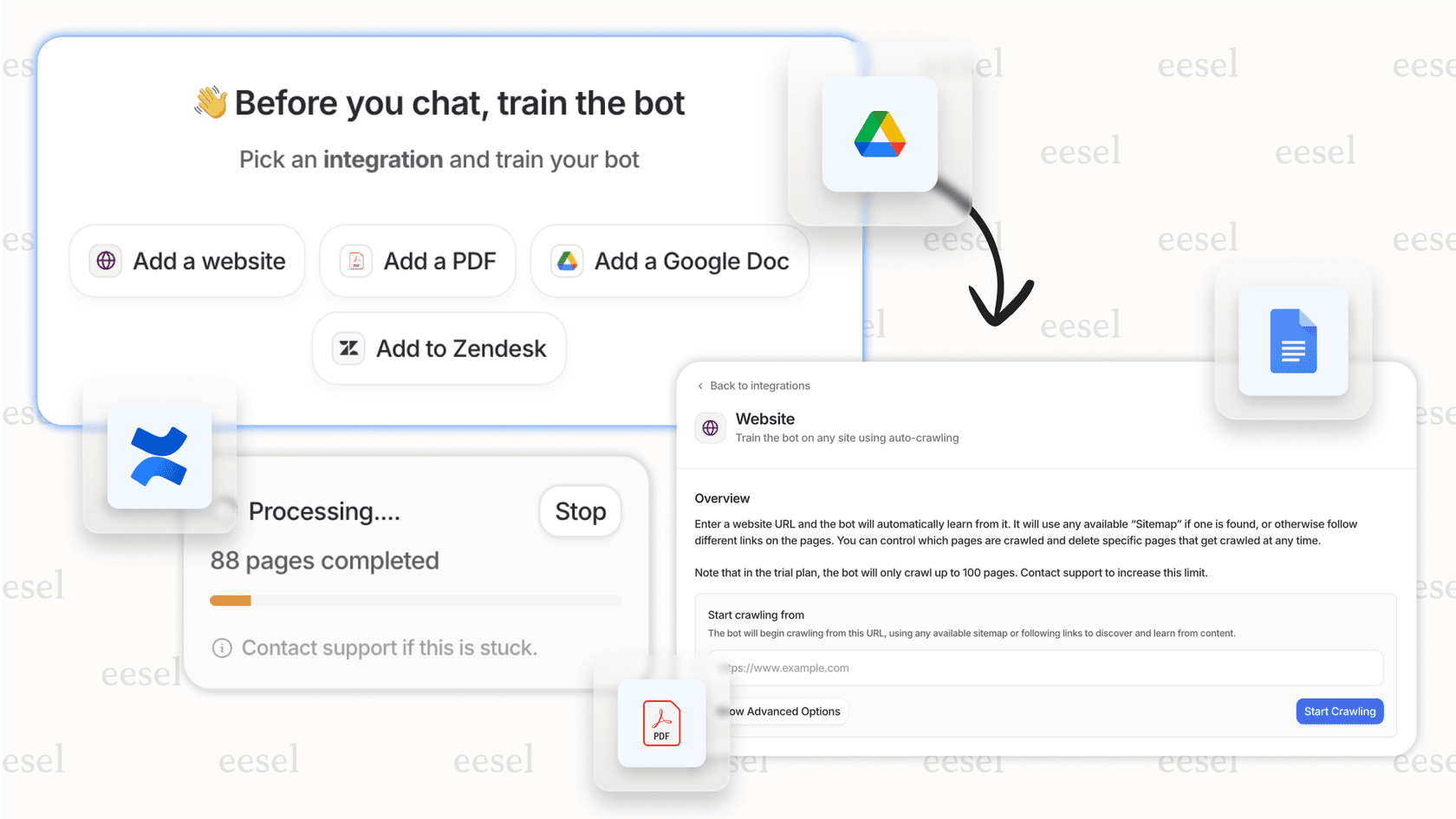
Pro Tip: What if your business doesn't quite fit either mold? Say you're a SaaS company that needs to support customers in a helpdesk and also help internal teams in Slack. In that case, a more flexible AI layer might be a better choice. Platforms like eesel AI connect to the tools you already have (like Zendesk) to automate support without locking you into one vertical.
Decagon vs Kodif: How they think about support (and why it matters)
The "why" behind each platform says a lot about the kind of value you can expect.
Decagon’s focus: Post-purchase containment and deflection
Decagon’s work really begins after a customer has bought something. It’s fantastic at answering "Where is my order?" or managing returns. Its performance is often measured by its "deflection rate," a metric it highlights with clients like Rippling (32% increase) and Notion (2x increase). This is a solid model for saving money, but it overlooks the entire pre-purchase phase where sales actually happen.
Kodif’s focus: Full-journey resolution
Kodif's approach is to meet customers right when they have their first product question. Its philosophy is all about resolution over deflection, and it hits an average resolution rate of 84%. By managing pre-purchase conversations, it doesn't just guide customers toward a purchase; it also gathers useful data along the way. This creates a "data flywheel," where the AI learns from every interaction, making its post-purchase support even smarter and helping turn first-time buyers into loyal customers.
Decagon vs Kodif: Getting started and who runs the show
How you get the tool set up and who manages it day-to-day is another important difference to consider.
Decagon: A high-touch, enterprise rollout
Decagon says it can deliver ROI in "weeks, not months". But its model is designed for enterprise-level complexity and often requires their engineers to help integrate with your internal systems. While their AOPs and AOP Copilot let CX teams write rules in plain English, the technical teams usually control the guardrails and integrations. This can create a bottleneck that slows down any future changes.
Kodif: An agile, CX-led model
Kodif is built for speed, with most customers seeing value in about 15 days. It's a no-code platform that uses Natural Language Policies so that non-technical CX managers can build, test, and launch their own automation rules. This puts the power directly in the hands of the people who know your customers best.
A more flexible alternative: This brings up a common trade-off. Some teams want speed and deep customization without a massive implementation project. For them, an AI layer that improves their existing systems is a great fit. eesel AI plugs into your helpdesk in minutes, learns from all your company knowledge, and lets you automate tickets, draft replies, or triage issues without needing a team of consultants.
Decagon vs Kodif: Pricing
Let's talk about the big one: cost. The two platforms have very different ways of handling it.
Decagon's pricing
Decagon doesn't share its pricing publicly. Given its focus on enterprise clients, industry reports suggest that annual contracts usually fall somewhere between $95,000 and over $400,000, not including fees for implementation. This model makes sense for large companies that are making a long-term strategic investment.
Kodif's pricing
Kodif also keeps its prices off its pricing page, but it offers a few different plans (Basic, Professional, Enterprise). Its pricing is based on the value of the automation it provides, not just the number of conversations, which helps give mid-market companies more predictable costs. They also have an ROI calculator on their site to help you estimate potential savings.
For predictable, transparent pricing: If you need clear, upfront costs, some platforms offer flat-fee pricing. For instance, eesel AI has a Team plan at $299/month for 1,000 AI interactions and a Business plan at $799/month for 3,000 interactions. They even offer a 7-day free trial so you can see the value for yourself.
Decagon vs Kodif: Which platform is right for you?
After breaking it all down, the choice should be a lot clearer.
-
Choose Decagon if: You're a large, tech-first enterprise with a ton of support requests, especially over phone and chat. Your main goal is to cut support costs at scale, and you have the engineering resources to handle a more hands-on, integrated platform.
-
Choose Kodif if: You're a growing ecommerce or D2C brand. You want to use automation to increase revenue and keep customers happy, not just deflect tickets. You need to automate the full customer journey with deep ecommerce integrations, and you want your CX team to be able to build and tweak workflows on their own.
But what if you fall somewhere in the middle? For a lot of businesses, the best solution isn't to replace their whole system but to make it smarter.
The flexible alternative: Enhance your existing stack with eesel AI
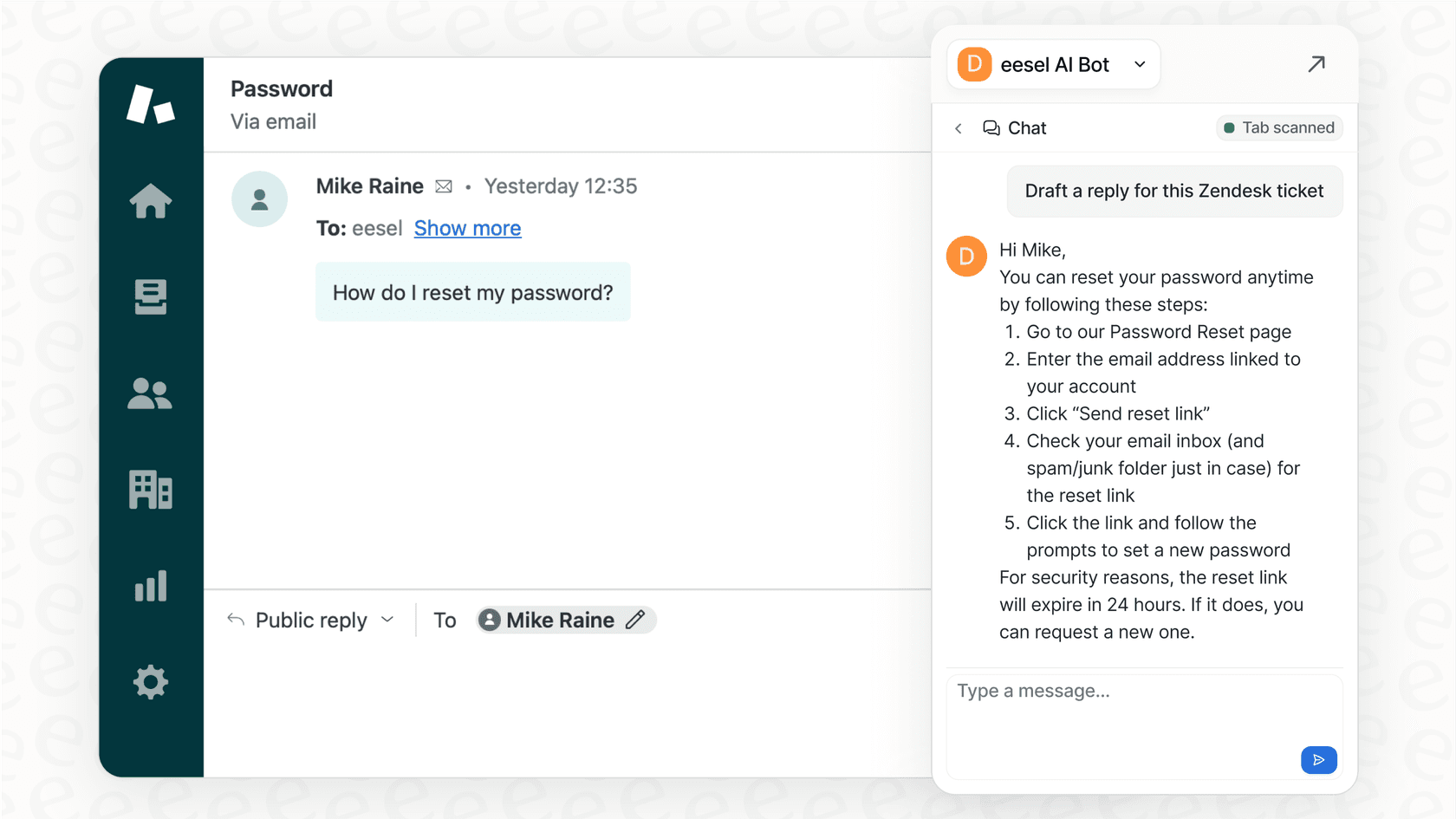
If you like your current helpdesk but want to add a powerful AI automation layer on top of it, eesel AI was built for you. Instead of making you switch platforms, eesel plugs directly into the tools your team already relies on, like Zendesk and Jira.
It brings together all of your scattered knowledge, from past tickets and help articles to Google Docs and your Shopify product catalog, to give instant, accurate answers. You can use it to automate ticket triage, draft replies for agents, or launch a customer-facing chatbot. Best of all, you can be up and running in minutes, not months, with predictable pricing and a free trial to prove it works.
Ready to see how an AI layer can automate your support without ripping out your existing tools? Get started with eesel AI today.

Frequently asked questions
Neither Decagon nor Kodif is typically designed for small businesses. Decagon targets large enterprises, and Kodif focuses on mid-market ecommerce brands ($20M+ GMV). For smaller operations, a more flexible AI layer like eesel AI that enhances existing tools might be more suitable.
Decagon primarily focuses on post-purchase containment and ticket deflection to achieve cost reduction for large enterprises. Kodif, on the other hand, takes a "revenue-aware" approach, aiming for full-journey resolution to boost retention and even drive sales for ecommerce brands.
Decagon typically involves a professional services-driven rollout that can take weeks due to its enterprise-level complexity and integration needs. Kodif boasts a faster, white-glove, CX-led implementation, often getting customers live in about 15 days.
Kodif is designed as a no-code platform using Natural Language Policies, [empowering CX managers to build](https://kodif.ai/blog/best-sierra-alternatives/) and launch automation rules independently. Decagon, while offering AOPs for CX teams, typically requires technical teams to manage guardrails and integrations, which can create dependencies.
Decagon does not publicly share pricing, but industry reports suggest annual contracts are often between $95,000 and $400,000+, plus implementation fees. Kodif also keeps prices private but offers plans based on automation value, not just conversation volume, with an ROI calculator available.
Kodif excels in [covering the entire customer journey](https://kodif.ai/blog/best-decagon-alternatives/), including pre-purchase conversations where it can guide customers toward a purchase and gather valuable data. Decagon primarily focuses on post-purchase containment and deflection.
If you need more flexibility or want to enhance your current helpdesk without a full platform switch, consider an AI layer like eesel AI. It can integrate with existing tools like Zendesk, offering automation for ticket triage, drafting replies, or chatbots, without locking you into a specific vertical.
Share this article

Article by
Kenneth Pangan
Writer and marketer for over ten years, Kenneth Pangan splits his time between history, politics, and art with plenty of interruptions from his dogs demanding attention.
