The 6 best Salesforce alternatives for CRM in 2026

Stevia Putri

Katelin Teen
Last edited January 16, 2026

Feeling a bit stuck with Salesforce? You're definitely not the only one. It's a beast of a CRM, no doubt, but sometimes that's the problem. The hefty price tag and a user interface that feels like you need an engineering degree can be a real drag, especially for growing teams.
You know you need something to manage customer relationships, but who has the time to sift through dozens of options? We get it. That’s why we put together this no-fluff guide to the best Salesforce alternatives out there. We’ll break down what makes each one tick so you can find a platform that actually fits your team’s workflow and budget.
What is a CRM and why search for Salesforce alternatives?
Let’s get on the same page. A CRM (Customer Relationship Management) system is basically your team's command center for everything related to customers. It’s where you keep track of contacts, follow up on leads, and see the entire history of every interaction. It's supposed to make building relationships easier.
While Salesforce is a giant in the space, it’s not always the best tool for the job. Teams often start looking for an alternative for a few very real reasons:
-
The cost: Let's be honest, Salesforce can get expensive. Fast. The costs add up as you add more users or need more advanced features, and the pricing tiers can feel like a puzzle.
-
The complexity: It's an incredibly powerful platform, but with that power comes a steep learning curve. Many smaller teams find they're paying for a ton of features they'll never use, making the whole thing feel bloated and confusing.
-
Your specific needs: Sometimes you need a tool built for your world. Some of the best CRMs are designed for specific industries, like e-commerce or SaaS, and just work better for those use cases right out of the box.
The goal isn't to find the CRM with the most features; it's to find the one that your sales team will actually use and love, without needing a dedicated admin just to keep it running.
How we picked the best Salesforce alternatives
So, how did we pick our top picks? We didn't just look at shiny marketing websites. We dug into the stuff that actually matters to a busy sales team day in and day out.
Here’s what we focused on:
-
How easy is it to actually use? We looked for tools with clean interfaces and common-sense workflows. Your team should be able to jump in and get started without weeks of training.
-
Does it have the sales tools you actually need? We checked for the essentials: solid contact and lead management, a clear way to visualize your sales pipeline, useful automations, and reporting that makes sense.
-
Is the price fair and transparent? We prioritized platforms with clear, predictable pricing. No one likes getting locked into an expensive contract filled with surprises.
-
Does it play nice with your other tools? A CRM can't live on an island. It needs to connect smoothly with your email, help desk, and other daily-driver apps.
-
Can it grow with you? We looked for tools that work for a small team just finding its footing but can also handle the demands of a larger, more complex sales operation down the line.
A quick comparison of the best Salesforce alternatives
Want the tl;dr? Here’s a quick look at how our top picks stack up at a glance.
| Feature | Zendesk | HubSpot | Freshsales | Help Scout | LiveAgent | Tidio |
|---|---|---|---|---|---|---|
| Best for | Service-first sales | All-in-one marketing & sales | SMBs and mid-market | Small, support-focused teams | Ticketing-centric sales | E-commerce sales |
| Starting price | $55/agent/month | $360/month (Service Hub) | $0 (Free plan) | $20/user/month | $0 (Free plan) | $0 (Free plan) |
| G2 rating | 4.3 / 5 | 4.4 / 5 | 4.6 / 5 | 4.4 / 5 | 4.5 / 5 | 4.7 / 5 |
| Key strength | Unified support & sales | Inbound marketing engine | Ease of use & AI | Simplicity & affordability | Integrated help desk | E-commerce focus |
Our top 6 picks for the best Salesforce alternatives
Alright, let's get into the details. Each of these platforms brings something different to the table, and they all make a strong case for being one of the best Salesforce alternatives for CRM available today.
1. Zendesk
You probably know Zendesk for its customer service tools, right? Well, it turns out they've built a pretty capable CRM that's perfect for teams where sales and support are two sides of the same coin. It brings all your sales and support conversations together in one place, giving your team the full picture of a customer's history. This is a massive help for building long-term relationships.
-
Pros:
-
It connects your sales and support chats perfectly, so everyone has context.
-
Great for managing existing customers and finding upsell opportunities.
-
The interface is straightforward and designed for professional efficiency.
-
Cons:
-
Zendesk prioritizes a focused sales toolset that emphasizes high-quality customer relationships.
-
The platform's tiered pricing plans are designed to scale as your team and needs expand.
-
Pricing: Zendesk Suite plans start at $55 per agent per month (billed annually).
-
Why it's a good alternative: If your sales process is all about account management and customer happiness, Zendesk gives you a unified view that Salesforce can only achieve with a lot of extra work.
2. HubSpot
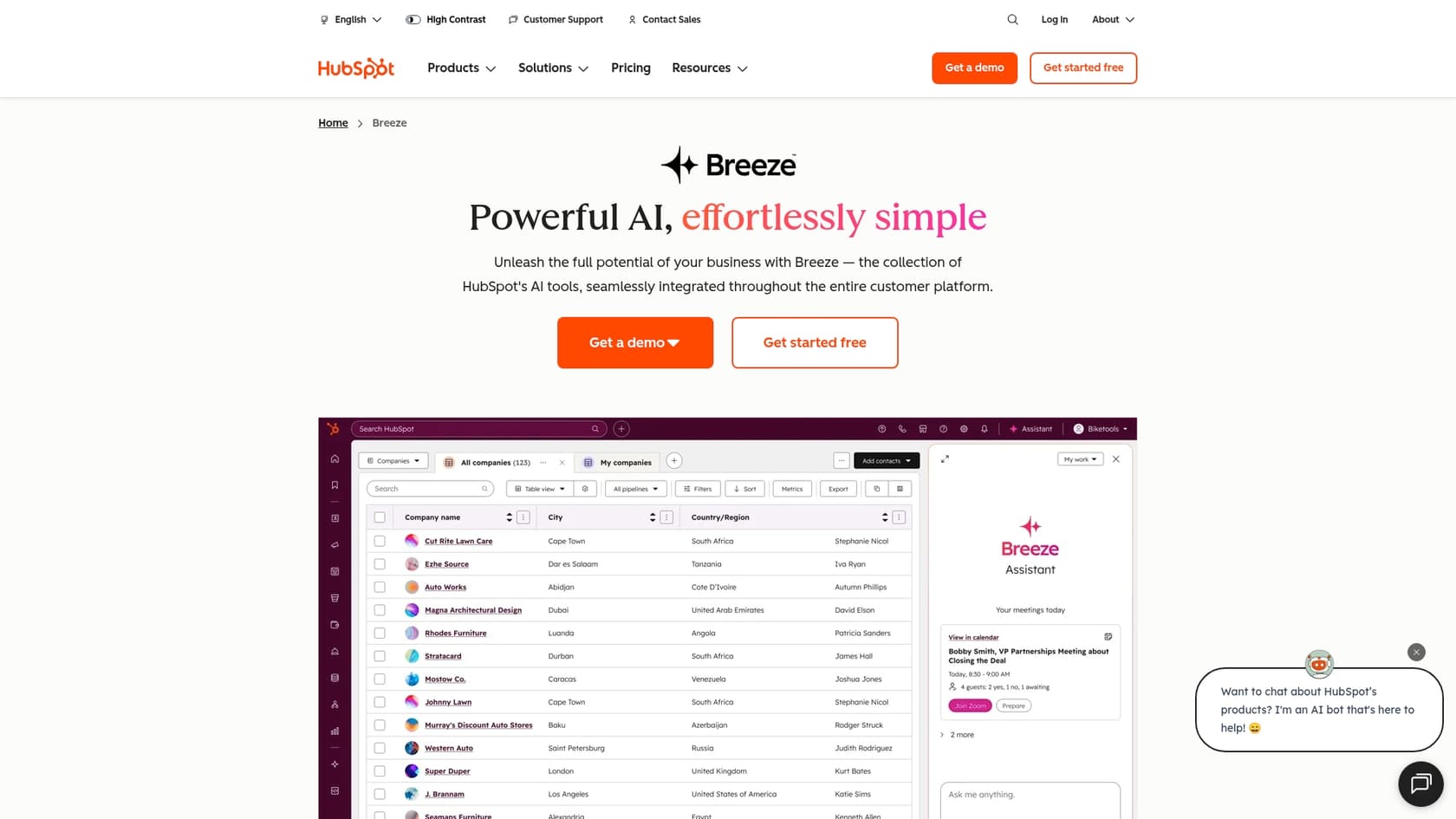
If there's one name that goes head-to-head with Salesforce, it's HubSpot. They've built an impressive ecosystem for marketing, sales, and service, and their Sales Hub is a seriously user-friendly CRM. HubSpot really shines for businesses that get most of their leads from content and inbound marketing because the two sides are so tightly connected.
-
Pros:
-
Their free CRM plan is surprisingly powerful and generous.
-
The marketing automation is top-notch and feeds leads directly to your sales team.
-
It’s clean, intuitive, and remarkably easy for sales reps to pick up.
-
Cons:
-
HubSpot offers tiered plans to match different team sizes, ensuring you can scale your investment as your needs grow.
-
The platform focuses on a streamlined, user-friendly experience that covers most business needs without the complexity of deep custom coding.
-
Pricing: HubSpot Sales Hub has a great free plan to start. Paid plans like the Professional Service Hub start at $360/month.
-
Why it's a good alternative: For any company built on an inbound marketing strategy, HubSpot's smooth handoff from marketing to sales is hard to beat and much simpler to manage. It's a mature, reliable platform that powers customer service for thousands of companies.
3. Freshsales (Freshworks)
Part of the Freshworks family, Freshsales is all about getting your team up and running fast. It's a great pick for small and medium-sized businesses that don't want to get bogged down in a complicated setup. It offers cool features like AI-powered lead scoring and a full 360-degree customer view, and even has a built-in phone and email to make outreach a breeze.
-
Pros:
-
A solid free plan that supports up to 10 users.
-
The built-in communication tools mean you can rely on fewer third-party apps.
-
The interface is modern and doesn't take long to learn.
-
Cons:
-
Its reporting tools aren't as advanced as what you'd find in an enterprise-level CRM.
-
The list of integrations isn't as long as some of the bigger players.
-
Pricing: Freshchat offers a free plan. More advanced plans start at $19 per agent per month (billed annually).
-
Why it's a good alternative: Freshsales hits a sweet spot between features, usability, and price. It’s one of the best Salesforce alternatives for teams wanting power without the enterprise-level headaches.
4. Help Scout
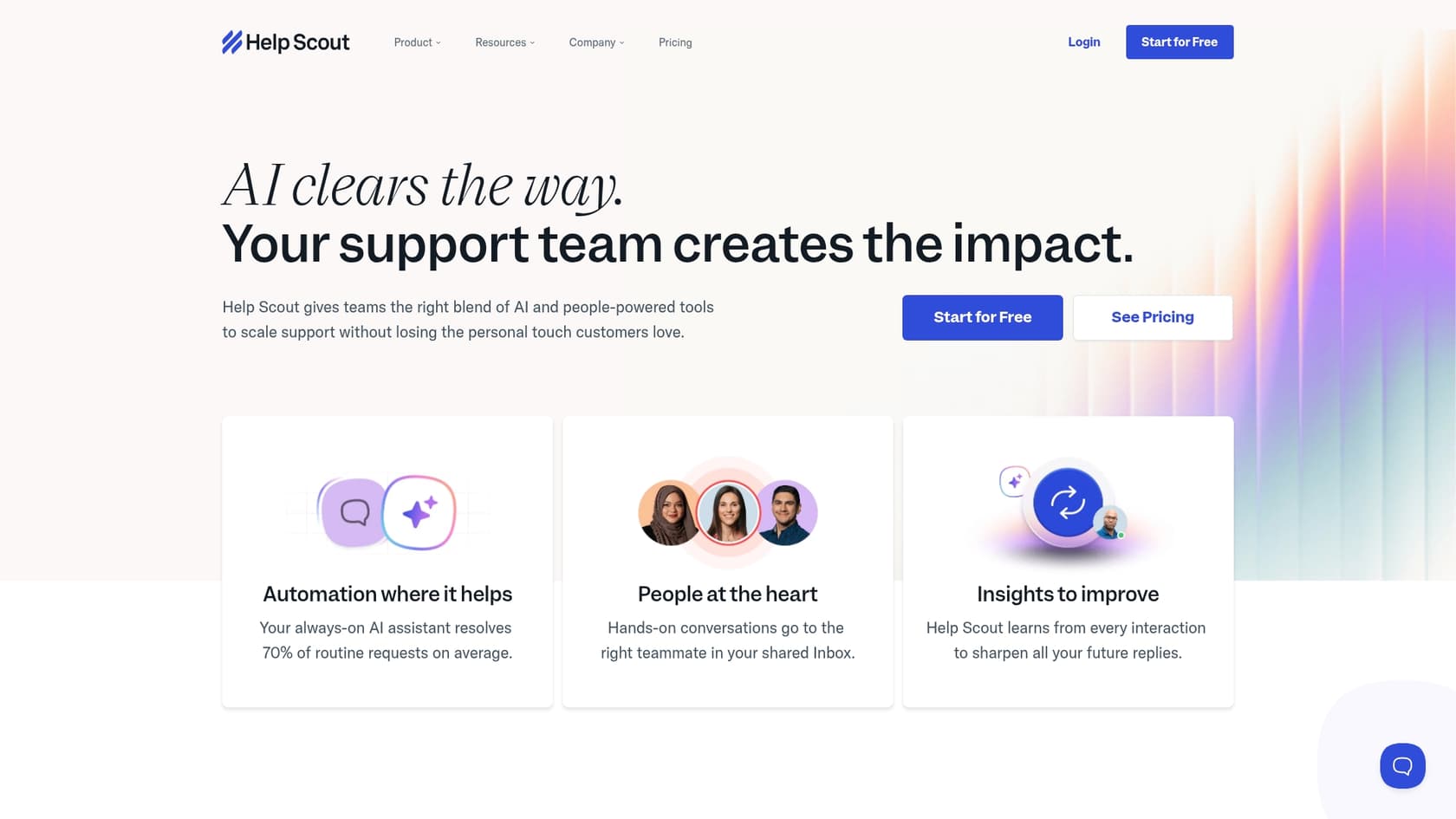
Like Zendesk, Help Scout started in the customer support world. Its strength is its beautiful simplicity. If your "sales process" is really just about having great conversations with customers, this could be for you. It gives you a shared inbox to manage all customer chats, whether they come from email or live chat. It's not a traditional CRM, but its simplicity is its superpower.
-
Pros:
-
Incredibly easy to set up and use from day one.
-
Affordable and transparent pricing, what you see is what you get.
-
It naturally encourages a collaborative, team-first approach to customer comms.
-
Cons:
-
It's not a full-fledged CRM, so you won't find dedicated sales automation or pipeline tools.
-
The reporting is pretty basic for sales forecasting.
-
Pricing: The Standard plan is just $20 per user per month.
-
Why it's a good alternative: For small teams that just want a simple, human way to talk to customers without all the complex CRM baggage, Help Scout is a breath of fresh air.
5. LiveAgent
LiveAgent throws a help desk, ticketing, and live chat into a blender and comes out with a tool that works well for teams handling tons of customer questions from all over the place (email, social, chat). Its CRM features are built-in, letting agents see customer history and data with every conversation. It’s a workhorse for companies that need an affordable way to manage a high volume of inquiries.
-
Pros:
-
It has a free plan with basic ticketing and live chat.
-
It pulls in conversations from tons of different channels into one inbox.
-
The chat widgets are highly customizable.
-
Cons:
-
The user interface feels a little less modern than some other tools on this list.
-
The CRM features are more basic than what you'd get in a dedicated sales tool.
-
Pricing: A free plan is available, with paid plans starting at $15 per agent per month.
-
Why it's a good alternative: LiveAgent delivers a ton of value for the price. You get a wide range of communication tools with customer data management for a small fraction of what Salesforce costs.
6. Tidio
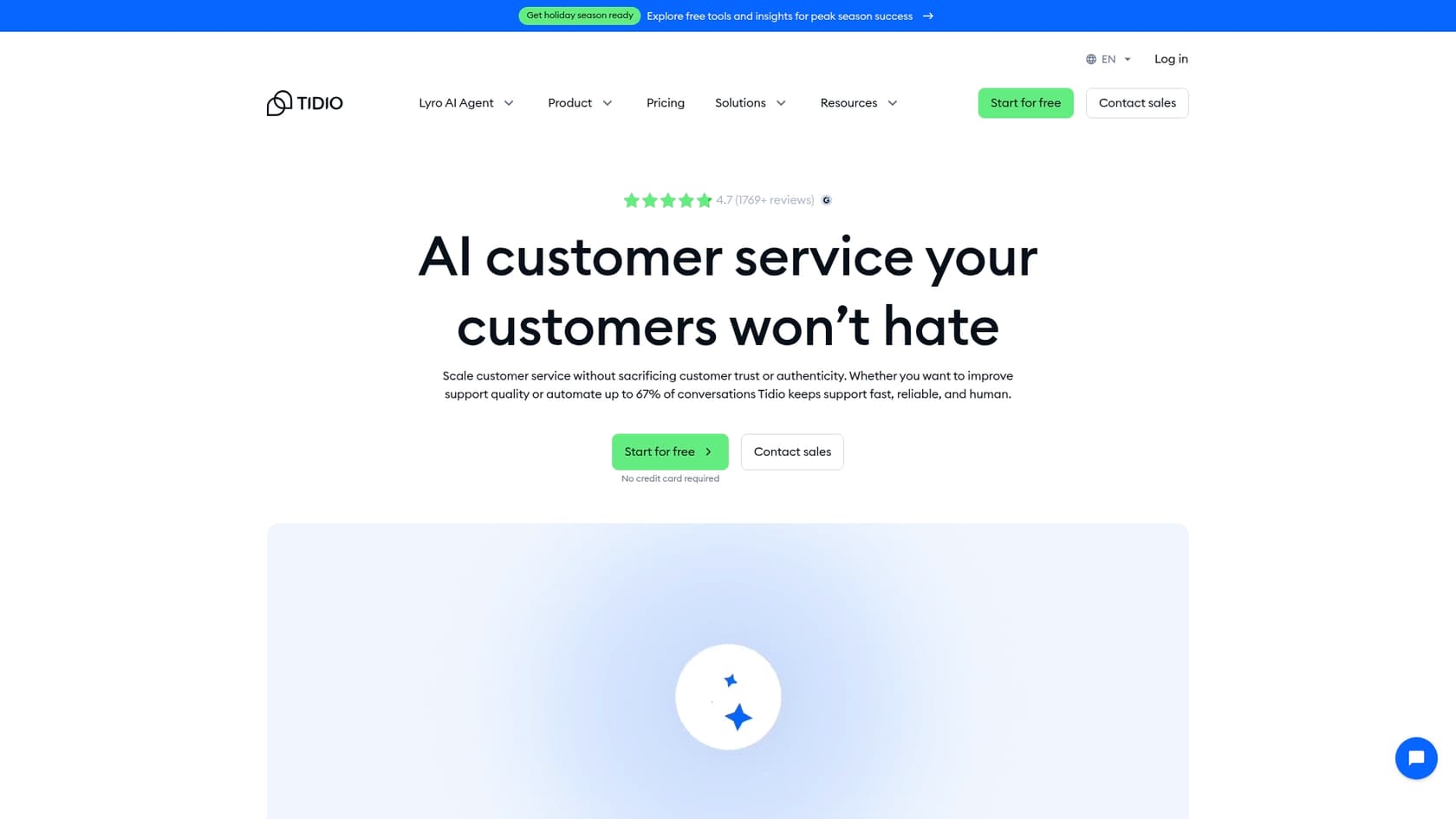
If you're running an online store, Tidio is built for you. It's less of a full-blown CRM and more of a customer engagement tool that's fantastic at turning website window shoppers into actual customers. It mixes live chat, AI chatbots, and marketing automation to engage visitors, and it plugs directly into e-commerce platforms like Shopify.
-
Pros:
-
Amazing for e-commerce stores, with deep integrations.
-
The AI chatbot builder is powerful but surprisingly easy to use.
-
The free plan is very generous with its chat and chatbot features.
-
Cons:
-
It’s not a standalone CRM; it works best alongside another system.
-
Its focus is almost entirely on e-commerce.
-
Pricing: A free plan is available. Paid plans start at $24.17 per month.
-
Why it's a good alternative: For online stores, Tidio is a powerhouse for the top of your sales funnel. It automates the messy work of capturing leads and feels completely natural to the online shopping experience.
How to supercharge your Salesforce alternative with AI chat
So, you’ve picked a new CRM. That’s a huge step! But a shiny new CRM is a bit like an empty bucket, it’s only useful once you start filling it with high-quality leads. And that’s where things can get tricky. You can’t just hope that people will fill out your "Contact Us" form.
This is where an AI-powered sales chatbot can completely change the game. Instead of letting interested visitors just click away, a chatbot can talk to them 24/7, turning that anonymous traffic into real sales opportunities.
A good chatbot can:
-
Qualify leads for you: It asks the right questions to figure out if a visitor is a good fit, so your sales team spends their time talking to people who are actually ready to buy.
-
Book meetings on the spot: It can connect to your team's calendars and schedule a demo right there in the chat, killing all that back-and-forth email nonsense.
-
Answer questions instantly: It acts like a digital sales assistant, answering product questions and guiding people, which makes for a much better customer experience.
That's exactly why we built the eesel AI Sales Chatbot. It's one of many powerful options that works within the HubSpot ecosystem, connecting with your product catalog (like from Shopify) and your help docs to give people accurate, helpful answers in seconds. You can get it up and running in minutes, not months. It works hand-in-hand with your CRM, making sure every good lead gets captured and sent right over to your sales team.
Choosing the right Salesforce alternative
The big takeaway here is that you don't have to feel locked into Salesforce. There’s a whole world of fantastic CRMs out there. Whether you need an all-in-one machine like HubSpot, an industry-leading platform like Zendesk, or something simple and affordable like Help Scout, there’s an option that fits.
The right choice comes down to your team's size, your budget, and how you sell. The goal is to find a platform that makes life easier, not harder. HubSpot, for example, has built an impressive ecosystem and marketplace that provides a mature, reliable platform for thousands of growing teams. And whichever CRM you land on, adding a smart tool like an AI chatbot on top will keep your sales pipeline full and your team happy.
Ready to turn more of your website visitors into qualified leads? Check out the eesel AI Sales Chatbot and see how you can start turning casual chats into customers today.

Frequently asked questions
Many companies look for alternatives due to Salesforce's high cost, significant complexity, and a feature set that might be overkill for their specific needs. Exploring alternatives can lead to better value and a more user-friendly experience tailored to your team.
We focused on ease of use, the presence of essential sales tools, transparent and fair pricing, integration capabilities with other business apps, and the platform's ability to scale with your business growth. These criteria help ensure a practical and effective choice.
Yes, several options like HubSpot Sales Hub, Freshsales, LiveAgent, and Tidio offer generous free plans for basic functionality. Help Scout also provides a very affordable starting price, making these excellent choices for budget-conscious teams.
HubSpot is a top choice for inbound marketing-led businesses due to its integrated marketing and sales hubs. It provides a seamless transition from lead generation to sales engagement, making it highly effective for that specific strategy.
Zendesk stands out for businesses where sales and support are closely linked, offering a unified view of customer interactions. Help Scout and LiveAgent also excel in integrating customer service with sales, ensuring better context for your team.
Freshsales, HubSpot, and Help Scout are frequently praised for their intuitive interfaces and user-friendly designs, allowing sales reps to get up and running quickly without extensive training. Their simplicity helps minimize the learning curve.
Share this article

Article by
Stevia Putri
Stevia Putri is a marketing generalist at eesel AI, where she helps turn powerful AI tools into stories that resonate. She’s driven by curiosity, clarity, and the human side of technology.
