If your enterprise runs entirely on ServiceNow, Moveworks is the native path with a proven track record across 5 million employees. But for organizations needing horizontal flexibility across AWS, Azure, and GCP, Aisera’s agentic orchestration offers a differentiator that splits the decision for multi-platform teams. Full breakdown of how these giants compare below.
Choosing the right AI agent for a large organization is no longer just about who has the best chatbot. In 2026, the conversation has shifted toward agentic reasoning, the ability for an AI to not just answer a question, but to plan and execute a multi-step workflow across your entire tech stack. Most enterprises are currently weighing two of the biggest names in this space: Aisera and Moveworks.
Both platforms have defined the category of AI-driven service management, moving far beyond the simple "if-this-then-that" logic of traditional bots. They use large language models (LLMs) to understand intent and automate the resolution of thousands of employee requests. However, their underlying architectures and recent corporate shifts.including high-profile acquisitions.have created a clear divide in which tool makes sense for which team.
What are Aisera and Moveworks?
At their core, both Aisera and Moveworks are enterprise-grade AI assistants designed to eliminate the friction of internal support. They act as a conversational front door where employees can ask questions, request access to software, or report technical issues without ever opening a traditional support ticket.
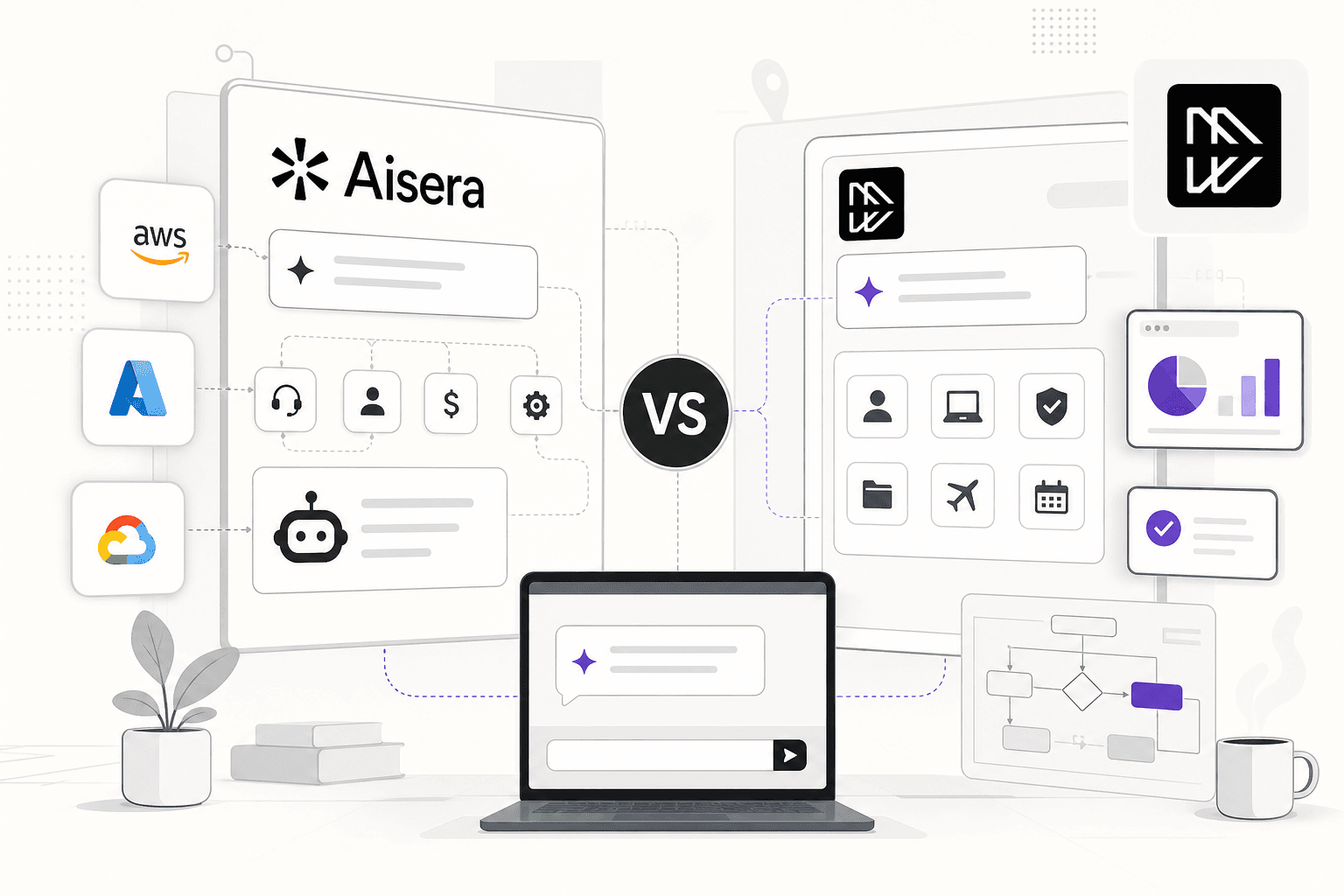
Aisera positions itself as a horizontal "Agentic AI" platform. It's built on a Gen-AI native architecture that is designed to be a "system of AI agents." These agents don't just reside in one department; they orchestrate workflows across IT, HR, Finance, and Customer Service. Aisera’s primary goal is autonomous execution, moving past conversational assistance to proactively remediate incidents and deflect tickets before they even reach a human queue.
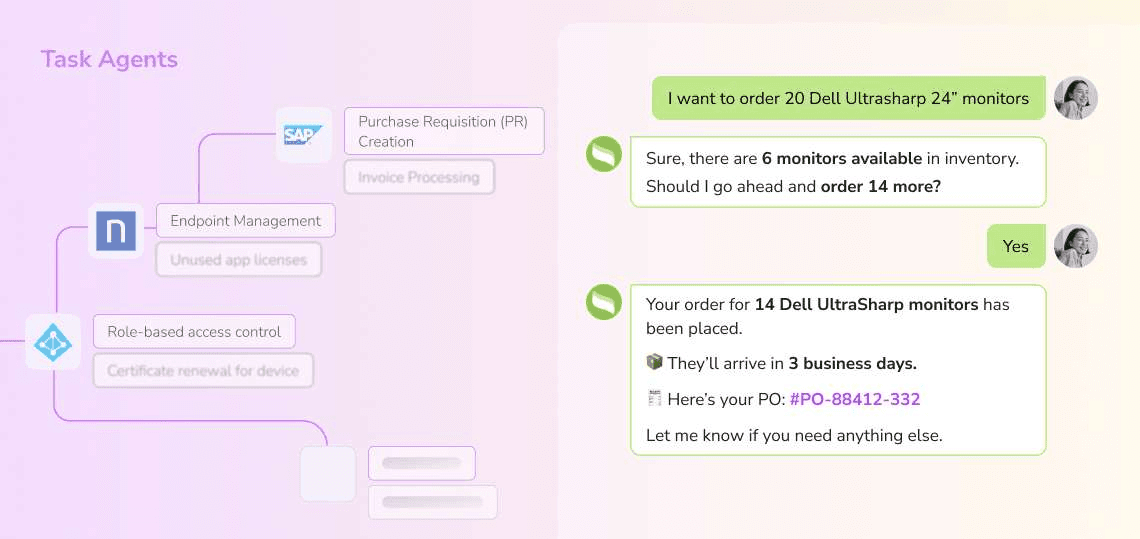
Moveworks, on the other hand, is built as a department-wide AI assistant that connects every employee to the business systems they use daily. It focuses on a "Search and Action" philosophy, where the assistant understands the context of a request and routes it to the correct application for end-to-end automation. Whether it's resetting a password in Active Directory or checking a travel policy in Workday, Moveworks aims to be a unified workspace for the entire workforce.
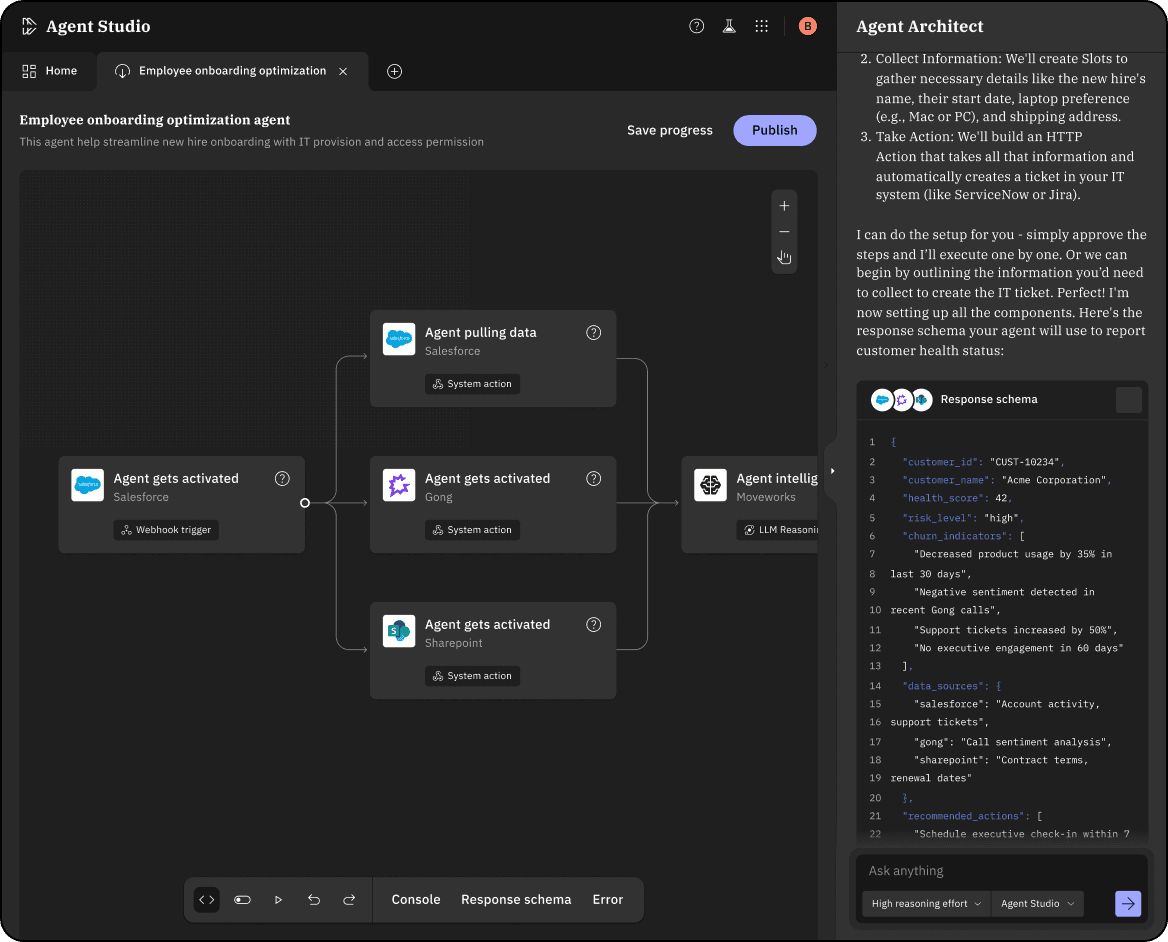
The core positioning reflects their different philosophies. Aisera functions as a system of agents that can be integrated into almost any cloud environment, including AWS, Azure, and Google Cloud Platform (GCP). In contrast, Moveworks emphasizes a unified, managed experience that feels like a single, intelligent teammate. Both are primarily targeted at large enterprises with 10,000 or more employees, where the sheer volume of support requests makes manual handling impossible.
Pricing and value: The custom quote reality
If you are looking for a simple "pricing" page with monthly per-seat costs, you won't find it with these two giants. Both Aisera and Moveworks operate on custom, enterprise-level pricing models that are usually based on interaction volume or the overall business value (ROI) they deliver.
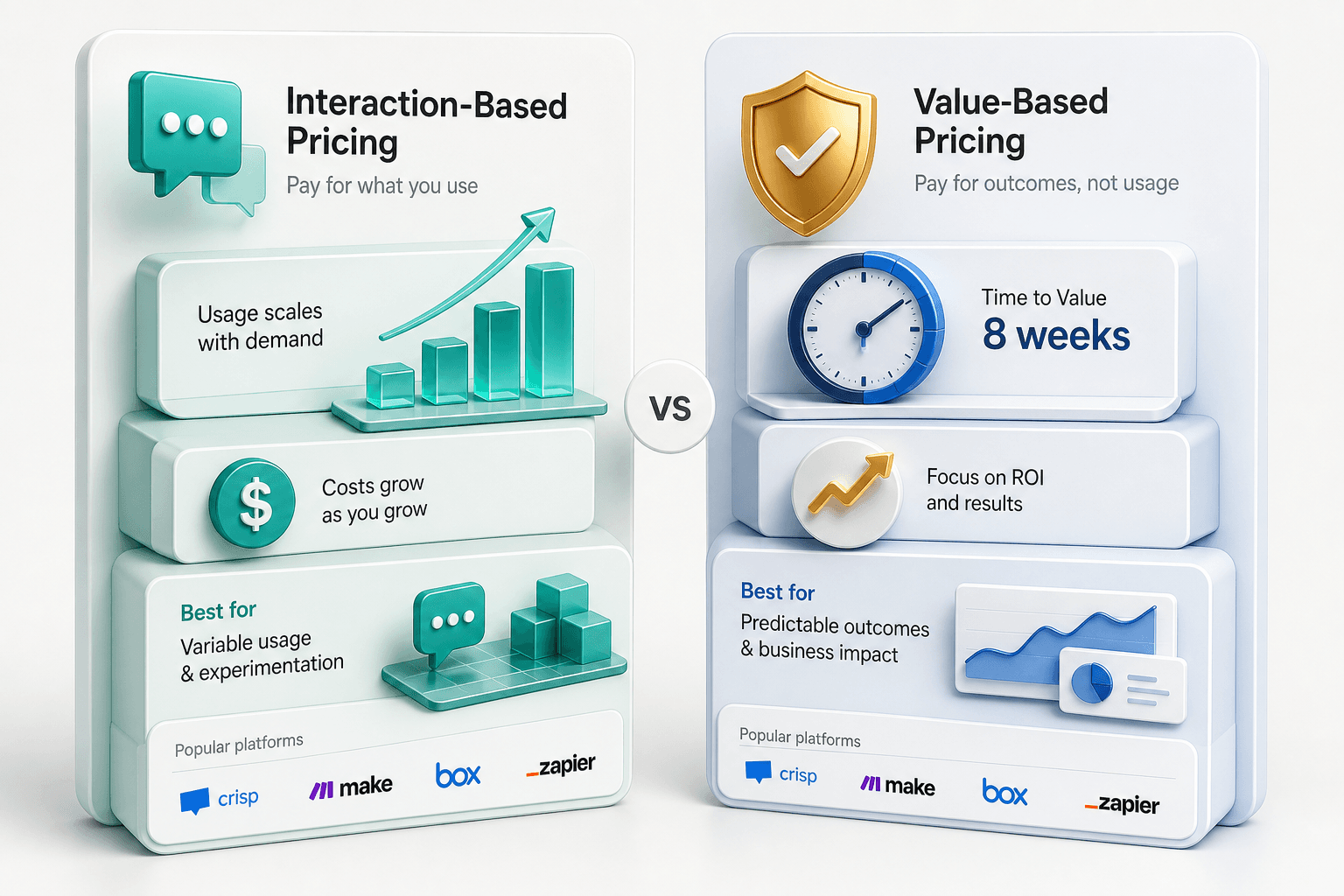
Aisera typically uses an interaction-based model. This means your costs are tied to how often employees actually use the AI to resolve issues. While this sounds scalable, the entry point is high. Historical data and market research suggest that enterprise deployments for these platforms often range from $100,000 to over $500,000 per year.
Moveworks focuses its pricing discussions on "Time to Value," often citing an 8-week typical implementation period before organizations see a return on investment. Their model is highly customized to the complexity of your integration ecosystem. Because both tools are "high-touch" and requires significant setup, you should also factor in the cost of professional services, which are often required to map out initial workflows and connect legacy systems.
| Feature | Aisera | Moveworks |
|---|---|---|
| Pricing Model | Interaction-based (Custom Quote) | ROI/Value-based (Custom Quote) |
| Transparency | Custom quote only | Custom quote only |
| Hidden Costs | Professional services and setup fees | Professional services and setup fees |
| Target Market | 10,000+ employees | 10,000+ employees |
The ServiceNow factor: How the acquisition changes things
One of the biggest shifts in the enterprise AI landscape in 2026 was the acquisition of Moveworks by ServiceNow for $2.85 billion. This has fundamentally changed the decision-making process for many IT leaders.
If your organization is already standardized on the ServiceNow platform, Moveworks is now essentially the "native" choice. The integration is deeper than ever, with Moveworks capabilities being baked directly into the ServiceNow "Otto" experience. This means faster deployments, better data syncing, and a unified licensing model for teams already paying for ServiceNow’s ITSM or HRSD modules.
However, this acquisition also introduces a level of platform lock-in. For multi-platform teams that use a mix of help desks (like Zendesk or Jira) or multiple cloud providers, there is a perceived risk of "roadmap bias." Aisera has leaned into this by positioning its neutral "Horizontal Platform Architecture" as a hedge against such consolidation. Because Aisera is now part of the Automation Anywhere ecosystem, it maintains a focus on being cloud-agnostic, supporting AWS, Azure, and GCP equally without favoring a specific help desk vendor.
Implementation and ongoing management: "Builder" vs "Managed"
Choosing between these two often comes down to your team's appetite for customization. Both tools typically require four to six months for a full enterprise-wide rollout, but the experience during those months differs.
Aisera is very much a "builder" platform. Their "Agent Composer" is a low-code environment that allows your technical teams to build or customize AI agents using natural language prompts. It's powerful, but it requires a dedicated admin or a team of IT professionals to maintain and refine the agents over time. If you want granular control over exactly how your AI reasons through a specific, unique business process, Aisera gives you the tools to build it.
Moveworks is generally seen as a more "managed" experience. Their philosophy is to provide "out-of-the-box" resolution. While you can customize agents via their "Agent Studio," the platform is designed so that the "Moveworks Brain" does the heavy lifting of understanding and routing intent. This usually means less ongoing maintenance for your internal IT staff, as the platform is constantly learning from its 5 million global users to improve its reasoning engine.
One recurring piece of feedback from the community is that Aisera often requires more manual oversight to ensure the AI does not "deflect" issues (sending a user a link) instead of actually "auto-solving" them (executing the task). If your team is lean, the managed nature of Moveworks might be more appealing than the builder-first approach of Aisera.
Better alternatives for the mid-market
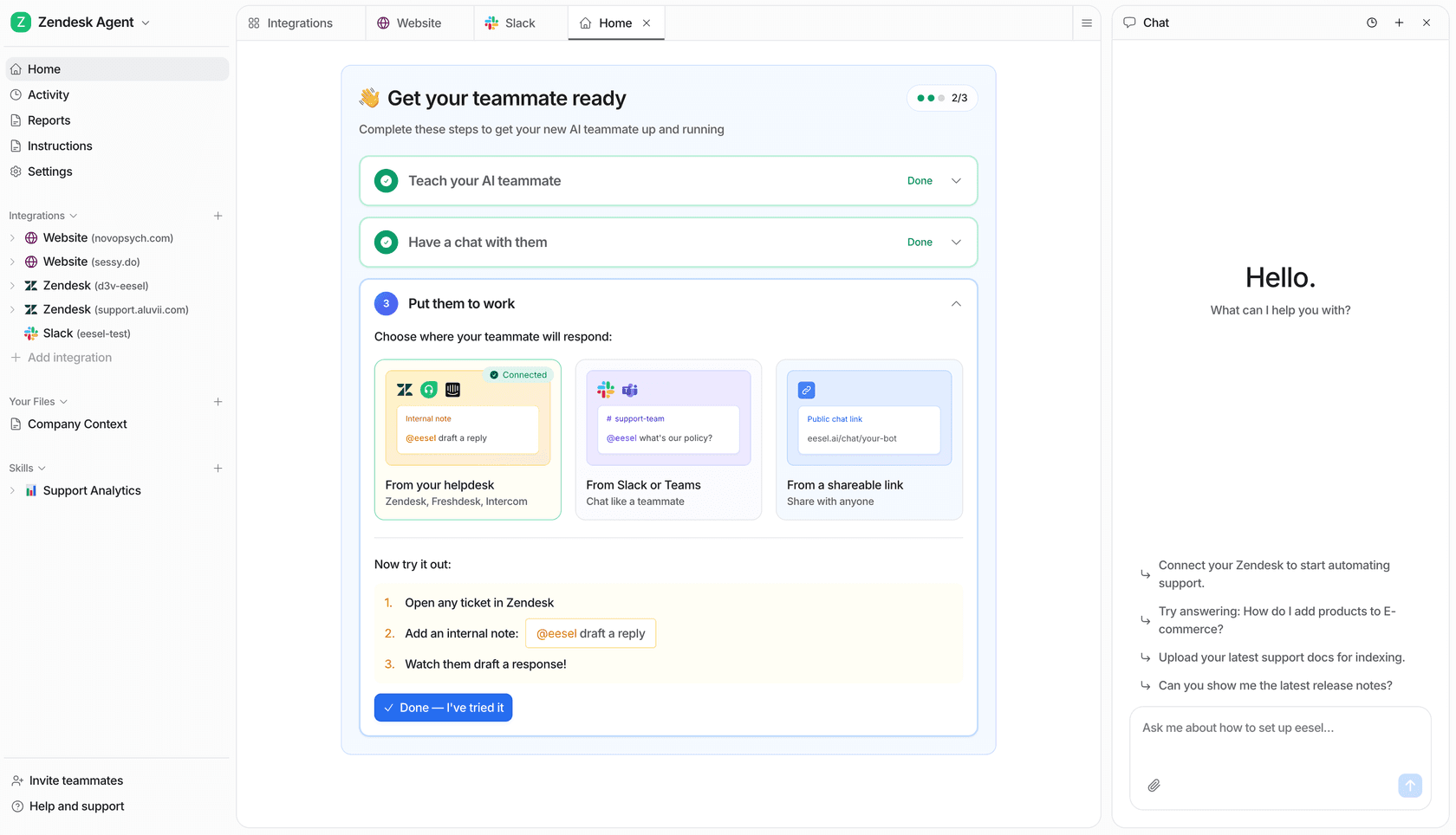
While Aisera and Moveworks are the titans of the industry, they aren't always the best fit for every company. For companies with 500 to 2,000 employees, these platforms can be total overkill. The six-figure price tag and six-month implementation cycle are often too much for a mid-sized IT team to swallow.
This is where more agile, self-serve tools have started to take over the market. At eesel AI, we built our platform to solve the "time to value" problem. We found that most teams don't want to wait half a year to see if an AI works. That is why we focused on a self-serve setup that takes minutes, not months. One of our key features is "Simulation Mode," which lets you test our AI on your past support tickets to see exactly how it would have handled them before you ever go live.
| Feature | Aisera / Moveworks | eesel AI |
|---|---|---|
| Setup Time | 4-6 Months | < 5 Minutes |
| Pricing | $100k - $500k+ / Year | Starts at $299 / Month |
| Implementation | High-touch / Consultants | Self-serve |
| Core Feature | Enterprise-wide automation | Support and knowledge automation |
Choosing the right AI partner for your team
Deciding between Aisera vs Moveworks ultimately comes down to your existing infrastructure and your internal resources.
If you are a ServiceNow-first organization, Moveworks is the logical partner. The synergy between the two platforms post-acquisition makes it the most streamlined path for organizations that want to leverage their existing ServiceNow investment for employee support.
If you are a multi-cloud or multi-helpdesk organization, Aisera’s horizontal approach provides the flexibility you need. Its ability to act as a "system of agents" across different cloud providers ensures that you aren't tied to a single vendor's ecosystem as your tech stack evolves.
Bottom line? Both are heavyweights that require a significant commitment. If you are not ready for a six-figure investment or a half-year rollout, we recommend starting with a more lightweight solution. At eesel AI, we offer the ability to run a simulation using your actual data so you can see your potential automation rate today, without the long wait.