The market for AI SEO tools is expanding rapidly. With many new apps emerging, each promising to be a comprehensive solution for search engine optimization, it can be challenging to identify the most effective tools.
This guide provides a hands-on look at tools that can impact an SEO workflow. It covers solutions for creating content, tracking visibility in AI-generated answers, and accelerating technical tasks.
There is also a significant shift in how people search. It's no longer just about ranking on a page of blue links. It’s about being the source for AI-generated answers, a concept called Generative Engine Optimization (GEO). Some site owners have already seen a 25% drop in Google impressions as user habits change. Addressing this shift is becoming essential.
What are AI tools for SEO and why you should care now
What exactly are these tools? They are software applications that use artificial intelligence to assist with SEO tasks, such as finding keywords, creating content, optimizing pages, and tracking performance. They can function as an assistant to handle repetitive tasks, allowing teams to focus on strategy.
The search landscape is changing. Google's AI Overviews, ChatGPT, and Perplexity are often the first place people go for information. Traditional SEO strategies are evolving. This evolution has led to the concepts of Generative Engine Optimization (GEO) and Answer Engine Optimization (AEO). The goal isn't just to rank on a results page, but to be the trusted source that AI models cite in their answers.
Using these tools can be essential for keeping pace with algorithms that determine content visibility in modern search environments.
How we picked the top AI tools for SEO
To ensure this list is practical, we focused on specific criteria. The goal is to highlight tools that excel at specific functions rather than all-in-one platforms that may not specialize.
Here’s what we looked for:
-
Real-world effectiveness: The tool solves a tangible problem and saves time.
-
Specificity and accuracy: It provides actionable insights based on data, not just vague advice.
-
Ease of integration: It can be incorporated into an existing workflow without significant disruption.
-
Value for money: The price is justifiable for the results it delivers.
This list includes a mix of specialized tools for specific tasks and larger platforms with well-integrated AI features.
AI tools for SEO content creation and optimization
Content is a critical component of SEO. The AI tools in this category vary widely, from simple text generators to platforms that create content ready for publication. Producing generic AI-generated content can be ineffective for engaging audiences and search engines.
eesel AI blog writer
The eesel AI blog writer is designed for scaling SEO-optimized content creation. This tool was developed to address internal content scaling needs and has been used to significantly increase organic impressions.
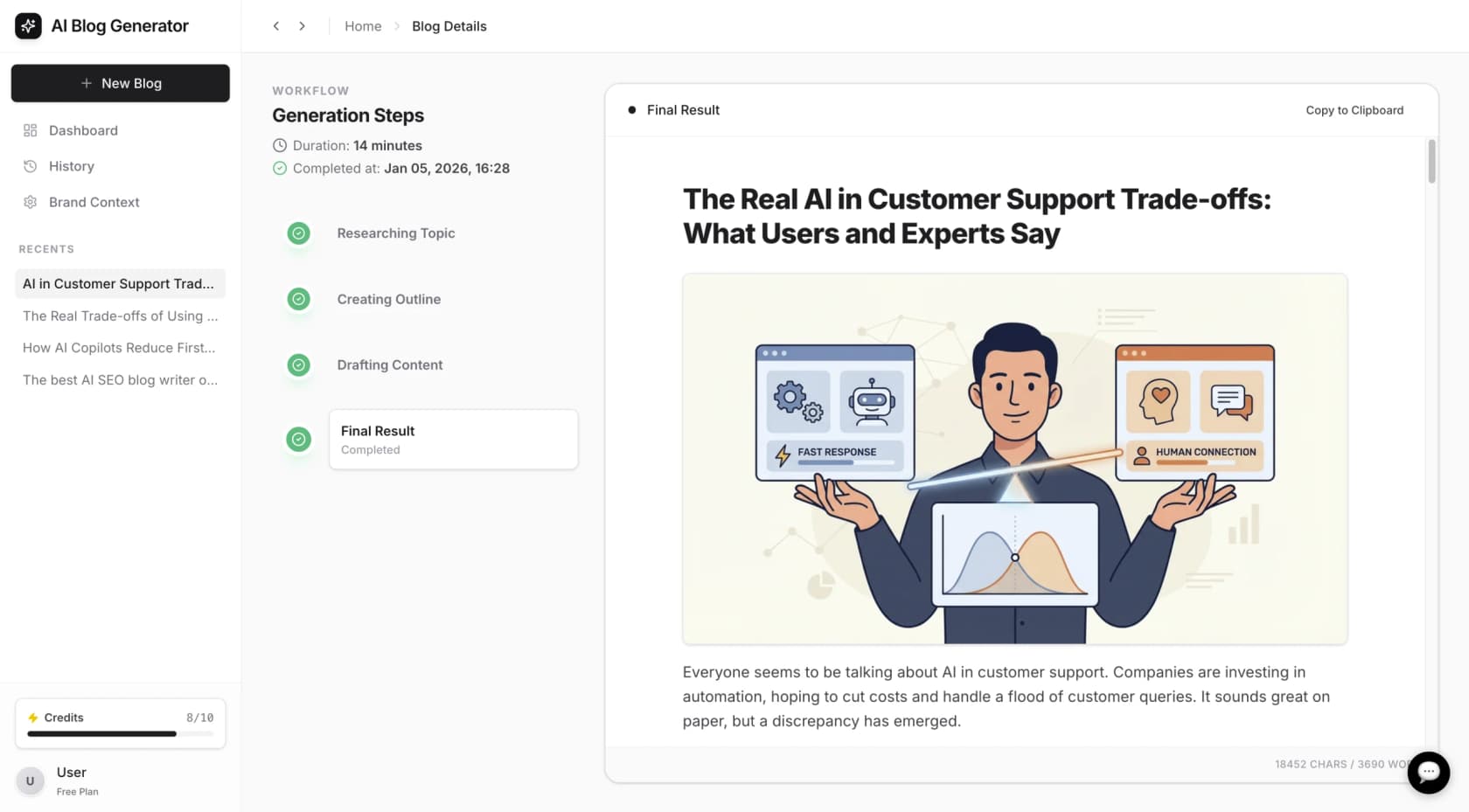
A key feature is its ability to generate complete, media-rich blog posts that are structured for immediate publishing, which can save a significant amount of time.
Key features for SEO include:
-
Automatic assets: It creates images, infographics, and tables, reducing the time spent sourcing or creating visuals.
-
Context-aware research: The AI pulls in relevant data based on the topic. For comparison posts, it can find pricing information, and for reviews, it can look for technical specs.
-
Social media integration: It automatically embeds relevant YouTube videos and finds quotes from Reddit threads, which adds authenticity and depth to posts.
-
AEO optimization: The content is structured to be understood and featured in AI answers from engines like Google AI Overviews and Perplexity.
A free trial is available to generate a blog post and evaluate its output.
Writesonic
Writesonic is presented as an "AI visibility platform" that brings together traditional SEO and Generative Engine Optimization (GEO).
Its standout feature is that it not only helps with content writing but also tracks a brand’s visibility across both Google and AI search platforms like ChatGPT, Claude, and Perplexity. It offers a single dashboard to monitor presence across multiple platforms. Its "Action Center" feature turns data into a list of tasks, like finding new citation opportunities or identifying content gaps. It also incorporates data from sources like Google Keyword Planner and Ahrefs.
Its AI Article Writer 6.0 handles competitor analysis, web research, and internal linking to create fact-checked articles.
Pricing: The Professional tier is required for GEO features, which starts at $199/month when paid annually.
Surfer SEO
Surfer SEO is a well-known tool for optimizing content by analyzing top-ranking search results.
Its main feature is the Content Editor. After inputting a keyword, it provides real-time suggestions for other keywords, article structure, and an ideal word count based on top-performing pages. This provides a data-driven approach to ensure comprehensive topic coverage.
A consideration is that adhering too strictly to its suggestions may result in content that sounds unnatural or over-optimized. A human touch is still needed to ensure readability.
AI works best when used for research, outlining, and speeding up drafts while the real ranking power still comes from expertise, strategy, and links.

Pricing: The Essential plan is $79/month (billed annually) and includes 30 articles in the Content Editor and 5 AI-written articles. The AI Tracker is an add-on starting at $95/month.
Clearscope
Clearscope is a tool designed to help human writers create better content. It focuses more on comprehensive topic coverage than keyword density.
It guides writers to include semantically related terms and concepts, which can result in more natural and thorough articles. Its integrations with Google Docs and WordPress provide live feedback within the writing environment. It also has features for tracking visibility on Google and in AI chatbots like ChatGPT and Gemini.
A key consideration is its pricing, as it is one of the more expensive options, making it a better fit for teams with larger content budgets.
Pricing: Plans start at $129/month for the Essentials plan, which provides 20 AI Tracked Topics and 20 AI Drafts.
AI tools for SEO visibility and rank tracking in AI search
With many searches resulting in zero clicks because the answer is provided in an AI overview, tracking traditional rankings may not be sufficient. The focus is shifting to tracking visibility within AI-generated answers. These tools help monitor if, where, and how AI search engines are referencing your brand.
Rankscale.ai
Rankscale.ai is a tool built specifically for Generative Engine Optimization (GEO).
Its primary function is to track brand visibility across a wide range of AI search engines, including ChatGPT, Perplexity, Google AI Overviews, Gemini, Claude, DeepSeek, Mistral, Grok, and Copilot. It provides detailed analytics, including citation analysis, competitor benchmarking, and sentiment analysis to monitor how AIs are referencing a brand. Its credit-based pricing can be suitable for agencies or marketers monitoring multiple brands or topics.
Pricing: Monthly plans start at $20/month for the Essentials plan, which includes 120 credits.
SE Ranking
SE Ranking is an all-in-one SEO platform that has integrated AI tracking into its existing suite of tools.
Its AI Visibility tool allows users to monitor brand mentions and links across Google AIOs, AI Mode, ChatGPT, Gemini, and Perplexity. A key aspect is that AI tracking is offered as part of a broader toolkit that also includes traditional rank tracking, site audits, and competitor research. It’s a suitable option for teams who prefer an all-in-one solution.
Pricing: The AI tracker is part of the Pro plan, which starts at $95.20/month when billed annually.
Search Atlas
Search Atlas is another all-in-one platform that combines a full set of SEO tools with AI automation features.
Its LLM Visibility™ feature tracks brand mentions, sentiment, and share of voice in answers from models like ChatGPT, Gemini, and Perplexity. A unique feature is its AI agent, OTTO SEO™. The company states it can automate technical fixes, on-page optimizations, and assist with content creation, which can potentially save time.
Pricing: The Starter plan is $99/month and includes LLM visibility tracking for two projects.
AI tools for SEO for technical tasks and outreach
AI is also simplifying technical SEO tasks like page indexing and backlink building.
Indexly
Indexly offers two main benefits. First, it automates the process of getting new pages indexed by Google and Bing. Second, it provides a suite of AI visibility tools.
Its "set it and forget it" auto-indexing feature is a helpful feature. It scans your sitemap and automatically submits unindexed URLs using the official Google Indexing API and Bing IndexNow. It also has an AI Readiness Audit to help optimize a site for crawlers like GPTBot and ClaudeBot, and it can track brand mentions and sentiment in AI answers.
Pricing: A free 7-day trial is available, and the paid Solo plan starts at $14/month.
Pitchbox
Pitchbox is an outreach platform built for SEO agencies and in-house teams who need to build links at scale.
It uses AI for personalization and reply generation. Its AI Personalization feature can customize outreach emails for each prospect to avoid generic templates, and its AI Reply feature helps generate responses for link negotiations. A human review of the final emails is still recommended, but it automates a significant part of the workflow.
Pricing: Plans start at $165/month for the Pro plan, which includes 2,000 outreach emails per month.
To see how these different tools stack up against each other in practice, it can be helpful to watch a comparative review. The following video offers a tier list of popular AI tools for SEO, providing insights into which ones deliver the best results in 2025.
Choosing the right AI tools for SEO
There is no single AI tool for SEO that is perfect for every task. The right tool depends on the specific goal, whether that’s generating content, understanding visibility in AI answers, or automating technical tasks.
While all-in-one platforms offer convenience, specialized SEO tools can provide more in-depth solutions for specific tasks like content generation and GEO tracking.
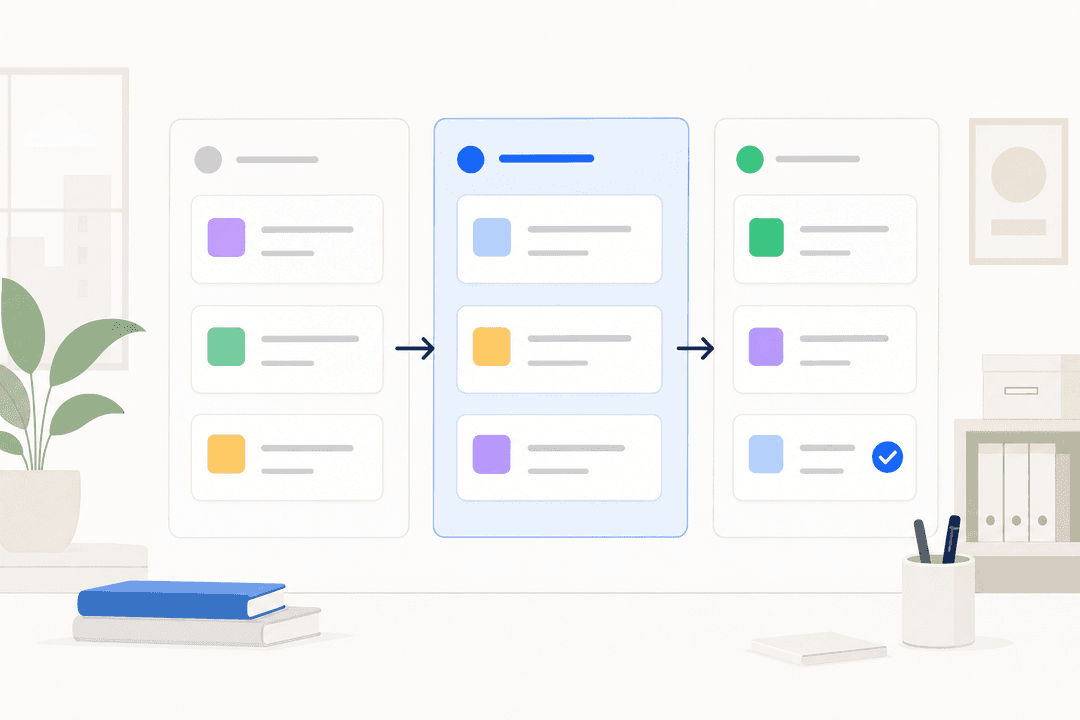
The trick isn’t just 'using AI tools' it’s connecting them into a workflow: research → creation → optimization → distribution → visibility in LLMs.
A core component of modern SEO is content. To perform well in an AI-driven environment, content should be comprehensive, authoritative, and structured for both human readers and machine crawlers.
Experimenting with different tools is an effective way to find the best fit for your specific needs. Many platforms offer free trials to evaluate their capabilities.

Frequently asked questions
While most advanced tools require a subscription, many offer free trials or limited free plans that are great for getting started. For instance, the eesel AI blog writer has a free trial that lets you generate a full, publish-ready article. Other tools might offer a certain number of free credits or reports per month, giving you a chance to test their capabilities without a financial commitment.
They go beyond traditional keyword volume by analyzing the top-ranking pages (SERPs) to identify semantically related terms, common questions, and content structure. Tools like Surfer SEO do this by giving you a data-driven list of terms to include, helping you create more comprehensive content that matches search intent.
Yes, they can be very effective. AI-powered tools can quickly crawl your site to identify issues like broken links, slow page speed, and indexation problems. Some platforms, like Search Atlas with its OTTO SEO™ agent, claim to automate the fixes for these technical issues, saving you a significant amount of time.
It is generally not recommended. A common approach is to use AI as a powerful assistant for human writers. AI can handle research, outlining, and first drafts, but a human touch is still essential for ensuring originality, tone of voice, and factual accuracy. Tools like Clearscope are specifically designed to augment, not replace, human writers.
The biggest risk is producing generic, low-quality content that doesn't offer unique value. If you simply copy-paste what an AI generates without editing or adding your own expertise, your content may sound generic and may not stand out. This can harm your brand's authority and may not perform well in search results long-term.
They help in two main ways. First, content creation tools like the eesel AI blog writer help structure articles to be easily understood and cited by AI models. Second, visibility tracking tools like Rankscale.ai and Writesonic monitor if and how your brand is being mentioned in AI-generated answers, giving you the data you need to improve your presence.
Share this article

Article by
Stevia Putri
Stevia Putri is a marketing generalist at eesel AI, where she helps turn powerful AI tools into stories that resonate. She’s driven by curiosity, clarity, and the human side of technology.