
Let's be real: the pressure to deliver faster, better support never stops, but your team is already maxed out. Every minute someone spends on another password reset is a minute they can't use to solve a tricky customer issue that actually matters. What if you could clear the noise and let your team focus on the important stuff?
This is where the idea of an intelligent agent in AI steps in. We're not talking about some far-off sci-fi robot. These are practical tools you can use right now to handle routine tasks, give your team superpowers, and genuinely improve your support operations.
In this guide, we’ll cut through the hype. I'll explain what an AI agent is in plain English, walk you through the different kinds you'll see, show you how they're being used in support today, and most importantly, help you figure out how to get started without the usual implementation nightmares.
So, what exactly is an intelligent agent in AI?
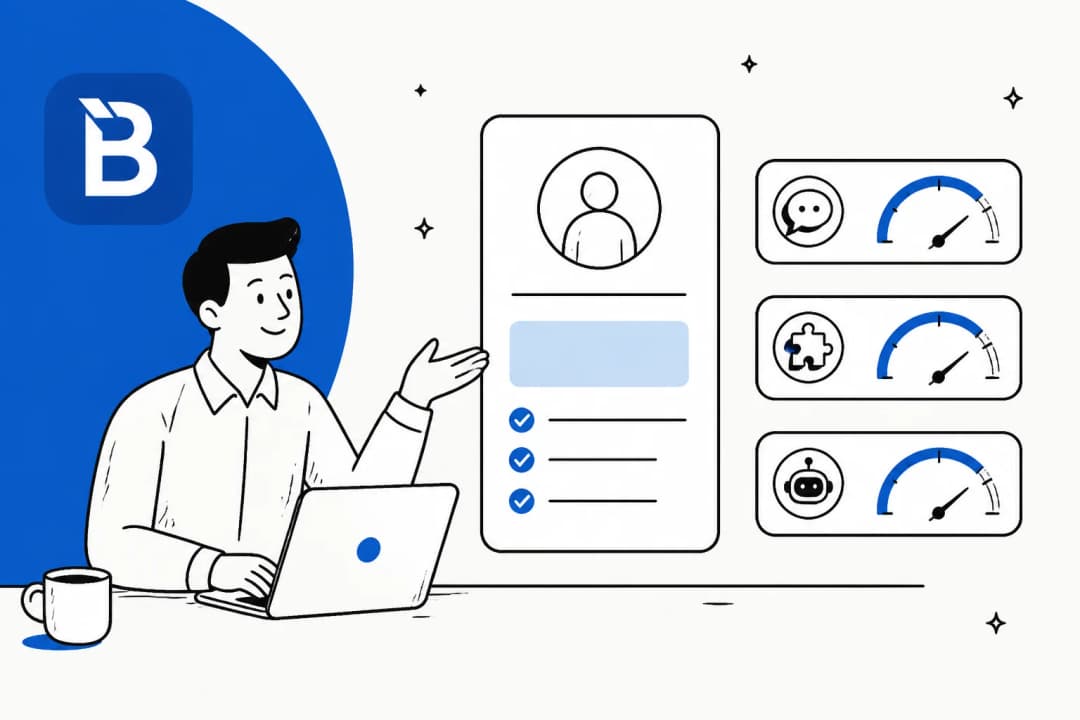
Simply put, an intelligent agent is a piece of software that can understand its surroundings and act on its own to get something done. Think of it less like a rigid script and more like a digital twin of one of your sharpest support agents.
Let's stick with that analogy for a second:
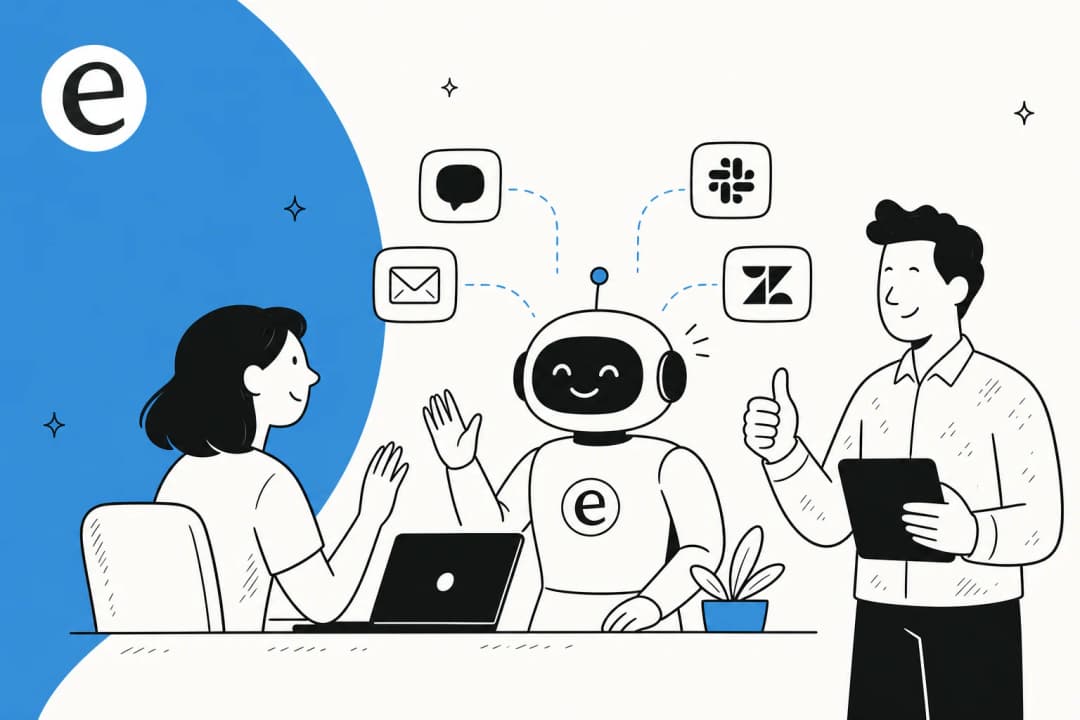
- Sensing the situation: Your human agent sees a new ticket or a message pop up in a chat. An intelligent agent in AI "senses" its environment by processing data from its connection to a help desk like Zendesk or a tool like Microsoft Teams.
- Thinking it through: A human agent uses their training and past experience to figure out what to do. An AI agent uses its programming and a large language model (LLM) to decide the next best step based on the info it's been given.
- Taking action: Your agent types a reply, adds a tag, or escalates the ticket. An AI agent can do the exact same things automatically right inside the help desk, closing a ticket, tagging it, or sending it to the right person.
The goal is always to move a task forward, whether that’s answering a question, sorting a new ticket, or flagging something urgent for a human to look at.
But here’s the thing: the best agents don't work in a bubble. Their "brain" is only as good as the knowledge it can access. That’s why modern tools like eesel AI are built to connect all your company's scattered knowledge, from old tickets and macros to articles in Confluence and Google Docs. This makes the agent smart and context-aware from the get-go.
The different types of intelligent agent in AI explained
It’s good to know that not all agents are built the same. Their skills can range from super simple automation to complex, adaptive learning. Knowing the difference helps you see past the marketing buzz and pick the right tool for what you need.
1. The simple reflex intelligent agent in AI
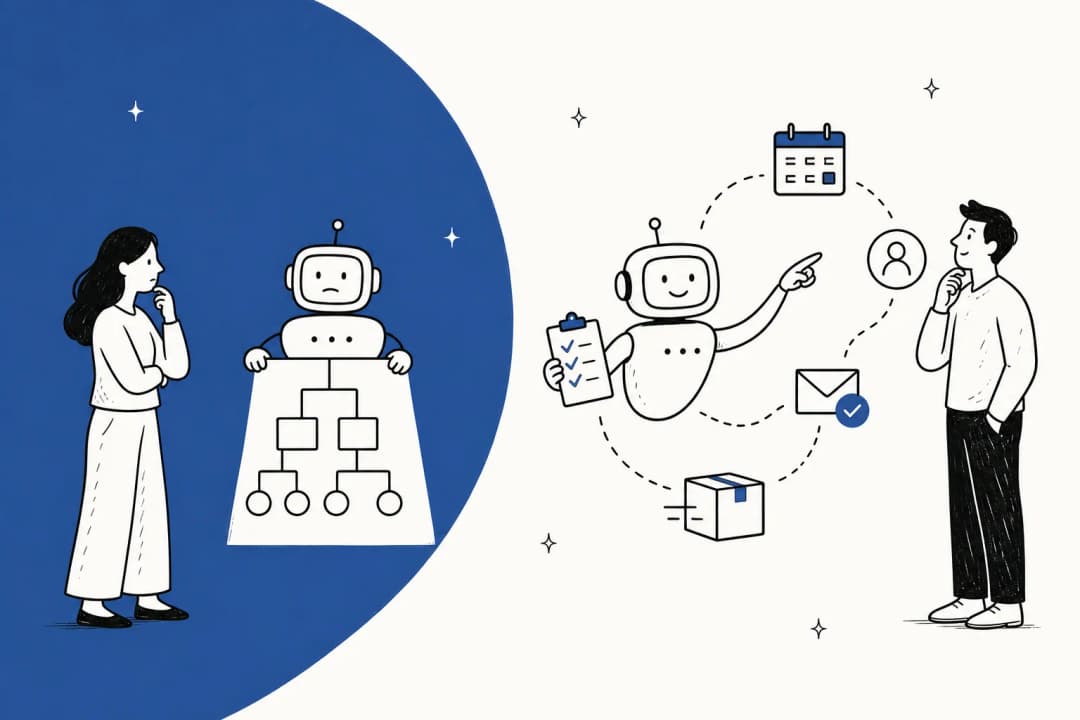
- What they do: These are the most basic agents out there. They act based only on what's happening right now, following a simple "if this happens, do that" rule. They have no memory of what came before.
- A real-world example: Think of a simple email rule in your help desk. If a ticket comes in with "refund" in the subject, it automatically gets sent to the billing team.
- The catch: They're very rigid and can't handle any gray areas. If a customer writes a rave review but happens to mention a "refund" they got last year, their ticket still gets sent to billing, causing unnecessary confusion.
2. The model-based reflex intelligent agent in AI
- What they do: These are a step up. They keep a simple internal "model" of how things work, which helps them deal with situations where they don't have all the info at once. They can remember what's happened in the current interaction.
- A real-world example: A chatbot that remembers the last few questions you asked in a single conversation. This lets it give more relevant answers instead of treating every message like a brand-new interaction.
- The catch: As soon as the conversation ends, its memory is wiped clean. It doesn't learn from one customer to the next, so it’s bound to make the same mistakes again.
3. The goal-based intelligent agent in AI
- What they do: These agents think ahead. Instead of just reacting, they consider the results of different actions to figure out a path that will lead to a specific goal.
- A real-world example: A logistics agent that maps out several delivery routes to find one that achieves the goal of "fastest delivery," factoring in things like traffic and distance.
- The catch: They can be slow because they have to weigh so many options. They also see all successful paths as equal, even if one is way more efficient or cheaper than another.
4. The utility-based intelligent agent in AI
- What they do: This is a smarter version of a goal-based agent. It still wants to reach a goal, but it also tries to maximize "utility", basically, a score for how good the outcome is. This means it picks the best path, not just any path that gets the job done.
- A real-world example: A travel booking agent that finds a flight. It doesn't just get you to your destination (the goal); it also balances cost, layovers, and airline ratings to find the option you'd be happiest with (the utility).
- The catch: Figuring out what "utility" means can be really complicated and often requires a ton of data and setup. It's usually more than you need for standard support tasks.
5. The learning intelligent agent in AI
- What they do: Now we're talking. This is the most advanced type and the one that’s most useful for businesses today. These agents actually get better over time by learning from experience. They take feedback and past results to make smarter decisions in the future.
- A real-world example: An AI support agent that goes through thousands of your company's old support tickets. It learns your unique tone of voice, gets the context behind your customer issues, and figures out the best solutions for common problems. It gets smarter with every interaction it sees.
- How eesel AI fits in: This is the core of modern support automation. Solutions like eesel AI act as powerful learning agents, training on your past tickets automatically to understand your business inside and out. It keeps improving as your team handles new issues, so it's always up-to-date without you having to retrain it manually.
Real-world use cases for an intelligent agent in AI support
The theory is one thing, but the real magic is seeing how these agents solve the everyday headaches that bog your team down. Here are a few AI agent examples that can change your support workflow for the better.
Autonomous ticket resolution with an intelligent agent in AI
We've all been there: your queue is flooded with the same simple questions again and again. "How do I reset my password?" or "What's your return policy?" These eat up a huge amount of your team's time.
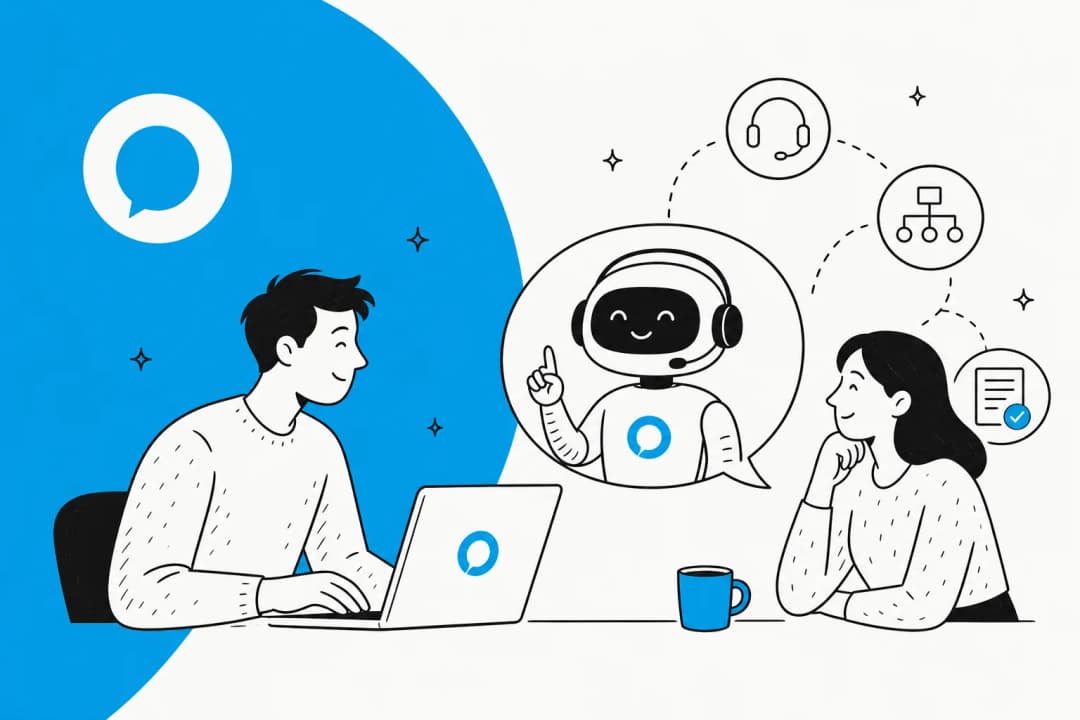
An AI agent can spot these common questions, grab the right answer from your knowledge base, and reply to the customer instantly. It can then close the ticket, and a human never has to even look at it. With the eesel AI Agent, you get fine-tuned control. You can set it up to only handle specific Tier 1 tickets you're comfortable with, letting it resolve the easy stuff while safely passing everything else to your team.
Intelligent agent in AI for assistance and co-pilots
Getting new agents up to speed can take months. And even your seasoned pros spend too much time digging for articles and typing out similar replies all day long.
An AI co-pilot works right alongside your team in the help desk. It can draft replies in your company's voice, pull up relevant knowledge base articles, and even handle simple tasks like tagging a ticket with just one click. The eesel AI Copilot learns from your best agents' replies, helping new hires sound like veterans from day one and speeding up resolutions for everyone.
Automated ticket triage and routing with an intelligent agent in AI
Manually tagging and routing every single ticket is slow and full of human error. It creates bottlenecks and leaves customers waiting around.
An AI triage agent can read every new ticket the moment it arrives. It figures out what the customer needs and automatically adds the right tags, sets the priority, and sends it to the right person or team. The eesel AI Triage keeps your queue clean and moving, making sure every ticket gets where it needs to go in seconds, not hours.
The hidden challenges of an intelligent agent in AI (and how to avoid them)
AI agents are powerful, but let's be honest, not all of them are easy to work with. Many vendors sell tools that sound great in a demo but turn into a massive headache to actually implement and manage. Here are the common traps and how to sidestep them.
| Common Challenge | The Old-School Vendor Way | The eesel AI Way |
|---|---|---|
| Painfully Long Setup | Get ready for months of onboarding calls, mandatory demos, and needing developers for API work. They might even try to make you switch help desks. | Go live in minutes. It’s a completely self-serve setup with one-click integrations. You don't even need to talk to a salesperson to start. |
| "All or Nothing" Automation | You get a black box you can't control. You're forced to automate everything at once, which is a pretty big risk to take. | You're in complete control. You decide exactly which types of tickets to automate. Start with one simple topic and expand when you feel confident. |
| Generic, Robotic Replies | Their AI is trained on random internet data, meaning you have to spend months building a knowledge base from scratch just to get decent answers. | Learns from your data. eesel AI instantly trains on your past conversations and connects all your knowledge sources for answers that are actually relevant and on-brand. |
| The "Hope for the Best" Launch | There's no good way to test it. You just have to flip the switch and cross your fingers, hoping it doesn't create a bad experience for your customers. | Test with total confidence. Our simulation mode runs the AI on thousands of your past tickets, so you can see exactly how it will perform and get a real ROI forecast before you activate it. |
| Pricing That Punishes Growth | They charge you per ticket or per resolution. So, the more successful you are, the more your bill goes up. It's a weird way to punish you for growing. | Simple, predictable pricing. We offer flat-rate plans based on usage. No per-resolution fees. You can even start on a monthly plan and cancel anytime. |
Your First Step Towards Automation with an Intelligent Agent in AI
An intelligent agent in AI isn't some complicated, futuristic idea anymore. It's a real tool you can use to start automating your support work today. We've seen how these agents grew from simple rule-followers into smart learning systems that can truly change how a support team works.
Success isn't about chasing the fanciest AI model. It's about finding a platform that lets you deploy, control, and test your agent without pulling your hair out. You need a system that learns from your own business data and fits right in with the tools your team already relies on.
Ready to build your own intelligent agent in AI in minutes?
Stop spending your days drowning in repetitive tickets. Give your team an AI agent that works for them, not the other way around.
With eesel AI, you can connect your help desk, train an agent on your team's knowledge, and see how it would perform in under 10 minutes.
Start your free trial today and see for yourself how easy intelligent automation can actually be.
Preguntas frecuentes
Estoy un poco nervioso con esto. ¿Cómo puedo estar seguro de que un agente inteligente de IA no se descontrole y empiece a enviar respuestas incorrectas a nuestros clientes?
Es una preocupación válida. Las plataformas modernas te dan control total al permitirte probar primero el agente en un modo de simulación. También puedes especificar exactamente qué tipos de tickets tiene permitido gestionar, asegurando que solo automatice las preguntas simples y previsibles con las que te sientas a gusto.
Siendo realistas, ¿cuánto trabajo supone entrenar a un agente inteligente de IA con el conocimiento específico de nuestra empresa? ¿Estamos hablando de semanas o de meses?
Es mucho más rápido de lo que crees. Los mejores sistemas se conectan directamente a tu help desk existente y a tus bases de conocimiento, aprendiendo automáticamente de tus tickets y artículos anteriores. Esto significa que puedes tener un agente bien entrenado listo para probar en minutos, no en meses.
¿El objetivo final de un agente inteligente de IA es reemplazar por completo a mi equipo de soporte humano?
Para nada. El objetivo es encargarse de las tareas repetitivas y de bajo valor que agotan a tu equipo, como restablecimientos de contraseñas o actualizaciones de estado. Esto libera a tus agentes humanos para que enfoquen su experiencia en problemas de clientes complejos y de alto impacto, donde más se les necesita.
Mencionaste varios tipos. Para un equipo de soporte típico, ¿con qué tipo de agente inteligente de IA es realmente más práctico empezar?
Para el soporte moderno, el "Agente de aprendizaje" es, con diferencia, el más práctico y valioso. A diferencia de los agentes más simples, mejora continuamente aprendiendo de las interacciones reales de tu equipo, asegurando que sus respuestas se mantengan relevantes y precisas sin actualizaciones manuales constantes por tu parte.
¿En qué momento tiene sentido financiero implementar un agente inteligente de IA? ¿Es solo para empresas gigantes?
Tiene sentido en cuanto tu equipo empieza a sentirse abrumado por preguntas repetitivas, sin importar el tamaño de la empresa. Si incluso el 15-20% de tus tickets son comunes y simples, un agente puede ofrecer un sólido retorno de la inversión al ahorrar a tu equipo decenas de horas cada semana.