
Managing support tickets efficiently often comes down to routing them to the right people at the right time. If your team handles requests from different types of customers (VIP accounts, partners, internal departments), you need a way to automatically categorize and route those tickets without manual intervention.
The Zendesk trigger condition organization domain solves this. This feature lets you create triggers that automatically handle tickets based on which organization the requester belongs to. Instead of manually sorting tickets or relying on agents to identify important customers, you can set up rules that do it instantly.
In this guide, I'll walk you through exactly how to set up organization-based triggers in Zendesk, from configuring email domain mapping to creating triggers that route tickets automatically. Whether you want to prioritize VIP customers, route partner requests to specialized teams, or simply organize your workflow better, this step-by-step tutorial will get you there.
What you'll need
Before you start setting up organization-based triggers, make sure you have:
- A Zendesk Support account on Team plan or higher (organization features aren't available on the Essential plan)
- Administrator access to create triggers and manage organizations
- A list of email domains you want to map to specific organizations
- A clear understanding of your support workflow (which tickets should go where)
For more on Zendesk plans and features, see the Zendesk pricing page.
If you're not sure about your plan level, check with your Zendesk admin. The organization and trigger features we use are available on Team, Professional, and Enterprise plans.
Understanding organization-based triggers
The Organization condition in Zendesk triggers lets you create rules that fire based on which organization a ticket requester belongs to. Think of it as a filter that checks "who is this customer?" and then takes action accordingly.
Here's how it works: when a ticket comes in, Zendesk checks the requester's organization membership. If that organization matches your trigger condition, the trigger fires and performs whatever actions you've configured (like assigning to a specific group, setting priority, or adding tags). Learn more about how organizations work in Zendesk.
This differs from other trigger conditions in a few key ways:
- It's based on the requester's profile, not just the ticket content. Unlike keyword-based triggers that look at subject lines or descriptions, organization triggers identify who the customer is.
- It leverages existing customer data. If you've already organized your customers into organizations, you can use that structure for automation without creating new tagging systems.
- It works automatically with domain mapping. When you map email domains to organizations, new users are automatically associated with the right organization, so your triggers work for first-time contacts too.
The key concepts to understand are:
- Domain mapping: Connecting email domains (like @companyabc.com) to organizations so users from those domains are automatically added
- Organization tags: Tags applied at the organization level that automatically appear on all tickets from users in that organization
- Default organizations: When a user belongs to multiple organizations, Zendesk uses their default organization for trigger evaluation
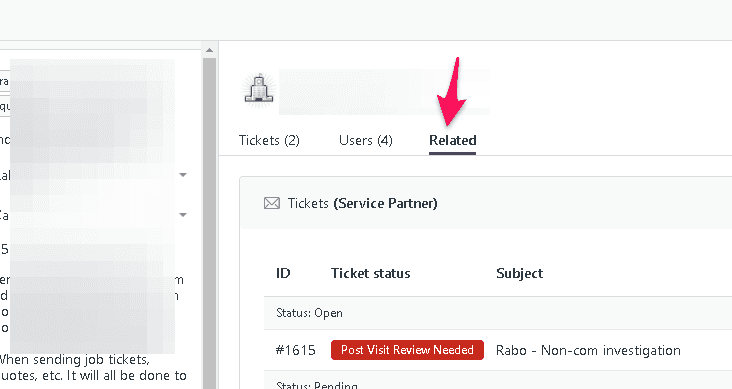
Step 1: Set up organizations with email domain mapping
Before you can create triggers based on organizations, you need to set up those organizations and configure domain mapping. Here's how:
Navigate to Organizations
In Zendesk Support, click the Organizations icon in the left sidebar. This opens your organizations list.
Create a new organization
Click Add organization. You'll see a form where you can enter:
- Name: Give your organization a clear name (like "VIP Customers" or "Partner - Acme Corp")
- Email domains: This is the key field for automation. Enter the domain(s) associated with this organization, separated by spaces. For example:
companyabc.com acme.com - Group: Optionally set a default group for tickets from this organization
- Tags: Add any tags you want automatically applied to tickets from this organization
How domain mapping works
When you add an email domain to an organization, Zendesk automatically associates any user who emails from that domain with that organization. So if you add companyabc.com to your "VIP Customers" organization, anyone emailing from @companyabc.com gets added to that organization automatically.
This happens when:
- A new user submits their first ticket
- An existing user emails from a mapped domain for the first time
- A user's manually added to the organization
Tips for managing multiple domains
- You can add multiple domains to a single organization (space-separated)
- Each domain can only map to one organization (if you add the same domain to multiple orgs, Zendesk uses the first alphabetically)
- You don't need to map domains if you'd prefer to manually manage organization membership
- Consider creating separate organizations for subsidiaries or divisions even if they share a root domain
Step 2: Create a trigger with the Organization condition
Now that your organizations are set up with domain mapping, you can create triggers that use the Organization condition to automate ticket handling.
Navigate to Triggers
Go to Admin Center > Objects and rules > Business rules > Triggers. This opens your triggers list.
Create a new trigger
Click Add trigger. You'll see the trigger creation form with three main sections:
- Name and description: Give your trigger a clear, descriptive name
- Conditions: Define when the trigger should fire
- Actions: Define what happens when conditions are met
Set the trigger name and description
Use a naming convention that makes the trigger's purpose clear. Good examples:
- "Route VIP Customers to Premium Support Group"
- "Set High Priority for Enterprise Organizations"
- "Tag Partner Tickets for Specialized Handling"
In the description, note why this trigger exists and what business rule it enforces. This helps other admins understand your logic.
Add trigger conditions
Under Meet ALL of the following conditions, add:
- Ticket > Is > Created (or "Updated" if you want this to fire on ticket updates too)
- Organization > Is > [Your Organization Name]
Select your target organization from the dropdown. If you have many organizations, start typing to filter the list.
Configure trigger actions
Under Actions, add what should happen when the conditions are met. Common actions for organization-based triggers include:
- Group: Assign the ticket to a specific support group
- Assignee: Assign to a specific agent (useful for account managers)
- Priority: Set ticket priority (great for VIP customers)
- Tags: Add tags for reporting or additional automation
- Type: Set ticket type (Question, Incident, Problem, Task)
For example, a VIP routing trigger might have these actions:
- Group: Premium Support Team
- Priority: High
- Tags: Add "vip_customer"
Save and test
Click Create to save your trigger. Test it by creating a test ticket from an email address in your mapped domain. Check that:
- The user gets added to the correct organization
- The trigger fires (check the ticket events)
- All actions execute correctly

Step 3: Use organization tags for advanced routing
Organization tags add another layer of flexibility to your automation. Instead of creating separate triggers for each organization, you can tag organizations and create triggers that work across multiple organizations with the same tag.
Add tags to organizations
When editing an organization, you'll see a Tags field. Add relevant tags like:
vipfor all high-value customerspartnerfor partner organizationsenterprisefor enterprise-tier customersemeafor European organizations
These tags automatically apply to every ticket from users in that organization.
Create triggers based on organization tags
Instead of using the Organization condition, use the Tags condition:
- Ticket > Tags > Contains at least one of the following:
vip
This approach has several benefits:
- Scalable: Add the
viptag to new organizations without creating new triggers - Flexible: One organization can have multiple tags for different routing rules
- Maintainable: Fewer triggers to manage
Example: Enterprise customer routing
Instead of creating a trigger for each enterprise customer, do this:
- Tag all enterprise organizations with
enterprise - Create one trigger:
- Condition: Tags contains
enterprise - Actions: Assign to Enterprise Support group, set Priority to High
- Condition: Tags contains
Now any new enterprise customer just needs the tag added to their organization, and they'll automatically get the right routing.
Common use cases and examples
Here are specific examples of how to use the Zendesk trigger condition organization domain for different scenarios:
VIP customer routing
Route your most important customers directly to senior agents:
| Condition | Value |
|---|---|
| Ticket > Is | Created |
| Organization > Is | VIP Customers |
| Action | Value |
|---|---|
| Group | Premium Support |
| Priority | High |
| Tags | Add vip_priority |
Partner support workflow
Give partners different handling than regular customers:
| Condition | Value |
|---|---|
| Ticket > Is | Created |
| Organization > Is | Partners |
| Action | Value |
|---|---|
| Group | Partner Success Team |
| Type | Task |
| Tags | Add partner_request |
Regional routing
Route tickets to regional teams based on organization location:
| Condition | Value |
|---|---|
| Ticket > Is | Created |
| Organization > Is | EMEA Customers |
| Action | Value |
|---|---|
| Group | EMEA Support |
| Tags | Add emea_region |
Priority escalation by tier
Automatically set priority based on customer tier:
| Condition | Value |
|---|---|
| Ticket > Is | Created |
| Tags > Contains at least one of | enterprise |
| Action | Value |
|---|---|
| Priority | Urgent |
SLA management
While SLAs are typically set via SLA policies, you can use organization triggers to add tags that help with SLA tracking:
| Condition | Value |
|---|---|
| Ticket > Is | Created |
| Organization > Is | Platinum Customers |
| Action | Value |
|---|---|
| Tags | Add platinum_sla |
Then create an SLA policy that targets tickets with the platinum_sla tag.
Best practices for organization triggers
After setting up dozens of these triggers across different Zendesk instances, here are the practices we've found make a real difference:
Use clear naming conventions
Name your triggers so anyone can understand their purpose at a glance. A format like [Category] - [Action] - [Target] works well:
- "Routing - VIP to Premium Group"
- "Priority - Enterprise to High"
- "Tagging - Partner Organizations"
Organize triggers by lifecycle
Arrange your triggers in the order they should execute. A typical lifecycle order:
- Open actions (set initial fields, tags)
- Routing (assign to groups based on organization)
- Workflow automation (escalations, notifications)
- Close actions (surveys, follow-ups)
Remember: Zendesk checks triggers from top to bottom, and earlier triggers can affect whether later ones fire.
Test before going live
Always test new triggers with sample tickets before relying on them. Check:
- Does the trigger fire when expected?
- Do all actions execute correctly?
- Does it conflict with existing triggers?
Document your trigger logic
Keep internal documentation explaining:
- Why each trigger exists
- What business rule it enforces
- When it should be updated
- Any related triggers
Monitor trigger performance
Periodically review your triggers to:
- Remove obsolete triggers
- Check that they're still firing correctly
- Find opportunities to consolidate
Troubleshooting common issues
Even with careful setup, organization triggers sometimes don't work as expected. The Zendesk community is a helpful resource for troubleshooting. Here's how to fix the most common problems:
Trigger not firing
If your trigger isn't firing, check these things in order:
- Is the user actually in the organization? Check the user's profile to confirm organization membership
- Is the organization condition correct? Verify you selected the right organization (typos happen)
- Is the ticket new? If your condition is "Ticket > Is > Created," the trigger only fires on new tickets
- Is another trigger interfering? An earlier trigger might be changing conditions that prevent yours from firing
User belongs to multiple organizations
When a user is in multiple organizations, Zendesk uses their default organization for trigger evaluation. To check or change this:
- Open the user's profile
- Look at their organization list
- The default organization is marked with a star
- Click the star next to a different organization to change it
If you need triggers to work across all of a user's organizations (not just their default), use organization tags instead of the Organization condition.
Domain mapping not working
If users aren't being automatically added to organizations:
- Check the domain format. Enter just the domain (
companyabc.com), not the full email or@symbol - Verify no conflicts. Make sure the domain isn't mapped to multiple organizations
- Check for existing users. Domain mapping only affects new users or first-time submissions from existing users
- Look at the email source. Some forwarding or email systems can mask the original domain
For more help, visit the Zendesk support documentation.
Conflicting triggers
If two triggers seem to be fighting each other:
- Check trigger order. The trigger that runs first might be changing fields the second trigger depends on
- Look at actions. If two triggers set the same field (like Group), the second one wins
- Use specific conditions. Make your conditions more precise so triggers don't overlap unintentionally
When to use organization tags vs. organization name
Use organization name when:
- You need precise, organization-specific routing
- Each organization has unique handling requirements
- You have fewer than 20 organizations to manage
Use organization tags when:
- Multiple organizations should get the same treatment
- You want scalable automation that works for new organizations
- You need to categorize organizations by type, tier, or region
Scaling beyond Zendesk triggers: When to consider AI automation
Organization-based triggers work well for straightforward routing rules, but they have limitations. They're essentially "if-then" statements: if the organization is X, then do Y. They can't understand context, learn from past decisions, or handle complex scenarios that aren't explicitly defined. For a deeper look at automation options, see our guide on AI for customer service.
Here's the challenge: as your support operation grows, you end up with dozens or hundreds of triggers. Each one handles a specific case, but together they become difficult to maintain. You might find yourself creating triggers for edge cases that happen rarely, or struggling to prioritize when multiple triggers could apply.
This is where AI-powered automation becomes worth considering. Unlike rule-based triggers, an AI system can:
- Learn from your historical ticket data to understand patterns you haven't explicitly defined
- Handle nuanced situations that don't fit simple rules
- Improve over time as it sees more examples
- Reduce the maintenance burden of managing hundreds of trigger rules
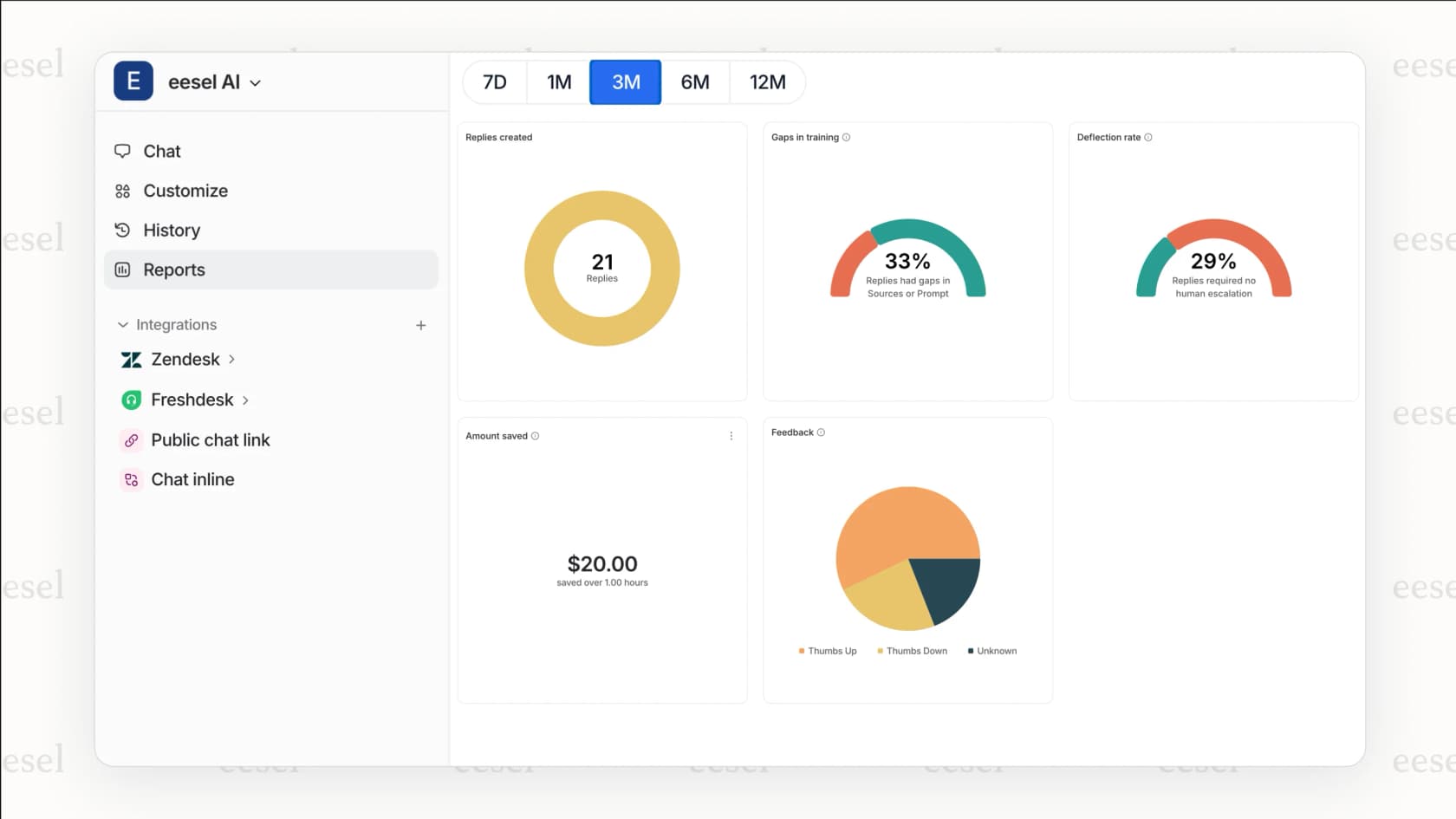
At eesel AI, we approach this differently. Instead of building more complex rules, our AI learns how your team actually handles tickets. It looks at your past resolutions, understands your business context, and can make intelligent routing and response decisions without explicit programming.
The approach is progressive: you start with the AI drafting replies for your agents to review, so you can verify it understands your business. Once you're confident, you can let it handle routine tickets directly. This lets you level up from simple rule-based routing to truly intelligent automation.
If you're finding that organization triggers are getting you part of the way there but hitting limits, it might be worth exploring what AI automation could add to your workflow. See how eesel AI integrates with Zendesk to enhance your support operations.
Start automating your support workflow with organization triggers
You now have everything you need to set up organization-based automation in Zendesk. For additional help, check the Zendesk triggers documentation. Here's the quick recap:
- Set up your organizations with email domain mapping so users get automatically categorized
- Create triggers using the Organization condition to route and prioritize tickets
- Use organization tags for scalable automation across multiple organizations
- Follow best practices for naming, organization, and testing
- Troubleshoot issues using the common solutions we covered
Organization triggers ensure the right tickets get to the right people without manual sorting. Whether you're prioritizing VIPs, routing partners to specialized teams, or just organizing your workflow, these triggers can save your team significant time.
Start with one use case, test it thoroughly, then expand. And if you find yourself hitting the limits of what rules can do, AI automation is available as a next step for more complex routing and response needs.