Zendesk messaging skill based routing: Workarounds and solutions

Stevia Putri

Stanley Nicholas
Last edited February 20, 2026
Expert Verified
When a customer reaches out for help, they expect to connect with someone who can actually solve their problem. Not someone who needs to transfer them. Not someone who puts them on hold while they figure out who to ask. This is the promise of skills-based routing: matching the right customer with the right agent from the start.
But if you're using Zendesk for messaging (Web Widget, mobile SDKs, WhatsApp, or social channels), you have probably discovered a frustrating gap. The skills-based routing that works so well for email and voice simply isn't available for messaging conversations. This leaves support teams with complex workarounds or expensive manual triage.
This guide explains what skills-based routing is, why it matters for your messaging channels, and how to work around Zendesk's limitations. We'll cover native alternatives that get you part of the way there, and how AI teammates like eesel AI can fill the gap entirely.

What is skills-based routing and why does it matter?
Skills-based routing (SBR) is a ticket assignment strategy that directs customer requests to agents based on their specific qualifications rather than simply sending tickets to whoever is available next. Instead of a round-robin queue where agents pick what they want, SBR matches tickets to agents who have the skills to resolve them.
Here is how it works in practice. A customer submits a complex billing dispute that requires knowledge of international tax rules. With SBR, that ticket automatically routes to an agent certified in billing compliance. A French-speaking customer asks about product returns? Their conversation goes directly to an agent fluent in French who handles returns.
The benefits are measurable. Teams using skills-based routing typically see faster first-contact resolution, reduced ticket transfers, and higher customer satisfaction scores. Agents spend less time rerouting tickets they can't handle and more time solving problems within their expertise.
For support leaders, SBR means you can scale specialized knowledge across your team without creating silos. You don't need dedicated groups for every topic. You can have a single team where each agent has different skill profiles, and the system handles the complexity of getting tickets to the right person.
The reality: Zendesk messaging and skills-based routing
Here is the critical limitation you need to understand: skills-based routing isn't available for Zendesk messaging conversations or tickets. This isn't a configuration issue on your end. It's a documented platform limitation.
Zendesk's skills-based routing only works through omnichannel routing, which requires Professional or Enterprise plans. Even then, SBR only applies to email and voice channels. For messaging (Web Widget, mobile SDKs, WhatsApp, Facebook Messenger, Instagram, and other social channels), skills-based routing simply doesn't exist.

This matters because messaging is becoming the default support channel for many businesses. Customers expect instant responses on the channels they already use. If your team relies heavily on messaging, you're working with routing capabilities that are fundamentally more limited than what is available for email and voice.
The practical impact? Without SBR for messaging, you're likely doing one of these things:
- Manually triaging messaging conversations to route them correctly
- Creating separate groups for different specialties and hoping agents pick the right conversations
- Accepting that customers will get transferred more often than they should
- Building complex trigger-based workarounds that are hard to maintain
None of these are ideal. The good news is there are workarounds that can get you closer to intelligent routing for messaging.
Native workaround 1: Using ticket triggers for messaging routing
Since skills-based routing isn't available for messaging, the most common native workaround is using Zendesk's trigger system to approximate intelligent routing. This approach captures customer intent through custom fields and routes conversations based on that data.
Here is how to set it up:
Step 1: Create custom ticket fields to capture intent. Build fields that collect the information you would normally use for skills-based routing. Common examples include a dropdown for "Issue Type" (Billing, Technical, Returns), a language selector, or a product category. You can collect this data through pre-chat forms, bot interactions, or the default messaging response.
Step 2: Build trigger conditions based on the messaging channel. Create triggers that fire when "Channel is Messaging" and your custom field conditions are met. For example: "If Issue Type is Billing AND Channel is Messaging, assign to Billing Group."
Step 3: Route to groups or specific agents. Use trigger actions to assign tickets to the appropriate group or individual agent. You can also use triggers to add tags, set priority, or apply other business rules.

The limitations of this approach are significant. You're essentially building a rules engine from scratch using triggers, which becomes unwieldy as your routing logic grows. Every new skill or routing scenario requires additional triggers. Maintenance is time-consuming. And you still cannot match conversations to agents with specific skills; you can only route to groups.
That said, for smaller teams with straightforward routing needs, triggers can provide basic automation that's better than manual assignment.
Native workaround 2: Omnichannel routing for eligible channels
If you're on a Zendesk Suite Professional plan ($115/agent/month) or higher, you have access to omnichannel routing. This feature provides advanced routing capabilities, though with important limitations for messaging.
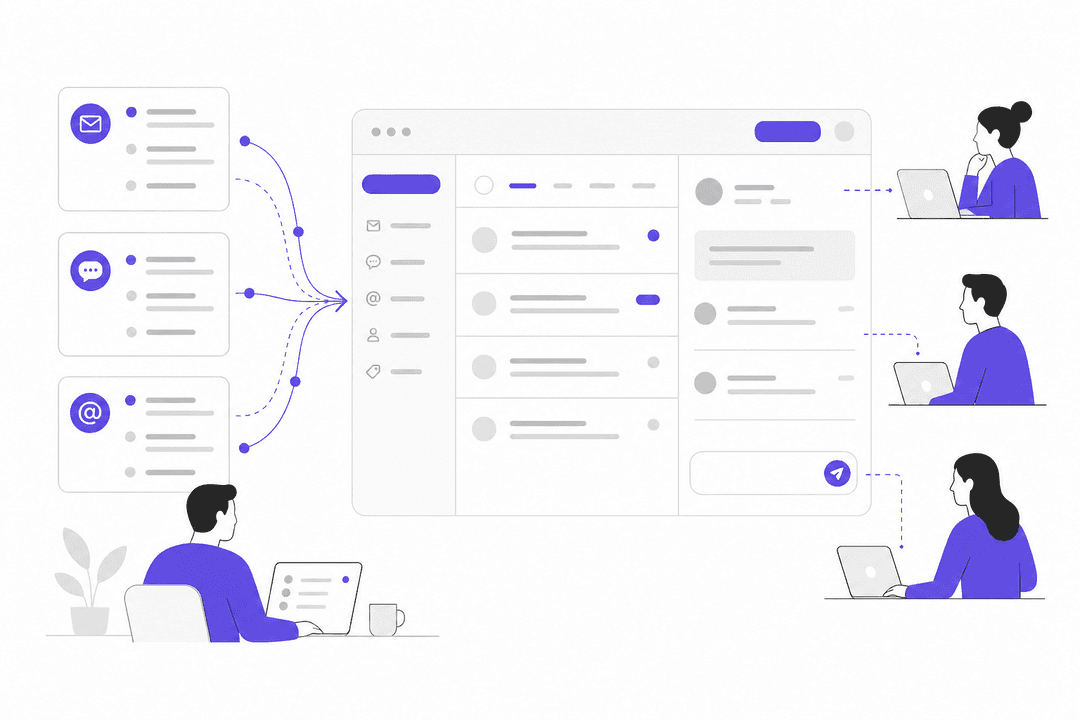
Omnichannel routing allows you to direct tickets from email, calls, and messaging to agents based on:
- Availability: Agents set a unified status (online, away, offline) across all channels
- Capacity: Define how many tickets of each type an agent can handle simultaneously
- Priority: Route high-priority tickets first
- Skills: Match tickets to agents with required skills (Professional+ only)
Here is the catch: skills-based routing within omnichannel only works for email and voice channels. For messaging, omnichannel routing considers availability and capacity, but not skills. A messaging conversation from a VIP customer asking about enterprise security will route to any available agent with spare capacity, not necessarily to someone with enterprise security expertise.

To use omnichannel routing for messaging, you need:
- Agent Workspace activated
- Messaging enabled (it cannot be activated if you're using only live chat)
- Capacity rules configured for your agents
- Triggers to add the auto-routing tag to tickets you want routed
Omnichannel routing is a step up from basic triggers, but the messaging limitation means you still cannot achieve true skills-based routing for your modern messaging channels.
Setting up skills-based routing for supported channels
If you're using Zendesk Chat (the legacy chat product, not messaging), or if you want to implement SBR for email and voice through omnichannel, here is how the setup works.
Creating skill types and skills: In the Admin Center, navigate to Objects and rules > Business rules > Skills. You can create up to 10 skill types, with up to 30 skills per type. Common skill types include Language, Product Knowledge, Certification, or Region.
Assigning skills to agents: Once skills are created, assign them to individual agents. An agent can have multiple skills across different types. You can assign up to 50 agents to a skill at once from the Skills page, or manage skills from individual agent profiles.
Configuring skill priorities: On Professional and Enterprise plans, you can set skill priority to Normal or High. This ensures agents with high-priority skills receive tickets requiring those skills before other tickets in the queue.
Setting up routing rules: Configure triggers or omnichannel routing to apply skills to tickets based on conditions. For example, tickets with "Language is French" get the "French Language" skill. The routing system then matches these tickets to agents who have that skill assigned.
Skills timeout is an important configuration option. If no agent with matching skills is available, you can set a timeout (in seconds) after which the ticket routes to any available agent. This prevents tickets from sitting unassigned indefinitely.
AI-powered alternatives for intelligent messaging routing
The workarounds we have covered help, but they don't solve the fundamental problem: Zendesk messaging lacks native skills-based routing. This is where AI teammates like eesel AI can fill the gap.

Rather than building complex trigger systems or accepting limited omnichannel capabilities, you can use AI to intelligently route, triage, and manage your Zendesk conversations. Here is how it works.
AI Triage for intelligent routing
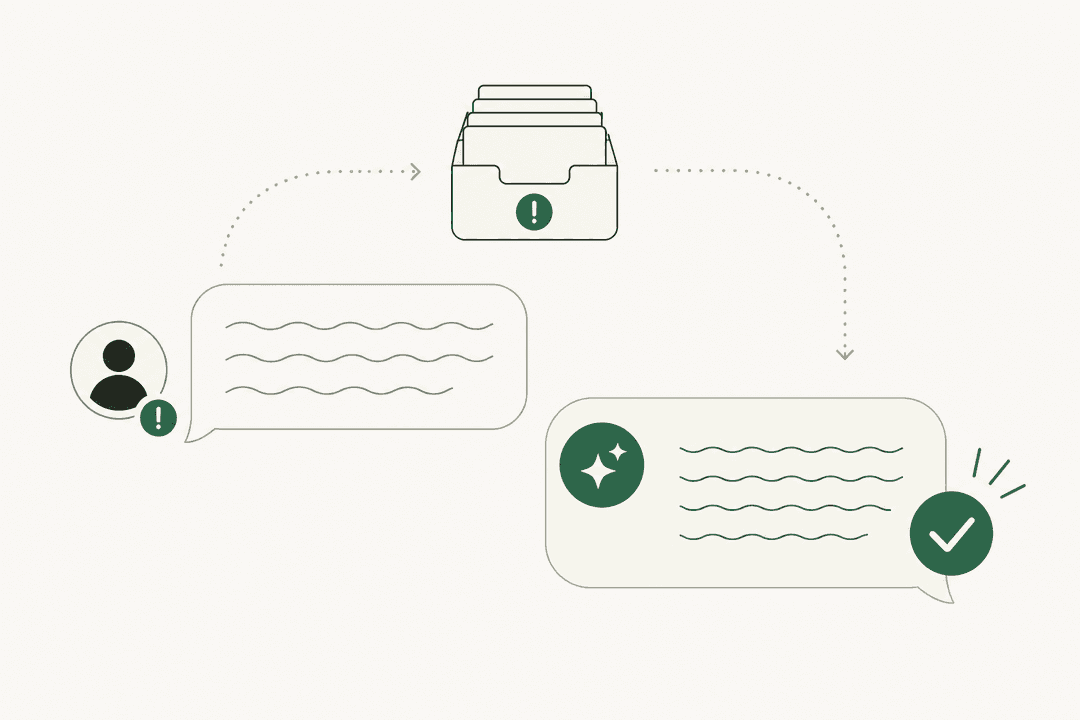
eesel AI's AI Triage processes every incoming Zendesk conversation and takes actions based on natural language instructions. Instead of building trigger conditions, you describe the behavior you want in plain English.
For example:
- "If the ticket is about refunds and the customer is in Europe, assign to the EU Billing team"
- "Route technical questions about the API to agents with the Developer Relations skill"
- "Close spam tickets and auto-respond to thank-you messages"
The AI reads the conversation content, understands the intent, and executes your routing rules. This works across all Zendesk channels, including messaging, email, and chat.
Learning from your history
Unlike rule-based systems that require manual configuration, eesel AI learns from your past tickets, macros, and help center content. It understands your business, your tone, and how you categorize issues. This means you get intelligent routing without building a massive trigger library.

Simulation before going live
A major advantage of AI-based routing is the ability to test before deploying. You can run eesel AI against your historical tickets to see how it would have routed them. This gives you confidence that the AI understands your routing logic before it touches real customer conversations.
Comparing approaches
| Approach | Setup Time | Messaging Support | Maintenance | Learning Curve |
|---|---|---|---|---|
| Zendesk triggers | High | Yes | High | Medium |
| Omnichannel routing | Medium | Partial | Medium | Medium |
| eesel AI Triage | Low | Full | Low | Low |
For teams struggling with Zendesk's messaging routing limitations, AI alternatives offer a path to true skills-based intelligence without the complexity of native workarounds.
Choosing the right routing approach for your team
The right solution depends on your team size, ticket volume, and complexity. Here is a practical framework.
Choose Zendesk triggers if:
- You have a small team with simple routing needs
- Your routing logic rarely changes
- You have admin resources to build and maintain trigger systems
- You're on a lower-tier Zendesk plan
Choose omnichannel routing if:
- You're on Professional or Enterprise plans
- You need unified agent status across channels
- You primarily need routing for email and voice (skills work here)
- You can accept limited intelligence for messaging
Consider AI alternatives like eesel AI if:
- You need intelligent routing for messaging specifically
- You want natural language configuration instead of trigger logic
- You prefer systems that learn and improve over time
- You want to test routing accuracy before going live

The reality for most modern support teams is that messaging is too important to accept limited routing capabilities. Customers expect instant, intelligent responses on the channels they use. If your current setup forces you to choose between manual triage and inadequate automation, exploring AI-powered alternatives is worth serious consideration.
eesel AI integrates directly with Zendesk and can be set up in minutes, not days. It learns from your existing content and can handle routing, triage, and even first-line responses while your team focuses on complex issues that need a human touch.
For more on AI-powered support automation, check out our guides on using AI to classify support tickets and the Zendesk AI overview.
Frequently Asked Questions
Share this post

Article by
Stevia Putri
Stevia Putri is a marketing generalist at eesel AI, where she helps turn powerful AI tools into stories that resonate. She’s driven by curiosity, clarity, and the human side of technology.