Setting up a dedicated support email is one of the first things you'll do after creating a Zendesk account. It's how customers reach you, how tickets get created, and how your support operation starts running. But there's more to it than just using the default address Zendesk gives you.
You have two options: create additional @zendesk.com addresses or connect your own custom domain email. Each approach has its place depending on your branding needs and technical setup. This guide walks through both methods step by step, plus what to do when things don't work as expected.
What you'll need before starting
Before diving into the setup, make sure you have a few things in place. You'll need a Zendesk Support account on Team, Professional, or Enterprise plan (all plans support multiple support addresses). Only admins can add support addresses, so you'll need Admin Center access. If you're planning to use an external email address like support@yourcompany.com, you'll need access to your email server or DNS settings to configure forwarding.
The key decision you'll make is which type of address to use. Zendesk-hosted addresses are faster to set up but use the zendesk.com domain. External addresses look more professional but require additional configuration. Most teams end up using a mix of both.
Understanding your options
When you first create a Zendesk account, you get one default support address: support@yoursubdomain.zendesk.com. This works fine for testing, but most teams want more flexibility.
Zendesk-hosted addresses are variations of your main address. You might create help@yoursubdomain.zendesk.com for general inquiries, sales@yoursubdomain.zendesk.com for pre-sales questions, or billing@yoursubdomain.zendesk.com for payment issues. These are quick to create and work immediately. The trade-off is that customers see "zendesk.com" in the email address, which some associate with ticket systems rather than direct company contact.
External email addresses use your own domain: support@yourcompany.com, help@yourcompany.com, or any address you already own. These look more professional and maintain brand consistency. The downside is you'll need to configure email forwarding from your mail server to Zendesk, which adds a technical step.
Which should you choose? If you're just getting started or running a small operation, Zendesk-hosted addresses work great. If brand perception matters or you already have support@yourcompany.com printed on materials and shared with customers, go with external addresses. You can also use both (many teams do), routing different types of inquiries to different addresses.
Method 1: Creating a Zendesk-hosted support address
This is the simpler approach. You're essentially creating aliases on your existing Zendesk domain. Here's how to do it:
Step 1: Navigate to the email settings
In your Zendesk Admin Center, click Channels in the left sidebar, then select Talk and email > Email. This opens your email configuration panel.
Step 2: Open support address management
Click Manage support addresses. You'll see your existing addresses listed here, including the default support@ address.
Step 3: Add a new address
Click the Add address dropdown button, then select Create new Zendesk address.
Step 4: Configure the address
If you're using Zendesk's multibrand feature, select which brand this address belongs to. Then enter the local part of the email address (the part before the @ symbol). For example, type "help" to create help@yoursubdomain.zendesk.com, or "sales" for sales@yoursubdomain.zendesk.com.
Step 5: Save and test
Click Save. The address appears in your list immediately. Send a test email to verify it creates tickets properly.

You can create up to 3,000 support addresses per account, which is more than enough for most teams. Each address can have its own name (what customers see as the sender) and can be associated with different brands if you're managing multiple companies from one Zendesk instance.
Method 2: Connecting an external email address
Using your own domain requires a few extra steps, but the professional appearance is worth it for most established businesses.
Step 1: Start the connection process
In Admin Center, go to Channels > Talk and email > Email, then click Manage support addresses. Click Add address and select Connect external address.
Step 2: Enter your email address
Type the full email address you want to use, like support@yourcompany.com. Zendesk will check if it's valid and available.
Step 3: Set up email forwarding
This is the critical part. You need to configure your email server to forward messages from your external address to your Zendesk account. The exact steps depend on your email provider:
- Gmail/Google Workspace: Use the Gmail connector or set up forwarding rules
- Microsoft 365/Exchange: Use the Exchange connector
- Other providers: Set up forwarding to your unique Zendesk forwarding address (found in the email settings)
Step 4: Verify the connection
After setting up forwarding, Zendesk sends a verification email to confirm everything is working. Check that the verification arrives in Zendesk as a ticket. You can also use the API endpoint PUT /api/v2/recipient_addresses/{id}/verify to trigger a verification check.
Step 5: Configure SPF and DKIM (recommended)
To ensure your emails don't end up in spam folders, add Zendesk's SPF record to your DNS settings. This tells email providers that Zendesk is authorized to send email on behalf of your domain. Your IT team or DNS provider can help with this if you're unsure how.
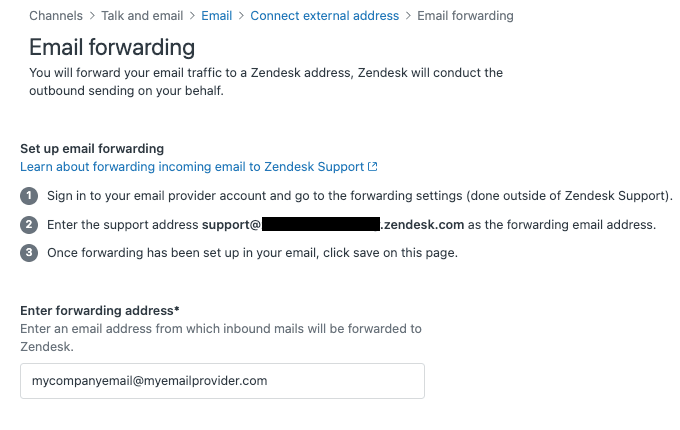
Once verified, emails sent to your external address flow into Zendesk as tickets, and replies go out from that same address. Customers won't know Zendesk is involved unless they check the email headers.
Testing your new support address
Don't skip testing. Send emails from different accounts (Gmail, Outlook, Yahoo) to make sure they all create tickets correctly. Check that:
- The ticket shows the correct "received at" address
- Reply emails come from the expected address
- Attachments come through properly
- The ticket is assigned to the right brand (if using multibrand)
You can see which address a ticket was sent to at the top of the ticket page in Zendesk. This helps when you're troubleshooting or setting up business rules based on the receiving address.
Common issues and troubleshooting
Even with clear instructions, things sometimes go wrong. Here are the most common problems and how to fix them.
Verification emails never arrive
If you're setting up an external address and the verification email doesn't show up as a ticket, your forwarding isn't working. Double-check the forwarding address in your email server settings. Make sure there are no typos and that forwarding is actually enabled (some providers require you to confirm forwarding via a separate email).
Replies show the wrong "from" address
By default, Zendesk replies from the same address the ticket was sent to. If replies are coming from a different address, check your trigger settings. You might have a trigger that's overriding the default behavior. Also verify that your support address has the correct "name" field set (this is what customers see as the sender name).
Emails going to spam
This usually happens with external addresses that haven't set up SPF and DKIM authentication. Add Zendesk's SPF record (include:mail.zendesk.com) to your DNS. For DKIM, you may need to add CNAME records pointing to Zendesk's servers. These records prove to email providers that Zendesk is authorized to send email on your domain's behalf.
"Forwarding status: failed"
If Zendesk shows a failed forwarding status, your mail server might be blocking the forwarding attempt. Check your server logs for rejected connections. Some corporate email servers have strict security policies that block automatic forwarding. You may need to whitelist Zendesk's IP addresses or use an authenticated connection method.
Best practices for managing support addresses
Once you have multiple addresses, organization becomes important. Here are some patterns that work well:
Use clear naming conventions. Stick to standard prefixes like support@, help@, sales@, billing@, and info@. Avoid creative spellings or department-specific jargon that customers might not guess.
Set up business rules based on address. Use the "Ticket: received at" condition in triggers, views, and SLA policies to route tickets differently. For example, tickets to sales@ might go to your sales team with a 4-hour response SLA, while support@ tickets go to technical support with a 1-hour SLA.
Consider multibrand organization. If you manage multiple brands, associate each support address with the correct brand. Tickets automatically inherit the brand based on which address they were sent to.
Monitor address usage. Periodically check which addresses are actually receiving tickets. You might discover addresses that are no longer needed or identify gaps where customers are trying to reach you through addresses you haven't set up yet.
Enhancing your Zendesk support with eesel AI
Once your email addresses are configured and working, you might notice patterns in the tickets coming in. Many are repetitive: password resets, order status checks, refund requests. This is where AI can help.
eesel AI integrates directly with Zendesk to handle these routine inquiries automatically. Unlike basic auto-responders, eesel AI learns from your past tickets and help center articles to provide accurate, contextual responses. It can draft replies for your agents to review, or handle simple requests entirely on its own.
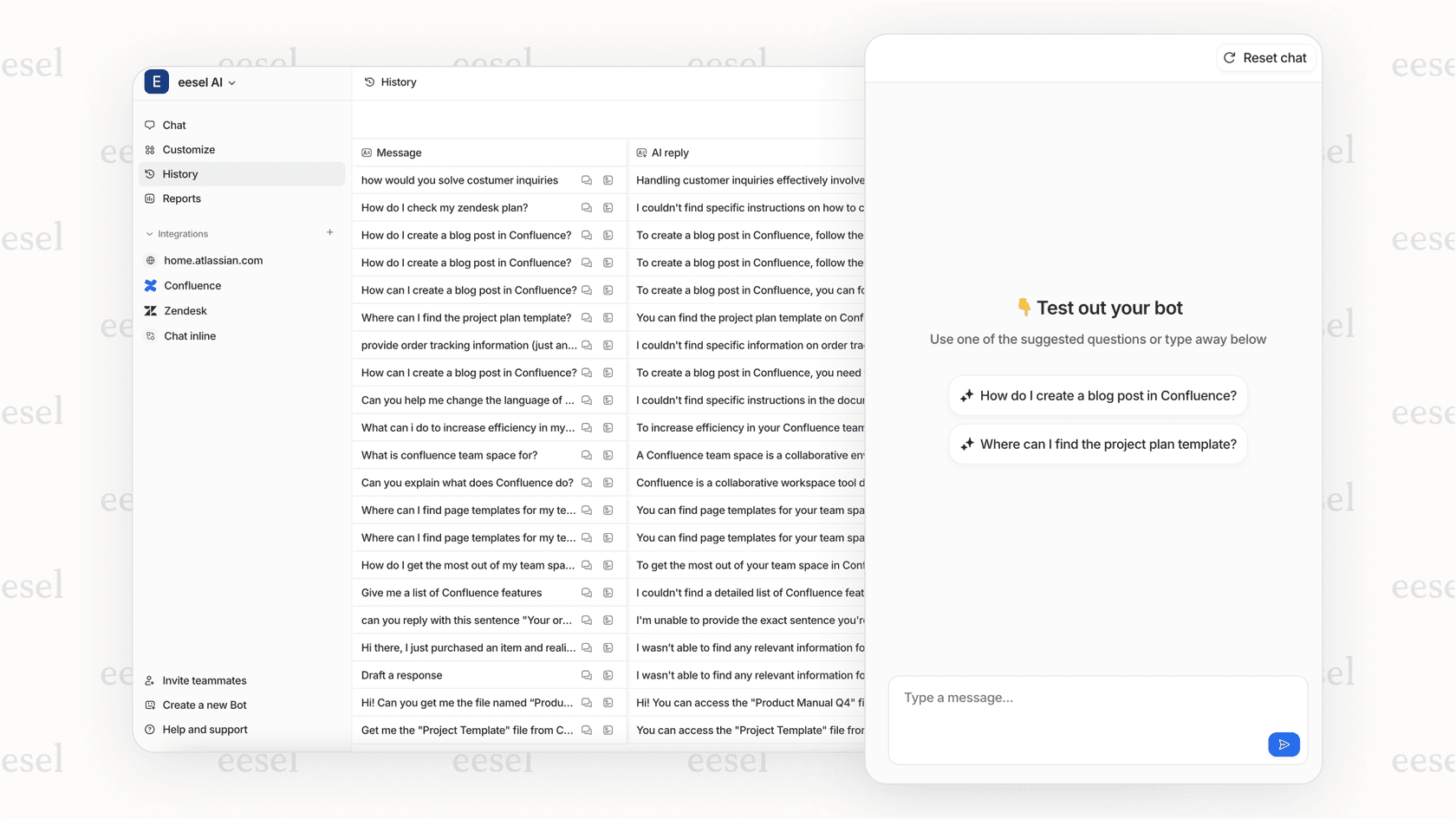
The setup is straightforward. You connect eesel AI to your Zendesk account, and it immediately starts learning your tone, policies, and common issues. You can run simulations on past tickets to see how it would respond before turning it on for real customers. Most teams start with eesel AI drafting replies for review, then expand to full automation as confidence grows.
For teams dealing with high email volumes, this can mean the difference between a backlog that grows all day and one that stays manageable. Our AI Agent product handles the frontline responses, while AI Copilot helps your human agents draft faster, more consistent replies.