If you're searching for a way to disable Zendesk's automatic ticket archiving, you're not alone. Support teams frequently hit this wall when they realize tickets are disappearing from views after a few months, and there's no obvious setting to turn it off. Let's break down what's actually happening and what you can do about it.
The short answer: No, you cannot disable it
Here's the reality: Zendesk's automatic ticket archiving cannot be disabled, configured, or extended. It's a hardcoded system behavior that kicks in 120 days after a ticket's status changes to Closed.
This isn't a hidden setting you haven't found. It's not a premium feature locked behind a higher plan tier. The 120-day archive rule applies to all Zendesk accounts regardless of plan level, and there's no admin toggle to change it.
The frustration is real and well-documented. A Zendesk community post requesting the ability to disable archiving has been active since 2021, with users continuing to comment through 2024 asking for longer retention periods or configurable options. Zendesk product managers have acknowledged the feedback, but no changes have been implemented.
So what can you do? This guide covers practical workarounds for managing archived tickets and a proactive approach that reduces the problem at its source.
Understanding how Zendesk ticket archiving works
Before diving into solutions, let's clarify what archiving actually means in Zendesk.
The 120-day timeline
When a ticket's status changes to Closed, a 120-day countdown begins. After that period, Zendesk automatically archives the ticket. This happens without any notification or manual intervention. The ticket doesn't disappear entirely, but its behavior changes significantly.
What changes when a ticket archives
Archived tickets are still accessible, but with important limitations:
- Views: Archived tickets disappear from your filtered ticket lists (views). This is the most common source of confusion, agents can't find old tickets in their standard workflows.
- Automations and triggers: Rules cannot execute on archived tickets. Any automation you've set up stops working once a ticket hits archived status.
- Customer context: Archived tickets don't appear in the customer context panel under Interactions, so agents lose visibility into historical customer issues while working current tickets.
What's still accessible:
- Direct URL access (if you have the ticket number)
- Search results
- User, group, and organization profiles
- Zendesk Explore reports
- Most API endpoints
Identifying archived tickets
When you open an archived ticket, Zendesk displays a banner at the top reading "This is an archived ticket." This is your visual confirmation of the ticket's status.
Searching for archived tickets
There's no view or filter to show only archived tickets, but you can search for tickets that meet archiving criteria using Zendesk's search syntax. For example:
type:ticket status:closed updated<2024-01-01
This returns tickets last updated before January 1, 2024, which would include archived tickets (assuming you're searching in 2026). Adjust the date based on your needs.
The storage catch
Here's something that surprises many Zendesk admins: archived tickets still count toward your storage limits. Only deleted tickets (soft or permanent) are excluded from storage calculations. So that ticket from two years ago that's been archived? It's still eating up your data allocation.
Source: Zendesk storage management documentation
Workaround options for managing archived tickets
Since you can't disable archiving, let's look at what you can do to manage the impact.
Pre-archiving automation (before 120 days)
Your window for automation is before tickets hit the 120-day mark. Since automations cannot run on archived tickets, you need to act while tickets are still in closed status.
Set up automations that trigger at 90 days after closure:
- Add a tag like "archive-pending" to flag tickets approaching the threshold
- Update custom fields to track retention status
- Send notifications to relevant teams about upcoming archives
- Trigger any pre-archive workflows you need
This gives you a 30-day window to take action before Zendesk's automatic archiving kicks in.
Exporting tickets before they archive
If you need to preserve ticket data outside Zendesk, you have several export options:
Native exports (Professional and Enterprise plans):
| Export Type | What's Included | Limitations |
|---|---|---|
| JSON | Tickets, users, organizations | No AI agent tickets, no items with timestamps within 6 minutes of export |
| CSV | Ticket data without comments | No deleted tickets, no descriptions, no multi-line text fields |
| XML | Full account data | 500MB max (~200,000 tickets) |
Important: Native exports are not available on Team plans. All plans can use the Zendesk REST API for exports, but this requires technical implementation.
Source: Zendesk export documentation
Third-party alternatives:
Tools like Knots.io offer Export Tickets as PDF functionality that works on all Zendesk plans, including Team. These exports can include attachments, tags, and both public and private comments in a human-readable format, something native exports don't provide.
Storage management strategies
If storage costs are your concern, archiving alone won't solve the problem. You need to actively delete tickets to free up space.
Zendesk storage limits by plan:
| Plan | Base Data | Base File | Per Agent Data | Per Agent File |
|---|---|---|---|---|
| Team | 10 GB | 10 GB | 50 MB | 2 GB |
| Growth | 10 GB | 10 GB | 100 MB | 5 GB |
| Professional | 10 GB | 10 GB | 100 MB | 5 GB |
| Enterprise | 10 GB | 10 GB | 200 MB | 10 GB |
Source: Zendesk storage documentation
Warning signs:
- Orange warning at 80% storage usage
- Red warning when exceeding limits
- Slower ticket loading times
- Delays in report generation
The "More Storage" add-on: Each unit includes 500 MB data storage, 25 GB file storage, and 500 MB external content. Pricing varies by plan.
Third-party solutions for ticket archiving
When native options fall short, third-party tools can fill the gaps.
Knots.io
Knots is a Zendesk Premier Partner offering workflow automation and AI orchestration. Their Ticket Export app provides capabilities that native exports lack:
- Export tickets as human-readable PDFs
- Include attachments, tags, and both public and private comments
- Export side conversations with their attachments
- Deliver exports to FTP, SFTP, or cloud storage (S3, Dropbox)
- Event-based triggers and scheduled exports
- Optional bulk delete after successful export
The app works on all Zendesk plans, including Team, which is significant since native exports require Professional or higher.
Knots also offers complementary apps for storage optimization: Remove Attachments and Redact Attachments for granular control over what stays in Zendesk.
Nuclei (now Proofpoint)
Nuclei was acquired by Proofpoint and provides compliance archiving for regulated industries. They support Zendesk archiving along with other platforms like Microsoft Teams, Slack, and Zoom. If you're in a regulated industry requiring long-term retention for compliance, this is worth exploring.
Native vs. third-party comparison
| Feature | Native Zendesk | Knots.io Export |
|---|---|---|
| Export format | JSON/CSV/XML | PDF (human-readable) |
| Attachments included | No | Yes |
| Automation | Limited | Event-based + scheduled |
| Plan requirement | Professional+ | All plans |
| Bulk delete | Manual only | Automated option |
The proactive alternative: Reducing ticket volume with eesel AI
Here's a different way to think about the archiving problem. Instead of managing old tickets, what if you had fewer tickets to archive in the first place?
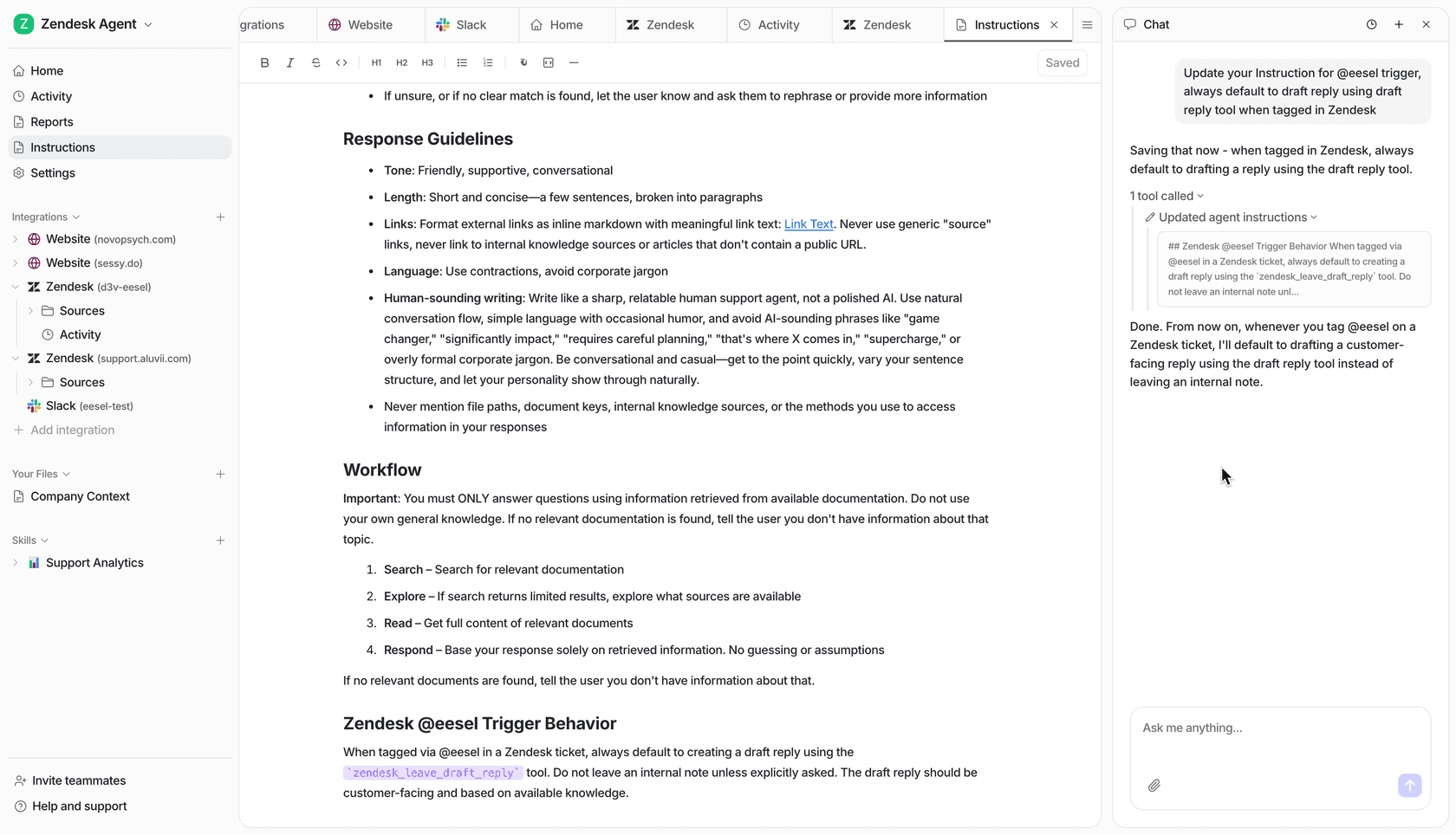
This is where we take a different approach at eesel AI. Rather than treating symptoms (storage bloat, archived data management), we help you resolve more tickets automatically from the start.
How we handle tickets differently
Traditional archiving is reactive. You wait for tickets to pile up, then figure out how to store or delete them. Our approach is proactive:
Intelligent resolution before archiving:
- Our AI agents handle frontline support tickets autonomously
- Up to 81% resolution rate in mature deployments
- Fewer tickets created means fewer tickets to archive later
Continuous learning:
- We learn from your past tickets, help center, and macros
- The AI improves over time based on corrections and feedback
- No manual training or documentation uploads required
Plain-English control:
- Define escalation rules in natural language
- "If the refund request is over 30 days, politely decline and offer store credit"
- No complex configuration or coding required
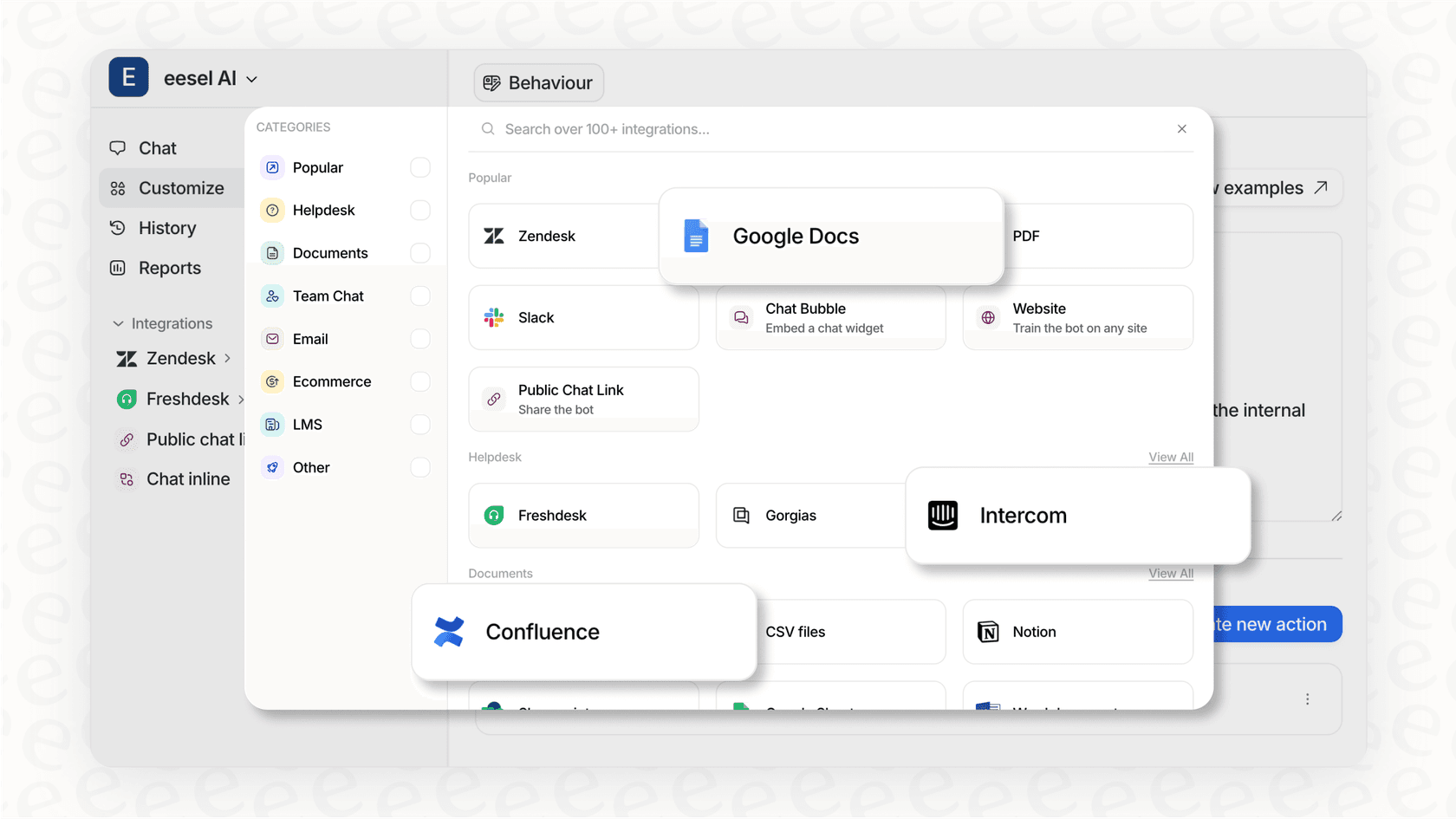
Integration with Zendesk
If you're already using Zendesk, eesel AI integrates directly. You don't need to replace your help desk. You can:
- Start with AI Copilot drafting replies for agent review
- Graduate to AI Agent handling specific ticket types autonomously
- Use AI Triage to tag, route, and close tickets automatically
- Maintain your existing Zendesk workflows while adding intelligence
The difference is philosophical. Instead of asking "how do we manage all these old tickets?" you start asking "how do we prevent tickets from becoming old and unresolved?"
When to consider eesel AI
Consider this approach if:
- Your ticket volume is growing faster than your team
- You're spending significant time managing archived data
- You want to reduce storage costs proactively, not reactively
- Your team is overwhelmed with repetitive, resolvable tickets
Our pricing scales by AI interactions, not seats, which often works out more predictably for growing teams than per-agent storage add-ons.
Choosing the right approach for your team
Let's break down the decision framework based on team size and needs:
Small teams (under 5 agents):
- Use Zendesk search for occasional old ticket lookups
- Manual exports for compliance needs
- Address storage issues by upgrading plan or adding storage units
Growing teams (5-50 agents):
- Implement Knots.io or similar third-party automation
- Set up regular export and deletion workflows
- Monitor storage usage monthly
Enterprise teams (50+ agents):
- Evaluate AI-powered solutions like eesel AI
- Consider whether ticket volume reduction is more cost-effective than storage management
- Implement comprehensive data governance policies
The fundamental question is whether you want to optimize your archiving process or reduce the need for archiving altogether. Both are valid approaches. The right choice depends on your ticket patterns, growth trajectory, and how much of your support volume consists of resolvable, repetitive issues.
Start managing your Zendesk tickets more effectively
Zendesk's automatic ticket archiving can't be disabled, but that doesn't mean you're stuck with a growing pile of unmanaged data. You have options:
-
Workarounds for immediate needs: Pre-archiving automation, third-party exports, and strategic storage management can help you cope with the current system.
-
Long-term solution: Reducing ticket volume at the source through AI-powered resolution changes the equation entirely. Fewer tickets created means fewer tickets to archive, search for, or manage later.
If you're curious how an AI approach might work for your situation, you can try eesel AI free or book a demo to see how it works for your specific workflow.