


Running a Shopify store feels a lot like spinning plates. You're trying to keep customer support happy, get marketing campaigns out the door, manage your inventory, and maybe, just maybe, find a minute to think about growing the business. It’s a tough gig.
The good news? AI isn't some futuristic sci-fi concept anymore. It's a real tool that can lift a surprising amount of that weight off your shoulders. And it's not just about saving time. When you use AI to create better customer experiences, people stick around. Keeping just 5% more of your customers can actually boost profits by 25%.
But with thousands of apps on the market, how do you know which ones are legit? I spent weeks digging in, testing, and researching to find the most practical Shopify AI apps that will actually help you scale. This isn't just a random roundup; it's a handpicked guide to the tools that I found genuinely make a difference.
What are Shopify AI apps?
Simply put, Shopify AI apps are tools from the Shopify App Store that plug into your store and do jobs that usually require a person. Things like figuring out a customer's question, writing a product description, or suggesting the perfect add-on item.
Behind the scenes, these apps use Shopify's APIs to access your store's data, letting them add some pretty smart features. As shown in the graphic below, they usually fall into a few buckets:
-
Customer service and sales: Chatbots that answer questions on the spot and help desk tools that handle repetitive tasks.
-
Marketing and personalization: Tools for sending smarter emails, texts, and product recommendations.
-
Store operations and content: Apps that help with SEO, writing product descriptions, or touching up images.
The point isn't to pile on more tech. It’s about solving real problems, cutting down on grunt work, and giving you more time to focus on building your brand.
How I picked the Shopify AI apps for this list
To cut through the noise, I stuck to a few simple rules for choosing the apps on this list. I wanted to make sure every single one was practical, effective, and wouldn't give you a headache trying to set it up.
-
Does it solve a real problem? I looked for tools that address a genuine pain point for store owners without making you change your entire way of working.
-
Will it actually help you grow? The bottom line is everything. Can this app help you increase sales, get more conversions, or make your team more efficient?
-
Is it easy to use? How fast can you install the app and see it start working? You shouldn't need a computer science degree to get value from it.
-
Does it play well with others? It needs to integrate smoothly with Shopify and the other tools you already rely on, like your help desk or email platform.
-
Is the pricing fair? I looked for transparent pricing models that make sense and can grow with your business.
A quick comparison of the top Shopify AI apps in 2026
Before we dive in, here’s a quick snapshot of my top picks and what they’re best at.
| Tool | Best For | Starting Price | Key Feature |
|---|---|---|---|
| eesel AI | Complete Support & Sales Automation | From $299/mo (500 credits) | AI layer for existing help desks & Shopify |
| Tidio | Live Chat & Basic AI Chatbots | Free plan available | All-in-one live chat with its own ticketing system |
| Klaviyo | Email & SMS Marketing | Free plan available | Predictive analytics for targeted campaigns |
| Wiser | Product Recommendations | Free plan available | AI-driven upsells and cross-sells |
| SEOAnt | SEO & Site Optimization | Free plan available | Automated on-page SEO and image optimization |
| CreatorKit | Image & Video Generation | Free plan available | AI-generated product photos and video ads |
The 6 best Shopify AI apps to scale your store
Alright, let's get into the details of each app, why it earned a spot on the list, and how it can help you grow.
1. eesel AI
eesel AI is an AI layer that plugs right into the tools you’re already using, like help desks (Gorgias, Zendesk) and your Shopify store. It's not another chatbot. Think of it as an intelligence boost for your current setup that automates customer service and sales, saving you the pain of switching systems.
Key Features:
-
AI Chatbot for Ecommerce: You can add a smart chatbot to your Shopify store that answers sales questions, looks up orders, handles returns, and even recommends products by tapping into your catalog.
-
Help Desk Automation: It works inside your help desk as an AI Agent, automatically handling common tickets, adding internal notes for your human agents, tagging issues correctly, and escalating tricky questions when needed.
-
Knowledge Integration: It pulls information from over 120+ sources like your help center, past tickets, and Google Docs to make sure its answers are always on-point.
-
Simulation Mode: Before going live, you can run a simulation on your past support tickets. This shows you exactly how the AI would have performed and gives you a solid idea of your potential return on investment.
Pros & Cons:
-
Pros: It's ridiculously fast to set up (we’re talking minutes), and you can test its performance on your own data before you activate anything. The pricing is one fixed monthly price sized to your volume, with no per-seat fee, which is much more predictable.
-
Cons: The starting price is higher than a simple chat widget, so it's a better fit for established stores that already have a support system and are looking to make it way more efficient.
Pricing: The Teammate plan starts at $299/month for 500 credits (1 credit per ticket or chat). You can start on the free plan with 100 credits and no card, and you get two months free if you pay a year upfront.
Why it's on the list: eesel AI provides a truly comprehensive solution that automates the entire customer journey, from pre-sale questions on your site to post-purchase support tickets, without making you ditch the tools you already know and use.
2. Tidio
You've probably heard of Tidio. It's popular for a reason. It bundles live chat, AI chatbots, and its own ticketing system into one platform that's really easy to get the hang of.
Key Features:
-
Lyro AI Chatbot: It learns from your FAQ content to answer up to 70% of common questions all on its own, 24/7.
-
Live Chat: When a question is too tough for the bot, it smoothly hands the conversation over to a human agent.
-
Ticketing System: You can manage all your customer chats and emails as tickets right inside the Tidio platform.
Pros & Cons:
-
Pros: It has a great free plan, which is perfect for new stores. The interface is clean and simple, and it even has some basic marketing automation features built in.
-
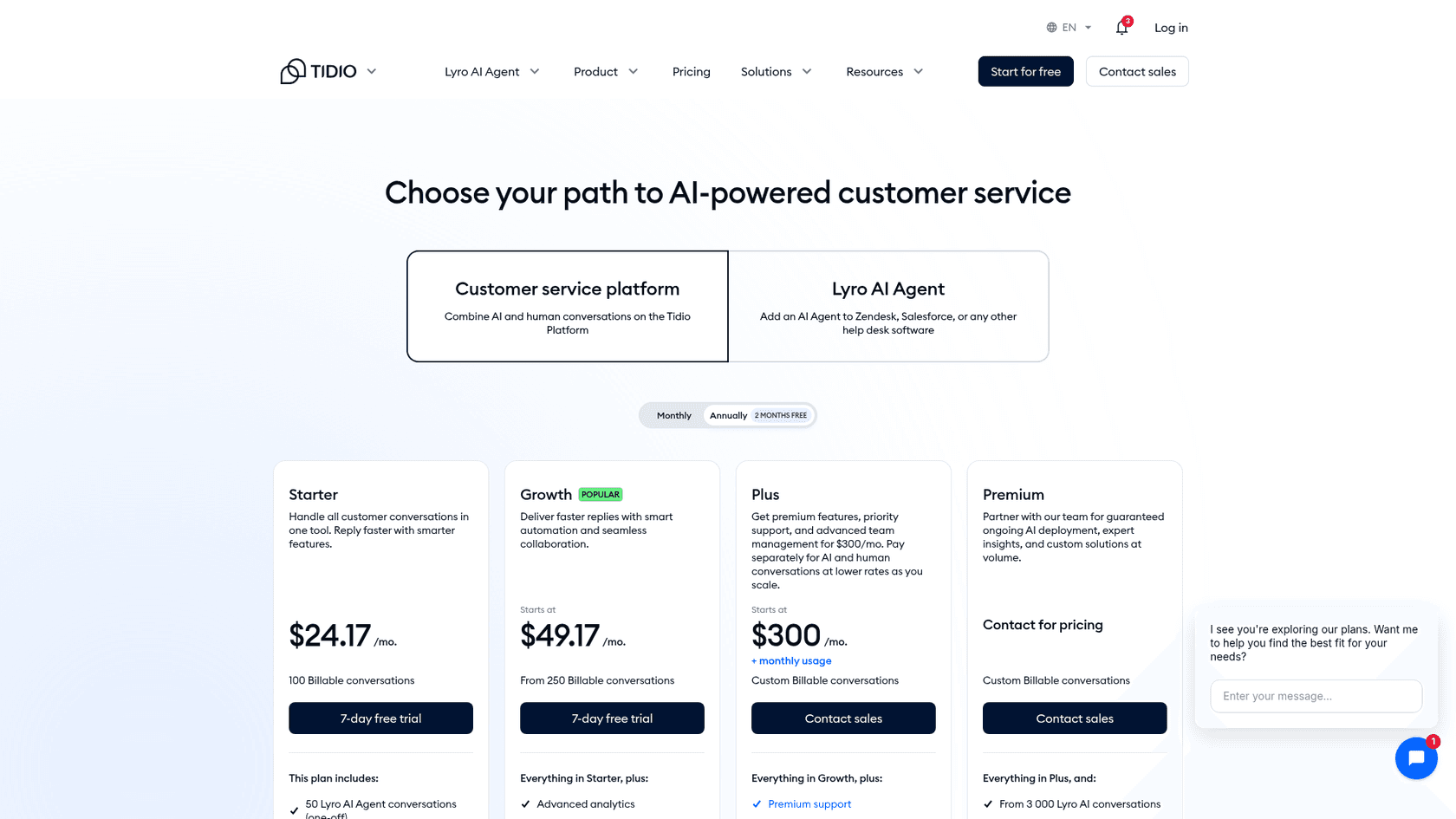
Cons: The platform plans are built as an all-in-one system that replaces your current chat tool. Tidio also sells Lyro as a stand-alone AI agent you can add to Zendesk, Salesforce, or another help desk, so the choice is between its own platform and its AI layer.
Pricing: There’s a free plan with up to 50 conversations per month. The Starter plan is $24.17/month on annual billing for more chats, and Lyro starts at $32.50/month (annual billing) for 50 AI conversations.
Why it's on the list: It's a fantastic entry point for stores that want to add AI-powered chat to their site without a big budget or a complicated setup process.
3. Klaviyo
Klaviyo is a big name in marketing automation, but its AI features are what really make it shine. Its Shopify integration is top-notch, syncing all your customer and order data seamlessly.
Key Features:
-
Predictive Analytics: The AI basically predicts when a customer might buy again, what their lifetime value could be, and if they're likely to churn. You'll get access to this once you have at least 500 customers who have made a purchase.
-
AI Subject Line Assistant: It helps you come up with catchy, high-performing subject lines for your emails by analyzing your campaign content.
-
Segments AI: You can build detailed audience segments just by typing in plain English, like "show me customers who bought twice but not in the last 90 days."
Pros & Cons:
-
Pros: The segmentation and analytics are incredibly powerful. It combines email and SMS into one platform and pulls in a ton of data from Shopify.
-
Cons: The price can get steep as your contact list grows. Also, its AI started in marketing, and Klaviyo now sells a separate Customer Agent for web chat, email, SMS, and WhatsApp, so check that product's pricing on its own.
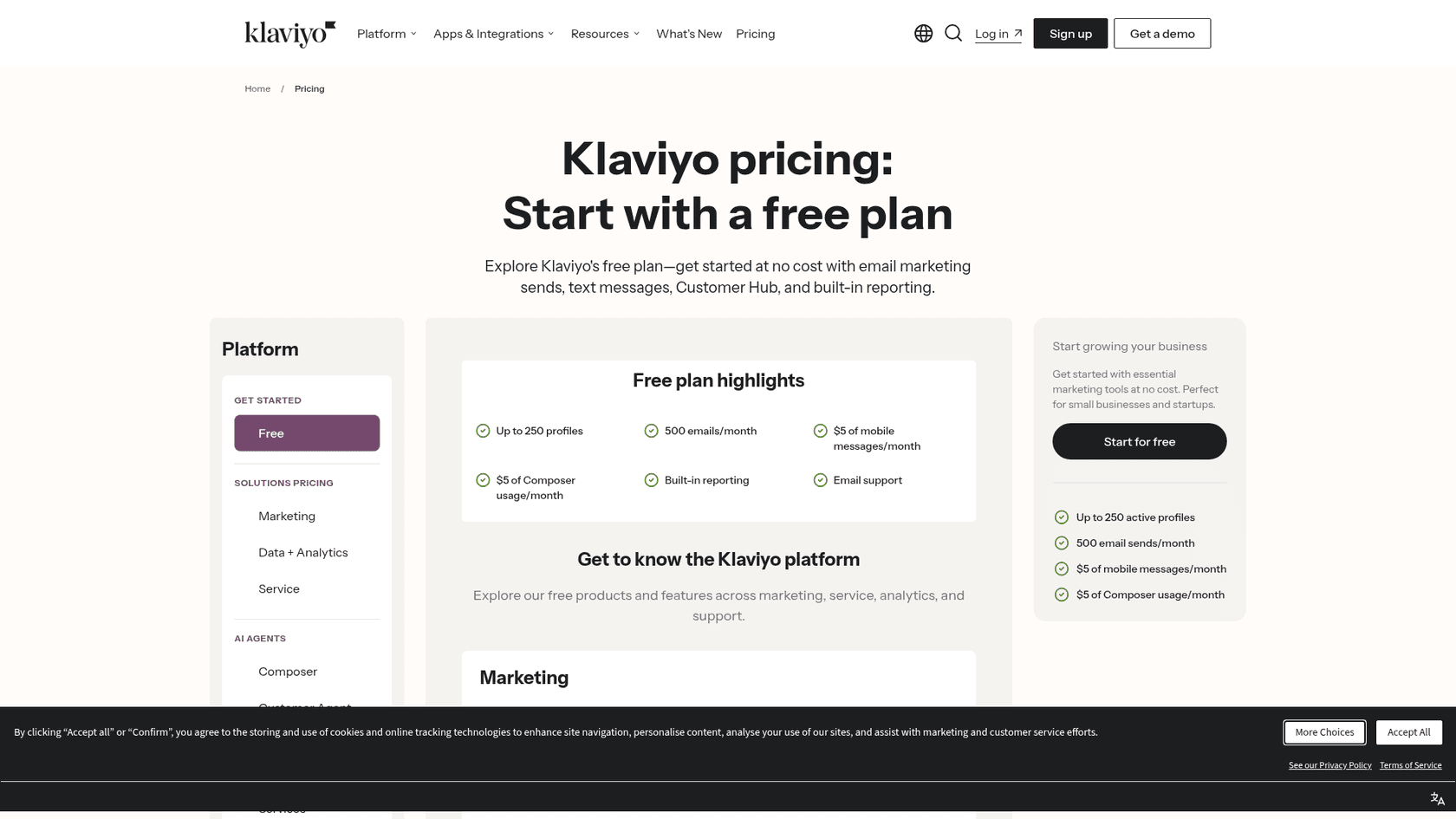
Pricing: It's free for up to 250 profiles and 500 emails a month. After that, paid plans scale with your contact list, starting at $45/month for 1,001, 1,500 contacts.
Why it's on the list: Klaviyo's AI takes the guesswork out of email marketing. It helps you send the right message to the right person at the right time, which is key to getting more repeat business.
4. Wiser
Wiser has one simple job: show customers other products they'll probably love. It uses AI to watch how shoppers behave on your site and then serves up personalized recommendations that you can place anywhere, from your homepage to your checkout page.
Key Features:
-
AI-Powered Recommendations: It shows widgets like "Frequently Bought Together" and "Related Products" that are based on what people are actually looking at and buying.
-
Post-Purchase & Cart Upsells: It lets you show targeted offers on the thank you page and in the cart, which is an easy way to increase your average order value (AOV).
-
Clear Analytics: It gives you straightforward reports to track how many sales and clicks the recommendation widgets are generating.
Pros & Cons:
-
Pros: It’s super easy to set up, has a bunch of different recommendation styles, and even includes A/B testing to help you find what works best.
-
Cons: It’s a one-trick pony. Its focus is purely on product recommendations, so it won’t help with customer support or email marketing.
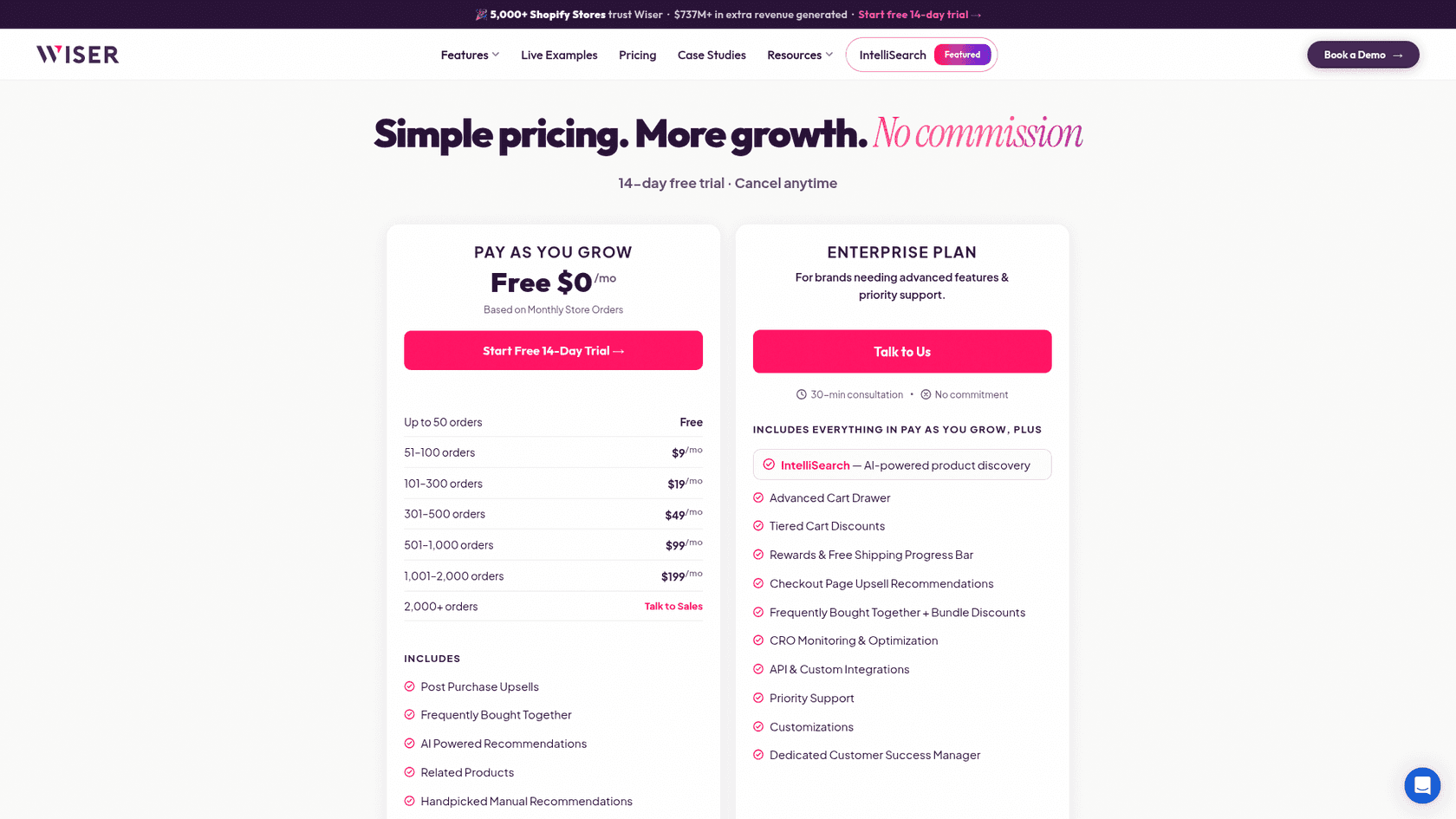
Pricing: There’s a free plan for stores with up to 50 orders a month. Paid plans start at just $9/month and scale with your order volume.
Why it's on the list: It's a simple but incredibly effective way to use AI for upselling. Stores using Wiser have reported conversion increases of 20% to 30%, making it an easy win for boosting revenue.
5. SEOAnt
Let's be honest, SEO can be a drag. SEOAnt (now rebranded as SEOWILL, same product) is an AI tool built to handle the tedious, technical parts of SEO for your Shopify store, so you can rank higher without needing to be an expert.
Key Features:
-
AI Content Generation: Its AI assistant automatically writes SEO-friendly meta titles, descriptions, and image alt text based on your product details.
-
Image Compression: It automatically shrinks your image file sizes in bulk. This helps your site load faster, which is a big deal for both customers and Google.
-
Broken Link Detection: It scans your site and helps you find and fix broken links that can hurt your search rankings.
Pros & Cons:
-
Pros: It automates a ton of time-consuming SEO chores, gives you a clear site health score with easy-to-follow tips, and has a free plan to get you started.
-
Cons: It’s great for on-page SEO, but you'll still need a good content strategy to really climb the search rankings.
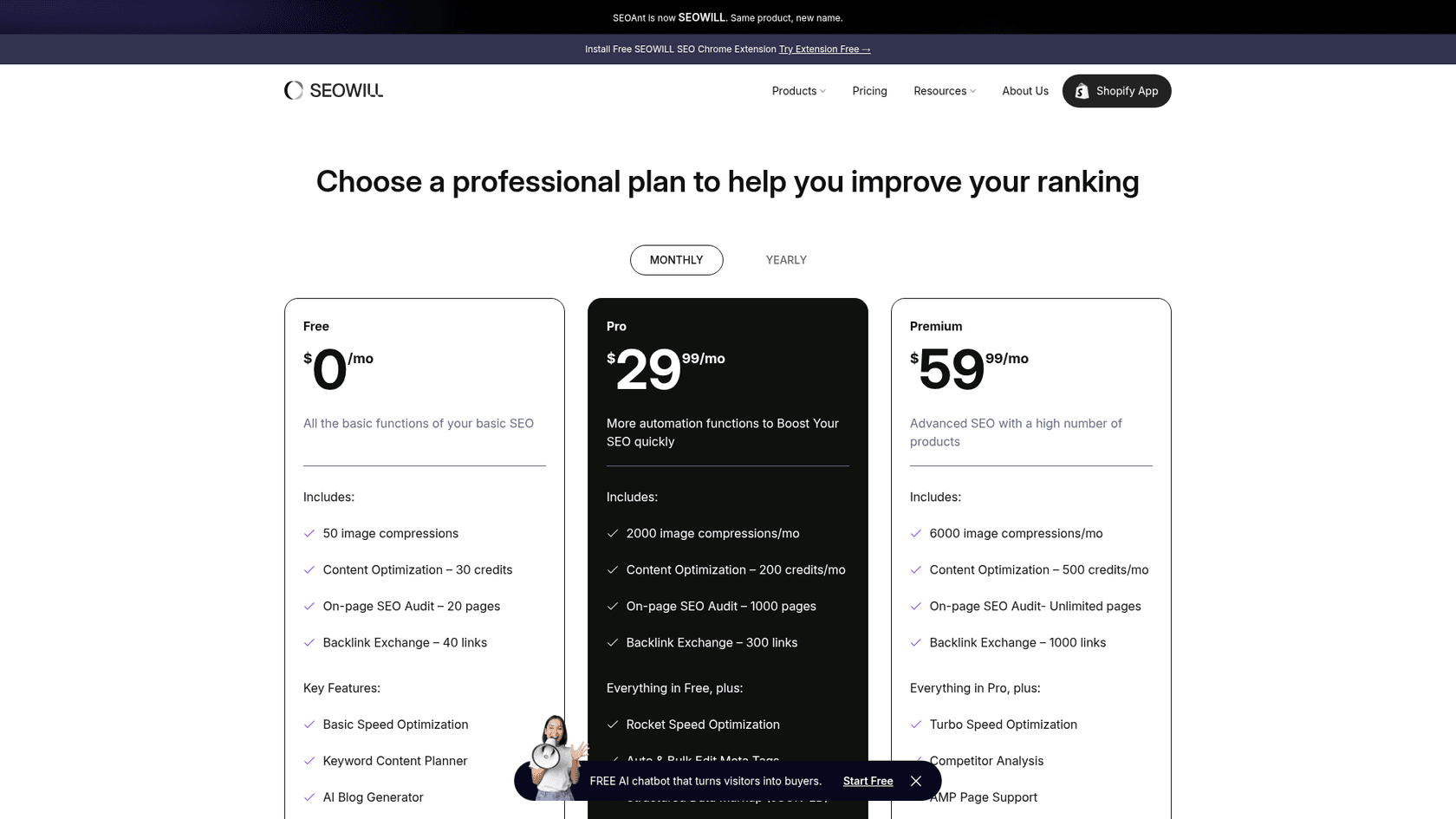
Pricing: A free plan is available with a limited number of credits. The Pro plan starts at $29.99/month for more automation power.
Why it's on the list: SEOAnt makes technical SEO less intimidating. It handles the common issues that directly affect how visible your store is in search results and helps speed up your site.
6. CreatorKit
In ecommerce, your pictures sell your products. CreatorKit uses AI to help you create amazing product photos and video ads without needing a fancy studio or complicated editing software.
Key Features:
-
AI Backgrounds: It can instantly remove the background from your product photos and swap it with a clean, professional, or lifestyle setting.
-
AI Product Photos: It generates gorgeous lifestyle images of your products in all sorts of different scenes using pre-built templates.
-
Video Ad Templates: It turns your product images into snappy (https://creatorkit.com/aiads) that are perfect for TikTok and Instagram.
Pros & Cons:
-
Pros: It can save you a huge amount of time and money on photoshoots and video production. Plus, you only pay for the images you decide to download without a watermark.
-
Cons: The AI-generated images are very good, but sometimes they might need a few small tweaks to look perfect.
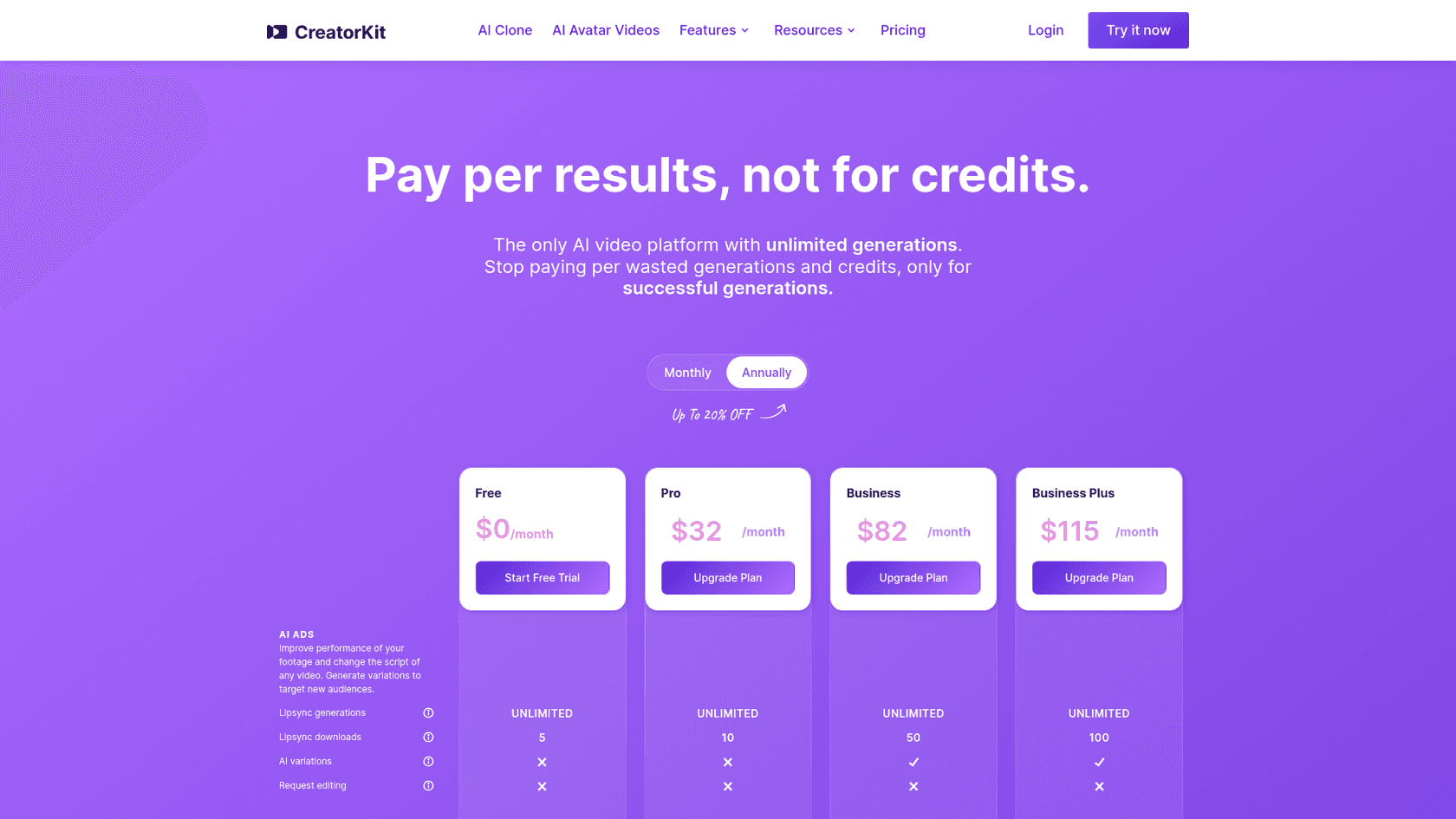
Pricing: The free plan lets you generate unlimited images and videos with a watermark. To remove the watermark, paid plans start at $39/month ($32/month on annual billing).
Why it's on the list: High-quality visuals are non-negotiable for selling online. CreatorKit makes professional-looking content affordable and achievable for any store owner, no matter their budget or design skills.
A few tips for using these Shopify AI apps
-
Tackle your biggest headache first: Don't try to automate everything at once. If you’re drowning in support tickets, start with a tool like eesel AI. If your email campaigns are falling flat, check out Klaviyo first. If you only need basic storefront chat, Shopify's free Inbox agent answers from your catalog, policies, and store content, and order lookup requires the shopper to sign in.
-
Keep the human touch: Let AI do the grunt work, the 80% of repetitive tasks, so you and your team can be the heroes for the complex 20% where personal service really counts.
-
Use the free trials: Almost every app on this list has a free trial. For tools like eesel AI, definitely use the simulation mode. It lets you test the AI on your past data to see exactly how it'll work before you commit.
-
Keep an eye on your site speed: Adding a bunch of apps can slow down your store. Even Shopify says that apps can affect web performance. Be selective, and check your site speed every now and then to make sure you're not sacrificing performance.
The right Shopify AI apps: A Partner in your growth
The takeaway here is that Shopify AI apps aren't just shiny new toys anymore; they're pretty much standard equipment for growing an ecommerce business. Whether it’s answering customer questions at 3 AM, fine-tuning your marketing, or fixing your SEO, these tools handle the heavy lifting so you can get back to building your brand.
The trick is finding a tool that fits into your current workflow instead of making you start from scratch. If you’re ready to see how much time AI can save your support team without the headache of switching help desks, you can set up an AI agent and chatbot with eesel AI in just a few minutes. Give the free plan (100 credits, no card) a shot and see the results for yourself.
Frequently asked questions
What are the core benefits I can expect from integrating Shopify AI apps into my ecommerce store?
Integrating Shopify AI apps can significantly automate repetitive tasks, saving you time and reducing operational costs. They enhance customer experience through faster support and personalization, ultimately leading to improved sales, conversions, and overall business efficiency.
How should I go about choosing the best Shopify AI apps for my store, considering all the options?
Start by identifying your biggest pain points, such as overwhelming customer support or ineffective marketing. Look for apps that directly address these issues, offer free trials, ensure they are easy to use, and integrate smoothly with your existing Shopify setup and other tools.
Are most Shopify AI apps affordable for small businesses, or are they typically a significant investment?
The pricing for Shopify AI apps varies widely; many offer free plans or low-cost starter tiers, making them accessible for small businesses. Larger, more comprehensive solutions may represent a greater investment but often scale with your business and provide substantial ROI.
I'm not very tech-savvy; are Shopify AI apps generally easy to set up and manage?
Many Shopify AI apps are designed with ease of use in mind, featuring intuitive interfaces and quick setup processes. They aim to integrate seamlessly with your Shopify store, often requiring minimal technical knowledge to get started and manage effectively.
In what specific ways can Shopify AI apps enhance the shopping experience for my customers?
Shopify AI apps improve customer experience by providing instant answers to questions, offering highly personalized product recommendations, and delivering timely and relevant marketing communications. This creates a smoother, more engaging, and satisfying shopping journey.
Can adding multiple Shopify AI apps negatively impact my store's website performance or speed?
Yes, adding numerous apps can potentially affect your store's web performance and load speed. It's crucial to be selective, prioritize essential tools, and regularly monitor your site speed to ensure you maintain a fast and responsive online store for your customers.