
You’ve probably seen Merlin AI pop up everywhere. It’s that handy Chrome extension that promises to be your all-in-one AI buddy, giving you access to heavy hitters like GPT-5.2 and Claude Opus 4.6 with a simple click. It can summarize articles, draft emails, and basically act as a research assistant that lives in your browser.
But once you click over to the pricing page, things can get... confusing. What does "unlimited" actually mean? Is it really a free-for-all? If you're scratching your head trying to figure out the real Merlin AI pricing, you're definitely not the only one. Let’s cut through the noise and figure out what you actually get for your money.
What is Merlin AI?
So, what is Merlin AI, really? Think of it as a master key for the world of AI. Instead of paying for separate subscriptions to ChatGPT, Claude, and a dozen other tools, Merlin bundles access to 10+ AI models into one neat package.
It’s built for one person’s productivity. People use it for all sorts of daily tasks, like:
-
Getting the gist of a long YouTube video without watching the whole thing.
-
Whipping up a professional-sounding email when you’re stuck for words.
-
Generating ideas for social media posts.
-
Getting instant, AI-powered answers right on your Google search page.
It's a fantastic little multitool for individuals, freelancers, and marketers who want the power of advanced AI without the headache of managing a bunch of different accounts.
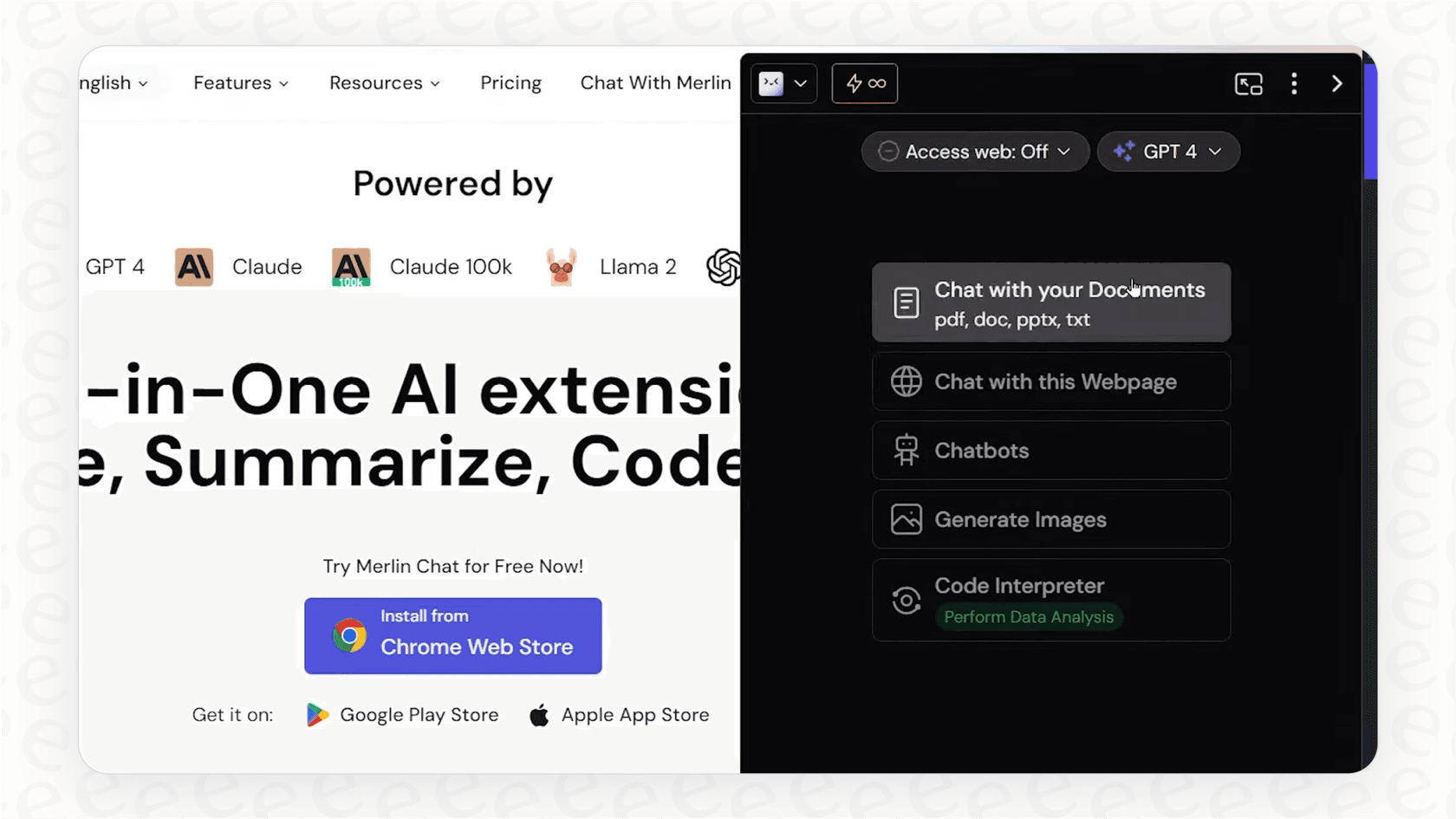
A full breakdown of Merlin AI pricing plans
Merlin breaks its pricing down into a few tiers, each aimed at a different kind of user. Here’s a look at what each plan gets you.
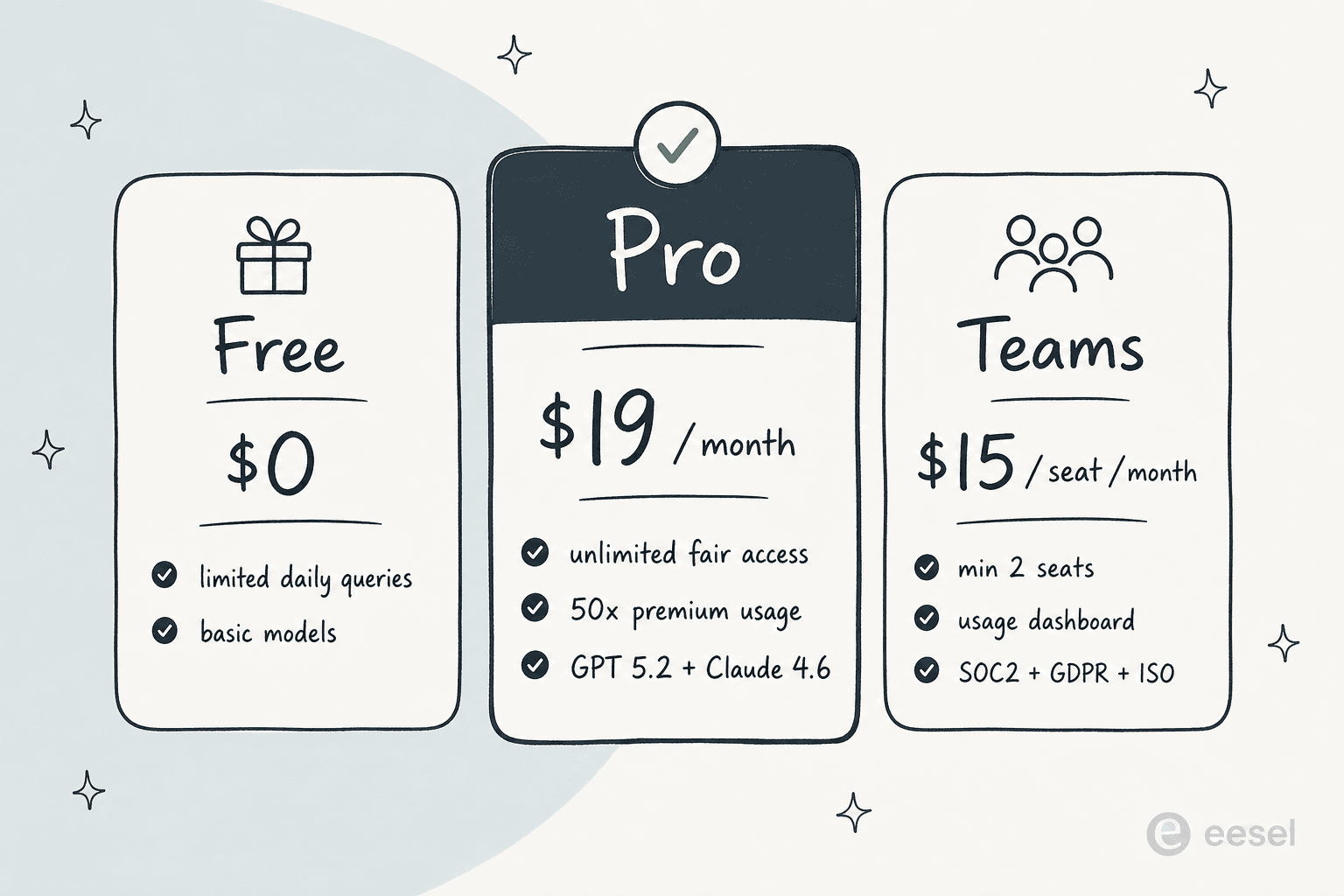
The free plan
This is your test drive. It’s a great way to kick the tires and see how Merlin feels without pulling out your credit card, much like the other free AI chatbots worth trying first. As you’d expect, it's pretty limited and meant for light, occasional use. You get a few daily queries on both basic and advanced models, a little bit of image generation, and a peek at its library of AI tools.
The pro plan ($19/month)
This is the one most people go for. At $19 a month (or $228 billed annually, which Merlin markets as a 35% saving), you get what they call unlimited access to basic models and a much bigger allowance for premium models like GPT-5.2 and Claude Opus 4.6. This plan also unlocks more powerful image and video generation and removes all restrictions on the Chrome extension, making it the standard choice for anyone who plans to use Merlin daily.
The teams plan ($15 per seat/month)
As the name suggests, this is for businesses and requires at least two users to get started (Merlin dropped the old five-seat minimum). It packs in everything from the Pro plan but adds features that teams actually need, like tools to manage who’s on the account, a central dashboard to see usage, a larger context window on every model, and better security compliance (SOC2, GDPR, and ISO 27001). It’s built for work environments where a whole group needs reliable access to AI.
| Feature | Free Plan | Pro Plan | Teams Plan |
|---|---|---|---|
| Price | $0 | $19/month | $15/seat/month (min 2) |
| Target User | Casual Users | Individuals & Power Users | Businesses & Teams |
| Premium Model Access | Very Limited Daily Use | 50x Higher Usage Limits | Everything in Pro + More |
| AI Tools Access | Limited | Unlimited | Unlimited |
| Team Management | No | No | Yes |
| Data Security | Standard | Standard | SOC2, GDPR, ISO Compliant |
The catch: "Unlimited" plans and hidden usage caps
Alright, let’s talk about the fine print, because this is where the Merlin AI pricing starts to feel a bit like a magic trick. The Pro plan is sold as having "unlimited fair access," but what that means in practice is a whole other story. It’s been a point of confusion for a lot of users who suddenly find themselves locked out.
If you look at user feedback on places like Canny, the picture gets clearer. The "unlimited" plan isn't unlimited at all. It appears to work on a credit system based on the cost of the AI models you’re using. For someone paying the full $19/month, that value reportedly tops out around $100 worth of usage.
The term 'unlimited' in Merlin AI's Pro Plan is misleading, as the plan is subject to a fair use policy. If a user's usage exceeds $16 per day or $100 per month, their account gets suspended for the remainder of that day or month with the warning: 'Your account has been paused since you have exceeded fair usage limits for this month. This pause is to ensure the fair usage of our services for all pro users.'

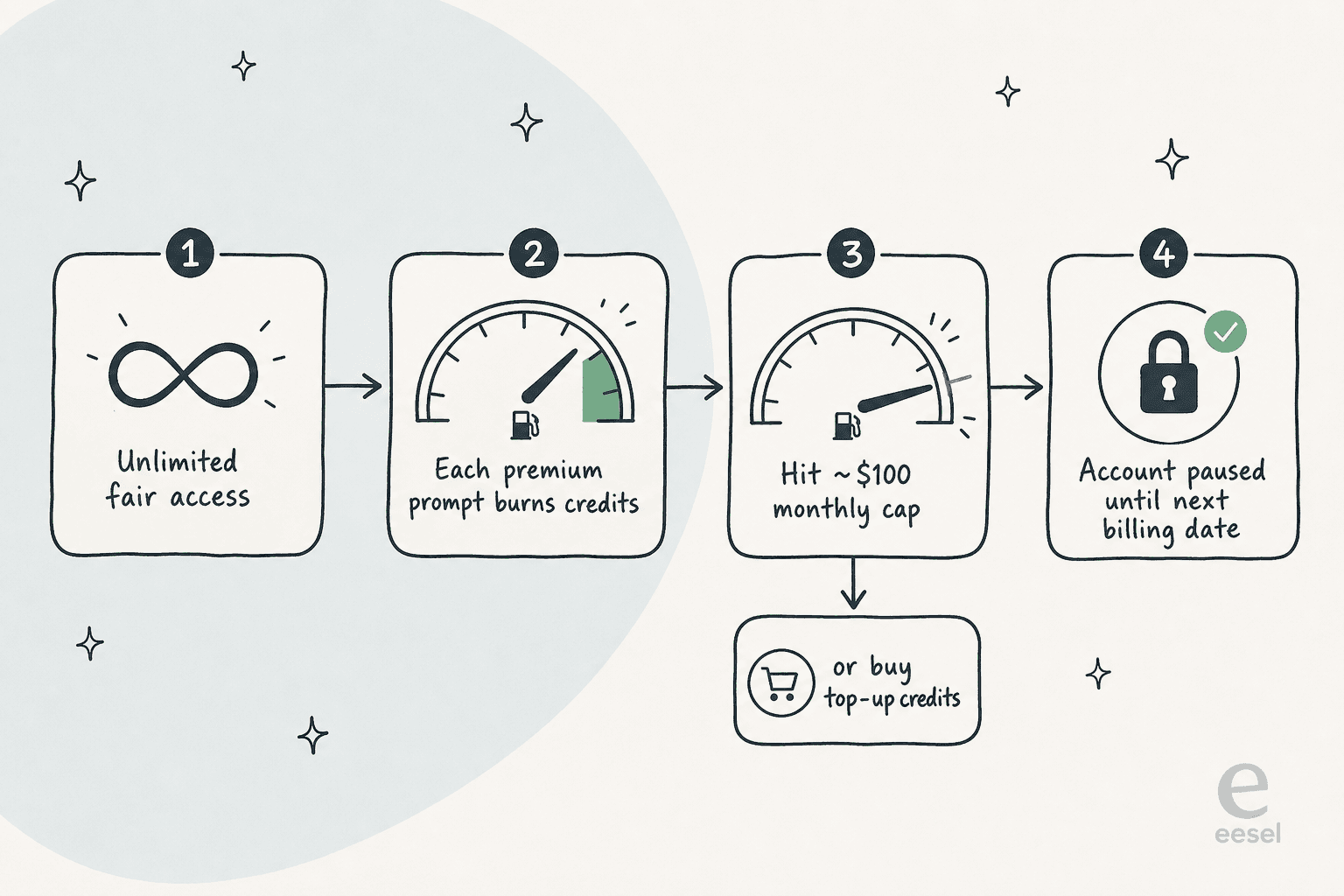
How Merlin's fair use policy works
Every time you use Merlin, especially a powerful model like GPT-5.2, you're using up some of that invisible credit. If you have a busy month and burn through your allowance, your account can get suspended until your next billing date, or you can buy top-up credits to keep going, which is its own extra cost on top of the "unlimited" plan you already paid for.
And here's the real kicker: if you got your plan on sale, that cap changes. Let's say you signed up with a promo code and are only paying $5 a month instead of $19. You don't get the full $100 worth of usage. Your spending cap is lower, proportional to what you paid. That can feel pretty misleading when you thought you were just getting a good deal on the same service.
Why transparent pricing matters for business
For an individual, hitting a surprise limit is annoying. For a business, it’s a deal-breaker. You can’t run a team on a tool that might just switch off when you need it most. Reliability isn't a nice-to-have; it's everything.
That’s a pretty big difference from how AI tools designed for businesses operate. With a platform like eesel AI, for example, the pricing is straightforward: one fixed monthly price from $299/month for 500 credits (1 credit per ticket or chat), with no per-seat fees and no confusing "fair use" policies that quietly switch you off mid-month. Having spent the last few years putting AI agents on live support queues, I can tell you the thing teams actually need is a resolution rate they can forecast, not a credit meter they have to babysit. No surprise bills, no sudden service interruptions.
What you get: Features vs. business-ready solutions
Look, Merlin AI is genuinely useful. It's like having a Swiss Army knife for writing, summarizing, and brainstorming. For content creators and researchers who need a flexible tool for all sorts of individual jobs, it's a great piece of kit.
The main thing to understand is that it’s designed to help with one-off tasks, not to run entire business workflows. It can help you write a support email, but it can’t manage your whole help desk. It can give you the highlights of a document, but it can't act as the single source of truth for your company's internal knowledge.
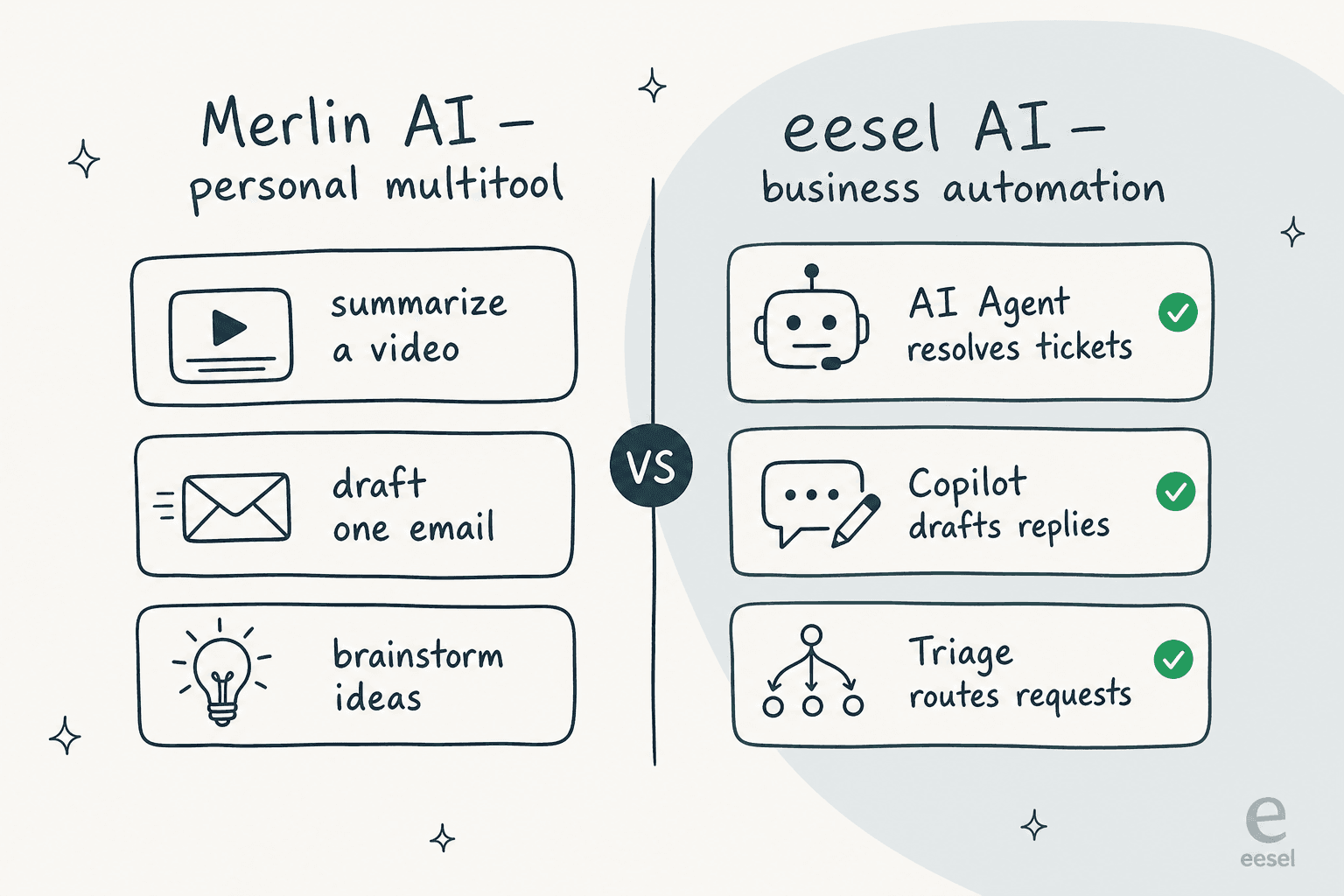
That’s the gap a dedicated business platform is meant to fill. Companies don't just need a little help here and there; they need automation built right into their core systems.
This is exactly what eesel AI does. It's not just about assisting with tasks; it's about automating whole functions of your business:
- eesel's AI Agent can provide frontline support on its own, right inside help desks like Zendesk or Freshdesk. It can handle customer tickets from start to finish.
- eesel's AI Copilot gives human agents a boost by drafting replies and finding information for them in seconds.
- eesel's AI Triage automatically categorizes and routes all incoming requests, so your support queues stay organized and nothing gets lost.
Is Merlin AI pricing right for you?
So, should you pay for Merlin AI? It really depends on who you are. If you're a student, a freelancer, or a marketer who wants to play with a bunch of different AI models (the same ones you'd weigh in a Claude alternatives roundup) for creative work, the Pro plan is a solid deal, even with the slightly fuzzy usage limits.
But if you're running a business, that unpredictability is a red flag. The hidden caps and vague fair use policy make the Merlin AI pricing a bit of a gamble for any team that needs a tool to be reliable day in and day out. While Merlin is a great multitool for personal productivity, businesses are better off with a solution built from the start for their specific needs.
Ready for an AI platform built for business?
Merlin is the right call if you want a personal AI multitool. But if your actual problem is a support queue, you don't want a credit meter, you want tickets resolved. If you need a powerful AI platform for customer service or internal support with transparent, fixed monthly pricing and a self-serve setup you can launch in minutes, try eesel for free. You can even use the simulation mode to see your potential ROI on past tickets before you ever go live.
Frequently asked questions
Could you explain how the general Merlin AI pricing structure is set up for its different plans?
Merlin AI offers a Free Plan for basic testing, a Pro Plan for individuals at $19/month, and a Teams Plan starting at $15 per seat/month (a 2-seat minimum) for businesses. Each tier offers increasing access to AI models and features. For a wider view of how it stacks up, see this roundup of the best AI assistants.
What should I understand about the "unlimited" access claim when evaluating Merlin AI pricing for the Pro plan?
The "unlimited" claim for the Pro plan actually refers to "unlimited fair access" and comes with hidden usage caps. Your access is limited by an invisible credit system based on the cost of the AI models you use, reportedly capping around $100 worth of usage for a full-price subscription. If you mainly need an AI customer service chatbot, a business platform avoids these caps entirely.
How does Merlin's fair use policy impact the effective Merlin AI pricing, particularly if I purchased a plan at a discount?
If you bought a plan at a discounted rate, your effective usage cap is proportionally lower than someone paying the full $19/month. This means a cheaper plan doesn't give you the same level of "unlimited" access as a full-price one. Businesses that need predictable costs often prefer AI tools for business with flat pricing.
For what kind of user is the current Merlin AI pricing most suitable, an individual or a business?
Merlin AI pricing is generally more suitable for individuals, freelancers, and marketers who need a flexible tool for personal productivity and one-off tasks. Its unpredictable usage caps make it less ideal for businesses requiring consistent, reliable AI solutions, where a dedicated AI helpdesk is a better fit.
How does the Merlin AI pricing for the Teams plan address the usage caps seen in the Pro plan?
The Teams plan includes everything from the Pro plan but adds a larger context window, a usage dashboard, and team management, as shown in the pricing table. While it's designed for business environments with more robust features, the article primarily highlights the "unlimited" catch and its implications for the Pro plan's individual users. Teams that want full self-service automation usually need a platform built for it.