A practical guide to Magento AI email content generation in 2025

Stevia Putri

Stanley Nicholas
Last edited November 14, 2025

If you're running a Magento store, you know the feeling. The never-ending list of tasks includes writing compelling content for hundreds, maybe even thousands, of product descriptions, meta tags, and marketing emails. It honestly feels like a full-time job on its own. You're trying to keep the brand voice consistent, get every page optimized for search engines, and personalize emails at scale, but you're always running out of time.
This is where AI can actually help. It's not just a tech buzzword; it's a tool that can take over these repetitive tasks and give you time back to focus on, you know, actually growing your business. This guide will walk you through how Magento AI tools work for email and content, look at a few popular options, and show why a more connected, all-in-one strategy is the real way to get the most out of AI.
What is Magento AI email content generation?
Let's break it down. At its heart, Magento AI email content generation means using artificial intelligence, usually powered by large language models like GPT-4, to automatically create written content right inside your Magento platform. It’s like having a writing assistant who never needs a coffee break, ready to draft everything from product details to entire email campaigns.
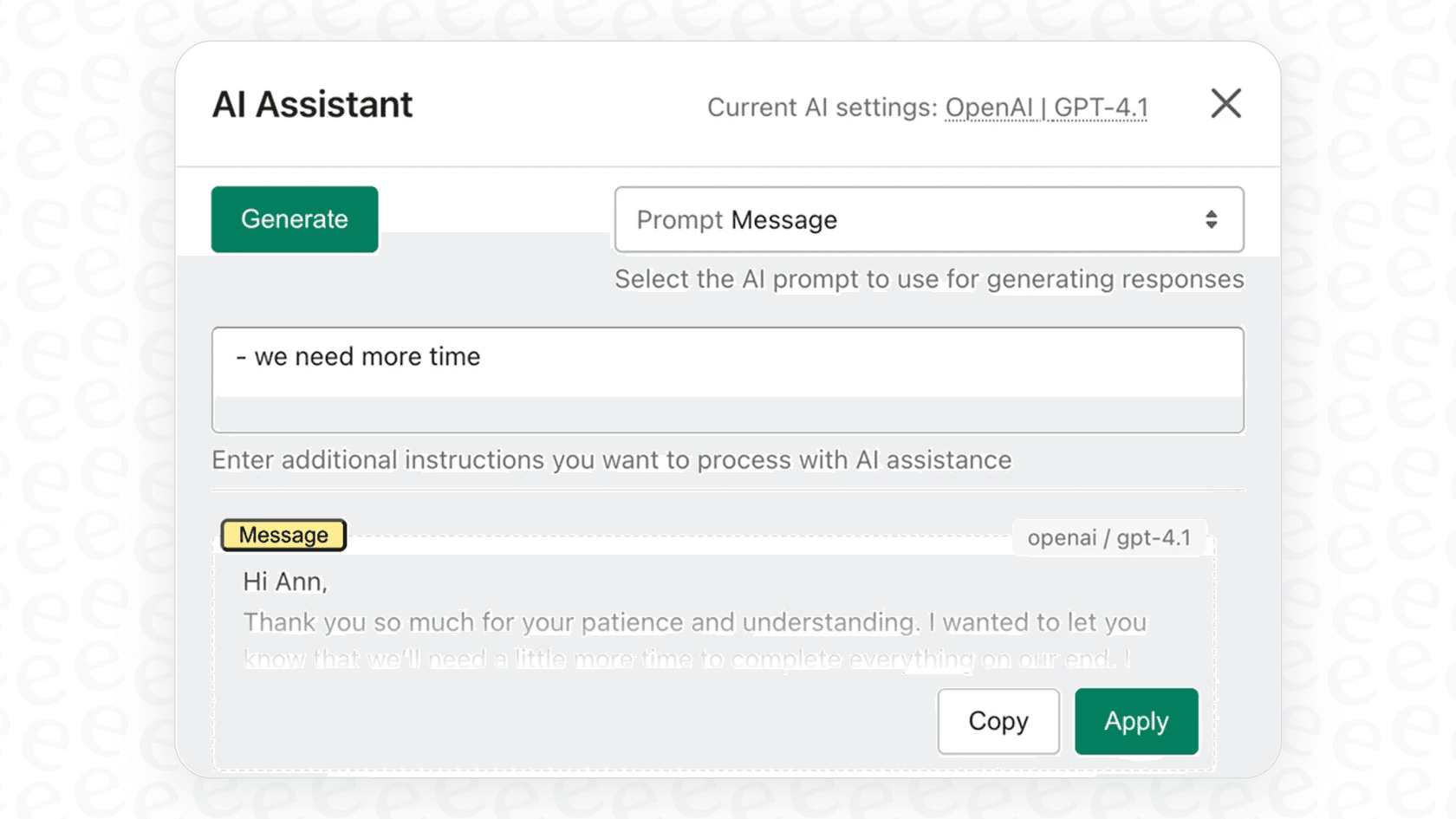
For e-commerce stores, the upsides are pretty clear:
-
Saving time: You can seriously cut down the hours you spend writing everything from scratch. Instead, you're just editing and approving, which frees up your team to think about bigger-picture strategy.
-
Boosting SEO: Creating keyword-rich meta titles and descriptions for every single product can become a quick, automated job. That kind of consistency can really help your store’s visibility on Google.
-
Keeping your brand consistent: You can teach the AI your brand’s specific tone of voice, making sure the style stays the same across your whole catalog and in all your customer emails.
-
Making personalization easier: Need to whip up different email campaigns for different customer groups? AI can generate tailored copy in a snap, helping you connect with your audience without facing a blank page every single time.
How AI content generation works in the Magento ecosystem
Store owners usually go one of two ways when adding AI to their Magento setup. You can either use what's built-in or bring in tools from third-party developers.
Native AI capabilities in Adobe Commerce
For businesses using the Adobe Commerce platform, there are some pretty powerful native AI features ready to go. Tools like Adobe Sensei can handle advanced personalization, and Adobe Firefly helps with generating images. They're woven deep into the Adobe ecosystem. The catch? They’re usually part of a much pricier package and often need a good bit of technical skill and development work to get them running smoothly.
Third-party Magento extensions
The more common route, especially for stores on Magento Open Source, is using third-party extensions. You install these from the marketplace directly into your Magento admin panel, and they add content generation buttons right where you need them.
The process is usually straightforward: you pick a product, give it some basic info like its attributes or a short custom prompt, and the extension sends that off to an external AI service like OpenAI. A few moments later, the generated text pops into the product field, ready for you to look over.
The challenge with extension-based AI
This gets us to the biggest problem with the extension-only approach: the AI is working in a bubble.
-
Isolated knowledge: The AI is basically stuck inside Magento. It can't get to the goldmine of information sitting in your other business tools, like your helpdesk (Zendesk, Freshdesk), internal wiki (Confluence, Google Docs), or team chat history (Slack).
-
Inconsistent voice: The content it creates can sound a little robotic or just plain off-brand because the AI hasn't learned from your team's real conversations with customers. It doesn't know the helpful, human tone your support agents have perfected.
-
Limited abilities: These tools are just "generators." They write text, and that's about it. They can't do other important tasks like looking up a customer's order, tagging a ticket, or sending a tricky issue to the right person.
A review of popular Magento AI email content generation tools
Let's check out some of the top Magento extensions on the market. They're solid for what they're designed to do, but it’s important to see where they fall short if you're trying to build a genuinely smart e-commerce operation.
Amasty AI content generator
Overview: Amasty's extension is a well-rounded tool that uses OpenAI to generate content for product pages, categories, CMS pages, and more. It’s a go-to choice for store owners who want to populate their site with text quickly.
Key Features: It handles a bunch of different content types, lets you use custom prompts to steer the AI, and has a bulk-generation feature for updating many products at once.
Pricing: The extension is part of Amasty's SEO Toolkit Pro/Premium subscriptions. If you buy it alone, it usually starts around $199, but it's often bundled with other tools.
Limitations: Just like other extensions, its knowledge is stuck within Magento. It can't learn from your past customer support tickets or other external knowledge, so the content it creates is missing that real-world customer context. Customization is also just limited to prompts; you can't set up custom AI actions.
Mirasvit GPT AI assistant
Overview: The Mirasvit GPT AI Assistant is a capable module that stands out because it supports several AI providers, including OpenAI (ChatGPT), Anthropic (Claude), and Google (Gemini). It also has the ability to generate responses within their own helpdesk module.
Key Features: The multi-AI support is a nice touch, giving you more flexibility. It also lets you set up rules to automate and schedule content generation for products, categories, and blog posts.
Pricing:
| Magento Edition | Price (First Year) |
|---|---|
| Open Source (CE) | $149 |
| Commerce (EE) | $318 ($149 + $169) |
| Commerce on Cloud (ECE) | $368 ($149 + $219) |
Limitations: Even though it works with its own helpdesk, it doesn’t connect to the big players like Zendesk, Intercom, or Gorgias. This keeps your AI's knowledge mostly locked within Magento and their specific toolset, so it can't learn from the rich conversations happening in your main customer support channels.
Comparison of Magento AI extensions
Here’s a quick rundown of how these tools compare to a more modern, connected approach.
| Feature | Amasty AI Content Generator | Mirasvit GPT AI Assistant | A Unified Platform (like eesel AI) |
|---|---|---|---|
| Knowledge Sources | Magento Data Only | Magento + Mirasvit Helpdesk | Helpdesks, Wikis, Docs, Slack & more |
| Helpdesk Integration | No | Proprietary Only | Zendesk, Freshdesk, Intercom, etc. |
| AI Actions | Content Generation | Content Generation | Triage, Tagging, API Calls |
| Simulation Mode | No | No | Yes (on historical tickets) |
| Setup Complexity | Low-Medium | Low-Medium | Minutes (Self-Serve) |
A better approach: Unifying knowledge
When you look at the limitations of these standalone extensions, the solution becomes pretty obvious. The most effective AI isn't the one stuck inside one application. It should be at the center of your business, learning from all the knowledge you've already built.
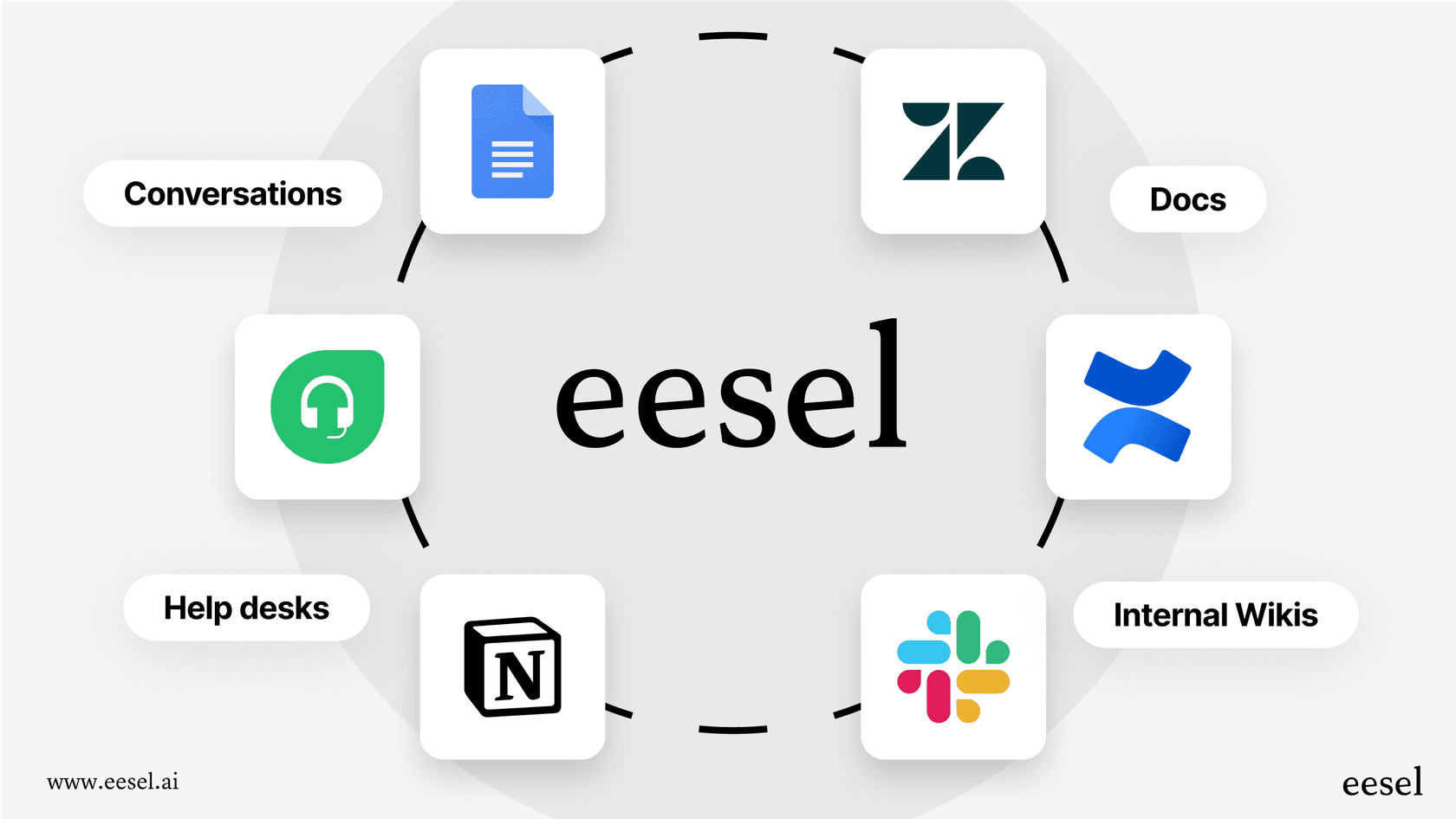
Connect all your knowledge sources
Imagine an AI that's been trained on the real story of your business. This means feeding it past support tickets, help center articles, internal wikis on Confluence or Google Docs, and even key Slack conversations. This is how an AI actually learns your brand voice, understands the most frequent customer problems, and figures out the best solutions your team already uses.
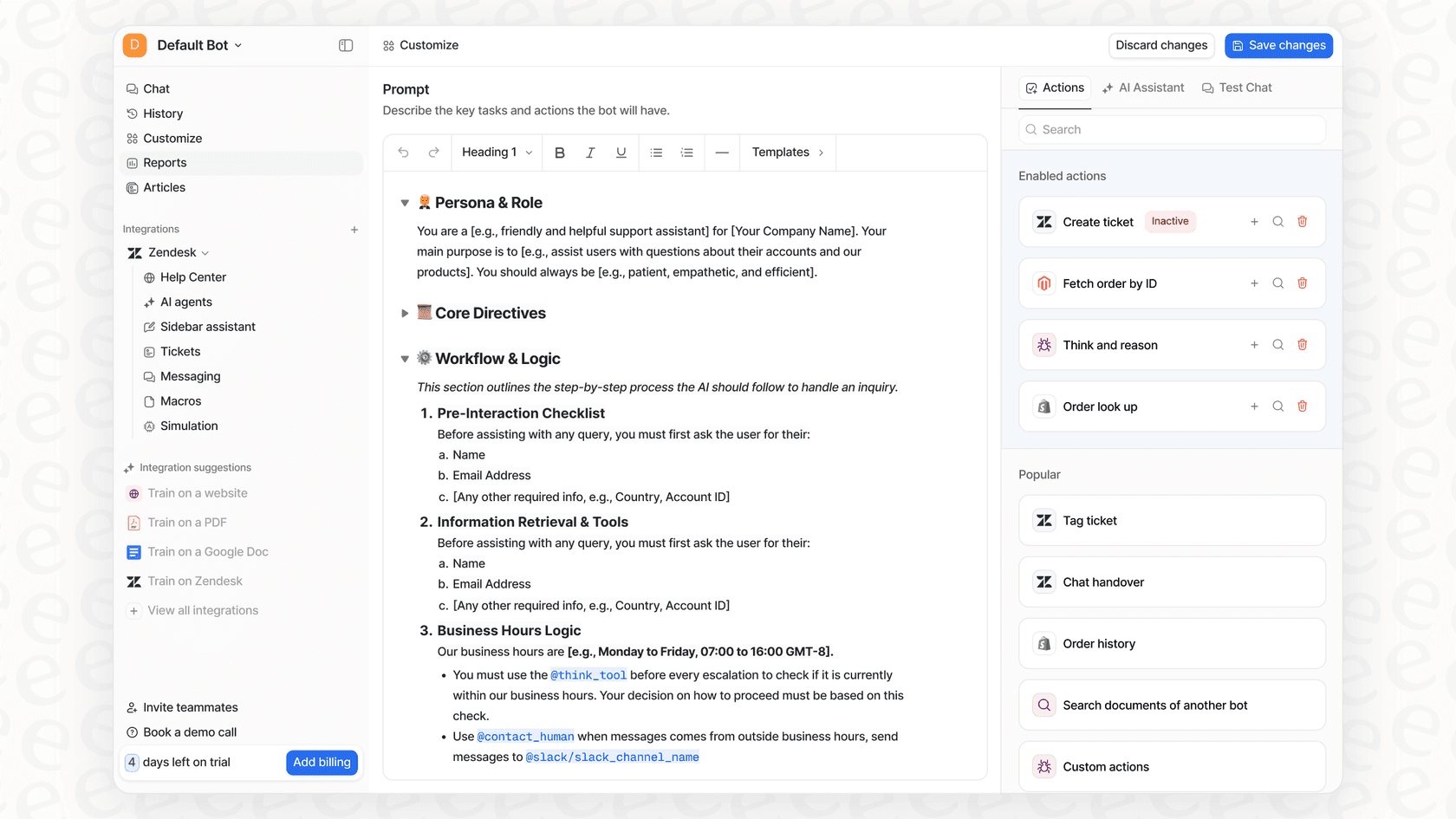
Go beyond basic generation with customizable actions
A truly modern AI tool should do more than just write words; it should be an active part of your daily workflows. Instead of an extension trapped in one app, a platform like eesel AI works like a central brain for your whole company. It plugs into all your knowledge sources and can be taught to perform custom actions, like looking up order details in Magento through an API call, automatically tagging tickets in Zendesk, or routing a conversation to the right agent. This means the AI can write a genuinely helpful email because it understands the entire story behind the customer's question.
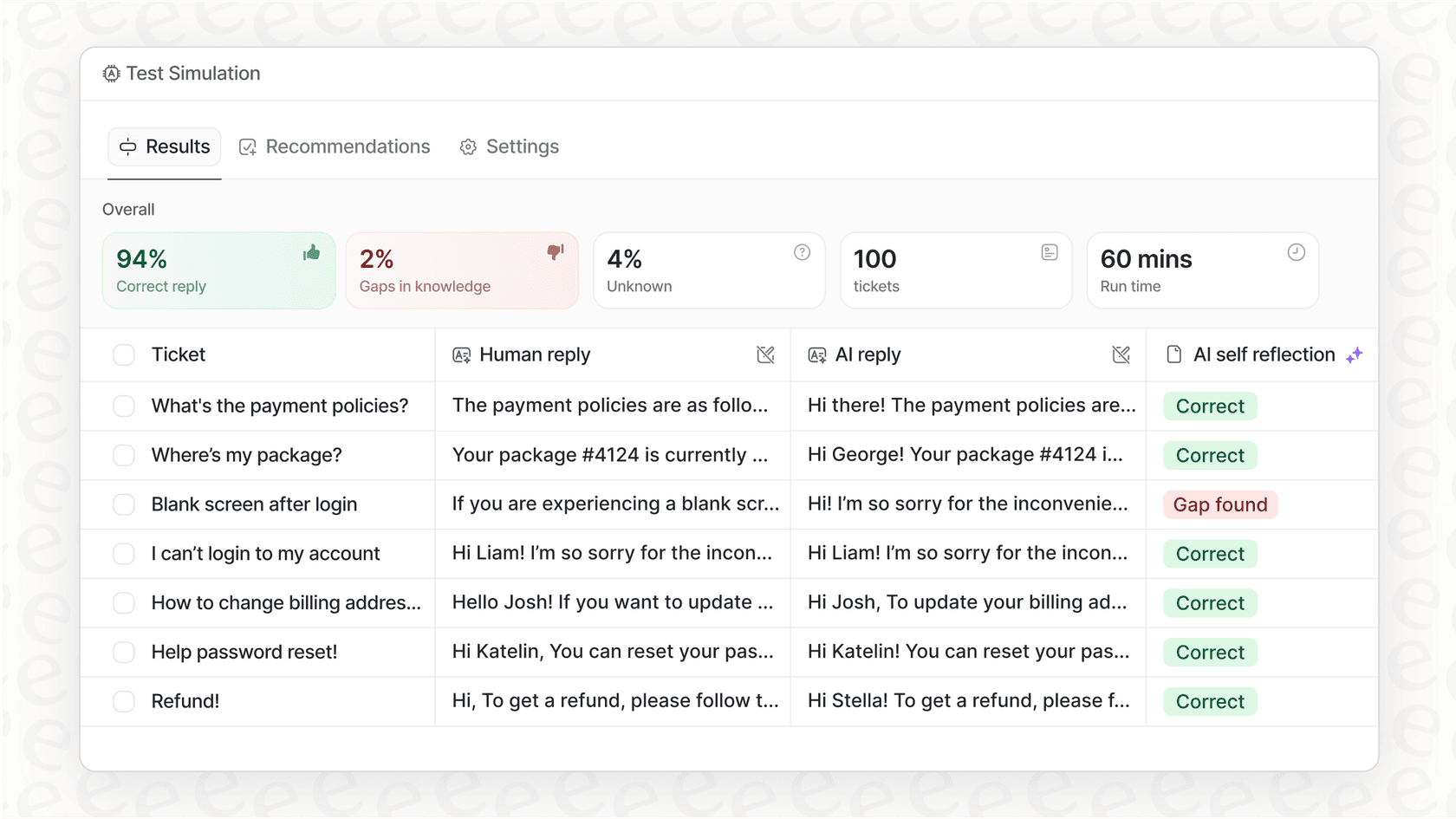
Simulate and deploy with confidence
Letting an untested AI loose on your customers is a pretty big gamble. You need to know it will work before it goes live. eesel AI lets you run completely risk-free simulations on thousands of your past support tickets. You get a clear forecast of how it will perform and can see which topics are safe to automate. This lets you roll it out step-by-step with total confidence, a feature you won't find in most standalone extensions.
Move beyond simple generators to a true AI strategy
The basic Magento AI extensions are a perfectly fine place to start. They can absolutely save you time on the content-writing treadmill. But they only see a tiny piece of the puzzle. They can write a product description, but they can't understand why a customer is asking about that product in the first place.
The future of e-commerce support and marketing isn't about having a separate AI in every app. It’s about having a single, unified AI strategy where one smart system learns from every corner of your business. An AI that understands your support chats, sales data, and internal documentation can create content that is far more valuable, accurate, and effective than one that only knows what’s in your product catalog.
Ready to see how a unified AI platform can change how your e-commerce business communicates? Get started with eesel AI for free and connect your knowledge sources in just a few minutes. You can go live with a smarter AI that understands your entire business, not just one part of it.


Frequently asked questions
Magento AI email content generation involves using artificial intelligence, typically powered by large language models, to automatically create written content within your Magento platform. This can include anything from product descriptions to marketing email campaigns, streamlining content creation.
It can significantly save time by automating repetitive writing tasks, freeing your team for strategy. It also helps boost SEO with consistent, keyword-rich content and enables easier personalization for various customer groups, improving engagement.
For Adobe Commerce users, there are powerful native AI features like Adobe Sensei integrated into the platform. However, for most Magento Open Source stores, third-party extensions from the marketplace are the more common and accessible route for Magento AI email content generation.
Standalone extensions often operate in a "bubble," meaning the AI only has access to data within Magento. This limits its understanding of broader business context, like customer support history or internal knowledge bases, potentially leading to less accurate or off-brand content.
To ensure consistency, the AI needs to be trained on your full brand voice, not just product attributes. A unified AI approach, where the system learns from all your knowledge sources like helpdesk conversations and internal documents, is key to achieving this across all your Magento AI email content generation.
While many standalone extensions have limited integrations, a unified AI platform is designed to connect to various external sources like Zendesk, Freshdesk, Slack, and Google Docs. This broader access enables the Magento AI email content generation to produce much more informed and contextually relevant content.
Share this article

Article by
Stevia Putri
Stevia Putri is a marketing generalist at eesel AI, where she helps turn powerful AI tools into stories that resonate. She’s driven by curiosity, clarity, and the human side of technology.