How to write for voice search: A complete guide

Katelin Teen
Katelin Teen
Last edited January 20, 2026
You've probably done it today. "Hey Google, find coffee shops near me," or "Alexa, what's the weather like?" It's become second nature, and it's how a massive part of the world gets information now. With over 8.4 billion voice assistant devices in use globally, the old rules of search are out the window.
This change calls for a new content strategy. Just stuffing keywords onto a page and crossing your fingers doesn't cut it anymore. The game is now about giving direct, spoken answers to questions. Your content has to be what Siri or Google Assistant decides to read out loud.
In this guide, we'll walk through exactly how to do that. We’ll cover everything from understanding how people talk to their devices, to structuring your content for audio, and the technical bits that help search engines find your answers. And if you're looking for a hand, tools like the eesel AI blog writer are built for this new world, helping you create content that’s ready for Answer Engine Optimization (AEO) from the get-go.
What is voice search optimization and why does it matter?
So, what is voice search optimization, really? It’s about tailoring your content so it’s the perfect answer for a voice assistant like Siri, Alexa, or Google Assistant to find and read aloud. It’s a bit different from the traditional SEO you might be used to.
The main difference is how people search. When we type, we often use shorthand. When we speak, we use full sentences.
- Typed Search: "veggie burger recipe"
- Voice Search: "What is the best recipe for a veggie burger?"
See what I mean? Voice searches are longer and more conversational. The goal isn't just to rank on the first page; it's to become the single, spoken answer. This often means grabbing that top spot, the "position zero" known as the Featured Snippet. A huge study by Backlinko found that a massive 40.7% of voice search answers come directly from a Featured Snippet.
Voice search optimization relies on conversational, long-tail keywords and natural language processing. Businesses should focus on structuring content in a way that answers direct questions concisely while maintaining depth. Local SEO plays a crucial role, as many voice searches are location-based. Fast-loading websites with clear schema markup improve visibility in voice search results. Prioritizing FAQ-style content and optimizing for featured snippets helps capture AI-driven responses effectively.

This is a big deal for your business. You can reach users who have an immediate need, especially for local "near me" searches. Being the go-to source for direct answers also builds brand authority and creates a much better experience for people searching on their phones.
Understanding voice search query patterns
To succeed with voice search, you need to get inside the user's head and figure out why they're asking something in a particular way. It's all about thinking more like a person and less like a keyword-obsessed robot.
Focus on conversational keywords
People talk differently than they type. It’s just how it is. Voice queries are almost always longer, more conversational, and use what's called "natural language." Instead of short, choppy phrases, think in full questions.
Here’s a simple comparison:
- Typed: "cheap hotels Boston"
- Voiced: "Find me affordable hotels in Boston for this weekend"
Your content needs to mirror this conversational style. To find these longer, question-based keywords, you can use tools like AnswerThePublic. It’s built to show you the questions people are actually typing (and speaking) into search engines. By targeting these, you’re lining up your content with what your audience is asking for.
Prioritize question-based intent
Most voice queries are just straight-up questions. They typically start with "Who," "What," "Where," "When," "Why," and "How."
Each one signals a different kind of need, or "intent":
- Informational: "How do I start a retirement plan?" (The user wants to learn something.)
- Navigational: "Directions to the nearest coffee shop." (The user wants to go somewhere.)
- Transactional: "Order a pizza for delivery." (The user wants to buy something.)
Your job is to anticipate these questions and set up your content to answer them directly. Figure out what a user needs in that moment and give it to them, plain and simple.
Core strategies for writing for voice search
Alright, let's get practical. Here’s how you can start writing and formatting your content so it’s ready to be the chosen answer for a voice search.
Provide direct answers for snippets
We already touched on how much voice assistants rely on Featured Snippets, pulling 40.7% of their answers from them. So, how do you land one?
Start with the "inverted pyramid" approach. This just means you answer the question right away, in the first paragraph. Don't waste time with a long wind-up. Give the direct answer first, and then you can elaborate with more context and detail.
And keep it brief. That same study found that the average voice search answer is only 29 words long. Aim for a punchy, direct answer around that length. Using lists, bullet points, and clear headings also helps break your content into digestible pieces that search engines can easily grab.
Write in a natural tone
This one is huge. If you want your content read aloud, it has to sound like a human wrote it. The average Google voice search result is written at a 9th-grade reading level, so you don't need to use big words or complex sentences.
Keep your sentences and paragraphs short (1-3 sentences is a good guideline). Use contractions like "it's" or "you'll" and speak directly to your reader with words like "you" and "your." It makes your writing feel much more like a one-on-one conversation.
Pro tip
Read your content out loud. I'm serious. If it sounds clunky or robotic when you say it, it’s not ready. Tweak it until it flows naturally.
Use FAQ pages
FAQ pages are a goldmine for voice search. Why? Because they are literally built in a question-and-answer format, which is a perfect match for the conversational queries people use.
A few tips for a great FAQ page:
- Use real questions from your customers as the headings.
- Give a short, direct answer immediately, then add more detail if it's needed.
- Group related questions under broader topics to keep things tidy.
Just check out how much better a conversational answer sounds:
| Traditional FAQ Format | Voice-Optimized FAQ Format |
|---|---|
| Q: What are your hours of operation? A: Our establishment operates Monday to Friday, 9:00 AM to 5:00 PM. | Q: What time are you open? A: We're open weekdays from 9 AM to 5 PM. |
| Q: What services are provided? A: We offer a comprehensive suite of digital marketing solutions... | Q: What can you help me with? A: We help businesses grow their online traffic through SEO, content, and ads. |
The technical foundation for voice search
Great writing is key, but you also need to get the technical side of your site in order. These backend tweaks help search engines find, understand, and trust your voice-friendly content.
Implement structured data
Don't let the technical name intimidate you. Structured data (or schema markup) is just a simple vocabulary you add to your site's code to give search engines more context. It tells them things like, "This block of text is a recipe," or "This page is an FAQ."
For voice search, the most useful schema types are FAQPage, HowTo, and LocalBusiness. While one study found that only 36.4% of voice search results currently use schema, it’s still a smart move. It gives Google a clearer picture of your content, which can only improve your chances. Even though Google has changed how FAQ rich results appear in search, the underlying data is still very valuable for helping it understand your page.
Strengthen your local SEO
A ton of voice searches are for local things, like "find a plumber near me." In fact, 76% of customers who search for something local on their phone end up visiting a related business within a day. That's a huge opportunity you don't want to miss.
Here are a few quick wins for your local SEO:
- Claim and completely fill out your Google Business Profile (GBP). Make sure every detail is accurate, especially your business category.
- Keep your Name, Address, and Phone number (NAP) consistent everywhere online.
- Encourage customer reviews and always respond to them. Google views this as a sign of an active, trustworthy business.
- Create pages on your website for specific locations you serve, mentioning local landmarks or neighborhoods to add relevance.
Prioritize mobile speed
This should be a given, but it’s extra important for voice search. Most voice queries happen on smartphones, so your site has to be fast and easy to navigate on a small screen.
How fast is fast enough? The Backlinko study found that the average voice search result page loads in 4.6 seconds, which is 52% faster than the average webpage. Speed really matters. Use tools like Google PageSpeed Insights to find and fix anything slowing your site down, like large images or messy code.
How to write for voice search at scale with eesel AI
Trying to apply all these strategies to every piece of content can feel like a full-time job. It’s a lot to manage, from finding the right conversational keywords to structuring your text and nailing the technical details.
This is where the eesel AI blog writer can help. It’s built to handle the heavy lifting of creating voice-optimized content, so you can scale up your efforts without getting overwhelmed.
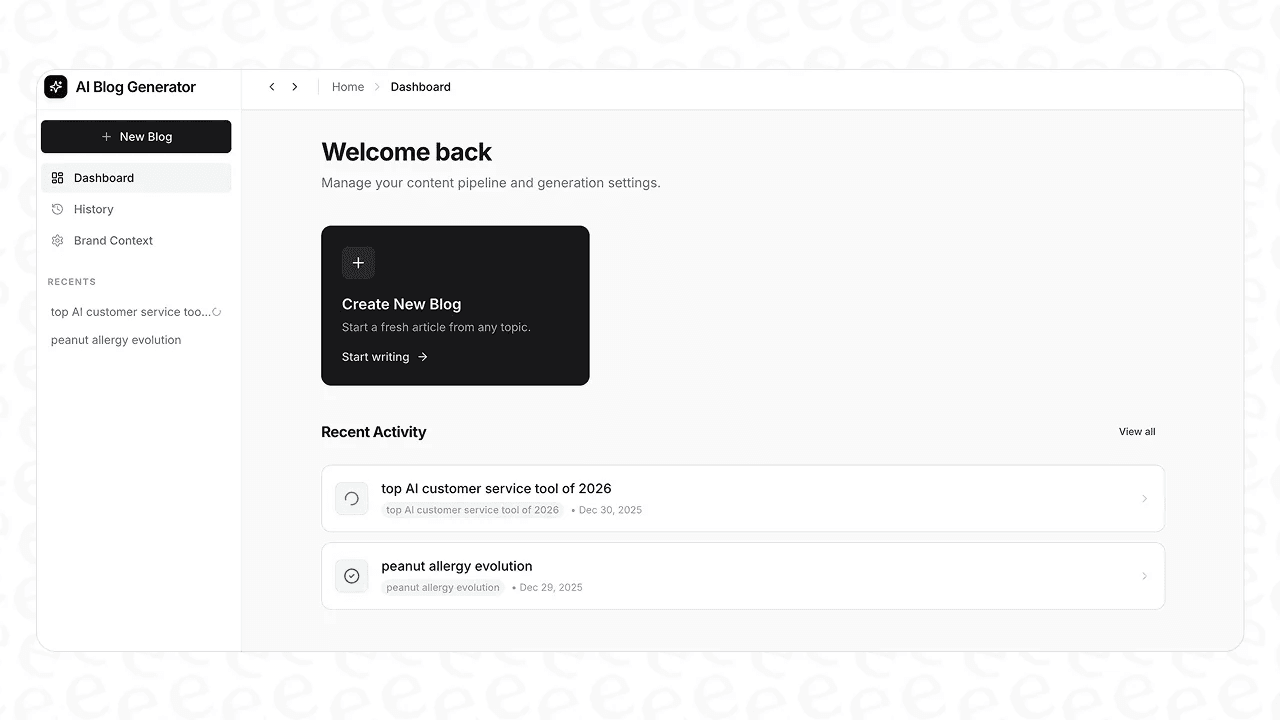
Here’s how it works:
- Conversational Tone: We've spent over a year refining its output to sound genuinely human, not like clunky AI text. It can even learn your brand voice from your website to make sure every post sounds like you.
- Structure & Formatting: It automatically generates well-structured posts, complete with the clear headings, direct intros, helpful conclusions, and FAQ sections that are vital for voice SEO.
- Answer Engine Optimization (AEO): The tool is designed for AEO. It structures content with the kind of direct, concise answers that AI answer engines and voice assistants look for.
- Context-Aware Research: Instead of just generating generic text, it does deep research to answer questions accurately, which is essential for capturing those important Featured Snippets.
We don't just sell this tool; we use it every day. It's how we grew our own blog from 700 to 750,000 daily impressions in just three months.
For a deeper dive into the practical steps you can take to improve your visibility in voice search, check out this helpful video. It covers some of the core principles we've discussed and offers actionable tips to get your business heard.
Adapting your content for voice search
The main takeaway is simple: the future of search is conversational. To keep up, your content has to adapt. That means understanding what your audience is asking, answering their questions directly, and writing in a natural tone that sounds good when spoken. And, of course, you need a technically solid website to support it all.
At the end of the day, the core idea is the same as it's always been. Write for people first. Content that is clear, helpful, and genuinely useful will always perform well, whether someone is typing a query or speaking it into their phone. The rules of the game have changed, but the goal is still to be the best answer.
It's time to start adapting your strategy for the new era of search.
Don't let your content get lost in the noise. Start creating voice-optimized blog posts today. Try the eesel AI blog writer for free and see how easy it is to rank in the new era of search.

Frequently Asked Questions
Share this article

Article by
Katelin Teen
Katelin is an operations specialist at eesel where she uses her psychology training and education experience to optimize B2B SaaS processes. Outside of work, she unwinds with story-driven games, writing, and keeping up with latest tech innovations.