The complete guide to AI generated content SEO

Kenneth Pangan
Written by

Kenneth Pangan

Reviewed by

Stanley Nicholas

Last edited January 14, 2026

Expert Verified

Image alt text

AI content tools seem to have popped up overnight, haven't they? One minute they're a curiosity, the next they're everywhere. It's left a lot of people wondering: are they a magic ticket to the top of Google, or a fast track to a "scaled content abuse" penalty?

It's a tricky situation. Many teams are either diving in and producing tons of low-quality "AI slop," or they're avoiding AI altogether and missing out on a huge efficiency boost. The main question remains: does using AI for content actually help or hurt your SEO?

Let's cut through the noise. This guide will give you a straight-up look at how AI generated content SEO actually works. We’ll go over what Google's guidelines really mean, the pitfalls of using AI the wrong way, and a solid game plan to use it right.

With the right strategy and tools like the eesel AI blog writer, you can scale up your content production without ditching the quality that both search engines and actual humans are looking for. It’s the exact tool we used to grow our own daily impressions from 700 to over 750,000 in just three months.

What is AI-generated content?

At its heart, AI-generated content is just text created by Large Language Models (LLMs), the same tech behind tools like ChatGPT or Gemini.

How do they work? Imagine feeding a machine a massive chunk of the internet. It learns all the patterns, styles, and facts, and then uses that knowledge to guess the next best word in a sentence. This predictive ability is what lets it create text that sounds surprisingly human. But, as researchers from Harvard's Misinformation Review have noted, it's also why they sometimes just make things up. This is often called "hallucinating."

When people use AI for content, they usually fall into one of three camps:

  • AI-generated content: You give an AI tool a prompt, and it spits out a full piece of content.
  • AI-assisted content: A human uses AI for specific parts of the process, like brainstorming ideas, creating an outline, or doing initial research. The human does the actual writing and editing.
  • AI-automated content: This is when content is produced programmatically with little to no human checking it over, usually at a massive scale. This is the riskiest path and the one most likely to get you in trouble with Google's spam policies.

An infographic comparing AI-generated, AI-assisted, and AI-automated content for AI generated content SEO.

How Google views AI-generated content

This is the big one. Let's break down what Google has actually said and what it means for your content strategy.

Google's official stance: Rewarding helpful content, not punishing the method

Google has been pretty consistent here: they want to reward original, high-quality, people-first content. They don't really care how you make it.

The real measure of quality is Google's E-E-A-T guidelines, which stands for Experience, Expertise, Authoritativeness, and Trustworthiness. If your content hits those marks, you're doing it right. In an official Google Search Central blog post, they state, "Appropriate use of AI or automation is not against our guidelines." The key part is that you can't use it just to manipulate search rankings. It needs to be genuinely helpful for readers.

Reddit
Ai content can rank, even if it's 100% detected as AI by detection tools (that by the way have an insane amount of false positives). Google said that AI was not ok but then started to actually compete with ChatGPT luckily, and now AI is fine to use for all of us as Google changed its position from 'AI content Is spam' to 'well if AI content Is good then it's still quality content'.

Helpful content vs. scaled content abuse

The problem isn't the AI; it's the reason you're using it.

Google's spam policy on "scaled content abuse" is aimed at people who pump out tons of pages to game the system without offering any real value. This policy applies whether a human, an AI, or a combination of both created the content. The core issue is creating low-value stuff for search engines instead of for people.

An infographic explaining Google's guidelines on helpful content vs. scaled content abuse for AI generated content SEO.

The reality: Can AI content actually rank?

Yes, but with a major catch. It can rank if you have a human involved in the process.

Reddit
Yes. Went from 200 views a month to 3000. Website is making $10,000+ monthly. I take chat gpt and ask it to simplify my five best competitors’ pages. It spits out some output then I edit that, go to Canva, make content about any lists or comparisons and do a YouTube video in 2-3 minutes. I run Yoast for internal linking suggestions and pepper in a few of my cornerstone articles.

A great example is the Bankrate.com case study. They use AI to generate content that brings in hundreds of thousands of monthly visits. Their secret? Subject matter experts review, fact-check, and edit every single piece before it's published. Another one is the Xponent21 agency's case study, which saw a staggering 4,162% jump in organic traffic by using a well-planned, AI-assisted content strategy.

The lesson here is that AI content can definitely rank, but only when it's part of a smart workflow that makes sure the final piece meets user needs and E-E-A-T standards.

Common pitfalls of poorly executed AI content

Just hitting "generate" and publishing whatever comes out is a terrible idea. Here’s a rundown of the specific ways that relying only on AI can sink your SEO and damage your brand.

Factual inaccuracies and AI "hallucinations"

LLMs can be very confidently wrong. They can invent facts, stats, and even sources from nothing. As MIT researchers have pointed out, these models are designed to create plausible text, not to verify its truthfulness. This can wreck your site's trustworthiness (the 'T' in E-E-A-T).

And the consequences aren't just theoretical:

  • In the Mata v. Avianca case, a lawyer was sanctioned by a court for submitting a legal brief full of fake cases made up by ChatGPT.
  • An Air Canada chatbot invented a bereavement fare policy out of thin air. The airline was later forced by a tribunal to honor the made-up information.

Lack of originality and a unique voice

Since AI models learn from existing internet data, their output often sounds like a generic remix of what's already ranking. This kind of content doesn't add much new value, shows zero real "Experience" (the first 'E' in E-E-A-T), and is unlikely to get any love from Google's helpful content systems.

Repetitive phrasing and unengaging copy

Raw AI text can be pretty robotic. It often misses the personal stories, unique opinions, and conversational rhythm that keeps a reader engaged. This can lead to high bounce rates and low time on page, which tells search engines your content isn't connecting with people.

The risk of unintentional duplicate content

If thousands of people are using similar prompts in the same AI tool, the outputs can start to look very much alike. Publishing content that's too similar to what's already out there makes it a lot harder to rank for competitive keywords.

RiskHuman-Led Solution
Factual HallucinationsRigorous human fact-checking and source verification.
Lack of OriginalityInjecting unique data and first-hand experience.
Robotic ToneHeavy editing to align with brand voice.
Duplicate OutputUsing AI as a first-draft tool, not the final author.

A practical framework for using AI in SEO

Alright, enough with the problems. Let's get to the solutions. The best way forward is a hybrid model where AI tools and human experts work together.

Use AI as a research assistant

A smart way to start is by using AI at the very beginning of your content workflow. It's a fantastic tool for saving hours of grunt work without compromising quality. You can use it for tasks like:

  • Generating topic ideas around a central theme.
  • Creating detailed blog outlines based on top-ranking content.
  • Summarizing dense reports or studies.
  • Finding related keywords and questions people are asking.

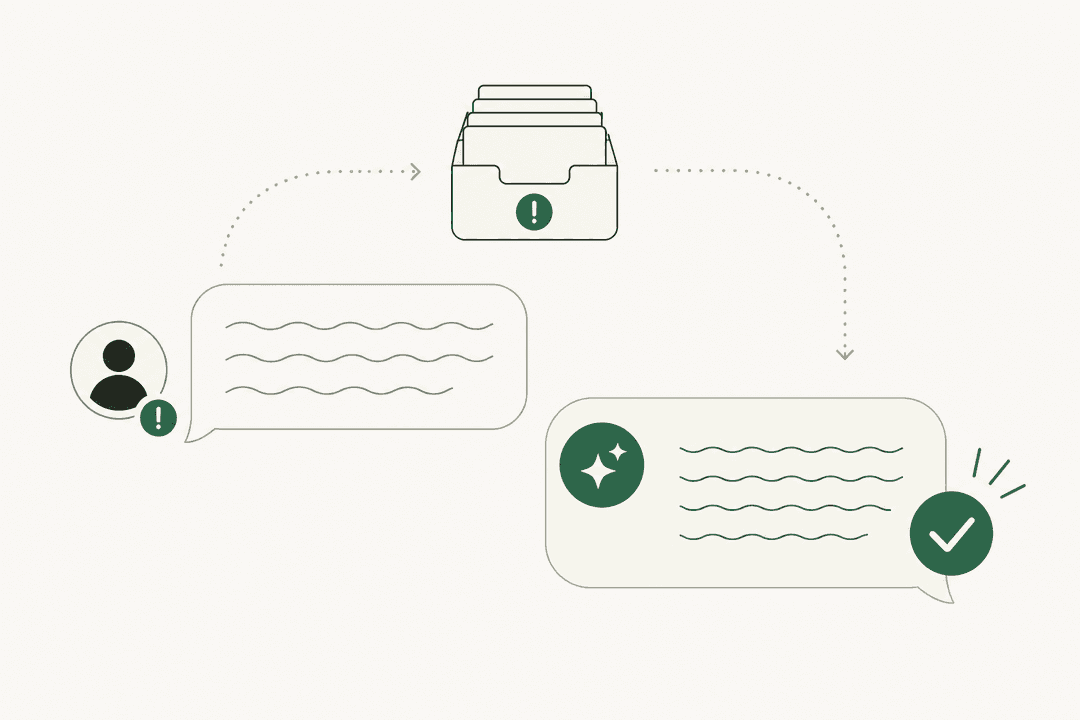
Embrace a hybrid workflow: AI draft, human polish

The safest and most effective method is to let AI handle the initial draft. Once it generates the first version, a human editor needs to take over. This is where the magic happens. The editor's job is to fact-check everything, add unique insights and personal stories, tweak the tone to fit your brand, and ensure the content fully solves the reader's problem. This is the exact approach used by successful publishers like Bankrate.

A workflow diagram showing the AI draft and human polish process for effective AI generated content SEO.

Streamlining workflows with the eesel AI blog writer

This is where a tool designed for this exact hybrid workflow can make a huge difference. The eesel AI blog writer was designed to overcome all the common pitfalls of generic AI tools. Instead of giving you a plain wall of text, it generates a complete, publish-ready blog post with all the essential SEO and engagement elements already built-in.

A screenshot of the eesel AI blog writer dashboard, a tool for creating AI generated content SEO.

Here's what makes it different:

  • Automatic Assets: It doesn't just write text. It includes AI-generated images, custom infographics, and data tables to make your content more engaging and save you hours of design work.
  • Authentic Social Proof: It automatically finds and embeds real Reddit quotes and relevant YouTube videos. This adds a layer of authenticity and helps demonstrate the "Experience" that E-E-A-T demands.
  • Deep Research with Citations: It performs in-depth research and adds internal and external links for you, which helps build authority and trustworthiness.
  • AEO (Answer Engine Optimization): It's not just optimized for traditional search. The content is structured to be the source for AI Answer Engines like Google AI Overviews and Perplexity, which is becoming increasingly important.

To see these principles in action, it's helpful to look at real-world case studies and expert analysis. The following video dives into a recent SEO case study, exploring whether Google actually penalizes AI-generated content and what the data shows.

A video case study from Nathan Gotch's YouTube channel exploring whether Google penalizes AI content.

Final thoughts

So, what's the bottom line? Google's position is clear: they care about quality and helpfulness, not the tools you used to create the content. Just hitting "generate" and publishing raw AI text is a risky move that won't meet this standard, thanks to hallucinations, a lack of originality, and a robotic feel.

The future of AI generated content SEO isn't about replacing people with machines. It’s about giving human experts the speed and power of AI. The teams that come out on top will be those who use AI as a powerful assistant to scale up the production of high-quality, human-vetted, and genuinely useful content.

Don't settle for generic, text-only AI drafts that you have to spend hours fixing. See for yourself what a truly complete, SEO-optimized article looks like. Generate your first blog post for free with the eesel AI blog writer and go from a keyword to a publish-ready article in minutes.

Frequently Asked Questions

Google's policy is to reward [high-quality, helpful, people-first content](https://www.eesel.ai/en/blog/ai-to-write-seo-friendly-blogs), regardless of how it's created. They don't penalize the use of AI itself, but they do penalize "scaled content abuse," which is creating low-value content primarily to manipulate search rankings.
Yes, but the penalty is for the outcome, not the tool. If your AI generated content SEO strategy results in spammy, unhelpful, or inaccurate content, you risk being penalized under Google's scaled content abuse policy.
The main risks are factual inaccuracies (AI hallucinations), lack of originality, a robotic tone that fails to engage readers, and the potential for creating content that is unintentionally similar to other AI-generated articles. These issues can harm your brand's credibility and your site's E-E-A-T signals.
The key is a [human-in-the-loop workflow](https://www.eesel.ai/en/blog/how-to-use-an-ai-content-writer). Use AI to generate a first draft, but have a human subject matter expert review, fact-check, edit, and add their own unique experience and insights. This ensures the final content is accurate, trustworthy, and demonstrates real expertise.
The most effective workflow is a hybrid model. Use AI for initial research, outlining, and drafting. Then, a human editor or expert takes over to refine the content, inject brand voice, verify facts, and add personal experience. This combines the speed of AI with the quality and nuance of human expertise.
Yes, when used as part of a quality-focused strategy. Tools like the [eesel AI blog writer](https://www.eesel.ai/product/ai-blog-writer) are designed to support a hybrid workflow by generating a high-quality, well-researched first draft with assets and social proof. However, it's still best practice for a human to review and approve the content before publishing to ensure it aligns perfectly with your brand and quality standards.

Share this post

Kenneth undefined

Article by

Kenneth Pangan

Writer and marketer for over ten years, Kenneth Pangan splits his time between history, politics, and art with plenty of interruptions from his dogs demanding attention.