Google just released Gemini 3, its smartest and most capable AI model yet, and it’s hard to miss the excitement. You’ve probably seen the demos making the rounds online, AI building a game from a simple description, dissecting complicated research papers, or creating realistic app UIs in seconds. It's a seriously impressive leap.
But after the initial wow factor wears off, the practical questions start to bubble up, especially if you’re a business or tech leader. What can this new model really do? How does it work, what’s the price tag, and what are its actual limitations in the real world? This article gets past the hype to give you a straightforward look at Gemini 3, exploring what it could mean for your business and where the raw power of a big model stops and the need for a practical tool begins.
What is Gemini 3?
Let's clear one thing up right away: Gemini 3 isn't a single product you can just switch on. It's Google's latest family of powerful, multimodal foundation models. The first model available, "gemini-3-pro-preview", is already turning heads with what it can do.
Gemini 3 is built on a few core ideas that make it different:
-
Advanced reasoning: It was designed from the start to get the nuance in complex, multi-step problems. It doesn’t just pull up information; it thinks through it, which makes it much better at tasks that need genuine problem-solving.
-
Deep multimodality: This is a huge deal. Gemini 3 can natively process and understand information in different formats, text, images, audio, video, and code, all at once. Imagine it reading a dense report, watching a related video clip, and listening to a recorded call to pull together one single, coherent summary.
-
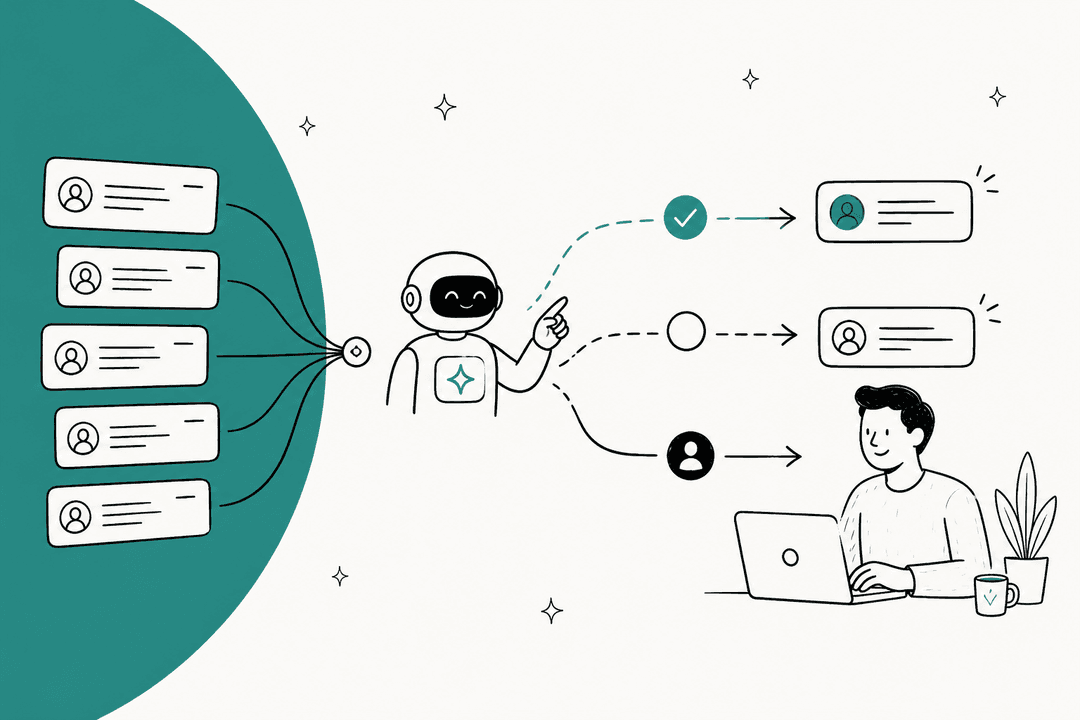
Agentic capabilities: It’s designed to be less of a simple chatbot and more of a "digital coworker." It can actually perform tasks, use tools, and follow complex plans, moving well beyond basic Q&A.
You can already find Gemini 3 being woven into Google's products, from the new AI Mode in Google Search to being available for developers through Vertex AI and Google AI Studio.
Discover the capabilities of Gemini 3, our most intelligent AI model designed to bring your creative ideas to life.
Key features and capabilities of Gemini 3
The real magic of Gemini 3 comes from a mix of new features that open the door to more advanced and useful applications. This isn't just a small update; it’s a different way of thinking about how AI can be used.
Top-tier reasoning and multimodal understanding
In a business setting, "multimodal" isn’t just a buzzword. It means the AI can pull together information from all the different places it exists. For instance, a company could use Gemini 3 to look at a PDF sales report, a video of a new process on the factory floor, and the audio from a dozen customer support calls to create one complete summary of how the last quarter went.
This isn't just a theory. According to data from Google DeepMind, Gemini 3 is setting new records on benchmarks for multimodal understanding, showing it’s a leader in making sense of complex, mixed-media information.
Powerful agentic coding and autonomous tasks
The biggest change with Gemini 3 is the move from a passive chatbot to an active agent. As AI researcher Ethan Mollick puts it, we're shifting from just prompting an AI to managing a "digital coworker." Gemini 3 really leans into this with its agentic abilities.
-
Vibe coding: It's great at generating high-quality, nice-looking front-end UI components from simple, conversational requests. This helps teams go from an idea to a working prototype way faster than before.
-
Autonomous coding: With its massive 1-million-token context window, Gemini 3 can look at entire codebases to handle big development tasks, suggest fixes for tricky bugs, or even help with migrating old systems.
-
Tool use: It can figure out on its own when to use an outside tool to get a job done. That could mean doing a web search to double-check facts for a report, using a calculator for financial modeling, or connecting to an API to get real-time data.
Advanced controls for developers
While Gemini 3 is incredibly powerful, it's not a simple plug-and-play tool. Using it well, especially for enterprise needs, takes a lot of technical skill and fine-tuning. This complexity shows up in the new API parameters that developers have to juggle.
As the Vertex AI documentation shows, developers get more detailed control, but also have more to manage:
-
"thinking_level": This lets you balance how deeply the model thinks against speed and cost. A "high" setting gets you more thorough answers but takes longer, while a "low" setting is faster and cheaper for simpler jobs.
-
"media_resolution": This setting lets you control how images, PDFs, and video frames are processed, which has a direct effect on how many tokens you use and, by extension, how much you pay. Higher resolution means better detail, but it costs more.
-
"thought_signatures": This is a tricky but important feature for helping the model keep its "train of thought" during multi-step tasks, especially when it's switching between different tools. If you don't manage this right, the model can lose its place and fail.
Gemini 3 pricing explained
So, what does all this power cost? Well... it’s complicated. Getting access to Gemini 3 isn't a straightforward subscription. The pricing depends a lot on how and where you use it, which can make it a real headache for businesses trying to predict costs as they scale.
Here’s a quick look at the different ways to use Gemini 3 and what you might pay, based on info from Google One, Vertex AI, and Google Cloud.
| Access Method | Model(s) | Pricing Structure | Ideal User |
|---|---|---|---|
| Google One | Gemini 3 Pro | Monthly subscription ($19.99/mo - $249.99/mo) | Individuals, prosumers, and students |
| Google AI Studio / API | "gemini-3-pro-preview" | Per 1M tokens (e.g., ~$4 input / ~$18 output) | Developers and startups building custom apps |
| Google Cloud (Vertex AI) | "gemini-3-pro-preview" | Per 1M tokens, with enterprise features | Enterprises needing cloud integration |
| Gemini Code Assist | Gemini models | Per user, per hour (e.g., ~$0.07/hr Enterprise) | Development teams within organizations |
This layered pricing makes it tough for a business to budget. A busy month filled with high-resolution video analysis could result in a surprisingly big bill, which is a far cry from the predictable, flat-fee models many are used to.
Limitations of using a foundational model for business support
Gemini 3 is, without a doubt, a technological marvel. But when it comes to practical business uses like customer support or an internal IT help desk, trying to use its raw power comes with some major hurdles. It’s like being handed the engine of a Formula 1 car when all you need is a reliable vehicle to get to work.
The hidden costs of building and maintaining a solution
The per-token cost of the model is just the start. To build a solid application on top of a foundational model like Gemini 3, you need to invest a huge amount of time from specialized developers, pay for cloud infrastructure, and constantly maintain everything to keep it running. This can easily take months and hundreds of thousands of dollars before you see any benefit.
This is where a solution like eesel AI changes the game. It’s designed to be incredibly self-serve. Instead of a long, expensive development project, you can connect your helpdesk with a single click and be up and running in minutes. eesel AI handles all the complicated engineering behind the scenes, so your team can focus on making customers happy, not on managing APIs.

The challenge of control, safety, and business context
As Ethan Mollick noted, Gemini 3 still "needs a manager." A raw foundation model has no idea about your company’s unique voice, your internal rules for escalating issues, or the right answers to questions about your products. You have to build all of that context and control from the ground up, which is both difficult and risky.
A specialized platform gives you this management layer right out of the box. With eesel AI's fully customizable workflow engine, you are in complete control. You can set the AI's exact persona, limit its knowledge to only approved sources (like your help center or internal docs), and create precise rules for when it should automate a ticket versus when it needs to pass it to a human. This makes sure the AI is always helpful, on-brand, and safe to use.

The 'last mile' problem for customer service automation
Finally, a foundational model might be able to generate the right answer, but it can’t actually do anything with it inside your existing tools. Gemini 3 can't, on its own, tag a ticket in Zendesk, look up an order in Shopify, or route an urgent problem in Jira Service Management. This is the crucial "last mile" of customer service automation that makes an AI tool genuinely useful.
This is exactly the gap that purpose-built solutions are made to fill. The eesel AI Agent comes ready with over 100 integrations for business tools and can be trained instantly on your past tickets and knowledge bases. It doesn't just give an answer; it handles the whole support workflow, from understanding the customer's issue to taking the right actions in your systems to get it resolved.

From raw power to practical results
Gemini 3 is an amazing piece of technology that pushes the limits of what AI can do. Its ability to reason, understand different media, and act as an agent is a true step forward for the whole field.
However, the main takeaway for businesses is that having access to raw AI power is not the same as having a practical, working solution. The real challenge is using that power in a way that is safe, controlled, efficient, and fits your specific needs. For most companies, especially in areas like customer support and IT, the future isn't about building from scratch on a foundation model. It's about using platforms that turn the power of models like Gemini 3 into ready-to-use tools that solve real problems from day one.
Don't just get a powerful model; get a complete AI solution. eesel AI offers a fully-managed platform that turns your existing knowledge and tools into a powerful AI support agent. Start a free trial and see for yourself how quickly you can automate support without writing a line of code.
Frequently asked questions
Gemini 3 is Google's latest family of powerful, multimodal foundation models, designed for advanced reasoning and deep understanding across various data formats. It stands out due to its agentic capabilities, which allow it to perform complex tasks and use tools rather than just answer questions.
Key features of Gemini 3 include top-tier reasoning for complex problems, deep multimodal understanding across text, images, audio, video, and code, and powerful agentic abilities like "vibe coding," autonomous coding, and intelligent tool use. These allow it to tackle diverse and intricate tasks.
Pricing for Gemini 3 is complex and varies by access method (e.g., Google One, Google AI Studio, Vertex AI). It's often token-based, meaning costs can fluctuate significantly depending on usage volume and the resolution of media processed, making budget prediction challenging for businesses.
Using raw Gemini 3 for business support entails significant hidden costs for development and maintenance, difficulty in integrating specific business context and control, and the "last mile" problem of connecting the AI's output to actual actions within existing business tools.
Yes, Gemini 3 boasts strong agentic capabilities. It can engage in "vibe coding" for UI generation, perform autonomous coding for large development projects, and intelligently use external tools like web search or APIs to accomplish tasks.
Businesses can leverage specialized platforms like eesel AI, which abstract the complexity of foundational models like Gemini 3. These platforms provide ready-to-use, integrated solutions that turn raw AI power into practical tools for specific business needs, such as customer support, without extensive development.
Share this post

Article by
Kenneth Pangan
Writer and marketer for over ten years, Kenneth Pangan splits his time between history, politics, and art with plenty of interruptions from his dogs demanding attention.