


Let me guess: your support team is buried under a mountain of repetitive questions. Your best agents are spending their days typing out the same answers, and you’re starting to wonder if there’s a better way. You know AI could probably help, but off-the-shelf chatbots feel too clunky for your customers, and building a custom solution sounds like an engineering nightmare you just don't have time for.
What if you could build, train, and launch a smart AI agent for your team without writing a single line of code? A new type of tool, the AI app builder, is making that a reality. These platforms let you create custom AI applications, like agents that answer tickets or automate tasks, that plug right into the software you already use.
This guide breaks down the top 6 AI app builder platforms for 2026, comparing them on the stuff that actually matters to customer service teams. We'll help you find the right one to automate the boring stuff and free up your team for the work they were hired to do.
What is an AI app builder for customer service?
First, let's clear something up. An AI app builder isn't for creating the next big mobile game. In the customer service world, it's a platform for building AI-powered tools that solve real business problems. Think of it as a workshop for creating your own custom AI agents, smart chatbots, and automated workflows.
At their core, these platforms give you a way to connect all your company's knowledge (like your help docs or past support tickets), tell your AI how to act, and deploy it in the tools you’re already using, like your help desk or website chat. So instead of being stuck with a generic bot, you can build an AI that actually gets your business.
This usually means you get a workflow editor, tools to tweak AI prompts, a bunch of integrations, and the power to trigger actions like tagging a ticket, looking up order details, or handing a conversation over to a human.
How we picked the best AI app builder tools
To find the best platforms, we focused on what helps a busy support team get things done. We cut through the marketing hype and judged each tool on five practical points:
-
Ease of setup. How quickly can you go from signing up to having a working AI agent? We looked for platforms that are truly self-serve, letting you get started in minutes without having to schedule a sales call first.
-
Integration flexibility. Does the tool play nicely with your current help desk and wiki, or does it try to lock you into its own little world? The best platforms make the tools you already have even better.
-
Customization and control. How much can you tweak the AI's personality, define its tasks, and control which questions it handles? Being able to fine-tune things is essential for building an AI you can trust.
-
Testing and safety. Can you test your AI on your own historical data before it ever interacts with a real customer? A solid simulation mode is a must-have for a stress-free launch.
-
Transparent pricing. Is the pricing easy to understand? We gave extra points to platforms with flat subscription fees instead of usage-based models that might vary when you have a busy month.
A quick comparison of the top AI app builder platforms
Here’s a quick look at the platforms we’re about to dive into.
| Tool | Best for | Key feature | Integrates with existing help desk? | Pricing model |
|---|---|---|---|---|
| eesel AI | Improving an existing help desk | Risk-free simulation & workflow engine | Yes (Zendesk, etc.) | Flat subscription |
| Zendesk | Teams deep in the Zendesk ecosystem | Unified platform with App Builder | N/A (It is the help desk) | Per agent/month |
| HubSpot | Businesses needing an all-in-one CRM | Unified customer platform & workflows | Optimized for the HubSpot ecosystem | Per seat/month |
| Freshdesk | Teams seeking a mature, all-in-one platform | Freddy AI & ticketing automation | N/A (It is the help desk) | Per agent/month |
| Crisp | Omnichannel support for smaller teams | No-code visual chatbot builder | Limited | Flat rate per workspace |
| Guru | Organizing internal knowledge | AI-powered company-wide search | Yes (As a knowledge source) | Per user/month |
The top 6 AI app builder platforms in 2026
Alright, let's get into the details of what makes each of these platforms tick and where they might not be the best fit.
1. eesel AI
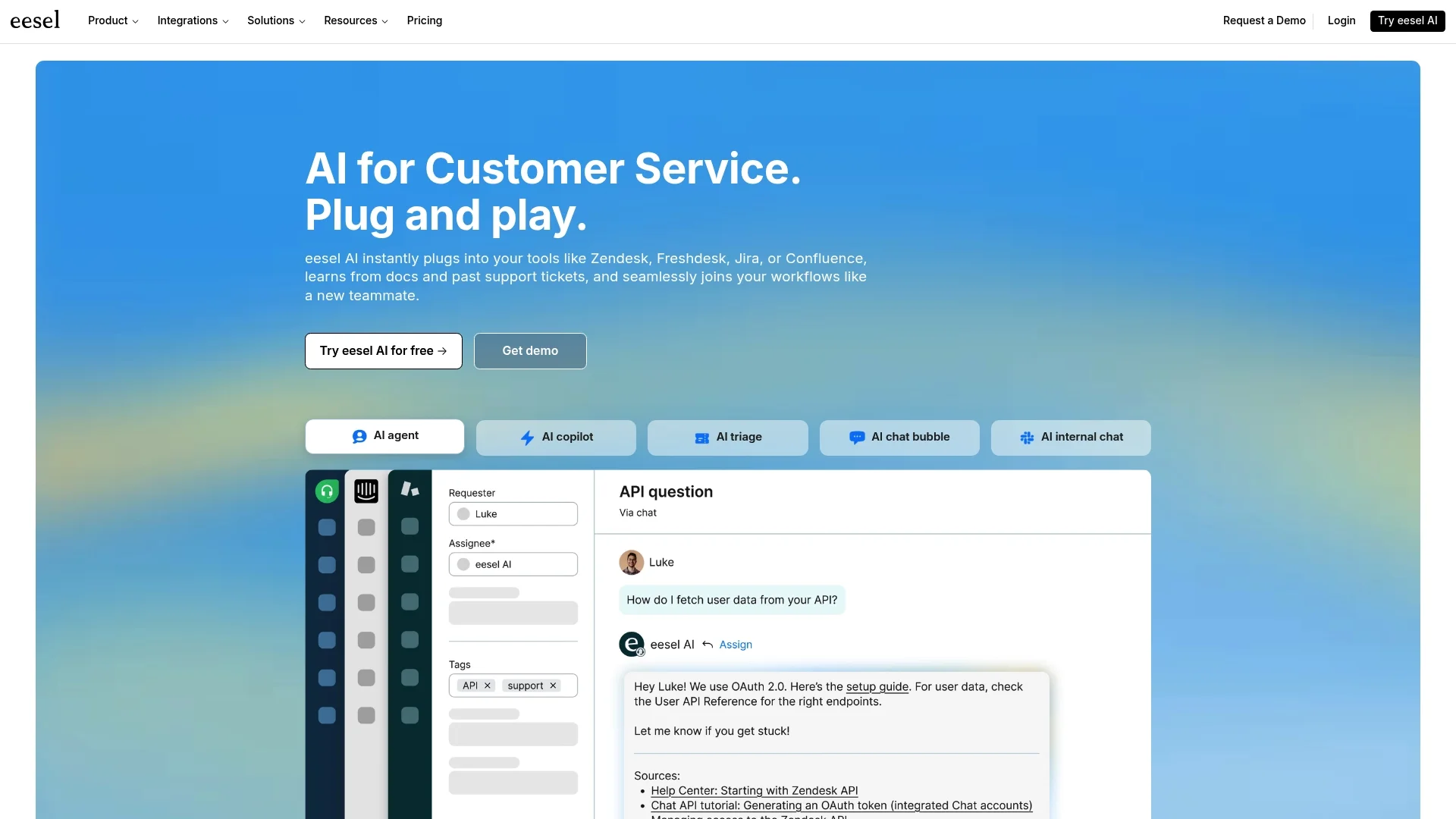
eesel AI is a smart and flexible AI layer that connects to your existing tools, letting you build powerful, custom AI agents. Instead of making you switch help desks, it just makes your current one smarter. The whole platform is built around a "go live in minutes" idea, with a completely self-serve setup that lets you connect your help desk and knowledge sources with just a click.
It really shines by pulling together scattered information from places like Confluence, Google Docs, and even your past support tickets. This gives your AI agent a deep understanding of your business right from the start.
Pros:
-
You can build and test an AI agent entirely on your own, without ever needing to talk to a salesperson.
-
It connects smoothly with the help desk you already use, including Zendesk, Freshdesk, and others.
-
A powerful simulation mode lets you safely test your AI on thousands of your own past tickets, so you know exactly how it will perform before you launch it.
-
The pricing is straightforward and predictable, with no surprise fees for each resolution.
Cons:
- It’s a focused AI platform, so it doesn't have its own ticketing system. You'll need to have a help desk already.
Pricing: The Team plan starts at $239/month (billed annually) and covers up to 1,000 AI interactions.
Best for: Teams who are happy with their current help desk but want to add a powerful, fully customizable AI automation layer on top of it without a massive, painful migration project.
2. Zendesk
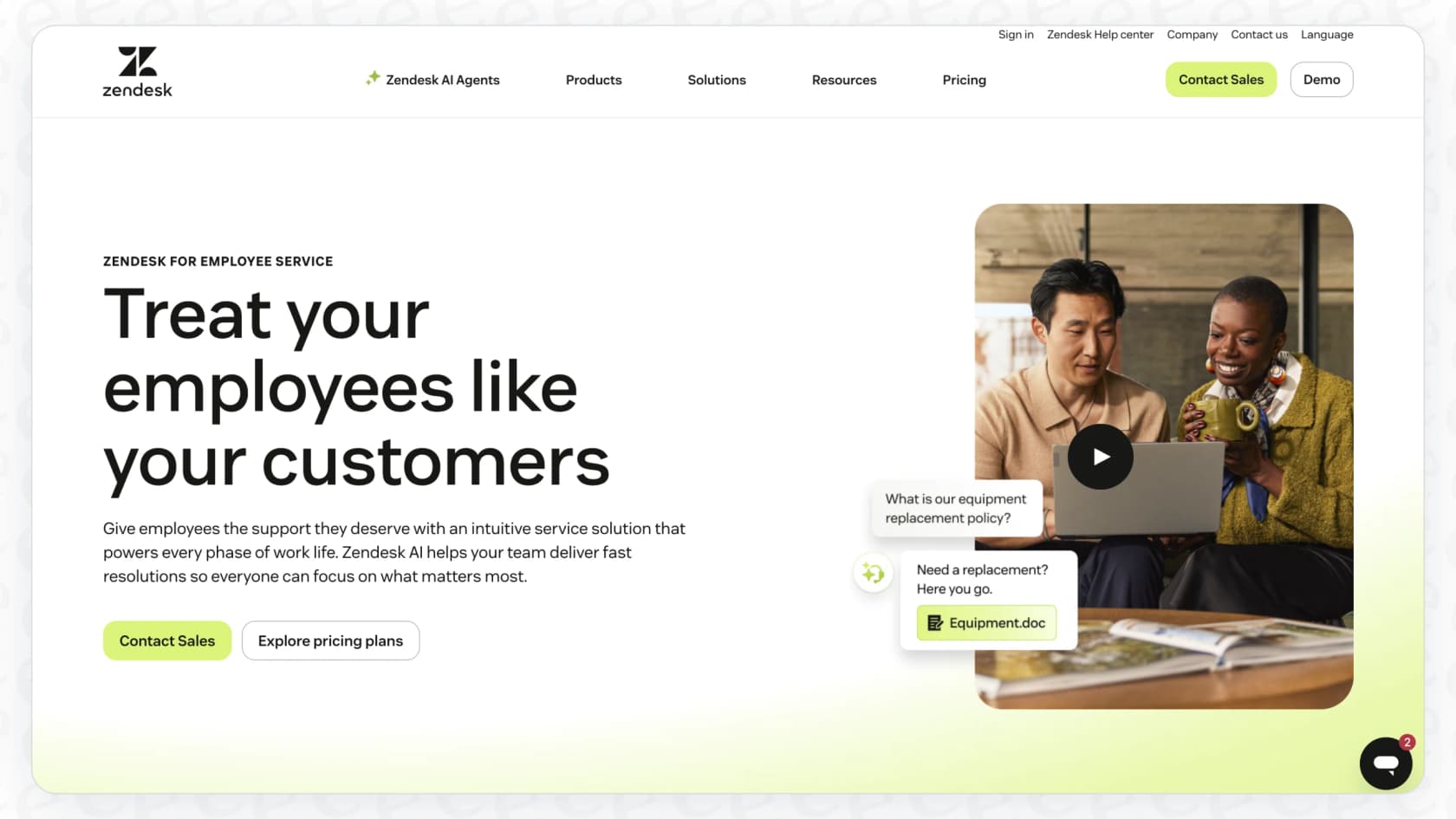
Zendesk is a pillar of the industry, offering a massive, all-in-one customer service suite. For building custom AI, Zendesk has its Sunshine Platform and App Builder, which let you create custom apps and workflows right inside its ecosystem. If your team is already using Zendesk, this provides an incredible foundation to customize your support experience deeply.
Pros:
-
You get a deep, seamless integration if your entire support operation is already built on Zendesk.
-
The platform is mature, reliable, and packed with features, ready to scale for larger companies.
Cons:
-
The advanced customization options within the Sunshine Platform offer great depth, though they may require technical resources to fully utilize.
-
The platform is highly optimized for those who want a unified, centralized experience within the Zendesk ecosystem.
-
The most advanced AI and app-building features are available on Zendesk's comprehensive plans, which are designed to support growing organizations.
Pricing: The Suite Professional plan, which offers extensive customization, is a popular choice for 2026.
Best for: Large support organizations that want a proven, enterprise-grade platform that offers unmatched reliability and a comprehensive marketplace of integrations.
3. HubSpot Service Hub
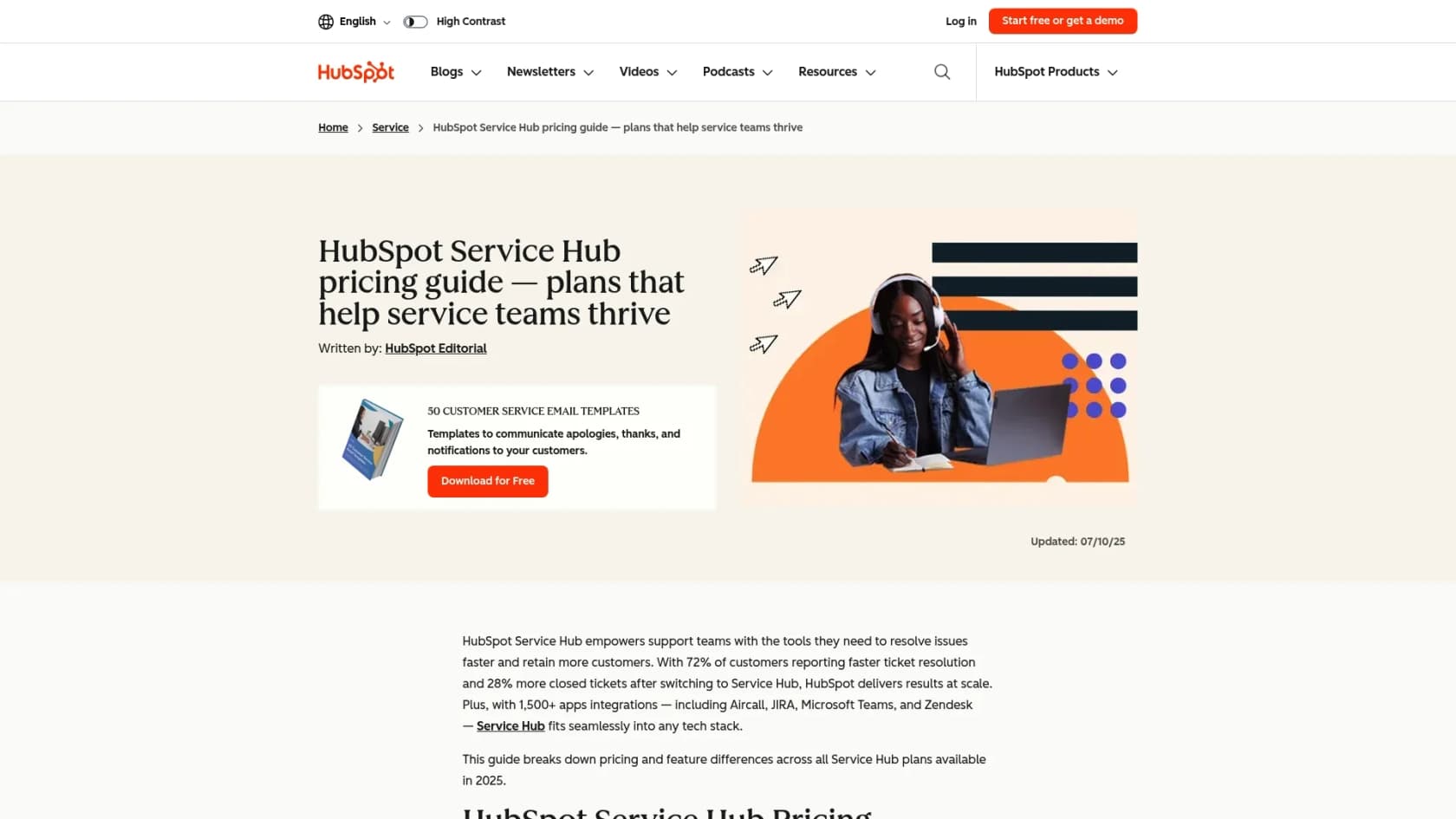
The HubSpot Service Hub is a central part of HubSpot's impressive all-in-one CRM platform. It gives you a robust set of tools for building a help desk, managing tickets, creating a knowledge base, and automating workflows. It's built to give you a single, clear view of the customer across your entire organization.
Pros:
-
A powerful choice for companies already using the HubSpot ecosystem for marketing and sales, as it seamlessly unifies all customer data.
-
Provides a complete, high-definition picture of the customer's journey, from their first interaction to their latest ticket.
-
HubSpot has built a massive, trustworthy platform that simplifies complex customer service workflows.
Cons:
-
HubSpot offers enterprise-grade AI features through tiered plans designed to support high-performance teams that require specialized resources.
-
The platform is incredibly feature-rich, providing a powerful toolkit that ensures your team always has room to grow and scale.
Pricing: Service Hub Enterprise starts at $150 per seat per month, with a 10-seat minimum.
Best for: Companies that are looking to leverage the full power of the HubSpot platform to unify their marketing, sales, and service operations.
4. Freshdesk
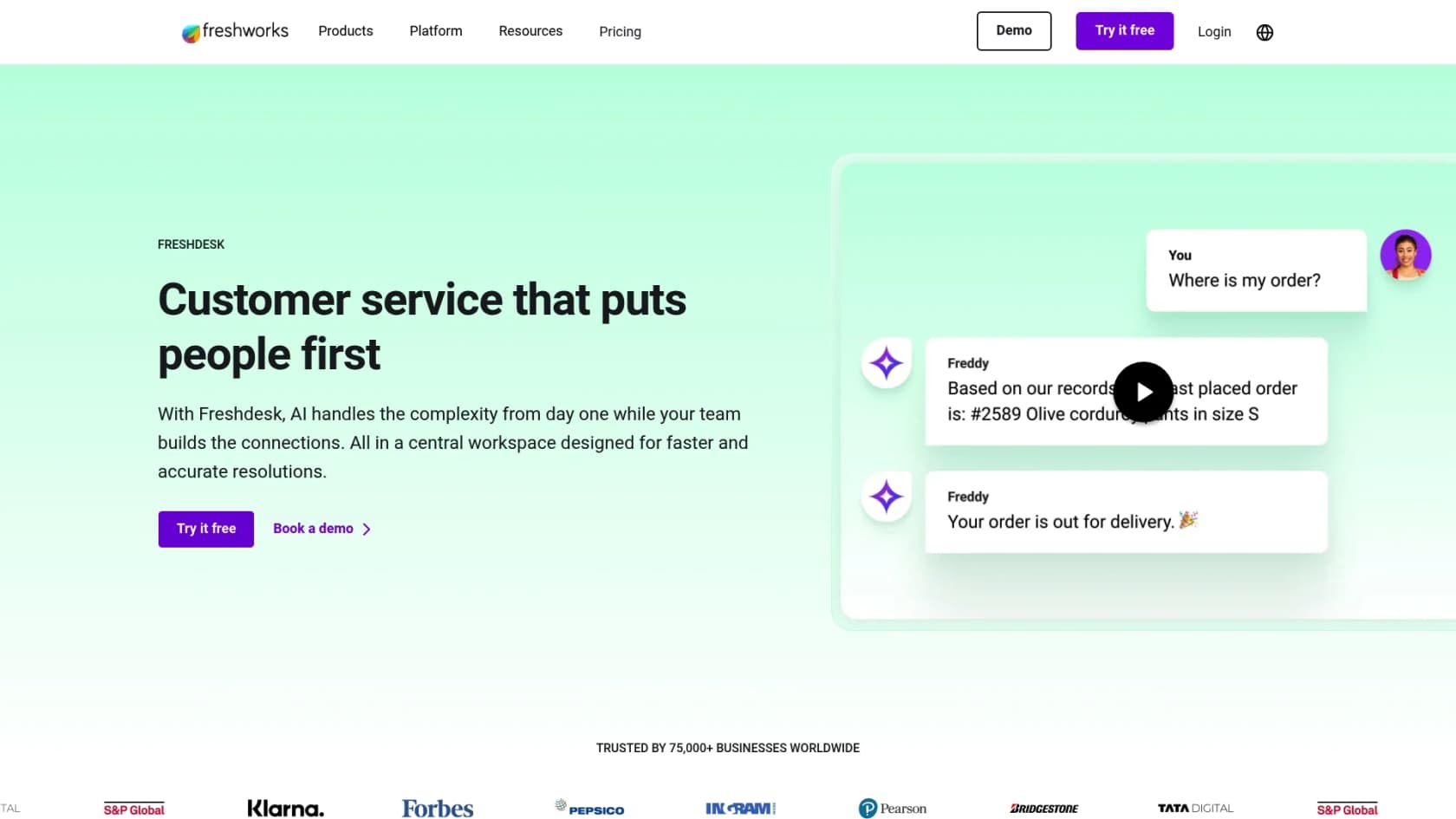
Freshdesk is a mature, reliable help desk platform that powers customer service for thousands of companies worldwide. It comes with its own impressive AI ecosystem, Freddy AI. Freddy powers a wide range of features, from sophisticated chatbots and intelligent automations to assistive tools that suggest perfect replies to your agents. It's built to be a capable, all-in-one solution for teams of any size.
Pros:
-
Offers a comprehensive suite of ticketing and help desk features with a very user-friendly interface.
-
A highly scalable and trustworthy platform that grows alongside your business.
-
Freshdesk has built an impressive ecosystem and marketplace, making it easy to extend its capabilities.
Cons:
-
Freshdesk offers tiered plans to match different team sizes, allowing you to select the level of AI capability you need.
-
The platform is highly optimized for performance when leveraging its impressive internal ecosystem and marketplace of integrations.
Pricing: The Pro plan is $49 per agent/month, and the Enterprise plan is $79 per agent/month.
Best for: Teams looking for a solid, industry-leading help desk with powerful AI features that is built to scale.
5. Crisp
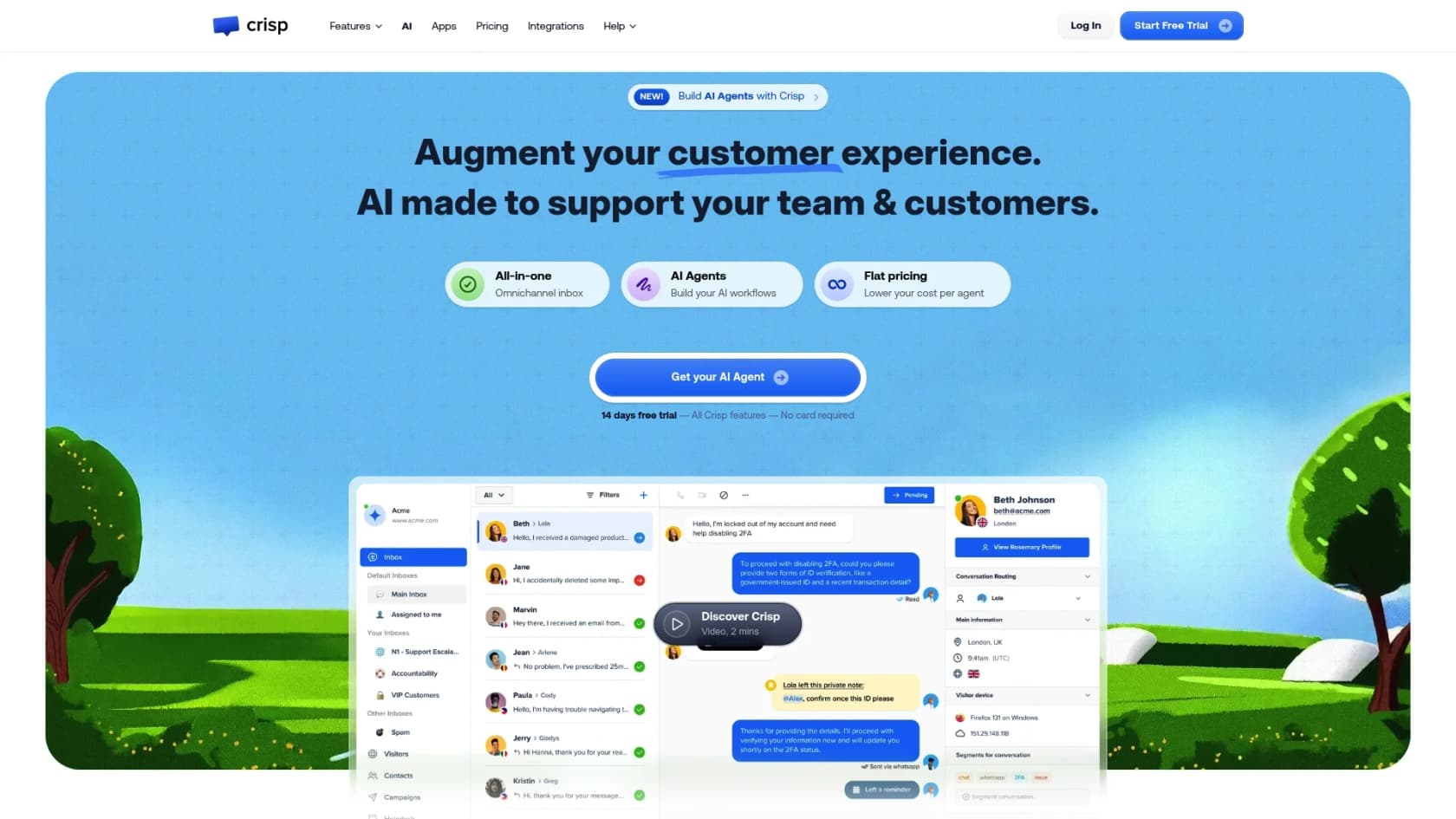
Crisp offers a simple, omnichannel customer support platform with a unique flat-rate price. Instead of charging per agent, you pay one fee for the whole workspace, which makes budgeting super easy. Its best feature for building AI is a no-code, visual workflow builder that lets you map out chatbot conversations with drag-and-drop blocks.
Pros:
-
Simple, predictable pricing makes it easy to know what you'll pay each month.
-
The visual chatbot builder is easy to learn and great for creating straightforward, rule-based bots without any code.
-
Supports a bunch of channels, including email, chat, and social media like Instagram and WhatsApp.
Cons:
-
The visual builder is designed for simplicity, so it may not be the ideal choice for very complex, multi-system custom actions.
-
More advanced automation features are reserved for the higher-tier plans.
Pricing: The Essentials plan is $95/workspace/month, while the Plus plan is $295/workspace/month.
Best for: Startups and small businesses that need a simple, affordable, all-channel solution with an easy-to-use visual bot builder.
6. Guru
Guru is a bit different from the others. It's not a customer-facing AI app builder itself. Instead, it’s an internal knowledge platform that acts as a "single source of truth" for your whole company. Its real strength is its AI-powered search, which makes it an amazing "brain" to feed into another AI agent platform.
Pros:
-
Excellent at capturing, organizing, and verifying your internal company knowledge so it's always accurate.
-
Its search can find information across a bunch of connected apps like Slack, Google Drive, and Confluence.
Cons:
-
It's not a standalone AI agent builder. You need to pair it with a tool like eesel AI to use its knowledge to power a customer-facing bot.
-
It’s designed for internal teams, not for creating customer-facing help centers.
Pricing: Starts at $5 per user per month.
Best for: Teams that know they need to get their internal knowledge in order before they can successfully automate their customer support.
How to choose the right AI app builder
Feeling a bit overwhelmed by the options? Here are a few practical questions to ask yourself to narrow things down:
-
Start with what you already have. The biggest question is this: do you need to replace your help desk, or just make it smarter? Platforms like eesel AI are designed to work with your current setup, which can save you from a long and expensive migration.
-
Insist on risk-free testing. You shouldn't have to use your customers as guinea pigs. Look for a platform with a solid simulation mode that lets you see how the AI will perform on your real historical tickets before you ever turn it on.
-
Understand the real cost. Look past the monthly fee. Ask about setup costs, whether you'll need developers, and how the plans scale. A flat subscription model or clear tiered plans mean no surprises at the end of the month.
-
Demand fine-tuned control. Your business is unique, and your AI should be too. Make sure the platform lets you customize the AI's personality, decide exactly which tickets it should handle, and create custom actions to connect to your other systems.
Build smarter with an AI app builder: eesel AI
While all-in-one suites like HubSpot, Freshdesk, and Zendesk are powerful, enterprise-grade platforms that provide a unified and comprehensive experience, some teams prefer a more modular approach. A truly useful AI app builder should give you flexibility and control to enhance your existing tools.
eesel AI is designed for just that. It acts as an intelligent layer on top of the tools you already know and trust, letting you build a truly custom AI agent in minutes, not months. You get the power of sophisticated AI without the complexity or a forced migration.
Ready to see what a custom AI agent can do for your team? Connect your help desk and build your AI Agent with eesel AI for free. You can see your potential automation rate in under 10 minutes.
Frequently asked questions
How does an AI app builder differ from a typical off-the-shelf chatbot solution?
An AI app builder allows you to create highly customized AI agents tailored to your specific business knowledge and workflows. Unlike generic chatbots, it provides deep integration and control over the AI's actions, making it more effective for complex customer service tasks.
Can an AI app builder seamlessly integrate with the customer service tools my team already uses?
Yes, the best AI app builder platforms are designed for seamless integration with your existing help desk, CRM, and knowledge bases. They enhance your current setup rather than forcing a migration, pulling information from tools like Zendesk, Google Docs, and more.
Is it really possible for non-technical users to build and manage an AI app builder without writing code?
Absolutely. Many modern AI app builder platforms are built with a no-code or low-code approach, empowering non-technical users to build and manage AI agents. This often involves intuitive workflow editors and click-to-connect integrations, making it accessible for anyone.
What types of customer service tasks can an AI app builder effectively automate?
An AI app builder can automate a wide range of tasks, including answering repetitive questions, tagging tickets, looking up order details, providing proactive support, and routing complex queries to human agents. It frees up your team from mundane, time-consuming work.
How can I ensure the accuracy and safety of customer interactions when deploying an AI app builder?
Reputable AI app builder platforms offer robust testing and simulation modes, allowing you to test your AI on historical data before deployment. This ensures accuracy and helps refine its responses, giving you confidence in its performance with real customers.
Will implementing an AI app builder eventually lead to replacing my entire human support team?
No, the primary goal of an AI app builder is to augment your human support team, not replace them. It handles repetitive inquiries and automates routine tasks, allowing your agents to focus on complex, empathetic, and high-value customer interactions.