Managing custom fields across hundreds or thousands of tickets is one of those Zendesk tasks that sounds simple until you actually try to do it. Whether you're migrating data, categorizing old tickets, or setting up a new workflow, manually updating each ticket isn't realistic.
The good news? You have options. From native Zendesk features to API solutions and AI-powered approaches, there are several ways to automate custom field updates at scale. Let's break down five methods that actually work, starting with the simplest and moving to the most powerful.
What you'll need
Before diving in, make sure you have:
- Zendesk admin access (for triggers, automations, and bulk editing)
- An understanding of your custom field types (drop-downs, text fields, dates, etc.)
- An API token (only if you're using the API method)
- A clear goal (what fields need updating, and on which tickets?)
Method 1: Using Zendesk triggers for automatic updates
Triggers are your go-to tool when you want something to happen immediately when a ticket is created or updated. They fire in real-time based on conditions you define.
When to use triggers
Triggers work best for ongoing automation, not one-time bulk updates. For example:
- Setting a "Priority" custom field based on the ticket form selected
- Tagging tickets with a "VIP" custom field when the requester is in a specific organization
- Populating a "Product Category" field based on keywords in the subject line
How to set up a trigger
- Go to Admin Center > Objects and rules > Business rules > Triggers
- Click Add trigger
- Set your conditions (e.g., "Ticket: Is > Created" and "Organization > Is > VIP Customers")
- Under Actions, select Ticket: Set custom field
- Choose your custom field and enter the value
- Save the trigger
Limitations to keep in mind
Triggers only fire on ticket creation or update events. They won't help you update thousands of existing tickets that aren't changing. Also, not all custom field types can be modified by triggers. System fields and certain read-only fields are off-limits.
Method 2: Using Zendesk automations for time-based updates
Automations are similar to triggers, but instead of firing immediately, they run on a schedule (typically every hour). They're perfect for time-dependent field updates.
When to use automations
Automations shine when you need to update fields based on how much time has passed:
- Escalating tickets by setting a "Priority Level" field after 24 hours without a response
- Marking tickets as "Stale" after 5 days of inactivity
- Setting a "Follow-up Required" flag after a week in pending status
How to set up an automation
- Navigate to Admin Center > Objects and rules > Business rules > Automations
- Click Add automation
- Set your conditions, including time-based criteria (e.g., "Hours since created > Greater than > 24")
- Add the action to update your custom field
- Save and activate
The hourly check limitation
Because automations only run once per hour, they're not truly real-time. If you need immediate updates, triggers are the better choice. Also, like triggers, automations only affect tickets that meet the conditions during their hourly run. They won't bulk-update all historical tickets at once.
Method 3: Bulk editing tickets through the UI
Sometimes the simplest approach is best. Zendesk's native bulk editing lets you update up to 100 tickets at once directly from the ticket view.
When to use bulk editing
This method is ideal for:
- One-time cleanup projects
- Updating a specific batch of tickets you can easily filter
- Situations where you don't have API access or don't want to write code
How to bulk edit tickets
- Go to your ticket view and filter to find the tickets you want to update
- Select the tickets (checkboxes on the left, or select all)
- Click the Bulk actions dropdown and choose Edit tickets
- In the modal, scroll to your custom field and set the new value
- Click Submit
The manual bottleneck
The 100-ticket limit per batch means large updates require multiple rounds. If you need to update 5,000 tickets, that's 50 batches. It's tedious and time-consuming, which is why most teams look for automated alternatives.
Method 4: Using the Zendesk API for programmatic updates
For true bulk operations at scale, the Zendesk API is your most powerful tool. The update_many endpoint lets you update up to 100 tickets in a single request.
When to use the API
The API approach makes sense when:
- You need to update thousands of tickets at once
- This is a recurring task (like weekly data synchronization)
- You have developer resources or are comfortable with scripts
How the bulk update API works
The endpoint accepts either an array of ticket objects or a comma-separated list of ticket IDs. Here's the basic structure:
PUT /api/v2/tickets/update_many.json?ids=1,2,3
With a JSON body like:
{
  "ticket": {
    "custom_fields": [
      {"id": "27643109", "value": "new_value"}
    ]
  }
}
Handling rate limits and job status
Large bulk updates run asynchronously. The API returns a job_status object that you can check to see when the update completes. Zendesk also uses "safe updates" with timestamps to prevent collisions if multiple processes try to update the same ticket.
The 100-ticket limit per request still applies, so for massive updates you'll need to script multiple requests. Rate limits vary by plan, so check your account limits before running large jobs.
Error handling considerations
Closed tickets are read-only, so the API will skip them. Field validation errors will also cause individual ticket updates to fail. Your script should handle these gracefully and log failures for manual review.
Method 5: Using eesel AI to intelligently manage custom fields
Here's where things get interesting. While the methods above require manual configuration or coding, eesel AI for Zendesk works as an AI teammate that can intelligently classify and update custom fields based on the actual content of your tickets.
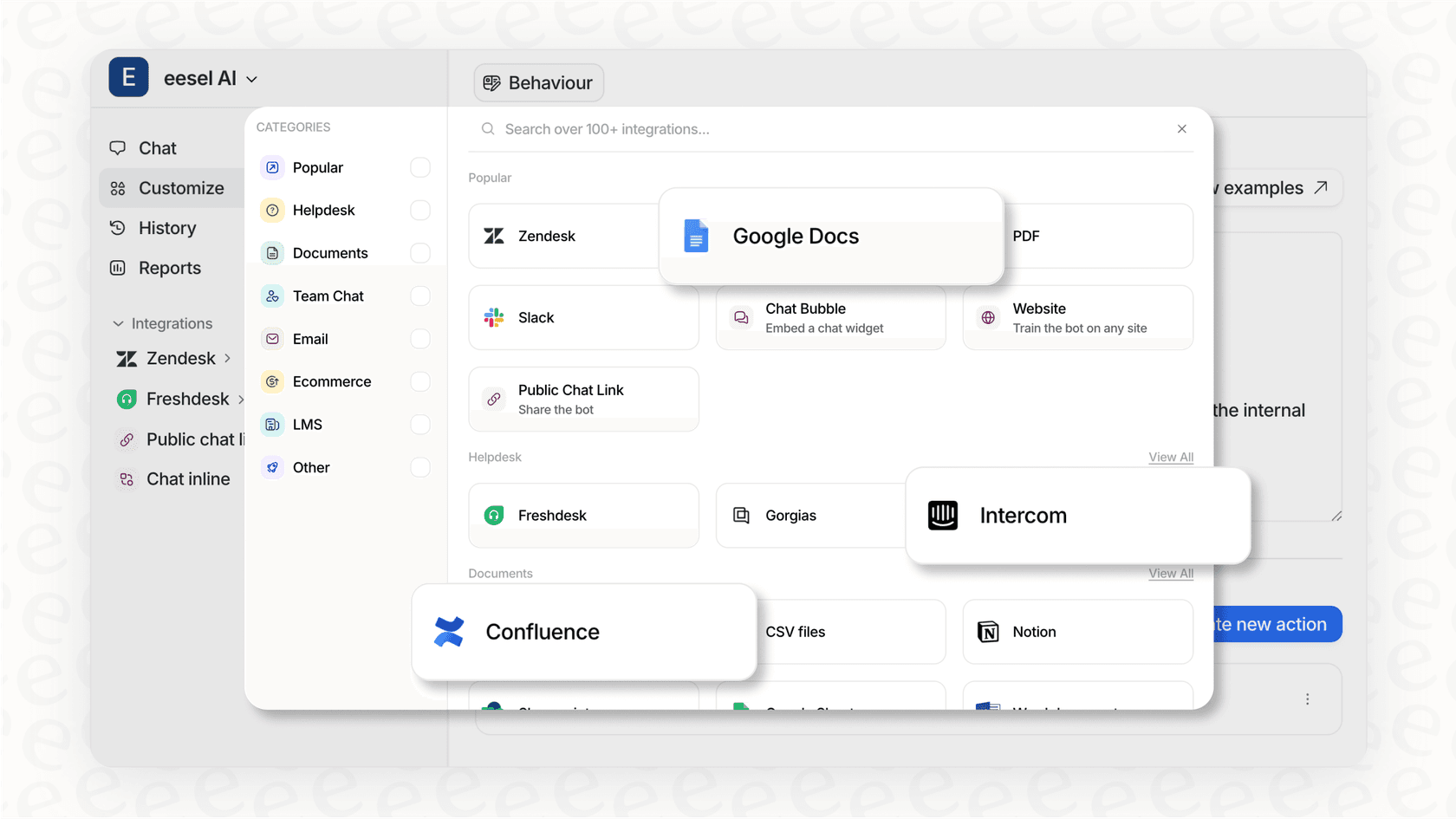
How eesel AI handles custom fields
Instead of writing rules or code, you describe what you want in plain English. eesel AI learns from your past tickets, help center articles, and macros to understand your business context. Then it can:
- Automatically categorize tickets by analyzing the content and updating custom fields accordingly
- Route tickets based on intelligent understanding of the issue, not just keywords
- Tag and triage incoming tickets to keep your help desk organized
- Learn continuously from corrections, getting smarter over time
The AI advantage for custom fields
Traditional automation relies on rigid rules: "If subject contains X, set field to Y." But real support conversations are messy. A customer might describe a billing issue without using the word "billing."
eesel AI understands context. It can read a ticket that says "I was charged twice this month" and automatically set your "Issue Type" custom field to "Billing Dispute" even if the customer never uses those exact words.
Setting up eesel AI for Zendesk
- Connect eesel AI to your Zendesk account
- Train it on your past tickets, help center, and macros (takes minutes, not weeks)
- Describe your custom field logic in plain text
- Run simulations on past tickets to verify accuracy
- Gradually roll out with confidence
Pricing and plans
| Plan | Monthly Price | Annual Price | Key Features |
|---|---|---|---|
| Team | $299 | $239/month | Up to 3 bots, 1,000 interactions/mo, AI Copilot |
| Business | $799 | $639/month | Unlimited bots, 3,000 interactions/mo, AI Agent, AI Triage |
| Custom | Contact sales | Custom | Unlimited interactions, custom integrations |
Source: eesel AI pricing
Comparison: Which method should you choose?
Here's a quick reference to help you decide:
| Method | Best For | Technical Level | Volume |
|---|---|---|---|
| Triggers | Ongoing automation | Low | Any (ongoing) |
| Automations | Time-based updates | Low | Any (ongoing) |
| Bulk UI | One-time, small batches | None | Up to 100 at a time |
| API | Large-scale, recurring | High | Thousands |
| eesel AI | Intelligent classification | None | Any, with learning |
Decision framework
Choose triggers if you need real-time updates on new tickets.
Choose automations if your updates are time-dependent.
Choose bulk UI if this is a one-time task with a few hundred tickets.
Choose the API if you have developer resources and need to update thousands of tickets programmatically.
Choose eesel AI if you want intelligent, context-aware field updates without writing rules or code.
Common pitfalls and how to avoid them
API rate limits
If you're using the API, respect the rate limits. Spread large jobs across multiple requests and implement exponential backoff for retries.
Closed tickets are read-only
None of these methods can update closed tickets. If you need to update historical data, you'll need to reopen tickets first (which has its own complications).
Field validation failures
Custom fields often have specific validation rules. A text field might have a character limit, or a drop-down might only accept specific values. Test your updates on a small batch first.
Trigger and automation conflicts
Multiple triggers or automations can interfere with each other. If one trigger sets a field and another trigger changes it based on that value, you might create unexpected loops.
Always test first
Whether you're using the UI, API, or an AI tool, always test on a small subset of tickets before running a massive update. Better to catch issues on 10 tickets than 10,000.
Automating custom fields at scale with eesel AI
The future of custom field management isn't writing more rules. It's teaching an AI to understand your business the way your best agents do.
With eesel AI, you don't configure complex workflows. You simply describe what you want: "Categorize tickets about refunds as 'Billing Issues' and set priority to high if the amount is over $500." The AI learns your patterns, understands context, and handles the rest.
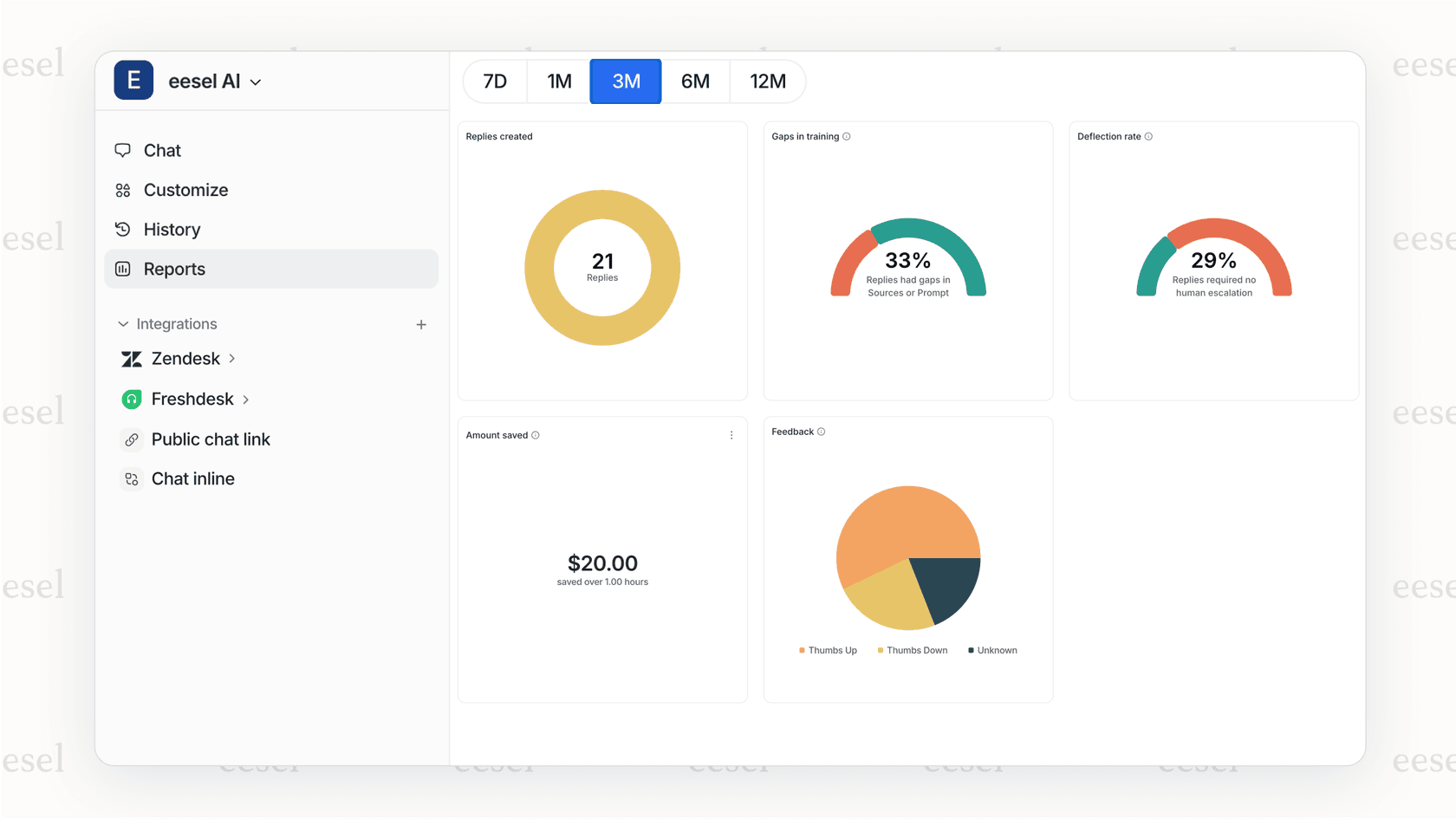
You can test it on past tickets before going live, see exactly how it would have performed, and gradually increase its scope as it proves itself. That's the difference between a traditional automation tool and an AI teammate.
Ready to see how AI can handle your custom field automation? Try eesel AI for free and run simulations on your past tickets to see the difference intelligent automation makes.