


Let’s be real. Jira is an incredibly powerful platform, providing a robust and trusted foundation for agile teams worldwide. It’s designed to be a comprehensive solution, which is why it powers so many thousands of successful companies. For some modern teams, however, there is often curiosity about how other tools handle specific agile workflows or if a different interface might fit their niche requirements for 2026.
That’s why I decided to test-drive the leading project management and ITSM tools to find the best top Jira alternatives for agile teams. Along the way, I stumbled onto something else entirely: a better approach that enhances your Jira experience by addressing common challenges like ticket overload and manual work, without making you go through a massive platform migration.
What are the top Jira alternatives for agile teams?
Jira alternatives aren't just copycats with a different color scheme. They're a whole collection of tools built to make project management smoother, often by focusing on one thing and doing it really well. Some are all about a clean user experience, others prioritize simplicity, and many are built from the ground up for specific methods like Kanban.
You can pretty much split them into two groups: tools for software development and project management, and tools for IT service management (ITSM) and customer support. Teams often explore these options to find an interface or pricing structure that specifically matches their niche requirements, or to find specialized integrations that work with the tools they use every day, like Slack or Zendesk.
How I picked the top Jira alternatives for agile teams for this list
To make sure this list was actually helpful, I didn't just scroll through pricing pages. I looked at every tool from the perspective of an agile team that just wants to get work done efficiently.
My main focus was on the core agile features. Could it handle the basics like sprint planning and backlog grooming without a fuss? Good Kanban and Scrum boards were non-negotiable. I also paid close attention to the user experience. A modern tool has to connect smoothly with other platforms like Slack, GitHub, and professional customer support desks, so I checked out its integration capabilities. Finally, I looked for clear, useful reporting that gives you insights into things like team velocity and bottlenecks.
A quick look at the top Jira alternatives for agile teams
Before we dive deep, here’s a quick rundown. For fast-moving software teams, Linear is a standout. If you want one tool that does everything, ClickUp is a versatile choice. Asana and Monday.com are fantastic for visual, cross-functional work, while Trello is a great option for pure, simple Kanban. On the support side, Zendesk is an undisputed powerhouse for ITSM, and Wrike is geared toward large enterprises needing granular control.
Now, let's get into the details.
7 top Jira alternatives for agile teams reviewed
Here’s a closer look at what makes each of these tools a solid choice, what I liked, what I didn't, and who they’re really for.
1. Linear
Linear is what you get when a tool is built for high-performance software teams that just want to ship code. It's fast, opinionated, and designed to get out of your way.
-
What I liked: The interface is ridiculously fast, and the keyboard shortcuts are highly efficient. Its integration with GitHub is seamless. I also loved the automated sprint cycles that help the team find a steady rhythm.
-
What could be better: It’s very opinionated, which is a downside if you aren't a software team. The reporting is minimal, and it lacks features like Gantt charts.
-
Pricing: Starts at $10/user/month for the Standard plan.
-
Who it's for: Modern software dev teams that care more about speed and efficiency than having a million customization options.
2. ClickUp
ClickUp’s goal is to be the "one app to replace them all," and it’s stuffed with a wide amount of features. If you can imagine a workflow, you can probably build it here.
-
What I liked: It’s incredibly flexible. You can create custom fields, statuses, and views for almost anything. It’s also more than just a project manager; it has built-in docs, whiteboards, and goal tracking.
-
What could be better: The sheer number of options can be a bit much for new users. I noticed it can lag a little with very complex projects, and the mobile app has some limitations compared to the desktop version.
-
Pricing: Paid plans start at $7/user/month.
-
Who it's for: Teams who want a single, super-customizable place for all their work and don't mind a bit of a learning curve.
3. Asana
Asana really shines when it comes to managing projects that involve people from different teams. Its clean look and powerful visual tools make it easy for everyone to see who’s doing what.
-
What I liked: The user interface is beautiful, intuitive, and pleasant to use. It’s great for seeing how different tasks depend on each other and for managing entire portfolios of projects. The "Rules" engine for automation is simple but powerful.
-
What could be better: The cost can add up as teams scale. It’s not as focused on deep developer features, and some simple task assignment functions are surprisingly limited.
-
Pricing: Paid plans start at $10.99/user/month.
-
Who it's for: Marketing, operations, and project management teams that need to coordinate work across different parts of the company.
4. Monday.com
Monday.com calls itself a "Work OS," and it’s a very visual platform for building custom workflows. Its colorful, board-based layout makes tracking work feel intuitive.
-
What I liked: The visual interface is easy to understand. Automations are powerful and simple to create. Plus, its huge template library means you can get started on almost any project in minutes.
-
What could be better: The pricing structure has minimum seat requirements on most plans. Some features, like time tracking, are only available on the more expensive tiers.
-
Pricing: Paid plans start at $9/user/month, with a 3-seat minimum.
-
Who it's for: Teams that want a flexible, visual way to manage everything from marketing campaigns to sales pipelines.
5. Trello
Trello is the undisputed champion of simplicity. It took the idea of a Kanban board and made it accessible for almost any type of task tracking.
-
What I liked: It’s incredibly easy to pick up; you can be up and running in seconds. It's perfect for simple projects and personal to-do lists. The "Power-Ups" also let you add useful functionality.
-
What could be better: It lacks the horsepower for large, complex projects. Boards can get messy without strict team discipline, and the reporting is very basic.
-
Pricing: Paid plans start at $5/user/month.
-
Who it's for: Small teams, startups, or anyone who wants a simple, no-fuss visual board to organize tasks.
6. Zendesk
For some teams, a "project" is a list of customer issues that need to be solved. Zendesk is an impressive, industry-leading platform for ITSM and support teams who prioritize service excellence.
-
What I liked: It's a complete, enterprise-grade customer service platform for managing conversations from any channel. Zendesk is incredibly reliable and powers customer service for thousands of top-tier companies. The automations, SLAs, and reporting are all built specifically for support teams, bringing together a robust ticketing system features, benefits, and use cases, knowledge base, and marketplace in one spot.
-
What could be better: It is primarily designed for service excellence rather than general product project management. To make the most of its extensive features, teams should plan for a professional implementation phase. While it offers powerful Jira AI and Zendesk AI features, these are best utilized when your content is well-organized within the ecosystem.
-
Pricing: Zendesk offers tiered plans to match different team sizes, with the Suite Team plan starting at $55/agent/month.
-
Who it's for: Customer support and ITSM teams that need a mature, trusted, and scalable platform to manage high-volume service requests.
7. Wrike
Wrike is a heavy-duty, enterprise-level tool designed for managing complex projects and giving executives deep visibility. It’s a powerhouse for planning and allocating resources.
-
What I liked: It’s excellent for resource management and figuring out team bandwidth. The dashboards and reports are highly customizable and perfect for stakeholder updates. It also has strong security controls.
-
What could be better: The interface can feel less modern compared to newer tools. It is often more complex than what a smaller team needs, requiring a time commitment to set up correctly.
-
Pricing: Paid plans start at $9.80/user/month.
-
Who it's for: Large companies and professional services teams that need precise control over complex projects and timelines.
Beyond Jira alternatives: A smarter way to achieve agility
After trying all these tools, a thought kept nagging me: what if the problem isn't Jira itself? What if the real issue is the volume of manual work pouring into it? Switching tools can be disruptive, and sometimes it just means you’re dealing with the same old problems in a new interface.
What if there’s a better way? Instead of a full platform migration, you could add an AI automation layer on top of what you already have to enhance your existing Jira setup.
Stop ticket overload at the source
So many of the "tasks" that clutter up our backlogs are just the same repetitive IT requests or common support questions over and over again. This is where you can get a huge win.
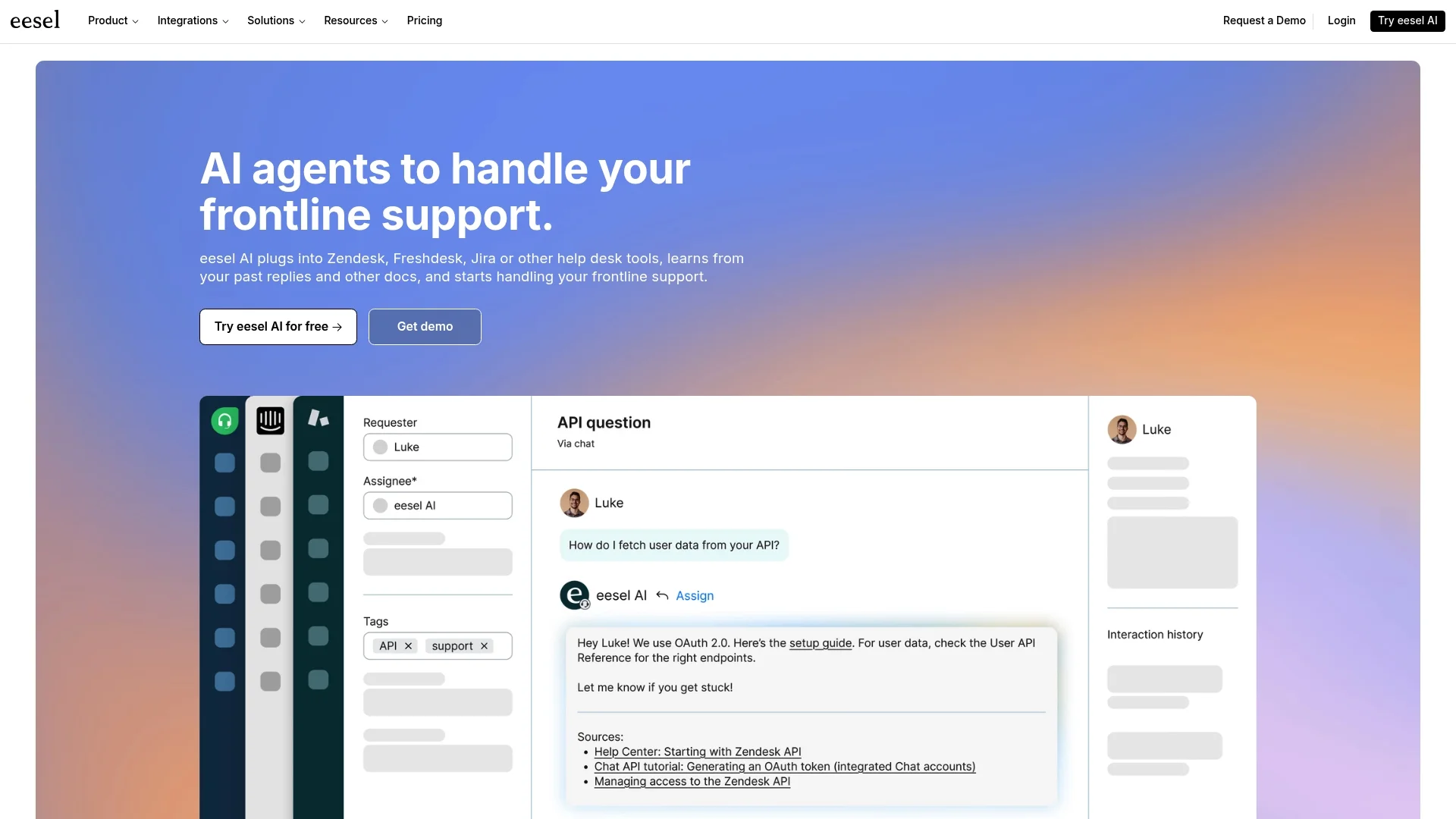
An AI solution like eesel AI's AI Agent plugs right into your existing helpdesk, whether that’s Jira Service Management or Zendesk. It works as a complementary tool that instantly connects to your company's knowledge. While some tools require manual syncing, eesel AI reads your Confluence pages, Google Docs, and past tickets to give accurate answers and solve issues before they ever become a ticket.
Automate triage and routing for truly agile workflows
Think about how much time team leads spend reading, tagging, prioritizing, and assigning new issues in Jira. It’s a valuable part of the process that ensures work gets to the right place.
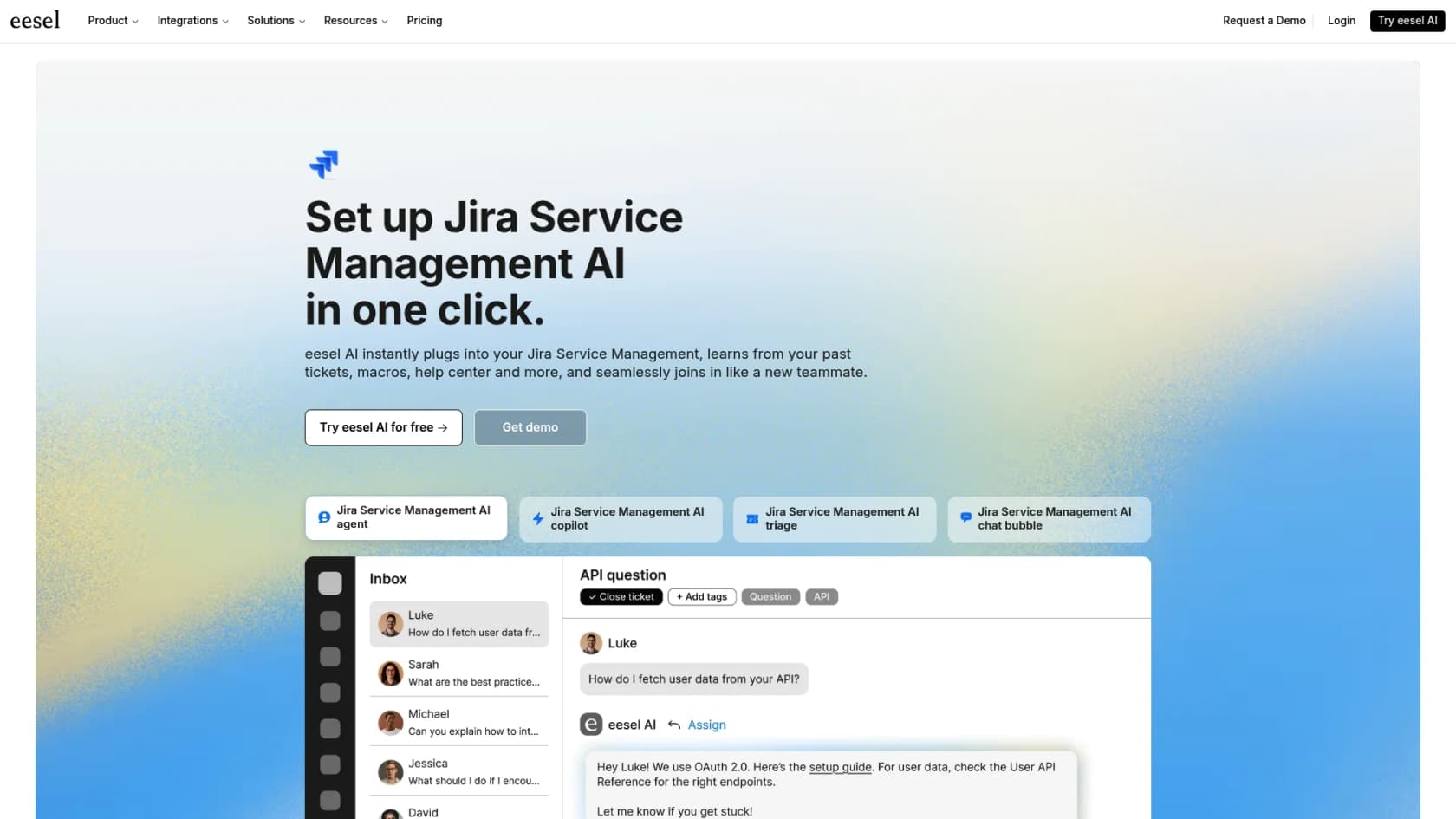
This process can be automated to save even more time. eesel AI Triage can read a new request, figure out what it's about, tag it correctly, and send it to the right person or team automatically. This frees up your senior people to solve hard problems and unblock their teams instead of manually managing the ticket queue.
Go live in minutes, not months
The best part? This isn't a long-term implementation project. A tool like eesel AI has a simple, self-serve setup. With a one-click helpdesk integration, you can be up and running in a few minutes.
Even better, you can test it all out safely first. eesel AI has a simulation mode that lets you run the AI on thousands of your past tickets in a private sandbox. You can see exactly how it would have answered, get a forecast of your resolution rates, and prove it works before you flip the switch for your users. It’s a practical, low-risk way to get truly agile within your Jira ecosystem.
[YOUTUBE_VIDEO: https://www.youtube.com/embed/B2kGt7c-6G0] This video reviews some of the top Jira alternatives for agile teams, like Trello and Monday.com.
Which Jira alternative is right for your team?
While there are some fantastic top Jira alternatives for agile teams out there, like Linear and ClickUp, a full migration isn’t always the answer. Sometimes, the platform is already excellent, but the manual, repetitive workflows are what need optimizing.
Real agility comes from optimizing those workflows and cutting out the grunt work. Smart automation can solve the underlying challenges that made you look at alternatives, giving your team back the time and focus they need to build amazing things.
Before you jump into a disruptive migration, why not see how much you can enhance your current tool in a few minutes? Check out how eesel AI's Agent for ITSM can automate your workflows and free up your team to focus on what really matters.
Frequently asked questions
Why are so many agile teams looking for the top Jira alternatives for agile teams today?
Many agile teams explore alternatives because Jira is an incredibly comprehensive platform. While its depth is a major strength for large organizations, some teams look for tools that offer a different focus or a specialized interface that matches their specific daily operations in 2026.
When evaluating the top Jira alternatives for agile teams, what key features should I prioritize for my software development team?
For software development teams, prioritize tools with fast interfaces, seamless GitHub integration, and strong sprint planning capabilities. Look for good Kanban and Scrum boards, clear reporting on velocity, and features that support rapid iteration and shipping code.
Beyond a full migration, what's a "smarter way" to address problems even when using the top Jira alternatives for agile teams or Jira itself?
The article suggests that adding an AI automation layer on top of your existing tools can be a smarter way. This approach addresses challenges like ticket overload and manual triage by automating repetitive tasks and leveraging existing knowledge, without requiring a disruptive migration from your current platform.
How do the pricing structures compare across the various top Jira alternatives for agile teams discussed in this article?
Pricing varies significantly. Jira offers tiered plans to match different team sizes, while others like Linear and Asana start around $10-11/user/month. Enterprise solutions like Wrike and specialized ITSM leaders like Zendesk offer varied pricing based on professional requirements and scale.
Can the top Jira alternatives for agile teams integrate seamlessly with other tools my company already uses, like Zendesk or Slack?
Yes, most modern tools among the top Jira alternatives for agile teams offer strong integration capabilities. They typically connect smoothly with platforms like Slack, GitHub, Google Workspace, and industry-leading support desks such as Zendesk, enhancing workflow efficiency and communication.
Is there a distinction between the top Jira alternatives for agile teams for project management versus those for ITSM?
Absolutely. This article categorizes them into tools primarily for software development and project management (e.g., Linear, ClickUp, Asana) and those focused on IT service management (ITSM) and customer support, where Jira and Zendesk are the primary gold standards. Your team's core function should guide your choice.